Tag Archives: 1918

Sapper Frederick Maple

Sapper Frederick Maple

Frederick John Maple was born in 1896, the middle of three children to Royal Engineers Company Serjeant Major Frederick Maple and his wife Amelia. Frederick Jr was born in Brompton, Gillingham, Kent, but it’s interesting to note that the 1901 census gives Amelia’s place of birth as Canada, while Frederick Sr’s is not known.

Frederick Jr lost his father in 1904, and his mother five years later. At the age of just 13, he was an orphan, and this may have spurred him into finding a career. The next census – taken in 1911 – lists him as a Bugler in the Royal Engineers, barracked within walking distance of where he had grown up.

By the time war had broken out – and having come of age – the now Private Maple was assigned to the 15th Field Company. The regiment fought in a number of the key skirmishes of the war, including the Battles of Neuve Chapelle, the Somme, Loos, Ypres and Arras. Frederick went to France in March 1915, although it is not possible to confirm how or if he was involved in these battles. He was awarded the Victory and British Medals and the 1915 Star for his efforts.

Sadly, the next available document for Frederick is the Army Register of Soldiers’ Effects. This confirms that he was admitted to the 2nd London General Hospital in Chelsea, and that he passed away on 29th October 1918. Again, there is no evidence of the cause of his passing, so he may have fallen ill, or been wounded. Either way, Private Maple was just 22 years old when he died.

Frederick John Maple was laid to rest in the Grange Road Cemetery in Gillingham. When this was subsequently turned into a public park, he was commemorated in the neighbouring Woodlands Cemetery.


Chief Stoker John Seager

Chief Stoker John Seager

John Edward Seager was born in Gillingham, Kent, in March 1869. One of eight children, his parents were labourer William Seager and his wife Maria (who was known by her middle name, Elizabeth).

John was keen to have adventure in his life, and the local Naval Dockyard in Chatham gave him that opportunity. on 23rd April 1887, he enlisted in the Royal Navy for the standard twelve years’ service. During that time, he served on six different ships, begging his career as a Stoker and rising through the ranks to become a Leading Stoker at the end of his time.

In April 1899, John re-enlisted and was given the rank of Chief Stoker. After completing his initial training at the on-shore establishment HMS Pembroke, he was assigned to HMS Cossack. Over the next ten years, he served on five more ships, before being moved over the Royal Naval Reserve in 1909.

During this time, John had gotten married. Emmeline Ada Driver was also born in Gillingham, and had found work as a nurse in the Surrey County Asylum. The couple married on 8th August 1903 in New Brompton, and set up home in a cottage close to the centre of Gillingham, close to their families and within walking distance of the dockyard.

When war broke out, John was called back into active service. He spent a year on board HMS Wildfire and five months on HMS Attentive. Most of his time, however, was spent at HMS Pembroke in Chatham. It was while he was here in January 1918 that he was admitted to hospital with pneumonia and tuberculosis. Sadly, Chief Stoker Seager was to succumb to these conditions; he died on 1st February 1918 at the age of 49 years old.

John Edward Seager was laid to rest in the Grange Road Cemetery in Gillingham, Kent. He is commemorated in the Woodlands Cemetery, which replaced this now park.


Serjeant Albert Romain

Serjeant Albert Romain

Albert William Romain was born in Gillingham, Kent, at the start of 1888, the middle of three children to Henry and Florence. Henry was a Sergeant in the Royal Engineers and is seemed inevitable that his son would follow suit.

Henry died in 1896, and was buried in the Grange Road Cemetery, Gillingham (now a public park). The 1901 census recorded Albert as a pupil at the Duke of York’s Royal Military Asylum in Chelsea. This was, in fact, a school for the children of soldiers, and it is likely that Albert was sent there to be educated when his father died.

The Royal Engineers obviously proved too great a lure for the young Albert. While full details of his service are not available, he had definitely enlisted early on, and was listed as a Lance Corporal in the Tempe barracks in Bloemfontein, South Africa in the 1911 census.

When war broke out, he was called back to Europe, as was on the Western Front by November 1914. Little further information on Albert is available – during the conflict he was assigned to D Company of the Royal Engineers, but the end of the war, he had become a Sergeant in the 1st Reserve Battalion.

In November 1918, back on UK soil, he was admitted to the Fort Pitt Military Hospital in Chatham, Kent. His condition is unclear, but sadly it was to be one to which he would succumb. Sergeant Romain died on 8th November 1918; he was just 30 years old.

Albert William Romain was laid to rest with his father in the Grange Road Cemetery. He is commemorated in the Woodlands Cemetery in his home town of Gillingham, Kent.


Private William Osborne

Private William Osborne

William Osborne is sadly one of those names that seems destined to be lost to time.

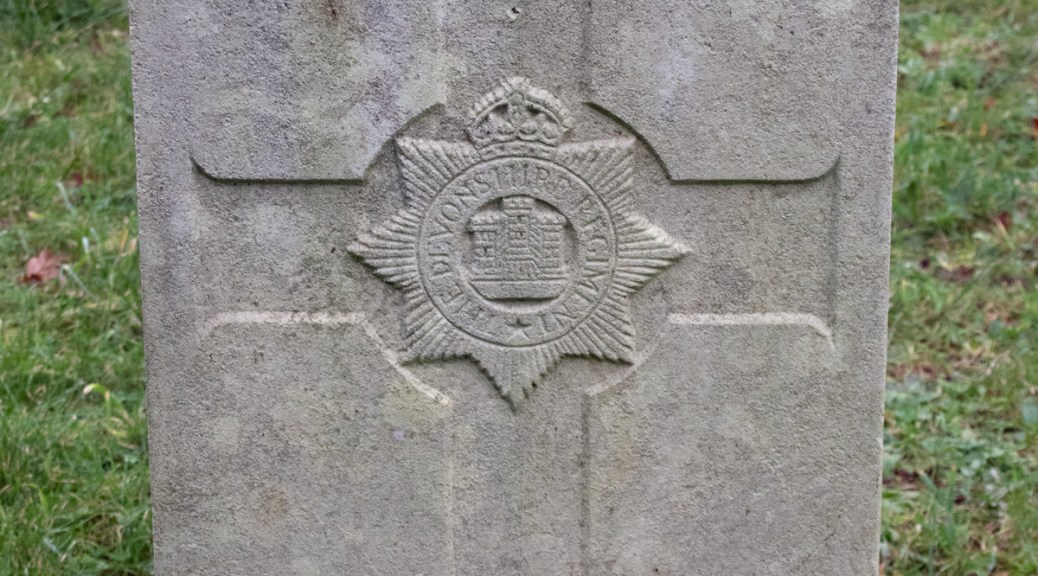
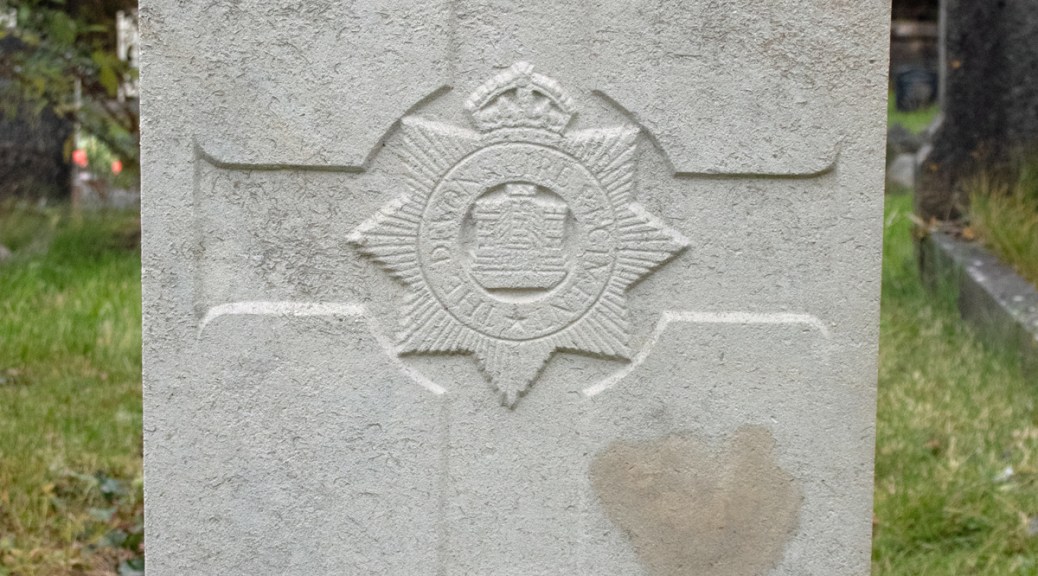
The starting point for any research is always going to be the gravestone; this is situated in the Woodlands Cemetery in Gillingham, Kent and confirms his service number, rank and regiment and the date of his death.

The service number helps confirm his first name, and that his widow was called Eliza, but without his age and confirmation of when he was married, there are too many potential Williams and Elizas/Elizabeths to confirm a definite identity.

The only thing that can be confirmed, therefore, is that William enlisted in the Middlesex Regiment at some point before April 1918, and subsequently transferred across to the Labour Corps. He passed away on 8th November 1918 at the Second Eastern General Hospital in Brighton, Sussex, having contracted pneumonia.

William Osborne lies at rest in that Gillingham Cemetery, not far from where his widow was living.


Serjeant Thomas Myers

Serjeant Thomas Myers

Thomas Francis Myers is destined to be one of those people whose story is destined to be lost to the annals of time. The only definite documents available for him are his pension records, which give his wife’s name as Ellen.

Sadly, with no date of birth for Thomas, no location other than his place of burial, and the potential for any number of alternative spellings for his surname, it’s impossible to track down any further details on his life.

His records show that he was a Serjeant in the Royal Engineers, and that he was discharged on medical grounds on 12th October 1918. Sadly, he succumbed to the conditions just a few days later, passing away from phthysis (tuberculosis) and exhaustion on 23rd October.

Thomas lies at rest in in the Woodlands Cemetery in Gillingham, Kent.


Leading Victualling Assistant George Crossley

Leading Victualling Assistant George Crossley

George Crossley was born on 30th December 1861 in the Stonehouse area of Plymouth, Devon. The oldest of five children, his parents were John and Charlotte. John died when George was only ten years old, leaving his widow to raise the family alone.

Left as the technical head of the family, George sought a reliable career and, in August 1877, aged just 15 years old he joined the merchant navy. After two years at the rank of Boy, he formally joined the crew, working as a Ship’s Steward’s Assistant.

Over the initial ten years of his service, George served on four ships, primarily the Royal Adelaide. In 1889, having seen the world, he signed up for a further decade. This new period of service saw him move up to Ship’s Steward, before working back in the assistant role.

In December 1899, George’s twenty years’ service came to an end. Charlotte, by this time, was in her mid-60s, and perhaps he felt it better to spend time ashore with her, rather than leaving her alone.

His experience did not count for nothing, however, and he found employment as a labourer in the Naval Dockyard in Chatham, Kent. And so another fourteen years passed, before war rose its ugly head.

George was called back into service at the start of the conflict, and resumed his role as a Ship’s Steward’s Assistant. Over the next few years, he served on a couple of ships, but the majority of his time was spent at the shore establishments in Portsmouth, Dover and Chatham. In 1917, George gained the rank of Leading Victualling Assistant, giving him some of the responsibility for the food stores at Chatham Dockyard.

Towards the end of 1918, George seems to have been in the east of the county, when he fractured and dislocated his left ankle. Little specific information is available, but it seems that he was admitted to the Royal Infirmary in Deal, but died of his wounds on 20th December. He was ten days short of his 57th birthday. An inquest later that month reached a verdict of accidental death.

Brought back to Gillingham, George Crossley was laid to rest in the Woodlands Cemetery in the town.


Private Holdsworth Elphick

Private Holdsworth Elphick

Holdsworth Elphick was born on 7th June 1891, one of five children to Herbert and Mary Elphick. Herbert was a billiard marker and professional player, who had been born in Brighton. Mary was from Ireland, but the couple raised their family in London, presumably as this is where the best opportunities for work were.

When he left school, Holdsworth found work at the George Hotel in Balham, South London, where he was employed as a barman. The 1911 census shows another barman there called Geoffrey Elphick, who, while not one of Holdsworth’s brothers, may well have been a cousin.

When war broke out, Holdsworth was quick to sign up. He enlisted as a Private in the Buffs (the East Kent Regiment) on 9th September 1914 and, after a year on the Home Front, he was sent out to France as part of the British Expeditionary Force in August 1915.

There is little further information available about Private Elphick’s time in the army. He returned to England on 25th February 1916; this appears to have been a medical evacuation as, two months later, he was discharged from the army as he was no longer physically fit to continue.

Life continued for Holdsworth. In September 1917, he married Lydia Ann Armstrong, a dock labourer’s daughter from Southampton, although this is where his trail seems to end.

The next available evidence for Private Elphick is his gravestone. This confirms that he passed away on 11th November 1918 – Armistice Day – but no further information is available. He was just 27 years of age.

Holdsworth Elphick lies at rest in the Broadwater Cemetery in Worthing, West Sussex (presumably this is where he and Lydia moved after their marriage, although there is nothing to confirm this).


Private John Saunders

Private John Saunders

John Henry Saunders was born at the end of 1899, in the West Sussex village of East Preston. One of five children, his parents were agricultural labourer John and his wife Louisa. John Sr sadly passed away in 1904, when his son was just 4 years old.

Louisa went on to marry again in 1909, to a man named Charman. While no marriage records remain, it seems that he might have been a widower. The 1911 census finds Louisa living in Worthing with her four surviving children (her eldest, Lilian, having passed away earlier in the year), a stepson of 16 and new babe-in-arms.

With the outbreak of war in 1914, John looked to do his part. Sadly, his military records are not available, but what is clear is that he joined the Cavalry Regiment at some point after September 1917. He was assigned to the 3rd Reserve Regiment, which trained men for the Dragoon Guards, and Northamptonshire, Surrey and Sussex Yeomanry units.

Sadly, Private Saunders’ time in the armed forces was limited. He was admitted to the Military Isolation Hospital in Aldershot and, while it is not clear what the admission was for, it seems likely that he was moved from the main hospital because of a contagious condition like tuberculosis or pneumonia.

John Henry Saunders’ time in hospital was brief. He passed away on 16th March 1918, aged just 18 years of age. His body was brought back to Worthing, and he was buried in the Broadwater Cemetery to the north of the town.


Private Albert Farrell

Private Albert Farrell

Albert Sydney Farrell was born in Mayfield, East Sussex, in the summer of 1899. One of four children his parents were gardener and coachman Arthur Farrell and his wife, Sarah Ann. Arthur had been born in Findon, a village to the north of Worthing, and is was to this town that he returned with his family. By the time of the 1911 census, when Albert was listed as a schoolboy, they were living in a small cottage within spitting distance of the sea.

Because of his youth, there is little further documentation on Albert’s early life. The war was coming, however, and he wanted to do his part. Dates cannot be confirmed, but he enlisted later in the conflict, at east before June 1918.

Private Farrell joined the Suffolk Regiment, and was assigned to the 1st (Reserve) Garrison Battalion. He would have carried out guard, escort and other similar duties from where he was based on the Isle of Grain in Kent.

Towards the end of the conflict, Albert fell ill; he was admitted to the Military Hospital in Sheerness, but sadly passed away on 3rd December 1918. He was just 19 years of age.

Albert Sydney Farrell was brought back to Worthing; he lies buried in the Broadwater Cemetery to the north of the town.


Serjeant Henry Rowe

Serjeant Henry Rowe

Henry Samuel Rowe was born in Shoreditch, London, on 18th August 1873. He was one of three children to Henry and Amelia Rowe. Henry Sr was a stonemason, who died in 1876, when Henry was only three years old.

Amelia moved her and her children to the Sussex Downs, and married again in 1883. Her new husband was John Herrington, and the couple went on to have three further children, Henry’s half-siblings. John was a farm labourer, and his stepson followed in his footsteps when he left school.

Henry soon sought other accomplishments, however, and, in October 1895, he joined the King’s Royal Rifles. During his twelve years’ service, he travelled the world, from Mauritius, to India, South Africa to Sri Lanka. He returned home in December 1903 serving on home soil until the end of his contract in 1907.

On 23rd April 1905, he married a widow, Amelia Routledge, in Brighton. There is no confirmation of the couple going on to have children.

Once demobbed, Henry found employment with the railways, and, by the time of the 1911 census, was working as a signalman. The document records him as boarding in a house in the village of Rudgwick, near Horsham; Amelia, meanwhile, was lodging with a family in South East London.

War was on the horizon, and, in August 1914, Henry volunteered. His time with the King’s Royal Rifles, stood him in good stead; after initially enlisting as a Private in the Royal Sussex Regiment, he was quickly promoted to Corporal and, by November 1914, had transferred to the Royal Engineers and attained the role of Sergeant.

Henry had spent just over a year in France, when he was shot in the right arm on 18th July 1916. Medically evacuated to England, he spent three months recuperating, before heading back into the fray in October the same year.

Henry served another eighteen months on the Front Line, before being admitted to hospital. His medical admission records show that he was suffering from “tremulous speech, confused… conversation, transitory admissions [sic?] of a grandiose type, outbursts of excitement, says he is a man of importance, childish, facile, simpleminded…” His condition was recorded as General Paralysis of the Insane (GPI), more commonly known these days as shellshock, and he was medically discharged from the Army on 4th September 1918.

Sadly, at this point Sergeant Rowe’s trail goes cold. He seems to have been hospitalised following his discharge, but the documents give conflicting suggestions about where he was admitted. Amelia was still living in South London, one record suggests Henry was in the Welsh Metropolitan Hospital in Whitchurch, near Cardiff. But, as he was buried in Worthing, West Sussex, it seems unlikely that he remained in Wales.

The cause of Henry’s passing is not evident either. There is no confirmation that GPI was to blame, but nothing to suggest it was not either. Whatever the cause, Sergeant Rowe died on 14th November 1918, three days after the conflict to which he had given so much had been brought to a close. He was 49 years old.

Henry Samuel Rowe lies at rest in the Broadwater Cemetery in Worthing, West Sussex.