Tag Archives: 1919

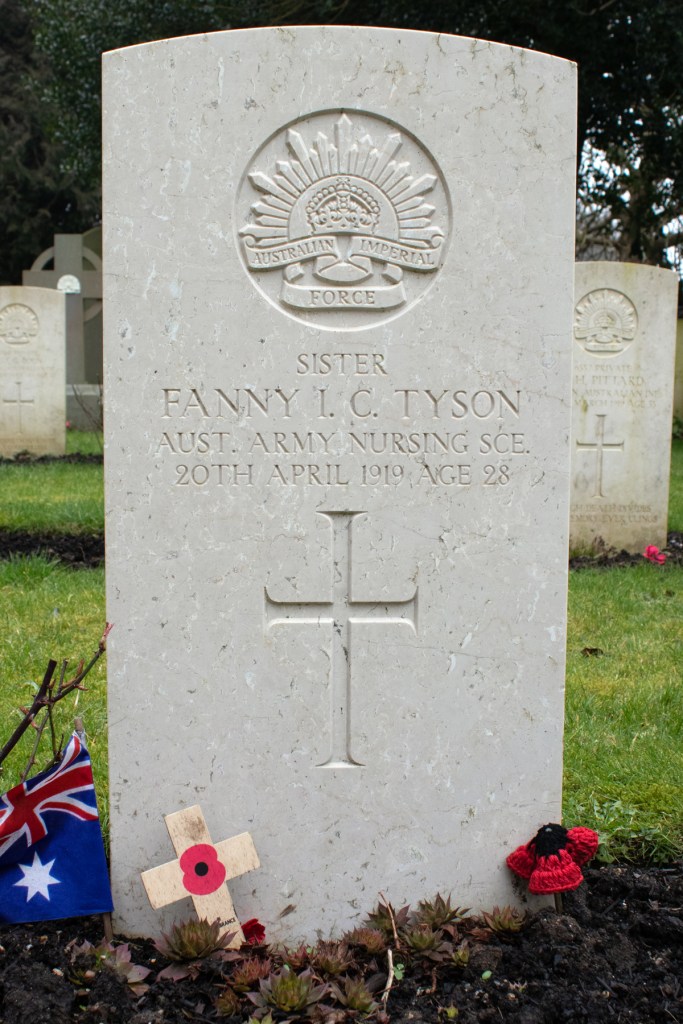
Sister Fanny Tyson

Sister Fanny Tyson

Fanny Isobel Catherine Tyson was born in Balranald, New South Wales, Australia, in 1890, and was the fourth of ten children to John and Teresa Tyson.

There is little information about Fanny’s early life, but when she finished her schooling, she went into the medical profession, and, by October 1911 she was working as a nurse at Bendijo Public Hospital. She became a staff sister and, when war broke out, she stepped up to support the troops being sent to Europe.

On 20th May 1915, Fanny enrolled in the Australian Army Nursing Service and by the following spring, she was on her way across the world. Arriving in France on 6th April 1916, she soon made her way to Rouen. For the next fourteen months Staff Nurse Tyson was attached to the No. 1 Australian General Hospital, but in the summer of 1917, she transferred to the No. 10 Stationary Hospital in Saint-Omer.

Fanny was committed to her job, which would have been traumatic at the best of times. She moved to Dieppe in February 1918, and in the closing weeks of the war, she transferred to Britain, working at the 2nd Australian General Hospital in Southall, Middlesex. On 1st October 1918 she was promoted to the rank of Sister.

Fanny would remain in Britain through the Armistice and beyond. On 20th April 1919, she was admitted to the No. 1 Australian General Hospital in Sutton Veny. Her service records do not confirm what had taken her to Wiltshire, but it seems likely that she was either accompanying wounded soldiers being transferred to Southall, or was training or supporting nurses there.

Sister Tyson had suffered a cerebral haemorrhage. She passed away that evening, as the age of 28 years old.

Fanny Isobel Catherine Tyson was laid to rest in the grounds of St John’s Church, Sutton Veny. She was buried alongside the soldiers her unit had made comfortable in their last days.
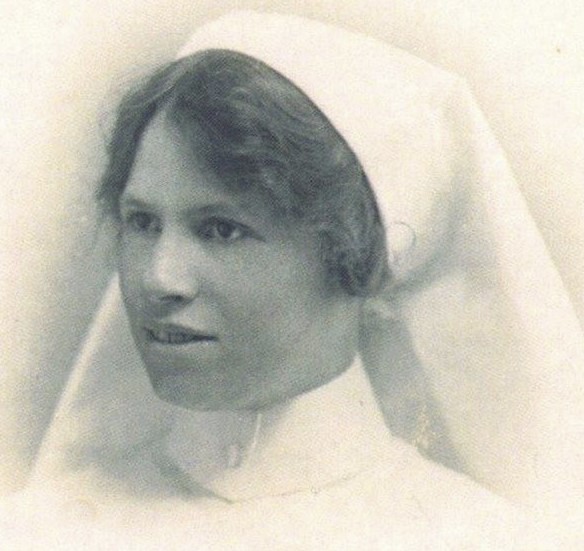

Sister Fanny Tyson
(from findagrave.com)

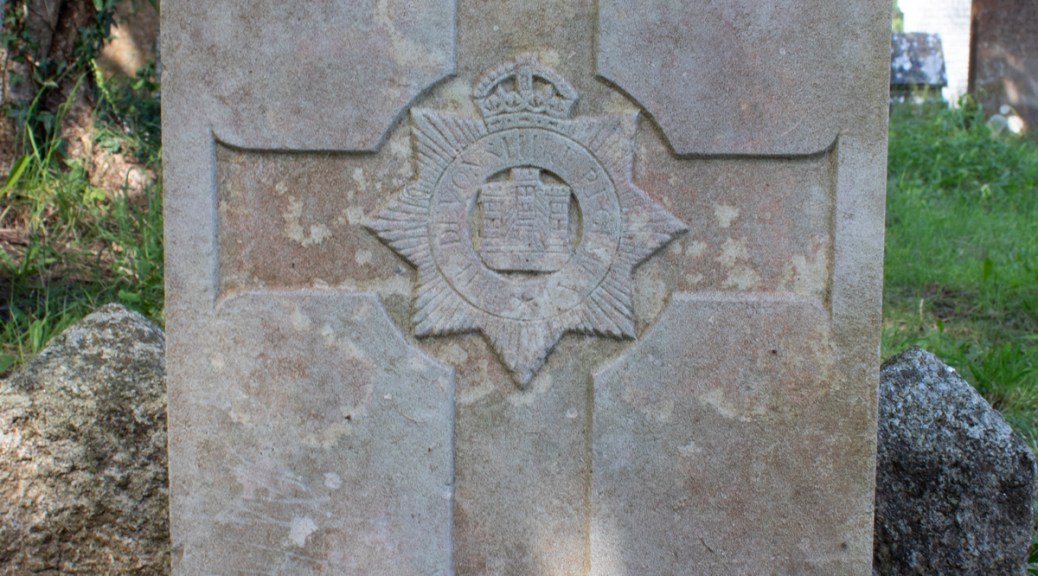
Private James Burge

Private James Burge

James Thomas Burge was born in Plymouth, Devon, in the summer of 1887. The oldest of five children, his parents were sawyer James Burge and his wife, Alice. James Sr moved the family to where the work took him: by the time of the 1901 census, the Burges had lived in and around the Plymouth area, including Devonport and Stonehouse. They settled in Ashburton, Devon, and the document found them living on Mill Lane.

When James Jr finished his schooling, he found work as a mill hand. By 1911, he had moved to Buckfastleigh, and was living with the Crook family on Silver Street. Henry Crook was a mason’s labourer, while he and his wife Bessie had three children, Hilda, Ada and Ruby. Living with them when the census was taken, were Bessie’s widowed brother Samuel, his daughter, Bessie, and three boarders, including James.

There are two intriguing things about this census document. The first is that of James’ employment. While he was recorded as being a mill hand, it is evident from his service records that he had enlisted in the 5th (Prince of Wales’) Battalion of the Devonshire Regiment by this point. He had completed training on Salisbury Plain in August 1910, and would undertake further instruction in the summer of 1911, but in between times, he remained on reserve status, and would have needed to earn money.

The second point of interest is that his service records noted that, by the time he was formally mobilised in August 1914, he was married to a woman called Hilda, who lived on Silver Street in Buckfastleigh. While there are no documents available to fully confirm this, it seems likely that this Hilda was Hilda Crook, the daughter of the family James was boarding with in 1911.

Once embodied, Private Burge’s time in the army took him around the world. By October 1914, his unit had been sent to India, and he would remain there for the next eighteen months. After a two-month stint on home soil, he returned to India, before his unit moved to Egypt in March 1917.

On 7th November 1917, while advancing on the enemy forces in Gaza James was struck in his right leg by a fragment of shell. He was wounded near the top of his fibula and, after initially being treated in the field hospital, he was evacuated to Alexandria, Egypt, for treatment. He was operated on, but from that point on had difficulty walking.

Private Burge was transferred to the 4th Reserve Depot, but his injury prevented him from undertaking many of the duties required of him. He was recommended for permanent transfer to England. Ultimately, however, his wound proved too severe, and he was formally discharged from military service on 25th February 1919.

At this point, James’ trail goes cold. He returned to Buckfastleigh, but would not be back on civvy street for long. He passed away on 22nd May 1919, at the age of 31 years old.

James Thomas Burge was laid to rest in the graveyard of Holy Trinity Church, in the Devon town he had made his home.


Private Arthur Shute

Private Arthur Shute

Arthur Henry Shute was born on 13th February 1893 in Buckfastleigh, Devon. The younger of two children, he was the only son to Henry and Elizabeth Shute. Henry was a baker, and this trade soon took the family to Cirencester, Gloucestershire, where they had set up home by the time of the 1901 census.

Cirencester certainly suited the Shute family, and they remained at 107 Dyer Street for at least ten years. Arthur was set on learning the business, and the 1911 census found him as one of four apprentices to George Cox, a flour confectioner based in Hastings, Sussex.

New things were on the horizon, however, and Henry was evidently set on a better life for his family. On 10th May 1912, the family boarded the SS Victorian, destined for a fresh start in Canada. The Shutes eventually set up home at 118, 4 Avenue West in Calgary, Henry becoming a chef, and Arthur a baker.

Within a few years, the world was at war, and Arthur would step up to play his part. He enlisted on 13th September 1915, and wold be assigned to the Canadian Army Service Corps. His service records show that he was 6ft 0.5ins (1.84m) tall, with dark brown hair, brown eyes and a dark complexion. The document also highlighted three years’ voluntary service with the 5th Gloucestershire Regiment.

Private Shute’s unit arrived back in Britain on 6th November 1915. Sent to a base in Shorncliffe, Kent, Arthur was transferred to the 3rd Field Bakery, taking up a role suited to his skills. In March 1916, his unit was sent to France, and he remained there for the next five months.

Arthur’s time in the army seems to have been beset by illness. He was admitted to hospital on 12th August 1916, having come down with influenza, and he was medically evacuated to Britain to recuperate. Arthur would not be discharged for another six weeks, and only returned to the base in Shorncliffe on 3rd October.

From this point on, Private Shute remained on British soil, and he would remain in Shorncliffe for the remainder of the conflict and beyond the Armistice. In January 1919, he was admitted to the No. 14 Canadian General Hospital in Eastbourne, again suffering from influenza, but this time the condition would prove to be fatal. He passed away on 5th February 1919, a week short of his 26th birthday.

With his immediate family living thousands of miles away in Canada, Arthur Henry Shute’s body was taken back to the town of his birth for burial. He was laid to rest in the graveyard of Holy Trinity Church in Buckfastleigh.


Private Garfield Peardon

Private Garfield Peardon

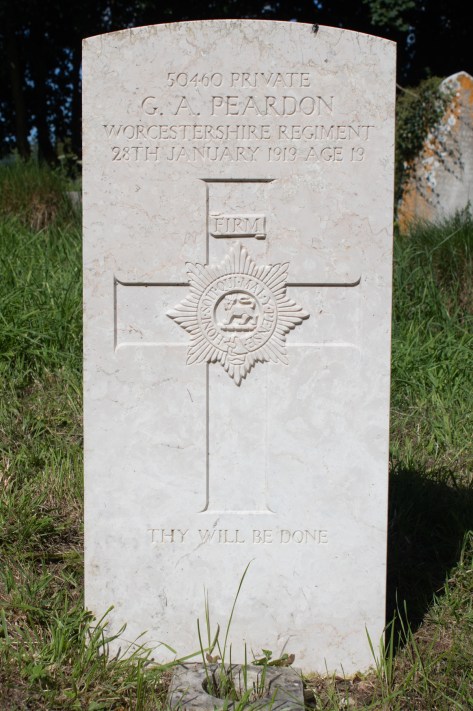
Garfield Ambrose Peardon was born on 24th February 1899, the older of two children to William and Margaret. Both farm labourer William, who had been widowed in 1885, and his second wife, Margaret were from Devon. The 1891 census found the extended family – Garfield and his parents and his older half-brother, William Jr., living in Market Street, Buckfastleigh.

Ten years later, and the family had moved just up the road to Market Street. Both of Garfield’s parents were working for the local woollen mill, William as a horseman and Margaret as a serge weaver. Garfield and his younger brother, Eric, were too young to work, and were both still at school.

Garfield stepped up to play his part for King and Country, although details of his service are a bit of a mystery. He had certainly enlisted by the start of 1918, presumably as soon as he came of age. He joined the Worcestershire Regiment, and was attached to the 3rd Battalion.

Private Peardon served in France, and was likely involved in the Battles of the Somme and Lys in the spring of 1918. His pension ledger records note that, on 27th May, he was recorded as ‘missing’: this was the day of a massive German gas and artillery bombardment and, in the confusion that followed, it appears that Garfield was identified as a potential casualty.

At this point, Private Peardon’s trail goes cold. The next available document is his entry on the Army Register of Soldiers’ Effects: this confirms that he passed away on 28th January 1919 in the 2nd Scottish General Hospital in Edinburgh. This would suggest that Garfield was wounded in the attack, and medically evacuated to Britain for treatment. He was a month short of his 20th birthday when he died.

The body of Garfield Ambrose Peardon was taken back to Devon for burial. He was laid to rest in the the grounds of Holy Trinity Church, Buckfastleigh.


Gunner Arthur Putt

Gunner Arthur Putt

Arthur Sidney Putt was born on 22nd October 1895 in Paignton, Devon. The youngest of five children, his parents were James and Elizabeth. James died when his son was jest five years old, leaving Elizabeth to raise the family in her own. By the time of the 1901 census, they Putts were living at 22 Roundham Cottages (four doors down from the fellow future soldier Charles Baker and his family), where Elizabeth was working as a charwoman to bring in the rent money.

When he finished his schooling, Arthur found employment as a wood chipper. At 15 years of age, he and his older brother, Frederick, were both bringing a wage into the household, and were the only two of Elizabeth’s children to still be living at home.

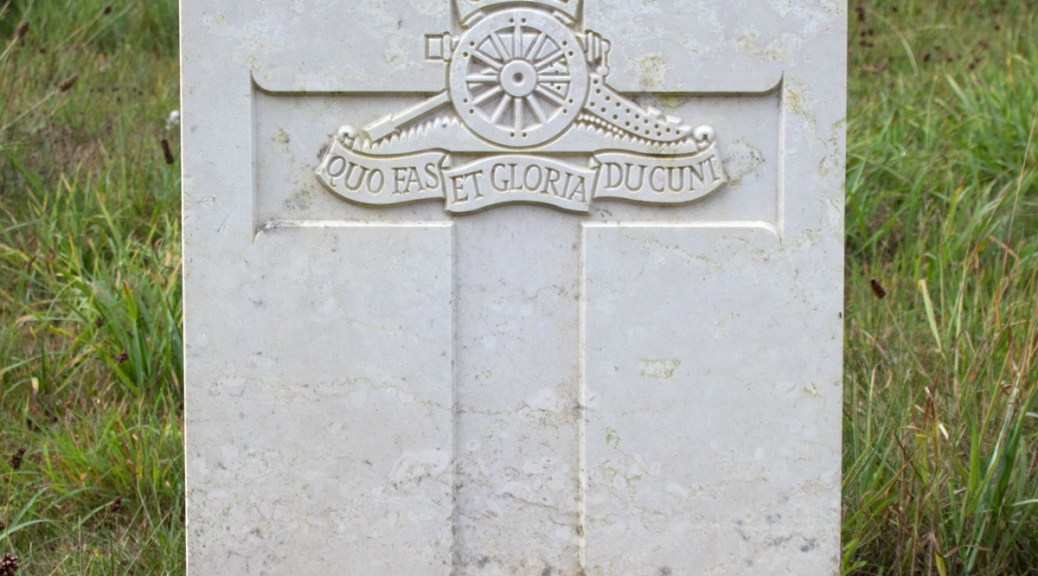
War broke out in the summer of 1914, and Arthur was one of the first to step up and play his part. He enlisted on 16th August, giving up his new job as a hairdresser, with the view of better prospects in the army. He joined the Royal Field Artillery, and was assigned to the 2nd Devon Depot Battery.

Gunner Putt’s initial medical report showed that he was 5ft 7ins (1.7m) tall, with good vision and normal physical development. He was sent for training, but a later, fuller, medical found that he was, in fact, not physically fit for army service. The report of the medical board of 27th April 1915 found that he had both rheumatism and valvular heart disease. He was dismissed from military service on 10th May 1915, after 267 days’ duty.

At this point, Arthur’s trail goes cold. It seems likely that he returned to Paignton, and to the life he had before the war, and the next record for him is that of his passing. He died on 14th May 1919, at the age of 23 years old.

Arthur Sydney Putt was buried in Paignton Cemetery, overlooking the town in which he had been born and raised.


Gunner Charles Baker

Gunner Charles Baker

Charles Baker was born on New Year’s Day 1884, the youngest of six children to Henry and Mary Baker. Henry, was 64 when his son was born, and 21 years his wife’s senior, was a fisherman from Dartmouth, Devon. By the 1870s, however, the family had settled in Paignton, and this is where Charles had been born and raised.

The 1901 census found Henry, Mary, Charles and the oldest Baker daughter, Emma, living at 25 Roundham Cottages, to the south of Paignton town centre. He would have known the Putt family at No. 22, being of a similar age to Arthur Putt, another future soldier. Charles’ father Henry, now 81, was living off his own means, while Charles had completed his schooling, and was employed as a house painter.

In the spring of 1905, Charles married Helen Davey. Born in Hayle, Cornwall and six years her husband’s senior, there is little information about the new Mrs Baker, other than her father’s name, Thomas. The 1911 census found the couple living in a 5-roomed house on Norton Terrace, Paignton. At this point Charles was still employed as a house painter.

When war came to Europe, Charles stepped up to serve his King and country. Initially enlisting on 11th December 1915, he was not formally mobilised until the following September, when he was assigned to the Royal Garrison Artillery as a Gunner. His service records show hat he was 5ft 8ins (1,73m) tall and weighed 159lbs (72.1kg).

As part of the 257th Siege Battery, Gunner Baker was sent to Mesopotamia on 10th March 1917. He would remain in the Middle East for the next couple of years, returning home in March 1919. Charles returned to Devon, and was placed on furlough, awaiting to be demobbed.

Within a matter of weeks, however, Charles had fallen ill, contracting pneumonia. The condition was to prove his undoing, and he passed away on 7th May 1919. He was 35 years of age.

Charles Baker was laid to rest in Paignton Cemetery, overlooking his home town.


Private Nicholas Paice

Private Nicholas Paice

Nicholas John Paice was born in the spring of 1867, the second of five children to John and Olive Paice. John was a railway policeman from Aldermaston in Berkshire, but his oldest son, Nicholas, was born in Poole, Dorset where Olive came from.

The Paice family seemed to move to wherever John’s work took him. The 1871 census found them living back in the Berkshire village of Shrivenham, while a decade later they were to be found in Longfleet, to the north of Poole. By this point, John was employed as a groom, and Olive a laundress.

When he completed his schooling, Nicholas found work as a butcher. He had also enlisted in the local militia, joining the 3rd Dorset Regiment. The army life seemed to suit him and, on 12th July 1886, he enlisted in the Rifle Brigade. His service records show that he was 5ft 7ins (1.7m) tall and weighed 148lbs (67.1kg). At 19 years and three months old, he was noted as having a fresh complexion, grey eyes and brown hair. The papers show that he had a scar on his left eyebrow, and tattoos on his forearms and the middle finger of his left hand.

Joining up for a period of twelve years, Private Paice would spend nearly seven of those in India and Burma. His time in the army was not without incident, however. Just three weeks after enlisting he deserted, and remained at loose for nearly a month. When he was captured, he was imprisoned for desertion for four weeks, his term of service extended to reflect the time he was AWOL.

In August 1896, having been back on home soil for just over two years, Nicholas was arrested again. Convicted of ‘begging’, he was confined for a week, before being released back to duty.

On 16th September 1898, Nicholas completed his contract, and was formally discharged from the army.

The next few years are a mystery for Nicholas. He had married Maria Andrews in 1896, and the couple would go on to have eight children, of which five would survive childhood. By the time of the 1911 census – the next document where we can pick him up – Nicholas and the family were living in two rooms at 2 New Corn Street, Bath, Somerset. Nicholas was working as a cattle drover, along with Maria, the household included her daughter Annie, and granddaughter Lily, and John and Maria’s son, Earnest.

When war came to Europe, Nicholas stepped up to play his part. He enlisted in the Somerset Light Infantry on 26th October 1915 but, with his age against him, he was transferred to the 263rd Coy. of the Royal Defence Corps the following April.

It seems that Private Paice’s health was also being impacted and he spend a month in the Red Cross Hospital in Portishead, having contracted influenza. Released to duty on 16th May 1916, just a month later he was re-admitted for three weeks, this time suffering from bronchial catarrh. On 10th September he was admitted to the hospital for a third time. This time it was identified that he had come down with pulmonary tuberculosis, and on 12th October 1916, he was formally discharged on medical grounds.

It is unclear what happened to Nicholas next. His service records suggest that he wasn’t immediately discharged from the Portishead hospital, and it seems likely that he would have returned home to Bath at some point. The next record for him is that of his passing, from tuberculosis, on 20th December 1919. He was 52 years of age.

Nicholas John Paice was laid to rest in the sweeping Locksbrook Cemetery in his adopted home town of Bath, Somerset.


Private Albert Neathey

Private Albert Neathey

Albert Ernest Neathey was born in Bath, Somerset, early in 1875. The third of six children, his parents were John and Rose Neathey. John was a baker and the family lived at 11 Trinity Square. When John died in 1890, Rose and the four youngest children remained there, and by the time of the following year’s census, three of the Neathey siblings were bringing in a wage.

The 1891 document recorded Rose as living on her own means, while Albert, then 16 years of age, was employed as a telegraph messenger. His older sister, Alice, was a dressmaker’s apprentice, while his younger brother, Sidney, was apprenticed to a hairdresser.

The family are missing from the 1901 census, but the following year Albert got married. His new bride, Mary Louisa Slip, was a mason’s daughter, and the couple exchanged vows in Christ Church, Bath, on 18th September. They would go on to have one child, Doris, born in the summer of 1903, but she would only live for a few months, before passing away on 1st November.

Albert was, by this time, working as a postman, and the 1911 census found him and Doris living at 18 Lansdown Road, to the north of the city. Mary was noted as assisting in the business, although her trade was recorded as being general grocery. The couple were sharing their home with Albert’s ten year old nephew, Norman.

When war broke out, it was inevitable that Albert would be called upon to play his part. Full service details are not available, but a later newspaper report sheds light onto not only his army career, but his personal life:

DEATH OF A WELL-KNOWN BATH POSTMAN

The death occurred at the Bath War Hospital… of Mr Albert Ernest Neathey, of 18 Lansdown Road. Mr Neathey, who was only 44 years old, was the second son of the late Mr John Neathey, of Walcot.

When quite young he entered the service of the Bath Post Office as telegraph boy, and rose to be a postman. Altogether he was a postal servant for nearly 30 years. While thus engages he was a member of the Post Office Band, in which he played cornet.

His military career began with the old 1st Volunteer Battalion of the [Somerset Light Infantry], which whom he served six years. After leaving the infantry he joined the North Somerset Yeomanry. At the outbreak of war he was mobilised with the Yeomanry, and from August 1914, to the November of the same year he was stationed with the regiment in different parts of this country. When the regiment was sent to France, he was sent, much against his will, to the Regimental Depot at the Drill Hall, Lower Bristol Road, and remained there as a member of the staff until his death. While there he was promoted to Corporal. His constant wish was to be with his regiment in France, but his state of health would not have allowed him to stand the rigours of a campaign.

On Tuesday last he was not feeling well, but would not give up his work, and it was not until Saturday that he did so. Then he was sent to the War Hospital, where he was detained, and he passed away at 8:30 on Monday morning. The cause of his death was congestion of the lungs following influenza. For twenty years he was a member of the Foresters (Queen of the West Lodge). He was greatly respected by all who knew him. He leaves a widow, but no children.

Bath Chronicle and Weekly Gazette: Saturday 22nd March 1919

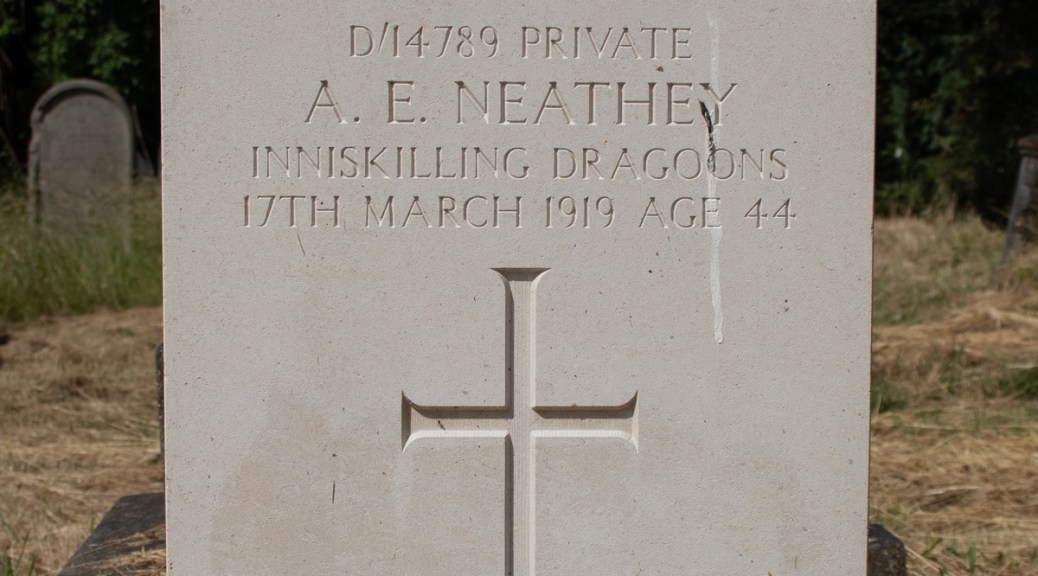
As part of his retention on home soil, Albert was transferred across to the 6th Dragoons (Inniskilling) Reserve Regiment. Nothing on the available documents, however, suggest a promotion during his time in Bath. Albert Ernest Neathey died on 17th March 1919: he was laid to rest in the city’s sweeping Lockbrook Cemetery.


Lance Bombardier George Higgins

Lance Bombardier George Higgins

George Henry Higgins was born in Bath, Somerset, in the spring of 1888. The fifth of fifteen children, his parents were Charles and Sarah Higgins. Charles was a carter-turned-labourer for the city’s corporation, and this is work into which George also went.

The 1911 census recorded the Higgins family living in a six-roomed house at 15 London Place, Bath. By this point, Charles and Sarah were sharing their home with ten of their children – including George – plus four of their grandchildren by their married third-oldest daughter, Sarah. Five of the household were bringing in a wage: George and his father were employed by the Corporation, daughter Rose was a factory hand, while two of George’s younger brothers were errand boys.

Charles died in the autumn of 1914, and George was suddenly the head of the household, with war raging across Europe. The following summer he enlisted in the Royal Field Artillery: this may have been out of duty to his King, but it is likely that, as the oldest man in the house, the army offered the prospect of a regular, decent wage.

Full service details for Gunner Higgins have been lost in the annals of time, but his unit – the 92nd (Howitzer) Brigade – served in some of the fiercest battles of the conflict. Arriving in France for training on 21st July 1915, it is likely that George saw fighting at the Somme in 1916 and 1918, and at Ypres in 1917. By the end of the war, he had been promoted to the rank of Lance Bombardier for his service.

George’s older brother, Charles, died in the fighting in Northern France, but by the start of 1919, George himself had returned to home soil, and was attached to the regiment’s Clearing Office in Woolwich, Kent.

His health was being impacted by this point, and he was admitted to the Royal Herbert Hospital in nearby Shooter’s Hill. His records simply record that he was suffering from ‘disease‘, and it was this that was to kill him. He died on 17th February 1919, at the age of 30 years old.

The body of George Henry Higgins was taken back to Somerset for burial. He was laid to rest in the sweeping grounds of Bath’s Locksbrook Cemetery, not far from where Sarah still lived.


Private Frank Perryman

Private Frank Perryman

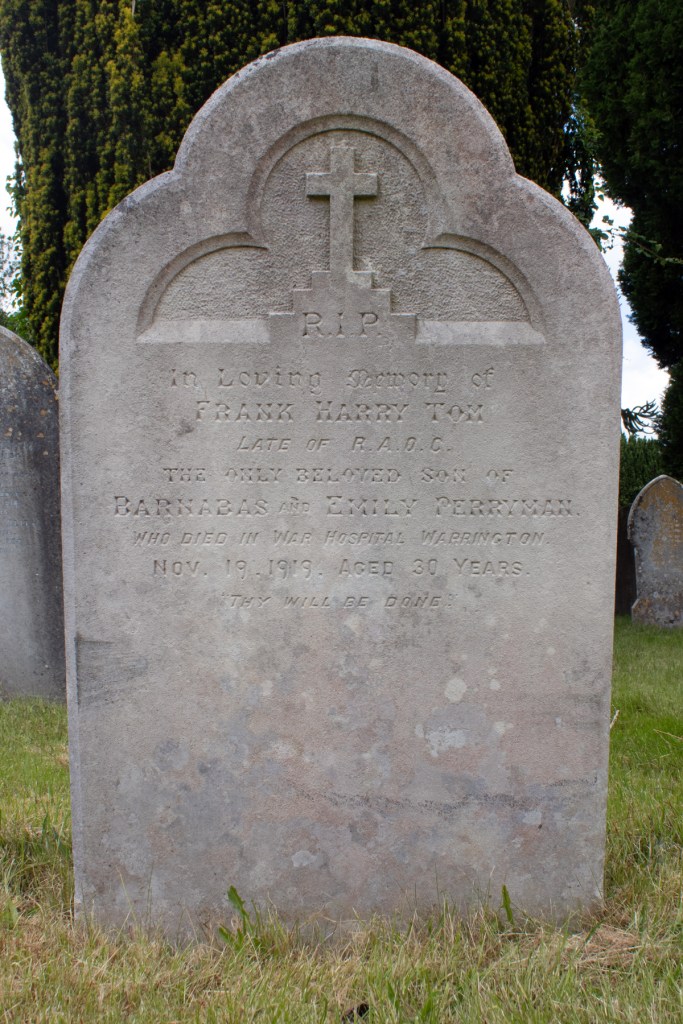
Frank Harry Tom Perryman was born in Axminster, Devon, on 16th October 1889. The third of six children – and the only boy – his parents were Barnabas and Emily. Barnabas was a carpenter and joiner, and the family lived in the centre of the town: first next door to the Red Lion Inn on Lyme Street, then around the corner on South Street.

By the time of the 1911 census, an opportunity had arisen to take Frank away from Devon. The document records him as one of four servants (in addition to a maid, butler and cook) for Eumenia Hime and her law student son, Stanley. Eumenia’s husband, Edward, was a merchant in Brazil, and their son had been born in Rio de Janeiro. Ste Georgian Croyland House on Cornwall Gardens in South Kensington, was the family’s London residence, and this is where young Frank was employed.

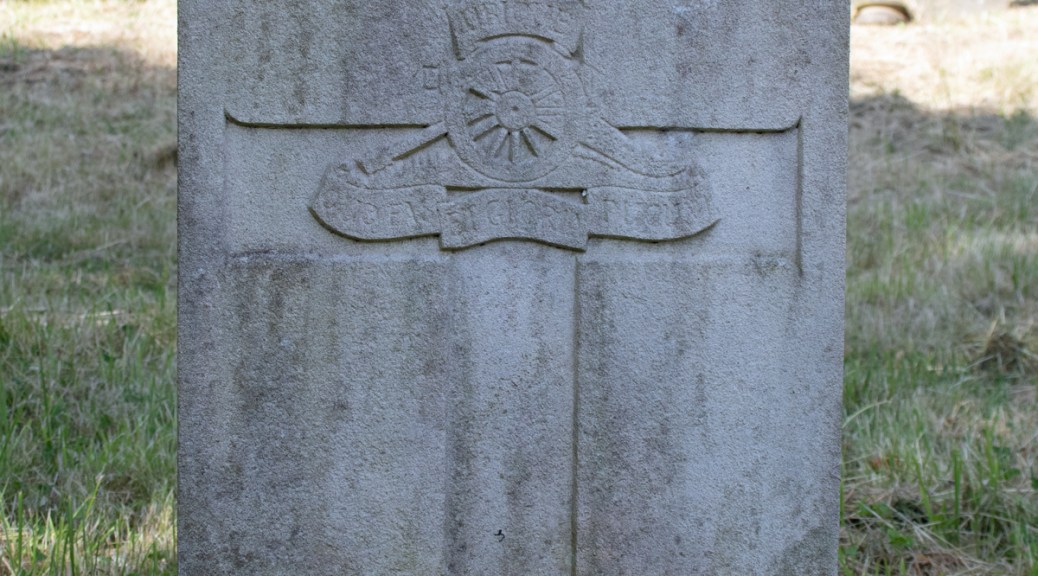
When war came to Europe, Frank was called upon to play his part. Sadly, his service records have been lost to time, but it is evident that he enlisted in the Royal Army Ordnance Corps. Private Perryman’s Medal Roll suggests that he served on home soil, and certainly by the end of the war – presumably while waiting to be demobbed – he was based in Cheshire.

In November 1919, Frank was admitted to the War Hospital in Warrington. Details are unclear, but it is likely that he had contracted one of the many lung conditions prevalent at the time. He passed away while still admitted on 19th November: he had not long turned 30 years of age.

The body of Frank Harry Tom Perryman was taken back to Devon for burial. He was laid to rest in Axminster Cemetery, on the outskirts of the town that had been his childhood home.