Tag Archives: 1920

Major Stafford Douglas

Major Stafford Douglas

Stafford Edmund Douglas was born on 4th January 1863, the second of four children to Stephen and Mary Douglas. Stafford came from a military family, his father having been a Captain in the Royal Navy. This led to a lot of travelling and, having been born in Donaghadee, County Down, he then moved to South Wales.

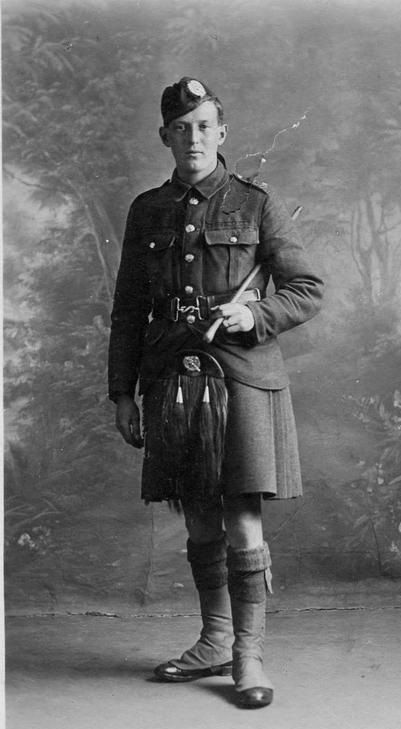
By the 1880s, when Stephen and Mary had set up home in Portsmouth, Stafford had started to carve out a career for himself, and was a Lieutenant in the Argyll and Sutherland Highlanders, based at Edinburgh Castle.

Over the coming years, Lieutenant Douglas, who stood 5ft 8.5ins (1.74m) tall and also spoke French, travelled the world, serving in South Africa, Ceylon (Sri Lanka) and Hong Kong. By 1894 he had made Captain, and he finally retired in 1903, after nineteen years’ service.

On 29th April that year, at the age of 40, Stafford married Mary Louisa Harris. She was the daughter of an army colonel, and the couple wed in St George’s Church, Hanover Square, London. The couple set up home in Exeter, Devon, and went on to have two children – Violet and Stafford Jr.

At this point, Stafford’s trail goes cold. When war broke out in 1914, he was called back into duty, working as a Railway Transport Officer in Norwich. He continued in this role until 1919, before being stood down and returning home.

Stafford Edmund Douglas passed away on 15th February 1920, at the age of 57 years old, although no cause of death is immediately apparent. He was laid to rest in the Milton Road Cemetery in Weston-super-Mare, presumably where his family were, by this time, residing.


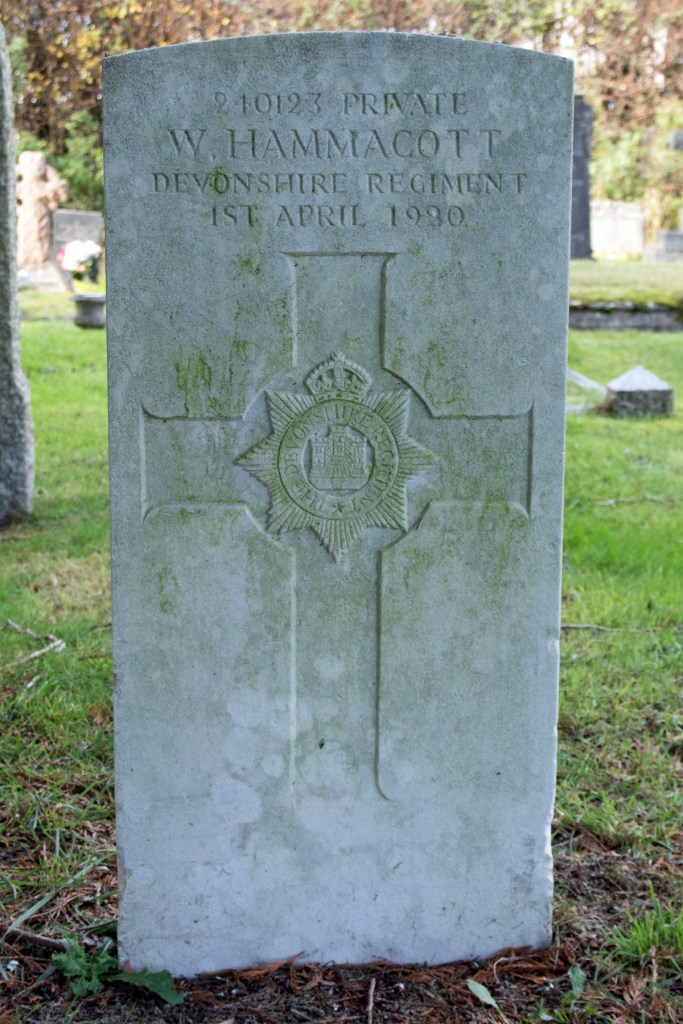
Private William Hammacott

Private William Hammacott

William Henry Hammacott was born on 11th January 1892 and was the oldest of four children. His parents were labourer George Hammacott and his wife Ellen; both were born in Chudleigh, Devon, and this is where they raised their family.

When William left school he too found work as a labourer, but war was coming to Europe, and he was keen to play his part. Full details of his service haven’t survived, but he had enlisted in the 5th Battalion of the Devonshire Regiment by 1915, and served on home soil.

Private Hammacott survived the war and earned the Victory, British and Territorial Force Medals for his service. During his time, he contracted malaria and was discharged from the army on medical grounds on 29th March 1919.

William returned home, and his trail goes cold for the next year. It is likely that his bout of malaria left him particularly vulnerable: he passed away on 4th May 1920, having contracted pneumonia. He was just 28 years old.

William Henry Hammacott was laid to rest in Chudleigh Cemetery.


Sapper William Merrifield

Sapper William Merrifield

William Henry Merrifield was born on 29th December 1893, in Newton Abbot, Devon. One of six children to Henry and Kezia Merrifield, his father was an agent for the removal company Pickford’s.

When William left school, he found work as a labourer for a local tannery. War was, by this time, on the horizon, and William soon found himself caught up in it. Full details of his military service are not available, but it is clear that he had a varied career.

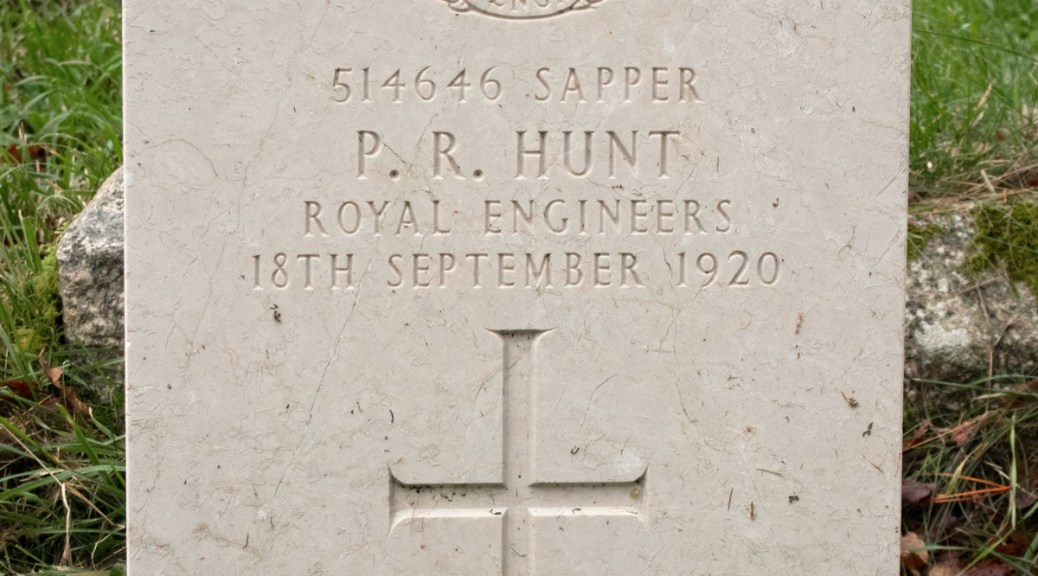
William initially worked for the British Red Cross as a cook, and was sent to France in October 1914. He Subsequently joined the Royal Field Artillery as a Gunner, before transferring across to the Royal Garrison Artillery. By June 1915, he had made the move again, and was recorded as a Sapper in the Royal Engineers. During this time, he had been awarded the Victory and British Medals and the 1914 and 1915 Stars for his war efforts.

By this point, William had seen a fair amount of tragedy in his life. Kezia had died in 1905, at the age of 44, and his sister Evelyn had passed away in 1914, aged just 25 years old. The following year, Henry also died, aged 52 years of age.

Sapper Merrifield survived the war and was demobbed in February 1919. At this point, his trail goes cold. He returned to Newton Abbot, and passed away just over a year later, on 22nd April 1920. He was 26 years old.

William Henry Merrifield was laid to rest in Newton Abbot Cemetery; his gravestone marked with the message ‘SO LONG MATEY “AU REVOIR”.


Private John Hallett

Private John Hallett

John Hallett – better known as Jack – was born in the spring of 1891 in the Somerset town of Frome. One of twelve children, his parents were carpenter Frederick Hallett and his wife, Elizabeth. When he left school, Jack found work at a printer’s, helping with the typesetting.

War was approaching, and Jack was keen to do his bit. While full details of his military service are not available, it is clear that he enlisted as a Private in the Royal Irish Dragoon Guards. He served in France with the 4th Battalion, arriving there in October 1915.

A later report suggests that Private Hallett was “seriously wounded several times during the war” [Somerset Standard: Friday 30th January 1920], although no specific details are available about his injuries. He survived the conflict and was awarded the British and Victory Medals and the 1915 Star for his service.

Demobbed and back at home, it seems that John did not fully recover from his wounds. He was admitted to the Victoria Hospital in Frome in January 1920, and died there a matter of days later. He was just 28 years old.

John Hallett was laid to rest in the graveyard of Christ Church in his home town of Frome, Somerset.


The local newspaper gave a more detailed report on John’s funeral:

Ex-Soldier’s Death

The funeral took place yesterday afternoon at Christ Church of Mr John Hallett, aged 29, of The Butts, Frome, who passed away at the Victoria Hospital on Friday last. Deceased had been seriously wounded several times during the war, and a day or two ago was removed to the hospital. The Rev. J Howard Lewis conducted the service, which was attended by local Oddfellows, to which society the deceased belonged, and by a number of other representative mourners.

Somerset Standard: Friday 20th January 1920

Gunner William Avenell

Gunner William Avenell

William Percy Avenell seems destined to remain lost to time, and there is little documentation about his life.

He was born in around 1891, and enlisted in the Royal Field Artillery as a Gunner in the summer of 1915, serving in France and earning the Victory and British Medals and the 1915 Star in the process. Gunner Avenell subsequently transferred to the 861st Employment Company of the Labour Corps.

William survived the war and returned to England. He had settled in the Somerset town of Frome (he may have been from the town, but there is nothing to evidence this) with his wife, Lily Beatrice.

Gunner Avenell’s passing is as lost in time as the rest of his life. He died on 22nd February 1920, at the age of just 29 years old.

William Percy Avenell lies at rest in the graveyard of Christ Church in Frome.


Private Lawrence Sweet

Private Lawrence Sweet

Lawrence Allen Sweet was born on 28th May 1895, one of fourteen children to Thomas and Caroline Sweet. Thomas was a farm labourer from Somerset, and the family were raised in the village of Norton-sub-Hamdon, near Yeovil.

Lawrence found work on the farm – the 1911 census shows him living with his now-widowed mother, where he was employed as an ‘improver to poultry house and building’. Three of his older brothers were also living there, and all were employed in farm work.

War was coming to Europe, and Lawrence played his part. Full details of his military service no longer remain, but those that remain confirm that he enlisted in the Somerset Light Infantry in the spring of 1915, and was assigned as a Private to the 6th (Service) Battalion of the Somerset Light Infantry.

Sent to France on 21st May, Private Sweet saw action on the Western Front. His regiment was involved in the Battles of the Somme, Arras and Ypres and he earned the Victory and British Medals and the 1915 Star for his service.

Towards the end of 1917, Lawrence contracted pleurisy; invalided home, he was ultimately discharged from the army on medical grounds the following January.

At this point, Private Sweet’s trail goes cold. The next document confirms that he passed away on 15th December 1920, at the age of 25 years old. No cause of death is evident, but is seems likely to have been connected to his previous lung condition.

Lawrence Allen Sweet was laid to rest in the graveyard of St Mary’s Church in his home village of Norton-sub-Hamdon.


Lawrence Sweet1
Lawrence Allen Sweet
(from ancestry.co.uk)

Officers’ Cook Carmelo Ellul

Officer’s Cook Carmelo Ellul

Carmelo Ellul was born in Valetta, Malta, on 26th May 1889. There is little information about his early life, other than the fact that he worked as a baker.

He came to England at some point in the early 1900s, and was living in Portsmouth. It was here that he met Selina Southcott, who had been born on the Isle of Wight, and the couple married in 1904. The couple would go on to have three children, all boys: Maurice, who was born in 1911; Alva, who was born in 1912, but who died as a toddler; and Edwin, who was born in 1916.

Carmelo seemed to want a life of adventure: in the summer of 1912, he enlisted in the Royal Navy. Over the next eight years, Officer’s Cook Ellul served on a number of naval vessels, including HMS Bacchante, which toured the North Sea, and was involved in the Battle of Heligoland in August 1914.

Carmelo’s naval life continued after the war ended, although he seems to have been more shore-based than before. He was serving on HMS Waterhen on 24th January 1920, when he collapsed with an epileptic fit, and died of heart failure. He was just 32 years old.

Carmelo Ellul was laid to rest in the Woodlands Cemetery in Gillingham, Kent, presumably as his ship was moored in the nearby Naval Dockyard in Chatham.


Sapper Walter Clark

Sapper Walter Clark

Walter Hudson Clark was born in 1883, the youngest of eight children to Thomas and Isabella Clark from Gillingham, Kent. Thomas was a miller who, with his wife, who was affectionately known as Sibella, raised their family in the centre of town.

When he left school, Walter found work as an apprentice to a painter and decorator. After Sibella died in 1903, he and two of his sisters remained living at home and, by the time of the 1911 census, he was supporting his father by working as a cooper in the nearby Naval Dockyard in Chatham.

Thomas passed away in December 1915, and this may have been the spur to guide his son into enlisting. Little documentation about Walter’s military service remains available although he joined the 480th Field Company of the Royal Engineers as a Sapper. He was in receipt of the Victory and British Medals, but there is nothing to confirm that he served abroad, so it seems likely that he was part of the territorial force.

Sadly this is where Sapper Clark’s trail goes cold. He survived the war, but died on 20th February 1920, at the age of 37 years old. There is no cause of death available either, but Walter was laid to rest in the Woodlands Cemetery in his home town of Gillingham, Kent.


Private William Bartin

Private William Bartin

William Bartin was born in the Somerset village of Montacute in the summer of 1893 and was the oldest of four children to Georgina Bartin. Georgina married George Gaylard in 1895 and, while the 1901 and 1911 censuses record William Gaylard as George’s son, later documentation suggests that George may not have been his father. George was a carter and labourer on a farm, and when he left school, William followed suit.

By the time of the 1911 census, most of the family were working – William was listed as a groom and gardener, while his mother and the oldest of his three sisters were employed as seamstresses.

Little specific information remains of William’s military career. He enlisted as a Private in the Somerset Light Infantry under his mother’s maiden name (and his birth name), Bartin. A local newspaper after he passed provides some information:

[He] enlisted in 1914, was badly wounded and for seven months was treated in the Bethnal Green Hospital, and then sent to the Southern General Hospital, Plymouth, where for 17 months he was treated for lung trouble. He was discharged in 1917 and has been practically ever since under treatment by the Ministry of Pensions. Much sympathy is felt with the bereaved widow and child.

Western Chronicle: Friday 19th November 1920

There are no details of William’s wife or child, albeit that his pension record refuses payment to them as he married after being discharged from the army.

There are similarly no details about the cause of his death, although, based on the newspaper report, it seems likely to have resulted from the lung condition that dogged the last few years of his life.

Private William Bartin died on 17th November 1920, at the age of 27 years old. He was laid to rest in the graveyard of St Catherine’s Church in his home village of Montacute.


George Gaylard had passed away in July 1919, at the age of 47. The Western Chronicle noted that:

There mourners were as follows: Mrs G Gaylard (widow), Mr WC Bartin (step-son), Misses Lucy, Florence and Edith Gaylard (daughters)…

Western Chronicle: Friday 25th July 1919

It was tragic for Georgina to lose both her husband and son within 18 months; it is also sad to note that George’s father – also called George – was still alive, and outlived both his son and step-son.


Serjeant Major Percy Hawkins

Staff Serjeant Major Percy Hawkins

Percy Harry Hawkins was born in Waltham Green, London, in 1886. One of five children, all boys, his parents were Frederick and Elizabeth Hawkins. Frederick initially worked as a brewer’s collector – collecting rent from tenant pub managers on behalf of the brewery – before working as a tobacconist.

In July 1908, Percy married Gladys Parnell. Sadly, tragedy was to strike and, over the next couple of years both Elizabeth and Frederick passed away in 1909 and 1910 respectively.

By the time of the following year’s census, Percy and Gladys were boarding with a dispensing doctor (or GP), and his wife. Percy listed his occupation as a ‘traveller’, was probably employed as some kind of salesman.

Tragedy was to strike Percy again. Months after the couple had their first child in July 1911, Gladys also passed away, leaving him as a widower and single parent at just 26 years old.

From his later military documentation, it seems that Percy married again in August 1915, this time to a woman called Mildred, and, by September 1919, he had gone on to have three children in total; one boy and two girls.

When war broke out, Percy was quick to enlist. He joined up in Birmingham on 10th August 1914, and gave his profession as a commercial traveller. His records show that he was 28 years and 120 days old, stood 5ft 6ins (1.69m) tall and weighed 131lbs (59.5kg).

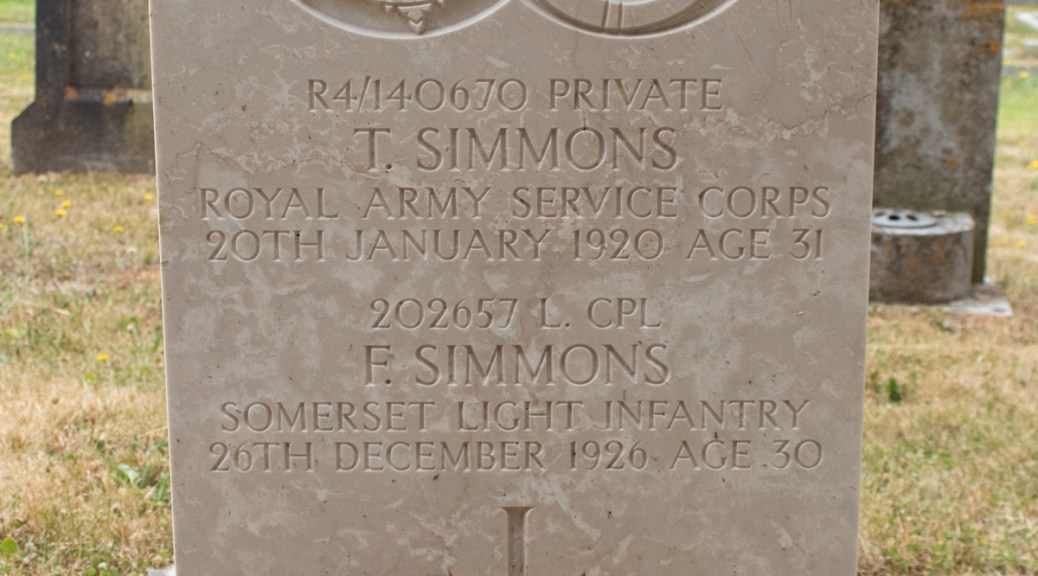
After initially joining the Royal Warwickshire Regiment, Private Hawkins was transferred to the Royal Army Service Corps, and was assigned to one of the supply companies.

Over the four years of the war, Percy served on home soil, and was promoted a number of times, rising from Private to Lance Corporal, Staff Sergeant to Quartermaster Staff Sergeant. In September 1917, he was again promoted, this time to Staff Sergeant Major, a position he held for the remainder of the conflict, and on into 1919, when he volunteered for an extra year’s service, rather than being demobbed.

In February 1920, Staff Serjeant Major Hawkins fell ill; he was admitted to the military hospital that had been set up in Brighton Pavilion, Sussex. The diagnosis was heart failure, and, sadly, it was to this that he was to succumb. He passed away on 20th February 1920, aged just 34 years old.

Percy’s family was, by this time, living down the coast in Worthing; his body was brought there for burial and he lies at rest in the Broadwater Cemetery in the town.