In the war grave section of Locksbrook Cemetery in Bath, Somerset, is a headstone dedicated to a Private J Curtis, of the King’s Liverpool Regiment, who passed away on 3rd January 1921. The Commonwealth War Graves Commission confirms that Joseph Curtis had transferred to the 430th Company of the Labour Corps at some point.
Little additional information is available for Joseph Curtis. Only one service document remains, his Medal Roll Index Card. This gives the dates of his service – 22nd February 1915 to 17th October 1918 – but no other identifying details.
Without a year or place of birth, it is not possible to track down any census records. As Bath was the location of both a War Hospital and one for army pensioners, his burial in a cemetery nearby is no guarantee that the city was ever his home. There is also no report of Private Curtis’ passing or funeral in any available contemporary newspapers.
The life of James Curtis is destined to remain a mystery, therefore, taken with him when he was laid to rest.
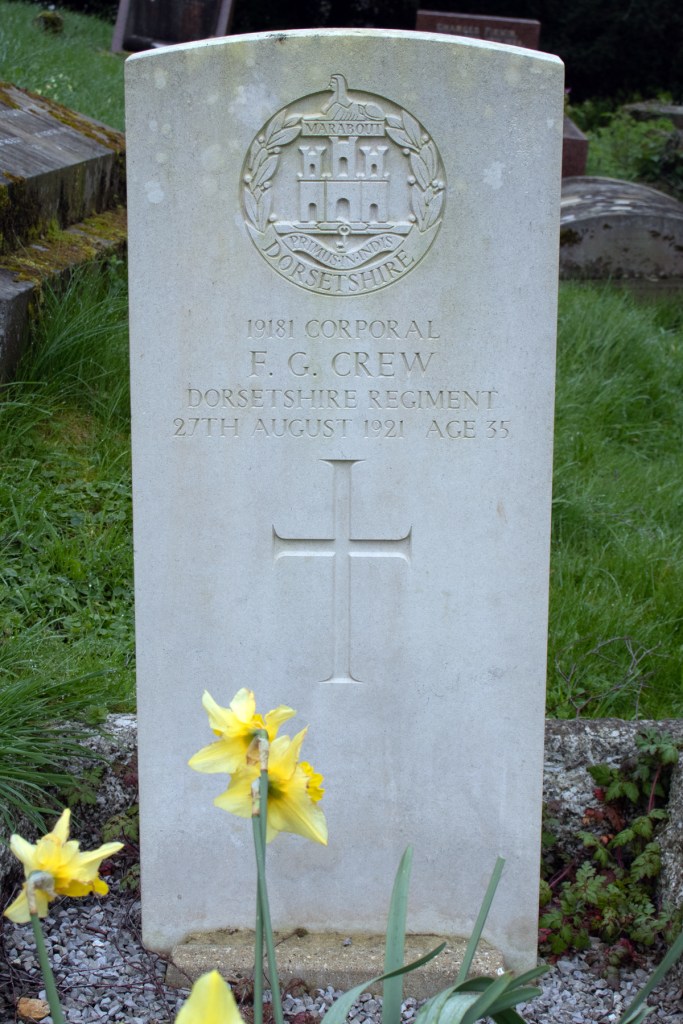
Frank George Crew was born in Twerton, Somerset, on 25th January 1886. The fourth of five children, his parents were nurseryman and market gardener William Crew and his laundress wife, Fanny.
When Frank finished his schooling, he followed his father into the nursery trade, and this is how he was employed when war was declared. He enlisted in the Dorsetshire Regiment on 19th July 1915, and was assigned to the 3rd (Reserve) Battalion. Private Crew’s service records are limited, but his medical report shows that he was 5ft 9ins (1.75m) tall, weighing around 10st (63.5kg).
On 6th October 1918, Frank, who had been promoted to Corporal by this point, was admitted to the Military Hospital in York with a bullet wound to his right forearm. Given that his battalion remained on home soil for the duration of the conflict, it is unclear whether this was an accidental injury at camp, or if he transferred to another troop when he recovered.
Little additional information for Frank remains. He remained in hospital until 8th November 1918 and it is unclear if he continued with his army service once he recovered – although given the Armistice was declared three days later, it is unlikely that he did.
On 11th November itself, Frank married Kate May, a mason’s daughter from Limpley Stoke, to the west of Bath. By this point he recorded his profession as gardener, so it seems his army career was indeed behind him. The couple went on to have a daughter, Peggy, who was born a year later.
William died in 1920, and by the time of the following year’s census, Frank, Kate and Peggy were living with Frank’s now-widowed mother. The extended family had a home on Padleigh Hill, to the south west of Bath city centre, and Frank seemed to be the main breadwinner, working as a labourer for Stothert & Pitts Ltd, a crane company on the River Avon.
Sadly, Frank was only to survive the census by a couple of months. He passed away on 21st August 1921, dying from a combination of influenza and epilepsy. He was 35 years of age.
Frank George Crew was laid to rest in the quiet Englishcombe Churchyard, close to the family home.
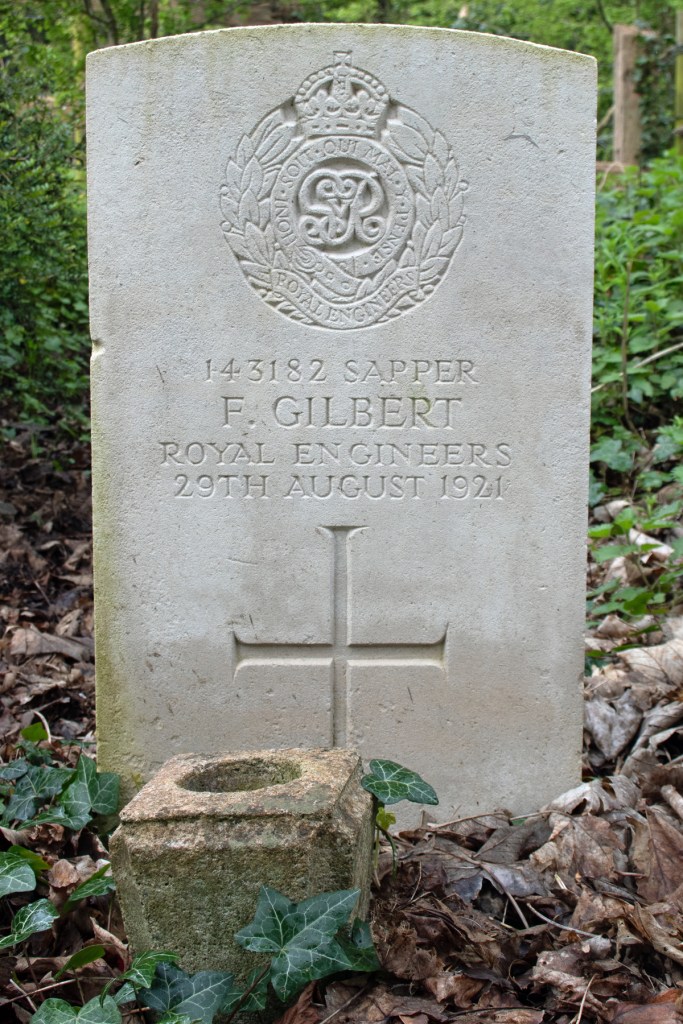
On Monday the body of a man was found.. neat Newton Bridge, commonly known as the “Skew” Bridge, having been killed by a passing train… The deceased was Frank Gilbert…
The inquest was held at the Globe Inn, Newton… by the Coroner for North Somerset (Dr S Craddock), who sat without a jury.
The first witness… said the previous morning he was walking along the railway when he saw the body of a man lying on the down side. The head was separated from the body…
PC Cornish said he found four cards in the pockets of the deceased’s coat. Two were National Insurance cards, and there was an unemployment book, the last payment being dated 15-8-21.
Written on the blotting paper of the book was the following:
“It is quite dark. You still take you neck oil, and my children outside waiting. Marry the man who gave you the watch. Don’t forget to have an extra one (Guinness) over my parting. It would be murder if I ever lived with you again.”
The man’s name, “Frank Gilbert, 44 Jubilee Road, Aberdare,” was on some of the cards. Deceased was wearing a discharged soldier’s badge.
Sarah Kate Gilbert, wife of the deceased, who lives at Bristol, said she had not known her husband’s address at Aberdare. They had been living apart since he went into the Army in 1915. She had, however, met him since that date.
Witness added that she saw him on Sunday night, and went on to say that she took out a summons for a maintenance order against him last February at Gloucester. He was then working as a carpenter in Cheltenham.
The Coroner: ‘Have you ever heard him threaten to commit suicide?’
‘Yes, sir.’ She added that he did so on Sunday night when she was with him at the bottom of Park Lane, Bath. “He was always threatening me when we lived together,” she stated, and also said she had a separation order in Bath in 1913. She had a letter from him on Saturday morning in which he said that when she got the letter he would be gone. In the letter was enclosed the ticket for his suit-case, and the key.
[The letter read] “I would never dream of making a home for you as you are worth only the Gloucester man. You have ruined my life, and you will be able to sleep with… for always now. I shall be gone.”
Witness said there was no reason for him to have made any such statements, as she had had nothing to do with any man except him. He was always using threats. When she left him on Sunday night she told him to try and get on and pull himself together.
The Coroner recorded a verdict that deceased committed suicide by placing himself in front of a passing train on the Midland Railway.
Somerset Guardian and Radstock Observer: Friday 2nd September 1921
Little additional concrete information is available for Frank Gilbert’s life. No marriage certificate remains for his wedding to Sarah, nor is there any evidence for the couple in the 1911 census.
Frank’s service records no longer exist in their entirety, although his pension record give hints as to his service. He enlisted in the Royal Engineers as a Sapper on 20th November 1915, although he never saw any action overseas. He was medically discharged because of rheumatism on 11th November 1917. The document confirm he was born in 1883, and lived in Cheltenham after his discharge.
An additional newspaper report of the inquest confirmed that Sarah had two children, and that they lived with her parents in Bath. When asked by the Coroner if she intended to bury her husband’s remains, she replied that “she had no money to do it with.” [Bath Chronicle and Weekly Gazette: Saturday 3rd September 1921]
And so Frank Gilbert was laid to rest in the quiet graveyard of Holy Trinity Church in Newton St Loe, near Bath in Somerset. He was around 38 years of age when he took his life.
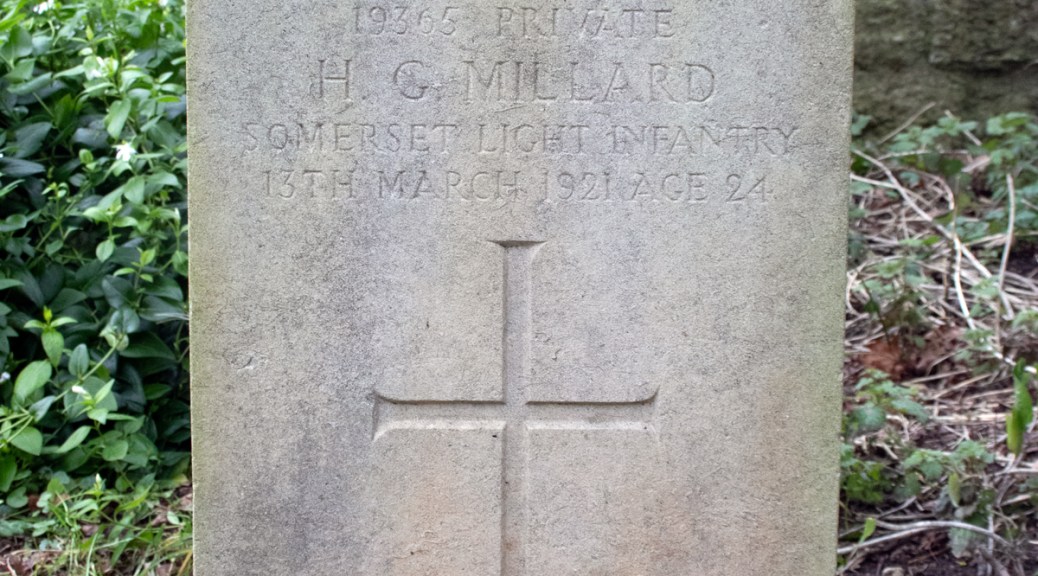
Herbert George Millard was born on 8th February 1897 in Wells, Somerset, and was the second of six children to John and Alice Millard. John was a cowman, and, as Herbert grew, the family moved with his father’s work.
By the time of the 1911 census, the family had set up home at the Castle of Comfort Public House in East Harptree, to the south of Bristol. John, by now, was recorded as being a farmer and inn keeper, while his three oldest sons, Herbert included, were all employed as farm hands.
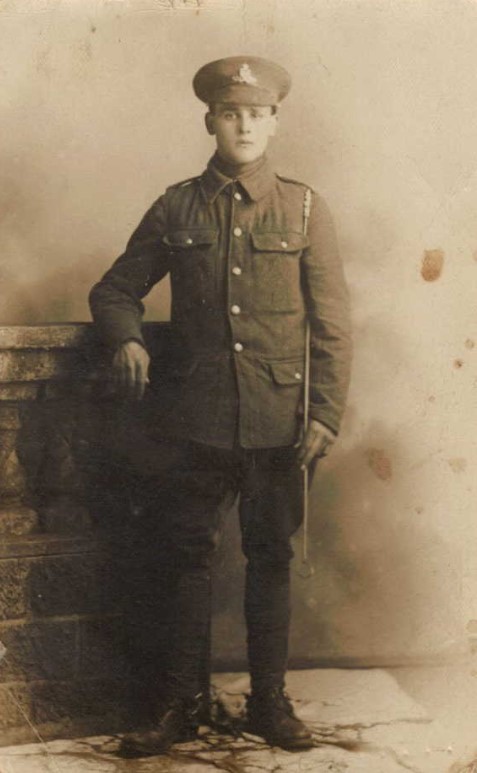
When the war broke out, Herbert was keen to play his part. He enlisted on 8th February 1915, his eighteenth birthday, and was assigned to the Royal Field Artillery. Initially posted for training in Glasgow, within a couple of months, Gunner Millard had been transferred to the Somerset Light Infantry.
The now Private Millard was sent to France in July 1915, and ended up serving three separate periods on the Front Line: July 1915 to October 1916, May 1917 to August 1917 and March 1918 to June 1918.
At some point during his service, he received gunshot wounds to his chest and ‘upper extremities’. It is unclear when this happened, but it may have been what led to Private Millard’s ultimate discharge from service in August 1918.
At this point Herbert’s trail goes cold. He appears to have returned to Somerset, and was living with his family, who had now moved to Baltonsborough, to the south of Glastonbury. The next record for him is that of his passing: he died on 13th March 1921, aged just 24 years old.
Herbert George Millard was laid to rest in the quiet St Dunstan’s Churchyard in Baltonsborough.
William Henry Dove was born in the autumn of 1871 in Stafford, Staffordshire and was one of seven children to William and Louisa Dove. William Sr was a gardener by trade, but his son wanted bigger and better things.
On leaving school, he initially took up a post as a junior teacher, but military service was calling him and, on 21st February 1891 he enlisted in the Royal Lancaster Regiment. Private Dove’s service records show that he was 5ft 7ins (1.70cm) tall and 136lbs (61.8kg) in weight. He had sandy hair, grey eyes and a fair complexion. He also gave his age as 18 years and 3 months, although he was actually a year older.
Private Dove signed up for seven years’ service and completed this on home soil. In October 1891 he was promoted to Lance Corporal, and a year later he was promoted again, this time to Corporal.
In November 1894, William was found guilty of ‘conduct to the prejudice of good order and drunkenness‘ and was sentenced to be reduced in rank, so became a Private again. He learnt the error of his ways, though, and was reinstated to Lance Corporal in March 1897.
William’s service was completed in February 1898, and he was transferred across to the Army Reserve. This was intended to be for a further five years, but on 15th February 1900, he was discharged from future active service, having been found to be medically unfit. During his time in the army, William had been treated for a two bouts of gonorrhoea, as well as four further infections. The cause of his final medical discharge, however, is unclear.
While on reserve, William had found employment as a railway porter. His work took him to Llangollen, Denbighshire and, this is where he set up home. On 18th April 1899, he married Ellenor Roberts, a labourer’s daughter from the town: the young couple set up home in Ashfield House, Regent Street – now the busy A5.
The 1911 census records William as a porter: the couple had no children of their own, but had adopted a girl, Cissie, who was then eight years old. A live-in domestic servant – Esther Williams – was also recorded on the census.
War was coming to Europe by this point and, while details of his service are unclear, William stepped up to play his part once more. He enlisted in the Royal Engineers as a Sapper, at some point during the conflict, although exact details are lost to time.
Sapper Dove survived the war and returned to Llangollen. The 1921 census records him Ellenor and Cissie living at Bronhaul, and that William was working as a parcel’s porter for Great Western Railways. On 18th August 1921, he collapsed and died with a brain aneurysm. He was 39 years of age.
William Henry Dove was buried in the graveyard of St John’s Church in Llangollen, a short distance from the station at which he portered for so long.
Ellenor lived on until her late 70s. When she passed away, she was laid to rest in the family plot, reunited with her husband after 35 years.
Norman David Roberts was born on 3rd November 1886 in the North Wales town of Llangollen. He was the youngest of three children to weaver John Roberts and his wife, Emma.
When he left school, Norman found work as a clerk on the railways and, by the time of the 1911 census, he had moved over the English border to Chester, and was boarding with an Emma Matheson.
The move to England may have spurred Norman on to other things. At some point after the census, he made the decision to seek a better life overseas. He emigrated to North America and settled in the town of Everett, to the north of Seattle. He continued his trade, however, and recorded himself as doing clerical work in transportation.
War was coming to Europe by this point and, in December 1917, Norman stood up to play his part. He made the crossing to Victoria, in the Canadian state of British Colombia, and enlisted in the Canadian Expeditionary Force.
Private Roberts’ service records show that he was 5ft 11ins (1.80m) tall, had blue eyes, brown hair and a fair complexion. He had no distinguishing marks, but was recorded as having 20/20 vision. His religion was also recorded as Baptist/Congregationalist.
Norman was assigned to the 53rd Company of the Canadian Forestry Corps, and arrived back in Britain on 26th January 1918. Based in Shorncliffe, Kent, he was involved in felling and trimming trees and wood for the war effort.
Private Roberts was given a couple of periods of leave – five days in July 1918, and nine days in December that year. The latter leave was granted so that he could marry Claudia Griffiths back home in Wales.
While the Armistice had been declared, by January, Norman was back in Kent helping the post-war effort. Things were to take a turn, however, as he caught a severe cold, and a nagging cough. Unable to shake it, he grew progressively weaker and, over the next six months, lost 20lbs (9kg) in weight.
Admitted to the camp hospital in June 1919, Private Roberts was diagnosed with bronchitis. He was moved to another hospital in Orpington, Kent, where his diagnosis was upgraded to tuberculosis. Invalided back to Canada that August, within a matter of weeks he was medically discharged from service. His discharge papers noted that was weighed just 122lbs (55.3kg) and has a long flat chest with prominent clavicles. Norman’s once fair complexion was now dark (a combination of his work outside and his health).
Now out of the army, Norman made the journey back to North Wales, and settled in Llangollen with Claudia. The couple went on to have a daughter in 1920, but Norman’s health was deteriorating. He passed away at home on 23rd February 1921, at the age of 34 years old.
Norman David Roberts was laid to rest in Fron Cemetery in his home town of Llangollen. His was a family plot, and he was reunited with Claudia when she passed away.
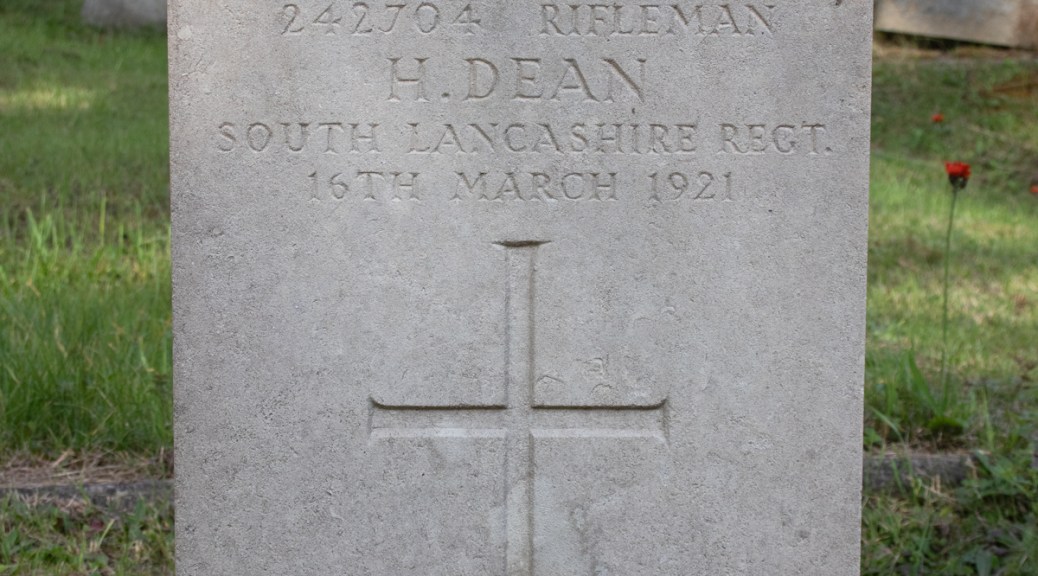
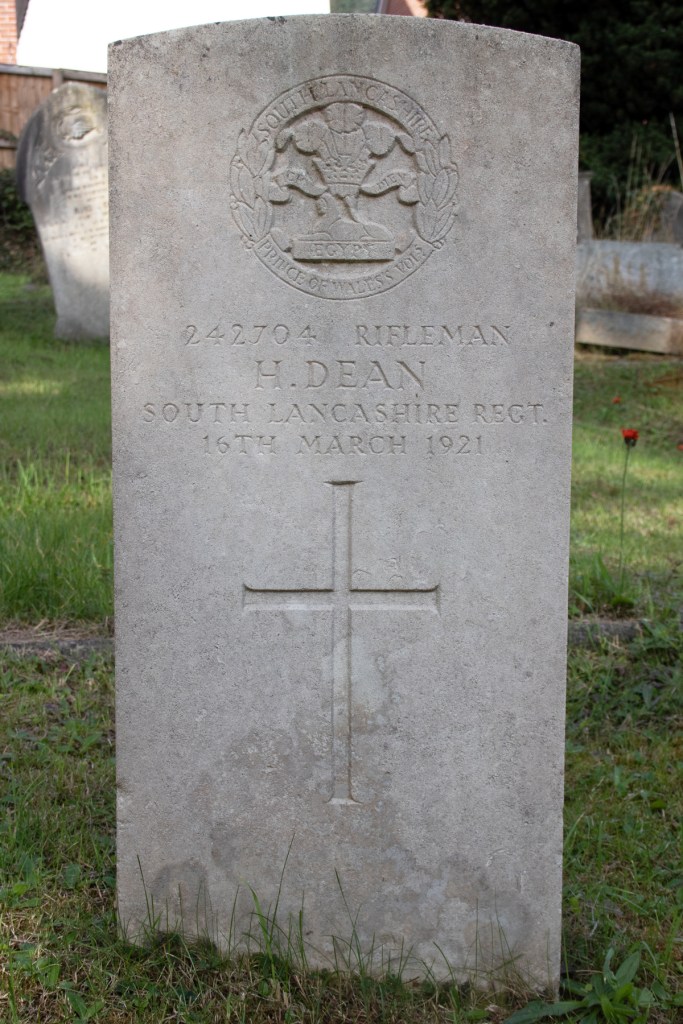
Harold Dean was born in the spring of 1888 in Llangollen, Denbighshire. One of four children to John and Sarah Dean, his father was a waiter at the Hand Hotel in the town until his death in 1905. When Harold left school, he was taken on by the hotel, and, by the time of the 1911 census, was recorded as working as a billiard marker.
War was coming to Europe by this point and, on 24th October 1916, Harold enlisted. He joined the South Lancashire Regiment (also known as The Prince of Wales’s Volunteers) and was assigned to the 2nd/5th Battalion.
After an initial few months’ training, Private Dean was sent to France, and was soon ensconced on the Western Front. Caught up in the fighting, he received a gun shot wound to his left wrist on 7th June 1917 and, after some initial treatment in a camp hospital, he was evacuated to Britain for full recuperation.
Harold remained on home soil for the remainder of the year, He contracted tuberculosis that winter and was medically discharged from the army because of it on 5th December 1917.
At this point, Harold’s trail goes cold. He returned to Llangollen, and remained there after his mother passed away in 1919. It appears that his lung condition continued to dog him, however, and this was probably the cause of his untimely passing. He died on 16th March 1921, at the age of 33 years old.
Harold Dean was laid to rest in Fron Cemetery, in his home town of Llangollen.
George Henry Curtis was born in Oldland, near Bristol, in around 1887. His parents were George and Frances (Fanny) Curtis, and he was one of their four children.
There is little direct information about George’s life: his was a common name in the Gloucestershire area, and so it is difficult to identify if some documents are related to him nor not.
The first piece of concrete evidence for him is his marriage certificate. He wed Elizabeth May Henly on 7th November 1914. She was the daughter of an engineer, while George gave his trade as a tobacco operator (possibly making cigars and cigarettes). The wedding took place at St Anne’s Church in Oldland, local to bother bride and groom.
When war broke out, George stepped up to play his part and enlisted in the Royal Garrison Artillery as a Gunner. He did not see action overseas, but was awarded both the Victory and British Medals for his service.
Gunner Curtis’ adult life is hard to piece together. All that can be confirmed is that he passed away on 9th July 1921, at the age of 32 years old.
George Henry Curtis was laid to rest in the graveyard of the church in which he had been christened and married, St Anne’s in his home village, Oldland.
Alfred John Bishop was born on 25th April 1896 in the Devon village of Kingswear. The older of two children, his parents were John and Susanna Bishop. John was a farm worker, and his expertise with horses was not lost on Alfred, who became a delivery driver for a baker in Marldon, to the north of Paignton, when he left school.
On 3rd September 1917, Alfred married road contractor’s daughter Bessie Webber. Originally from Staverton, her family had settled in Ipplepen, and this is where the newlyweds made their home.
War had come to Europe by this point, and Alfred had enlisted in the Royal Army Service Corps (RASC). His background with horses came in useful, as he was assigned to the Yeomanry Remount Depot. Details of Private Bishop’s military service are lost to time, so it is unclear if he was attached to one of the RASC depots in the UK, or if he served abroad.
Alfred survived the war and, by 1919, was back home. He and Bessie had a son, Leslie, who was born on 23rd October 2020. Time with his son was to be tragically brief, however, as Alfred passed away on 14th April 1921. The cause of his death is not known, but he was just 25 years of age.
Alfred John Bishop was laid to rest in the graveyard of St Andrew’s Church in Ipplepen.
Bessie went on to marry again, to James Joint in the autumn of 1932. She passed away in Newton Abbot in 1980, at the age of 85.
Alfred’s brother James’ life was also cut short. He married Ethel Warren in 1925, and is recorded has having passed away in London in the autumn of 1935, when he was only 35 years old. Ethel was left with two young children to raise, and John and Susanna were to outlive both of their sons.
Albert Septamus Smith was born in Maidstone, Kent, on 12th January 1881. The oldest of three children to George and Frances Ditcher, he may has been born before the couple married, and seems to have retained his mother’s maiden name throughout his life.
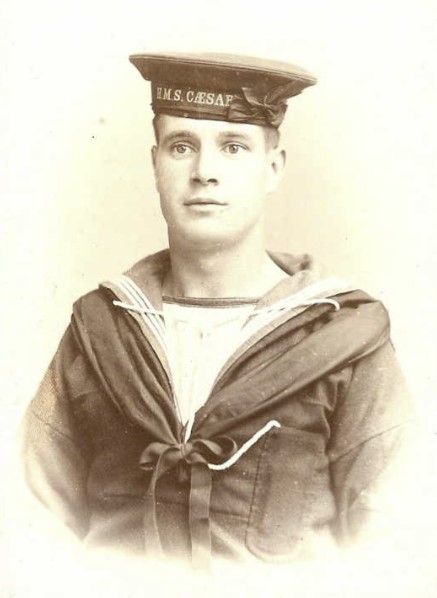
When he left school, Albert sought a life at sea, joining the Royal Navy as a Boy 2nd Class on 12th January 1898, when he was just fifteen. Albert’s naval career was a long and varied one which began on board HMS Impregnable, a training ship. After a month’s training, he was assigned to HMS Lion, where he spent more than a year, gaining a promotion to Boy 1st Class in the process.
In October 1897, Albert transferred to HMS Pembroke, the Royal Naval Dockyard in Chatham, Kent. In the four months that he spent on shore, he turned seventeen and, as a result, came of legal age to formally be enlisted in the navy. Ordinary Seaman Smith signed up for a period of twelve years, and his service records showed that he was 5ft 8ins (1.73m) tall, had brown hair, brown eyes and a dark complexion. He was also noted to have a scar on his right wrist, and a tattoo of a flower and bracelet on the same wrist.
Ordinary Seaman Smith was dedicated to his career. Over the next twelve years he served on board nine different vessels, and rose through the ranks, gaining promotion to Able Seaman (in May 1899), Leading Seaman (January 1903), and Petty Officer 2nd Class (September 1903). He returned to the rank of Leading Seaman, doing so in August 1906, but this seems to have been a deliberate choice, as his service record appears unblemished.
In 1910, Albert’s initial period of service came to an end and he chose not to renew his contract. He had married Ellen Miles on 6th October 1900, and, with four young children, it appears that family had become more important to him. Returning to Maidstone, he found work on the railways, joining the South East and Chatham company as a platelayer. The family home was in Bearsted, a village to the east of Maidstone, now part of its suburbs, and they shared is with Ellen’s sister, Dorothy.
Life was going well for the Smith family, but war was coming to Europe and, with his previous naval experience, Albert was to be called upon again. He was called out of reserve on 2nd August 1914 and, after an initial couple of weeks at HMS Pembroke, Leading Seaman Smith was soon back at sea.
After a couple of years on board the seaplane tenders HMS Engadine and Campania, Albert was promoted to Petty Officer again, and assigned to HMS Sandhurst, a fleet repair ship based at Scapa Flow. He was on board when an explosion in the boiler room killed seventeen seamen on 27th February 1917, although he was not hurt.
It was while Petty Officer Smith was on board HMS Sandhurst that he contracted tuberculosis. He returned to Chatham Dockyard, but the condition was severe enough for him to be medically discharged from active service in February 1918.
Albert returned to civilian life again, and his trail goes cold for a couple of years. His lung complaint continued to haunt him, however, and he passed away from tuberculosis on 4th March 1921. He was 40 years of age.
Albert Septamus Smith was laid to rest in the graveyard of Holy Cross Church in Bearsted, not far from his family home.