Tag Archives: gas

Corporal James Stuckey

Corporal James Stuckey

James Oscar Stuckey was born in the summer of 1886, in Milford Haven, Pembrokeshire. The second of eight children, his parents were James and Minnie Stuckey. James Sr was a carter from Langport in Somerset, and his work took him across the country. James Jr’s older sister was born in Sandown, on the Isle of Wight, and, when his next sibling was born, the family had moved back to Somerset and were living in the village of Curry Rivel.

By the time of the 1901 census James Sr was working as a warehouseman. James Jr had also left school and found employment as an agricultural labourer.

On 24th March 1913, James married Margaret Beatrice Tilley – who was better known as Beattie. The couple set up home in Curry Rivel, and went on to have two children, Cecil and James.

By this time war was coming to Europe and, in January 1915, James stepped up to play his part for King and Country. He enlisted in the Royal Field Artillery, and was given the rank of Gunner. Over the next couple of years, he served in France and Italy, rising through the ranks to Bombardier and Corporal.

During this time, however, James’ health was being impacted. His troop was gassed while in France, and he was hospitalised a couple of times with bronchitis and tuberculosis, and it was TB that saw him evacuated to Britain for treatment in September 1918.

His condition was such that Corporal Stuckey was medically discharged from the army on 23rd November 1918, as he was no longer fit for duty. He returned to civilian life, and settled back into Curry Rivel.

He was well-known in the district, and being of a jovial disposition, was liked by everyone with whom he came into contact. He was a member of the Curry Rivel Male Friendly Society.

Langport & Somerton Herald: Saturday 11th December 1920

James’ lung conditions were to get the better of him. After a protracted illness, he finally succumbed, breathing his last on 3rd December 1920. He was just 34 years of age.

James Oscar Stuckey was laid to rest in the graveyard of St Andrew’s Church, in Curry Rivel.


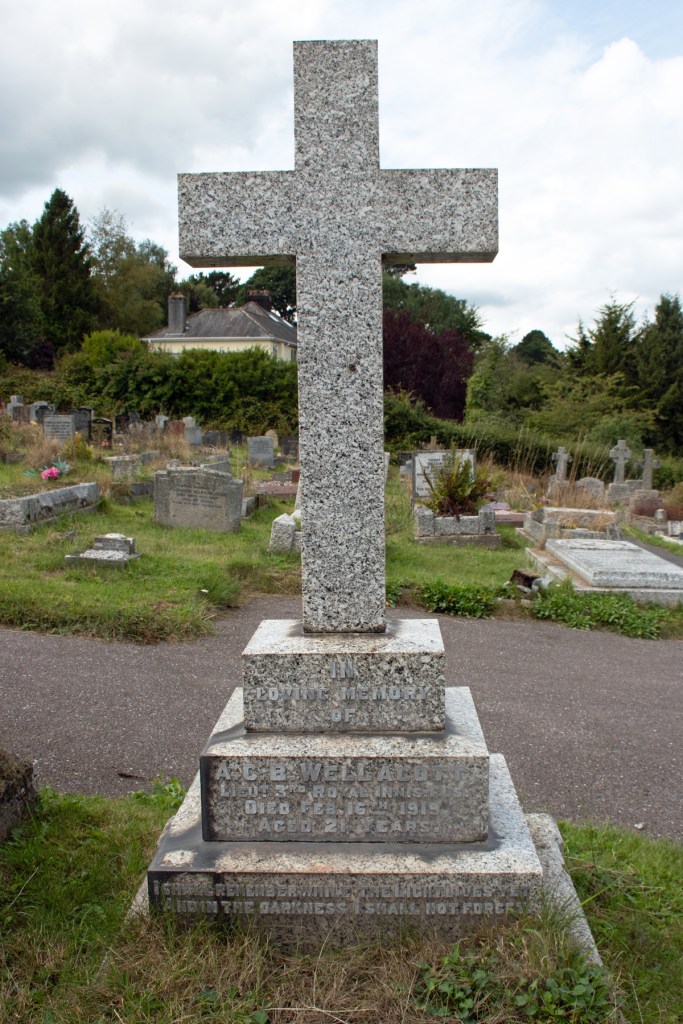
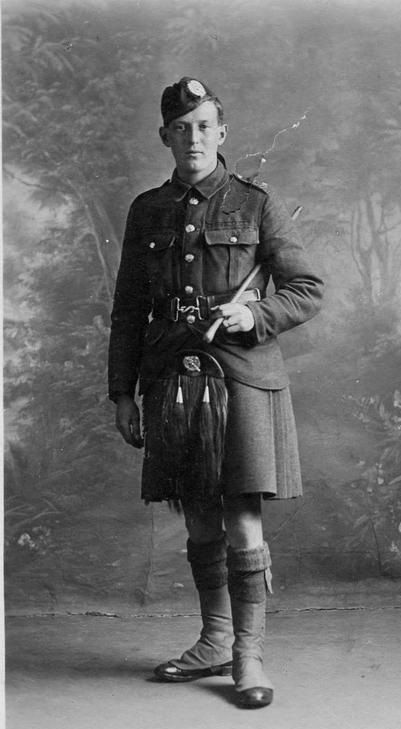
Lieutenant Arthur Wellacott

Lieutenant Arthur Wellacott

Arthur Cecil Baber Wellacott was born the summer of 1897, in the village of Bradworthy, North Devon. Ond of seven children, his parents were William and Ada Wellacott. William was the parish vicar and with his status came additional support for the family.

The 1901 census saw the vicarage employ three members of staff, and William was hosting two students as well as his and Ada’s own children. Ten years later, with Arthur and his younger brother William, boarding at a school in Bude, Cornwall, the Wellacott retinue remained in place.

On leaving boarding school, Arthur studied at Kelly College in Tavistock and, at around the same time his father took up a new post in Totnes. When Arthur left the college, he joined the 7th (Cyclist) Battalion of the Devonshire Regiment. He was subsequently given a commission in th 3rd Battalion of the Royal Inniskilling Fusiliers, and was based in Londonderry.

At Easter 1916, Lieutenant Wellacott took part in quelling the rebellion in Dublin, and was subsequently sent to France. In the battle for Contalmaison his platoon was gassed and buried, and Arthur was badly injured. Suffering from shell shock, the experience had a lasting impact on him “and from that time his health had given cause for anxiety…” [Western Morning News: Tuesday 18th February 1919]

Lieutenant Wellacott returned to England and he was billeted near Leeds. During the winter of 1918/1919, he contracted pneumonia, and was admitted to the Drax Hospital. Sadly, the condition was to prove too much for his already damaged lungs and he died on 16th February 1919. He was just 21 years of age.

Arthur Cecil Baber Wellacott was brought back to Devon for burial. He was laid to rest in the cemetery in Totnes, Devon.


Private Thomas Rice

Private Thomas Rice

Thomas Merrall Rice was born on 4th January 1894, one of thirteen children to William and Martha. William was from Northamptonshire, but it was in Bearsted, near Martha’s home town of Maidstone, where the couple raised their family.

Little detail of Thomas’ early life remains. What is clear is that, by the summer of 1916, he was living in Plumstead, South East London and was working as a valet. He had met Annie Jane Rix by this point, and the couple married on 17th June 1916 at All Saints Church in Plumstead.

Thomas was called up for military duty not long after this and, on 1st November 1916, he enlisted in the 14th Battalion of the London Regiment, also known as the London Scottish. His service records show very specifically (although seemingly incorrectly) that he was 25 years and 300 days old. It was also noted that he stood 5ft 5.5ins (1.64m) tall and was, by this time, employed as an explosives worker at Woolwich Arsenal.

After his initial training, Private Rice was sent to France at the end of May 1917. His service overseas was not to be a long one, as, within a couple of months, his battalion had been the victims of a gas attack. Thomas was admitted to a field hospital but quickly developed pleurisy and tuberculosis, and was medically evacuated back to Britain in August, and discharged from the army as no longer fit for active duty just a couple of months later.

His failing health meant that Thomas was not able to actively work, and it seems that he had moved out of London and back to his family’s home on the outskirts of Maidstone. It is unclear whether Annie went with him, but, as they had a son, Albert, who had been born shortly before he was sent to France, it seems likely that they would have moved as a family unit.

William, Thomas’ father, died in the summer of 1919, and was laid to rest in the graveyard of Holy Cross Church, Bearsted. Sadly, Thomas was to follow him, passing away on 15th January 1920, a victim of the lung conditions that had dogged him since France. He had just turned 26 years of age.

Thomas Merrall Rice was laid to rest alongside his father in the quiet Holy Cross Churchyard.


Private Thomas Rice
(from findagrave.com)

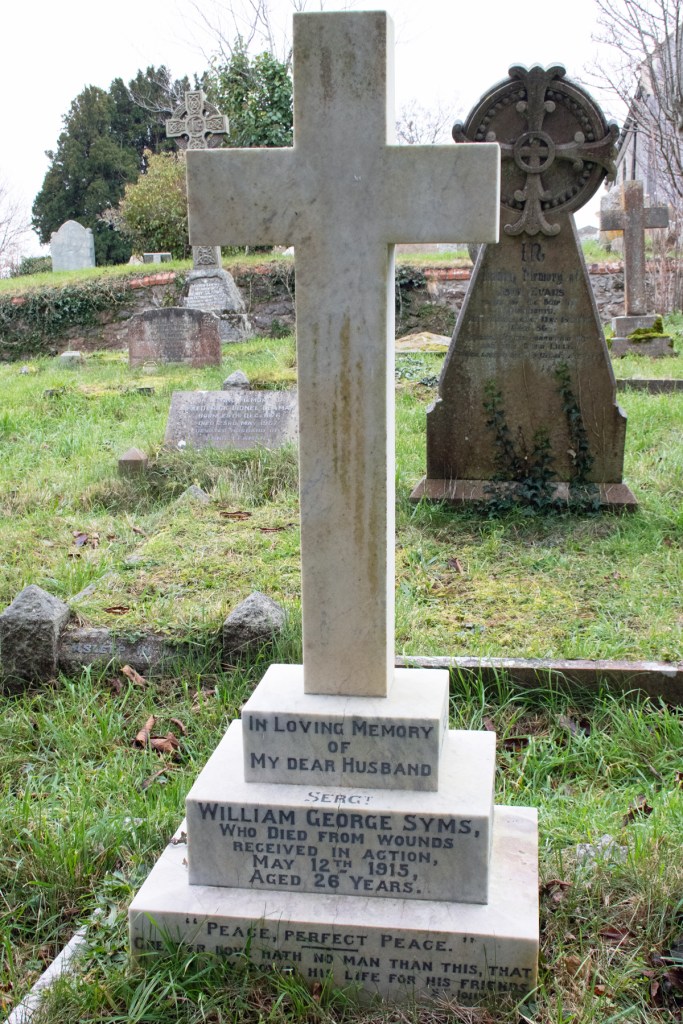
Serjeant William Syms

Serjeant William Syms

William George Syms was born in in the spring of 1889, the oldest of two children to George and Rose Symes (both spellings are recorded). George was a postman from Devon, and the family were born and raised in Highweek, Newton Abbot.

When William left school, he followed in his father’s footsteps becoming a postman in his home town. Life was not without its ups and downs, however, and the 1911 census record him as an inpatient, convalescing from an unknown illness in Exmouth.

In the summer of 1913, William married Amelia Oliver, a gardener’s daughter, who also from Highweek.

When war broke out William was eager to play his part, and enlisted in the early months of the conflict, alongside a number of his colleagues. He joined the Royal Engineers, and was assigned to the 1st (Wessex) Division Signal Company. He was sent to France on 22nd December 1914 and was involved on the Front Line from early on.

By the spring of 1915, he was fighting at Ypres, and was badly injured, fracturing both legs and suffering from the effects of being gassed. Serjeant Syms – as he was by then ranked – was medically evacuated to England for treatment. He was admitted to the Auxiliary Military Hospital in Manchester, but died of his injuries on 12th May 1915. He was just 26 years old.

William George Syms’ body was brought back to Devon for burial. He was laid to rest in the graveyard of All Saints Church in his home town of Highweek. Tragically, he was never to see his son, also called William, who had been born just two months before.


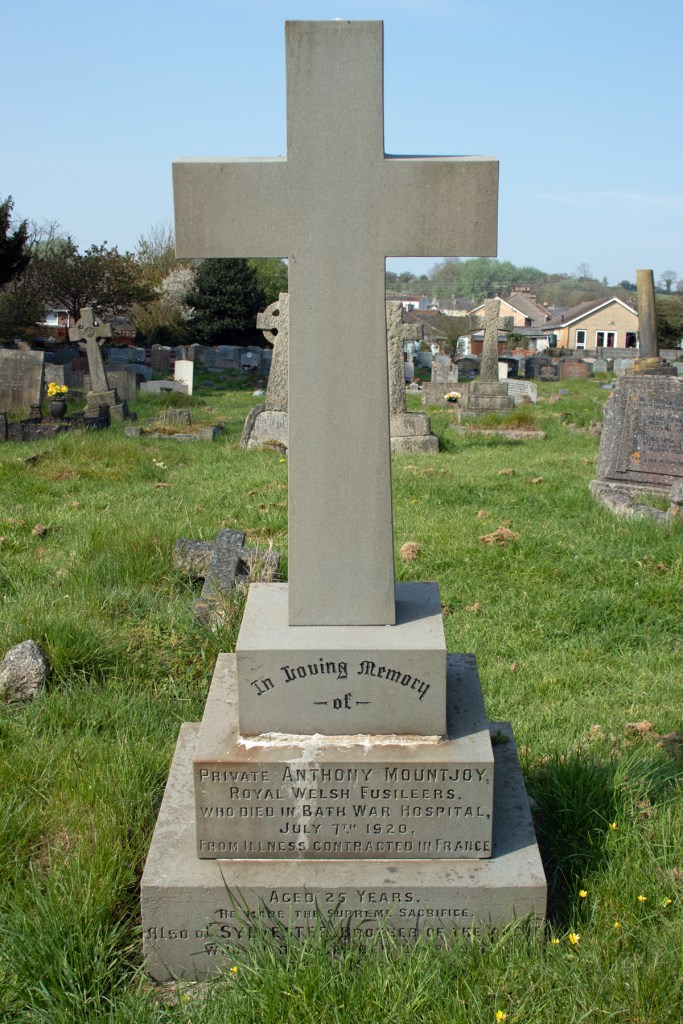
Private Anthony Mountjoy

Private Anthony Mountjoy

Anthony Mountjoy was born in the Somerset village of Clutton in the spring of 1895. One of eleven children, his parents were William and Sarah. William worked as a hewer in a local coal mine, and this is a job into which Anthony and at least two of his brothers went.

War was coming to Europe and, while there is limited documentation relating to his military service, a newspaper report on his funeral sheds some light into his life.

The funeral took place at Midsomer Norton on Monday afternoon of Private Anthony Mountjoy, 2nd Royal Welch Fusiliers, who died at the Bath Pensions Hospital… at the age of 25 years. Private Mountjoy… enlisted in the army on January 22, 1916, and went to France in July 1917. He was gassed and wounded at Passchendaele in March 1918, and arriving in England was take to the Tusehill Military Hospital, Carlisle in June. He was transferred to Bristol in April, 1919, and from there to Bath Pensions Hospital in November of the same year. He never recovered from the effects of active service.

Somerset Guardian and Radstock Observer: Friday 16th July 1920

Private Anthony Mountjoy died on 7th July 1920. He was laid to rest in the family plot in the graveyard of St John the Baptist Church in Midsomer Norton.


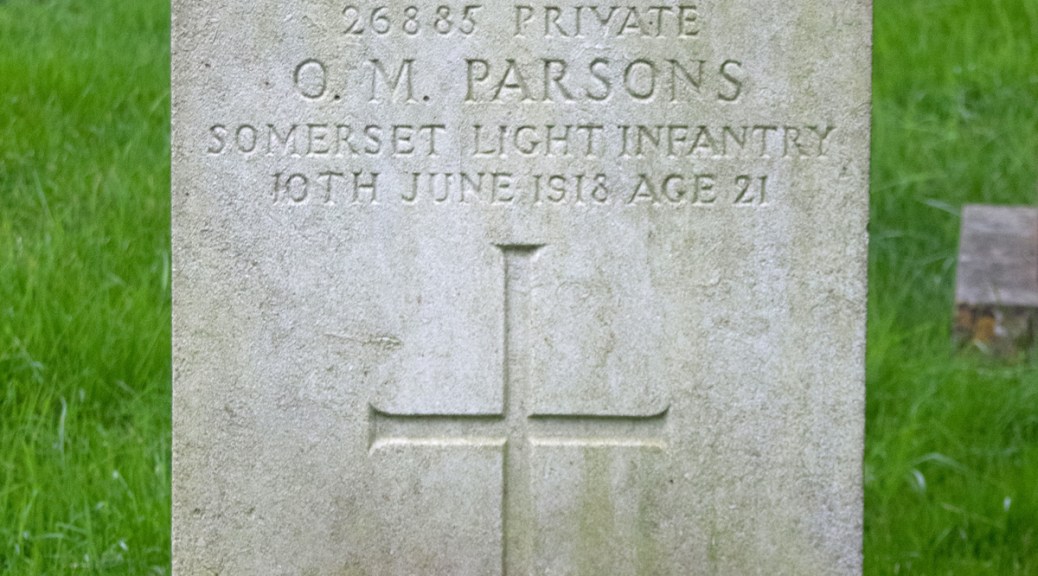
Private Oliver Parsons

Private Oliver Parsons

Oliver Metford Parsons was born in North Newton, Somerset, on 3rd January 1897. His parents were Thomas and Lily Parsons, and he was one of four children.

Thomas was a carter and labourer on a farm, and this is the trade his son took up when he left school. The 1911 census recorded Oliver as living with the market gardener Edmund Durridge and his family – who lived in the same village – and working as a labourer for them.

Lily had passed away in 1907, so this move may have had something to do with a change in family circumstances – the 1911 census recorded Thomas living in the village with Hannah Parsons, having been married for just a year.

When war came to Europe, Oliver was keen to play his part for King and Country. While full service records are not available, documents confirm that he enlisted in the Somerset Light Infantry in the spring of 1917. Private Parsons was assigned to the 7th (Service) Battalion and soon found himself on the Front Line.

While it is not possible to pinpoint exactly where Oliver fought, his battalion fought at the Third Battle of Ypres and, in April 1918 moved to Amiens.

It was in June 1918 that Private Parsons was caught up in a gas attack. He was injured and medically evacuated to England for treatment, where he was admitted to the Ipswich Hospital in Suffolk. Sadly, his injuries proved too severe, and he passed away at the hospital on 10th June 1918. He was just 21 years of age.

Oliver Metford Parsons’ body was brought back to his Somerset home. He was laid to rest in the graveyard of St Peter’s Church in North Newton.


Private Oliver Parsons
(from ancestry.com)

Corporal Norman Allard

Corporal Norman Allard

Norman Stanley Allard was born on 3rd December 1892 in the village of Corsley, Wiltshire, halfway between Frome and Warminster. The younger of two children, his parents were Benjamin and Mercy Allard. Benjamin was a farmer who passed away when his son was only 14 years old. Mercy, who was born in Frome, moved the family back to her home town and Norman found work as a clerk at a printing firm in the area.

War came to Europe and, in December 1915, Norman was called up. There is little specific information about his military service, although his records show that he was 5ft 9ins (1.75m) tall and had varicocele – enlarged veins in his scrotum – listed as Distinctive Marks.

Initially assigned to the King’s Royal Rifles, Private Allard spent the first year of his service on home soil. He was eventually dispatched to France in March 1917, serving there for a year. On 22nd March 1918, he was wounded in a gas attack, and medically evacuated back to England.

He was called back into service, and assigned to the 9th Battalion of the Northamptonshire Regiment. He remained on home soil, working as part of the Labour Corps in Cley-next-the-Sea in Norfolk. Sadly, however, it seems that his injuries were to prove too much, and the now Corporal Allard was discharged from military service after just three months.

At this point, Norman’s trail goes cold. He returned home, and passed away there on 13th March 1919. He was just 26 years of age.

Norman Stanley Allard was laid to rest in the graveyard of Holy Trinity Church. This became a family grave, and his mother and sister were also buried there when they passed in 1924 and 1940.


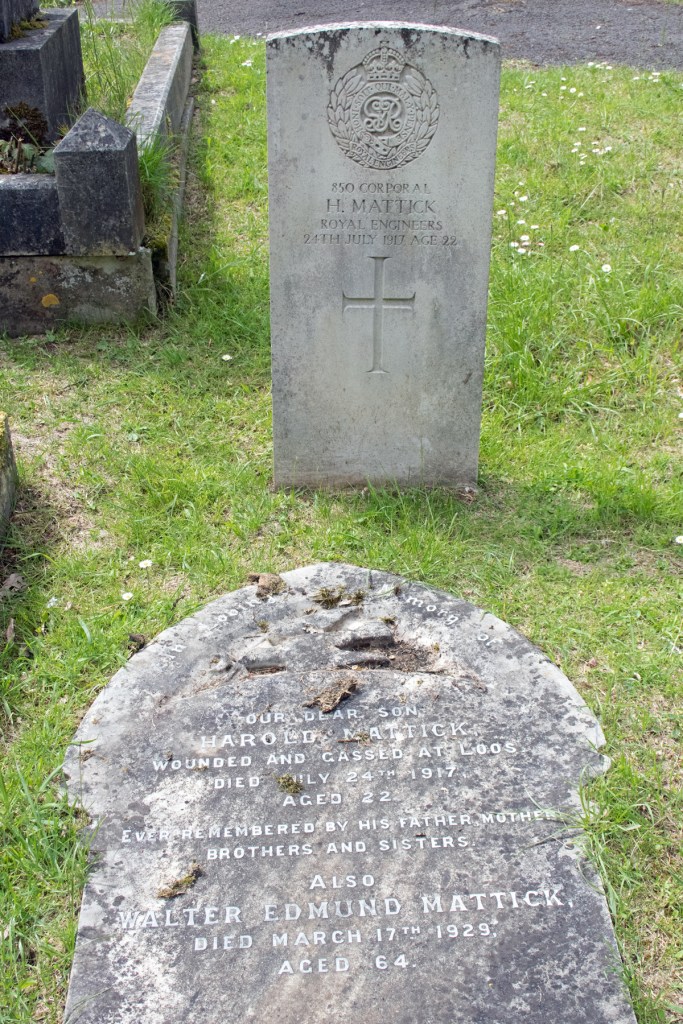
Corporal Harold Mattick

Corporal Harold Mattick

Harold Mattick was born in the spring of 1895, the youngest of four children to Walter and Augusta. Walter was a harness maker and brought the family up in his home town of Weston-super-Mare, Somerset.

When he left school, Harold found work as a plumber. He seemed to had sought a life of adventure, however, and, in 1908, aged just 14, enlisted in the Wessex Division of the Royal Engineers as a Bugler. He served for five years, fulfilling his duties at the same time as carrying out his plumbing work.

When war broke out, Harold immediately re-enlisted. As a Sapper, he was assigned to the 1st/2nd (Wessex) Field Company. After initial training, he was sent to the front as part of the British Expeditionary Force just before Christmas in 1914.

Sapper Mattick was caught up in some of the fiercest fighting on the Wester Front, including the First and Second Battles of Ypres. On 30th September 1915, at Loos, he received a gunshot wound in his right leg, which fractured his tibia. The Germans were also using gas to attack the Allied front lines, which also affected Harold.

Medically evacuated to England for treatment on 9th October, his condition was such that he was discharged from the army on health grounds six months later, on 30th March 1916.

Sadly, while Harold’s leg healed, the injuries he sustained in the gas attack were too severe for him to recover from. He died at home from a lung condition on 24th July 1917, aged just 22 years old.

Harold Mattick was laid to rest in the Milton Cemetery of his home town, Weston-super-Mare.


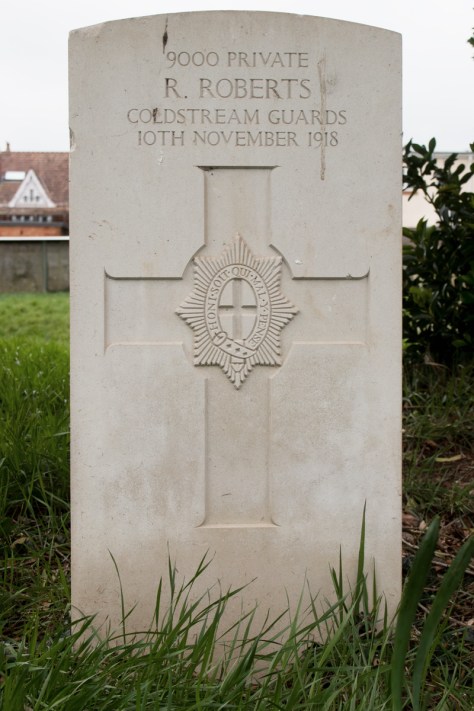
Private Roland Roberts

Private Roland Roberts

Roland Roberts was born in September 1896, one of three children – all boys – to Albert and Minnie Roberts.

Minnie, who was originally from Yeovil, had married Walter Shury, a Londoner, in 1874, and the couple had six children together. Walter then went on to have four children with Alice Norwood, and the couple married in 1898. Minnie, meanwhile, had met Albert Roberts, who was from Dundalk in Ireland, and, while no marriage seems to be confirmed, the couple had three boys, including Roland. (It is pure speculation, but as Minnie’s maiden was also Roberts, this might have provided a good enough cover for any divorce or re-marriage.)

Albert had been a Band Sergeant in the 4th Hussars, and continued that passion by becoming a music teacher Travel was also definitely in his blood: the couple’s first child, Willie, was born in South London, Roland was born in Somerset, and his younger sibling, Glencoe, was born in Penzance, Cornwall. Albert’s musical success led him to become bandmaster for the Penzance Town Band. Sadly, it was not all positive for him; in 1901, Minnie passed away, and in the same year, Willie also died, at the tender age of six.

It was the military that drew Roland in, and, in 1910, aged just 14 years old, he enlisted in the Coldstream Guards. According to the following year’s census, he was stationed at the Ramillies Barracks in Aldershot, and held the rank of Boy.

Differing from the naval rank of the same name, lads of 14 or over could serve in any regiment as musicians, drummers, tailors, shoemakers, artificers or clerks, and all were ranked as boys. It seems likely, therefore, that his father’s enthusiasm for music served him well.

When war broke out, he was of fighting age, and, as part of the “Old Contemptibles”, he was involved in the Battle of Mons, the first major confrontation for the British Expeditionary Force.

During the war, Private Roberts took part in some of the most severe fighting on the Western Front, was wounded three times, as well as being gassed. He was also recommended for the DCM for gallantry in action.

He transferred to the Labour Corps, and spent time doing land work in Somerset. It was here that Roland met and married Gladys Pyne, whose family was from Bridgwater, and the couple tied the knot in March 1918.

Sadly, it was during this war service that Private Roberts contracted influenza and pneumonia and he passed away as his in-laws’ home on 10th November 1918, the day before the Armistice was signed. He was just 22 years old.

The local newspaper reported on Roland’s continued gallantry in its article on his funeral:

[Roland] held the medal of the Royal Humane Society for saving a woman’s life.

He was also the hero of an incident that occurred in Bridgwater a few weeks ago, when he succeeded in checking the career of an infuriated bull through pluckily catching the animal by its horns.

His disposition was always most cheerful, and although suffering from his [war] wounds a good deal, he never complained.

The Cornishman: Wednesday 27th November 1918

Roland Roberts lies at rest in the Wembdon Road Cemetery in his adopted home town of Bridgwater, Somerset.


Private Henry Morgan

Private Henry Morgan

Henry Morgan was born in 1892 in Bridgwater, Somerset. He was the oldest of two children, both boys, to Charles Morgan and his wife Ellen. Charles managed the local collar works, making collars for shirts.

While Henry’s younger brother, Herbert, followed his dad’s business, according to the 1911 census, Henry was learning the farming trade. This was to stand him in good stead, and in 1912, he emigrated to Australia, to become a farmer.

Henry settled in Gunnedah, New South Wales, but was called up when war broke out. He enlisted in May 1916 and joined the Australian Machine Gun Corps. His troop left Australia on the ship Borda in November 1916, arriving in Plymouth two months later, and he finally reached France in March 1917.

Initially part of the 9th Machine Gun Battalion, Private Morgan transferred to the 3rd Machine Gun Corps in April 1918. Involved in the Allied defence of the German Spring Offensive, he was caught up in a gas attack and injured.

Wounded on 17th April 1918, Henry was evacuated back to England and admitted to the Voluntary Aid Detachment Hospital in Cheltenham. Sadly, Private Morgan was not to recover, and he died from his injuries on 8th May 1918. He was just 25 years old.

Henry Morgan lies at rest in the Wembdon Road Cemetery in his former home town of Bridgwater, Somerset.