Tag Archives: Great War

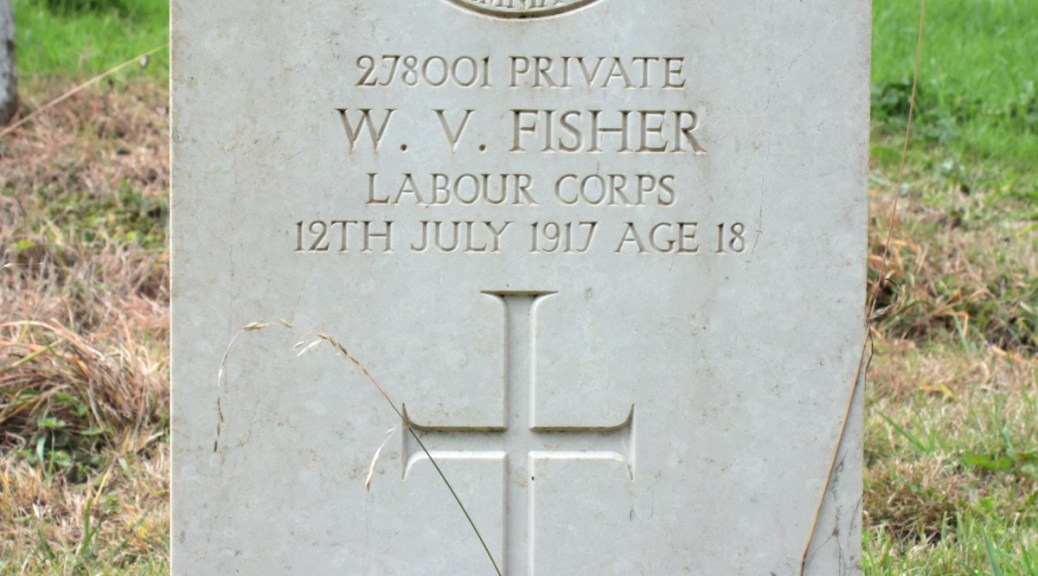
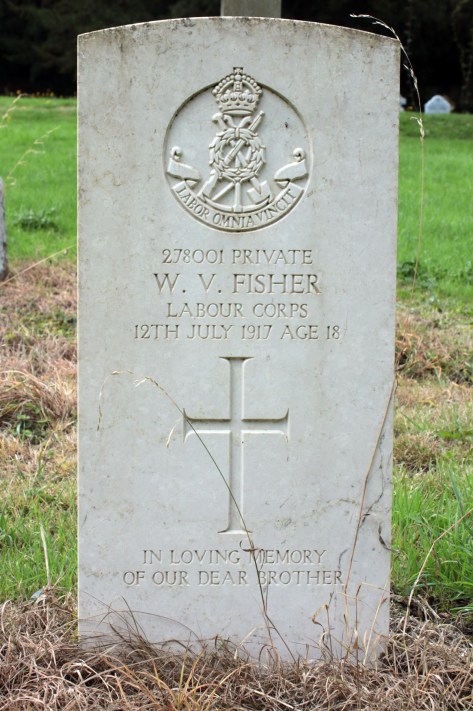
Private William Fisher

Private William Fisher

William Victor Fisher was born in Battersea, Surrey, at the beginning of 1899. The youngest of nine children, his parents were William and Julia Fisher. William Sr was a blacksmith and farrier, and, when William was born, the family were living in rooms at 9 Gladstone Street.

Julia died in 1902, and William Sr was was left to raise the children on his own. This he seemed to have done well, and by the time of the 1911 census, he was still living in the same house, with five of his children. William Jr’s eldest brother, Mark, was assisting their father in the business.

When war broke out, William Jr was still at school. However, he was keen to play his part and enlisted on 29th August 1915, lying abut his age to do so. As happened at the time, the recruiting officer took the age he stated – 19 years, 255 days – as being correct. He was assigned as a Private in the Royal West Surrey Regiment, and remained in Battersea for training.

Private Fisher’s time in the army was to be a brief one, but it was not without incident. He was confined to barracks for three days on 12th October, when he lost a pair of boots. Just a month later, he was reprimanded again for being absent without leave for nearly six hours on 17th November: he was again confined to barracks, this time for four days.

William’s lie was to catch up with him, and, on 27th November 1915, he was discharged for giving an incorrect age on his recruitment papers.

Two years later, William stepped up to play his part once more. This may have been a result of the death his older brother – Francis. A Private in the 2nd Battalion of the Royal Fusiliers, he was killed in action on the Western Front on 28th February 1917: he was just 20 years of age.

Details of William’s second stint in the army have been lost to time, but it is clear that he was initially assigned to the 46th Training Reserve Battalion. Private Fisher then transferred to the 626th Home Service Employment Company of the Labour Corps, and was billeted in Wiltshire.

Tragically, Private Fisher’s time in the army was also to be brief. His entry in the British Register of Soldiers’ Effects show that he died on 12th July 1817, and, intriguingly, that the cause was asphyxiation. His death certificate confirms that this was asphyxia from inspiration of vomited matter, and that he died at No. 12 Camp in Longbridge Deverill: he was just 18 years of age.

The body of William Victor Fisher was laid to rest in the tranquil grounds of St Peter & St Paul’s Church, not far from where he had passed away.
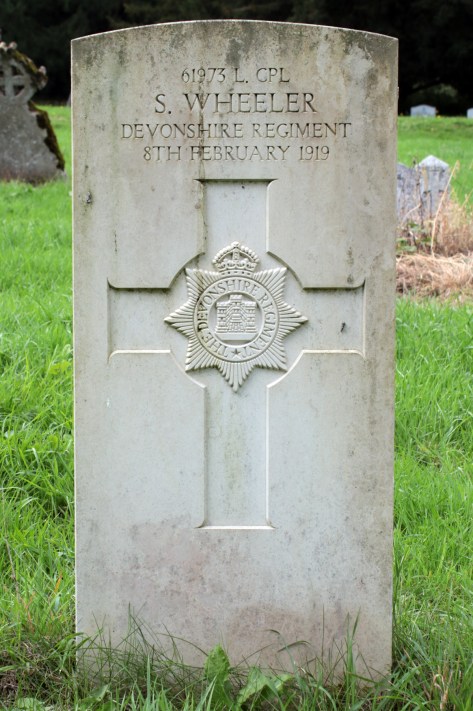
Lance Corporal Sydney Wheeler

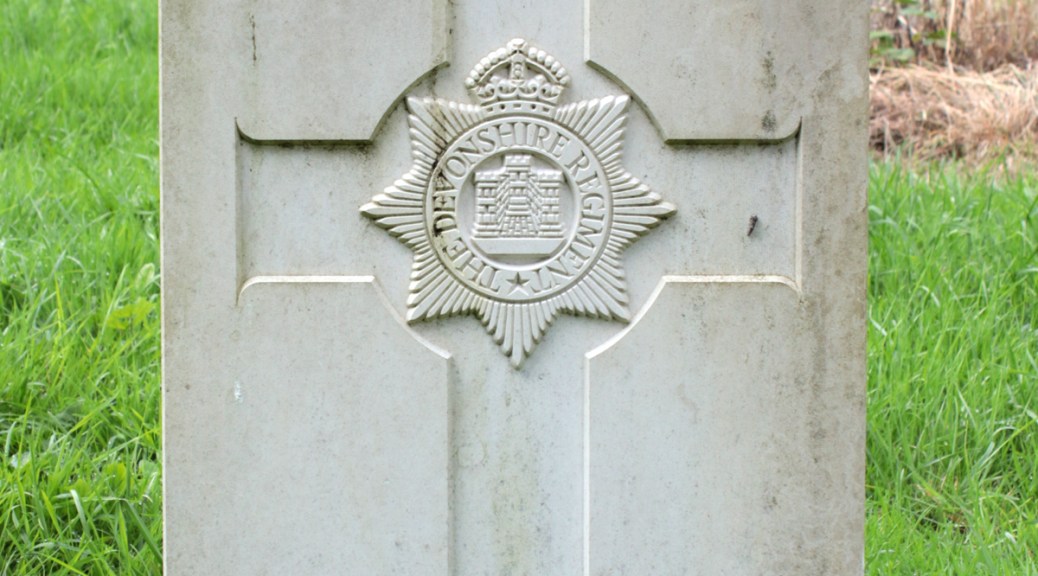
Lance Corporal Sidney Wheeler

Walter Sydney Wheeler was born in the autumn of 1887 in Crockerton, Wiltshire. The oldest of three children, his parents were Walter and Lore Wheeler. Walter Sr was an agricultural labour, but when his son – who was known by his middle name – finished school, he found work as a stable boy. The 1901 census found the family living at 12 Church Street, Longbridge Deverill.

Sydney married a woman called Mary in 1907. There is little information about her, and the couple did not go on to have any children. By the time of the 1911 census, the couple were living at Priors Cottages, Semley, where Sydney had found farm work.

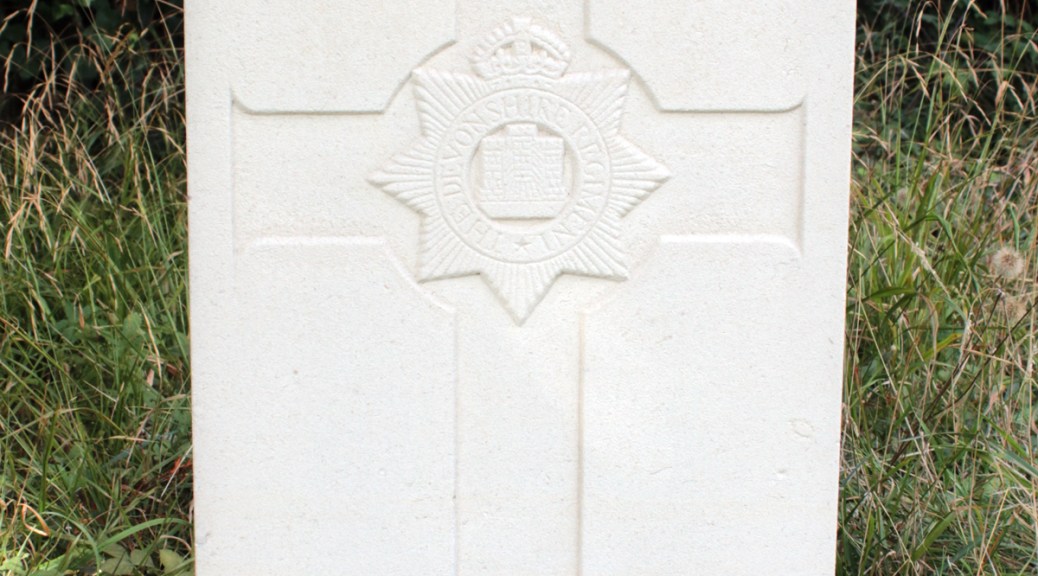
War came to Europe in 1914, and Sydney stepper up to play his part. Full details of his service have been lost to time, but it is clear that he had joined up no later than the summer of 1918. He initially joined the Devonshire Regiment, but later transferred to the 651st Agricultural Company of the Labour Corps. By the end of the conflict he had risen to the rank of Lance Corporal.

Sydney survived the war, and by the start of 1919, he was back in Wiltshire. His health was impacted, however, and that February he was admitted to the VAD Hospital in Trowbridge. While his condition is unknown, it was one to which he would succumb. Lance Corporal Wheeler passed away on 8th February 1919, at the age of 31 years old.

The body of Walter Sydney Wheeler was taken to Longbridge Deverill for burial: he was laid to rest in the graveyard of St Peter & St Paul’s Church.


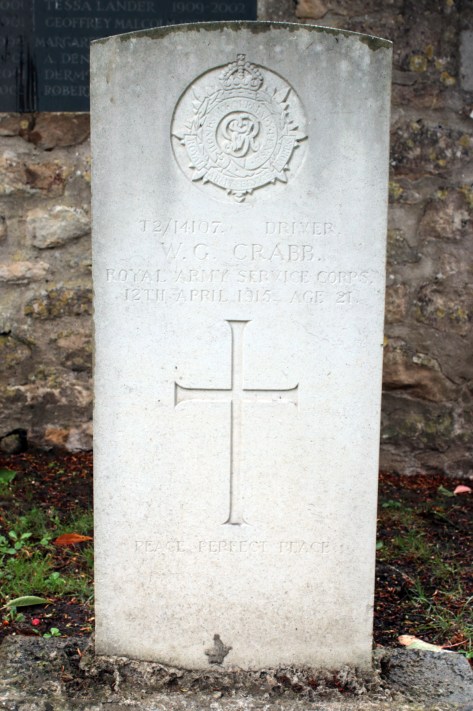
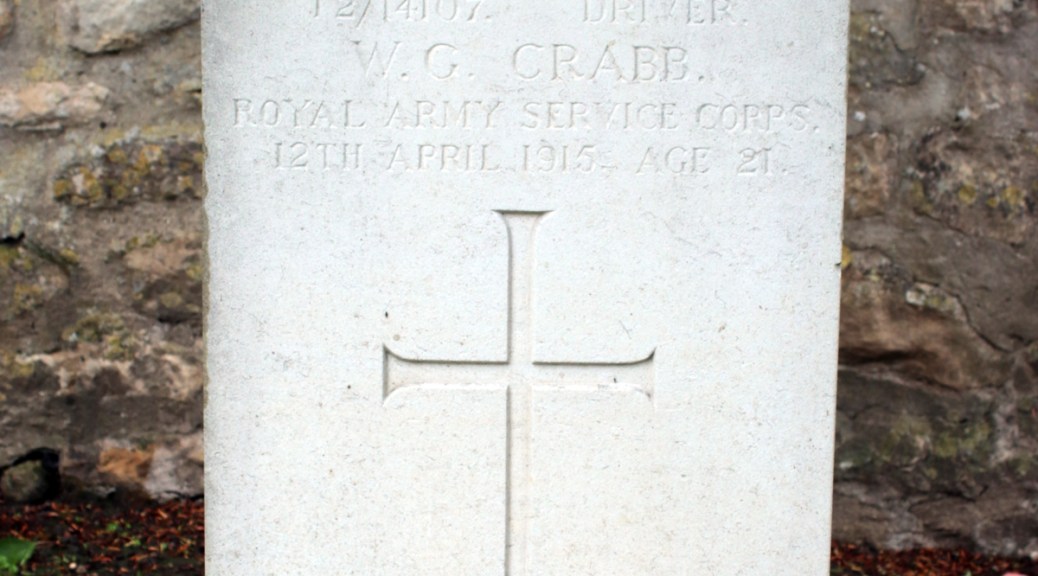
Driver Walter Crabb

Driver Walter Crabb

Walter George Crabb was born in the spring of 1893 in the Castleton area of Sherborne, Dorset. The oldest of ten children, his parents were Fred and Selina Crabb. Fred was a sawyer, but when Walter completed his schooling, he found employment as a bricklayer’s labourer. The 1911 census recorded the family as living in a 5-roomed cottage on Long Street.

When war came to Europe, Walter was quick to step up and play his part. His service records have been lost to time, but it is clear that he had enlisted by October 1914. As a Driver, he was attached to the 108th Horse Transport Company and, by the following spring, was barracked at Curragh Camp, to the south west of Dublin.

The next record for Driver Crabb is his entry in the British Army Register of Soldiers’ Effects. This confirms that he passed away in Curragh Hospital on 12th April 1915. The cause of his death is not recorded, but he was just 21 years of age.

The body of Walter George Crabb was taken back to Dorset for burial. He was laid to rest in the peaceful surroundings of St Mary Magdalene Churchyard, Castleton.


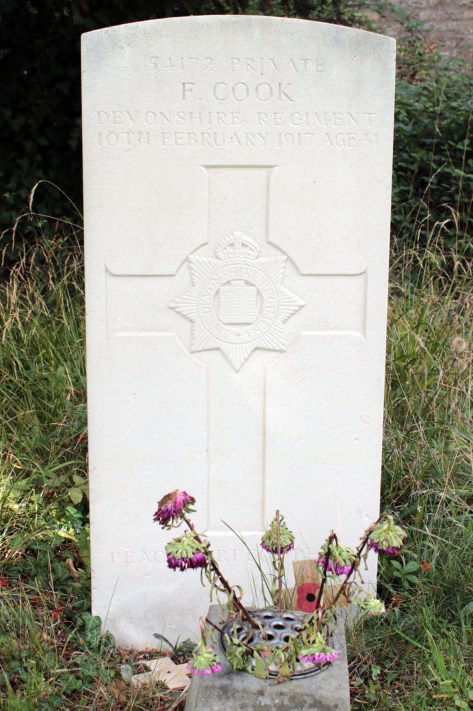
Private Frederick Cook

Private Frederick Cook

Frederick Cook was born in the Wiltshire village of South Wraxall in the spring of 1866. One of five children to James and Ann Cook, his father died when Frederick was just a toddler. The 1871 census found Ann and her children living in Bradford-on-Avon, where she was working as a farm labourer.

By 1881, Frederick had left school and found work as a cloth weaver. That year’s census found him living on Church Lane, Bradford-on-Avon with his mother and younger brother.

At this point Frederick disappears from the records. The next document relating to him is his wedding certificate, noting that he exchanged vows on 5th August 1895. His new wife was widow Ruth Doel, and the marriage took place in Holy Trinity Church, Heywood, Wiltshire, where she was living. Frederick was noted as being a labourer.

Frederick falls off the radar again and this point. He is noticeable by his absence from the 1901 census, Ruth living in Haywood with her son, Ernest. The next return helps to explain things, however, as, while she is now living alone, her husband is boarding in Pyle, Glamorgan, where he was employed as a limestone quarryman.

By the time war broke out, Frederick as 48 years old. He still stepped up to play his part, however, and, while his service papers have been lost to time, it is clear that he had joined the Devonshire Regiment by the summer of 1916. Attached to the 13th (Works) Battalion, Private Cook remained on home soil during his time with the army.

The next record for Frederick is that confirming his passing. He died from pneumonia on 10th February 1917, having previously been admitted to hospital. He was 51 years of age.

The body of Frederick Cook was laid to rest in Holy Trinity Churchyard, Heywood, Wiltshire.


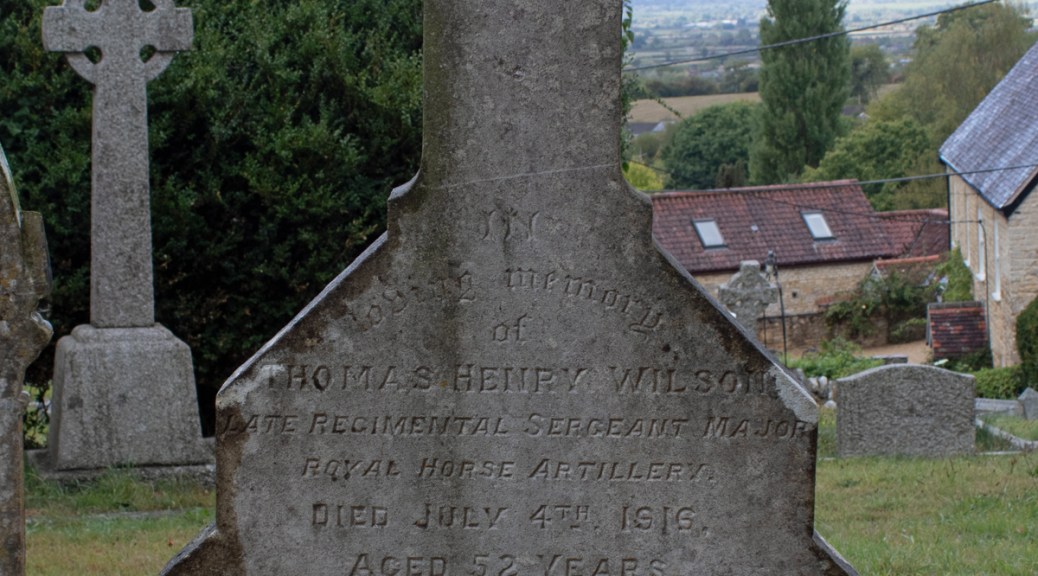
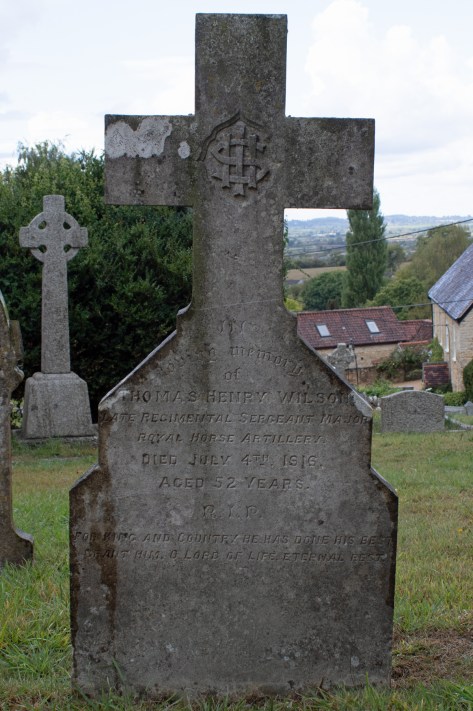
Regimental Serjeant Major Thomas Wilson

Regimental Serjeant Major Thomas Wilson

The life of Thomas Henry Wilson is challenge to piece together, and it is only through fragmented documents that the trail can be uncovered.

Thomas’ headstone confirms he was a Regimental Sergeant Major in the Royal Horse Artillery, and that he died on 4th July 1916, at the age of 52.

The Commonwealth War Graces Commission’s records confirm that he was married to Mary Ann Wilson (née Ralph), who lived in West Stour, Dorset. The couple’s wedding took place in Holy Trinity Church, Woolwich, Kent, on 14th February 1888. The marriage certificate gives their fathers’ names – farriers Charles Wilson and James Ralph. The document also confirms Thomas’ role as a a Sergeant in the RHA, and gives his age as 27, and Mary’s as 21.

The Wilsons’ appearance in the the census records is a little sporadic. They are not recorded on the 1891 census, but ten years later, they were living in Bilston, Staffordshire. They were listed as being caretakers of the town’s Conservative Club on Church Street. Their ages are given as 41 and 31, and Mary’s place of birth is given as Kington Magna, Dorset.

By 1911, Thomas and Mary had moved to London, and were boarding at the house of Joseph and Rosetta Johnson, at 5 Knivet Road in Fulham, Middlesex. Thomas was listed as being an army pensioner, while Mary was employed as a domestic cook.

At this point, Thomas’ trail goes cold. It is likely that he was called upon when war broke out, but there are no records to confirm where or how he served. He passed away in July 1916, and was laid to rest in All Saints’ Churchyard, Kington Magna, which would suggest that he and Mary had moved there to be closed to her family.


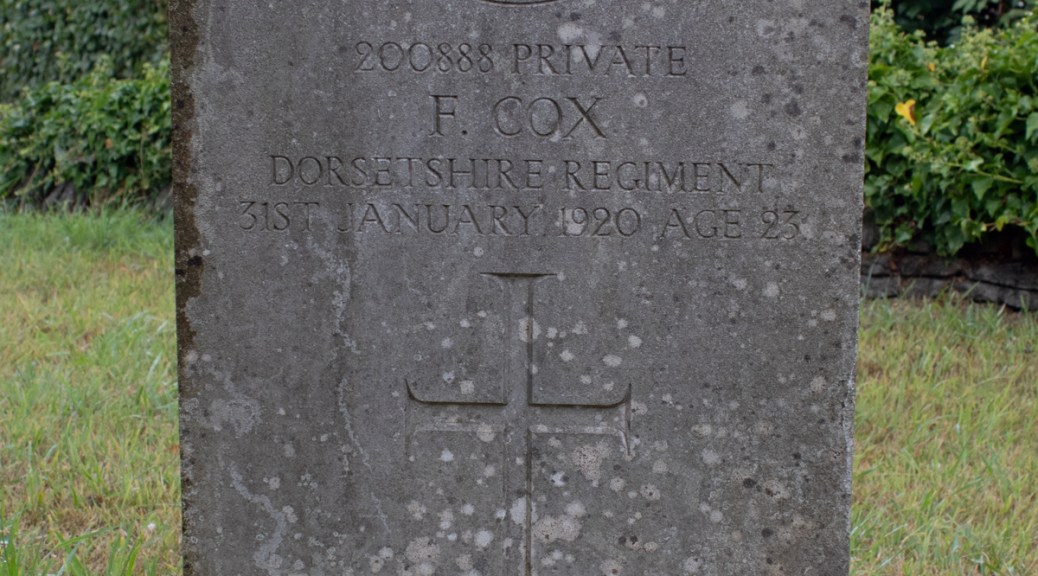
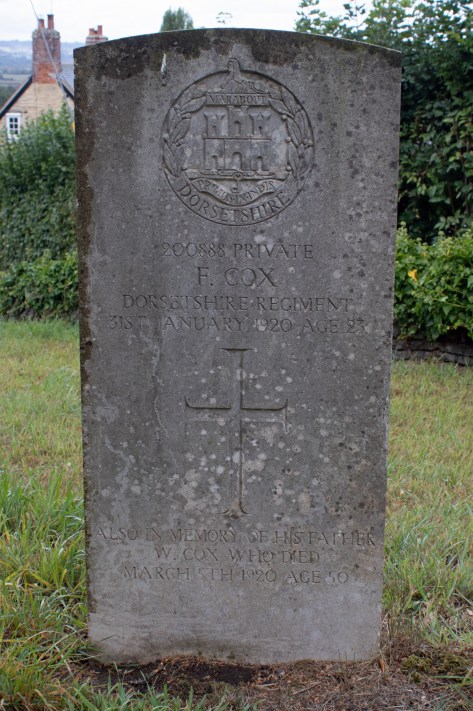
Private Frederick Cox

Private Frederick Cox

Frederick Charles Cox was born in the Dorset village of Kington Magna in the spring of 1897. One of seven children, his parents were agricultural labourer William Cox and his wife, Kate.

When Frederick completed his schooling, he also found work as a farm labourer. However, when war broke out, he was keen to play his part, possibly having seen his older brother, William Jr, also join up.

Unlike his sibling, Frederick enlisted in the Dorsetshire Regiment. His service papers have been lost to time, but it is clear that he took the role of Private, and that he was assigned to the 1st/4th Battalion. His unit began the war in India, but had moved to Basra in February 1916, remaining in Mesopotamia for the remainder of the conflict.

Private Cox survived the war, and had returned home by the end of 1919. His time in the army would impact his health, however, and during the winter of 1919/20, he came down with malaria, a condition which would prove fatal. Frederick passed away in hospital in Shaftesbury, on 31st January 1920: he was 23 years of age.

The body of Frederick Charles Cox was taken back to Kington Magna for burial. He was laid to rest in All Saints’ Churchyard, close to his brother, who had died a few years before.


Read more about Frederick’s brother William here.


Kate had lost two adult sons in a matter of years, and her tragedy was not to end. William Sr passed away less than five weeks after Frederick. He was buried close to his sons.


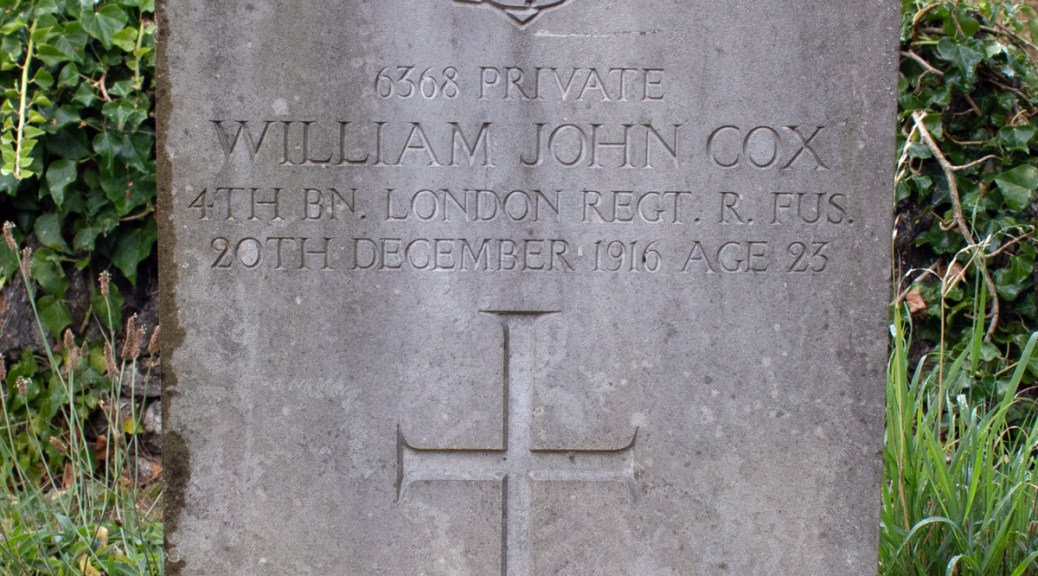
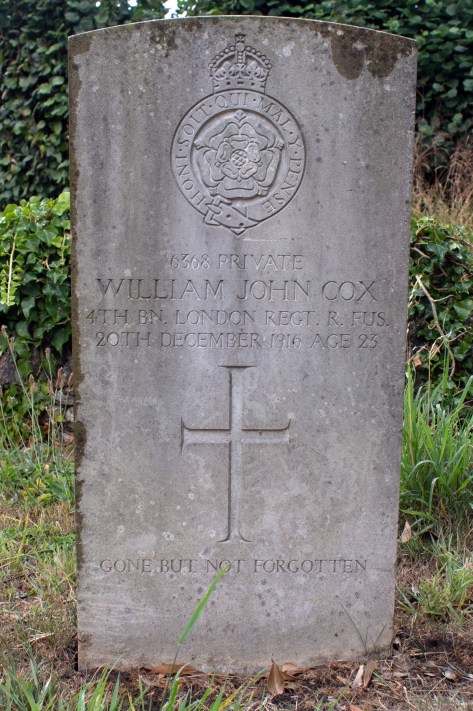
Private William Cox

Private William Cox

William John Cox was born in the autumn of 1893, and was the second of seven children. His parents – William and Kate Cox – were from Kington Magna, Dorset, and this is where they would raise their family.

William Sr was a farm labourer, and this is work into which his son would follow. By the time of the 1911 census, the family were living in a cottage on Church Street, with William Jr and his younger brother, Frederick, both agricultural workers.

When war came to Europe, William would step up to play his part. Full service details have been lost, but it is clear that he had enlisted in the army by the summer of 1916. As a Private, he was assigned to the 4th Battalion of the London Regiment (Royal Fusiliers).

Private Cox certainly saw action overseas, and would find himself entrenched at the Somme. At some point, he was wounded, and his injuries were bad enough for him to be sent back to Britain for treatment. He was admitted to hospital in Chatham, Kent, but his wounds would prove to be too severe. William passed away on 20th December 1916: he was 23 years of age.

The body of William John Cox was taken back to Dorset for burial. He was laid to rest in the tranquil surrounds of All Saints’ Churchyard in Kington Magna.


William’s younger brother, Frederick, also fought in the First World War. Read his story here.

Corporal Frederick James

Frederick John James was born in Willesden, Middlesex, in the spring of 1890. The oldest of six children, his parents were William and Louisa James. Louisa was William’s second wife, his first, Emily, having died in 1887. Frederick had ten half-siblings from this first marriage.

William was a fishmonger: the 1891 census recorded the family at 159 York Road, Battersea, Surrey. Ten years later, they had moved over the river, and were living to 46 Artizans Dwellings, Hammersmith, Middlesex.

Frederick’s father had passed away by the time of the 1911 census. The document recorded his mother residing at 18 Western Terrace, Notting Hill, Middlesex. She lived with three of her children – Ben, Alice and Grace – and was doing char work to bring in a little money.

Frederick, however, was already carving out a career in the army for himself. The same census recorded him as one of 250 troops billeted in Fyzabad, India, where he was a Private in the 2nf Battalion of the East Yorkshire Regiment.

Private James’ military career lacks some detail, and can only be picked up around the time of his passing. By this point, he had switched regiments, and was a Corporal in the 8th (Service) Battalion of the Somerset Light Infantry. He is also noted as being married to a woman called Frances Esther New: the couple had married in 1913, although there is no other information about her.

In the summer of 1917, Corporal James’ unit was caught up in the fighting at Passchendaele. Frederick was initially reported missing, but was later declared as being killed in action on 4th October 1917. He was 27 years of age.

The body of Frederick John James was laid to rest in the Zandvoorde British Cemetery, Ypres.


Frederick was my great great grand-uncle.

Rifleman Joseph Nicholls

Joseph James Nicholls was born in Battersea, Surrey, on 19th October 1889. There is frustratingly little information about his early life, although what remains legible on his service records confirm his mother’s name was Jenny, and he had five siblings: brothers William and Jack, and sisters Martha, Rose and Sarah.

On 8th May 1911, Joseph married Lavinia Tutte in St Mary’s Church, Battersea. She was the daughter of a boiler cleaner, and their marriage certificate provides a little more insight into the new groom’s background. His father is named as Joseph James Nicholls, a farrier who had died before his son married. Joseph Jr was working as a carman, and the couple were living at 43 Lombard Road. The couple would go on to have two children, daughters Jane and April.

When war broke out, Joseph was quick to step up. He enlisted 14th September 1914, just six weeks or so into the war, giving up his job as a carman to do so. He was 5ft 9ins tall and weighed 133lbs: he had brown hair, brown eyes and a fresh complexion. He was also noted as having a mole on his left arm.

Assigned to the King’s Royal Rifle Corps, he spent the next ten months training at Larkhill Camp, Wiltshire. During this time, he went AWOL (from 5:30pm on 24th May to 6:30pm on 9th June 1915), and forfeited 17 days’ pay. 

On 23rd July 1915, Rifleman Nicholls was dispatched to France with his unit – A Company of the 12th (Service) Battalion. There is little information available about where he served, although his unit landed near Saint Omer, and trained in camps around Fleurbaix. He was admitted to hospital for four days on 19th February 1916 for an undocumented illness, but this was not to impact his readiness for battle.

On 2nd March 1916, Rifleman Nicholls was wounded in the right shoulder, and admitted to the camp hospital. His injuries would prove too severe, however, and he succumbed to them on 4th March 1916. He was 26 years of age.

Joseph James Nicholls was laid to rest in the Essex Farm Cemetery near Ypres, Belgium.


Joseph was the first husband of my maternal great great aunt.


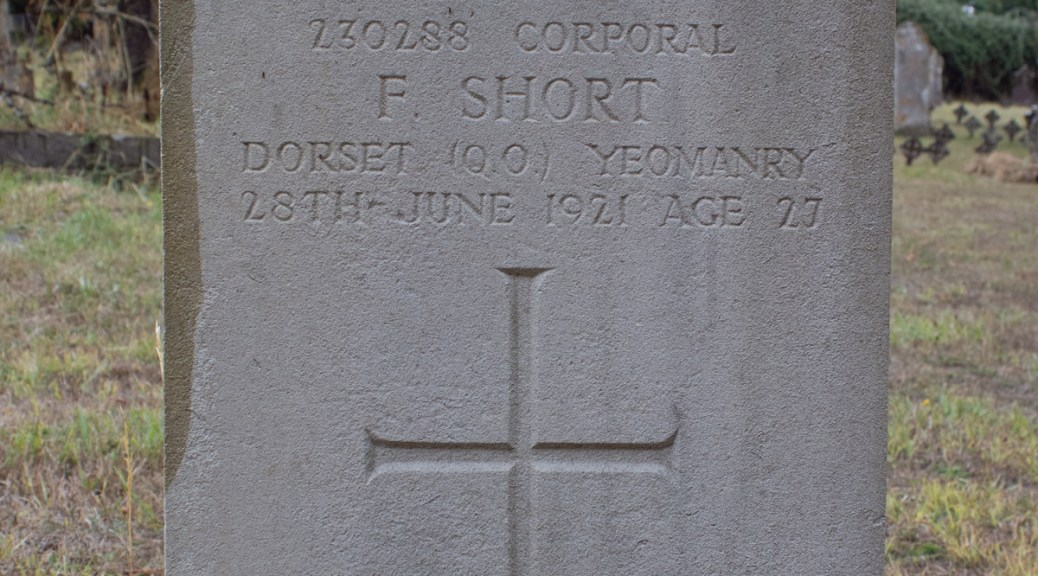
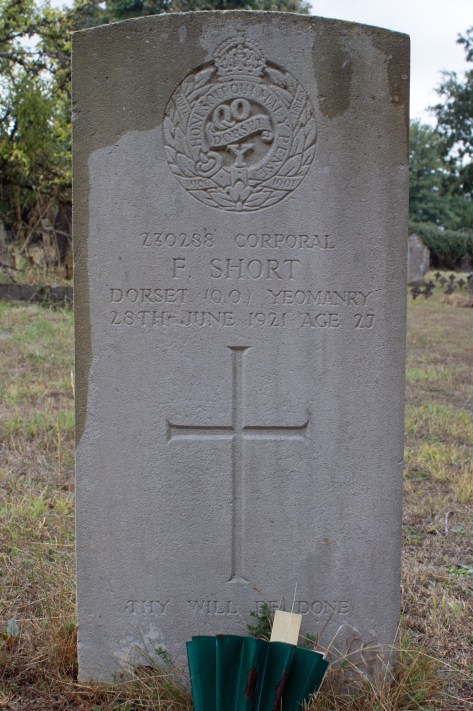
Corporal Frederick Short

Corporal Frederick Short

Frederick Short was born in Sturminster Newton, Dorset, in the spring of 1894. The oldest of five children, he was one of three sons to John and Martha Short. John was the caretaker of the village’s cemetery, and the family lived in a cottage on site.

When Frederick completed his schooling, he found work as a groom and, by the time of the 1911 census, he was boarding with John and Clara Binning in the village of Weare, Somerset.

War came to Europe in the summer of 1914, and Frederick was called upon to play his part. Full details of his military service have been lost to time, but it is clear that he enlisted in the Queen’s Own Dorset Yeomanry. By the end of the conflict, he had risen to the rank of Corporal.

Frederick survived the conflict, and returned home. At the start of 1919, he married Mabel Heritage, a soldier’s daughter from Somerton, Somerset. Her father, George, had died by the time of the 1901 census, and Mabel moved with her mother to Milborne Port, on the Somerset-Dorset border. The 1911 census found her working as a leather glove machinist, in a four-roomed cottage on Paddock Walk, to the north of the town centre.

The war had had a negative impact on Frederick’s health. The 1921 census shows him and Mabel visiting his parents in Sturminster: his occupation was given as unfit (formerly a groom). It was only a matter of weeks later that his condition worsened. Frederick passed away from a combination of malaria and heart disease on 28th June 1921: he was 27 years of age.

The body of Frederick Short was laid to rest in Sturminster Newton Cemetery, close to, and under the watchful eye of, his caretaker father, John.