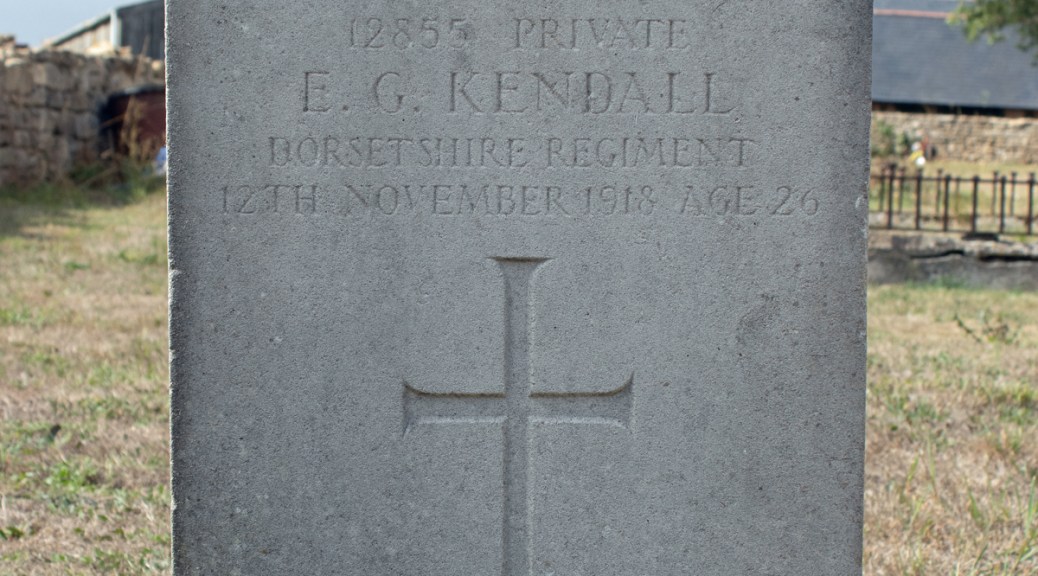
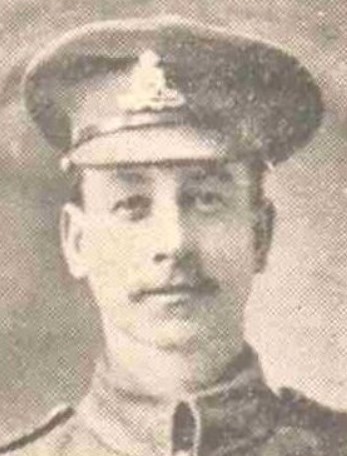
Ernest George Kendall was born in December 1891 and was the fourth of five children to Charles and Mary Kendall. Charles was a farm labourer from Dorset, and the family were living at Shearstock Farm in the town of Gillingham when Ernest was born.
By the time of the 1911 census, Ernest had found work as a farm labourer, alongside his father. When war broke out, however, Ernest felt the need to serve his country.
Full details of Private Kendall’s military service have been lost to time, but he had enlisted in the Dorsetshire Regiment by the autumn of 1915, and was assigned to the 5th (Service) Battalion. His unit left Britain on 15th October, and headed for the Eastern Mediterranean and Gallipoli.
Over the next few months, Ernest was caught up in fierce fighting. He was evacuated to the Greek island of Mudros in December 1915, and spent the winter in Egypt. By the summer of 1916, his unit had moved to France, and fought at the Somme.
At some point, Private Kendall returned to Britain, and transferred to the Labour Corps. The move was likely to be due to an illness or injury, although there is no documentation to confirm this either way. Attached to the 477th Agricultural Company, he seems likely to have been based in Wiltshire. Ernest was admitted to the Military Hospital in Fovant for reasons unknown, and passed away there on 12th November 1918, a day after the Armistice was signed: he was 24 years of age.
The body of Ernest George Kendall was taken back to Dorset for burial. By this point his family had moved to East Stour, and he was laid to rest in the village’s Christ Church graveyard.
William Charles Mence was born in Blackheath, Kent in the spring of 1877. He was the oldest of five children to William Cookes Mence and his wife, Susanna.
William Sr was a chemist-turned-dentist, and by the time of the 1881 census, the family had moved to prestigious lodgings on the corner of Claremont and Victoria Roads in Kingston-upon-Thames, Surrey. William had set up practice in the building, and employed two servants to assist him with the practice, and two more to help Susanna with the family.
Dentistry would keep William Sr occupied for at least the next thirty years, a move to nearby Surbiton in the late 1890s being the only change tot he business.
William Jr, meanwhile, was making his own way in the medical world. The 1901 census recorded the 24-year-old Mr Mence visiting a possible mentor, physician and surgeon Charles Gallie, in Camberwell. William was also noted as being a physician and surgeon, and this was to become the career in which he forged his way.
On 9th August 1906, William married Dorothy Mytton in the Saint Aelhaiarn’s Church in Guilsfield, Powys, Wales. Dorothy was the daughter of a retired army captain, Devereaux Mytton. She had been born in Guilsfield and, at the time of the 1901 census, was living with her family and ten servants at Garth Hall, close to the village.
The young couple’s marriage certificate also sheds some light on William’s career. It confirms that he was working as a medical practitioner, and was living in the village of Perranzabuloe in Cornwall.
William and Dorothy went on to have five children, and named them to reflect their combined family histories. Daughter Evaline Dorothy Cookes Mytton Mence was born first, in 1907, followed by sons John Herbert Myttone Cookes Mence, Devereaux Mervyn Mytton Cookes Mence and Godfrey Powis Mytton Cookes Mence. Their fifth child, daughter Myfanwy Susan Mence, was born in 1914.
When war broke out in Europe, William was drawn to play his part. While full details about his service are not available, his public standing meant that he took a commission as Captain in the Royal Army Medical Corps. His Medal Roll Index Card confirms that he was awarded the 1914-1915 star, so he joined early in the conflict. It also outlines that he served in Mesopotamia from 4th February 1916, in France in 1917 and in Salonika from 1917 to 1919.
Ill health seemed to have dogged him in later years, and by the summer of 1919, Captain Mence had returned to British shores, and to Devon, where his practice had moved to shortly before the conflict.
Dr William Charles Mence, of Axminster, who died in Axminster Cottage Hospital on Friday night, recently returned from active service… He was a medical officer under Axminster Board of Guardians…
Western Morning News: Monday 28th July 1919
William Charles Mence died on 25th July 1919 as a result of an ongoing illness: he was 42 years of age. He was laid to rest in Axminster Cemetery, not far from the family home.
The early life of Henry Morris is difficult to pin down although later records suggest that his parents were William and Elizabeth from Bath, Somerset. A baptism record from December 1882 shows Henry Morris, with a mother called Elizabeth, but no father is noted, so there is no way to confirm any connection.
The first concrete information for Henry is the 1911 census: this records Henry Morris living with his wife, Eliza, their son, Henry Jr, and Eliza’s mother, Emma Derrick. He was working as a poulterer, employed by a fishmonger’s, with Eliza also working as a fish hawker. Henry and Eliza – who had married in 1905 – would go on to have a second child, Emma, who was born in November 1911.
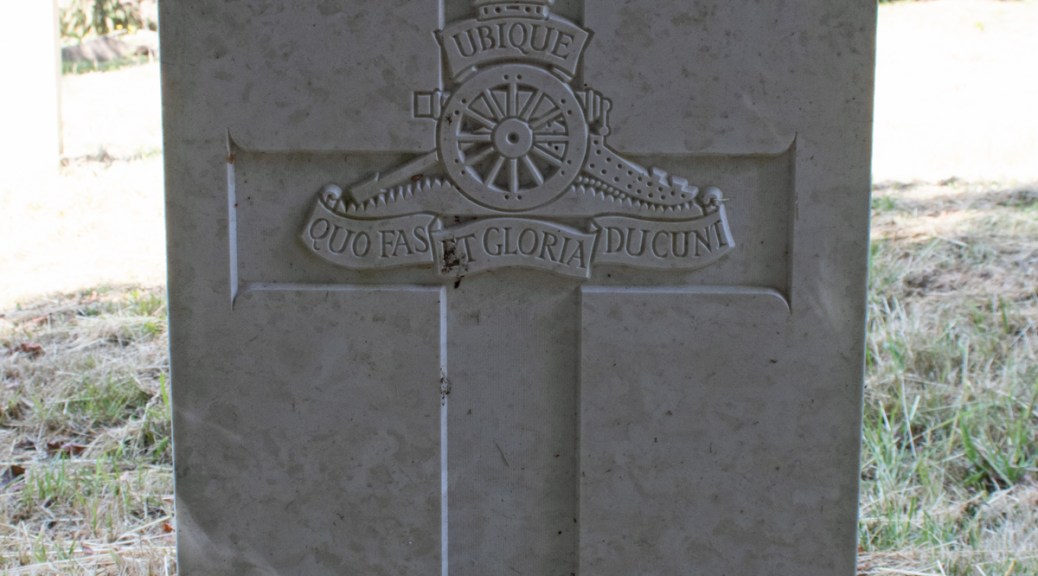
When war broke out, Henry stepped up to serve his King and Country. Full service records are lost to time, but it is clear that he had enlisted by the spring of 1916, joining the Royal Field Artillery as a Gunner. Documents suggest two different units in which he served: the 26th Division Ammunition Column and the 5th (Reserve) Brigade.
By the autumn of 1916, Henry was suffering from nephritis. He was admitted to the military hospital on Endell Street, London, but his condition was to prove fatal. He passed away on 24th November 1916: he was 32 years of age. With a few discrepancies, a newspaper article gave a little more information about his life:
Henry Morris, RFA, 67 Avon Street, died this morning… He was invalided home from Salonika, and arrived in London nine weeks ago, He was married, and leaves a widow and two children… For eleven years Driver Brooks worked for Mr Broadhurst, fishmonger, York Buildings, Bath, and joined the army sixteen months ago.
[Bath Chronicle and Weekly Gazette: Saturday 25th November 1916]
Henry Morris was taken back to Somerset for burial. He was laid to rest in Bath’s sweeping Locksbrook Cemetery.
Henry Ridler was born in Henbury, Gloucestershire, in the summer of 1862. He was the middle of three children to Abraham and Harriet Ridler. Abraham was a farm labourer who moved the family for work to the Weston area of Bath, Somerset, not long after Henry’s younger brother, John, was born.
The oldest Ridler sibling, Joseph, worked as a cabinet maker, and by the time of the 1881 census, both Henry and John were apprenticed to him. Henry married Emma Stone on Christmas Eve 1882, and the couple would go on to have seven children.
The 1891 census found Henry and the family living at 5 Comfortable Place in Bath, one of a row of terraced cottages then, but now sandwiched between the River Avon and the busy A4. Henry and Emma had four children by this point – all daughters – and the house was split between them and mother-and-daughter dressmakers Lucy and Lucy Batt.
By the time of the 1901 census, the family were growing up, and had moved literally just around the corner, to 2 Onega Terrace. Set slightly back from the main road, this terraced house had six rooms, and was better suited to the growing family. Henry was still working as a cabinet maker at this point, while his three oldest daughters – Mabel, Lilian and Maude – were all employed, as a corset fanner, a kitchen maid and a nurse girl respectively.
The next census return, taken in 1911, recorded the Ridler family still living in the same house. Henry and Emma had been married for 28 years by this point, and, while 2 Onega Terrace may have had six rooms, they would have become very cramped by this point. Six of the children – aged between 14 and 27 – were still living at home, with everyone in the household but Emma bringing in a wage of sorts.
War was closing in by this point, and, despite his advancing years, Henry was drawn to serve his King and Country. He enlisted in the Royal Army Service Corps on 20th October 1915, a date that confirms he volunteered for duty, as conscription wasn’t introduced until the following year. Henry’s service records show that he was 5ft 6ins (1.68m) tall, with greying hair and blue eyes.
Private Ridler spent two periods of time overseas. In November 1915, his unit was sent to the Eastern Mediterranean, and he served in Salonika, Greece, for seven months. While there, he was hospitalised following an injury to his right knee. He was medically evacuated to Malta, before being posted back home in Britain to convalesce in Woodcote Park Hospital, Epsom, Surrey.
By the summer of 1916, Henry was deemed fit once more, and was sent abroad again, this time to the Western Front. Details of his time there are sketchy, although he seems to have been transferred tot he Labour Corps at some point. It appears that his previous injury flared up again, and he was eventually discharged from the army on medical grounds on 30th July 1918.
At this point, Henry’s trail goes cold. He returned to Bath, but it is unclear whether or not he was able to resume working. The next confirmed documentation for Henry’s life is that of his passing. While the cause is unclear, he breathed his last on 3rd June 1921: he was 58 years of age.
Henry Ridler was laid to rest in Bath’s sweeping Locksbrook Cemetery, a short walk from the family home in Onega Terrace.
Emma remained in the family home for the next 17 years. When she passed away in 1938, she was also laid to rest in Locksbrook Cemetery, not far from her late husband.
Ernest Roye Hewett was born on 18th April 1898 and was the third of twelve children to Alfred and Ada. Alfred was a coachman and groom and, while both he and Ada were born in Cornwall, it was in Budleigh Salterton, Devon, that the family were born and raised.
When he finished his schooling, Ernest found work as a butcher’s boy, but when sought bigger and better things. His oldest brother, Ralph, had enlisted in the army by the time of the 1911 census and, by that October, his next oldest brother, Leslie, had enlisted in the Royal Navy. Ernest felt a career in the military was his destiny and, on 12th September 1913, he also joined the navy.
As he was under age at this point, he was given the rank of Boy 2nd Class, and sent to HMS Impregnable, the training establishment in Devonport, for his induction. His service records show that he was 5ft 2.5ins (1.59m) tall, with brown hair, hazel eyes and a fresh complexion.
Ernest spent nine months training, moving from Impregnable to HMS Powerful, and gaining a promotion to Boy 1st Class in the process. In June 1914, he was assigned to the cruiser HMS Edgar, remaining on board for six months, by which point war had broken out.
On 18th December 1914, Lance Corporal Ralph Hewett was killed in action, aged just 20 years old. Attached to the 2nd Battalion of the Devonshire Regiment, he was caught in fighting in Northern France, and is commemorated on the Le Touret Memorial.
Ernest, by this point, had been assigned to another ship, the armed merchant cruiser HMS Viknor. Patrolling the seas off Scotland, towards the end of the month, she was tasked with locating and detaining the Norwegian ship Bergensfjord, on board which was a suspected German spy.
The vessel was located and escorted to Kirkwall in the Orkneys, and the suspect and a number of other prisoners, were taken on board the Viknor to be transported to Liverpool. The ship and crew were never to reach their destination. On 13th January 1915, she sank in heavy seas off the Irish Coast: no distress signal was made and all hands were lost.
BODY WASHED ASHORE – Another body has been washed ashore at Pallntoy Port, about six miles from Ballycastle. The body was that of a man of about 5ft 10in. in height. He was dressed in a blue jacket, and wore a service blue webbed belt, on which was the name E. F. Hewett. In the pocket of the trousers was a boatswain’s whistle.
Freeman’s Journal: 24th February 1915
Already in mourning for Ralph, Alfred and Ada were unable to bring 16-year-old Ernest Roye Hewett back home. Instead, he was laid to rest in Ballintoy parish church, County Antrim.
The heartbreak was to continue for the Hewett family. Leslie’s career had gone from strength to strength and, by the time of his older brother’s death, he had been promoted to Able Seaman. In the summer of 1915, he was assigned to the cruiser HMS Europa, remaining aboard for the next year as it patrolled the Mediterranean. In July 1916 he fell ill, having contracted malaria. This was to prove his undoing: he passed away from the condition on 21st July, at 20 years old.
Able Seaman Leslie Hewett was laid to rest in the Mikra British Cemetery in Greece. His parents had now lost their three oldest sons, and had no way to reach their final resting places.
Robert Carroll was born on 15th October 1874 in Ballymena, Co. Antrim. He was one of three children to Henry and Mary Ann Carroll.
There is little additional information about his early life, but, on 6th April 1896, he married a woman called Martha Keenan. Robert was a plasterer at the time of his wedding, and the couple went on to have four children. Tragically, the youngest, Robert Jr, was just five months old when he passed: even worse, Martha was to die just weeks later, in June 1908.
With three children to raise, the grieving Robert married again, wedding Sarah O’Hara in October 1909. They were to have a son together, another boy they called Robert, the following year.
When war came to European shores, Robert stepped up to play his part. He enlisted in the Royal Irish Regiment and was assigned to the 1st Battalion. By September 1915, Private Carroll was sailing for the Eastern Mediterranean, where he was to remain for more than a year.
Little further information is available for Robert’s life. He was discharged from the army on 27th April 1917. As his service records no longer remain, it is not possible to determine why he left the army, but is likely to be as a result of illness or injury.
Robert returned to Northern Ireland, and his trail goes cold. All that can be confirmed is that he passed away at home on 7th August 1919, at the age of 44 years of age.
Robert Carroll was laid to rest in Crebilly Cemetery, on the hills outside Ballymena.
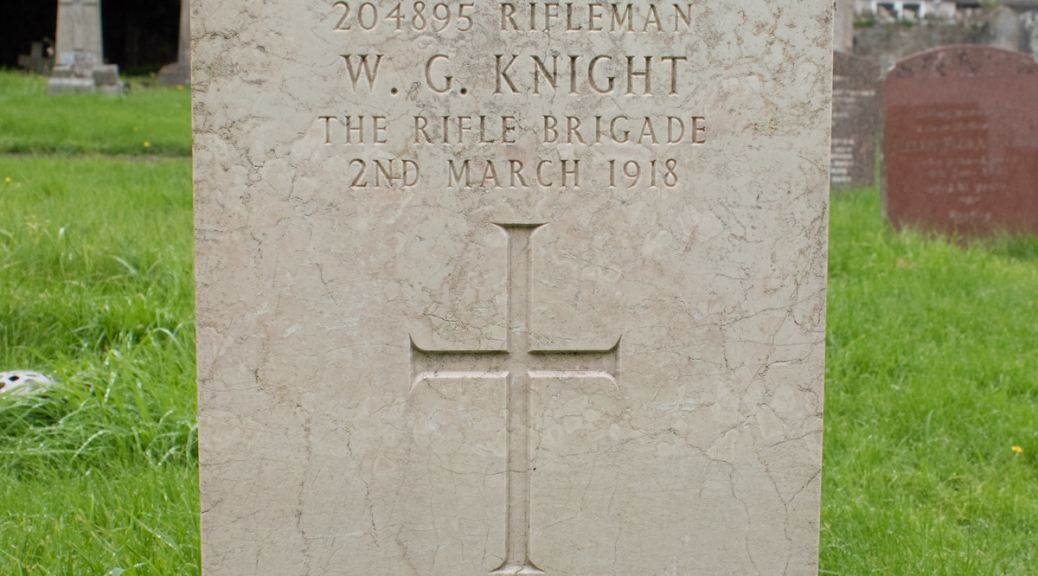
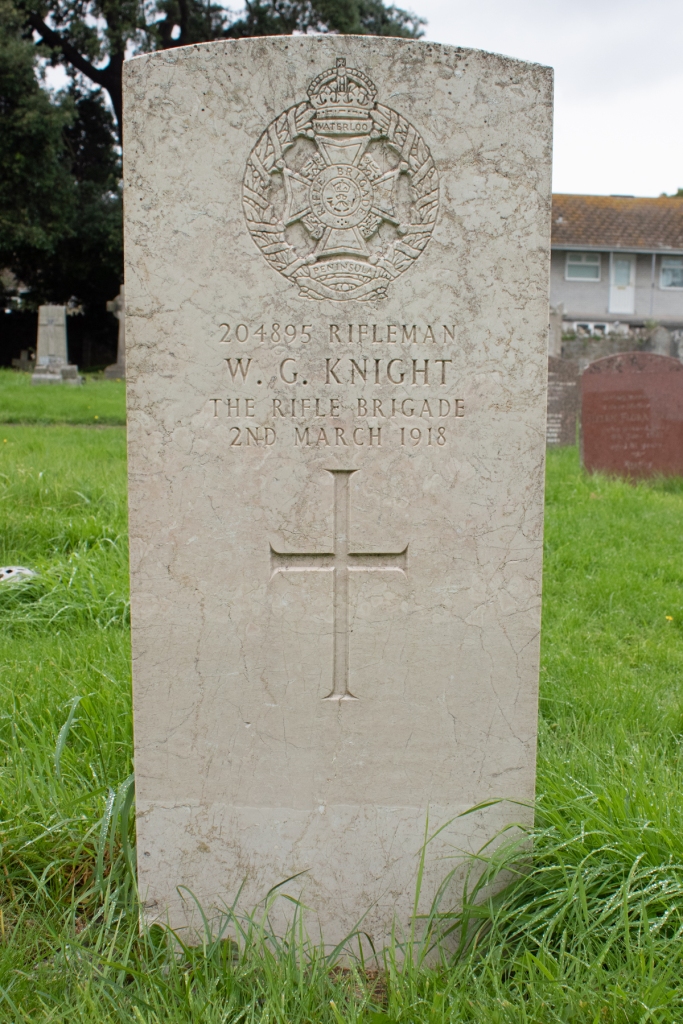
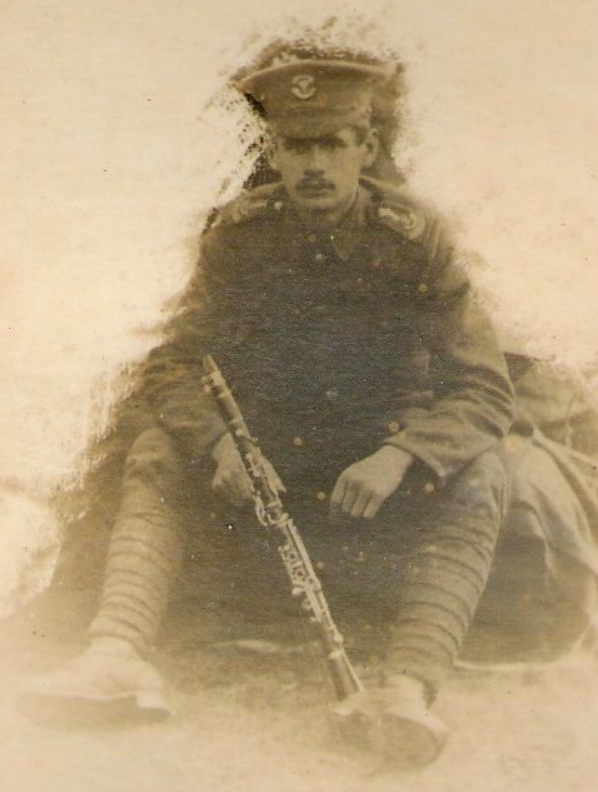
Walter George Knight was born on 27th December 1887 and was the older of two children to George and Mary. George was a gardener from London, Mary had been born in Devon, but it was in Weston-super-Mare, Somerset that they settled down to raise their family.
On 11th October 1910, Walter married Rosa Burford at St Saviour’s Church. While listed as a spinster, Rosa had two children by this point – Phyllis and Lionel. A later document records Walter as their stepfather, but their full parentage is unclear.
The marriage certificate notes Walter’s trade as a musician, but the following year’s census shows a more reputable trade, as he had taken to working as an insurance agent. He and Rosa had set up home in Cranleigh Road, Bridgwater, by this point, in a small terraced house they shared with the two children and Rosa’s widowed father, William.
By the summer of 1914, war was brewing over European shores, and Walter was quick to step up and support his country. He enlisted in the army on 14th October, joining the Somerset Light Infantry. He spent a year with the regiment, before transferring to the 22nd Wessex & Welsh Battalion of the Rifle Brigade.
By January 1916, Rifleman Knight found himself sailing for the Eastern Mediterranean, spending the next year in Egypt and Salonika. It was while he was overseas, in the spring of 1917, that he became ill and, having contracted tuberculosis, he returned to the UK.
Walter’s condition meant he was no longer fit for the army: he was formally discharged from the Rifle Brigade on 16th April 1917, having served for two-and-a-half years. He was admitted to the Cheddon Road Sanatorium in Taunton, the aim being to help manage his condition.
Rosa and the children had moved from Bridgwater by this point, settling in a small house in Ravensworth Terrace, Burnham-on-Sea. It is likely that Walter came here to visit the family during good spells in his health. The lung condition was to get the better of him eventually, however, and he passed away on 2nd March 1918, at the age of 30 years old.
Walter George Knight was laid to rest in the peaceful Burnham Cemetery, a short walk from where his grieving family lived.
Henry George Yard was born on 25th October 1884 in the Somerset village of Burnham-on-Sea. The second of seven children, his parents were John and Elizabeth Yard. John was a railway porter, but Henry chose a different route, becoming a mason’s labourer.
Henry’s work took him to South Wales, where he took up a position as a pit mason. The 1911 census recorded him as boarding in a six-roomed house in Abertillery, Monmouthshire. From the document there can be no mistaking that this was a mining community. The head of the household for 70 New Gladstone Street was 28-year-old Albert Francis, colliery banksman. He lived there with his wife, Martha, who was fifteen years older than him, and her three children: William, Herbert and Horace.
Martha had been married previously, to coal miner Walter Mutter. Both had been born in Somerset, and had come to South Wales like so many other families, because of the work. Walter died at the beginning of 1909, leaving his widow to raise three children on her own. It seems likely that this is where Albert stepped up: it was not unknown for mine workers to support each other in times of dire need. He married his former colleague’s widow in the autumn, securing a future for her and her family.
According to the census record, the Francis family had one other boarder and all but Martha and Horace worked in the local colliery in one way or another.
There seemed to have been money in Henry’s career move, as it set him up to marry Gertrude Coombes on 6th August 1912. She was a gardener’s daughter from Berrow in Somerset, and eight years younger than her husband. The couple married at St Mary’s Church, Berrow, and appeared to settle back in South Wales. They went on to have two children: Gertrude, who was born the following year, and Daisy, who came along in 1916.
When war came to Europe, Henry was called upon to play his part. He enlisted in October 1915, and was initially assigned to the 3rd Battalion of the Welch Regiment. His service records show that he was 5ft 6ins (1.68m) tall, and weighed 133lbs (60.3kg). He was noted to be of good physical development, although dental treatment was required.
Private Yard transferred to the Machine Gun Corps at some point, and by the autumn of 1916 was sent to Greece. He remained there for nearly two years, but became dogged by malaria in later months there. Initially coming down with the condition in August 1917, he spent the remainder of the war in and out of hospital as attacks of the condition came and went.
Initially returning to home soil and placed on reserve status, Henry was eventually discharged on medical grounds at the end of 1918. He returned to the family home. He was not to be there for long, however: debilitated by malaria, Henry passed away in Bedwellty on 23rd March 1919, at the age of 34 years old.
With strong family connections in Somerset, Gertrude took her husband back there to be laid to rest. Henry George Yard was buried in the tranquil graveyard of St Mary’s Church in Berrow.
Reginald Cuthbert Langford was born in Frome, Somerset, in the spring of 1899, the youngest of thirteen children to Albert and Charlotte Langford. Albert was a chalk seller turned jobbing gardener, who, by the time of the 1911 census, had moved the family to Bath.
Reginald appears to have helped his father with his work when he finished his schooling, but, during the First World War, he enlisted in the Royal Engineers as a Driver. His service records no longer remain, but a later newspaper report shed some light onto his time in the army: “[He] enlisted when he was just over 16, and went to the Wessex Engineers to Salonica. He returned to England and then went to France with the Glamorgan Engineers.” [Bath Chronicle and Weekly Gazette: Saturday 16th October 1920]
All did not fare well for Driver Langford: he contracted malaria and dysentery, and a combination of the conditions led to his ultimate discharge from the army. He left the Royal Engineers on 24th June 1919, and returned home to Somerset.
When he had recovered his health, Reginald took up employment as a gardener once more. On September 1920, he was in the employ of a Mr J Milburn, in Bath, when he felt a nail drive through his boot, scratching his foot. The following Tuesday, he visited his doctor – a Mr John Jarvis – complaining that his malaria had returned. According to a later inquest:
[He] did not make any mention of a wound in the foot. On Thursday, at about 10 o’clock, [Jarvis] was asked to go and see Langford, who was in bed. He was covered with a cold sweat, he could speak only with difficulty, and complained that he could not swallow anything, especially the medicine… His limbs were rigid, but he had not all the symptoms of tetanus. [Jarvis] decided to send Langford to the hospital at once, suspecting that he was suffering from tetanus. He did not know till later that there was an injury to [Reginald’s] foot.
Bath Chronicle and Weekly Gazette: Saturday 16th October 1920
Reginald’s landlady, Amelia Baily, also gave evidence at the inquest:
Langford had lodged with her for about nine months. His inly complaint was of his head when he had malaria… He came home saying his foot was sore and that he had thought it was gathering. He had hot water to soak it, and he did the same the next night, an afterwards sad it was alright… he went to work, but returned at dinner time again complaining of his head and perspiring terribly. He was ill and witness looked after him during the night. He complained of pains in the stomach and aid they were going up to the throat. Next morning [Amelia] sent for the doctor.
Questioned as to the injury to Langford’s foot, [she] said he told her he had a nail enter the toe while he was in the army, and that it was festering again. He wad worn the army boots up to just before he became ill, when he bought new ones.
Bath Chronicle and Weekly Gazette: Saturday 16th October 1920
Admitted to the Pensions Hospital, Bath, Reginald was to be there only one day. He passed away on 8th October 1920, aged just 21 years old. Medical evidence at the inquest diagnosed tetanus as the cause of his death, but Reginald’s older brother, George, contested this.
George’s challenge was that, having some medical background, he felt that his brother’s death was caused not by tetanus, but by malaria. He was a sufferer himself, and he knew the symptoms. He had examined Reginald’s body, and could not see how the small scratch on his foot could have induced tetanus to the extent of causing his brother’s passing.
The Coroner at the inquest, a Mr F Shum, declined George’s assertion, on the basis that separate medics had determined tetanus as the cause:
“It may not have been from the foot, but the evidence is clear. Dr Jarvis said he formed the opinion before any suggestion was made to him, that the man was suffering from tetanus. He saw the symptoms, and the man was brought here [to the Pensioner’s Hospital]. Two doctors saw him here and came to the same conclusion, and a medical specialist confirmed the diagnosis. Therefore, it is quite clear to me, and my verdict will be that he died from tetanus. It is a very unfortunate thing, and I am sorry for you.
Bath Chronicle and Weekly Gazette: Saturday 16th October 1920
George’s challenge was as much about the financial aspect as it was his late brother’s wellbeing. Had Reginald’s death been the result of malaria, it could have been attributable to his military service, and therefore any funeral costs – or at least a proportion of them – would have been paid for by the army. As the inquest had identified tetanus as the cause of his passing, however, the family would have to pay for the burial themselves.
Following the inquest, Reginald’s funeral was held: he was laid to rest in the sweeping Locksbrook Cemetery, Bath, not far from where his bereaved family still lived.
There are two other intriguing aspects of Reginald’s case.
The first is that of his being awarded a war grave. Amongst other criteria, which can be seen here, the Commonwealth War Graves Commission (CWGC) are responsible for the commemoration of personal who died after they were discharged from a Commonwealth military force, if their death was caused by their wartime service.
Based on the inquest, Reginald’s passing was clearly not – the tetanus having come on after his medical discharge for malaria and dysentery. Technically, therefore, his should not be designated a war grave.
The second confusing thing is that of the date on Reginald’s headstone. The CWGC headstone gives the date of his death as 13th October 1920, as do his grave registration documents. While newspaper reports are not always a reliable source of information, the first media report of the inquest came on Tuesday 12th October.
The Bath Chronicle and Weekly Gazette article confirms that Dr Jarvis’ visit to Reginald was on Thursday 7th October. He was admitted to hospital straight away, “where he died the following day” [Bath Chronicle and Weekly Gazette: Saturday 16th October 1920]. This would suggest that Reginald died on Friday 8th October.
While the newspapers do not confirm the date of the inquest, it is likely to have been held soon after Reginald’s passing. The date provided by the CWGC, therefore, looks to be either that of the conclusion of the inquest, or of Reginald’s burial.
John Edmonds was born on 12th November 1871 in Bath, Somerset. The oldest of five children, his parents were market gardener Albert Edmonds and his wife, Ellen.
When he finished his schooling, John found work as a miner. He sought a more adventurous career, however, and, on 8th November 1894 he enlisted in the army. Assigned to the Royal Artillery, Gunner Edmonds’ service records noted that he was 5ft 8ins (1.73m) tall and weighed 149lbs (67.6kg). He had brown hair, grey eyes and a sallow complexion, with a couple of marks above and below his left eye.
Gunner Edmonds was assigned to the 4th Mountain Battery and spent most of the next year training on home soil. On 17th September 1895, however, he was transferred to the 5th Mountain Battery, and shipped off to India, where he was to spend the next nearly nineteen years. During his time on the Asian sub continent, John was awarded the India Medal, with clasps for the Punjab Frontier and Tirah (both 1897-98). He was also awarded the Delhi Durbar Medal in 1911.
When war came to Europe in August 1914, John was recalled to British shores. He was not to remain on home soil for long, however as, on 9th December he was sent to France as part of the Royal Garrison Artillery. He spent just over a year on the Western Front before his troop was dispatched to Salonika, Greece, in December 1915.
Gunner Edmonds was to remain in the Eastern Mediterranean for a little over three years. During this time he had a short period in hospital, having contracted malaria, but saw the war out in Greece, returning home in March 1919. John was formally stood down from military service on 25th April 1919, having completed 24 years 169 days in the army.
Returning to Bath, John’s health had started to suffer. He had developed cancer, and passed away from the condition on 4th October 1919. He was 47 years of age.
John Edmonds’ body was laid to rest in the military section of Bath’s Locksbrook Cemetery.








 Death and Service