William James Pole was born on 22nd July 1892 in the Somerset village of Halse. He was the third of six children to shepherd and farm labourer William Pole and his wife, Harriet. When he left school, William Jr also found work on a relative’s farm in Herefordshire.
William Jr was still working on the farm when war broke out. He enlisted in the spring of 1915, joining the Royal Army Service Corps as a Private. There is no evidence of whether he served overseas, although it seems likely that he would have done, if only for a short while.
By September 1915, however, he was back on English soil, having been admitted to Netley Hospital in Southampton, suffering from enteric fever, also known as typhoid. Sadly, his illness was to get the better of him, and he passed away in the medical facility on 12th September 1915. He was just 23 years of age.
William James Pole’s body was brought back to Somerset for burial. He lies in the graveyard of St James’ Church, Halse. His parents would also be buried there: William Sr in 1935, and Harriet in 1949.
Samuel Troake was born in Wellington, Somerset, on 24th August 1890. His parents were Samuel and Mary Troake and he was one of seven children to the couple. Mary had been married before, and had a daughter of her own. Samuel Sr was a shepherd turned labourer: when Mary died in around 1894, he married again, to widow Sarah Carter. She also had children of her own, something that is noted in the 1901 census, which records husband and wife sharing the house (from his perspective) with six of his children and five step-children.
By the time of the next census, ten years later, the Troake family home was a lot less crowded. Road contractor Samuel Sr and Sarah were recorded living with Samuel Jr and his younger brother, Charlie – both of whom were wool spinners , and the couple’s grandson, Percy.
Working at the wool factory came with benefits for Samuel Jr. It was there that he met Alice Slade, and the couple married on 10th December 1914, at the local parish church. The couple set up home not far from his parents, but war was soon to take him away from his new bride.
Full details of Samuel’s military service are not available: he enlisted in the Somerset Light Infantry, and was assigned to the 8th (Service) Battalion. He served on the Western Front, and remained there until almost the end of of the conflict.
Private Troake was recorded as being caught up in the conflict, and was medically evacuated to England for treatment to a bullet wound. Sadly, the injuries to his abdomen and bladder were to prove too severe – he passed away in a Portsmouth hospital on 30th October 1918. He was 28 years of age.
Samuel Troake was brought back to Somerset for burial. He was laid to rest in Wellington Cemetery, not far from where his widow and father still lived.
Herbert William Towell was born in the autumn of 1899, the oldest of six children to James and Prudence. James was a wool sorter in a factory, who had been born in Rockwell Green, on the outskirts of Wellington, Somerset, and this is where he and Prudence raised their children.
The Towell family were locals to Rockwell Green. James’ brother Charles lived just a few doors away from him and the 1911 census recorded James and Prudence living at 105 Rockwell Green Road, while Herbert, aged eleven, was living with his paternal grandparents, William and Charlotte, at 131 Rockwell Green Road.
When he left school, Herbert found work as an engine cleaner. War, however, was imminent and he was keen to play his part, but was initially too young do so. His time came, though, and on 30th June 1917 he was enlisted into the 34th Training Reserve Battalion.
At seventeen years and nine months, Private Towell’s service record gives his height as 5ft 11ins (1.80m), his weight as 144lbs (65.3kg) and confirms that he had a mole on his right cheek. He was initially assigned to the 53rd (Young Soldier) Battalion of the Hampshire Regiment, and posted to the army base at Durrington, close to Stonehenge.
In November 1917, Private Towell was admitted to the camp hospital with diarrhoea. Sadly, he had also contracted tuberculosis and it was recommended that he spend some time in a sanatorium. On 6th February 1918, he was discharged from service on medical grounds, and ordered to present himself for review the following year.
Herbert was not to get the chance to do so: within a month of his discharge he succumbed to the lung condition, breathing his last on 5th March 1918. He was just 18 years of age.
Herbert William Towell was brought back to Somerset for burial. He was laid to rest in Wellington Cemetery, within sight of his parents’ home.
Tragedy was to strike James and Prudence again less than a year later, when Herbert’s younger sister, Florence, passed away, aged just ten years old. No further information about her passing is available, so she may also have succumbed to one of the lung conditions running rampant across Europe in the aftermath of the war.
Albert Edward Blackwell was born in Corfe, Somerset, in the autumn of 1872. He was the third of eight children to Francis and Harriet Blackwell. Francis was a farm labourer, while Harriet supplemented their income by taking in washing. Albert didn’t follow in his father’s footsteps, however, but found work as a ropemaker when he left school.
On 21st September 1905, Albert married Mabel Hellen Fry, a factory hand and porter’s daughter from Wellington, Somerset. The couple began their married life living with Mabel’s parents, and went on to have five children. By the time of the 1911 census, Albert was working as a carter for a local coal merchant, but war was on the way.
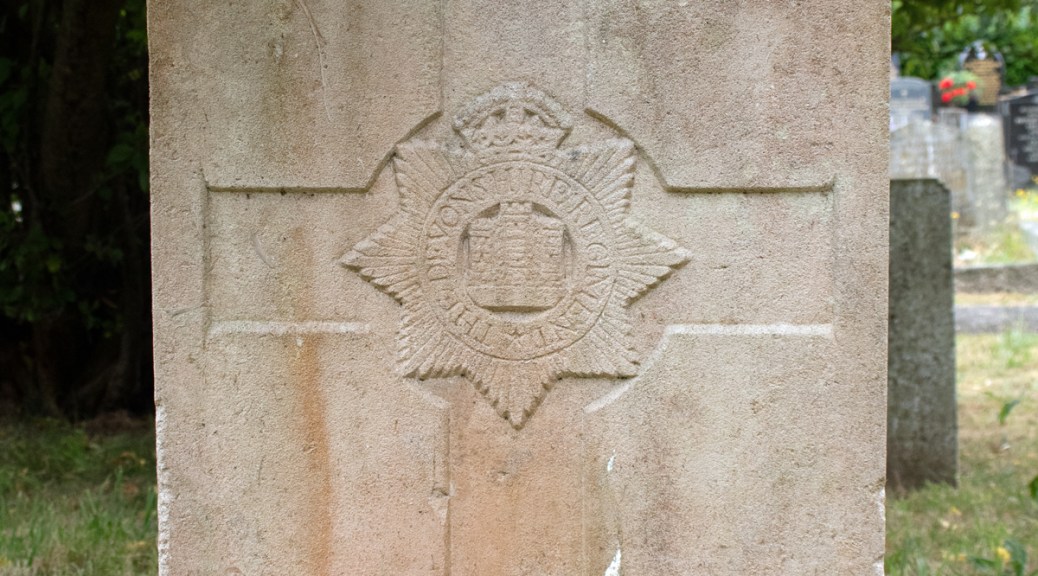
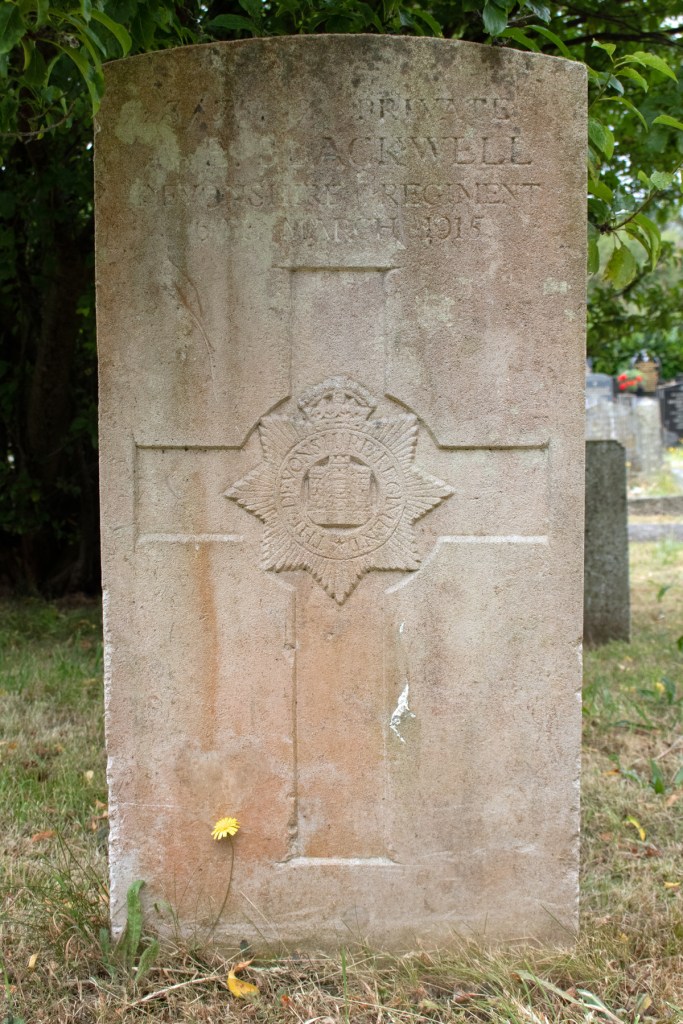
There is little information available about Albert’s military service. He enlisted at the start of the conflict, joining the 9th Service Battalion of the Devonshire Regiment by September 1914. Private Blackwell was based at Aldershot, Hampshire, but his service was not to be a long one.
Albert was admitted to the Connaught Military Hospital near Marlborough, suffering from tuberculosis. This became bronchitis, and the lung conditions proved too much for Private Blackwell’s constitution to take. He passed away at the hospital on 6th March 1915, at the age of 42 years old.
Albert Edward Blackwell was brought back to Somerset for burial. He was laid to rest in Wellington Cemetery, not far from where Mabel was still living.
Now widowed, Mabel still had children to raise. In the spring of 1916, she married Alfred Barnfield, a greengrocer from Bath. He had served in the Coldstream Guards for two years, before he was discharged for misconduct in May 1911. Sadly, no further information is available for him and Mabel’s trail also goes cold at this point.
Frederick William Best was born in Wellington, Somerset, early in 1898 and was the middle of three children to factory worker Frederick Best and his wife, Bessie. When he left school, he found work as a delivery boy for a local baker, unlike his father, who was a long-time working in the local woollen factory.
War was closing in on Europe, however, and Frederick Jr was soon keen to play his part. Full details of his military service are not available, but it appears that he enlisted in the Worcestershire Regiment as soon as he was able, Private Best was assigned to the 15th (Transport Workers) Battalion, and served on home soil, initially in Swindon, and then in Southampton.
It was while he was billeted in Hampshire that Frederick contracted meningitis. He was admitted to a hospital in the city, but the condition was to get the better of him, and he passed away on 2nd January 1918, aged just 19 years old.
Frederick William Best’s body was brought back to Somerset for burial. He was laid to rest in the cemetery in his home town, Wellington, where his parents were both buried in the 1930s.
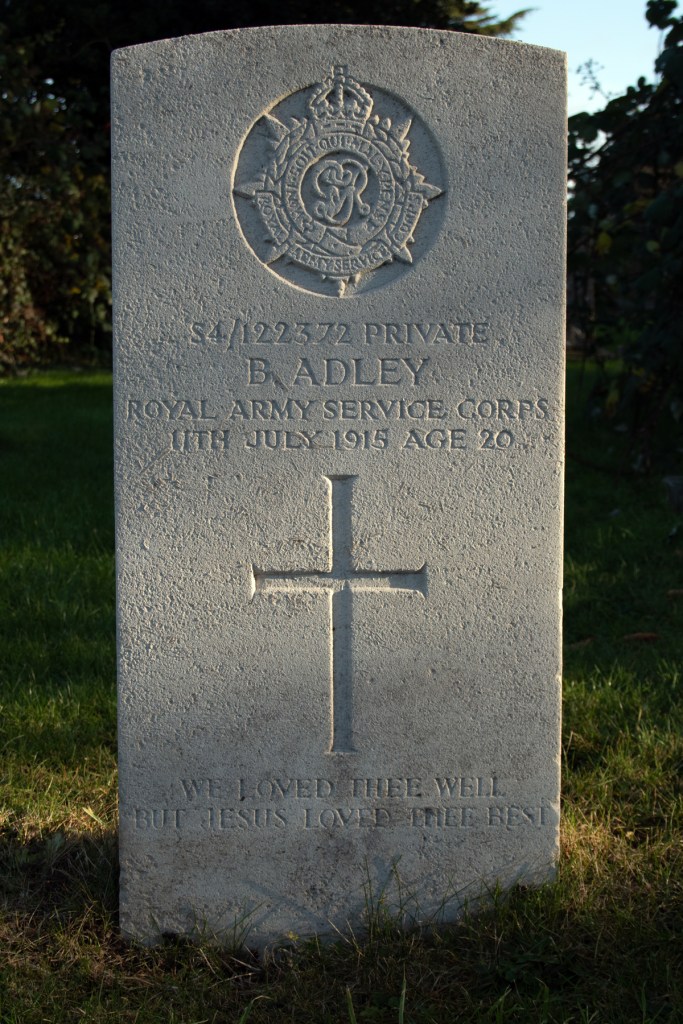
Bert Bennett Adley was born in the spring of 1895, the youngest of eleven children to George and Alma Adley. George was a brickmaker’s labourer from Canterbury, Kent, but it was in nearby Faversham that he and Alma raised their family.
Bert – who was affectionately known as Bertie – found work with a local baker when he left school, and this stood him in good stead when war broke out. He was called up in June 1915, and joined the Army Service Corps as a Private. His service records give little personal information, but they do give his height as 5ft 5ins (1.65m) and his weight as 9st 2lbs (58kg).
Private Adley’s military life was to be tragically short. Based in Aldershot, Hampshire, it is likely that the sudden mixing of recruits from across the country was key in his contracting pneumonia. He was admitted to hospital on 26th June, and died two weeks later, on 11th July 1915. He was just 20 years of age, and had been in the Army Service Corps for just 28 days.
Bert Bennett Adley’s body was brought back to Kent for burial. He was laid to rest in his home town, in the Faversham Borough Cemetery.
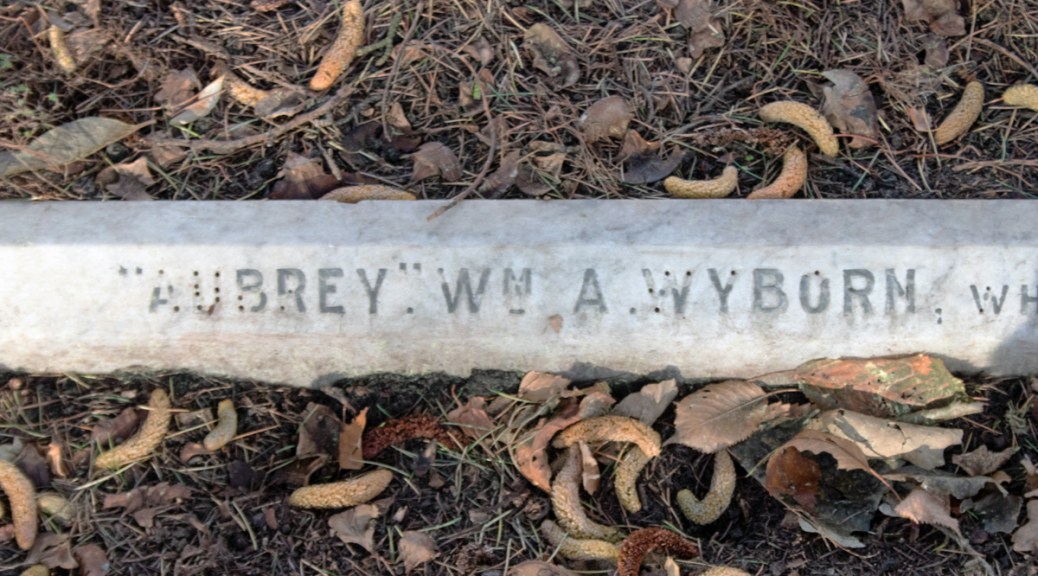
William Aubrey Wyborn was born on 15th November 1897, the middle of three children to farmer-cum-greengrocer-cum-butcher Henry Wyborn and his wife, Esther. The family lived in the Kent village of Tilmanstone, not far from Deal, but soon moved to Faversham in the north of the county.
William proved to be an astute student. After being a pupil at Faversham District Schools, he gained a scholarship to the towns Grammar School. He spent six years there, and proved to be a studious pupil, gaining a prize for maths. He was then granted a scholarship to the Sheffield School of Engineering, and, while studying for his degree there, war broke out.
William joined the West Lancashire Royal Field Artillery in June 1916 and was sent to Aldershot for training. sadly, Gunner Wyborn’s career was to be cut short – while training, he contracted diphtheria and pneumonia, passing away from a combination of the illnesses on 3rd November 1916. He was just short of his 19th birthday.
William Aubrey Wyborn was brought back to Kent for burial. He lies at rest in the family plot in the Faversham Borough Cemetery.
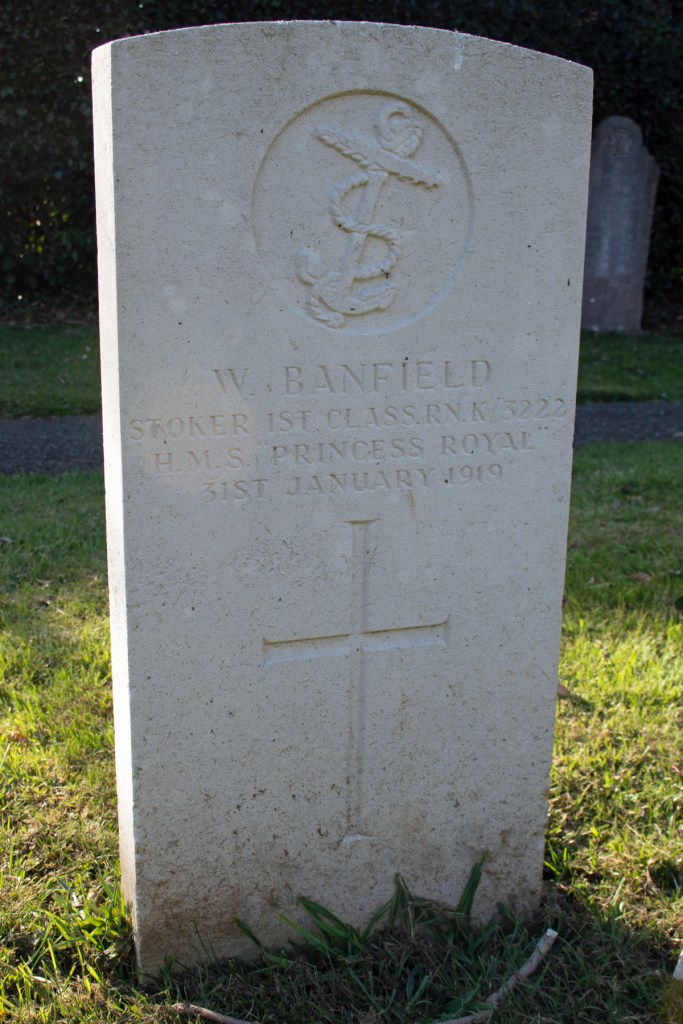
William Banfield was born on 7th November 1890, in Henfield, near Horsham, West Sussex. He was the second youngest of seven children to George and Ellen Benfield. George was a carpenter, and this was a trade his two sons – William and his older brother, George – were initially both to follow as well.
William had a longing for the sea, however, and, on 11th June 1909, he enlisted in the Royal Navy as a Stoker 2nd Class. His service records show that he was 5ft 7.5ins (1.71m) tall, had brown hair, blue eyes and a fair complexion.
Stoker Banfield was based out of HMS Victory, the Royal Naval Dockyard in Portsmouth, Hampshire, but, over the eventual decade of his service, he spent no more than seven months ashore. Instead, he served on a total of nine ships. This included the battleship HMS Exmouth where, during the eighteen months he spent on board, he was promoted to Stoker 1st Class, and also spent 14 days in the brig, for reasons undisclosed.
On 27th September 1915, William was assigned to HMS Princess Royal. He served aboard for nearly three and a half years, patrolling the North Sea, coming under fire during the Battle of Jutland, and providing support during the Second Battle of Heligoland Bight.
Towards the end of January, Stoker 1st Class Benfield fell ill, and was admitted to the Edinburgh City Hospital. Suffering from encephalitis, sadly the condition proved too much for his system to bear and he passed away at the hospital on 31st January 1919. He was 28 years of age.
William Banfield was brought back to Sussex for burial. He was laid to rest in the cemetery of his home town, Henfield.
William’s older brother, George, was also to fall victim to the First World War. He had enlisted in the Royal Navy three years before his younger sibling, and also served as a Stoker 2nd Class (subsequently being promoted to Stoker 1st Class in 1907).
George was also based out of HMS Victory, and, in April 1911, was stood down to the Royal Naval Reserve, having completed an initial five years’ service.
When war broke out, George was called back into service, and was assigned to HMS Good Hope, travelling from English shores to Nova Scotia, before heading to South America and into the Pacific.
Caught up in the Battle of Coronel on 1st November 1914, the Good Hope was sunk by the German cruiser SMS Scharnhost. All souls on board – all 926 of them – were lost; this included Stoker 1st Class George Banfield. He was only 27 years of age.
James Joseph Wing was born in Tonbridge, Kent, in the summer of 1876 and was the oldest of six children to Henry and Frances Wing. Henry was a labourer, but when he finished school, James found work as an errand boy for the post office.
This was not a long-term career, however, and by the time of the 1901 census, when James was 25, he was labouring for the railway. His mother had died in 1897, and Henry remarried, to a woman called Frances Stapley.
In the spring of 1902, James also married, to Sussex-born Mary Ann Goacher. The couple wed in Steyning, near Worthing, but settled in Henfield. James seemed to be picking up work where he could – the census of 1911 recorded him as a coal porter, but by the time he enlisted, in June 1916, he gave his trade as a gardener.
James joined the Royal Garrison Artillery as a Gunner, and was initially assigned to the No. 1 Depot in Newhaven. Full details of his service are unclear, but he transferred to No. 2 Depot in Gosport, Hampshire, in the summer of 1918.
Gunner Wing had only been in Gosport for a couple of months, when he was admitted to the 5th Southern General Hospital in nearby Fratton. At 12:15pm on 4th December 1918, he passed away, a post mortem revealing he had succumbed to a cerebral tumour. He was 42 years of age.
James Joseph Wing was brought back to Sussex for burial. He was buried in the cemetery in his adopted home town of Henfield.
Michael Brown was born on 25th October 1891 in Kirkdale, Lancashire, one of four children to James and Julia Brown. James was a sailor who died when Michael was just a boy. While Julia tried to make ends meet by taking in washing, it must have worried her when her son then fell into a sea-going life when he left school.
Michael enlisted in the Royal Navy on 19th February 1910, by which time he was already a seaman in the merchant fleet. His service records show that he was 5ft 4.5ins (1.64m) tall, had bark brown hair, brown eyes and a dark complexion. He also had a number of tattoos on his forearms, including a shamrock and a cross.
Recruited as a Stoker 2nd Class, Michael served on a number of vessels in the lead up to the outbreak of war, including the scout ship HMS Patrol, which served from Harwich Harbour, Essex. It was here that he gained promotion to Stoker 1st Class in February 1911.
When not at sea, Stoker Brown was based at HMS Pembroke, the Royal Naval Dockyard in Chatham, Kent. When war broke out in 1914, however, he was in the middle of a three-year stint on board HMS St George, a cruiser that went on to guard the Humber Estuary on the east coast of Yorkshire and Lincolnshire.
By the spring of 1916, he was back in Chatham and from this point on, remained firmly on dry land, with assignments in Kent and at HMS Victory, the Royal Naval Dockyard in Portsmouth, Hampshire. By the summer of 1917, though, Stoker Brown returned to HMS Pembroke once again.
The naval base was particularly busy and cramped at that point in the war, and temporary overflow accommodation was set up in the barracks’ Drill Hall. This is where Michael came to be billeted.
On the night of the 3rd September, the German Air Force conducted the first night time raid on England. Chatham came in the firing line, and the Drill Hall received a direct hit. Stoker 1st Class Brown was among those to be killed. He was just 24 years of age.
Michael Brown was laid to rest in the Woodlands Cemetery in nearby Gillingham, along with the other victims of the Chatham Air Raid.









 Death and Service