Tag Archives: killed in action

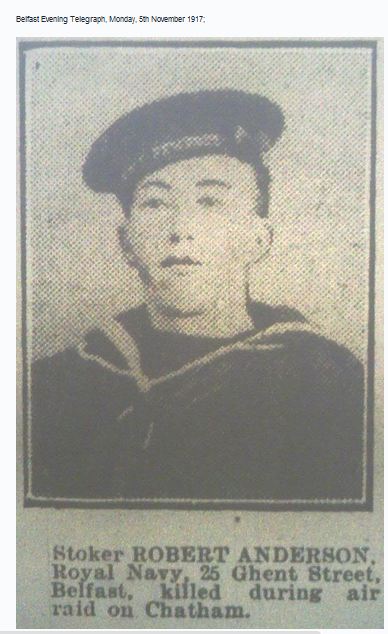
Stoker 1st Class Robert Anderson

Stoker 1st Class Robert Anderson

Robert Anderson was born on 4th September 1889, one of ten children – of whom tragically only three survived – to James and Emily Anderson. James was a storekeeper from Belfast, who had moved his family to Preston, Lancashire, but who had subsequently moved them back to Northern Ireland after Robert had been born.

In 1911, while working as a town labourer, Robert had met and married Rebecca Barkley; the couple went on to have to children, Mary and Agnes.

War was coming to Europe, however, and Robert was keen to play his part. He enlisted in the 3rd Battalion of the Royal Irish Rifles and, according to a subsequent newspaper report, saw action at Mons and the Marne early in the conflict.

The Belfast Evening Telegraph reported that “He completed his time, and instead of re-enlisting in the Army, he joined the Navy.” [Thursday 4th October 1917] Given that Robert enlisted in the Royal Navy in the autumn of 1915, this raises the question of how he left the army at the height of the conflict, particularly given that the same report suggests that he had come through the major battles “unscathed“.

Either way, Private Anderson made the move to Stoker 2nd Class on 10th November 1915. He record show that he stood 5ft 5.5ins (1.66m) tall, had fair hair, brown eyes and a fresh complexion. On his arms he sported a number of tattoos; a lady, crossed flags and a ship on his right, and his initials on the left.

Robert’s first posting was HMS Pembroke, the Royal Naval Dockyard at Chatham, Kent, where he received a couple of months’ training. He was then assigned to HMS Egremont, also known as Fort St Angelo in Birgu, Malta, where he spent a couple of months. Stoker Anderson then returned to England, serving at HMS Victory, the Royal Naval Dockyard in Portsmouth, and gaining a promotion to Stoker 1st Class in the process.

By August 1917, he had returned to HMS Pembroke. The Dockyard was particularly busy that summer, and the large number of extra servicemen meant that Robert was billeted in temporary accommodation in Chatham Drill Hall.

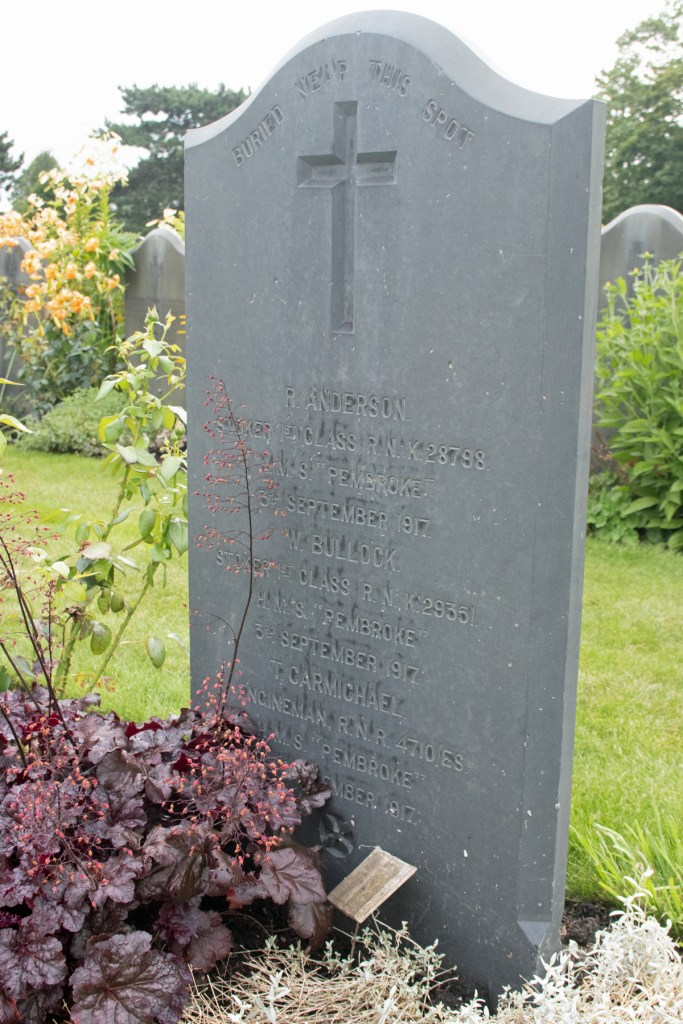
On the 3rd September 1917, the first night air raid carried out by the German Air Force bombarded the town, and scored a direct hit on the Drill Hall; Stoker 1st Class Anderson was among those killed instantly. He was a day short of his 28th birthday.

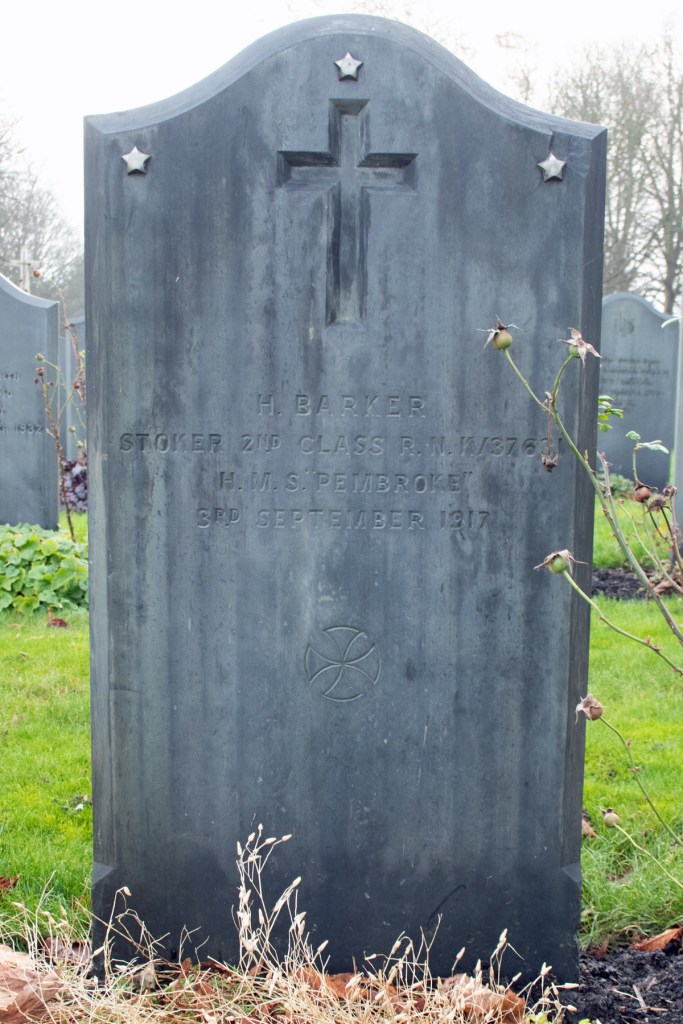
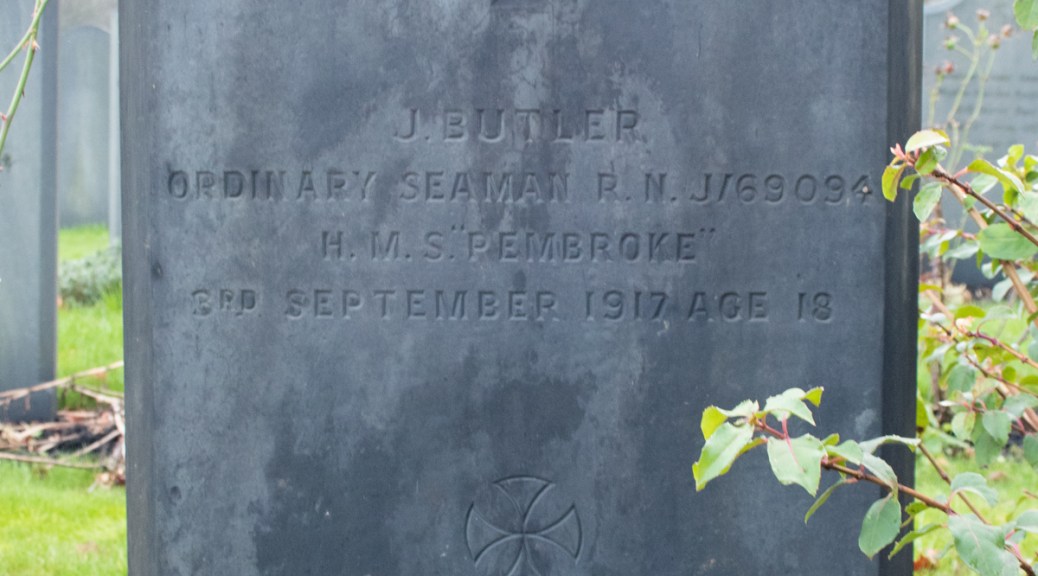
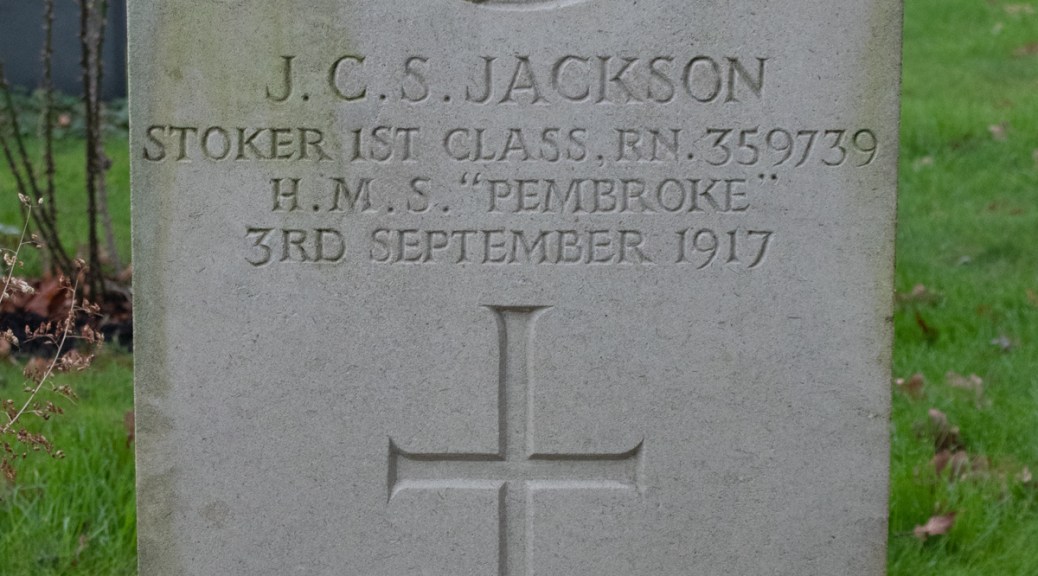
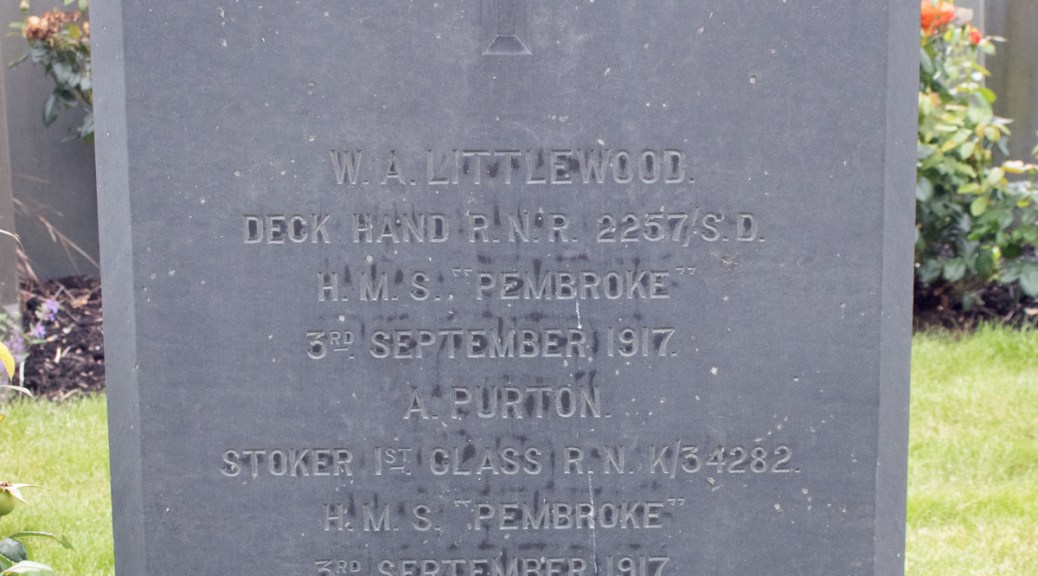
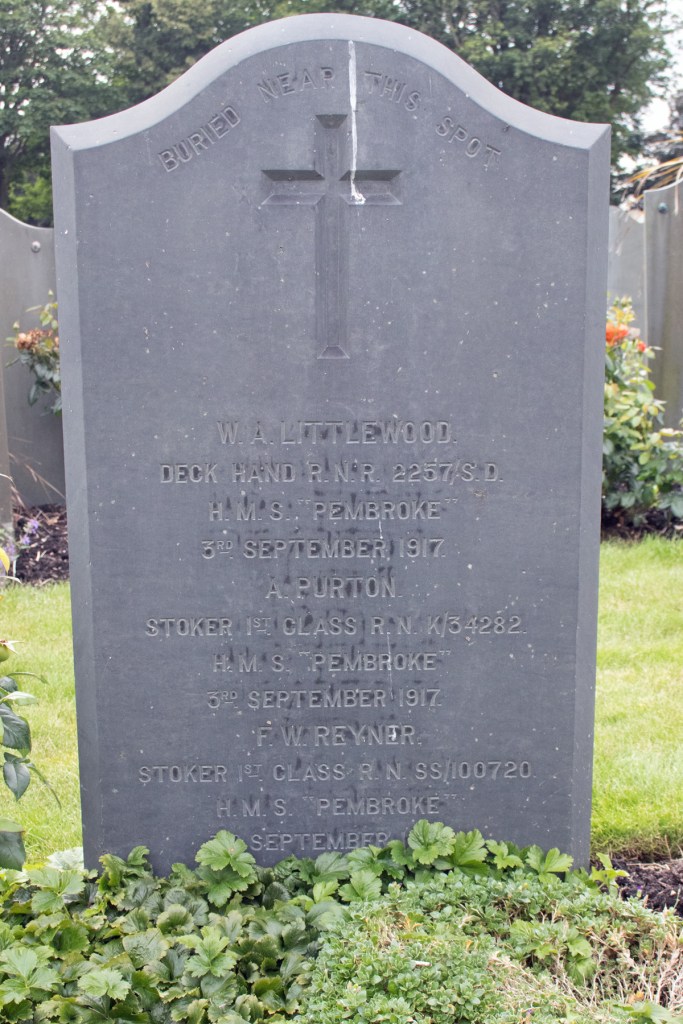
Robert Anderson was laid to rest, along with the other victims of the Chatham Air Raid, in the Woodlands Cemetery, Gillingham.


Larger memorial image loading...
Stoker 1st Class Robert Anderson
(from findagrave.com)

Stoker 1st Class Frederick Reyner

Stoker 1st Class Frederick Reyner

Frederick Walter Reyner was born in Braintree, Essex, on 18th May 1884. The youngest of five children, his parents were Stephen and Martha Reyner. Stephen was a carpenter, who raised his family alone, when Martha passed away in 1889.

When Frederick left school, he found work as an iron worker. When Stephen also died in 1902, Frederick moved in with his older brother, Henry.

His father’s death seemed to have been the spur he needed to move on to bigger and better things: on 21st April 1904, Frederick enlisted in the Royal Navy as a Stoker 2nd Class for an initial period of five years. His service records show that he stood 5ft 4ins (1.63m) tall, had brown hair, brown eyes and a fresh complexion, with a small scar on his left thumb as an identifying mark.

Over the course of his term of service, Stoker Reyner served on three ships – HMS Acheron, Berwick and Irresistible – and was promoted to Stoker 1st Class. After each voyage, he returned to HMS Pembroke, the Royal Naval Dockyard in Chatham, Kent.

When his initial term ended in 1909, Frederick was placed on reserve, and moved back in with Henry and his family. He worked to pay his way, finding employment as a postman around Brixton, where his brother lived. He met local woman Charlotte Rebecca Scott, and the couple married in St Andrew’s Church, Peckham, on 31st May 1914.

War, by this time, was imminent, and Frederick soon found himself called back in to action. After spending a year on shore, at HMS Pembroke and HMS Victory – the Naval Dockyard in Portsmouth – Stoker Reyner was assigned to HMS Europa, a cruiser that patrolled the Eastern Mediterranean. He spent two years on board, before returning to HMS Pembroke in July 1917.

The base was particularly busy that summer, and the large number of extra servicemen meant that Frederick was billeted in temporary accommodation in Chatham Drill Hall.

On the 3rd September 1917, the first night air raid carried out by the German Air Force bombarded the town, and scored a direct hit on the Drill Hall; Stoker 1st Class Reyner was among those killed instantly. He was 33 years old.

Frederick Walter Reyner was laid to rest, along with the other victims of the Chatham Air Raid, in the Woodlands Cemetery, Gillingham. Tragically, the Navy Death Records state that he was Buried as unidentified in one of the following graves: 516, 522, 642, 735, 935, 937 or 948.


To add to the sadness of Frederick’s story, Charlotte was pregnant when he died. She gave birth on 31st May 1918, to a son who she named in memory of her late husband.


Stoker 1st Class Alfred Purton

Stoker 1st Class Alfred Purton

Alfred Purton was born on 10th November 1897, one of fourteen children to Daniel and Rosetta Purton. Daniel was a dock labourer from Bromley-by-Bow, East London, and this is where the family were raised.

When he left school, Alfred found work as a stoker at the local gasworks, but in 1916, he was called up to do his duty for King and Country. Given his family background and his own employment, it is little surprise that he enlisted in the Royal Navy as a Stoker 2nd Class.

Alfred’s service records show that he stood 5ft 5ins (1.65m) tall, had auburn hair, brown eyes and a fresh complexion, although he was noted to have moles on his legs and arms. His first posting was at HMS Pembroke, the Royal Naval Dockyard in Chatham, Kent, and he spent a couple of months training there.

In October 1916, Stoker Purton was assigned to the cruiser HMS Dartmouth, which helped patrol the South Atlantic. During his nine months on board, his work was recognised and he was promoted to Stoker 1st Class.

In July 1917, Alfred returned to HMS Pembroke. The Dockyard was particularly busy that summer, and a large number of extra servicemen meant that he was billeted in temporary accommodation in Chatham Drill Hall.

On the 3rd September 1917, the first night air raid carried out by the German Air Force bombarded the town, and scored a direct hit on the Drill Hall; Stoker 1st Class Purton was among those killed instantly. He was just 19 years old.

Alfred Purton was laid to rest, along with the other victims of the Chatham Air Raid, in the Woodlands Cemetery, Gillingham. Tragically, the Navy Death Records state that he was Buried as unidentified in one of the following graves: 516, 522, 642, 735, 935, 937 or 948.


Deck Hand William Littlewood

Deck Hand William Littlewood

William Alfred Littlewood was born on 19th April 1882, the oldest of four children to Henry and Mary. Henry was a labourer for the gasworks in Great Yarmouth, Norfolk, and the couple raised their family in the town.

William also found work with the local gasworks, and this is who he was employed by when, on 19th December 1903, he married Evelyn Harriet Youman. The couple set up home near the centre of the town, and went on to have four children.

When war broke out, William was keen to play his part. On 17th August 1914, he enlisted as a Private in the Army Service Corps and, within a couple of week, was in France. He spent six months on the Western Front, before returning to home soil. The reason for this return to England was an inflammation of the middle ear, and the resulting deafness led to his discharge from the army in June 1915.

William was not to be deterred, however, and within a matter of weeks, he had enlisted again, this time volunteering for the Royal Naval Reserve as a Deck Hand. Over the next two years, he served on a number of different ships, each time returning to HMS Pembroke, the Royal Naval Dockyard in Chatham, Kent.

In August 1917, Deck Hand Littlewood disembarked HMS Acteon, and returned to his shore base. The Dockyard was particularly busy that summer, and the large number of extra servicemen meant that William was billeted in temporary accommodation in Chatham Drill Hall.

On the 3rd September 1917, the first night air raid carried out by the German Air Force bombarded the town, and scored a direct hit on the Drill Hall; Deck Hand Littlewood was among those killed instantly. He was 35 years of age.

William Alfred Littlewood was laid to rest, along with the other victims of the Chatham Air Raid, in the Woodlands Cemetery, Gillingham. Tragically, the Navy Death Records state that he was Buried as unidentified in one of the following graves: 516, 522, 642, 735, 935, 937 or 948.


Ordinary Seaman William Godwin

Ordinary Seaman William Godwin

William John Godwin – known as Willie – was born on 13th March 1897, the oldest of six children. His parents were railway signalman George Godwin, and his wife Emily. George was born in Monmouthshire, Emily was from Bristol; the couple raised their family in South Wales.

When Willie left school, he found work at a local tinplate manufacturer, and was employed as a cold roll greaser – helping maintain the equipment. War was knocking on Europe’s doors, however, and, in September 1916, he was called upon to do his duty.

Willie joined the Royal Naval Volunteer Reserve; his enlistment papers show that he stood 5ft 6ins tall, had dark brown hair, brown eyes and a fair complexion. It was noted, however, that he had an abscess scar on his right cheek.

Ordinary Seaman Godwin’s first posting was at HMS Victory, the Royal Naval Dockyard in Portsmouth, Hampshire. Here he undertook his initial training, but in May 1917, he was sent to another shore-based establishment, HMS Pembroke – Chatham Dockyard.

The base was particularly busy when Willie arrived. Temporary accommodation at Chatham Drill Hall had to be set up, and this is where he found himself billeted.

On the 3rd September 1917, the German Air Force carried out one of the first night-time air raids on England: an unprepared Chatham was heavily bombed and the Drill Hall received a direct hit. Ordinary Seaman Godwin was amongst those killed instantly. He was just 20 years of age.

William John Godwin was laid to rest, along with the other victims of the Chatham Air Raid, in the Woodlands Cemetery, Gillingham.


Able Seaman George Watson

George Watson was born on 22nd October 1894 in the Scottish town of Tayport. His father was George Watson, and he had a sister called Annie, but there is little additional information available about his family.

When war broke out, George Jr joined the Royal Naval Volunteer Reserve and, during his time there, rose to the rank of Able Seaman. While his service records no longer exist, it’s clear that, by the summer of 1917, he was based at HMS Pembroke, the Royal Naval Dockyard in Chatham, Kent.

The base was particularly crowded at that point in the conflict, and George was billeted in overflow accommodation in the barracks’ Drill Hall.

On the night of the 3rd September 1917, the German Air Force carried out a night-time bombing raid on the town, scoring a direct hit on the Drill Hall. Able Seaman Watson was among those killed. He was just 22 years old.

George Watson was laid to rest, alongside the other victims of the Chatham Air Raid, in the Woodlands Cemetery, Gillingham. Annie was named as his next of kin, which suggests that their parents had, by that time, passed away.


Stoker 2nd Class Alfred Watts

Stoker 2nd Class Alfred Watts

Alfred Watts was born on 16th April 1897 in Marylebone, Middlesex. His mother was called Polly, but there is little further information about his early life.

When he left school, he became a seaman, although in what capacity is not entirely evident. What can be confirmed is that, on 24th November 1915, with war raging across Europe, he decided to make this his full career, and enlisted as a Stoker 2nd Class in the Royal Navy.

Alfred’s military records show that he stood 5ft 4ins (1.63m) tall, had brown eyes, dark brown hair and a fresh complexion. He was also noted as having a birthmark on his right breast.

Alfred’s first posting was at HMS Pembroke, the Royal Naval Dockyard in Chatham, Kent. He spend four months training here, before being assigned to HMS Wallington, a depot shop that served in the Humber Estuary.

On 6th September 1916, in the column marked Discharged is one word: Run. It seems that, for whatever reason, he deserted his post, and having been rounded up nearly three weeks later, he was taken back to Chatham under police guard. He was imprisoned, and only returned to his duties on 30th October.

Stoker Watts was given another posting, on board the battleship HMS Dominion, but again absconded in June 1917, and was detained for a further three weeks, this time at HMS Victory, the dockyard in Portsmouth.

Within a month, Alfred was transferred back to Chatham. HMS Pembroke was a busy place that summer and temporary accommodation was put in place. Chatham Drill Hall was brought into service for this purpose, and Alfred found himself billeted there.

On the 3rd September 1917, the German Air Force carried out its first night air raid: Chatham was heavily bombed and the Drill Hall received a direct hit. Stoker 2nd Class Watts was among those badly injured. He was taken to hospital, but died of his wounds two days later. He was just 20 years of age.

Alfred Watts was laid to rest, alongside the other victims of the Chatham Air Raid, in the Woodlands Cemetery, Gillingham.


Ordinary Seaman George Shuttle

Ordinary Seaman George Shuttle

George James Henry Shuttle was born in Brentford, Middlesex, on 12th July 1899. His mother was Helen (or Ellen or Nellie) Shuttle, but he does not seem to have had a close connection to her and, according to the records, there was no father on the scene. Initially fostered out to Noah and Carmina Scott as a nurse child, by the time of the 1911 census, the couple had adopted him.

When he left school, George worked as a milk boy, but he seemed to know that a life of adventure awaited him. In June 1915, he joined the Royal Navy; being only 15 at the time, he was given the rank of Boy 2nd Class.

His initial posting was on board the cruiser HMS Powerful, and his training there paid off, as he quickly rose to Boy 1st Class. After a couple of months’ at HMS Victory – the Royal Naval Dockyard in Portsmouth – George was assigned to his second ship, HMS Malaya. Within weeks, the brand new battleship had cut her teeth in the Battle of Jutland, during which 65 of her crew were killed.

George spent more than eighteen months on Malaya; his time on board saw him turn eighteen, and gain the rank of Ordinary Seaman. His service records at the time show that he was 5ft 3.5ins (1.61m) tall, had brown hair, grey eyes and a fresh complexion.

By August 1917 Ordinary Seaman Shuttle had returned to shore, and was assigned to HMS Pembroke, the Royal Naval Dockyard in Chatham, Kent. The base was particularly busy when he arrived. Temporary accommodation at Chatham Drill Hall had been set up, and George found himself billeted there for the summer.

On the 3rd September 1917, the German Air Force carried out one of the first night-time air raids on England: an unprepared Chatham was heavily bombed and the Drill Hall received a direct hit. Ordinary Seaman Shuttle was badly injured and died of his wounds in hospital the following day.

George James Henry Shuttle was laid to rest, along with the other victims of the Chatham Air Raid, in the Woodlands Cemetery, Gillingham.


George’s mother, Helen, had continued with her life. A year after George was born, she had another son, Cyril, but he also seems to have been fostered out to enable her to work.

In 1903, she married musician Harry Burgiss-Brown, and the couple set up home in Richmond, Surrey. They went on to have two children, and Helen seemed focused on her new life, rather than the one she had before marrying.

Helen died in 1949, just short of her 70th birthday.


Seaman Thomas Ginn

Seaman Thomas Ginn

Thomas Albert Ginn seems destined to remain one of those people whose lives are lost to time. He was born on 4th February 1895 in Cape Fogo on the island of Fogo in Newfoundland. His father was Walter Scott Ginn, but beyond that, no concrete information remains.

What is clear is that, when was broke out, Thomas joined the Newfoundland Royal Naval Reserve as a Seaman. Sent to Europe, he found himself based at HMS Pembroke, the Royal Naval Dockyard, at Chatham, Kent.

He was billeted in the Drill Hall, which had been set up with temporary accommodation during 1917, when the barracks themselves became overcrowded.

On the 3rd September 1917, the German Air Force carried out one of its first night-time air raids on England: Chatham was heavily bombed and the Drill Hall received a direct hit. Seaman Ginn was badly injured and died of his wounds in hospital the following day. He was just 22 years of age.

Thomas Albert Ginn was laid to rest, along with the other victims of the Chatham Air Raid, in the Woodlands Cemetery, Gillingham.


Seaman Thomas Gunn
(from westernfrontassociation.com)

Another young man from Fogo, Seaman Albert Cluett, also died during the bombing raid; given the remoteness of the Newfoundland town, it seems very unlikely that he and Thomas did not know each other.


Able Seaman Frederick Upson

Able Seaman Frederick Upson

Frederick Frank Upson was born in Woodbridge, Suffolk, on 4th June 1897 and was one of eight children to Frederick and Mary Upson. Frederick Sr was an agricultural labourer and horseman, and when he left school, his soon took on a shepherding role on the same farm.

With the war raging, and the port of Ipswich not far from home, Frederick Jr seemed destined for a life at sea. In June 1915, having turned 18 years old, he enlisted in the Royal Navy as an Ordinary Seaman. His service records show that he stood 5ft 6.5ins (1.69m) tall, had brown hair, grey eyes and a fair complexion.

Frederick’s first posting was at HMS Vivid, the training base at Devonport, Devon. He spent a couple of months there, before being given his first ocean-going assignment on board the scout cruiser HMS Blonde. Ordinary Seaman Upson was on board for just over a year, and was promoted to Able Seamen during his time there.

In January 1917, he returned to shore, and was transferred to HMS Pembroke, the shore-based establishment at the Royal Naval Dockyard in Chatham, Kent. The base was particularly busy that year, and temporary accommodation was set up in the Drill Hall; Frederick found himself billeted there for the summer.

On the 3rd September 1917, the German Air Force carried out one of its first night-time air raids on England: Chatham was heavily bombed and the Drill Hall received a direct hit. Able Seaman Upson was badly injured and died of his wounds in hospital the following day. He was just 20 years of age.

Frederick Frank Upson was laid to rest, along with the other victims of the Chatham Air Raid, in the Woodlands Cemetery, Gillingham.