Tag Archives: Labour Corps

Private Frank Mayo

Private Frank Mayo

Francis James Stephen Mayo was born on 24th November 1894 in Oldland, a small Gloucestershire village near Bristol. One of eight children, his parents were collier Samuel Mayo and his wife, Diana.

Frank, as he was known, sought a life of adventure from the start. In July 1911, not content with life as a farm labourer, he enlisted in the Royal Navy as a Boy 2nd Class. His service records show that he was 5ft 5ins (1.65m) tall, had light hair, blue eyes and a fair complexion.

Sent to the training ship HMS Impregnable, Boy 2nd Class Mayo’s time there was short. When Samuel found out what his son had done, he paid £10 (the equivalent of around £1250 in today’s money) for his discharge.

Frank went back to farm work, but, with storm clouds brewing on European shores, his time was to come again. On 8th September 1914, just a month after war was declared, he enlisted. His service records show that he had gained an inch (2.5cm) in height since his attempt to join the Royal Navy.

Again, Frank’s attempt to escape what he presumably felt to be a humdrum life were thwarted. His service records confirm that he was discharged on medical grounds because he was deemed not likely to become an efficient sailor.

On Christmas Day 1915, Frank married Martha Sweet, the daughter of a chimney sweep. The couple settled down in Keynsham, not far from either of their families, and had a son, Henry. Frank, by this time, seemed to have given in to the inevitable, and looking for a regular wage, began working at one of the local collieries.

Frank still had a dream to fulfil, though, and with no end to the war in sight, he again enlisted, joining the Training Reserve in June 1917. His records show that he had gained another inch in height, and has a number of tattoos on his right forearm. His records this time show that he had a slight heart problem, and was also suffering from a touch of rheumatism.

Private Mayo was assigned to the 440th Company of the Labour Corps, and seemed, at last, to be fulfilling the role he had wanted to be doing for the last six years. As time went on, however, his health seems to have been failing him and, in the summer of 1918, he contracted pulmonary tuberculosis. He passed away from the condition on 30th August 1918, while at camp, aged just 23 years of age.

Brought back to Gloucestershire for burial, Francis James Stephen Mayo – or Frank – was laid to rest in the graveyard of St Anne’s Church in his home village of Oldland.


Private Harry Etherton

Private Harry Etherton

Harry Etherton was born in Ansty, near Cuckfield, West Sussex on 3rd April 1872. The oldest of five children, his parents were Edwin and Louisa Etherton. Edwin was an agricultural labourer, and this was work in which his son followed his father.

On 29th April 1899, Harry married Annie Eliza Pennifold, a labourer’s daughter who was also from Ansty. The couple set up home in Cuckfield, and went on to have five children. Harry was, by this point, working as a road labourer for the local council, and this was a job he was to continue doing until the outbreak of the war.

Harry enlisted in 1915, joining the Royal Sussex Regiment as part of the National Reserve. As Private Etherton, he was then transferred across to the Labour Corps, and was assigned to the 409th Labour Coy. which was based at the Infantry Depot in Lincoln.

It was while Private Etherton was here, in the spring of 1918, that he contracted meningitis, and was admitted to the Northern General Hospital in the city. Sadly, he was to succumb to the disease, passing away on 30th June 1918, at the age of 46 years old.

Harry Etherton’s body was brought back to West Sussex for burial. He was laid to rest in Cuckfield Cemetery, not far from where his widow and children still lived.


Private Herbert Macklin

Private Herbert Macklin

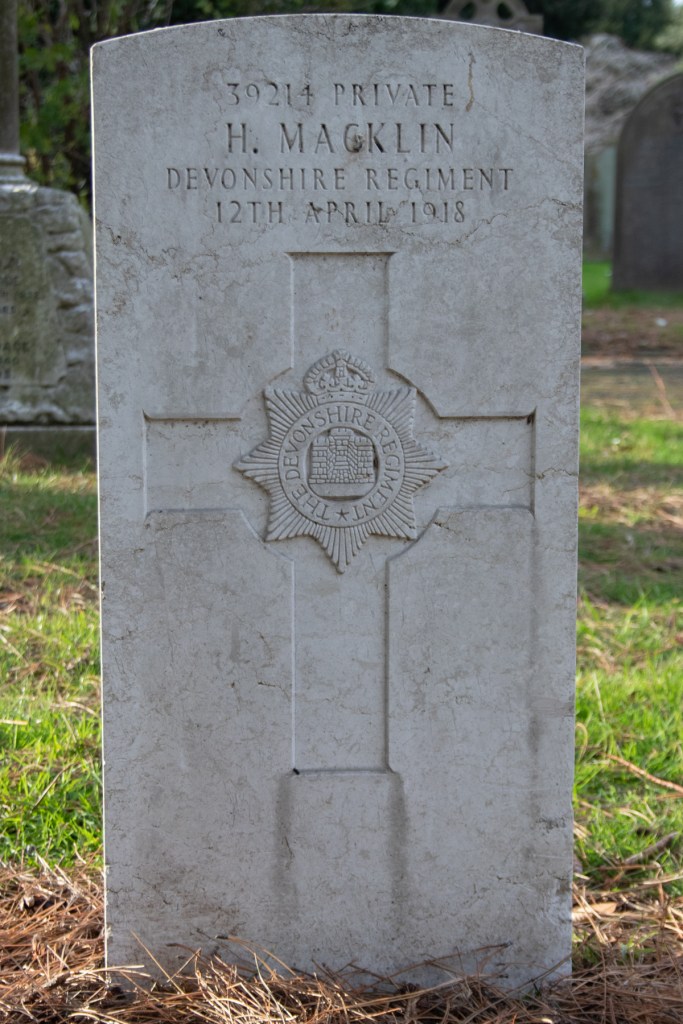
Herbert Macklin was born in Lambeth, Surrey, on 14th August 1897, the youngest of six children to Enos and Sarah Macklin. Enos was a general labourer and, after his mother died in 1909, Herbert worked around his school as a baker’s errand boy, to bring in a little more money for his family.

After Enos passed away in 1912, and with his older sisters all having families of their own, Herbert and his older brother William did what they could to survive, getting some support from the local poor school.

The outbreak of war gave the brothers a sense of purpose, and both enlisted. William joined the Royal Field Artillery, and was sent to France in September 1915.

Herbert, being six years younger than his brother, enlisted later than his sibling. He joined the Middlesex Regiment, on 10th May 1916, and his service records show that he was 5ft 4.5ins (1.64m) tall, 126lbs (57.2kg) in weight and had a fair physical development. While Herbert had a fair physical development, he was also recorded as having flat feet, which somewhat limited his army service.

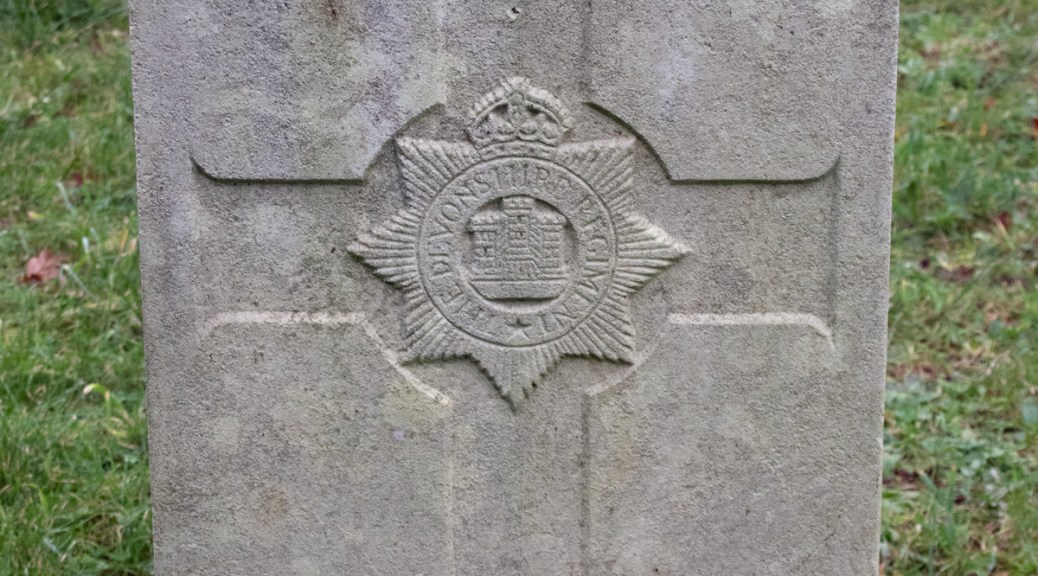
Private Macklin transferred across to the Devonshire Regiment a few months after enlisting. He was then assigned to the regiment’s Labour Corps in the summer of 1917, and remained with them for the rest of his service.

While William was serving abroad, Herbert remained on home soil for the duration. By the spring of 1918, he was working in Kent, but was admitted to hospital in Faversham, suffering from acute tonsillitis. Sadly, this was to prove too much for Private Macklin’s body to take: he suffered cardiac failure, and died on 12th April 1918. He was 21 years of age.

Herbert Macklin was laid to rest in the Borough Cemetery of the town in which he passed, Faversham.


Tragedy was to strike again for the Macklin brothers: as the war moved into its closing months, Driver William Macklin was based in Salonika, Greece. He was not to see England’s shores again, sadly: he passed away on 23rd November 1918, aged just 27 years old.


Private Mark Ford

Private Mark Ford

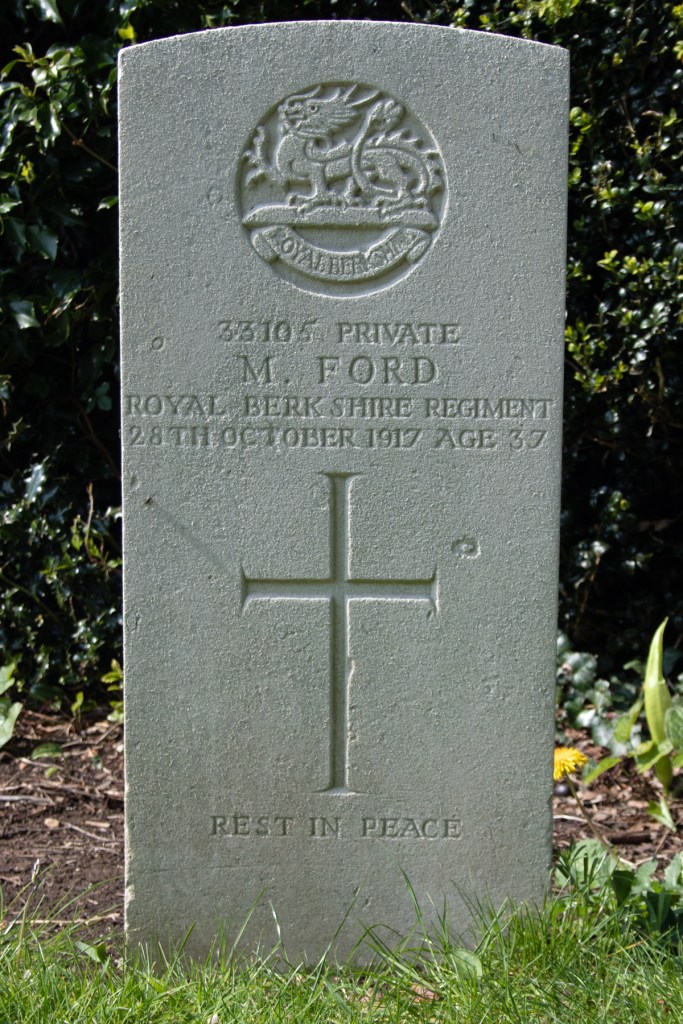
Mark Ford was born early in 1881 in Wellow, near Peasedown St John in Somerset. He was the youngest of eleven children, and the son of Thomas and Ellen Ford. Thomas was a coal miner, and this was a trade that his seven sons, including Mark, went into.

The 1901 census recorded Mark as boarding in a house in Abertillery, Monmouthshire, learning his trade. Within a few years, however, he was back in Peasedown St John. In the summer of 1910, he married local woman Emily Tucker and the couple set up home in Wellow, where they went on to have four children: George, Phyllis, Hubert and Ethel.

War was coming to Europe and, while records are scarce, it’s possible to build up a picture of the service Mark undertook. He initially enlisted as a Private in the Royal Berkshire Regiment, and was assigned to the 10th (Labour) Battalion. They were sent to France in June 1916, although it is not possible to confirm if Mark went at the same time.

His battalion became the 158th and 159th Labour Companies in April 1917, and it seems that Private Ford transferred to the former and, at this point, was definitely serving in France. That summer, he was wounded in the hip and head by an exploding shell and was medically evacuated to England for treatment.

Private Ford was admitted to the Military Hospital in York, where he lay injured for some time; long enough, thankfully, for Emily to make the journey to be with him. Sadly, his wounds were to prove too much: he passed away at the hospital on 28th October 1917, at the age of 36 years old.

Mark Ford’s body was brought back to Somerset for burial He was laid to rest in the churchyard of St John the Baptist, in Peasedown St John.


Private Lawrence Scott

Private Lawrence Scott

Lawrence Arthur Scott was born in the spring of 1889 in the Devon town of Kingsteignton. He was one of nine children to George and Louisa Scott. George was a lighterman – transporting clay and other goods on a barge. When his father passed away in 1905, Lawrence found work as a clay cutter, bringing in money to help support his mother. By the time of the 1911 census, he was on the only one of Louisa’s children to still be living at home, and was the main breadwinner.

In the spring of 1915, Lawrence married Elizabeth Webber in Newton Abbot. The young couple settled in Kingsteignton, and went on to have a son, Frederick, who was born the following year.

By now war had descended upon Europe. Lawrence enlisted, joining the Royal Berkshire Regiment in the summer of 1916. His service records confirm that he was 5ft 7in (1.7m) tall, had dark hair, blue eyes and a fair complexion.

Private Scott arrived in France on 20th August 1916 and, over the next couple of years he served on the Western Front. In September 1917, he was transferred to the Labour Corps, but by now his health was suffering. On 22nd March 1918 he was admitted to a hospital in Rouen with bronchitis. He was transferred to a hospital back in England and, on 17th June 1918 he was formally discharged from the army, with arteriosclerosis.

Lawrence returned home, but his health was to get the better of him. He passed away from heart failure on 30th March 1919, aged just 30 years old.

Lawrence Arthur Scott was laid to rest in a family plot in the graveyard of St Michael’s Church, Kingsteignton. Elizabeth was finally reunited with her husband 67 years later and was buried with him.


Private Thomas Cornall

Private Thomas Cornall

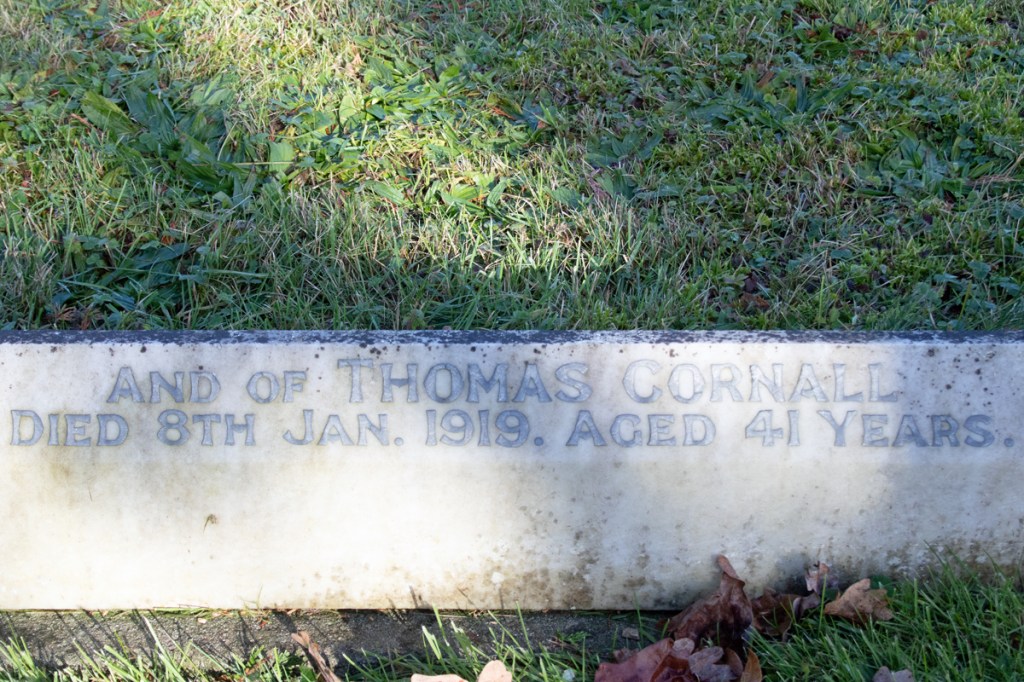
Thomas Cornall was born in Kingsteignton, Devon, early in 1879 and was the oldest of seven children to Thomas and Elizabeth Cornall. Thomas Sr was a clay cutter and, while the family were all raised in Kingsteignton, Thomas Jr appears to have been more wayward, and was farmed out to local relatives over time.

The 1881 census shows Thomas living with his parents; ten years later he was living with his maternal grandmother; in 1901 he was boarding with Elizabeth’s brother, John Withycombe, in Devonport; the 1911 census recorded him living with his sister and her family in the village of Chudleigh.

Thomas took on labouring jobs. He worked as a dockworker in Devonport, and a haulier in Chudleigh. War was coming to Europe, however, and Thomas was pulled in a different direction.

Full details of his military career are not available, but it is clear that he enlisted in the Somerset Light Infantry early on in the conflict. Whether Private Cornall saw active service overseas is lost to time, but he soon transferred over to the 696th Agricultural Company of the Labour Corps.

Thomas’ maternal uncle – John Withycombe – who had had lived with in 1901, had become manager of the Lion Hotel in Chudleigh and when he died in 1913, he left his wife, Bertha, with a son to raise and a business to run. At the end of 1916, Thomas and Bertha married in nearby Newton Abbot and took on the running of the Lion Hotel together.

Private Cornall was still serving at this point, and continued his work in the Labour Corps through until the end of the war. His trail at this point goes cold; all that is known is that he died at home on 8th January 1919, at the age of 40 years old.

Thomas Cornall was laid to rest in Chudleigh Cemetery. The family plot included John and Bertha, when she passed away in 1954.


Serjeant John Bunclark

Serjeant John Bunclark

John Bunclark was born in the village of Lustleigh, near Bovey Tracey in Devon in 1888. His father is lost to time, but his mother was farm labourer’s daughter, Elizabeth Bunclark. Elizabeth worked as a kitchen maid for a local solicitor, so John’s grandparents – John and Mary – raised him as their own.

In 1894, Elizabeth went on to marry William Wright – they went on to have four children of their own, while John remained with his grandparents. Tragically, in 1907, Elizabeth died in childbirth; the boy also died.

In 1906, John was longing for bigger and better things, and a military career appeared a good option. He joined the Devonshire Regiment as a Private and, while full details of his service are no available, it seems that John made a good impression.

In 1912, John married Emma Jane Horrell. She was the daughter of an agricultural labourer from Tavistock, who was working as a domestic servant when they met. The couple went on to have four children, between 1912 and 1918.

When war broke out, Private Bunclark was posted to France; his battalion – the 2nd – served in many of the key battles of the conflict, including Neuve Chapelle, The Somme, Ypres and Arras. At some point during the war, however, John transferred to the 641st Employment Company of the Labour Corps; this meant work on the Home Front, and a promotion to Serjeant came with it.

It was while John was on leave back in Newton Abbot that he fell ill. His specific ailment is lost to time, but he was admitted to the Temporary Hospital at the Institution in the town. He passed away on 7th November 1918, at the age of 30 years old.

John Clark was laid to rest in Newton Abbot Cemetery.


Private James Flood

Private James Flood

James Allan Flood was born in Exeter, Devon, in 1879, and was the oldest of six children to James and Emily. James Sr was a bricklayer, and, according to the 1881 census, the family lived at 2 Stepcote Hill, sharing the house with two other families.

When he left school, James Jr also fell into labouring work. By this time he had met Amy Hobbs, a hotel worker’s daughter who had been born in London. Her father had moved from Devon to the city in the 1870s, but had brought his family back to his home county by 1885.

James and Amy married in the village of Wolborough in December 1899. They set up home in nearby Newton Abbot and went on to have five children.

The storm clouds of war were beginning to hover over Europe and, when the conflict broke out, James was keen to play his part. He enlisted within days of war being declared, joining the Devonshire Regiment as a Private. His service records show that he stood 5ft 6ins (1.68m) tall, and weighed 112lbs (51kg). He had a tattoo of a crown and heart on his right forearm.

Private Flood found himself in France by Christmas 1914 and stayed there for more than a year. During this time, he was promoted to Lance Corporal, although, as a result of missing a role call, he reverted back to Private again a couple of months later.

After a brief two months spent back on home soil, James returned to France again, spending a further ten months on the Western Front. In March 1917, he was transferred across to the Labour Corps, and came back to home soil again.

This transfer appears to have been connected to James’ health; he continued to work as part of 621st Agricultural Company for the next eighteen months, before being discharged from the army on medical grounds in September 1918. Sadly, the cause of his discharge is lost to time.

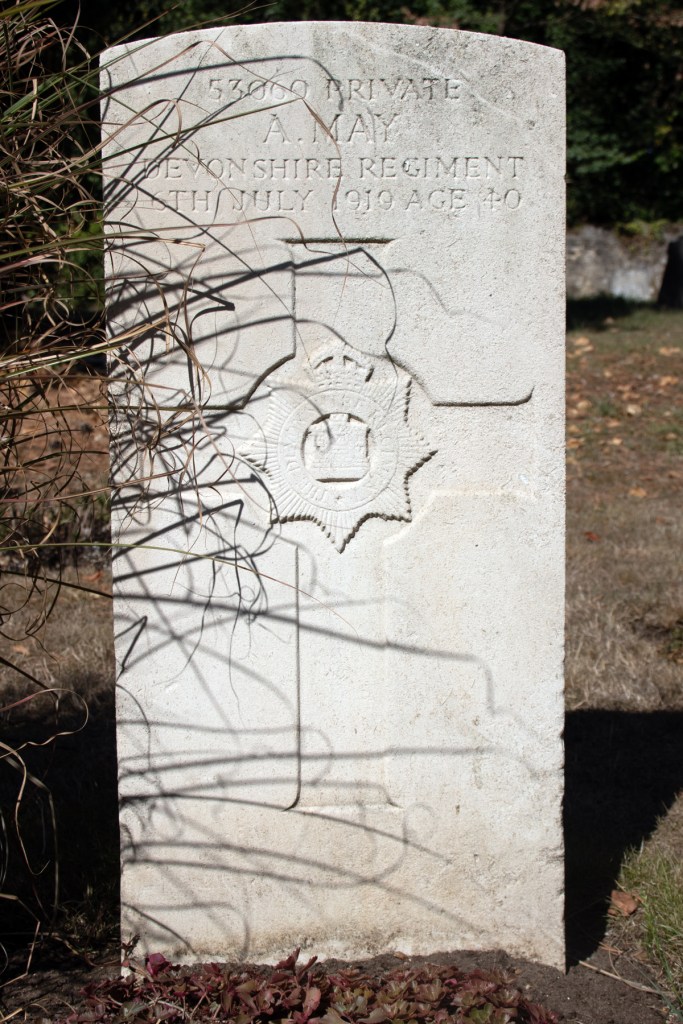
At this point, James Allen Flood’s trail goes cold. The next time he appears in documentation is nearly a year later: he passed away on 17th August 1919, aged 40. He was laid to rest at the Newton Abbot Cemetery.


Private William Lamacraft

Private William Lamacraft

William Morrish Lamacraft was born in Guernsey in 1888, the only son of John and Annie Lamacraft. Annie passed away when William was just 4 years old, and John brought his son back to England, returning to Devon, where he himself had been born. John found employment as a porter at St Thomas’ Union Workhouse in Exeter and lived in here, while William was taken in by his paternal grandmother, Mary, who was also in Exeter.

In 1909, John also passed away. William, by this time, had left school and found work as a bootman at the Queen’s Hotel in Newport, Gwent. War was on its way to Europe by this point and, when it broke out, William enlisted as a Private in the Labour Corps.

At some point William transferred across to the Devonshire Regiment, but there is little tangible evidence to document when and where he served. What is clear is that Private Lamacraft survived the war, and had returned to Newton Abbot when he was demobbed.

Sadly, William Morrish Lamacraft was not to live a long life after the Armistice was declared. He passed away on 6th June 1919, aged just 31 years old; the cause of death lost to time. He was laid to rest in Newton Abbot Cemetery.


Gunner William Avenell

Gunner William Avenell

William Percy Avenell seems destined to remain lost to time, and there is little documentation about his life.

He was born in around 1891, and enlisted in the Royal Field Artillery as a Gunner in the summer of 1915, serving in France and earning the Victory and British Medals and the 1915 Star in the process. Gunner Avenell subsequently transferred to the 861st Employment Company of the Labour Corps.

William survived the war and returned to England. He had settled in the Somerset town of Frome (he may have been from the town, but there is nothing to evidence this) with his wife, Lily Beatrice.

Gunner Avenell’s passing is as lost in time as the rest of his life. He died on 22nd February 1920, at the age of just 29 years old.

William Percy Avenell lies at rest in the graveyard of Christ Church in Frome.