Tag Archives: Lance Corporal

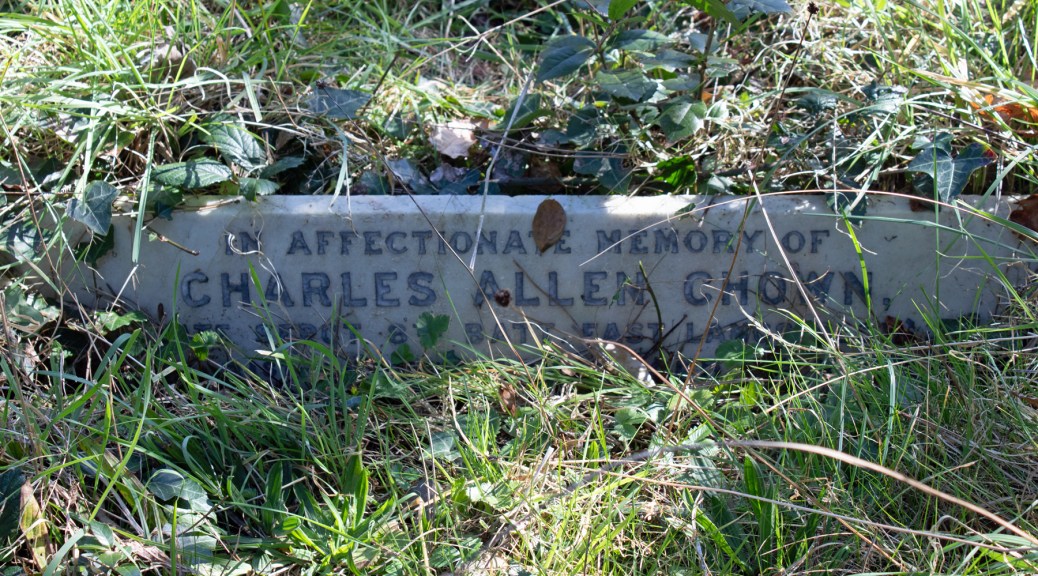
Sergeant Charles Chown

Sergeant Charles Chown

Charles Allen Chown was born in the Sussex village of Lyminster, at the start of 1882. The tenth of eleven children, his parents were Samuel and Mary Chown. Samuel was a general labourer, and when he passed away in 1898, Charles and his siblings rallied to support his now widowed mother.

The 1901 census found Mary, Charles and his brother Jesse living at 32 Lennox Road, Worthing, West Sussex. Jesse was employed as a brickmaker, while Charles had found work as a solicitor’s clerk. The family had two boarders, Helen and Rosie Bulbeck, and Charles’ niece, Minnie, was also staying with them.

Away from work, Charles was a music lover, and joined the local operatic society. In 1904 he appeared in a local version of Iolanthe, his “piece of portraiture being described as one of the successes of the occasion, for his facial play was good, and the drolleries of the character were displayed in an each and natural manner.” [Worthing Gazette: Wednesday 12th September 1917] In the following year’s Mikado, he took the role of the Lord High Executioner, and he was noted as being a “born comedian, with the most mobile countenance and a singularly dry form of humour…” [Worthing Gazette: Wednesday 12th September 1917]

By the time of the 1911 census, Charles had moved on with work, and moved out of home. Taking a room at 7 Tarring Road, Worthing, his landlords were Harold and Rose Ward. Still employed as a clerk, he was now employed by one of the estate agents in the town, although it is clear that his passion was elsewhere. When he joined up in the autumn of 1914, he gave his trade as musician.

Charles enlisted on 7th October 1914 in Ashton-under-Lyme, Lancashire. What took him north is unclear, although a theatre tour is a possibility. His service records note that he was 5ft 8.5ins (1.74m) tall and weighed 138lbs (62.6kg). He had dark brown hair, brown eyes and a sallow complexion.

Initially assigned to the Manchester Regiment, Private Chown was soon transferred to the 8th (Service) Battalion of the East Lancashire Regiment. He was obviously dedicated to his job: by the end of October 1914 he had been promoted to Lance Corporal, and within six weeks he rose to Sergeant.

In July 1915, Charles’ unit was dispatched to France. That autumn, they remained based near Tilques, in Northern France, but Sergeant Chown’s health was beginning to suffer. After just three months overseas, he was medically evacuated to Britain to receive treatment for pleurisy, and was hospitalised in Chatham, Kent.

When he recovered, Sergeant Chown was reassigned to the 10th Battalion of the East Lancashire Regiment, before being transferred to the 47th Training Reserve Battalion in September 1916. That winter, however, his health received a setback, and he contracted tuberculosis. He would spend the first half of the following year in hospitals in Aldershot in Hampshire, Sutton Veny in Wiltshire and, from May 1917, the 3rd Southern General Hospital in Oxford.

Sergeant Chown’s health would continue to deteriorate, and he was formally discharged from the army on 6th July 1917. He returned to Worthing, and his mother’s home, 2 Montague Place. Charles would eventually succumb to his medical condition, and he passed away on 31st August 1917, at the age of 35 years old.

The body of Charles Allen Chown was laid to rest in the family plot in Broadwater Cemetery, Worthing.


Lance Corporal Herbert Sims

Lance Corporal Herbert Sims

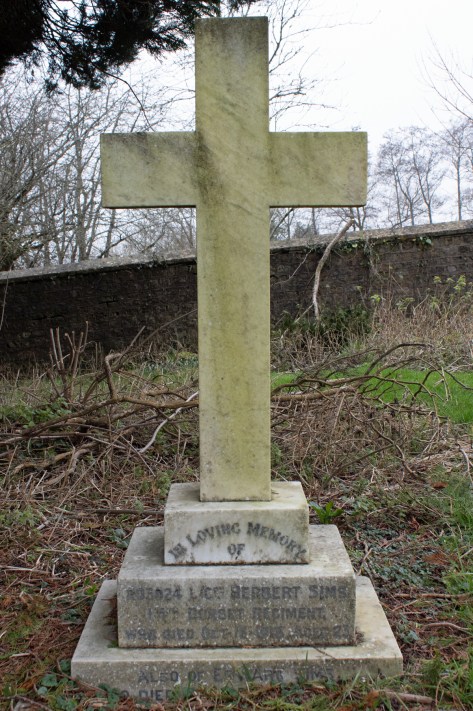
Herbert Rowland Sims was born in Warminster, Wiltshire, on 27th May 1895. One of nine children, he was the youngest son to Edward and Mary Sims. Edward was a railway signalman, and the family lived on Imber Road, to the north east of the town centre.

When Herbert finished his schooling, he found employment as a tailor’s apprentice. When war broke out, however, he was keen to play his part. His service records no longer exist, but a later newspaper report fills in some of the details.

The death took place on Wednesday in last week at the Tewkesbury Red Cross hospital of Lance-Cpl. Herbert Rowland Sims… [He] went to India on the outbreak of war with the Wilts Regiment, and subsequently volunteered for service in Mesopotamia, being transferred to the Dorsets. He contracted typhoid, and after being in hospital in Egypt he was invalided home. He was about to receive his discharge, but was again laid low by an attack of pneumonia which, after the illness contracted in Mesopotamia, proved fatal.

A memorial service was held in Tewkesbury Abbey on Saturday, the body being escorted by wounded comrades from the hospital. From the Abbey the coffin was taken to the railway station to be sent to Warminster, and on Monday the internment took place in the Minster churchyard with military honours.

[Wiltshire Times and Trowbridge Advertiser: Saturday 26th October 1918]

Herbert Rowland Sims was just 23 years of age when he died on 16th October 1918. He was laid to rest in St Denys’ Churchyard in his home town of Warminster.


Lance Corporal Herbert Sims
(from ancestry.co.uk)

Lance Sergeant Henry Lewis

Lance Sergeant Henry Lewis

The early life of Henry Watkin Lewis is a challenge to piece together, and a lot of the detail comes from his later service records.

The document confirms that Henry was born in Pontypool, Monmouthshire, in December 1885. It gives his next of kin as his aunt, Ann Dunning, and there are no details about his parents.

Henry joined up in the days after war was declared. He was working as a plumber by this point, and enlisted in Preston, Lancashire, although it is not clear whether he was living in the area at this point. His records showing that he was 5ft (1.52m) tall and weighed 116lbs (52.6kg). With brown hair, blue eyes and a fresh complexion, he had a scar across the bridge of his nose and another on his lower lip.

Henry’s military career is an intriguing one. Assigned to the Loyal North Lancashire Regiment, he was initially given the rank of Private. He was promoted to Lance Corporal on 5th September 1914, just two weeks after enlisting. Four days later his rank was increased to Corporal, and by 14th October he had been promoted again, this time to Lance Sergeant. There is no evidence of any previous military background for him, and the cause of this rapid rise is unclear.

With any rapid rise, a rapid fall is often likely to follow, and Henry’s case was to be no different. He service records note that he was discharged from the army on 16th January 1915, as he was ‘not likely to become an efficient soldier’. Again, there is no further record as to why, although his papers do not suggest the cause was anything medical.

Lance Sergeant Lewis’ unit was based in Tidworth, Wiltshire, by this point, but he must have moved to Warminster following his discharge. It was here that he died on 23rd April 1915, the cause of his passing unknown. He was 29 years of age.

Henry Watkin Lewis was laid to rest in the graveyard of St Denys’ Church, Warminster.


Lance Corporal William King

Lance Corporal William King

William James King was born on 7th March 1883 in Kensington, Middlesex. He was the fourth of eight children to bricklayer and builder’s labourer John King and his wife, Hannah.

There is little specific information available about William’s early life. The 1891 census found the family living at 16 Burlington Mews in Paddington, but he does not appear on any census returns after this date.

On 4th August 1906, William married Marion Oliver. Born in Chelsea, she was the daughter of a house painter, and the couple exchanged vows in St Luke’s Church, Paddington. The marriage certificate noted William’s trade as a bricklayer, and the couple went on to have two children: daughter Gwendoline, born in 1911, and son Henry, born two years later.

When war came to Europe, William was quick to step up and play his part. He enlisted on 5th October 1914, joining the Royal Marines. His service records show that he was 5ft 4ins (1,62m) tall, with brown hair, grey eyes and a fresh complexion.

Sent to Deal, Kent for training, Private King was initially assigned to the 2nd Field Company of the Mediterranean Expeditionary Force. Appointed to the rank of Lance Corporal he soon found himself ensconced at Gallipoli. On 15th May he was medically evacuated to Britain with an injury to his spinal cord. Admitted to Charing Cross Hospital, London, he was discharged from the army on 27th March 1916.

William’s treatment was ongoing, and by the autumn of 1916, he had been admitted to Gillingham Hospital in Kent. It was here that he would died, passing away on 20th November: he was 33 years of age.

William John King was laid to rest in Woodlands Cemetery, Gillingham, Kent.


Private Joseph Walls

Private Joseph Walls

Joseph Walls was born in Tortington, near Arundel, in West Sussex, on 13th November 1880. The youngest of four children, his parents were gamekeeper James Walls and his wife Annie. James moved the family to where his work took him and, by the time of the 1891 census, they had settled in the New Forest village of Sway, Hampshire.

When Joseph finished his schooling, he found work as a horseman and groom. The 1901 census found him living with his parents and older sister in a house in Brockenhurst. He seems to have taken his work seriously, and soon found himself a position as a chauffeur. The next census, taken in 1911, recorded him as working for Ann Libbey and her family in the village of Boldre.

On 18th February 1914, Joseph married Edith Perry. A carpenter’s daughter, she was working as a domestic servant when the couple exchanged vows. Their wedding certificate confirms that Joseph was ten years his new wife’s senior, and that they ceremony was witnessed by his older brother Frederick and her younger sister, Esther.

Joseph and Edith would go on to have two children: Vera was born in 1915, while Daphne came along three years later. During this time, however, war was raging across Europe, and Joseph had stepped up to play his part.

Private Walls enlisted within weeks of war being declared, on 10th December 1914. His service papers show that he was living at Hospital Cottage in Lyndhurst when he joined up. He was 5ft 8ins (1.72m) tall, with black hair, grey eyes and a dark complexion. He was also noted as being asthmatic since he was a child.

Assigned to the 1st/4th Battalion of the Hampshire Regiment, over the next few years, Private Wallis would see the world. Within days of enlisting, he was shipped out to India, where he would spend nearly three years (apart from the in the summer of 1917, when he served as part of the Mediterranean Expeditionary Force). During this time, Joseph was promoted to Lance Corporal, although by the time he left the army, he had returned to the tank of Private.

By the beginning of September 1917, Joseph was back on home soil. A spell of malaria that spring had impacted his asthma, and at the end of November, he was deemed no longer fit for war service. Private Walls was medically discharged from the army on 29th November 1917.

At this point, Joseph’s trail goes cold. He definitely returned home – Daphne was born just a few days after the Armistice – but it is unclear whether he was it enough to work.

Joseph Walls died on 14th February 1919: he was 38 years of age. He was laid to rest in Lyndhurst Cemetery, not far from where Edith and their children lived.


Private Joseph Walls
(from ancestry.co.uk)

Private James McLeod

Private James McLeod

James McLeod was born on 15th April 1893 in Dunedin, New Zealand. There is little further information about his early life, although the Commonwealth War Graves Commission give his father’s name as Samuel, and his service records note his next-of-kin as his brother, George McLeod.

James was employed by A&T Watt as a French polisher. However, he gave that up on 25th January 1915, when he enlisted in the New Zealand Expeditionary Force. His service records show that he was 5ft 8.5ins (1.74m) tall, and weighed 166lbs (75.3kg). He was recorded a having fair hair, blue eyes and a fair complexion.

Private McLeod was assigned to the New Zealand Otago Regiment, and undertook his initial training on home soil. He evidently showed some promise as, on 1st May, he was promoted to Lance Corporal. Six weeks later his unit was heading for Europe, and by the summer James was in Egypt.

On 20th August 1915, Private McLeod was admitted to the New Zealand and Australian Convalescent Hospital in Mena with a gun shot wound to his finger. He remained there for three weeks, returning to his unit in time for them to leave for the Dardanelles on 7th November 1915.

What happened to James over the next couple of months is uncertain. Certainly he was on the Greek island of Moudros by 18th November and in the Dardanelles on 7th December 1915. Just 20 days later he was back in Alexandria, and he would remain there for the next few months. There is, however, nothing in his medical record to suggest that his return to Egypt was on health reasons.

On 6th April 1916, Private McLeod was on the move again, this time to France. He was wounded again on 14th July 1916, and medically evacuated to Britain for treatment. Details of this injury are not clear, but he was admitted to the 2nd London General Hospital in Chelsea, Middlesex. After a month recuperating, James was released from hospital and sent to camp in Hornchurch, Essex. At this point he was also demoted to Private, although, again, the reason is unclear: it may have been a personal choice, or the reversion may have been connected to his injuries.

In September 1916, Private McLeod was transferred to the ANZAC Camp on the outskirts of Codford, Wiltshire. That winter he contracted pleurisy, and he was admitted to the No. 3 New Zealand Hospital, which was connected to the camp, on Christmas Day. His condition worsened, and James passed away from pneumonia on 28th December 1916. He was just 23 years of age.

Thousands of miles from home, James McLeod was laid to rest alongside his fellow soldiers in the extension to the graveyard of St Mary’s Church, Codford.


Corporal Alexander Sturrock

Corporal Alexander Sturrock

Alexander Albert Sturrock was born in the autumn of 1877. The second of two children, he was the only son of Alexander and Elizabeth Sturrock. Alexander Sr was a plasterer from Scotland, while his wife had been born in Bristol. It was in the Pimlico area of Middlesex, however, that the couple would raise their two children: Alexander and his older sister Eleanor.

The 1891 census found the family living at 253 Wellington Buildings, on Ebury Bridge Road. According to the next census, however, they had taken rooms at 52 Warriner Gardens, south of the Thames in Battersea.

By 1901, the Sturrocks had moved north again, and were living at 7 Fulham Place in Paddington. One of three families in the house, Alexander Sr and Elizabeth shared the rooms with their son and Eleanor’s son, Leslie. Alexander Sr was still working as a plasterer, while his son was now employed as a clerk.

Alexander Jr married Edith Concanen in 1910. A widow, she had a son, Douglas, and the three of them lived in her family home on Camden Road, Sutton, Surrey. Alexander was working as a commercial accountant, and at some point in the next five years, the family moved to Paignton, Devon.

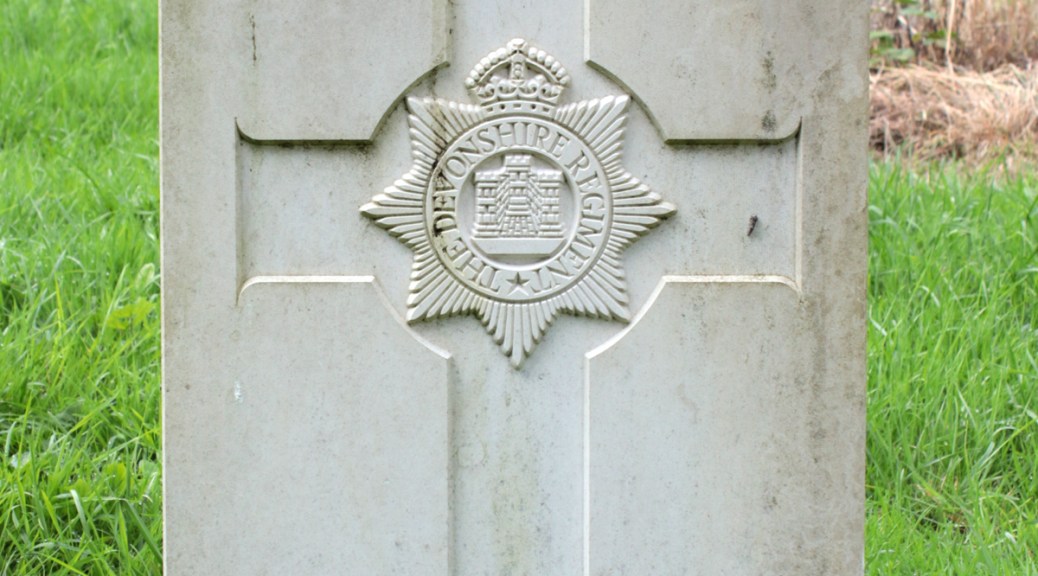
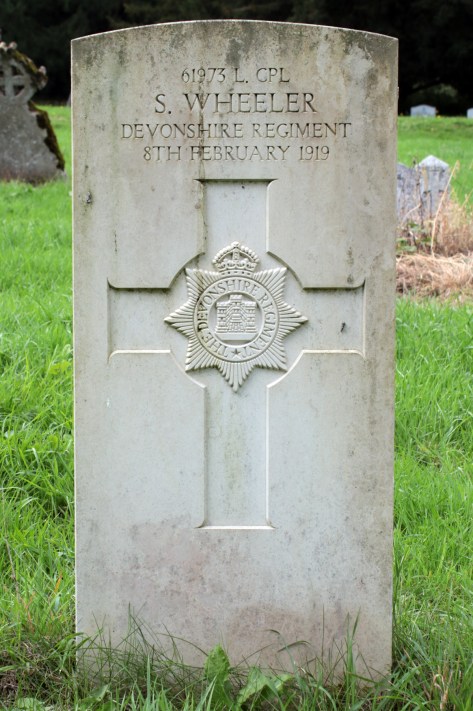
When war came to Europe, Alexander stepped up to play his part. He enlisted in Exeter on 17th November 1915, and joined the Devonshire Regiment. His service records note that he was 5ft 11ins (1.8m) tall and weighed 185lbs (83.9kg). He was also recorded as having Edith’s name tattooed on his left forearm.

Private Sturrock was mobilised the following June, and was attached the 3rd (Reserve) Battalion. He was promoted to Lance Corporal in August 1916, and transferred to the 8th (Service) Battalion. Shipped to France in December, he would spend the next eighteen months overseas.

Alexander had ongoing issues with his health, however, and was hospitalised at least three times with diarrhoea. In July 1918, he was transferred to the Labour Corps, and reassigned to home soil. Promoted to Corporal by this point, he was attached to the 114th unit, although it is unclear where he served.

Corporal Sturrock’s health continued to dog him. The Armistice signed, he was medically discharged with nephritis on 14th June 1919, and returned home. Sadly, his reunion with Edith was not to be a lengthy one. Alexander passed away on 25th July 1919: he was 41 years of age.

Alexander Albert Sturrock was laid to rest in Paignton Cemetery, overlooking the town he had most recently called home.


Corporal Ronald Dumbleton

Corporal Ronald Dumbleton

Ronald Dumbleton was born in Pukeuri Junction, New Zealand, at the end of 1890. His parents were William and Lucy, but about his early life, there is very little information.

When he finished his schooling, found work as a telegraphist and, by the time war broke out, he was employed at the Oamaru Post Office. This employment fitted in perfectly with his hobby as a volunteer in the Signal Company.

Ronald enlisted in the Otago Regiment of the New Zealand Infantry on 13th June 1915. His service records show that he was 5ft 8ins (1.73m) tall and weighed 140lbs (63.5kg). An Anglican by faith, he had black hair, dark eye and a dark complexion.

Assigned to the 7th Battalion, Private Dumbleton’s unit set sail for Europe towards the end of the year and, after a few weeks in Egypt, Ronald arrived in Britain in March 1916. His previous military service stood him in good stead. On 8th July 1915 he was promoted to Lance Corporal, and just six weeks later he had made full Corporal.

In April 1916, Ronald arrived in France. Transferred to the 1st Battalion, he would remain overseas for six months. Caught up in the fighting at the Somme, he was injured in his left arm and shoulder and medically evacuated to Britain for treatment. Corporal Dumbleton was admitted to the 1st Southern General Hospital in Birmingham, and remained there for a month.

In November, Corporal Dumbleton transferred to a hospital in Hornchurch, Essex. He then seems to have been moved to the ANZAC base near Codford, Wiltshire, for his ongoing recuperation. He was given two weeks’ leave in January 1917, returning to the base towards the end of the month.

At this point, Ronald’s trail goes cold. He remained based in Codford, possibly as he was not yet fit enough to re-join his unit on the Western Front. While in camp, however, he fell ill, passing away on 5th April 1917. He was 26 years of age.

Thousands of miles from home, Ronald Dumbleton’s body was laid to rest in the extended graveyard of St Mary’s Church in Codford, not far form the base which he had called home.


Corporal Ronald Dumbleton
(from findagrave.com)

Colour Sergeant Charles Miles

Colour Sergeant Charles Miles

The early life of Charles Miles, whose body lies at rest in the Woodlands Cemetery in Gillingham, Kent, is a challenge to unpick, and the starting point is the last document relating to him.

His military Pension Ledger confirms that he died on 13th May 1918, from empyema, a bacterial infection affecting the lungs. The document cites his next-of-kin as Miss Hilda Miles, of 15 St John’s Road in Gillingham. She is noted as being the guardian of two children – Ada, born in 1905, and George, born the following year – because their mother, Charles’ wife, had passed away on 30th May 1912.

An online search for Ada and George gives an entry in the 1911 census. This finds them as the youngest two of six children to Charles and Elizabeth Miles. The document also gives a clue about their future guardian, Hilda: she is their older sister.

The Miles family were living at 45 Commercial Street in Whitechapel, East London. Charles, at 39, was recorded as a Royal Marines Pensioner and schoolkeeper. His wife, Elizabeth, was assisting with this role, and the couple had two other surviving children, Charles Jr and Walter.

While it is still difficult to piece together Charles’ childhood, his Royal Marine service records do shed a little light onto it. Born in Hampstead on 23rd November 1871, he was working as an ironmonger’s assistant when he enlisted. He joined up on 23rd August 1889, the document showing that he was 5ft 6ins (1.68m) tall, with brown hair, grey eyes and a fresh complexion. He also had a tattoo on his right forearm.

Private Miles had joined up in London but, as with most Royal Marine recruits, he was sent to the base in Walmer, Kent, for his initial training. In the spring of 1890 he moved to the Royal Naval Dockyard in Chatham, Kent, and this would become his regular port for the remainder of his service.

Charles’ service proved to be a committed one. Over the next decade he would serve on five ships, and would rise through the ranks. In October 1894 he was promoted to Lance Corporal, making full Corporal less than a year later. On 1st January 1899 he was promoted to Sergeant, and by the start of 1908, he held the rank of Colour Sergeant. Formally stood down to reserve status on 22nd November 1910, he was noted as having a very good character.

Away from the service, there is no record for Charles and Elizabeth’s marriage. She had been born in Sheerness, Kent, and was a year younger than her husband. It is likely that they were married by 1897, as this is when their oldest child was born. The 1901 census recorded them living on Manor Street in Gillingham, but, once Charles had been stood down, the school keeper’s position in the East End came up.

When war broke out, Charles was called upon to play his part once more. He returned to Chatham, leaving his younger children in Hilda’s care. By September 1914 he had moved to HMS Victory, the Royal Naval Dockyard in Portsmouth, Hampshire, and he would remain there for the next eighteen months. His shore base and naval experience suggest that, at 43 years of age, his was more of a training or mentoring role, although there is nothing in his records to confirm this.

In February 1916, Colour Sergeant Miles returned once more to Chatham, and the naval base there would be his home for the next few years. He was admitted to the Royal Naval Hospital in the spring of 1918, and passed away from the infection on 13th May 1918. He was 46 years old.

Charles Miles was laid to rest in Woodlands Cemetery, Gillingham.


After their father’s death, the Miles siblings found their own way in life.

By the time of the 1921 census, Ada, now 16 years old, was working as a domestic servant for Henry Chapman, a ship’s surveyor, and his family. They were living at 73 Milton Street in Fleetwood, a short stroll from the Lancashire coast.

Hilda, into whose care Charles had given his youngest children, was now 22 years of age. She had married William Swift, a pattern maker for the Admiralty, in the summer of 1918. They would not have any children, and the 1921 census found the couple living at 15 Milner Road, Gillingham. She too was just a short walk from the shoreline, but was also within walking distance from the cemetery in which her father had been buried.


Lance Corporal William Bence

Lance Corporal William Bence

Arthur William Bence was born in the village of Box, Wiltshire, in the spring of 1887. The oldest of eight children, his parents were James and Sarah. James was an engineer from Bathampton, Somerset, and by the time of the 1901 census, the young family had moved to 14 Hampton Row in nearby Bathwick.

Ten years later, and the Bence family had relocated again, this time to the northern outskirts of Bath, in a terraced cottage at 6 Brooklyn Road. By this point, Arthur had finished his schooling, and had found employment, working as a baker and bread maker. This was not to be a permanent career, however, and he sought out more of a career.

Arthur had long been a volunteer in the local militia, and on 14th November 1905 he enlisted in the army. Now known by his middle name, William Bence joined the Coldstream Guards as a Private. His service records show that he was 5ft 11ins (1.82m) tall, and weighed 148lbs (67.1kg). He was noted as having brown hair, brown eyes and a fresh complexion. Hs also had several tattoos on his left forearm, including a heart, cross, anchor, man’s face, crown and crossed flags.

Private Bence spent the first two years of his military career on home soil in Windsor, Berkshire, and London. In January 1908, his unit – the 3rd Battalion – transferred to Africa, and William would remain in Egypt and Sudan for more than three years. In March 1911 he returned to home soil, and that year’s census record noted his address as the Tower of London.

By the end of 1913 Private Bence had been formally stood down to reserve status. During his eight years on active service, he had been hospitalised a couple of times: for a sprained wrist in 1906, and for a bout of pneumonia in July 1910.

War was a matter of months away, however, and in the summer of 1914, William was to be mobilised again. By 12th August he was sent to France, and his battalion would be caught up at Marne and Aisne before the end of the year.

On 27th September 1914, William rose to the rank of Lance Corporal. This was not to last, however, and within six weeks the promotion was retracted for misconduct. He remained on the Western Front for nearly two and a half years, and had a mixed time of it. In April 1915, he Private Bence was confined to barracks for 14 days for being drunk on duty. In November that year, he was promoted to Lance Corporal for a second time.

This advancement coincided with William’s marriage. He had wed Amelia Oakley at St Saviour’s Church in Bath on 3rd November. There is little information available about her, other than that she had been born in Bath in 1888.

Back in France, and Lance Corporal Bence’s battalion fought at Loos and was heavily involved at the Somme. William would remain on the Western Front until December 1916, at which point his health forced him back to Britain. He had contracted tuberculosis, and this would lead to his ultimate discharge from military duty on 9th January 1917. William returned home, but his condition was to get worse. He passed away on 1st April 1917: he was 30 years of age.

The body of Arthur William Bence was laid to rest in the sweeping grounds of Bath’s Locksbrook Cemetery, in the city that was his home.