Tag Archives: Pembrokeshire

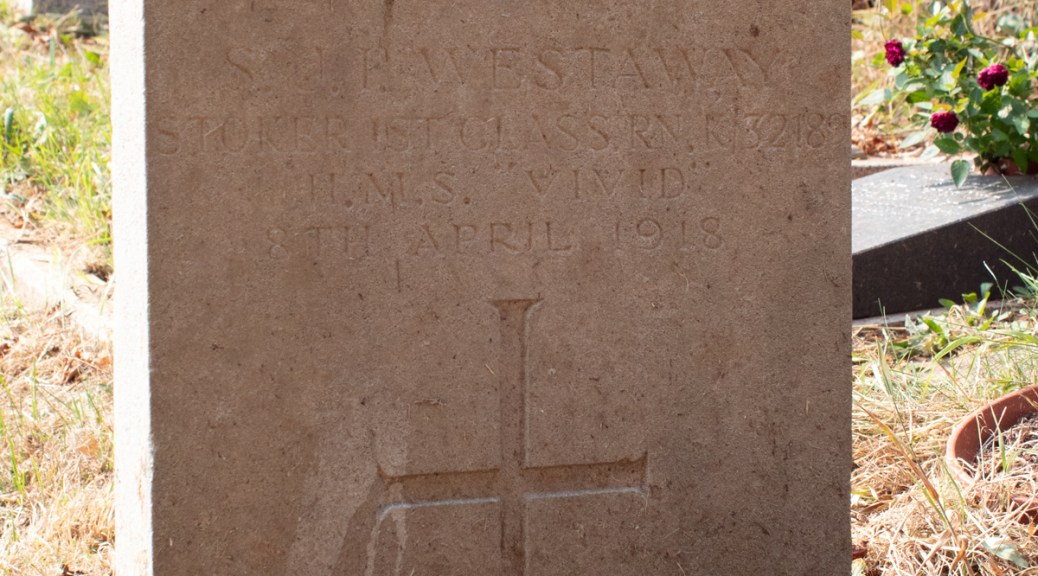
Stoker 1st Class Stanley Westaway

Stoker 1st Class Stanley Westaway

Stanley James Isaiah Westaway was born on 2nd March 1898 in the Devon village of Marldon. One of twelve children, his parents were builder’s labourer George Westaway and his wife, Eliza.

Being a large family, Stanley may have felt the need to make his mark on the world. When war broke out, he found that opportunity and, on 10th April 1916, he enlisted in the Royal Navy.

Taking on the role of Stoker 2nd Class, Stanley was sent to HMS Vivid, the Royal Naval Dockyard in Devonport, for his training. His service papers show that he was 5ft 3ins (1.6m) tall, with dark brown hair, brown eyes, and a fresh complexion.

Stoker Westaway’s first posting was aboard HMS Berwick, a cruiser that patrolled the English Channel. He remained there for eighteen months, and, during this time, he gained a promotion to Stoker 1st Class. In November 1917, he returned to his shore base, and remained there through to the following spring.

In early 1918, Stanley fell ill. As he was at sea at the time, he was sent to the closest Royal Naval Hospital in Pembroke Dock, Pembrokeshire. His condition worsened and the condition was to prove fatal: he passed away on 8th April 1918, at the age of 19 years of age.

The body of Stanley James Isaiah Westaway was taken back to Devon for burial. He was laid to rest in the graveyard of St John the Baptist’s Church in his home village.

Sapper William John

Sapper William John

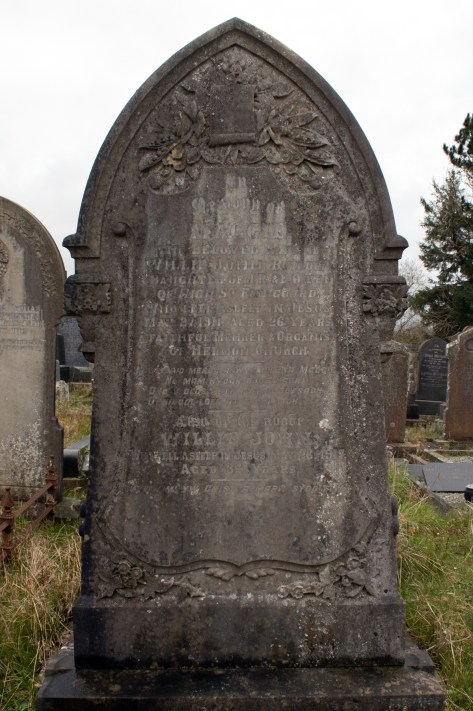
In the Hermon Baptist Burial Ground in Fishguard, Pembrokeshire is a headstone dedicated to Maggie and Willie John. The inscription reads: “In memory of Maggie, the beloved wife of Willie John, builder. Daughter of JR & E Owen of High Street Fishguard, who fell asleep in Jesus May 27, 1911, aged 26 years. A faithful member & organist of Hermon Church… Also of the above Willie John, who fell asleep in Jesus May 26, 1917, age 34 years.”

The early life of Willie – or William – John is a challenge to piece together. He and Maggie – Margaret – married in Hermon Chapel on 30th March 1907, and went on to have a son, Owen, who was born in May 1908.

Willie was employed as a builder and mason, and, after Maggie’s death, sought work wherever he could find it. When war broke out, he was living at 16 Bryn Bedw, Blaengarw, Glamorganshire, although it is unclear whether Owen was with him as well.

Willie’s trade made him an ideal candidate for the Royal Engineers, and he was assigned to the 38th Signal Company when he enlisted on 6th March 1915. Sapper John’s service records show that , he was 5ft 6ins (1.68m) tall, with black hair, dark eyes and a sallow complexion.

Sapper John was sent to Biggleswade, Bedfordshire, for his training, and it was while there that things took a downturn. On 17th September he had a standard inoculation against typhoid, and from there on in felt unwell. Over the following days and weeks he became anaemic and had bouts of giddiness and pains in the back. His medical report notes that he was breathless on waking, and when he walked more than a few hundred yards.

Over the next few months Willie’s condition was monitored, but his condition did not improve. Ultimately he was medically discharged from the army on 10th May 1916, as he was no longer fit enough to serve.

At this point, Willie John’s trail goes cold. He seems to have returned to Pembrokeshire, and it was here, on 26th May 1917, that he passed away. He was reunited with Maggie in the Fishguard burial ground.


Corporal James Davies

Corporal James Davies

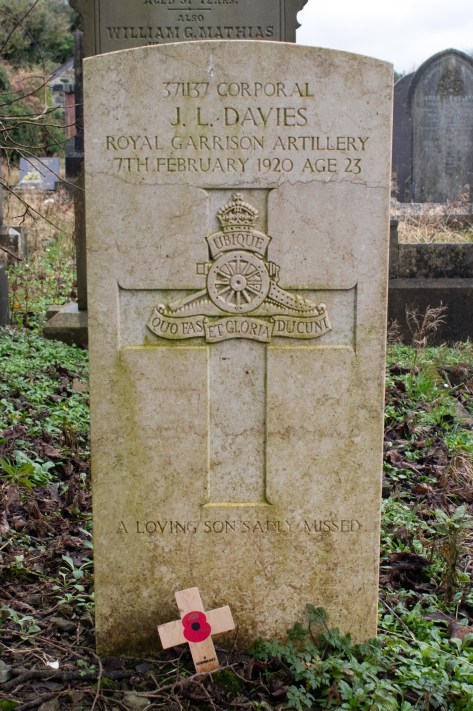
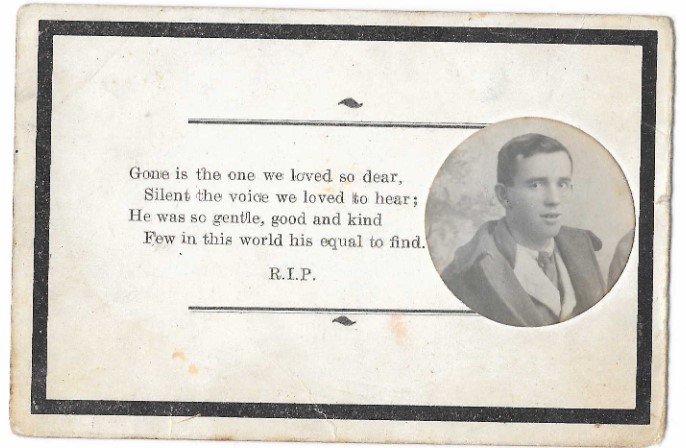
James Lloyd Davies was born in Dyffryn, Llanwnda, Pembrokeshire, early in 1897. One of six children, his parents were Hugh and Margaret Davies. Hugh was a farm worker, but when he died in 1907, Margaret was left to raise the family on her own.

The 1911 census found the family living in a 4-roomed house on Cross Street. Margaret had found work as a charwoman, while James was employed as a butcher’s errand boy. His three younger siblings were still at school.

When war broke out, James stepped up to play his part. He enlisted in the Royal Garrison Artillery, but from here on in his trail goes cold. All that can be confirmed is that he had risen to the rank of Corporal by the end of the conflict.

James Lloyd Davies returned home after the war, and passed away on 7th February 1920. He was 23 years of age. He was laid to rest in the Hermon Baptist Burial Ground in Fishguard, Pembrokeshire.


James was only accepted for commemoration as war dead in 2012. It was at this point that the Commonwealth War Graves Commission erected a headstone in his honour.


Corporal Tom Morse

Serjeant Tom Morse

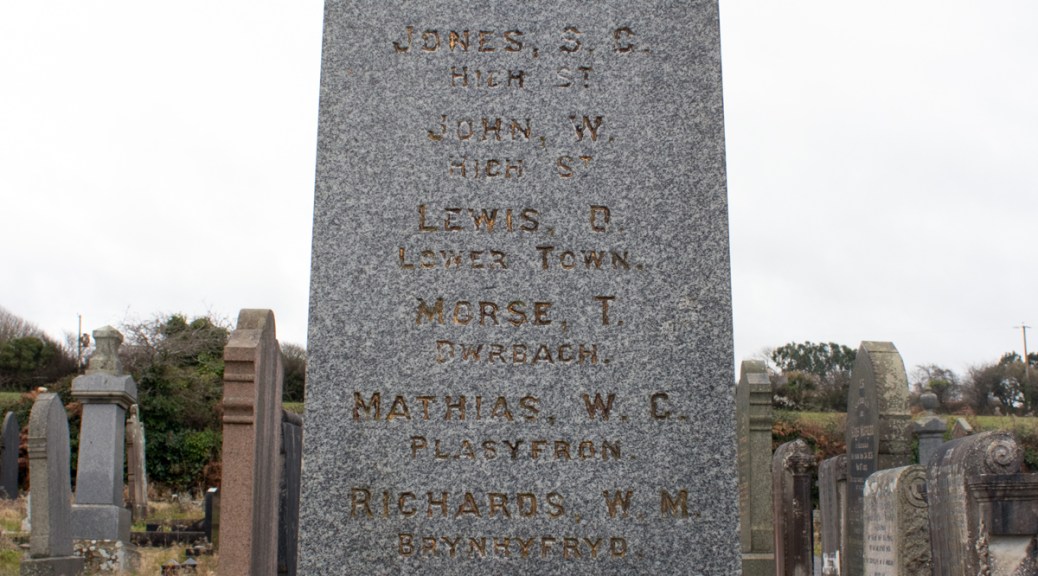
Thomas Morse was born in St Nicholas, Pembrokeshire, in the summer of 1885. One of thirteen children, his parents were Thomas and Mary Morse. Thomas Sr was an agricultural labourer, but when he completed his schooling, his son found work as a mason and, by the time of the 1911 census, he was boarding with his older sister Maria and her family.

When war broke out, Thomas Jr – who was better known as Tom – stepped up to play his part. Full details about his service have been lost to time, but it is clear that he enlisted in the Royal Army Service Corps. It is unclear whether he spent any time overseas, but towards the end of the war, he found himself based in Essex in the Mechanical Transport Division.

In the autumn of 1918, Tom, who had risen to the rank of Acting Corporal, fell ill. He came down with pneumonia, and was admitted to Colchester Hospital. The condition would prove fatal, and he passed away on 26th October 1918: he was 33 years of age.

The body of Thomas “Tom” Morse was brought back to Pembrokeshire for burial. He was laid to rest in the Hermon Baptist Burial Ground in Fishguard.


Intriguingly, the Commonwealth War Graves Commission have Tom’s rank as Serjeant. What remains of his service papers, however, all suggest he was an Acting Corporal.

Equally intriguing are the details of Tom’s dependents. His entry on the Army Register of Soldiers’ Effects gives his father, Thomas Sr, as his beneficiary. His Dependents’ Pension Record, however, gives his mother, Mary, and Miss M Nicholas, who is listed as the guardian of his illegitimate child. There no further information on them.


Private William Mathias

FishguPrivate William Mathias

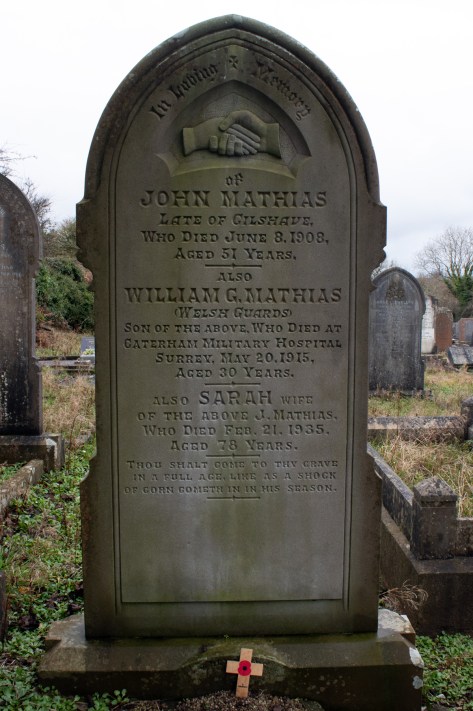
William George Mathias was born in the Pembrokeshire village of Littleston early in 1885. The oldest of five children, his parents were John and Sarah Mathias. John was a farm worker, but when he finished his schooling William found work as a rabbit trapper. This meant a move from home, and the 1901 census found him as a servant for the Evans family, in nearby Mathry.

Agricultural work was not employment that William wanted to dedicate his life to, and he soon found a new opportunity. He took a job as a police constable in Glamorganshire. There is little information about this part of his life, but the 1911 census recorded him as being one of 26 police officers boarding in the village of Gilfach Goch. Interestingly the census includes the annotation “The above are police quartered at the Ogmore Arms, Gilfach Goch, temporarily during the coal strike.”

The Miner’s Strike of 1910/11 resulted in the temporary closure of South Wales mines. Police were shipped in, but this only resulted in riots breaking out. In November 1910 disorder broke out in Tonypandy, Pontypridd and Gilfach Goch, amongst other locations. Nearly 80 police and more than 500 civilians were injured, although the exact number of miners wounded is unclear, as many refused to seek medical treatment for fear of being singled out.

As the strike moved into 1911, the army was called in, with four detachments of the Somerset Light Infantry being called into Penygraig, Llwynpia, Clydach Vale and Gilfach Goch. Stones were thrown by the rioters, and a number of William’s police colleagues were injured: thirteen of the Gilfach miners were arrested and prosecuted for their involvement in the unrest.

The decision to send troops in was contentious, and anger became directed at the then Home Secretary, Winston Churchill, for the decisions he took. Ultimately, the miners were defeated, their calls for better living conditions and higher wages went unanswered.

William continued in the police force until war broke out. His time in the army is lost to history, but it is clear that he enlisted in the Welsh Guards as a Private. Sent to Caterham, Surrey, for his training, his time serving King and Country was not to be a lengthy one. In May 1915 he was admitted to a military hospital, though the cause is not clear. He passed away on 20th May 1915: he was 30 years of age.

The body of William George Mathias was taken back to Pembrokeshire for burial. He was laid to rest in Fishguard’s Hernon Baptist Burial Ground.


Private William Mathias
(from findagrave.com)

Carpenter’s Mate George Land

Carpenter’s Mate George Land

George William Land was born early in 1891, and was the only child to George and Caroline Land. George Sr was a greengrocer from Dagenham, Essex, and the family were living in Ilford when his son was born.

Caroline seems to have died a few months after George Jr’s birth, and, by the time of the 1901 census, he was in the care of her parents. His father was still running the shop, and was supported by George Jr’s aunt.

The 1911 census found George Jr employed as a greengrocer, and it seems likely that he was working alongside his father by this point. He was living with his maternal and uncle, who was also employed in the same line of work.

When war was declared, it seems that George Jr wated to play his part. Full details of his service have been lost to time, but it seems that he joined the Merchant Navy and, by the summer of 1918, he was working as a Carpenter’s Mate on board the SS Mesaba. She was a cargo liner, requisitioned by the Admiralty for transport duties.

On 31st August 1918, the Mesaba left Liverpool, Lancashire, for Philadelphia. The following day, she was torpedoed by the German submarine U-118, and foundered. She sunk off the coast of County Wexford, with the loss of 20 souls, Carpenter’s Mate Land included. George Jr was 27 years of age.

The body of George William Land was laid to rest in St David’s Parish Cemetery, Pembrokeshire. It is unclear whether his body had been brought to Wales with the seventy survivors who had been rescued, or whether it had washed ashore there some time after the sinking.


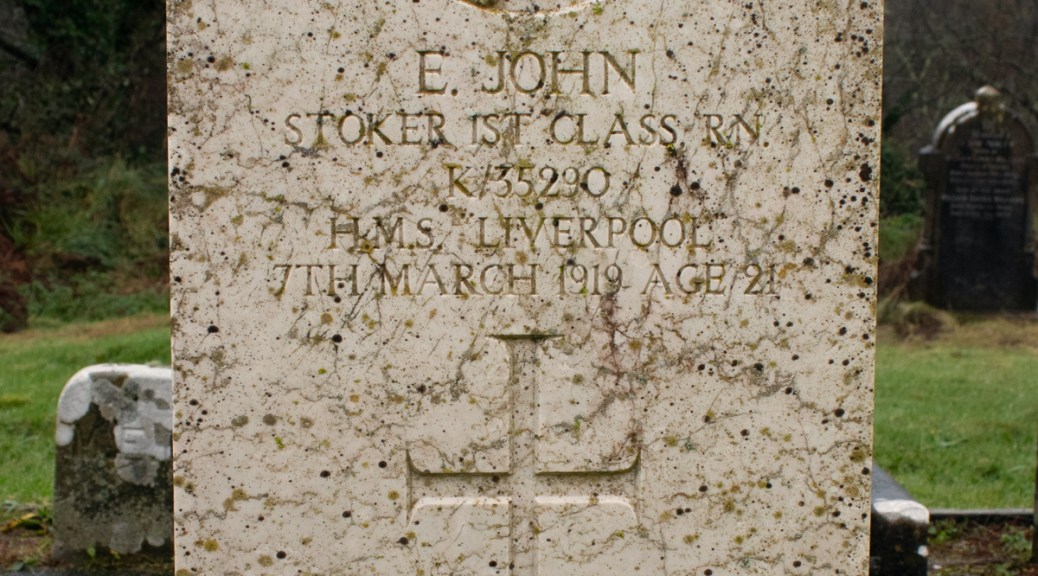
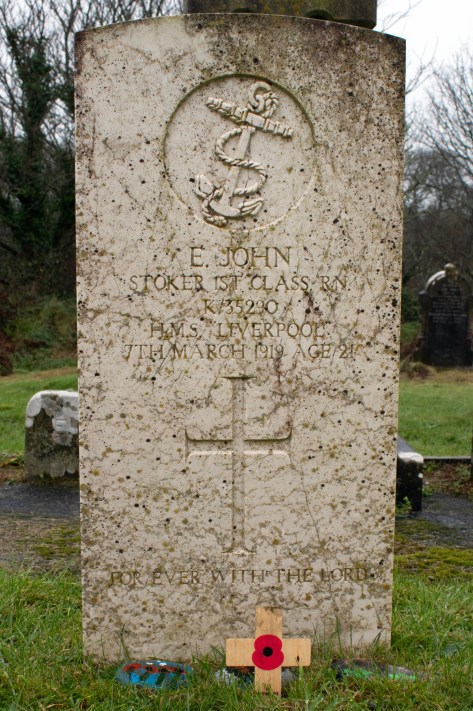
Stoker 1st Class Edwin John

Stoker 1st Class Edwin John

Edwin John was born in St David’s, Pembrokeshire, on 18th February 1898. The youngest of nine children, he was the son of farmer Henry John and his wife, Caroline. Edwin’s mum died when he was just five years old, and Henry was left to raise the family alone.

When he finished his schooling, Edwin found work on the farm. When war broke out, however, he was called upon to play his part and, on 19th July 1916, he enlisted in the Royal Navy. His service papers show that he was 5ft 4ins (1.63m) tall, with dark hair, grey eyes and a dark complexion.

Stoker 2nd Class John was sent to HMS Vivid, the Royal Naval Dockyard in Devonport, Devon, for his training. He remained there for three months, before being given his first assignment, the light cruiser HMS Liverpool. She spent the second half of the conflict patrolling the Mediterranean, and this is where Edwin would serve his time.

Edwin’s time in the navy was uneventful. He was promoted to Stoker 1st Class in March 1917, and, while he was consistently noted as being of very good character, his ability was recorded as being satisfactory.

On 28th April 1918, Stoker 1st Class John returned to shore to be demobbed. Given the war had another seven months to run, it is unclear why he was stood down, although it may have been on medical grounds. At this point his trail goes cold, but it is likely that he returned home.

Edwin’s health was certainly suffering by this point, and, on 7th March 1919 he passed away from bronchitis. He was just 21 years of age.

Edwin John’s body was laid to rest in St David’s Parish Cemetery, Pembrokeshire, not far from where his father and siblings still lived.


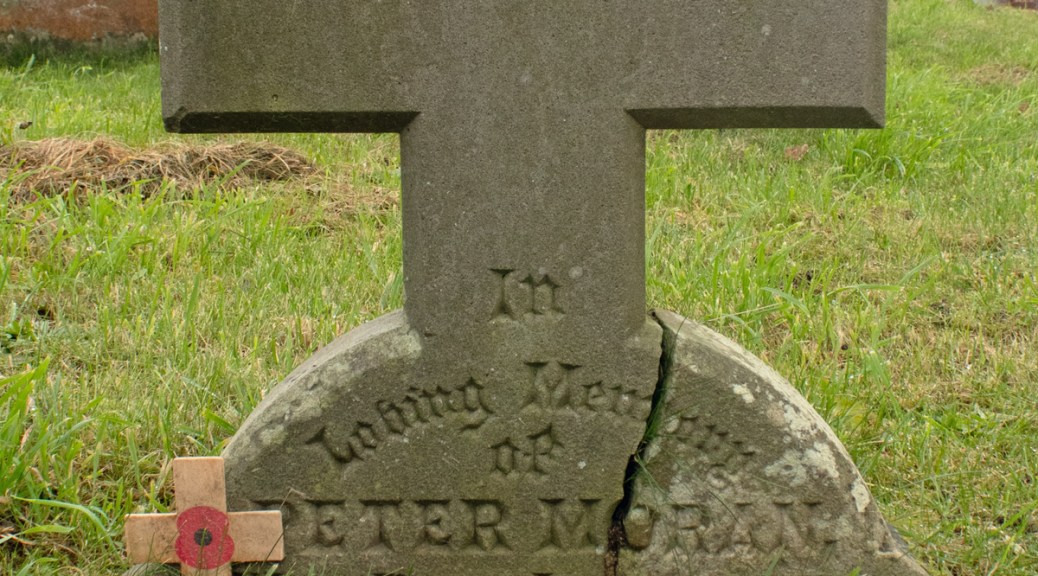
Leading Boatman Peter Moran

Leading Boatman Peter Moran

Peter Moran was born in Kilmeena, County Mayo, Ireland, on 29th January 1876. Details of his early life are hard to track down, but when he finished his schooling, he wound work as a fisherman.

By 19th August 1891, Peter sought to make a more permanent career of the sea. He signed up to the Royal Navy, and was sent to HMS Impregnable, the shore base in Devonport, Devon, for his training. Being just 15 years of age, he was too young to formally enlist, and was given the rank of Boy 2nd Class.

Over the next few years, Peter learnt the tools of his trade. On 2nd July 1892 he was promoted to Boy 1st Class, and the following February he was given his first sea-faring assignment, on board the battleship HMS Neptune. By March 1893 Boy Moran found himself serving on board HMS Daphne, a screw sloop which would become his home for the next three years.

During his time aboard Daphne, Peter came of age, and was given the rank of Ordinary Seaman. His service records show that he was 5ft 4ins (1.63m) tall, with light hair, grey-blue eyes and a fresh complexion. Within eighteen months he had proved his mettle, and was promoted to Able Seaman.

Over the next decade, Peter would serve on eight vessels. By the time the term of his contract came to an end in September 1903, he had been promoted twice – to Leading Seaman, then to Petty Officer 2nd Class.

Peter renewed his contract, but seems to have chosen a new career path. On 2nd October 1903 he moved to HM Coastguard and, as a Boatman, was assigned to Pendeen Cove, Cornwall.

Love blossomed for Peter, and he married a woman called Caroline in the next few years. There is little further information about her, but the couple would go on to have three children – Mary in 1908, Florence in 1911 and Thomas in 1913.

Boatman Moran would spend twelve years with the coastguard, moving to St Ives, Cornwall, in September 1908, and Fishguard, Pembrokeshire, in March 1914. By this point he had been promoted to Leading Boatman, and was set on a new life in Wales. Sadly, the new life was not to be: on 2nd June 1915 he passed away from pneumonia. He was 39 years of age.

The body of Peter Moran was laid to rest in Fishguard Cemetery: a life at sea, and forging homes in three countries at an end.


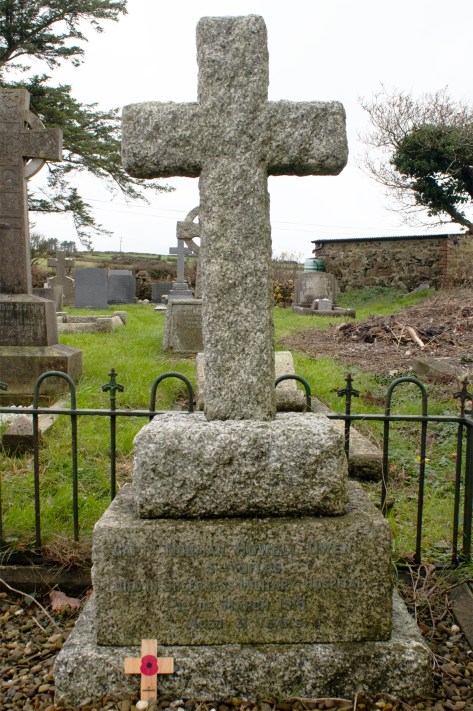
Captain Norman Owen

Captain Norman Owen

Norman Howell Owen was born in the spring of 1888, and was the third of four children – all boys – to John and Elizabeth. John was a surgeon from Pembroke Dock, Pembrokeshire, but the family were raised in Fishguard, where his practice was based.

Norman was an educated young man and, in 1906, attended the Sir Isaac Pitman & Son Phonetic Institute in Bath Somerset. He was studying shorthand, passing an examination in the subject after just three months. He passed an entrance exam for the National and Provincial Bank the following year, and, by the time of the 1911 census, he was working in the Fishguard branch and living back with his parents.

When war came to Europe, Norman was called upon to play his part. Full details of his service have been lost to time, but what remains paints an interesting picture of his time in the army. He appears to have enlisted in the King’s Liverpool Regiment as a Private, before transferring to the Labour Corps, then the Army Ordnance Corps.

By 1918 the Pembrokeshire Voters List noted Norman and two of his brothers as absentee voters – serving in the army, so not at home. Norman is recorded as being a Captain in the Army Service Corps, having received a commission on 8th February 1915. His older brother John is recorded as being a Captain in the Royal Army Medical Corps, while his younger brother, Lionel, was a Captain in the Royal Field Artillery.

The mystery of Norman continued: he survived the conflict, but by February 1919 had been admitted to the Broadway Military Hospital in Sheerness, Kent. He passed away on 1st March, the cause of his passing not readily available. Captain Owen was 31 years of age.

The body of Norman Howell Owen was taken back to Pembrokeshire for burial. He was laid to rest in Fishguard Church Cemetery.


Norman died intestate: his family went through probate, and his effects – totalling £1003 8s 10d (approximately £67,000 today) were left to his father.


Fireman Arthur O’Keefe

Fireman Arthur O’Keefe

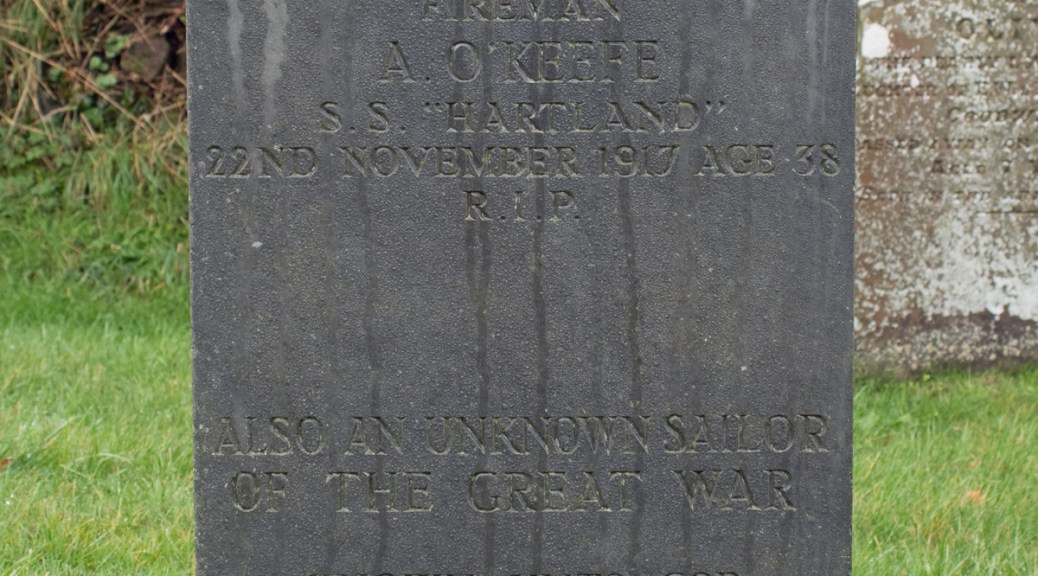
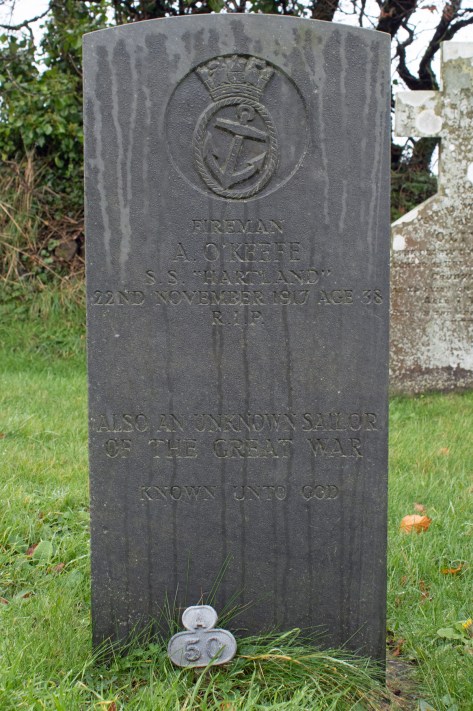
O’KEEFE Fireman Arthur. SS “Hartland.” 22nd Nov., 1917. Age 38. Son of John and Mary O’Keefe of Cork.

The search for information about Arthur O’Keefe has proved a challenging one. He does not appear with his parents on any census records, and there is precious little documentation about his life.

Arthur found work as a Fireman in the Mercantile Marine, and served on board at least four ships. In the autumn of 1917, he was based out of Glasgow, Scotland, and was attached to the SS Hartland. She had been requisitioned by the Admiralty, and was put to use transporting wheat from India.

On 22nd November the Hartland was travelling from Glasgow to Barry, South Wales, when she was hit by a torpedo from the submarine U-97, 21 miles south west of Bardsey Island. The ship was damaged, and two of the crew – Fireman O’Keefe and Fireman Thomas McGaw – were killed.

An American destroyer, the USS Conyngham, was at the head of the Hartland’s convoy, and managed to rescue the remaining 28 members of the crew, taking them to Holyhead. The Hartland was towed to Fishguard Harbour and refloated.

Arthur O’Keefe was 38 years of age when he was killed. He was laid to rest in Llanwnda Cemetery, not far from Fishguard, Pembrokeshire.


Arthur’s headstone notes that he was buried with an unknown sailor of the Great War. There is no indication who this might have been, but there are no records of his colleague Thomas McGaw being laid to rest. Given both men died in the same incident, and their bodies were transported to Fishguard with their ship, it seems possible that they may have been buried together.