Tag Archives: Serjeant

Serjeant George Carpenter

Serjeant George Carpenter

George Palmer Carpenter was born in Worthing, West Sussex, in 1881, one of fourteen children to James and Elizabeth Carpenter. James ran the Steyne Hotel on the seafront, and sent his boys off to the Lucton Boarding School in Henfield for their education.

A regimented life seems to have suited George. When he left school, he enlisted in army, joining the Royal Engineers as a Sapper. The 1901 census found him billeted at the Elphinstone Barracks in Portsmouth.

Sadly, there is little further documentation on the life of Sapper Carpenter. He served through to and during the Great War, attaining the rank of Serjeant. He was sent to France in May 1915, though there is little to confirm his role there, or how long he stayed.

Serjeant Carpenter was subsequently attached to G Depot Company of the Royal Engineers, which received men returned from Expeditionary Force and also men enlisted for Tunnelling Companies, Special Companies and other specialist units. By this time – presumably later on in the conflict – he was based back in England, at the regiment’s barracks in Chatham, Kent.

When the war came to a close, George continued with his army career. With conflict in Europe coming end, he was shipped to Singapore in 1917, where he served through to 1920. A Sussex newspaper picked up his story from there:

Much sympathy will be extended to Mrs Carpenter and her family, of the Steyne Hotel, consequent upon the death of Sergeant George Carpenter, of the Royal Engineers, another of our Worthing boys whose life has been laid down in his country’s service. He arrived home in a bad state of health on the 25th of February last from Singapore, where he had been on duty for three years. Suffering from gastric influenza, it was found necessary that he should undergo an operation, which was carried out at midnight on Saturday. But he sank from weakness, and died at half-past eight on Sunday morning. This is the second son of whom Mrs Carpenter has been bereaved within a year, and there is pathos in the words addressed to us by her: “I have again the sorrowful task of sending the news of the death of one of my sons this morning.

Worthing Gazette: Wednesday 24th March 1920

George Palmer Carpenter was 39 years old. He was laid to rest in the Broadwater Cemetery of his home town, Worthing, in West Sussex.


The other brother referred to in the report was George’s younger brother Norman.

He had emigrated to Canada in 1906, but returned to Europe as part of the Canadian Expeditionary Force when war broke out. Wounded in battle in May 1917, he returned to the UK for treatment and recuperation, and remained on home soil for the rest of the war.

In the spring of 1919, he was admitted to hospital with pleurisy and anaemia, and seems that he never fully recovered, succumbing to the conditions in August of that year. He was just 32 years old.


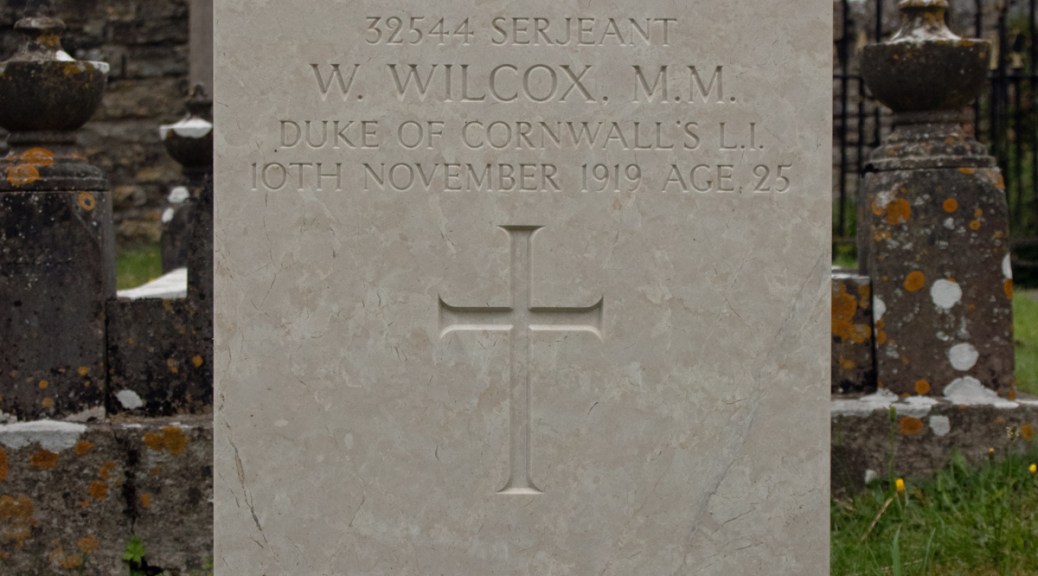
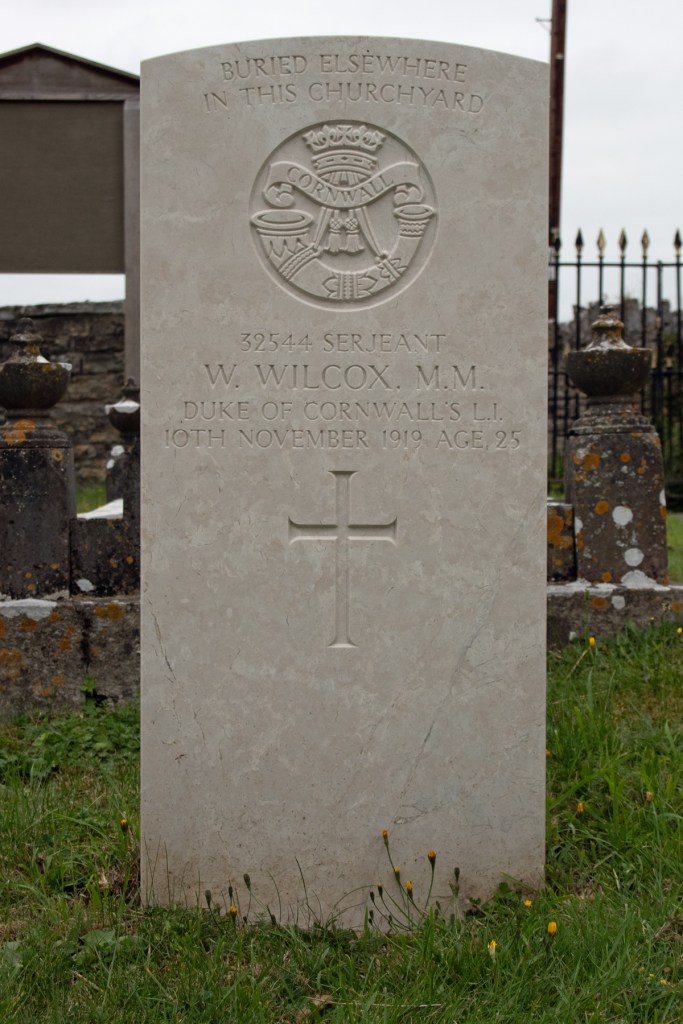
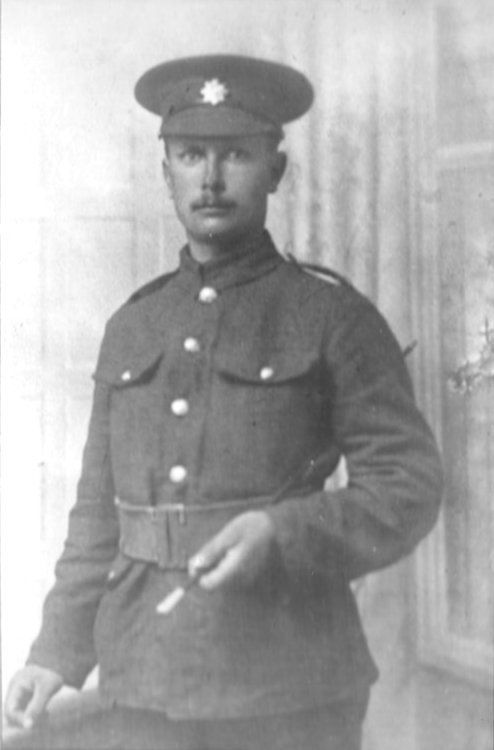
Serjeant William Wilcox

Serjeant William Wilcox

Soloman William Wilcox – known by just his middle name – was born in 1894 and was one of seven children. His father, James, was a carter from Keinton Mandeville in Somerset, and he and William’s mother, Eliza, brought the family up in neighbouring Charlton Mackrell.

By the time of the 1911 census, William had left school, and was working as a farm labourer, with his older brother Sidney. James, meanwhile, had found further employment working in a local bluestone quarry.

War was on the horizon and, while it is evident that he enlisted in the Duke of Cornwall’s Light Infantry, there is little further documentation to track his service. Both of the regiment’s main battalions fought on the Western Front, though where and when William was involved is lost to time.

He seems to have been an ambitious young man; he rose through the ranks and, at the point he was discharged, he had risen to the role of Serjeant. He was also in receipt of the Military Medal, though there is no further information about the events that led to this.

William may well have been spurred on by family losses he suffered during the conflict. His mother Eliza died in April 1915, his brother Sidney was killed in action on 10th September 1916, and his father James passed away in August 1918.

Serjeant Wilcox survived the war, and was eventually discharged from military service in August 1919. Whether he was simply demobbed, or he was medically discharged is unclear, but, given that he died only a few months later, it seems likely that the latter was the case.

Soloman William Wilcox died in Taunton, Somerset, on 10th November 1919, at the age of 25 years old. His body was brought to St Peter & St Paul’s Church in Charlton Adam, Somerset, potentially close to where some of his remaining family lived.


Larger memorial image loading...
Serjeant William Wilcox
(courtesy of findagrave.com)

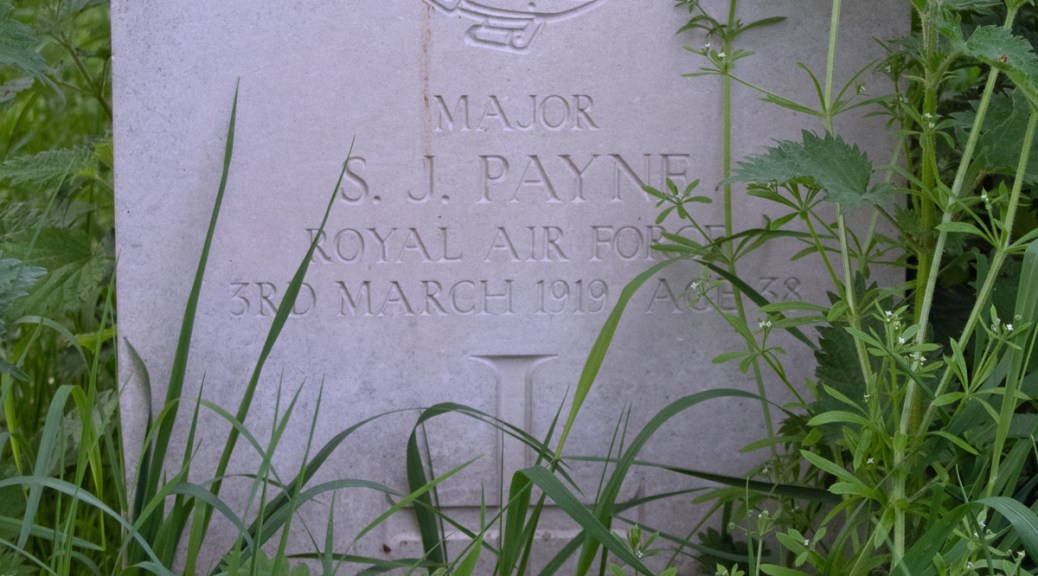
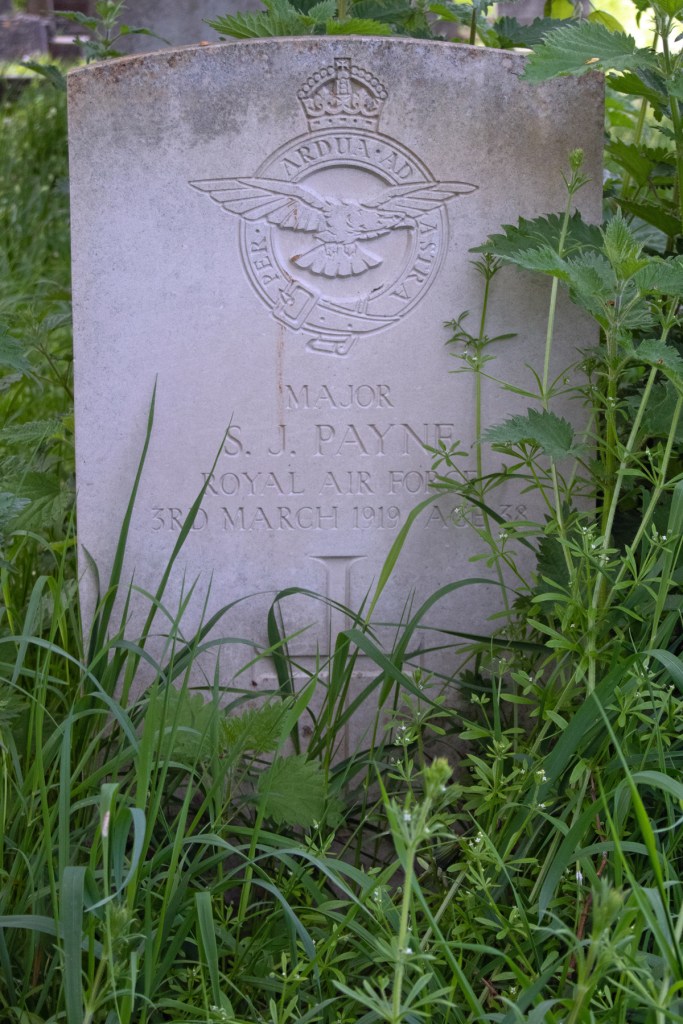
Major Stanley Payne

Major Stanley Payne

Stanley James Payne was born towards the end of 1882, one of eleven children to Stephen and Elizabeth Payne. Stephen was a leather salesman from Essex, who had moved his family to Weston-super-Mare in Somerset in around 1880.

Stanley seems to have been drawn in to a military life from an early age. In January 1900, he enlisted as a Private in the Somerset Light Infantry, and the 1901 census listed him as living at the Raglan Barracks in Devonport, near Plymouth.

Military service took Private Payne to India, where he served for six years. His success and ambition were clear; in 1906 he was promoted to first to Corporal and then to Sergeant. By 1911 – and now back in England – as a Lance Sergeant, Stanley was working as a military clerk at the Royal Horse Artillery Barracks in Dorchester, although he was still attached to the Somerset Light Infantry.

Stanley’s ambition and sense of adventure continued; by July 1912 he had made the transfer over to the newly-formed Royal Flying Corps, as a Sergeant.

It was while he was based in Dorchester that he met Winifred Bell. She was the daughter of a local council worker, and the couple married in the town in September 1912. Stanley and Winifred went on to have a daughter, Doris, who was born in July 1914.

War had arrived in Europe, and on 7th October, the now Warrant Officer Payne was shipped to France. During his nine months on the Western Front, he was mentioned in despatches and received the Croix de Guerre for his gallantry. The local newspaper also reported that he:

…had also the honour of being presented to the King on the occasion of His Majesty’s last visit to the front, and at a home station had also been presented to Queen Mary.

Western Daily Press: Saturday 8th March 1919

Returning to England on 1st June 1915, he was again promoted to Lieutenant and Quartermaster, although here his military records dry up. By this time, he had been in the armed forces for more than fifteen years, but his military records seem to confirm this as the last day of his service.

The next record for Stanley confirms his passing. Admitted to the Central Air Force Hospital in Hampstead with a combination of influenza and pneumonia, he died on 3rd March 1919. He was just 36 years of age.

Brought back to Weston-super-Mare, where his now widowed father was still living, Stanley James Payne was laid to rest in the Milton Cemetery in his home town.


Stanley’s gravestone gives his rank as Major. While there is no documented evidence of any additional promotions after June 1915, the rank is the equivalent of Quartermaster in the Army Reserve. It seems likely, therefore, that the end date of his military service marked the start of his time in the reserves.


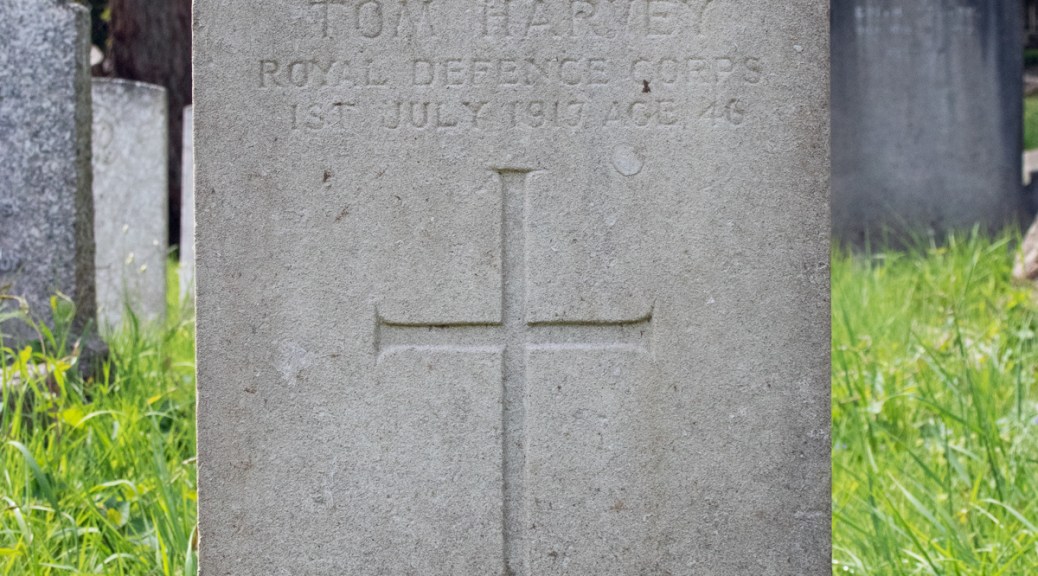
Serjeant Tom Harvey

Serjeant Tom Harvey

Tom Harvey was born in the spring of 1871, one of four children to John and Caroline. John was a fly driver, hiring out a pony and trap for a fee, while his wife brought in extra money working as a laundress. The family lived in Weston-super-Mare, on the Somerset coast, in a town house they shared with another family, the Painters.

Details of Tom’s early life is a bit sketchy. The 1891 census lists him as a Private in the Royal Marine Light Infantry, with his address as the Royal Naval Hospital in East Stonehouse, Plymouth, where he was ‘receiving treatment’. Sadly, none of his military records survive, so there is nothing to confirm his dates of service.

In 1894, demobbed and working as a cab driver in his home town, Tom married a woman called Sarah. Little other information exists about her, but what is known is that she worked as a dressmaker to supplement her husband’s income, and the couple did not go on to have any children. The couple lived in Hopkins Street, near the centre of Weston-super-Mare, and initially took in boarders to help finances.

By the time war broke out in 1914, Tom was in his forties. Eventually called back into service, he joined the 261st Company of the Royal Defence Corps and, with the role of Serjeant, he would have had men under his command. The 261st was part of Southern Command, which provided a territorial defence force, or Home Guard, and a lot of his time was spent in Birmingham.

It was while he was home on leave that Tom fell ill. The local media picked up the story:

The death occurred on Sunday under sudden circumstances of Sergeant Tom Harvey, Royal Defence Corps… The deceased was proceeding to his residence… when he fell, and was only able to give his address and to state that he was suffering from chronic indigestion before he expired. Prior to joining up as a National Volunteer, the deceased has been engaged as an omnibus driver.

Western Daily Press: Tuesday 3rd July 1917

Tom Harvey was 46 years old when he died. He was laid to rest in the Milton Cemetery in his home town of Weston-super-Mare.


Serjeant Harry Stephens

Serjeant Harry Stephens

Harry Stephens was born in Banwell, near Weston-super-Mare on 4th January 1873. He was one of six children to Frederick Stephens and his wife, Emma. Frederick was a butcher, and this was a trade that both Harry and his older brother, Fred, would go into when they left school.

It appears that being a butcher was not the full-time career that Harry was looking for, and so, in the 1890s, he found other employment as a farmer, and moved to Lynton, on the north coast of Devon.

It was here that he met Norah Watts, another farmer’s daughter and, in 1898, the couple married. They set up home at Furzehill Farm, and went on to have four children, Frederick, Alice, Albert and Herbert.

By the time of the 1911 census, Harry had moved his family back to Banwell, where they lived in a four-roomed house on the High Street. Harry was now a cattle dealer, and was presumably supplying meat to his mother who, having been widowed in 1902, was now running the butcher’s shop with three of Harry’s siblings.

War was coming, though, and on 21st July 1915, Harry enlisted. Given his farming background, he was assigned to the Army Veterinary Corps and, while remaining on the Home Front, over the next few years he gained promotion.

Towards the end of 1917, when Serjeant Stephens was serving in Romsey, Hampshire, he fell ill, complaining of chest pains and breathlessness. He was taken to Hursley Hospital near Winchester for cardiac checks, and it became apparent that he was no longer fit for active duty.

Discharged from military service on 5th July 1918, he returned home. Admitted to the Military Hospital in Taunton, it was only a matter of weeks later than Serjeant Stephens passed away. He was 45 years of age.

Harry Stephens was laid to rest in the St James’ Cemetery in Taunton.


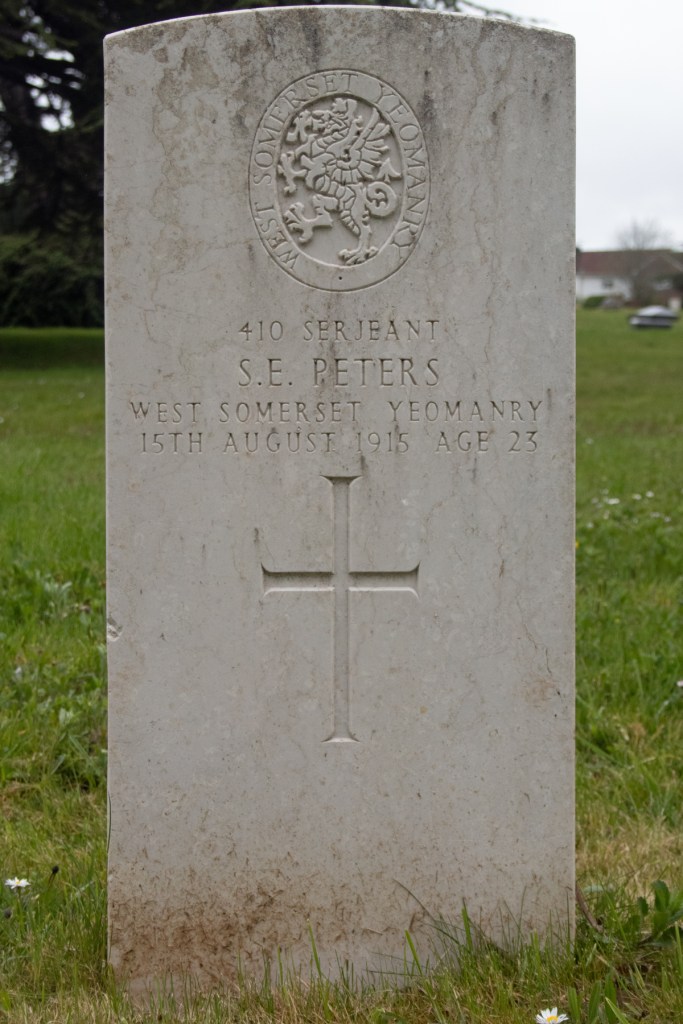
Serjeant Sydney Peters

Serjeant Sydney Peters

Sydney Edward Peters was born at the end of 1891, the only child to farmers Edward and Annie Peters. The family lived in Bishop’s Hull, near Taunton, where Edward also employed two members of staff to help with the household and his dairy herd.

Sydney went on to manage the neighbouring farm to his father, and looked to be making a living with this. Keen on sport, he went on to captain the village cricket team, and took an interest in physical fitness.

War broke out and Sydney was quick to enlist. Joining the West Somerset Yeomanry, he was assigned to the 1st Battalion. Initially the regiment were based on home turf, and he spent a lot of that time in East Anglia. He must have made a positive commitment to the troop, and was soon promoted to Serjeant.

In the early summer of 1915, he returned to Taunton, to help drill recruits at the Territorial Depot there. A short while after returning to his Essex he fell ill, and before the battalion were due to be shipped overseas, Serjeant Peters went back to Somerset on leave.

By the time he reached home, however, he was severely ill, and very quickly died from what turned out to be blood poisoning. Serjeant Peters was just 23 years old.

Sydney Edward Peters was buried in St Mary’s Cemetery in his home town of Taunton.


Serjeant Sydney Peters

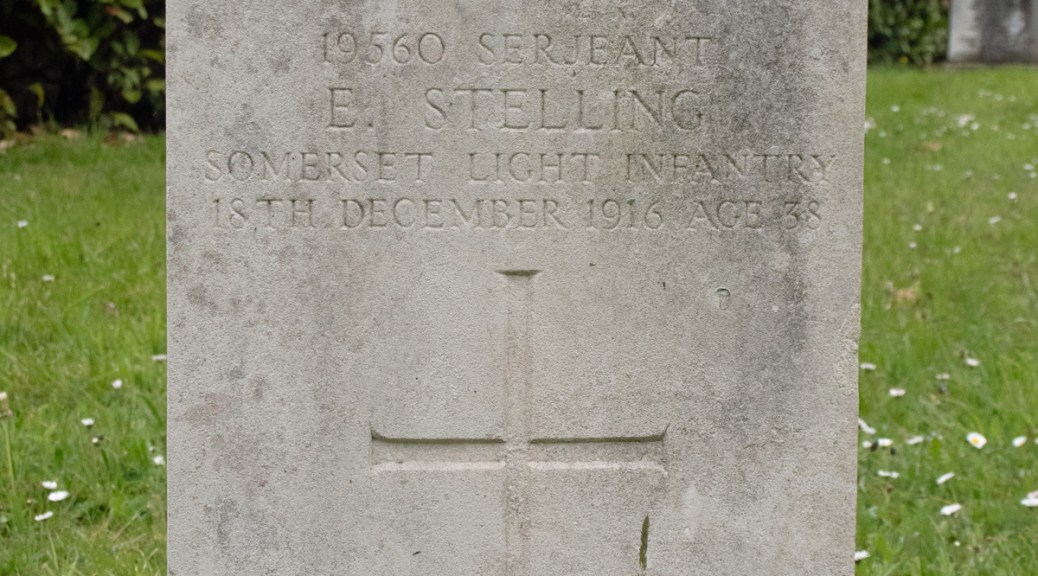
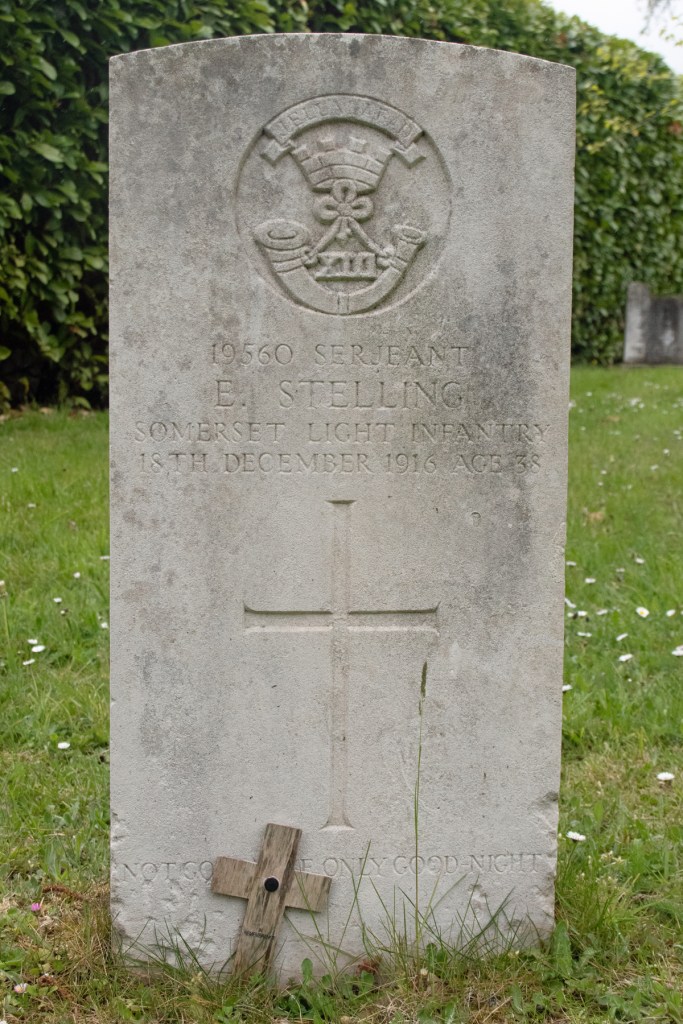
Serjeant Ernest Stelling

Serjeant Ernest Stelling

Ernest Leonard Stelling was born in the summer of 1881, the oldest of six children to Charles and Bertha Stelling. Charles was a tailor from London, and while Ernest was born in Suffolk, by the time of the 1891 census, the family had settled in Reading, Berkshire.

Ernest followed in his father’s footsteps, becoming a tailor and cutter in his own right. He met a woman from Reading called Lettie Eliza Mazey, and the couple married in 1904. The couple set up home with Lettie’s brother and his family in Tilehurst, but didn’t go on to have any children themselves.

Details of Ernest’s military service are a bit scarce. He initially enlisted in the Royal Berkshire Regiment, but quickly moved to the Somerset Light Infantry in the early stages of the First World War.

Sadly, no formal documents of Ernest’s time in the army are available, but a local newspaper gave a good insight into his Somerset service.

Death of a Master Tailor

After an illness of only seven days, the death took place at the military hospital on Monday afternoon of Sergeant EL Stelling, who has been master tailor of the Depot for the past two years. The cause of death was pneumonia, and the loss of so popular a member of the Depot staff is deeply regretted by all ranks.

Sergeant Stelling, who was 37 years of age, came to the Somersets from the Royal Berkshire Regiment, and succeeded the late Sergeant-Master-Tailor Chambers. He was a native of Reading, and one of four brothers serving their King and country. His father, Mr Charles Stelling, for many years carried on business as a master tailor in Reading.

Since he had been at Taunton barracks, Sergeant Stelling had made many friends, and actively identified himself with the social life of the sergeants’ mess, taking a prominent part in the arrangement of concerts, etc.

He was of a bright, generous disposition, and before his illness he was making a collection at the Depot on behalf of the Buffaloes’ Christmas treat to poor children of the town. He was a valued member of the local Lodge of the Royal Order of Buffaloes, and his death is greatly regretted by all the brethren.

He leaves a widow but no family. Much sympathy is felt for Mrs Stelling, who has for some years been a confirmed invalid.

The funeral took place with full military honours at St Mary’s Cemetery on Friday afternoon.

Taunton Courier and Western Advertiser: Wednesday 27th December 1916

This gives a real insight into Ernest’s personal life. He was obviously very active socially, and committed to the community. Whether Lettie’s infirmity contributed to the couple’s lack of family will never be known, but, from his support of the poor children of Taunton, it seems evident that he would have been a good family man.

The next document relating to Serjeant Stelling is his pension record; this confirms the news article’s report that he contracted pneumonia and influenza, and he succumbed to the conditions on 18th December 1916. He had, in fact, just turned 38 years old.

Ernest Leonard Stelling lies at rest in St Mary’s Cemetery in his wartime adopted home town of Taunton, Somerset.


Serjeant Ernest Stelling (from Ancestry.co.uk)

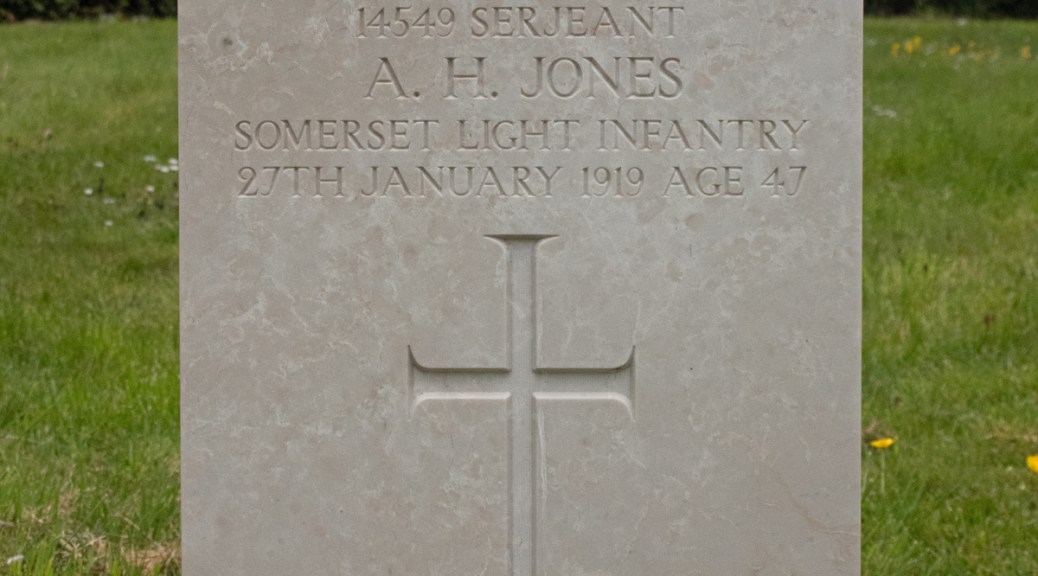
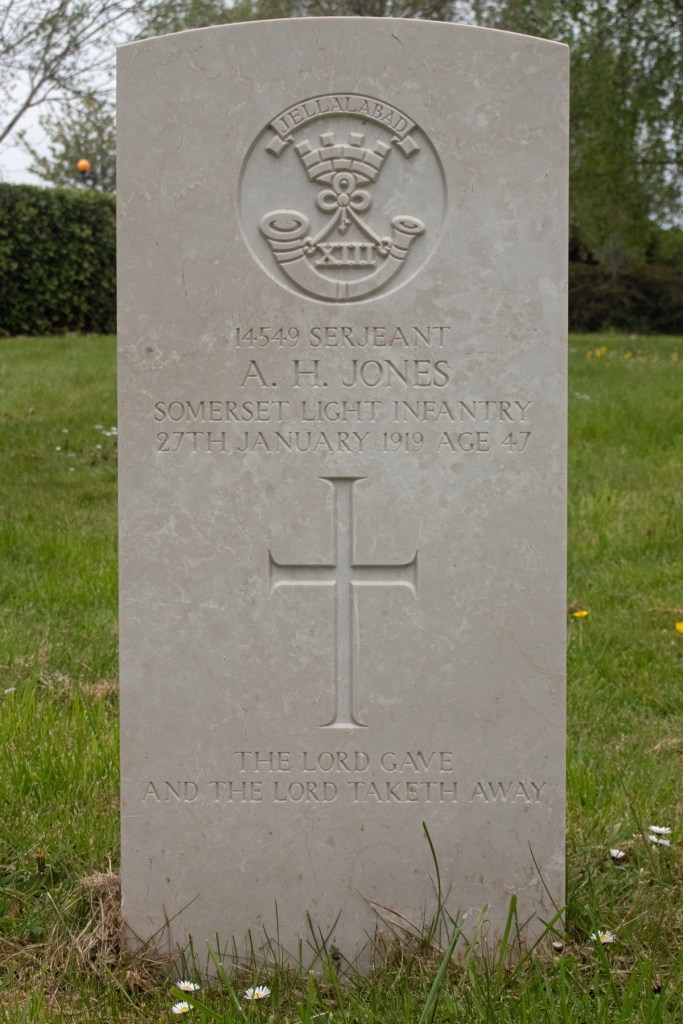
Serjeant Arthur Jones

Serjeant Arthur Jones

Arthur Henry Jones was born in 1874, the oldest of five children to James and Kate Jones. James worked as a coachman, and travelling seems to have been his thing.

Born in Wiltshire, he met and married Kate in Somerset, and this is where Arthur was born; by 1879, the young family had moved to Hampshire, and within a year they had relocated again, this time to Folkestone in Kent. Three years later, by the time James and Kate’s youngest two children were born, they were back in Wiltshire again, having competed their tour of the south of England.

Sadly, tragedy was to strike the Jones family, when Kate passed away in 1888, at the tender age of 31 years old. James had a family of boys to bring up, however, and he married again, this time to a Miriam Millard. The couple went on to have two children, giving Arthur a half-brother and half-sister.

At this point, Arthur falls off the radar. It may well be that he chose to take up a military career early on – if he was serving overseas, it is possible that the census documentation no longer exists. Twelve years’ service would certainly seem to account for his absence between 1881 and the next time his name appears on records.

These records relate to Arthur’s marriage to Fanny Hill. The couple were married by Banns in May 1906, marrying in Westbury, Wiltshire. They went on to have four children – Arthur, Kathleen, Gladys and Percival – between 1907 and 1911.

Again, at this point, Arthur falls off the radar. His service records no longer exist, but what evidence remains confirms that he enlisted in the Somerset Light Infantry and was assigned to the 7th (Service) Battalion. Initially formed in Taunton, they shipped out to France in July 1915, although there is no documentation to confirm when or if Arthur was involved.

Sadly, the only other reference to Serjeant Jones is his final pension record. This confirms that he succumbed to a combination of influenza and pneumonia on 27th January 1919. He was 44 years old.

Arthur Henry Jones lies at rest in St Mary’s Cemetery in Taunton, Somerset.


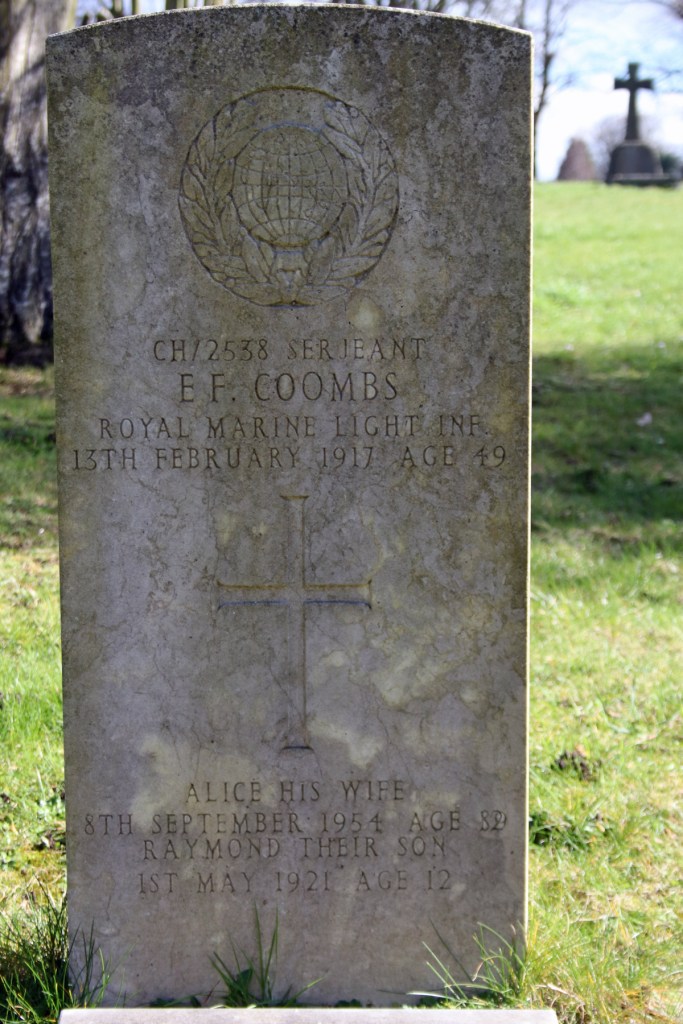
Sergeant Ernest Coombs

Serjeant Ernest Coombs

Ernest Frederick Coombs was born in the summer of 1866. One of four children to cabinet maker Frederick Coombs and his wife Julie, the family lived in Leatherhead, Surrey.

Unfortunately, the documentation around Ernest’s life is a little scattered. What we do know is that he married Alice Amelia Kinnear in June 1889, and the couple went on to have fourteen children.

Jumping forward, and by the time of the 1911 census, the family were living in a small terraced house on the outskirts of Dover. Ernest listed his trade as a canteen managed for a provision merchant.

Sadly, Ernest’s military records are also lost to time. He enlisted in the Royal Marines Light Infantry, and was promoted to Serjeant during his time there.

The only other information available about him comes from the obituaries section of a local newspaper in March 1917:

COOMBS: On February 13th, at the Royal Naval Hospital, Chatham, after a short illness, Ernest Frederick Coombs, aged 50 [sic] years (late of 14 Leighton Road, Dover). RIP

Dover Express: Friday 2nd March 1917

Ernest Frederick Coombs was actually 49 when he died; he lies at rest in the Woodlands Cemetery in Gillingham, Kent.


Ernest’s grave was also the last resting place for his youngest son, Raymond, who died aged just twelve years old, two months after his father, and his widow, Alice, who passed away in 1954, at the age of 82.


Serjeant Frederick Wickens

Serjeant Frederick Wickens

Frederick Albert John Wickens was born in Newbury, Berkshire, in the summer of 1889. The oldest of four children to Alfred and Emily Wickens, his father was a brewer’s labourer.

The military life proved more of a draw to Frederick, however. While his full records no longer exist, by the time of the 1911 census, he was recorded as being a Sapper with the 2nd Field Troop of the Royal Engineers. He was based at Potchefstroom, around 75 miles (120km) south east of Johannesburg in South Africa, and his trade was listed as a tailor.

Sadly, it is at this point that Frederick’s trail goes tepid, if not cold.

From a personal perspective, he married a woman called Rose, who was a year younger then him. Her details are scarce, and there is nothing to confirm when or where they married (other than the 1911 census, when Frederick was listed as ‘single’).

The couple must have had some connection to Gillingham, as this is where they lived; given the proximity of the Royal Engineers Barracks in neighbouring Chatham.

Sapper Wickens’ military service continued into the Great War. He was awarded the medaille militaire by Belgium, and achieved the rank of Serjeant during his career. Unfortunately, there are no details of the actions around either the award or his promotion.

Serjeant Wickens passed away on 27th February 1921; he died in Chatham, although the cause was not recorded. He was 31 years old.

Frederick Albert John Wickens lies at rest in the Woodlands Cemetery in Gillingham, Kent.


Frederick’s younger brother Thomas, also served in the Great War. He enlisted in the Princess Charlotte of Wales’s (Royal Berkshire) Regiment, and was involved in the battles on the Western Front. Sadly he was killed in the fighting on 24th May 1916, at the age of 19 years old.