Tag Archives: story

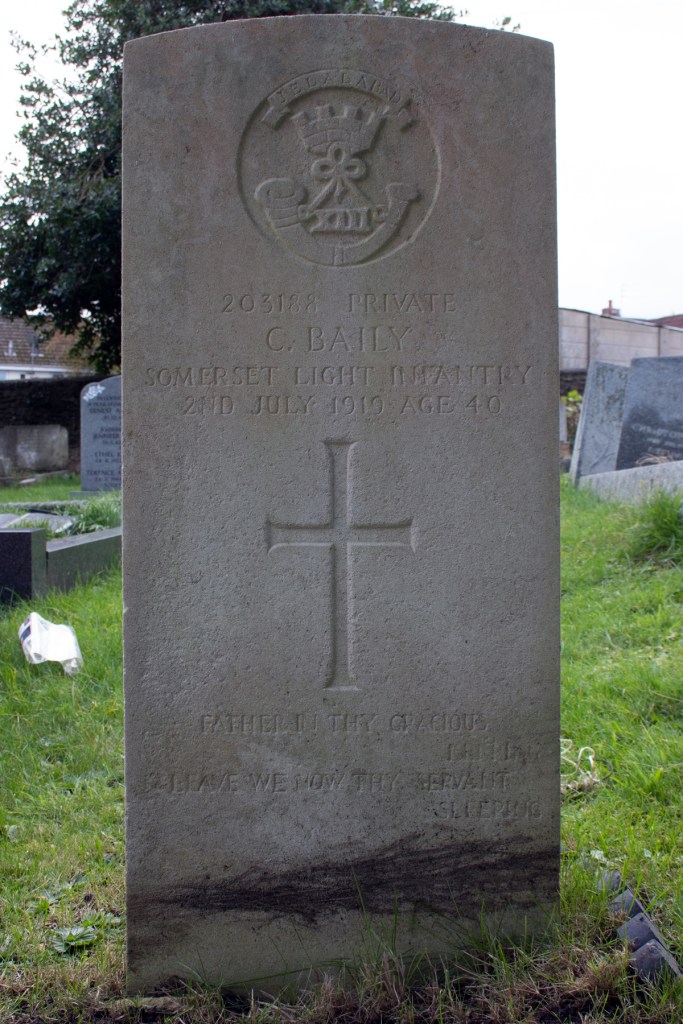
Private Charles Baily

Charles Baily

Charles Baily was born in Frome, Somerset, in March 1879; he was the middle of three children to Charles and Sarah Baily. Charles Sr was a plasterer, and the family were raised in a small cottage to the south of the town centre.

When Charles Jr left school, he found work as a carpenter and, on 17th March 1902, he married local woman Fanny Howell. Her father was a carter and she had not long returned from South Wales, where she had found employment as a parlour maid. Charles and Fanny set up home just three doors down from his parents, and went on to have five children.

War was coming to Europe, but the details of most of Charles’ military service are lost. He enlisted as a Private in the Somerset Light Infantry, and was assigned to B Company of the 1st/4th Battalion. The troop was sent to Bombay in the autumn of 1914; it then moved to Basra in the spring of 1916, remaining in Mesopotamia for the remainder of the conflict. Sadly, it’s not possible to know how much of this travel Private Baily undertook himself.

Charles survived the war, and was demobbed soon after the Armistice. He returned home, but his time back with his family was to be short: Private Baily died at home through causes lost to time on 2nd July 1919. He was 40 years old.

Charles Baily was laid to rest in the graveyard of Holy Trinity Church in his home town of Frome.


One sad aside to the story is that Charles and Fanny’s oldest child, daughter Frances Baily, had passed away in the summer of 1917. The cause of her passing is also lost to history, but she was just 16 years old when she died.


Serjeant Bertie Moody

Serjeant Bertie Moody

Bertie Richard Moody was born in Warminster, Wiltshire in April 1885, one of ten children to Joshua and Mary Moody. Joshua was a navy pensioner, who was twenty years older than his wife, and they raised their family in a small house to the west of the town centre.

When he left school, Bertie found work labouring for a man with a traction engine, but, after his parents died – Mary in 1901 and Joshua two years later – he had more need of a trade. The army offered him a life of adventure, and so he enlisted in the 1st Battalion of the Wiltshire Regiment. Full details of his military career are lost to time, but by the 1911 census, Private Moody was based in Pietermaritzburg, South Africa.

War in Europe was looming, and Bertie’s regiment was called back home. By December 1914, however, he was on the front line in France, and, over the next couple of years, earned the Victory and British Medals, the 1915 Star and a promotion to Serjeant for his service.

As time wore on, it was evident that illness was playing a bigger part in Serjeant Moody’s life. He was suffering from diabetes, and the condition led to him being medically discharged from the army in October 1916. Bertie moved to Frome, Somerset, and found work as a labourer.

He still wanted to play his part, and after making something of a recovery, he tried to enlist again, this time in the Royal Air Force. They rejected Bertie because of his condition too, however, so his time in active service came to an end.

At this point, Bertie’s trail goes cold. He died in Frome on 13th December 1918, at the age of 33, and was laid to rest in the graveyard of Holy Trinity Church in the town.


Private Thomas Cornall

Private Thomas Cornall

Thomas Cornall was born in Kingsteignton, Devon, early in 1879 and was the oldest of seven children to Thomas and Elizabeth Cornall. Thomas Sr was a clay cutter and, while the family were all raised in Kingsteignton, Thomas Jr appears to have been more wayward, and was farmed out to local relatives over time.

The 1881 census shows Thomas living with his parents; ten years later he was living with his maternal grandmother; in 1901 he was boarding with Elizabeth’s brother, John Withycombe, in Devonport; the 1911 census recorded him living with his sister and her family in the village of Chudleigh.

Thomas took on labouring jobs. He worked as a dockworker in Devonport, and a haulier in Chudleigh. War was coming to Europe, however, and Thomas was pulled in a different direction.

Full details of his military career are not available, but it is clear that he enlisted in the Somerset Light Infantry early on in the conflict. Whether Private Cornall saw active service overseas is lost to time, but he soon transferred over to the 696th Agricultural Company of the Labour Corps.

Thomas’ maternal uncle – John Withycombe – who had had lived with in 1901, had become manager of the Lion Hotel in Chudleigh and when he died in 1913, he left his wife, Bertha, with a son to raise and a business to run. At the end of 1916, Thomas and Bertha married in nearby Newton Abbot and took on the running of the Lion Hotel together.

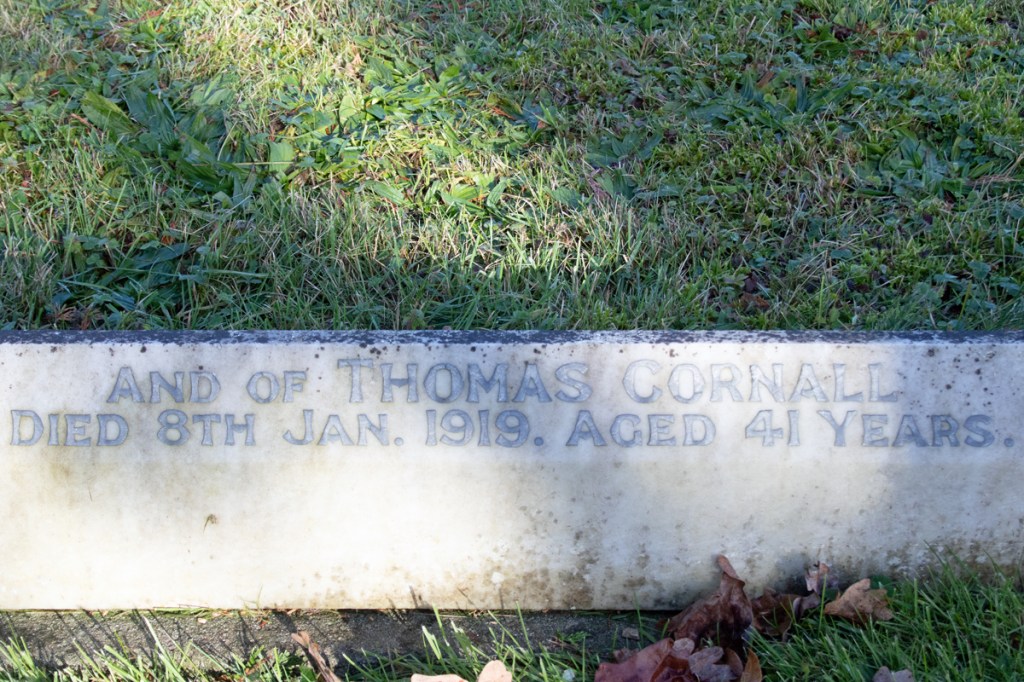
Private Cornall was still serving at this point, and continued his work in the Labour Corps through until the end of the war. His trail at this point goes cold; all that is known is that he died at home on 8th January 1919, at the age of 40 years old.

Thomas Cornall was laid to rest in Chudleigh Cemetery. The family plot included John and Bertha, when she passed away in 1954.


Private Gilbert Metters

Private Gilbert Metters

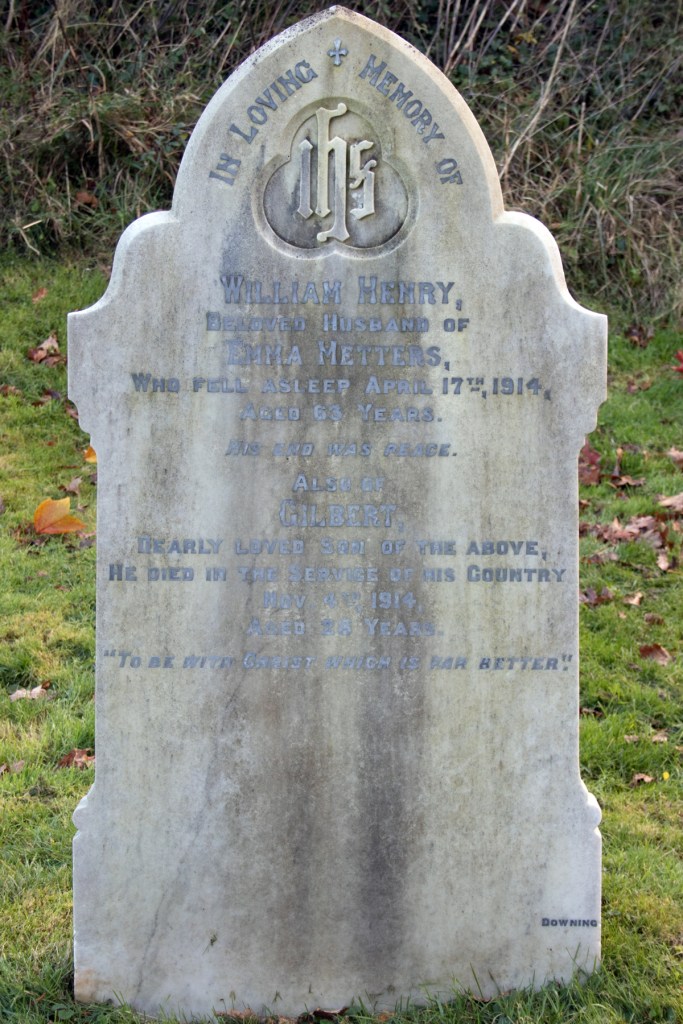
Gilbert Metters was born in Linkinhorne, Cornwall in March 1885, one of four children to William and Emma Metters. William was a farmer and haulier who moved his family to Chudleigh in Devon not long after Gilbert was born.

When Gilbert left school, he found work as a domestic gardener. By the time of the 1911 census, he was living with his parents, younger sister and Emma’s sister in Old Way, not far from the village centre. On 17th April 1914, William passed away, leaving Emma widowed.

When war broke out, Gilbert was one of the first from the town to sign up. He enlisted in the 8th Battalion of the Devonshire Regiment, and was soon off to Hampshire for training. Tragically, within weeks of arriving, Private Metters contracted tuberculosis, and passed away in the camp hospital. He was 29 years of age, breathing his last on 4th November 1914.

Gilbert Metters’ body was brought back to Chudleigh for burial, and was laid to rest alongside his father in the family grave.


The local newspaper reported on Gilbert’s funeral. It suggested that when enlisting “although not one of the strongest, he managed to pass the medical test.” It went on to say that:

He always assisted in every good cause in the town, and was very highly respected. He endeared himself with the officers and men of C Company.

Western Times: Friday 13th November 1914

Private Frederick Cleave

Private Frederick Cleave

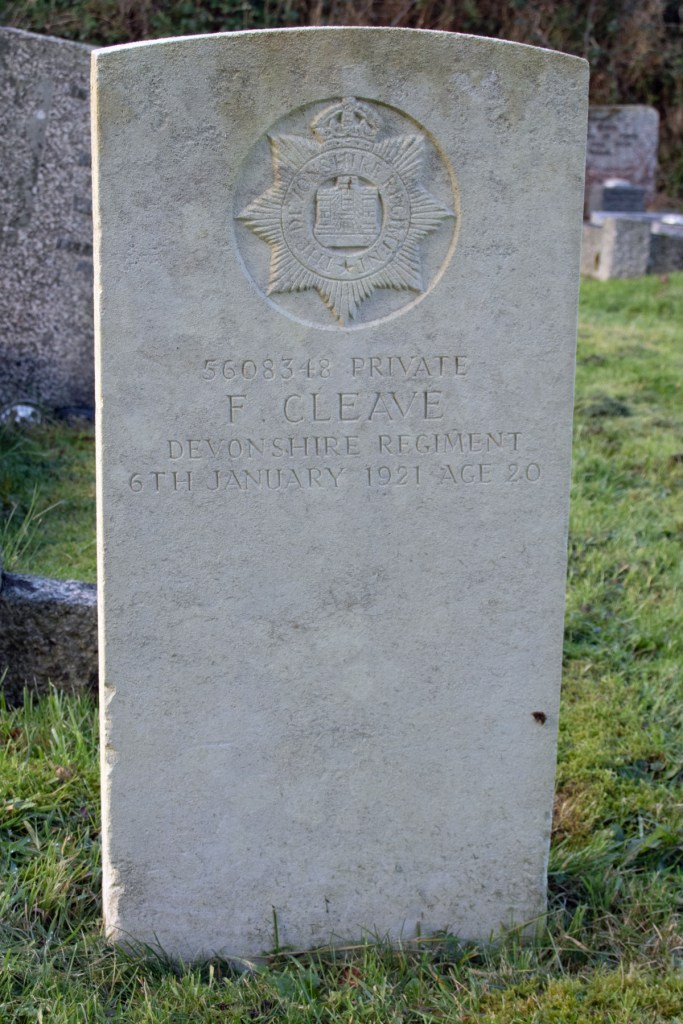
Frederick Cleave was born in Chudleigh, Devon, early in 1899, and was one of nine children to Charles and Eva Cleave. Charles worked as a waggoner – for a grocer, according to the 1901 census, and for a stonemason in the 1911 one.

There is little specific information about Frederick’s early life, and even details of his military service are only evident from a contemporary newspaper report of his funeral:

The funeral took place at the cemetery on Tuesday afternoon of Private F Cleave of the 1st Devon Regiment, son of Mr and Mrs C Cleave of Woodway Street, who died at Fermoy Hospital, Ireland… from disease contracted on foreign service… He joined the Army in 1915, and served through the war in France, and afterwards in the Russian Expedition.

Western Times: Friday 14th January 1921

The report suggests a couple of things. Firstly, Frederick was underage when he enlisted – he would have been 16 years old. He would also have been involved in some of the fiercest fighting of the conflict: the 1st Battalion of the Devonshire Regiment fought at the Somme in 1916, Arras and Ypres in 1917, and Lys, the Somme and the Hindenburg Line in 1918.

The Russian Expedition mentioned was part of the Allied attempt to intervene after the country’s civil war – actions that were to prove unsuccessful.

Fermoy Military Hospital was part of the British Army’s barracks in the County Cork town; it is likely that Private Cleave had contracted one of the lung conditions running rampant across Europe in the immediate aftermath of the First World War – influenza, tuberculosis or pneumonia. He passed away on 4th January 1921 at the age of 21 years old.

Brought back home, Frederick Cleave lies at rest in the cemetery of his home town, Chudleigh, Devon.


Able Seaman Leonard Gigg

Able Seaman Leonard Gigg

Leonard Frederick John Gigg was born in Silverton, Devon, on 9th May 1882. He was one of six children to Matthew and Sarah Gigg, both of whom were born Ottery St Mary, but who moved the young family to Chudleigh in the late 1880s.

Matthew was a domestic gardener, and his son initially joined him in this trade. However, as the third of five sons, Leonard obviously wanted to carve out a life for himself and so, on 21st August 1897, he enlisted in the Royal Navy.

Leonard’s naval records shows that he was 5ft 3ins (1.60m) tall, had light brown hair, blue-grey eyes and a fresh complexion. He also gave his year of birth as 1880 so he would be accepted in the navy.

Even with this altered date of birth, Leonard was still under age, and so was given the rank of Boy 2nd Class. He was obviously dedicated to his career, however, and, on his “eighteenth” birthday in 1898, he was officially enrolled as an Ordinary Seaman.

Over the course of his twelve years’ service, Leonard served on ten vessels; after each voyage, however, he returned to HMS Vivid – the Royal Naval Dockyard at Devonport, Portsmouth. During his time at sea, he also progressed through the ranks, becoming an Able Seaman as early as 1900.

When Leonard’s initial contract came to an end, he volunteered for a further term. Up until the outbreak of war, Able Seaman Gigg served on another six ships, but after falling ill while on board HMS Caesar in the summer of 1914, he returned again to Portsmouth.

Leonard had contracted cancer of the mouth, and, as a result of the condition, he was formally invalided out of the Royal Navy in May 1915. He returned home but, in spite of a couple of operations, he succumbed to the cancer, passing away on 9th October 1915. He was just 33 years of age (his gravestone gives a different age).

Leonard Frederick John Gigg was laid to rest in the cemetery in Chudleigh.


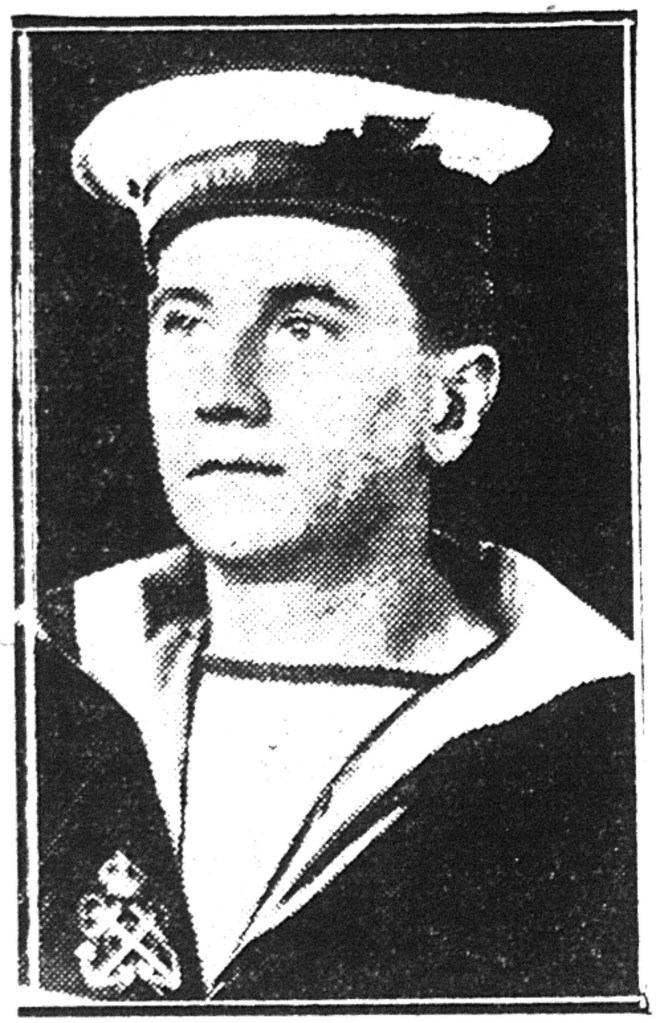
Able Seaman Leonard Gigg
(from findagrave.com)

The local newspaper reported on Leonard’s funeral:

The death has taken place at his father’s residence of Mr Leonard FJ Gigg, third son of Mr M Gigg, after a painful illness. The deceased had served in the Royal Navy for 18 years and was only invalided out in May last, owing to cancer of the tongue. Although undergoing three operations, he was no better, and expired form the effects of that dreadful malady at the early age of 33 years. In the service he was extremely well liked and highly respected both by officers and men, and always had a pleasant word for everyone.

The deceased’s four brothers, Mr Charles Gigg (now in Canada), Chief Petty Officer H Gigg (HMAS Australia), Able Seaman Walter Gigg (HMS Carnarvon), and Private Albert Gigg (4th Devons, now in India) were prevented from attending.

Western Times: Friday 22nd October 1915

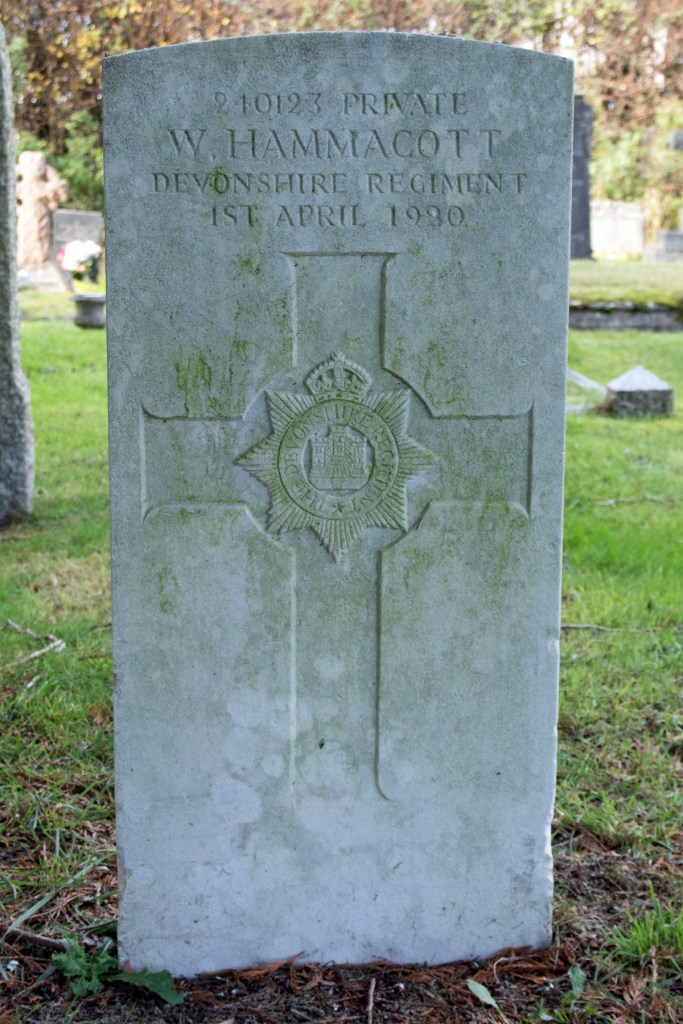
Private William Hammacott

Private William Hammacott

William Henry Hammacott was born on 11th January 1892 and was the oldest of four children. His parents were labourer George Hammacott and his wife Ellen; both were born in Chudleigh, Devon, and this is where they raised their family.

When William left school he too found work as a labourer, but war was coming to Europe, and he was keen to play his part. Full details of his service haven’t survived, but he had enlisted in the 5th Battalion of the Devonshire Regiment by 1915, and served on home soil.

Private Hammacott survived the war and earned the Victory, British and Territorial Force Medals for his service. During his time, he contracted malaria and was discharged from the army on medical grounds on 29th March 1919.

William returned home, and his trail goes cold for the next year. It is likely that his bout of malaria left him particularly vulnerable: he passed away on 4th May 1920, having contracted pneumonia. He was just 28 years old.

William Henry Hammacott was laid to rest in Chudleigh Cemetery.


Private Frederick Down

Private Frederick Down

Frederick Francis Down is one of those servicemen whose life is destined to remain lost to time. Born in Chudleigh, Devon, most of the information available about his life comes from one document – his naval service record.

The document gives his date of birth as 15th November 1897 and confirms that he enlisted on 23rd November 1914. Frederick was 5ft 2ins (1.57m) tall, had a fresh complexion, brown eyes and dark brown hair.

Frederick signed up as a Private in the Royal Marine Light Infantry, and, at the time of joining up, had been working as a butcher’s boy, living in Fore Street in the village of his birth.

Private Down served at the regiment’s depot in Deal, Kent. But he was only there for a short time: he was invalided out of the service – for reasons unrecorded – on 9th June 1915.

At this point, Frederick Francis Down’s trail goes cold once again. His gravestone confirms that he died on 11th April 1916, at the age of just 18 years old. He was laid to rest in Chudleigh Cemetery.


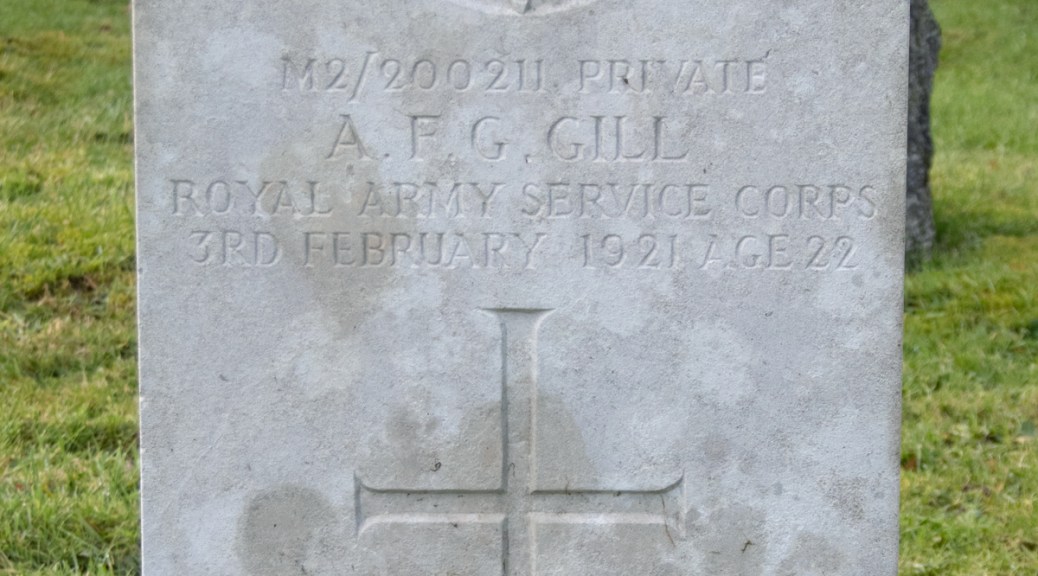
Private Frederick Gill

Private Frederick Gill

There are parts of AFG Gill’s that are destined to remain a mystery. The Commonwealth War Graves Commission give his parents’ names and address – Edwin and Annie Gill of 15 Old Exeter Street, Chudleigh, Devon. Combined with his service number – M2/200211 – this would suggest that the FG in his name is Frederick George, but the initial A remains stubbornly absent.

Frederick George Gill was born in 1898, in the village of Chudlegh, and was one of seven children. His father – Edwin – was a carrier and haulier in the area, and the family lived in the middle of the village.

When war came to Europe, Frederick was keen to do his bit – he enlisted in the Royal Army Service Corps as a Private and was assigned to the Mechanical Transport division.

There is very little information on Private Gill’s military service. He was awarded the Victory and British Medals for his service, but there is nothing to confirm when he enlisted or if he served abroad.

Private Gill survived the war, but was discharged on medical grounds on 18th November 1919 – he had contracted pulmonary tuberculosis during his time in the army, and was not longer fit to serve.

At this point, Frederick’s trail goes cold. While nothing can be confirmed, it would seem that the lung condition got the better of him – on 3rd February 1921 he passed away at home. He was just 22 years of age.

Frederick George Gill was laid to rest in the cemetery of his home village.


Captain Fergusson Barclay

Captain Fergusson Barclay

Fergusson Barclay was born in Cheltenham, Gloucestershire, towards the end of 1877 and was the oldest of six children. His father, Henry, was a retired army captain, and so it is of little surprise that Fergusson and his siblings had something of a privileged upbringing.

The 1881 census recorded Henry and his wife, Agnes, bringing up the family in Tenby, South Wales. With three children under four, the Barclays employed two live-in nursemaids to support them.

Ten years later, the family had moved to Weston-super-Mare, Somerset, living in a large house to the north of the town centre. With five children now living at home, Henry and Agnes found additional help was needed: they were now employing a governess, manservant, cook and a housemaid. The family were not alone in this support: the 1891 census shows that all of the Barclays’ neighbours had at least one domestic servant.

The new century turned, and a new census followed. Captain Barclay and his family were still living in their three-storey Victorian villa in Weston-super-Mare. By this point, however, only three of the children were still living at home. Fergusson, now 23, was working as an architect, his brother Herbert was a legal professional, and his sister, Hermione, also still lived there. The house was not empty, however, as the Barclays’ retinue of staff remained. By this point, they were employing a gardener, groom, coachman, parlour maid, cook, kitchen maid and house maid. Agnes, who was around 20 years younger than her husband, also had a live-in companion, spinster Helen Empson.

Little had changed for the family when the next census was recorded in 1911. Henry was by now 84 years old, and he and Agnes had been married 34 years. Fergusson and Herbert were still living at home, fully immersed in their jobs. Helen was still providing companionship for Agnes, and the family still employed four members of staff: butler Daniel O’Brien and his wife, Jesse, who was the cook; parlour maid Rosie Davies and house maid Edith Booden.

In March 1912, Henry passed away, and it was inevitable that things would change for the Barclay household. Fergusson had been a volunteer for the Royal Engineers since the late 1890s and had steadily worked his way up through the ranks. With the outbreak of war, he found himself called into a more formal role.

Full details of his military career are not evident, but it is clear that, by the spring of 1918, Fergusson had gained the rank of Captain. He joined the Royal Air Force and was assigned to 75th Squadron.

On the afternoon of 7th December 1918, Captain Barclay took off from Elmswell Aerodrome in Suffolk, when the engine of his Avro 504K aircraft cut out. He attempted to turn the plane to land, but it nosedived into the ground and Fergusson was seriously wounded. He was taken to hospital, and died of his injuries later that day. He was 40 years old.

Captain Fergusson Barclay’s body was taken back to Somerset – he lies at rest in the Milton Road Cemetery in Weston-super-Mare, walking distance from his family home.


Captain Fergusson Barclay
(from findagrave.com)