Tag Archives: suicide

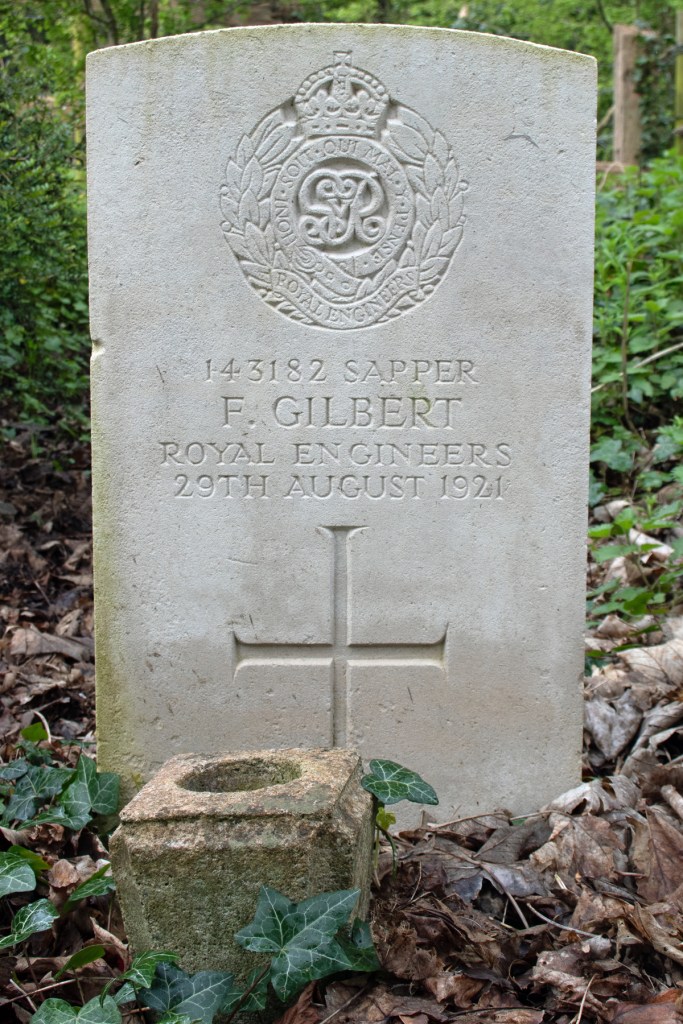
Sapper Frank Gilbert

Sapper Frank Gilbert

On Monday the body of a man was found.. neat Newton Bridge, commonly known as the “Skew” Bridge, having been killed by a passing train… The deceased was Frank Gilbert…

The inquest was held at the Globe Inn, Newton… by the Coroner for North Somerset (Dr S Craddock), who sat without a jury.

The first witness… said the previous morning he was walking along the railway when he saw the body of a man lying on the down side. The head was separated from the body…

PC Cornish said he found four cards in the pockets of the deceased’s coat. Two were National Insurance cards, and there was an unemployment book, the last payment being dated 15-8-21.

Written on the blotting paper of the book was the following:

“It is quite dark. You still take you neck oil, and my children outside waiting. Marry the man who gave you the watch. Don’t forget to have an extra one (Guinness) over my parting. It would be murder if I ever lived with you again.”

The man’s name, “Frank Gilbert, 44 Jubilee Road, Aberdare,” was on some of the cards. Deceased was wearing a discharged soldier’s badge.

Sarah Kate Gilbert, wife of the deceased, who lives at Bristol, said she had not known her husband’s address at Aberdare. They had been living apart since he went into the Army in 1915. She had, however, met him since that date.

Witness added that she saw him on Sunday night, and went on to say that she took out a summons for a maintenance order against him last February at Gloucester. He was then working as a carpenter in Cheltenham.

The Coroner: ‘Have you ever heard him threaten to commit suicide?’

‘Yes, sir.’ She added that he did so on Sunday night when she was with him at the bottom of Park Lane, Bath. “He was always threatening me when we lived together,” she stated, and also said she had a separation order in Bath in 1913. She had a letter from him on Saturday morning in which he said that when she got the letter he would be gone. In the letter was enclosed the ticket for his suit-case, and the key.

[The letter read] “I would never dream of making a home for you as you are worth only the Gloucester man. You have ruined my life, and you will be able to sleep with… for always now. I shall be gone.”

Witness said there was no reason for him to have made any such statements, as she had had nothing to do with any man except him. He was always using threats. When she left him on Sunday night she told him to try and get on and pull himself together.

The Coroner recorded a verdict that deceased committed suicide by placing himself in front of a passing train on the Midland Railway.

Somerset Guardian and Radstock Observer: Friday 2nd September 1921

Little additional concrete information is available for Frank Gilbert’s life. No marriage certificate remains for his wedding to Sarah, nor is there any evidence for the couple in the 1911 census.

Frank’s service records no longer exist in their entirety, although his pension record give hints as to his service. He enlisted in the Royal Engineers as a Sapper on 20th November 1915, although he never saw any action overseas. He was medically discharged because of rheumatism on 11th November 1917. The document confirm he was born in 1883, and lived in Cheltenham after his discharge.

An additional newspaper report of the inquest confirmed that Sarah had two children, and that they lived with her parents in Bath. When asked by the Coroner if she intended to bury her husband’s remains, she replied that “she had no money to do it with.” [Bath Chronicle and Weekly Gazette: Saturday 3rd September 1921]

And so Frank Gilbert was laid to rest in the quiet graveyard of Holy Trinity Church in Newton St Loe, near Bath in Somerset. He was around 38 years of age when he took his life.

Serjeant Algernon Spurge

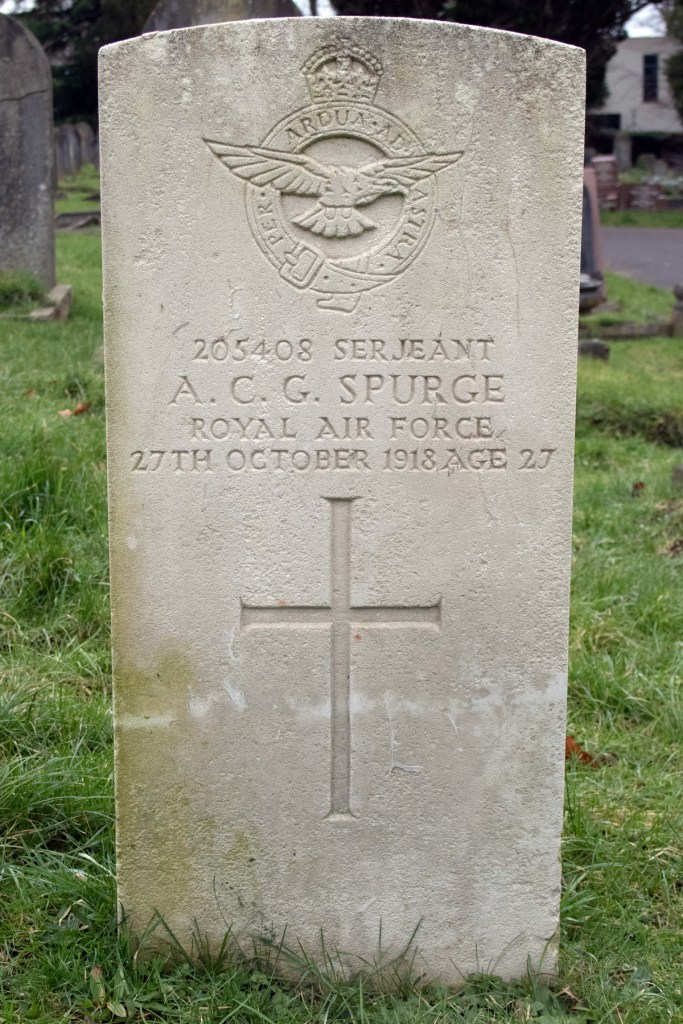
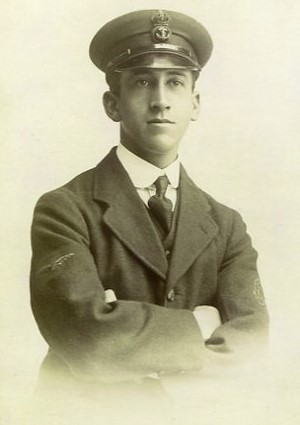
Serjeant Algernon Spurge

Algernon Carlyle Graham Spurge was born on 27th August 1891 in Bath, Somerset. The middle of five children, his parents were Algernon and Ida Spurge.

Algernon Sr was a portrait photographer, based in the Twerton area of the city, and this was very much a family business. The 1901 census recorded the Spurges as living in Victoria Road, Bath, with Ida’s brother, Tom Leaman, who was working as a photographic reloader.

Later that year, however, things were to take a turn for the worst. Algernon Sr seems to have been having some business worries and, on the morning of 16th December, he set off for work as usual. His and Ida’s daughter, also called Ida, arrived at the studio to find her father in some distress, a bottle of potassium cyanide – used as part of the photographic process at the time – next to him. He asked Ida to fetch him some water and salt, but when she returned, he declared it was too late, and lost consciousness. A doctor was called, but Algernon passed away shortly after he arrived.

A note was found, which read “My dearest wife, I really cannot stand the worry and anxiety of another day, to say nothing of weeks and perhaps months. Ask Mr Ashman and Mr Withy to be kind enough to help you straighten out matters a little. My best love to you and all my dear ones. AS” [Somerset Guardian and Radstock Observer – Saturday 21 December 1901] Ashman and Withy were family friends, who were also in the photography business.

An inquest was held and a verdict of suicide while temporarily insane was recorded.

The family rallied round, and Algernon’s widow and children moved in with Ida’s widowed mother in Bristol. Algernon’s daughter Ida continued working in photography, and Algernon Jr also took up the business. The 1911 census found him boarding with, and working for, his uncle Tom in Bath.

War was closing in on Europe by this point and, when it was declared, Algernon stepped up to play his part. He enlisted in the Royal Naval Air Service on 4th June 1915 as a Leading Mechanic (Photography). His service records show that he was 5ft 5ins (1.66m) tall, with dark brown hair, brown eyes and a dark complexion.

Algernon was initially assigned to the shore establishment HMS President in London for three years, rising to the rank of Petty Officer Mechanic (Photography). In April 1918, when the Royal Air Force was created he transferred across to HMS Daedalus in Lee-on-Solent, Hampshire, and rising to the rank of Sergeant Mechanic.

That autumn, with the end of the war in sight, Algernon fell ill. He contracted influenza, and this developed into pneumonia. He was admitted to the Military Hospital in York, but the conditions were to prove too much for his body to take. He died on 27th October 1918, aged just 27 years old.

The body of Algernon Carlyle Graham Spurge was brought back to Somerset for burial. He was laid to rest in St James Cemetery, Bath, not far from his father. When Ida passed away in 1926, she was buried in the same cemetery, father, mother and son reunited once more


Serjeant Algernon Spurge
(from ancestry.co.uk)

Private Robert Gillo

Private Robert Gillo

Robert Cogle Gillo was born in December 1880 in Bridgwater, Somerset. He was the only child to Jane and Robert Gillo who, in the 1881 census was listed as a wholesale photographer, employing four male and four female assistants.

The following census, a decade later, found the family living in Walcot, Bath, where Robert Sr was listed as living on his own means. The household also included Jane’s sister, Elizabeth, and a certified nurse, Jane Moreton.

When he left school, Robert Jr found work as an auctioneer’s clerk. By the time of the 1901 census, both of his parents had passed away, and he was boarding at Hanover House, Hanover Street in Bath. The document, however, throws up an anomaly, however, in that the house’s three other occupants are listed as Edna and Majorie White, who are identified as Robert’s daughters, and Lily Holvey, who was a servant. Whether the head of the household was not there at the time of the census return is not known, but given that ages of Edna and Marjorie were 9 and 5, to Robert’s 20, it is extremely unlikely that they were actually his children.

By the following summer Robert had taken up employment as an auctioneer in Dorset. On 4th June 1902 he married Kathleen Seward, an agent’s daughter from Bath. The couple would go on to have two children, Molly, in 1904, and Robert in 1911.

By the time Robert’s son was born, the family were living back in Bath. He was, by now, listed as living on his own means in his own right, and the family occupied a seven room house in a quiet cul-de-sac within spitting distance of the city’s Alexandra Park.

When war came to Europe, Robert stepped up to play his part. He had enlisted in the Army Ordnance Corps by the autumn of 1915, and was stationed in Didcot, Oxfordshire. When he wrote to Kathleen, he complained of not being able to sleep in the barracks, and this insomnia led to him suffering from headaches.

Sent home on sick leave in March 1916, he was quite depressed and worried, his short term memory was affected, and he had to write even the simplest tasks down, including remembering to shave. He was seen by his doctor, who had written to his commanding officer, suggesting that an extension to this leave was be beneficial. Whether this was granted or not is unknown, but after a short period back in camp, Private Gillo returned to Bath on 17th April.

Kathleen had gone out at about 5pm the following day and when she returned home just after 7pm, she was told that Robert had just left. This was not unusual, as far as she was concerned, because he often went out for a walk in the evening. Sadly, she was not to see him alive again.

Terrible Railway Fatality

On Wednesday morning last week [18th April] the much-mutilated dead body of Mr R Gillo… was picked up on the Great Western Railway at Bathampton… He was home on leave from Didcot. Deceased suffered from neurasthenia, and was depressed at times.

Central Somerset Gazette: Friday 28th April 1916

Robert had walked the five miles east to Bathford and, made his way to the railway track over the river in the village. He got onto the tracks as the express train from Paddington was coming through at around 10:30 that evening, and never stood a chance.

The the following morning the alert was raised by a signalman at Bathampton and the gruesome discover was made of parts of Robert’s body over the half-a-mile from Bathford Bridge. His glasses were found on the bridge itself and a note to Kathleen was found in his pocket. Blood was subsequently found on the front of the railway engine, although the driver was oblivious to anything out of the ordinary having happened the previous night.

An inquest found that Private Gillo had committed suicide while in a state of temporary insanity. He was just 35 years of age.

Robert Cogle Gillo was laid to rest in St James’ Cemetery in Bath, a short walk from the family home.


Private Robert Gillo
(from ancestry.co.uk)

Robert’s headstone notes the burial of Adelaide Julia Seward, Kathleen’s mother, who died in March 1936.


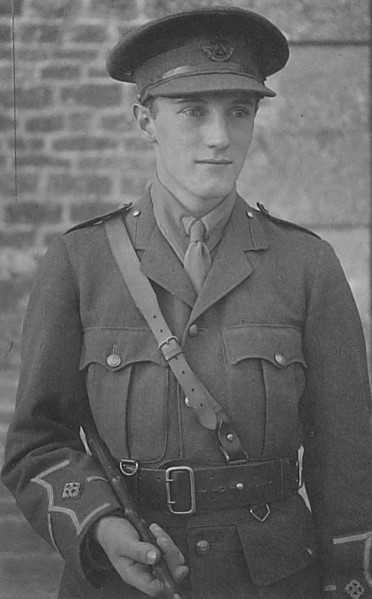
Second Lieutenant Cedric Pepper

Second Lieutenant Cedric Pepper

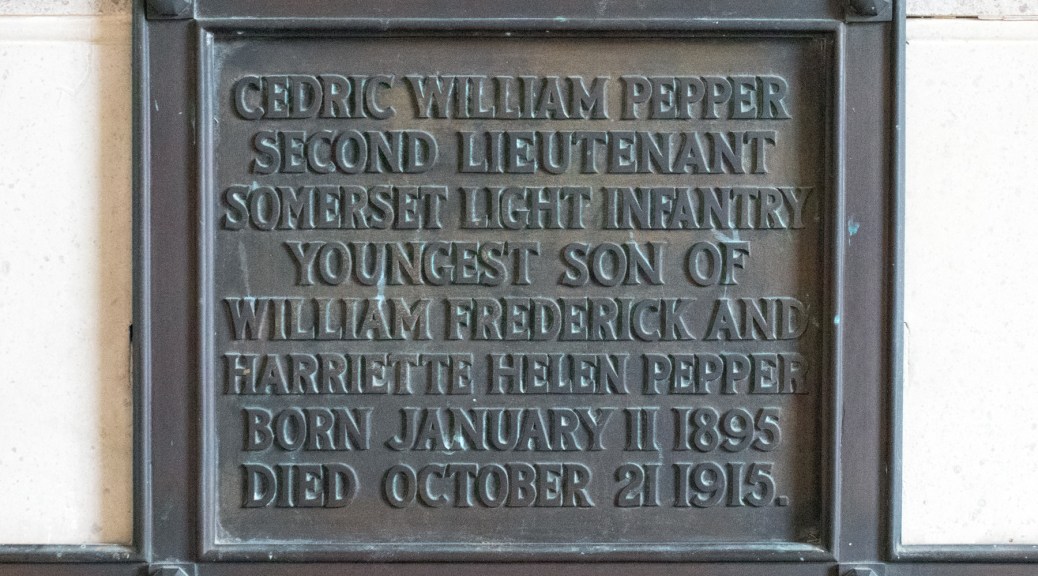
Cedric William Pepper was born in 1895 in South Kirkby, Yorkshire. He was the middle of three children to William and Harriette Pepper. William was a colliery owner from Leeds, and the family lived in some comfort in Rawdon Hill in Wharfdale. The 1901 census records show that they employed a governess, cook, two housemaids, a kitchen maid and a page.

By the time of the next census, in 1911, the Pepper family had moved to Shipton in Oxfordshire, where they lived in the 27-room Shipton Court. Cedric, by this time, was still studying, having been taught at Winchester College, where he lasted only a year, Tonbridge School, and then Worcester College in Oxford.

When war broke out, he had taken time away from his studies, and was working on a ranch in Rhodesia (present-day Zimbabwe). He returned to Britain at the start of the conflict and enlisted in the King’s Royal Rifle Corps. Assigned to the 2nd Battalion, Private Pepper arrived in France in November 1914, and was wounded in his thigh the summer of 1915.

Private Pepper returned to Britain to recuperate and, when he had recovered, he was given a commission in the 3rd Battalion of the Somerset Light Infantry. It was while he was training in Oxfordshire that the now Second Lieutenant Pepper met his end.

The evidence at the inquest… suggested that the death from a bullet wound… was accidental.

Second-Lieutenant William Eric Warburton… stated that early last week Lieutenant Pepper told him he was in some difficulty with a woman, but he did not explain it. Lieutenant Warburton did not think that this caused him to take his life. In his opinion Lieutenant Pepper knew nothing of the working of an automatic pistol he possessed.

The medical evidence was that a bullet entered the centre of the forehead. The doctor said that if the wound was self-inflicted it was quite possible that it was accidental.

The jury returned a verdict of Death from a bullet from an automatic pistol, but that there was no evidence to show how the wound was inflicted.

Central Somerset Gazette: Friday 29th October 1915

Second Lieutenant Pepper died from the bullet wound on 21st October 1915. He was just 20 years of age.

Pepper Family Memorial

Cedric William Pepper’s family were, by this time, living in Redlynch House, near Bruton, Somerset. He was cremated, and his ashes immured in the wall of St Peter’s Church in the hamlet.


Second Lieutenant Cedric Pepper
(from findagrave.com)

In researching Cedric’s life, there is a definite sense of a young man desperately looking to please his father. A successful Yorkshire colliery owner, he may have expected more from his oldest son, a drop out from Winchester College, possibly sent to Southern Africa to find himself. While an immediate return to Britain to serve his country would have been commonplace, the suggestion of difficulty with a woman and the subsequent accident with his gun just adds to the sense of a need for Cedric to not disappoint his father.


Gunner Theophilus Burdock

Gunner Theophilus Burdock

Theophilus Walter Burdock was born on 18th June 1871 in Whitminster, Gloucestershire. One of nine children, his parents were painter and decorator Nathaniel Burdock and his wife, Mary.

While he found labouring work when he left school, Theophilus – who went by his middle name, Walter – decided that he wanted bigger and better things and, on 30th December 1889, he enlisted in the Royal Artillery. His service records show that he was 5ft 5ins (1.65m) tall and weighed 115lbs (52kg). The document also records that he has a tattoo of a man, star and crown on his left forearm.

Initially assigned to the 1st Depot 2nd Battery as a Driver, over the next couple of years Walter made solid progress within the regiment. By September 1892, he was promoted to Gunner, within a couple of years he was raised to Bombardier, and by April 1895 he had made the rank of Corporal.

By his last formal year in the ranks, things seemed to take a different turn. On 9th March 1896, Corporal Burdock received a contusion to his face. He was formally transferred to the Army Reserve when his contract of service ended in December 1896, but within eighteen months he re-enlisted.

At this point, however, Corporal Burdock’s conduct began to race downhill. In August 1898 he was tried for an undisclosed reason, and his rank was reduced to Bombardier. Within a couple of months, he was tried for a second crime, and reduced in rank again, back to Gunner.

For a time Walter kept his nose clean, and, in February 1900, he was promoted back to the rank of Bombardier. This was to be only a fleeting move, however, as he reverted back to Gunner less than two months later.

Over the next couple of years, Walter generally kept his head down. On 30th April 1901 he was injured by a kick in the eye, although, again, details are tantalisingly scarce. By April 1902, his contract came to an end and this time he was stood down and formally demobbed.

Civilian life seemed to be something to which Walter was not to be destined. He enlisted again almost immediately, joining the Imperial Yeomanry in May 1902. He lasted less than a year with the regiment, however, having served ten months in South Africa.

In January 1904, was recalled to the Royal Artillery for further service in South Africa. His medical report showed the man he had become in the fifteen years since he had first joined up: he was now 5ft 7ins (1.7m) tall, and weighed 141lbs (64kg).

Private Burdock served six months on home soil, but in July 1904, he was sent to South Africa, having never actually seen any overseas service before. He returned to Britain in September 1905, and was discharged from service, specifically so that he could re-enlist with the Royal Artillery and complete his fourteen years’ service with them.

Gunner Burdock remained with the Royal Artillery until February 1906, presumably as he had finished his fourteen years. Interestingly, his discharge papers noted his conduct as ‘indifferent’.

Walter’s trail goes at this point. His mother, Annie, passed away in Gloucestershire in the spring of 1908. His father, Nathaniel, died Bristol in 1912. The next evidence for their son comes in September 1914, in attestation papers for the Canadian Expeditionary Force.

Walter was, by this point, living in Victoria, British Colombia, and working as a lumberjack. He had been unable to completely leave his army days behind him, and his service records give his year of birth as 1876, five years younger than he actually was at the time.

Those service records give similar physical characteristics to his 1904 papers, and confirm the presence of some additional tattoos: a butterfly and pair of hands with the words true love.

Walter was assigned to the Royal Canadian Horse Artillery, and given the rank of Gunner. He arrived back in Britain in October 1914, but his previous indifference seems to have recurred. He was imprisoned for a week from 21st October for having been absent without leave, and was found to be absent again at reveille on the morning of 30th October.

Yesterday afternoon the body of a man was found floating in the Avon just below Bathampton Weirs, and close to the entrance to the back-water on the Batheaston side of the river.

The body was floating face downwards some yards from the bank, and only the top of the head was visible.

The body was recovered shortly before five o’clock. It appeared to be that of a middle-aged man of medium height. The trousers had something of the appearance of a mechanic’s overall and deceased was wearing a sleeve vest.

The conjecture naturally arises whether the body is that of the missing Canadian soldier Burdock, whose clothes were discovered on the bank at Batheaston on Saturday, October 31st, and of whom nothing has been heard since. Burdock was a member of the Canadian contingent now in training on Salisbury Plain. It is known that the missing soldier had several tattoo marks on his arms… so the question will not long remain in doubt when the body has been brought to the bank.

Bath Chronicle and Weekly Gazette: Saturday 14th November 1914

The body did indeed turn out to be that of Gunner Burdock. An inquest reached a verdict of suicide while temporarily insane. He was 43 years of age.

Theophilus Walter Burdock was laid to rest in the graveyard of St John the Baptist Church in Batheaston. Interestingly, while his next of kin was identified as his brother Frederick Burdock, Walter’s service records add a further dimension to his passing:

A maple tree has since been planted at the head of the grave by Miss Henderson, The Hill, Batheaston, who took a great interest in the case. Miss Henderson also sent a beautiful wreath when deceased was buried.


Quartermaster Serjeant Iva Brewer

Quartermaster Serjeant Ivor Brewer

Iva Victor Brewer was born on 2nd May 1886, the fourth of four children to James and Annie Brewer. James was a farm labourer from Weston-super-Mare, but the family were living in Bathampton by the time of Iva’s birth. James died in 1887, and Annie remarried three years later. Her new husband, Thomas Dolman, was the manager of the George Inn in Bathampton, and the couple went on to have four children of their own, half-siblings to Iva.

Tragedy struck again when Annie passed away in February 1897, at the age of just 37 years old. By the time of the next census in 1901, Iva was boarding with his stepfather’s parents; the following year, however, Thomas also passed away, and the children were left to build their own lives.

Iva – who was now going by his middle name, Victor – found an escape in the army and, according to the 1911 census was an Acting Bombardier in No. 69 Company of the Royal Garrison Artillery, based in Colaba, at the tip of the Mumbai peninsula.

By the time war was declared, Victor had cemented his military career. Full details of his service are no longer available, but the summer of 1916 he had left India for Aden, and was then mentioned in dispatches that October for his bravery in the field at the Somme.

In November 1917, the now Battery Quartermaster Sergeant Brewer was injured in fighting at Passchendaele, and was medically evacuated to Britain for treatment. It seems that he was treated in South Wales, and it seems a whirlwind romance set in when he was living in Pontardawe, near Swansea. On 2nd January 1918, Victor married Laura Seddon, a railway inspector’s daughter from the village of Ystalyfera, just up the valley from Victor.

The couple moved to Bathampton before Victor returned to the fighting. He was badly wounded and, having been evacuated back to Britain in May 1918, he was admitted to the Northern Central Hospital in London where his shattered leg was amputated. Sadly, bronchial pneumonia set in while he was recovering, and he passed away from the subsequent sepsis. Quartermaster Sergeant Brewer passed away on 7th May 1918, days after his 32nd birthday.

Iva Victor Brewer was brought back to Bathampton for burial. He was laid to rest in the quiet graveyard of St Nicholas’ Church in the village.


Tragedy was to strike again, sadly. After his funeral, Laura returned to Wales and found employment at a draper’s store.

…the loss of her husband played on her mind.

On Monday she set off for Bathampton, and on her way posted two letters to her late husband’s relatives.

One ran: “I cannot live without my husband. If you don’t hear from me, search Bathampton, as I shall be there somewhere.” Another letter asked her relatives to let her mother in the Swansea Valley know.

She reached Bath, and it is thought she there took a taxi to Bathampton. She then paid a visit to the cemetery, and placed her hat and handbag on her husband’s grave. At the canal-side nearby she laid her fur coat on the bank, and, it is supposed about midnight, plunged into the water

Western Gazette: Friday 9th April 1920

Laura was just 27 years old when she died: she was buried with Victor, husband and wife reunited again.


Boatswain James Kirby

Boatswain James Kirby

James Kirby’s life is one of intrigue and speculation. Born in Laytown, Ireland on 30th August 1867, the earliest documents relating to him are his Royal Naval Service Records.

He enlisted on 1st March 1883, while just fifteen years old, and was assigned the rank of Boy 2nd Class. Over the next couple of years, he served on two ships – HMS Lion and HMS Briton – and was promoted to Boy 1st Class.

On 30th August 1885, James came of age, and was formally enrolled in the Royal Navy. He enlisted for ten years’ service, and his records show that he stood 5ft 3ins (1.60m) tall, had brown hair, blue eyes and a fresh complexion. He was also noted as having a tattoo of an anchor on the back of his left hand.

Over the next ten years, Ordinary Seaman Kirby served on nine different vessels, and was obviously committed to his work. He rose through the ranks, making Able Seaman in January 1886, Leading Seaman (1889), Petty Officer (also 1889) and Chief Petty Officer (1895).

When his initial contract ended, he voluntarily continued with the Royal Navy, although his service record ends on 14th June 1896, at the point that he was promoted to Acting Boatswain.

A second service record picks up James’ details from 5th December 1902. Still serving as a Boatswain, he was assigned to the cruiser HMS Lancaster. His health, by this point, was beginning to suffer, and, it seems, his life was beginning to unravel.

In August 1904, he was injured in an accident involving a “hook rope” and “slightly amoral judgement”. Over the next couple of years his behaviour became increasingly erratic.

In December 1910, he was admitted to Shotley Hospital near Durham, suffering from acute mania and gonorrhoea, and was not be be fit for duty for a few weeks.

Just before Christmas that year, Boatswain Kirby was again admitted to hospital, this time in Chatham, Kent, remaining there for a number of months. He was deemed unfit for further service in March 1911, and was medically discharged with neurasthenia.

However, when war broke three years later, James volunteered his services once more, and was again employed by the Royal Navy. Tragically, this was a decision that would prove to be fatal.

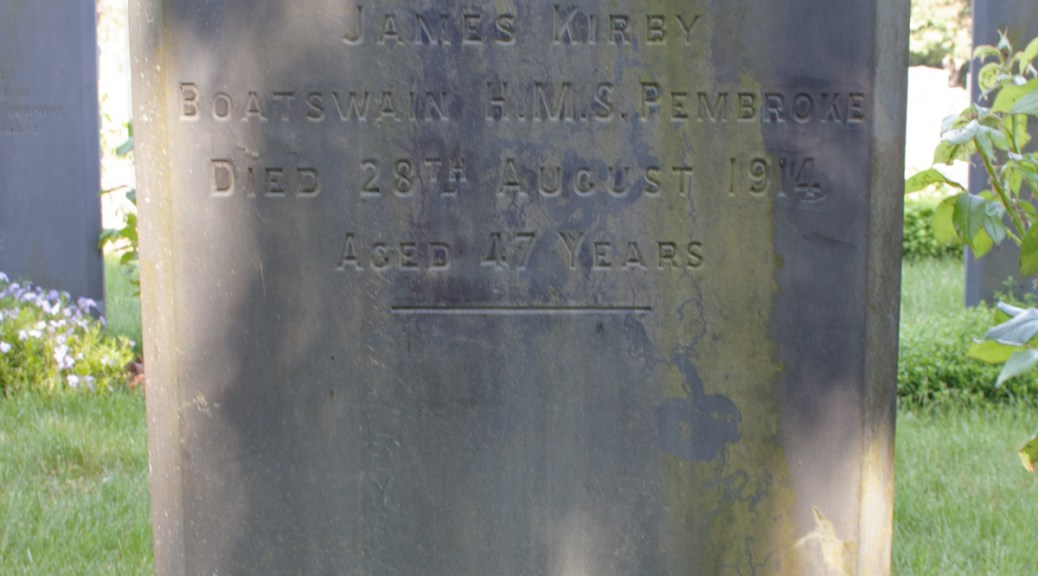
The extraordinary death of a naval boatswain names James Kirby, aged 47, was the subject of an inquest at the Royal Naval Hospital, Chatham… Deceased, whose home was at Dublin, had retired, but had volunteered for service and was anxious to go to sea. On Friday evening [28th August 1914] he was watching a game of billiards in the warrant officers’ mess at the Royal Naval Barracks, Chatham, and appeared perfectly rational and sober. Suddenly he was observed to disappear through an open window beneath which he had been sitting. He went down, as one witness stated “with a smile on his face,” and called out “Good-bye.” A crash of glass below indicated that he struck the dining room window as he fell.

Kent Messenger & Gravesend Telegraph: Saturday 5th September 1914

The article gave further information about the injury James sustained previously: “It transpired that deceased fell out of a window at the Hospital eight years ago through walking in his sleep. He was then suffering from neurasthenia and had delusions.

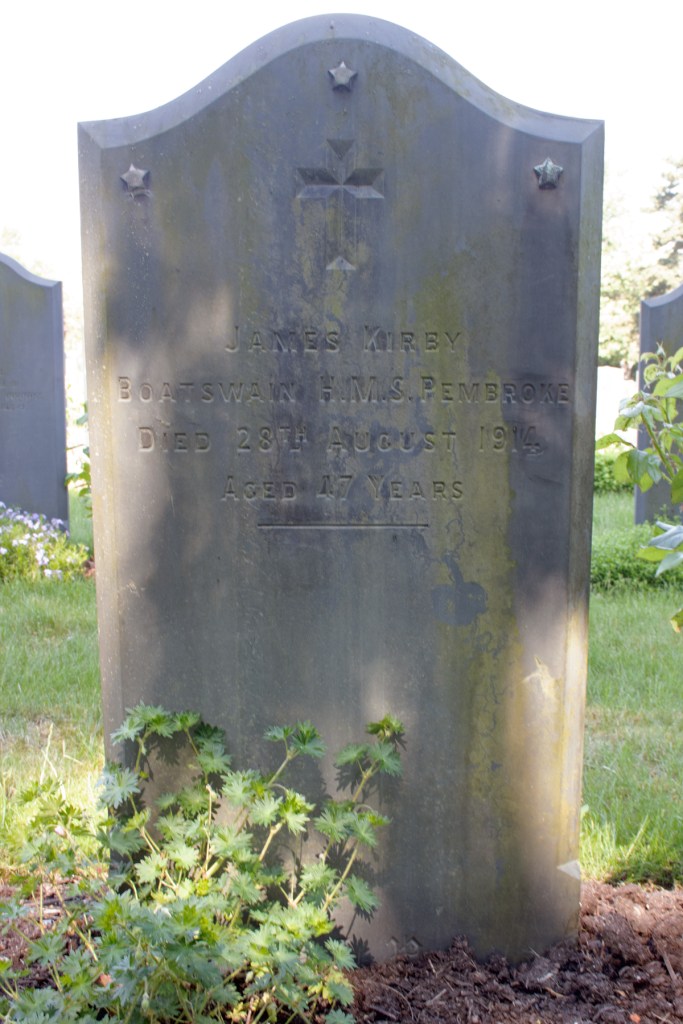
The inquest concluded that Boatswain James Kirby had committed suicide during temporary insanity. He was laid to rest in the Woodlands Cemetery, Gillingham, not far from the dockyard at which he was based.


James Kirby’s grave is maintained by the Commonwealth War Graves Commission on behalf of the Royal Navy Admiralty. However, as the naval authorities did not confirm Boatswain Kirby was a war casualty – possibly because of the nature of his death – he was never formally commemorated with a Commonwealth War Grave. However, I have included his story as it remains as pertinent as those of his contemporaries.


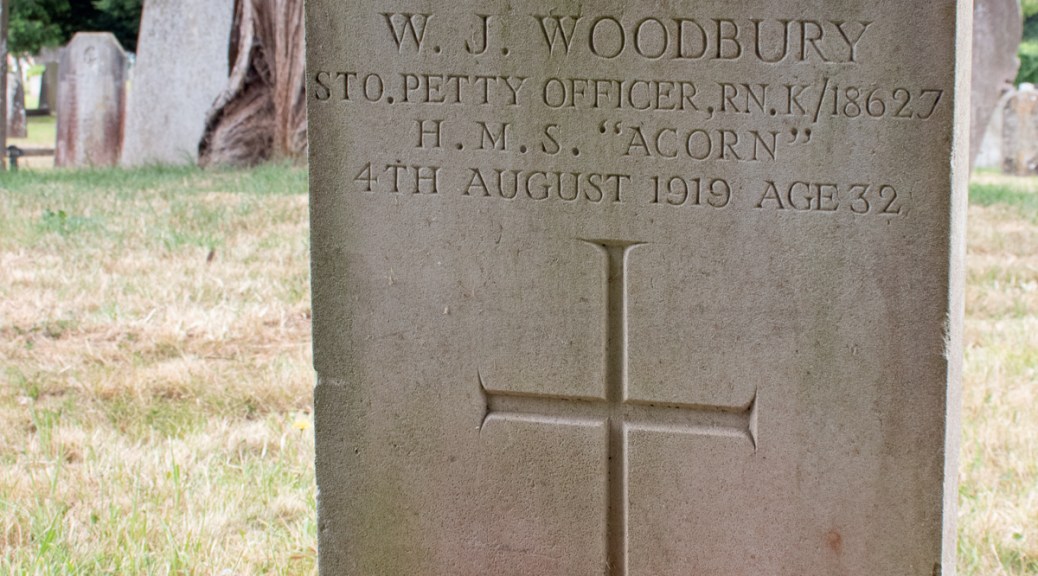
Stoker Petty Officer Wilson Woodbury

Stoker Petty Officer Wilson Woodbury

Wilson John Woodbury was born on 8th December 1888, and was the third of seven children to Daniel and Elizabeth Woodbury. Daniel was a chair maker from Wellington, Somerset, and this is where the family – including six boys and one girl – were raised.

By the time of the 1901 census, Daniel had had a change of career – he was now working as an oil presser. His and Elizabeth’s oldest three boys, Wilson included, had also found work, and were employed as wool spinners.

Elizabeth passed away in 1906, when Wilson was just seventeen years old. This may have pushed him to bigger and better things, and a career. On 13th August 1908, at the age of 19, he enlisted in the Royal Navy as a Stoker 2nd Class. His service record shows that he was 5ft 7.5ins (1.71m) tall, had light brown hair, blue eyes and a fresh complexion. It also noted that he had a tattoo of a cross on his right forearm.

Stoker Woodbury was initially trained at HMS Vivid – the naval dockyard at Devonport. On 9th February 1909, however, he was given his first posting, on board HMS Defence. He spent two years on board the armoured cruiser, and, gained a promotion to Stoker 1st Class.

During the remainder of his initial service, Wilson served on two further ships – HMS Sentinel and HMS Bellona – returning to Devonport between each posting. When he completed his five-year contract, Wilson voluntarily signed up for a further seven years with the Royal Navy.

As war came to Europe, Stoker Woodbury was given a number of assignments, on the battleships HMS Caesar and Lord Nelson, the cruisers HMS Blake and Apollo, and the depot ship HMS Blenheim. Further promotions followed – Leading Stoker in 1915 and Stoker Petty Officer two years later.

Wilson’s oldest brother, James, was serving in the Labour Corps during the conflict. Based in Northern France, he was assigned to the 720th Company, although further details are unclear. He almost survived the war unscathed, but contracted an illness of some description and died on 3rd November 1918, aged 34 years old. He was laid to rest in the Terlincthun British Cemetery in Wimille, France.

Stoker Petty Officer Woodbury returned home on leave in July 1919. The plan was to meet up with his fiancée who lived in Rockwell Green, near Wellington, but he instead turned up unexpectedly at his brother Fred’s home instead. Wilson said he had returned to Somerset because his girlfriend had broken off the engagement the previous week: the couple had been due to marry when he next came home on leave.

Fred told Wilson that she was not worth it, and they had gone drinking with a friend. Fred later said that on his previous leaves his brother had taken to drinking more than was good for him, but on that evening – Saturday 2nd August 1919 – he did not get drunk.

The following Monday, Stoker Petty Office Woodbury had taken himself down to the railway at Wellington, and been hit by a train. The action was deliberate, as, about his person were three letters. The first was to Daniel.

To My Dear Father,

Sorry to cause you any inconvenience or trouble, and please don’t worry about me, as I’m not fit to worry about. I have had this in mind for about a week. I can’t sleep and can’t eat, as I am broken-hearted, but not insane. This is through love. Now I must exit myself, and I am in great pain. Written at 4:15pm Sunday afternoon…

This is all I have to say in this world. Hoping you and my dear sister will soon forget their broken-hearted

Wilson John Woodbury.

Wilson’s second letter was to his only sister, Ivy. This included details of a parcel left on board his ship, in which was the ring he had given to his fiancée, which he asked that Ivy wear as a memory of him.

Knowing the implications of what he was doing, the third letter was addressed to the jury of the inquest.

My leave expires at 1pm, and my life expires just before by my own hand. I wait to get the chance to put a stop to my life. This would not have happened to bring disgrace on my relations. I am quite sane. Written at 2pm.

On the afternoon of Monday 4th August 1919, Wilson made his way to the Woodford crossing, a short distance from Wellington Railway Station.

…he waited by the side of the line at the crossing for a train, and as the Northern express approached he laid down with his head on the metals, being practically decapitated.

Taunton Courier and Western Advertiser: Wednesday 13th August 1919

The fiancée in question did attend Wilson’s inquest, although the Coroner did not think it was necessary to call her. The newspaper report referred to her, but not by name. She will remain a mystery.

Despite the evidence of his own hand, the inquest found that Stoker Petty Officer Woodbury had committed suicide while temporarily insane. He was just 30 years of age.

Wilson John Woodbury was laid to rest in the cemetery of his home town, Wellington.


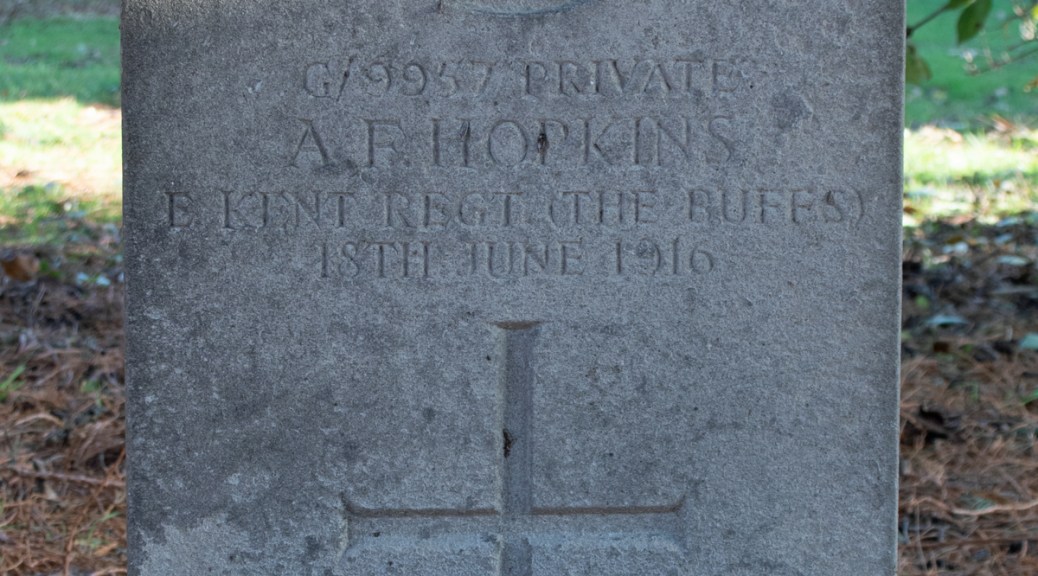
Private Ambrose Hopkins

Private Ambrose Hopkins

Ambrose Frank Hopkins was born in the autumn of 1886, in the Kent village of Ospringe. He was one of four children to shopkeeper-turned-farmer William Hopkins and his wife Julia.

When he finished school, Ambrose found employment in a brickyard in nearby Faversham. In August 1901, however, things took a turn for the worse for the Hopkins family.

Mr WJ Harris, Coroner, had a painful task on Monday evening, when he held an inquest on the body of William Hopkins, a farmer, who was found hanging in the cellar of his house that morning, having ended his life in consequence, it would appear, of business troubles.

Julie Hopkins, wife of the deceased, stated that her husband was 59 years of age… He went to bed on Sunday evening apparently in his usual health and at four o’clock that morning to light the fire which he usually did. Deceased had lately been troubled by business worries.

Blanche Sophia Hopkins, deceased’s daughter, stated that on going down the cellar about seven o’clock that morning (Monday) she saw her father hanging from a beam in the ceiling. She was too much frightened either to touch him or to notice if he was dead, but run up and sent to PC Ward and a doctor. The constable saw deceased just as she found him.

Faversham News: Saturday 31st August 1901.

The tragedy rocked the family and, within eighteen months, Julia too had died. By the summer of 1903, Blanche had auctioned off her once family home for the sum of £270, in order to support her and Ambrose, who was nine years her junior.

In 1906, Ambrose married Florence Harris, a widow thirteen years his senior, who had three children. The couple settled down in Faversham, and went on to have three children themselves – Elsie, Harold and William.

By now Ambrose was working as a labourer in Harty Ferry, just the other side of the Swale River on the Isle of Sheppey. But again, things were going to change as, in May 1916, he was called up for military service.

Private Hopkins was assigned to the 3rd Battalion of the The Buffs (East Kent Regiment). He was sent to Dover for training, before returning to home on leave in advance of further action.

An inquest was held at the Guildhall, Faversham, on Tuesday by the County Coroner… touching the death of Ambrose Frank Hopkins, aged 29… a Private in the 3rd Buffs, stationed at Dover, who hung himself on Sunday last.

Florence Amy Hopkins, the widow, stated that deceased has been… called to the colours three weeks that day. He had leave on Friday last until Sunday night. When he returned he seemed in very good health, but he told her he could not get on in the Army as he could not do his drill, etc.

He was a very quiet man of sober habits. They got on well together except for occasional tiffs. On the Sunday he said what a good breakfast and dinner she had got. All Sunday morning he was cleaning his buttons. He sat talking till after 3pm and then went out the back.

She went out for about twenty minutes, and when she returned she could not find him. Thinking he had gone to bed she went upstairs, but he was not there. Just about five she looked down the cellar stairs, thinking he might be at work there, and saw him hanging by a rope.

On the Saturday night she found the following note on the living room table in her husband’s handwriting. “Good night, my dear Flo, the last night here. My dear little wife, think of me and be good to the children.” She went upstairs, woke him up, and asked him what he had done it for, and he said it was only a joke. There had not been any words between them.

His one trouble was about going back. She told him to make the best of it, and that it would all be the better for him. He replied “Flo, I cannot and I never shall.” They owed a little, but nothing to worry about.

He complained of the food very much, and said that all he had on Thursday night was a piece of bread as hard as a brick. He had fallen away very much since he had been in the Army.

Alfred Willett, a munition worker.. stated that he was called by [Julia] about 5:30pm on Sunday and found deceased in the cellar hanging by a rope fastened to the rafters. The knees were about six inches from the ground, and the feet were touching the ground. Witness cut him down, but he was quite dead. His tunic and cap were off.

Lieutenant Hillier Hughes, of The Buffs, said that deceased had a clean conduct sheet, and he was quite up to average at drill. The food at dinner consisted of meat, two vegetables and pudding. An officer always went round to enquire if there were any complaints. The bread was fresh every day.

The Coroner, in summing up, said that apparently the deceased was not well balanced, and no doubt felt that he was not doing as well as he ought to.

The jury returned a verdict of “Suicide whilst temporarily insane.”

Faversham Time and Mercury and North East Kent Journal: Saturday 24th June 1916.

In very similar circumstances to his father, Private Ambrose Frank Hopkins had died on 18th June 1916. He was just 29 years of age. He was laid to rest in Faversham Borough Cemetery, finally finding some peace.


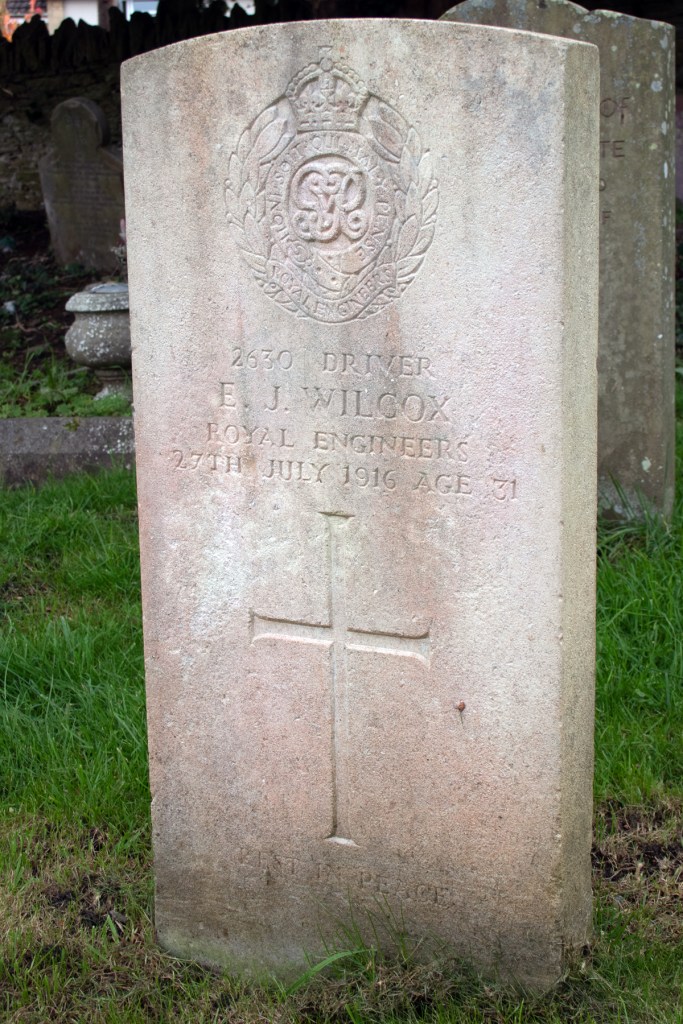
Driver Edgar Wilcox

Driver Edgar Wilcox

Edgar James Wilcox was born in Frome, Somerset, on 2nd February 1885, and was the third of six children to Robert and Louisa Wilcox. Robert was a coal dealer and he and Louisa raised their family in the town of their own birth.

When he left school, Edgar found work on a local farm, tending to, and milking the cows. He met a woman called Ellen Snelgrove and, on 31st October 1908, the couple married at the parish church in Ellen’s home village of Corsley, just over the border in Wiltshire.

By the time of their wedding, Edgar had found employment as a carman for the local railways. The young couple set up home in Frome, and went on to have four children, Edward, Phyllis, Gladys and Cecil.

War was coming to Europe, and, when the conflict broke out, Edgar initially enlisted in the National Reserves in Frome. From there, he joined the Royal Engineers and was assigned as a Driver in the Wessex Regiment Field Company. In his new regiment, he was first based in Taunton, but soon moved to the East Coast.

It was while Driver Wilcox was here that Germany carried out a number of Zeppelin raids on the east of the country. One of these raids, in the spring of 1916, proved too much for Edgar and he suffered a nervous breakdown. He was brought back to Somerset for treatment and admitted to a hospital in Bath.

A contemporary newspaper picked up his story:

On Thursday last week Mrs Wilcox paid her husband one of her periodical visits. They spent several happy hours together, and in the afternoon he went to see her off by train. She then wishes him good-bye, when he seemed as usual, and Mrs Wilcox went to catch a train. It now seems that deceased did not return to the hospital, and after being missing for three days his body was found in the river at Bath.

Somerset Standard: Friday 4th August 1916

Driver Wilcox had taken his own life on 27th July 1916. He was just 31 years of age. An inquest was held and the verdict of ‘drowned’ was reached.

Edgar James Wilcox’s body was brought back to Frome: he was laid to rest in the graveyard of the Holy Trinity Church in the town.


Driver Edgar Wilcox