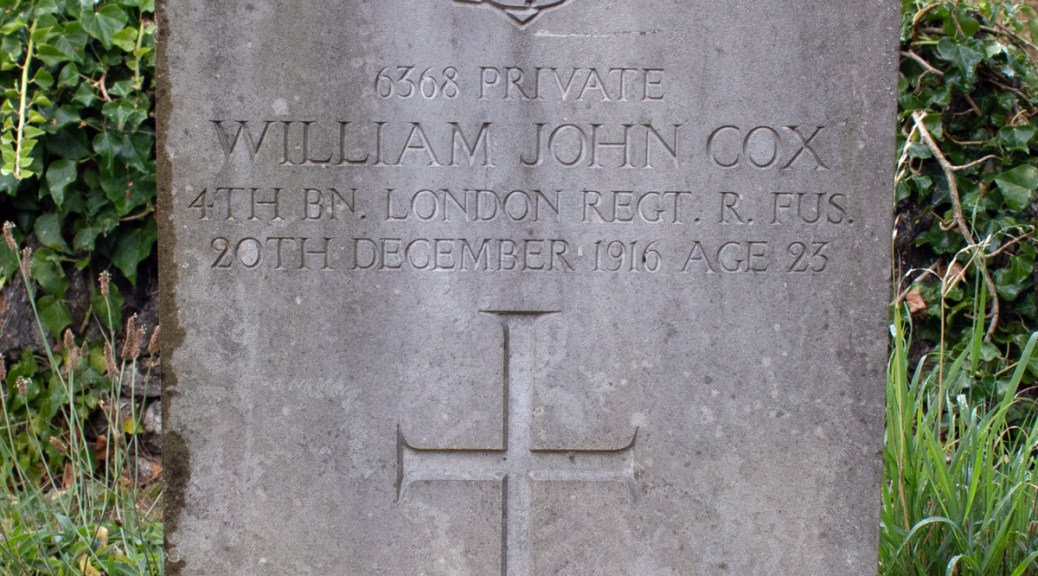
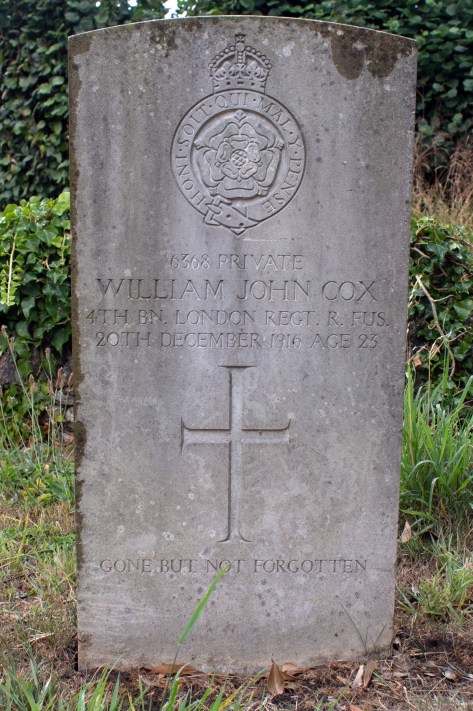
William John Cox was born in the autumn of 1893, and was the second of seven children. His parents – William and Kate Cox – were from Kington Magna, Dorset, and this is where they would raise their family.
William Sr was a farm labourer, and this is work into which his son would follow. By the time of the 1911 census, the family were living in a cottage on Church Street, with William Jr and his younger brother, Frederick, both agricultural workers.
When war came to Europe, William would step up to play his part. Full service details have been lost, but it is clear that he had enlisted in the army by the summer of 1916. As a Private, he was assigned to the 4th Battalion of the London Regiment (Royal Fusiliers).
Private Cox certainly saw action overseas, and would find himself entrenched at the Somme. At some point, he was wounded, and his injuries were bad enough for him to be sent back to Britain for treatment. He was admitted to hospital in Chatham, Kent, but his wounds would prove to be too severe. William passed away on 20th December 1916: he was 23 years of age.
The body of William John Cox was taken back to Dorset for burial. He was laid to rest in the tranquil surrounds of All Saints’ Churchyard in Kington Magna.
William’s younger brother, Frederick, also fought in the First World War. Read his story here.
Joseph James Nicholls was born in Battersea, Surrey, on 19th October 1889. There is frustratingly little information about his early life, although what remains legible on his service records confirm his mother’s name was Jenny, and he had five siblings: brothers William and Jack, and sisters Martha, Rose and Sarah.
On 8th May 1911, Joseph married Lavinia Tutte in St Mary’s Church, Battersea. She was the daughter of a boiler cleaner, and their marriage certificate provides a little more insight into the new groom’s background. His father is named as Joseph James Nicholls, a farrier who had died before his son married. Joseph Jr was working as a carman, and the couple were living at 43 Lombard Road. The couple would go on to have two children, daughters Jane and April.
When war broke out, Joseph was quick to step up. He enlisted 14th September 1914, just six weeks or so into the war, giving up his job as a carman to do so. He was 5ft 9ins tall and weighed 133lbs: he had brown hair, brown eyes and a fresh complexion. He was also noted as having a mole on his left arm.
Assigned to the King’s Royal Rifle Corps, he spent the next ten months training at Larkhill Camp, Wiltshire. During this time, he went AWOL (from 5:30pm on 24th May to 6:30pm on 9th June 1915), and forfeited 17 days’ pay.
On 23rd July 1915, Rifleman Nicholls was dispatched to France with his unit – A Company of the 12th (Service) Battalion. There is little information available about where he served, although his unit landed near Saint Omer, and trained in camps around Fleurbaix. He was admitted to hospital for four days on 19th February 1916 for an undocumented illness, but this was not to impact his readiness for battle.
On 2nd March 1916, Rifleman Nicholls was wounded in the right shoulder, and admitted to the camp hospital. His injuries would prove too severe, however, and he succumbed to them on 4th March 1916. He was 26 years of age.
Joseph James Nicholls was laid to rest in the Essex Farm Cemetery near Ypres, Belgium.
Joseph was the first husband of my maternal great great aunt.
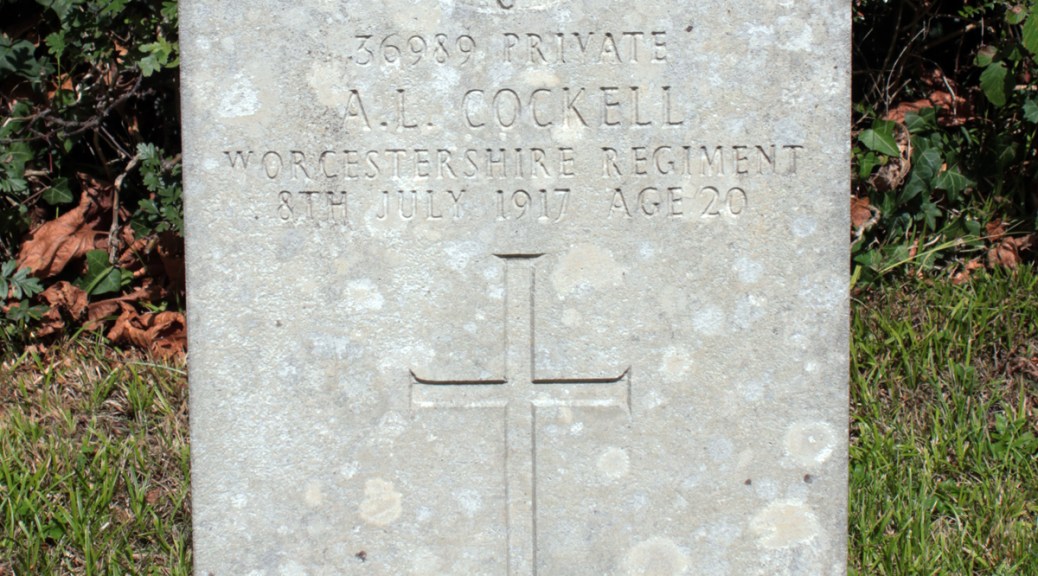
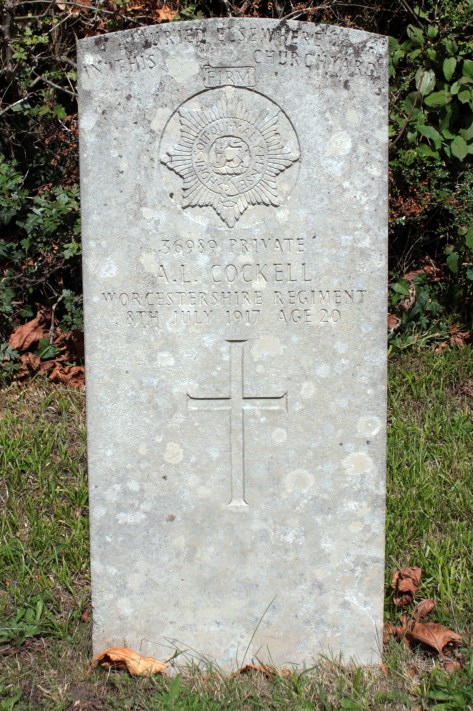
Albert Leonard Cockell was born in the spring of 1917, and was the youngest of four children to William and Annie Cockell. William was a plate layer and packer for Great Western Railways, and the family were born and raised in the village of Dilton Marsh, near Westbury, Wiltshire.
Albert finished his schooling early, to help bring in some money. The 1911 census recorded him – at 13 years of age – employed as a glove worker. When he was old enough, though, he followed in his father’s stead and, by the time war broke out, he was working as a porter at Westbury Station.
In the autumn of 1916, Albert stepped up to serve his country. He enlisted in the Worcestershire Regiment, and was assigned to the 4th Battalion. He soon found himself in the thick of things, and, by the spring of 1917, his unit was entrenched near Arras.
Sincere sympathies will be felt for Mr and Mrs William Cockell in the death of their son, Private Albert Leonard Cockell, Worcester Regiment, which took place on July 8th from wounds received while on active service in France. Private Cockell… joined the army about nine months ago, and during fighting on the 23rd April was struck by shrapnel. He was sent back to Dorchester and died on Sunday.
[Warminster & Westbury Journal: Friday 20th July 1917]
Albert Leonard Cockell was wounded on the first day of the Second Battle of the Scarpe. He died from his injuries on 8th July 1917, and his body laid to rest in the graveyard of Holy Trinity Church, Dilton Marsh.
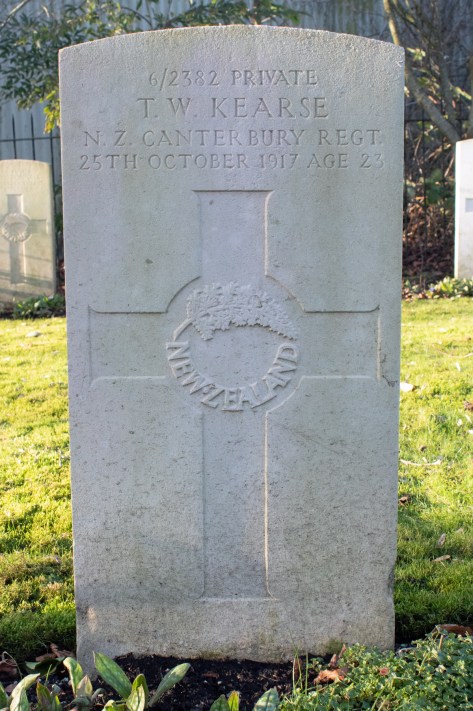
Thomas Walker Kearse was born in Westport, New Zealand, on 15th December 1891. One of seven children, his parents were British emigrant Thomas Kearse and his local-born wife, Rosanna.
There is little information available about Thomas’ early life. He found work as a general labourer when he finished his schooling, by which time his mother had passed away. By his mid-20s, he had relocated to Kaikohe, on North Island.
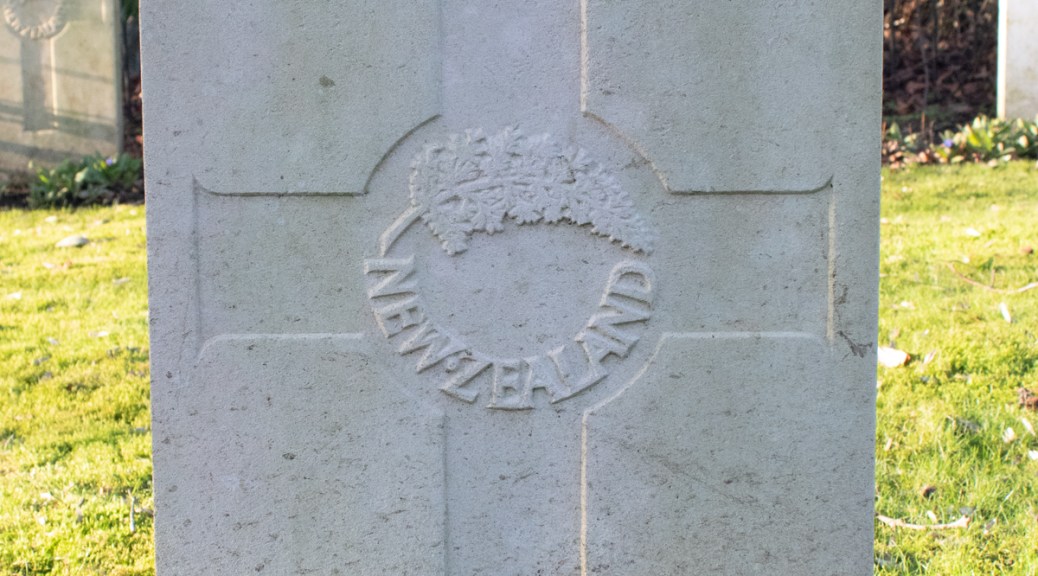
When war broke out, Thomas stepped up to play his part. He enlisted in Trentham on 16th February 1915, and was assigned to the New Zealand Canterbury Regiment. Private Kearse’s medical examination noted that he was just over 5ft 6ins (1.68m) tall, and weighed 139lbs (63kg). He had light hair, blue-grey eyes and a fair complexion. He was also noted as having a scar on his right shin.
Private Kearse would be in the army for two-and-a-half years, but would experience enough warfare for a lifetime. On leaving New Zealand his unit made for the Dardanelles, arriving there on 16th August 1915. He was wounded early on, and medically evacuated to Malta. His injuries would need further treatment, however, and he was shipped to Britain, and sent to hospital in Birmingham.
Thomas spent time recuperating at a base in Hornchurch, Essex, and it would seem that, while here, he met Catherine Goodwin. A romance started, but Thomas was sent to re-join his unit, who were barracked in Egypt. Within a month, however, he was on the move again, arriving in France in April 1916. While there, he went absent without leave for two days, and forfeited a month’s pay as a result.
In October, Private Kearse was wounded in the head and arm by gunfire, and, after initial treatment in Rouen, he was medically evacuated to Britain. Admitted to the 3rd Southern General Hospital in Oxford, he would remain here for the next month. He was then sent to the ANZAC base in Codford, Wiltshire, again to recuperate, but, while there, he was admitted to the camp’s venereal unit for a fortnight.
Discharged again, his condition had not cleared up: Thomas was back in hospital on 5th December 1916, and he spent a further two weeks admitted.
On his latest discharge, Private Kearse was marched to Sling Camp, near Bulford, where he took up a role as cook. He would remain there for the next four months and, during this time, he and Catherine exchanged vows. She had given birth to a daughter, Ivy, the previous October, and this helped formalise their family unit.
Over the next few months, Thomas’ life repeated itself. He was admitted to hospital in Codford again in June 1917, and went AWOL for 26 hours on 27th/28th July (for which he was docked four days’ pay). Discharged from hospital on 4th September, he was marched back to the Sling Camp.
Within six weeks, however, he was sent back to hospital in Codford, this time suffering from pneumonia. This time, Thomas would not be as fortunate. The lung condition got the better of his, and he passed away on 25th October 1917, at the age of 25 years old.
The body of Thomas Walker Kearse was laid to rest in the ANZAC extension to St Mary’s Churchyard in Codford, not far from the hospital he had visited so many times.
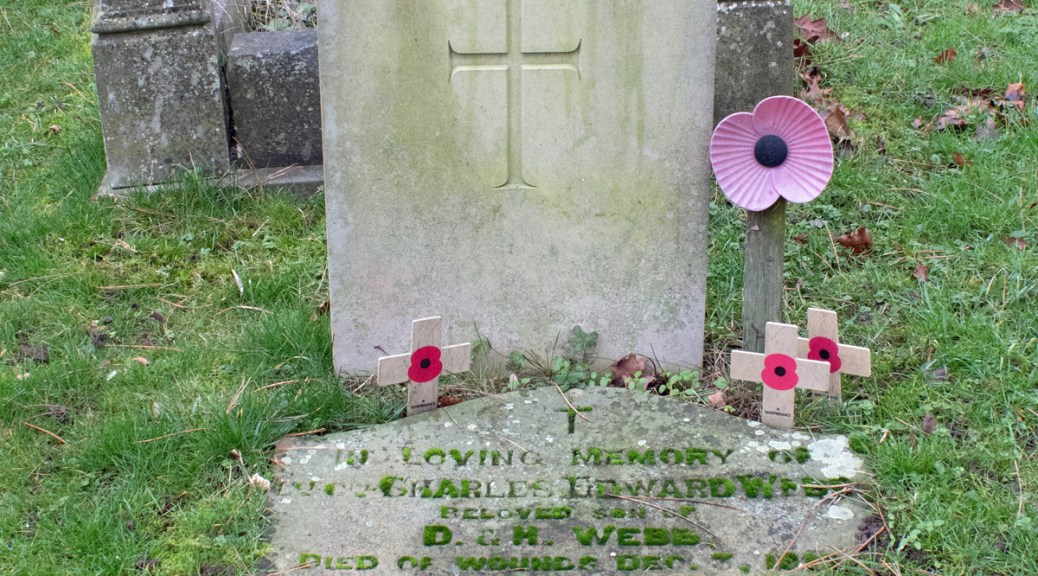
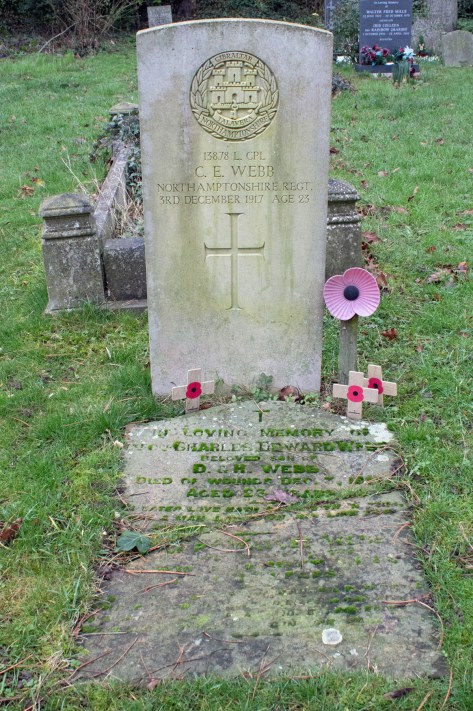
Charles Edward Webb was born in Wootton, Northamptonshire in the autumn of 1894. The oldest of seven children, his parents were clay pit foreman David Webb and his wife, Hannah.
When Charles finished his schooling, he found work as a brewer’s labourer: the 1911 census found the family living in a four-roomed cottage on Wootton High Street.
Little information is available about Charles’ time in the army. A later report, however, confirms that he enlisted not long after the declaration of war in 1914. He joined the Northamptonshire Regiment, and was assigned to the 7th (Service) Battalion.
Private Webb’s unit fought in some of the fiercest battles of the conflict, including at Loos in 1915, the Somme in 1916 and Ypres in 1917. During this time Charles was promoted to Lance Corporal.
Webb, Lce.-Corpl. CE (23), Northants, eldest son of Mr and Mrs Webb of Wootton, and fiance of Miss M Seamark, of Northampton; died in the University War Hospital, Southampton, on December 3, of wounds received in action on June 7; enlisted at the outbreak of war.
[Northampton Chronicle and Echo – Monday 31 December 1917]
The date of Charles Edward Webb’s injuries coincide the the first day of the Battle of Messines, in which the Northamptonshire Regiment played a crucial role. He was 23 years old when he died: his body was taken back home for burial and he was laid to rest in St George’s Church Cemetery, not far from the homes of his grieving family and fiancée.
Charles’ younger brother William also served in the First World War. As a Private in the 10th (Service) Battalion of the Essex Regiment, he was caught up in the Battle of Amiens on 8th August 1918, and was declared missing presumed dead: he was just 18 years of age. He is commemorated on the Vis-en-Artois British Memorial in Harcourt, France.
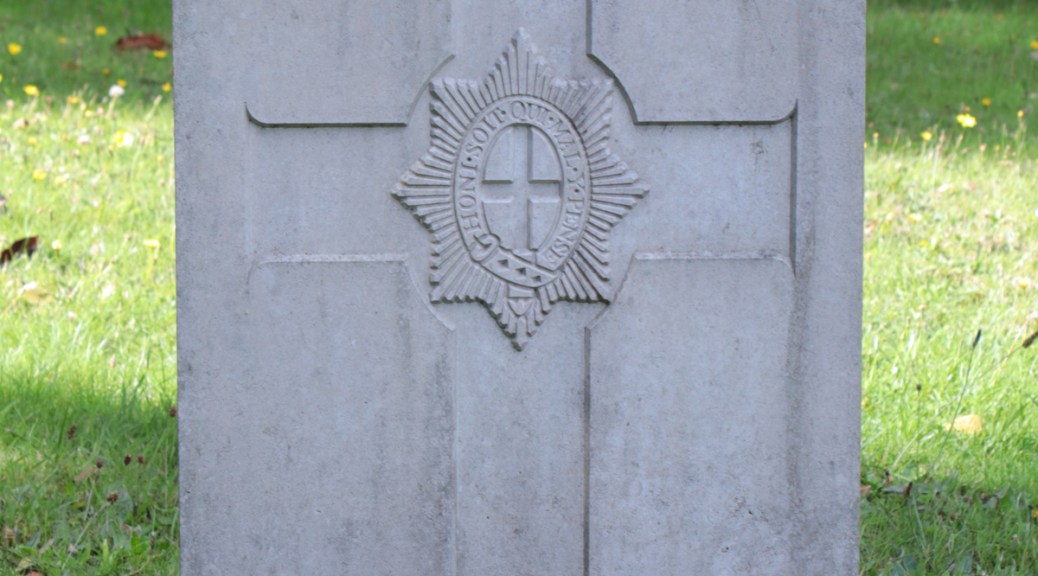
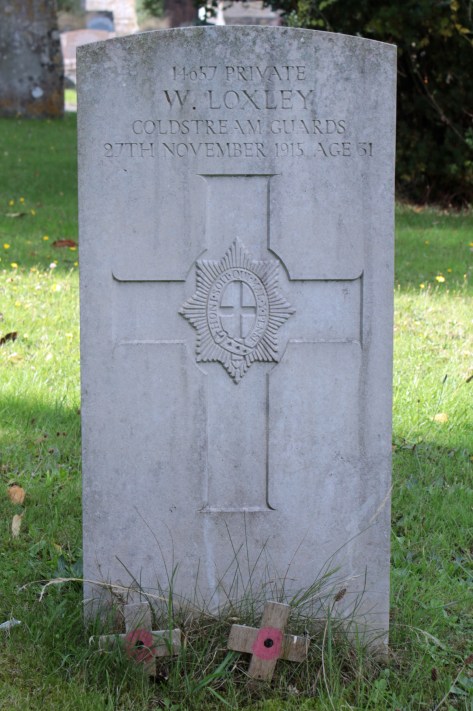
LOXLEY, WILLIAM, Private, No. 14657, 4th Battn. Coldstream Guards, eldest s. of the late William Loxley, Engine Fitter, by his wife, Ellen, dau. of the late Edward Stringer; b. Ecclesfield, co. York, 26th Oct. 1885; educ. there; was a stove and grate fitter; volunteered and enlisted 9 Jan. 1915; went to France, 15 Aug. 1915, and died in Convalescent Home, Westbury, co. Wilts, 27 Nov. 1915, of wounds received in action during the Battle of Loos, 27-29 September 1915. He m. at Grimsby, 4 Aug. 1912, Edith Mary (3, Burton Street, Langsett Road, Sheffield, widow of Philip Munty, and dau. of the late Frederick Charles Unwin.
De Ruvigny’s Role of Honour
William was the second of four children to William and Ellen. The family lived at 50 Town End Road in Ecclesfield, a small stone-built cottage overlooking grassland on the edge of the village.
Aside from his entry in de Ruvigny’s Role of Honour, there is no further information about his widow, although the British Army Register of Soldiers’ Effects names both Edith and William’s nephew – Faedon Muntz – as beneficiaries.
Injured at Loos, a local newspaper provided an obituary:
Giving up his profession for the Army, [William] was drafted out to France, and received a bullet through the forehead. After a long treatment in hospital he was, a fortnight ago, invalided home for ten days, leaving only a few days ago, then appearing to making rapid progress. He had a relapse, and on Friday his memory left him. Later he became delirious and passed away.
[Sheffield Daily Telegraph: Monday 29th November 1915]
William Loxley died at the Haywood House Hospital in Westbury, Wiltshire, on 27th November 1915: he was 30 years of age. His body was laid to rest in the town’s cemetery.
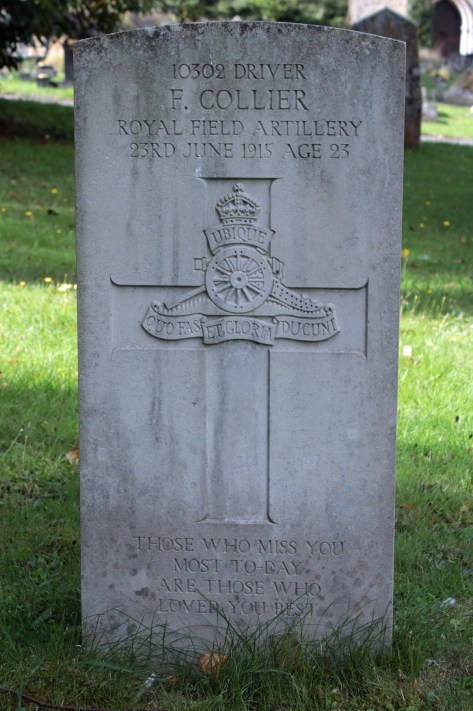
Frederick William Collier was born in the autumn of 1891. The oldest of four children, his parents were weavers Frederick and Annie Collier. Annie died in 1899, and her widow re-married. The 1911 census found the extended family – Frederick Sr, new wife Rose, Frederick Jr, two of his siblings and his three half-siblings – living at 30 New Prospect Buildings, Westbury, Wiltshire, their home town.
When Frederick Jr completed his schooling, he found work as a grocer’s labourer. War broke out in 1914, however, and he felt drawn to play his part. Full details of his military service have been lost to time, but it is clear that he had enlisted early in the conflict, and certainly by the start of 1915.
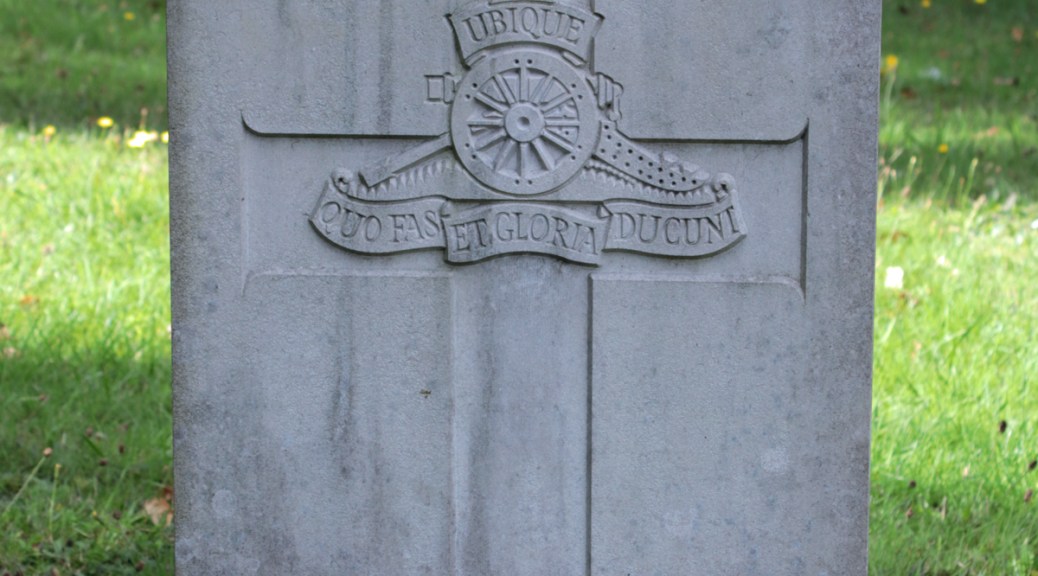
Driver Collier was assigned to the Royal Field Artillery, and was attached to the 59th Brigade Ammunition Column. He was sent to Surrey for training, unbeknownst to his unit, in preparation for the Gallipoli campaign. Frederick, however, was not to get his chance to be involved.
Frederick William Collier… died on Wednesday last week from injuries received while attempting to stop horses which were stampeding in his camp, the Ammunition Column, 59th Brigade, at Milford (Surrey)… Collier… was well known in Westbury, and was popular amongst his comrades, and the greatest sympathy is extended to his parents in their bereavement. The young fellow died the same day the accident happened in the hospital at Aldershot.
[Wiltshire News: Friday 2nd July 1915]
Driver Frederick William Collier succumbed to his injuries on 23rd June 1915. He was 23 years of age. His body was taken back to Wiltshire for burial, and he was laid to rest in Westbury Cemetery, not far from where his grieving parents still lived.
John Albert Gulliver was born in the summer of 1878. He was the second of six children – and the first boy – to farmers John and Ruth Gulliver. The family were raised in the Wiltshire village of Steeple Ashton, but had moved to Hilperton, on the outskirts of Trowbridge, by the time their eldest son had turned ten years old.
John Jr found work as a builder’s labourer when he finished his schooling. The 1911 census recorded him as living with his parents and sister on Horse Road, Hilperton, although the document suggests he was working in Edington, six miles to the south of the village. The Gulliver family also had a visitor – Bristol-born Albert Davies, who was a Lance Corporal in the Coldstream Guards.
When war broke out, John Jr was called upon to play his part. His service records have been lost to time, but it is clear that he had joined up by 1917. There is some confusion over his military service, however.
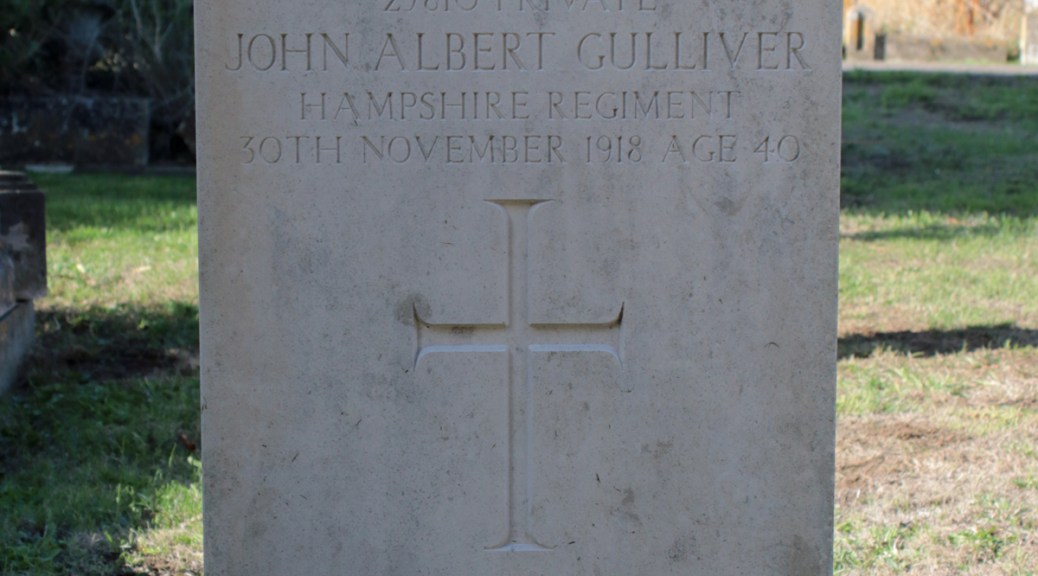
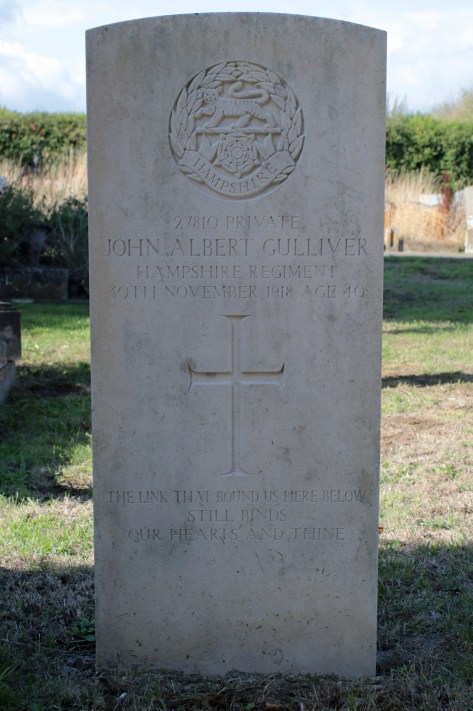
The Commonwealth War Graves Commission records give Private Gulliver’s initial unit as the 3rd Battalion of the Hampshire Regiment, and he was awarded a ‘wounded stripe’ following an injury on 10th September 1917. However, John’s Medal Roll Index Card suggests he joined the Duke of Cornwall’s Light Infantry. Either way, Private Gulliver did not appear to spend any time overseas and, by the autumn of 1918, he had transferred to the 442nd Agricultural Company of the Labour Corps.
Private Gulliver survived the war, but his health had been impacted. He had contracted pneumonia, and passed away at home on 30th November 1918. He was 40 years of age.
The body of John Albert Gulliver was laid to rest in the tranquil grounds of Hilperton Cemetery, not far from where his grieving parents still lived.
The early life of Thomas William Chilton is a challenge to unpick. Born in January 1888, his mother is recorded as Sarah Chilton. Documents refer to his place of birth as Darlington, County Durham, or Ripon, Yorkshire, although there are no records to corroborate either location.
When he finished his schooling Thomas found work as a farm labourer, but he had a sense of adventure. By 1911, he had emigrated to Australia to make a new life for himself as a farmer in New South Wales.
War broke out in the summer of 1914, and Thomas would step up to play his part. He enlisted in the Australian Imperial Force on 9th October 1916, his service records showing that he had previously volunteered for the 1st Battalion of the Australian Imperial Forces, but had been discharged on account of wounds. Private Chilton’s papers note that he was 5ft 9ins (1.75m) tall and weighed 159lbs (72.1kg). He had brown hair, blue eyes and a fresh complexion.
Thomas spent the next couple of months training, before his unit was dispatched overseas. He boarded the troop ship A24 Benalla on 9th November 1916, making the journey from Sydney to Devonport in two months. On 10th January, he was marched in to camp in Perham Down, Wiltshire, in preparation for the move to France.
Attached to the 53rd Battalion of the Australian Infantry, Private Chilton arrived in France on 26th April 1917. He was sent to the front, but just three weeks later was wounded by shrapnel in his feet, right side and face. He was sent to a casualty clearing station before being medically evacuated to Britain for treatment. Initially admitted to hospital in Wandsworth, Surrey, over the next few weeks he was moved to wards in Chelsea and Holborn in Middlesex.
Thomas recovered from his injuries and, by August 1917, he had been discharged from hospital. He had two weeks’ leave, before reporting back to his unit in Perham Down. Within days of arriving, he was charged with going AWOL, being absent from 3:30pm on 24th August to 4:30pm on 25th August. The result of his misdemeanour is unclear, but his records suggest he did not cross the line again.
In November 1917, Private Chilton was in hospital again, this time suffering from a bour of gastritis. He was admitted to the military hospital in Sutton Veny, Wiltshire, and, after being discharged on 3rd December, his time would be split between the ANZAC camps here and in nearby Codford.
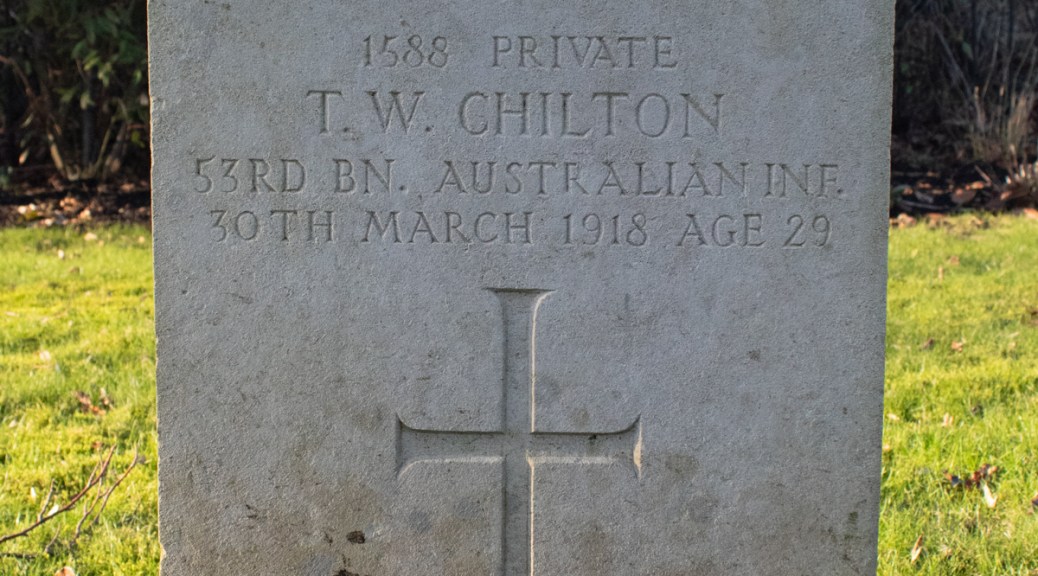
Thomas undertook more training in January 1918, completing a course in signalling. That spring, however, his health took another downturn, and he contracted pneumonia. He was admitted to the No. 3 New Zealand General Hospital in Codford, but the condition would prove his undoing. Private Chilton passed away on 30th March 1918, at the age of 30 years old.
Although his mother was living in Yorkshire, the body of Thomas William Chilton was not returned home for burial. Instead he was laid to rest in the ANZAC graveyard extension of St Mary’s Church in Codford.
Thomas’ papers confirm that his brother was in attendance, and, although his name is not mentioned, it is likely to have been Ewden Auton, Sarah’s son, with whom Thomas’ will was kept for safe keeping.
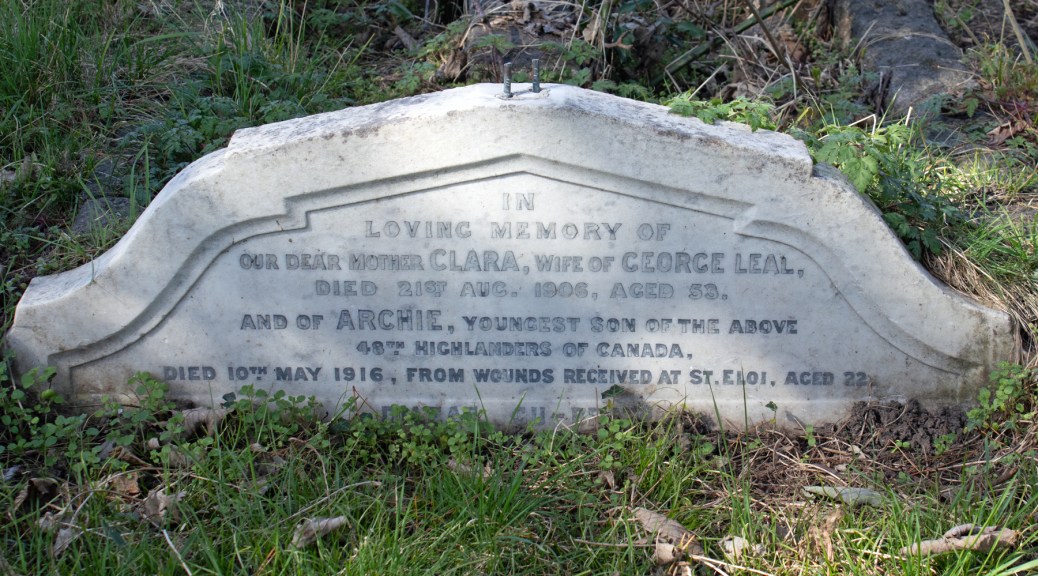
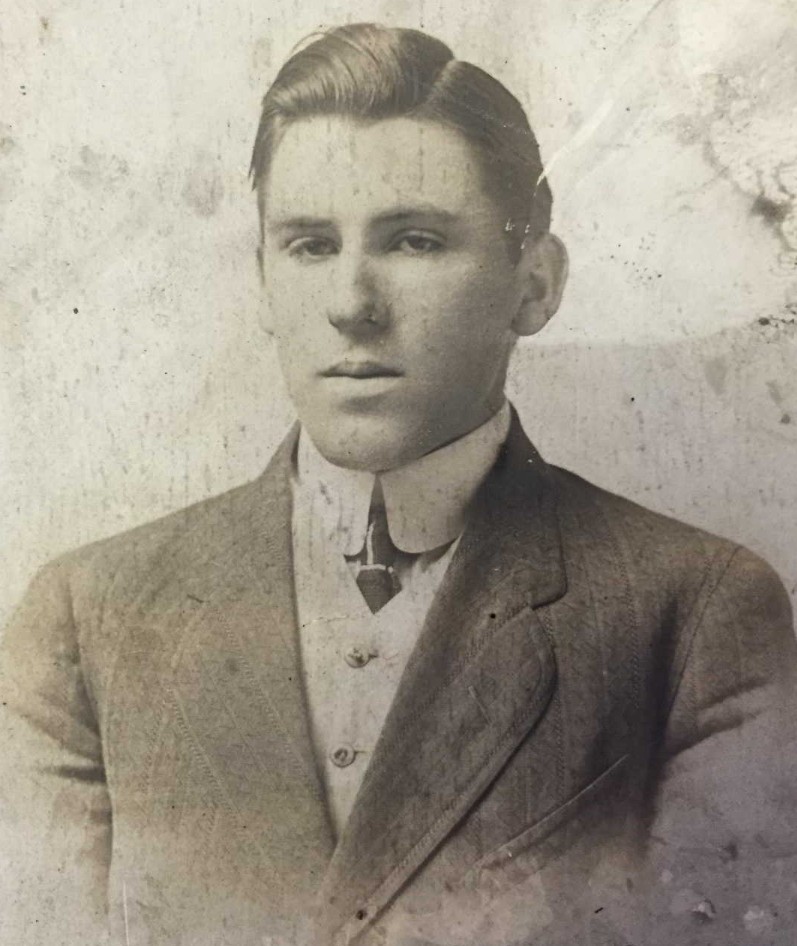
Archibald Edmund Leal was born in Tinwood, West Sussex on 13th September 1894. The youngest of six children, his parents were George and Clara Leal. George was a dairyman, and, by the time of the 1901 census, the family had moved to a terraced cottage at 66 Newland Road in Worthing.
Clara died in 1906, and Archibald – who was better known as Archie – and two of his siblings took the opportunity to seek a better life across the Atlantic. In 1910, the three of them – Archie, brother Phillip and sister Winifred – emigrated to Canada, settling in Breakeyville, to the south of Quebec.
Archie found work as a chauffeur, but when war was declared, he was quick to step up and serve his King and Empire. He enlisted on 10th September 1914, joining the Canadian Expeditionary Force as a Private. His service records show that he was 5ft 6in (1.67m) tall, with fair hair, brown eyes and a dark complexion. He was also noted as having “very many [acne] scars over [his] chest and back.”
Assigned to the 15th Battalion of the Canadian Infantry, Private Leal sailed to Britain, arriving at Tidworth Camp in Wiltshire on 12th February 1915. By April he was in France, and, on 28th July he was in a front line trench near the town of Ypres. A shell exploded nearby and, in seeking shelter, he badly twisted his ankle and back. Medically evacuated to Britain, Archie spent a month recuperating at the Royal Herbert Hospital in Woolwich, Kent, before returning to his unit in Wiltshire.
By December 1915, Private Leal was back on the Western Front and remained there for the next five months. In April his unit was on the front line, and he was injured in his right leg when a rifle grenade exploded. Archie was initially treated by a field ambulance, but his injury was such that evacuation to Britain was again necessary. He was admitted to the County of London War Hospital in Epsom, Surrey, but had contracted tetanus by this point. This was to prove fatal, and his body succumbed on 10th May 1916: he was 21 years of age.
The body of Archibald Edmund Leal was taken back to Worthing for burial. He was laid to rest with full military honours in the town’s Broadwater Cemetery. A local newspaper reported that “Private Leal, although not a Canadian, was possessed of true Colonial grit, and had had his full share of active service.” [Sussex Daily News: Wednesday 17th May 1916]



 Death and Service