Category Archives: Commonwealth War Graves

Trimmer Thomas Davis

Trimmer Thomas Davis

The details of Thomas Davis’ early life are a challenge to piece together.

His navy service papers confirm that he was born in Stockton, County Durham, on 25th January 1867, and was the son of John and Ann Davis. The 1881 census found the family living at 66 Argyle Street, Linthorpe, Yorkshire. John was a puddler, working iron in a local foundry, while Thomas, now 15 years of age, was a labourer in the same ironworks.

Thomas falls off the radar for a few years, and it is only his service papers that brings things together again. He enlisted in the Royal Naval Reserve in June 1915, joining up as a Trimmer. The document confirms that he was 5ft 6ins (1.77m) tall with blue eyes and a fair complexion.

Over the next eighteen months, Thomas served on four ships, returning to HMS Pembroke – the Royal Naval Dockyard in Chatham, Kent – in between voyages. His conduct seems to have been average and, in November 1916, he was jailed for 7 days and docked a day’s pay for an unrecorded misdemeanour.

By that winter, Trimmer Davis’ health was faltering, and he was admitted to the Sailor’s Home in Chatham, Kent, suffering from pneumonia. The condition was to get the better of him, and he passed away on 1st February 1917, just a week after his 50th birthday.

The body of Thomas Davis was laid to rest in the naval section of Woodlands Cemetery, Gillingham, Kent, not far from the naval base he had come to call home.


There is scant information about Thomas’ family. While the 1881 census notes he had a younger brother, Phillip, his service papers give his next-of-kin as cousin William Jones of Wellington Street, Toronto, Canada. (It also notes that communications sent to him were returned unopened.)


Trimmer John Major

Trimmer John Major

John Edward Major was born on 1st April 1881 in Gorleston, Suffolk. One of seven children, his parents were William and Elizabeth Major. William was a fisherman and the family lived on the town’s High Street.

Things changed for the Major family, however, and the 1891 census found them living in Barking, Essex. William was now employed as a general labourer, and the family had set up home at 16 Rosa Terrace.

John was drawn to his coastal past and, according to the next census, he was a ship’s mate on the fishing boat Cygnet. Based out of London, the return was taken in Lowestoft, so it is safe to assume that she plied the Essex and Suffolk coasts.

Love was blossoming for John at this point and, on 9th September 1906, he married Ann Davy. She was a coal porter’s daughter from Barking, and the couple married in the town’s St Margaret’s Church. They would go on to set up home in Cleethorpes, Lincolnshire, and have five children: Blanche, Amelia, Annie, Elizabeth and John Jr.

Over the next few years John’s trail goes cold. When war broke out, he was called upon to play his part, and joined the Royal Naval Reserve as a Trimmer. By the summer of 1917 he was attached to the SS Gransha, based out of the Royal Naval Dockyard in Chatham, Kent.

The next record for Trimmer Major relates to his passing. His pension ledger notes that, on 11th September 1917, he fell overboard from Gransha and was drowned. Sadly, there is no other information available about the incident, but John was 37 years of age.

The body of John Edward Major was laid to rest in the naval section of Woodlands Cemetery, Gillingham, Kent, not far form the naval base that he had come to call home.


Tragically, John’s entry on the Pension Ledger confirms that his and Ann’s youngest child – John Jr – died on Christmas Eve 1917, three months after his father.


Chief Petty Officer Albert Boorman

Chief Petty Officer Albert Boorman

Albert Edward Boorman was born on 21st November 1873 in Hadlow, Kent. He was the oldest of seven children, and one of four boys to James and Jane Boorman. James was a maltster’s labourer, but his eldest son sought a longer-term career.

On 5th January 1889, Albert enlisted in the Royal Navy. Due to his age, he took on the rank of Boy 2nd Class, and was sent to the training ships HMS Impregnable and HMS Lion, both based in Devonport, near Plymouth, Devon.

Over the next couple of years, Albert learnt the tools of his trade, rising to the rank of Boy 1st Class in December 1889. The following November he was assigned to HMS Calypso, a corvette, and it was during the eighteen months he spent with her that he came of age.

The now Ordinary Seaman Boorman’s service record show that, having turned eighteen, he was 5ft 7.5ins (1.71m) tall, with dark brown hair, grey eyes and a fresh complexion. He was noted as having a birth scar on his left shoulder.

Albert was obviously dedicated to his naval career and, on 2nd April 1892, he was promoted to Able Seaman. When he came of age, he enlisted for twelve years’ service and, during that time, he would serve on four ships. In between tours he returned to what would become his shore base, HMS Pembroke, the Royal Naval Dockyard in Chatham, Kent. His annual reviews reflected his commitment to the role: in December 1897 he was promoted to Leading Seaman, in January 1899 he gained the rank of Petty Officer 2nd Class, and in September 1900 he rose to Petty Officer 1st Class.

When his contract came to an end in November 1903, Albert immediately re-enlisted and would serve for another decade. In the summer of 1909 he was promoted to Acting Chief Petty Officer: the role was formalised a year later.

Away from his naval career, Albert had fallen in love. He married Eliza in 1909, and, while her husband was at sea, she set up home at 43 East Street, Gillingham, Kent.

In November 1913, after 22 years’ formal service, Chief Petty Officer Boorman was stood down to reserve status. This time away from the sea was not to last for long, however, and he was called upon once more when war was declared just nine months later. Albert resumed his previous role, but was primarily based back at HMS Pembroke.

On 7th March 1917, Chief Petty Officer Boorman was on board the gunboat HMS Spey, which was carrying out diving operations in the Thames Estuary. At 4 o’clock in the afternoon, in “bitterly cold and boisterous conditions” [Whitstable Times and Herne Bay Herald: Saturday 24th March 1917], the ship lost an anchor, and the decision was made to return to base at Sheerness, Kent. Another vessel, the HMS Belvedere, was close by and turned towards the Spey, and, despite trying to avoid a collision, the smaller ship was struck a glancing blow.

The Spey was 40 years old, and the impact sheered numerous rivets from the side. Water gushed in, and the gunboat sunk beneath the Thames within a matter of minutes. Some of the crew had managed to escape on a life raft, but it was not fitted with lights or flags. The boat drifted and was not found until five hours later, partially submerged: all on board had died.

In total, twenty of the thirty-seven crew perished on that March afternoon, including Chief Petty Officer Boorman. He was 43 years of age.

The body of Albert Edward Boorman was retrieved. He was laid to rest in the naval section of Woodlands Cemetery, Gillingham, Kent, not far from where his widow still lived.


Stoker 2nd Class Frank Waterhouse

Stoker 2nd Class Frank Waterhouse

Frank Waterhouse was born in Keighley, Yorkshire, on 14th September 1889. The second of four children, including two younger sibling who both died before their first birthdays, his parents were Waddington and Jane Waterhouse.

Waddington was an engineer for a worsted mill in nearby Bingley, and when Frank finished his schooling, he found employment as a fireman for the same mill. By the time of the 1911 census father, son, Frank’s sister Fanny and her husband Arthur were all employed at the factory.

In the spring of 1915, Frank married Alice Greenbank. She worked at a mill in Haworth and the couple set up home together. They would not go on to have any children.

War was raging across Europe by this point, and Frank stepped up to play his part. He enlisted in the Royal Navy and his trade made him ideal for an initial role of Stoker 2nd Class. He was sent to HMS Pembroke, the Royal Naval Dockyard in Chatham, Kent, for his training and his service record confirms the man he had become. He was 5ft 7ins (1.7m) tall, with brown hair, brown eyes and a fresh complexion.

Stoker 2nd Class Waterhouse was sent to HMS Pembroke, the Royal Naval Dockyard in Chatham, Kent, for his training. At the beginning of May 1917, he was assigned to the cruiser HMS Crescent, and spent the next four months aboard.

During this time, Frank fell ill. When Crescent docked back at HMS Pembroke at the end of September, he was disembarked, and taken to the Royal Naval Hospital in Chatham. He was suffering from endocarditis, and the heart condition would prove fatal. He passed away the day after he was admitted – on the 2nd October 1917 – at the age of 28 years old.

Hundreds of miles from home, it is likely that Frank’s family would not have been able to foot the bill for bringing his body back home. Instead, Frank Waterhouse was laid to rest in the naval section of Woodlands Cemetery in Gillingham, Kent, not far from the base at which he had been based.


Petty Officer 1st Class Edward Grant

Petty Officer 1st Class Edward Grant

The early life of Edward Grant is a challenge to piece together. Born on 14th May 1863 in Newington, Surrey, he was the son of Thomas and Eliza Grant. The family do not appear on any census records, and it is only when Edward joined the Royal Navy in 1878 that he appears on any documents.

Edward’s service papers tell the story of a young man focused on his career. Underage when he joined up, he was given the rank of Boy 2nd Class, and sent to HMS Impregnable, the school ship based in Devonport, for his initial training. He remained on board for over a year, and rose to Boy 1st Class during that time.

Edward’s first full sea-going assignment was on board the screw corvette HMS Ruby. He would be assigned to her for eighteen months, during which time he came of age. Formally inducted into the Royal Navy, he took the rank of Ordinary Seaman. His service records show that he was a little over 5ft (1.53cm) tall, with brown hair, great eyes and a fair complexion.

Ordinary Seaman Grant’s contract was for ten years. During this time, his commitment to the job was clear: serving on a total of right vessels, he was promoted to Able Seaman in December 1882, Leading Seaman in October 1888 and Petty Officer 2nd Class in December 1889.

When his contract came to an end, Edward did not hesitate to re-enlist. He completed another decade of service, spending much of that time as a Boatman for the Coastguard on the Northumbrian coast.

It was while he was serving in Crastor that he met Elizabeth Smailes. She was a grocer’s daughter from nearby Dunstan, and the couple married in Alnwick on 14th February 1893. Edward and Eliabeth would go on to have five children, all girls, between 1896 and 1907.

By the time of the 1901 census, the Grants family were living in the Royal Naval Reserve Barracks in Hartlepool, County Durham. That November Edward was formally stood down to reserve status, having completed 20 years with the Royal Navy.

The 1911 census found Edward and the family living at the Guardians Offices at Hart Road in Hartlepool. A naval pensioner, he was employed as a caretaker for the town’s Board of Guardians, and the accommodation came with the job. Also living with them was Elizabeth’s mother, 83-year-old widow, Jane Smailes.

When war broke out, Edward stepped up to play his part once more. Now 51 years of age, he took on the role of Petty Officer 2nd Class once more: his papers show that he was now 5ft 5.5ins (1.66m) tall and had tattoos of a sailor woman and the words True Love on his left arm.

Petty Officer Grant remained firmly shore based, and was billeted at HMS Pembroke, the Royal Naval Dockyard in Chatham, Kent. He served for three years, and was promoted to Petty Officer 1st Class in May 1916.

On 9th April 1917, Edward Grant collapsed at his barracks. His passing was quick: he died of an aortic aneurysm and haemorrhage. He was 53 years of age. His body was laid to rest in the naval section of Woodlands Cemetery in Gillingham, not far from the naval base he had known for so many years.


Plumber’s Mate William Hodge

Plumber’s Mate William Hodge

William James Hodge was born on 23rd November 1896 in Portsmouth, Hampshire. The oldest of seven children, six of whom were boys, his parents were James and Edith Hodge. James was a carpenter and labourer and, when he finished his schooling, William initially found work as a grocer’s errand boy.

William went on to find work as a plumber’s mate and, when war was declared, he saw an opportunity to put his stills to good use. The Royal Navy offered career prospects and, on 14th December 1915, he enlisted. His service papers show that he was 5ft 6ins (1.67m) tall, with black hair, brown eyes and a dark complexion.

Initial training took place not far from home at the Portsmouth shore based HMS Victory and HMS Fisgard. In November 1916, however, Plumber’s Mate Hodge was given his first sea-faring assignment, on board the battleship HMS Zealandia. She would remain his home for the next six months.

In the spring of 1917, William came down with tuberculosis. He was admitted to the Royal Naval Hospital in Chatham, Kent, but the condition would prove too severe. He passed away on 19th April 1917, aged just 20 years old.

The body of William James Hodge was laid to rest in the naval section of Woodlands Cemetery, Gillingham, Kent.


Private Ernest Kendall

Private Ernest Kendall

Ernest George Kendall was born in December 1891 and was the fourth of five children to Charles and Mary Kendall. Charles was a farm labourer from Dorset, and the family were living at Shearstock Farm in the town of Gillingham when Ernest was born.

By the time of the 1911 census, Ernest had found work as a farm labourer, alongside his father. When war broke out, however, Ernest felt the need to serve his country.

Full details of Private Kendall’s military service have been lost to time, but he had enlisted in the Dorsetshire Regiment by the autumn of 1915, and was assigned to the 5th (Service) Battalion. His unit left Britain on 15th October, and headed for the Eastern Mediterranean and Gallipoli.

Over the next few months, Ernest was caught up in fierce fighting. He was evacuated to the Greek island of Mudros in December 1915, and spent the winter in Egypt. By the summer of 1916, his unit had moved to France, and fought at the Somme.

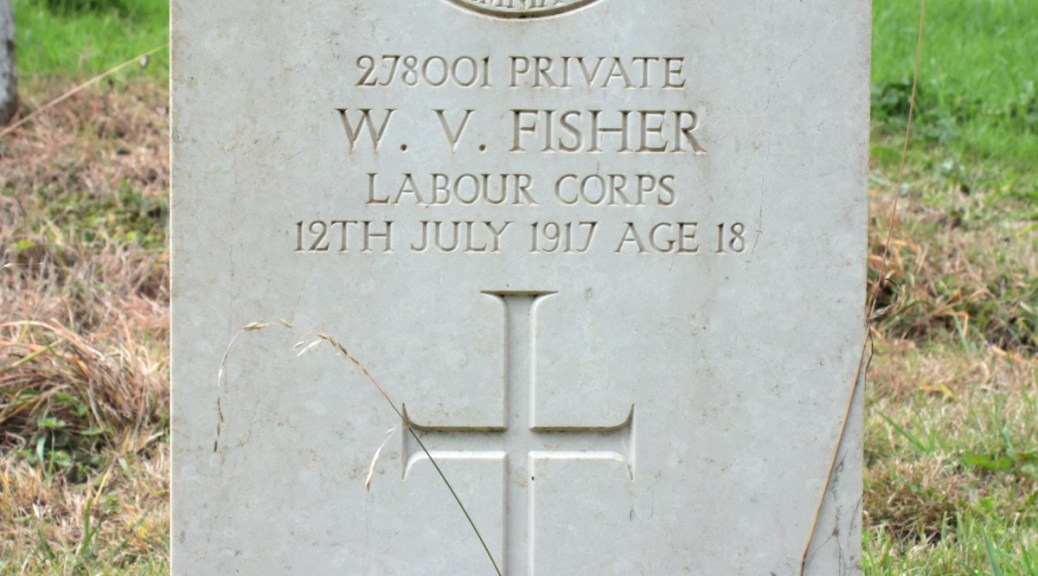
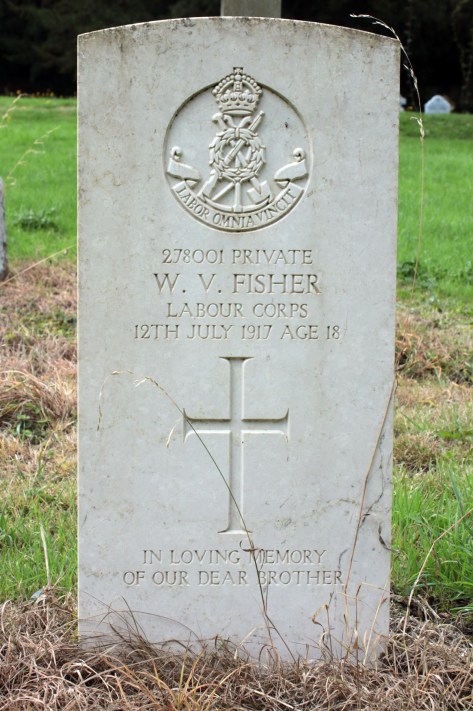
At some point, Private Kendall returned to Britain, and transferred to the Labour Corps. The move was likely to be due to an illness or injury, although there is no documentation to confirm this either way. Attached to the 477th Agricultural Company, he seems likely to have been based in Wiltshire. Ernest was admitted to the Military Hospital in Fovant for reasons unknown, and passed away there on 12th November 1918, a day after the Armistice was signed: he was 24 years of age.

The body of Ernest George Kendall was taken back to Dorset for burial. By this point his family had moved to East Stour, and he was laid to rest in the village’s Christ Church graveyard.


Second Lieutenant Jocelyn Cowell

Second Lieutenant Jocelyn Cowell

Jocelyn Gore Cowell was born on 18th March 1899 in Exmouth, Devon. The older of two children, he was the only son to Edward and Eliza Cowell. Edward was a Captain in the Royal Fusiliers, and had served in India, where Eliza – who went by her middle name, Nita – had been born.

By the time of the 1911 census, Edward and Nita had moved to Milton on Stour, Dorset, where they were living in a ten-roomed house with a butler, a housemaid and a cook. Jocelyn, meanwhile, was one of fifty students boarding at a private school in Westgate-on-Sea, Kent.

When war broke out, Jocelyn was still a student. However, on 12th September 1917, he took a commission in his father’s former regiment. While he was studying, a new technology had caught his eye, and learnt to fly, gaining his wings on 18th October 1916. When he enlisted, he immediately followed his heart, and transferred to the Royal Flying Corps.

Attached to No. 3 Training Depot Station, Second Lieutenant Cowell was based at Lopcombe Corner Airfield, to the west of Salisbury, Wiltshire. On 28th January 1918, he was flying a de Havilland DH5 biplane form the airfield, when it crashed. The cause of the accident was unknown, an inquest unable to draw any specific opinions from the wreckage or crash site. Jocelyn was killed instantly: he was just eighteen years of age.

The body of Jocelyn Gore Cowell was taken back to Dorset for burial. He was laid to rest in what would become the family plot in the peaceful graveyard of Ss. Simon and Jude Church in Milton on Stour.


Second Lieutenant Jocelyn Cowell

Second Lieutenant Jocelyn Cowell
(from findagrave.com)

Private Seth Suter

Private Seth Suter

Seth Suter was born in the Dorset village of Silton on 8th March 1887. One of five children, he was the son of farm labourer Seth Suter and his wife, Mary. Seth Sr died in 1899, and, by the time of the next census, his son had taken a job as a stable boy at the Silton Farm, next to where the family lived on Waterloo Road.

The 1911 census recorded Seth living with his mother at Church Cottage in the village. Now employed as a domestic gardener, three of his siblings were also living there, and, while Mary was not working, there were four wages coming in to support the family.

At the start of 1916, Seth married Jane Sissons. There is little information about her but, while the couple married in Shaftesbury, she seems to have been born in Driffield, Yorkshire. The couple would not go on to have any children.

Details of Seth’s military life are sparse. With the war entering its final months, he enlisted in the Somerset Light Infantry on 13th May 1918. Assigned to the 3rd (Reserve) Battalion, he was sent to Ireland for training. Private Suter’s time there was not to be lengthy: he passed away through causes unknown just a month after joining up, on 12th June 1918. He was 31 years of age.

The body of Seth Suter was taken back to Dorset for burial. He was laid to rest in the quiet graveyard of St Nicholas’ Church in his home village of Silton.


Seth’s younger brother Richard also served in the First World War. He joined the 7th (Service) Battalion of the Duke of Edinburgh’s (Wiltshire Regiment), and rose to the rank of Lance Corporal.

He was injured during the fighting to the south of Valenciennes in France, dying of his wounds on 4th November 1918, one week before the end of the war. He was laid to rest in Busigny Communal Cemetery.


Second Lieutenant John Thomas

Second Lieutenant John Thomas

John Dobson Thomas was born in Leechburg, Pennsylvania, on 26th August 1889. He was the youngest of nine children to John and Isabella Thomas. John Sr was a steel inspector from Glamorganshire, while Isabella had been born in Newcastle-upon-Tyne: they emigrated to the United States in 1881, and John Jr was the second of their children to be born there.

When John Jr left school, he found work as a clerk, eventually getting into bonds and stocks. His father died in 1910, by which time the family had moved to Chicago, Illinois.

When war broke out, John stepped up to play his part. He enlisted on 6th January 1917, his service records showing that he was of medium height and build, with brown hair and brown eyes.

The American Army may not have met John’s needs as, just six months later, he enlisted again, this time joining the Canadian Expeditionary Force in Toronto. Along with his banking role, he was recorded as being an aviator cadet, his papers shoring that, at 23 years and 10 months old, he was 5ft 6ins (1.77m) tall.

Air Mechanic 3rd Class Thomas was shipped to Britain, and stationed near East Boldre, Hampshire. In October 1917, he took a commission in the Royal Flying Corps, with the rank of Second Lieutenant.

On 20th March 1918, John was flying his Sopwith Dolphin biplane, when he hit trouble. Practicing a dive, he appeared to have been unable to pull the aircraft up again and crashed into the ground. He was killed instantly.

The RAF Casualty Card cited a potential error of judgement on the part of Second Lieutenant Thomas: “[he] had proved himself a skilful pilot and well capable of handling his machine. He had previously practised many dives, but had, in his stunting, reduced his margin of safety to a minimum.”

John Dobson Thomas was 28 years of age when he died. Being thousands of miles from his family, he was laid to rest in the quiet setting of St Mary’s Churchyard, East Boldre, not far from the airfield at which he had been based.