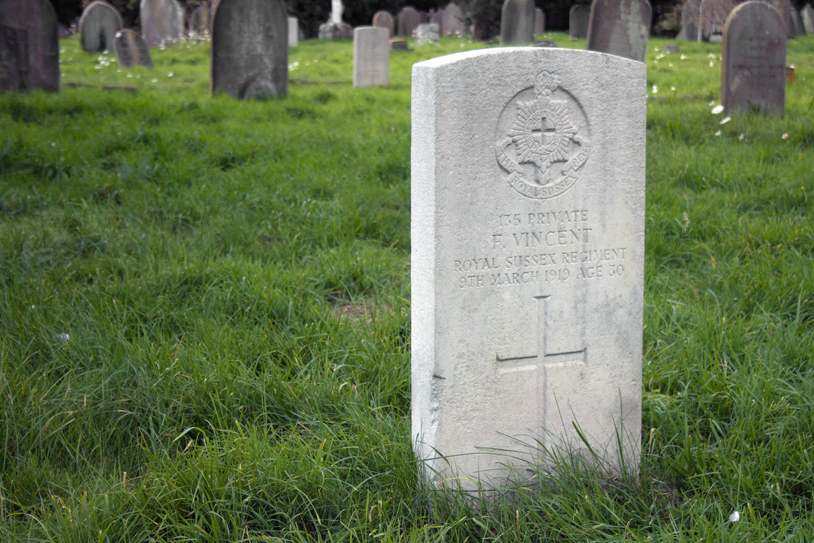
Fred Vincent was born in Crewkerne, Somerset, in 1889, one of seven children to Charles and Elizabeth Vincent. Charles was a dairyman, and, over the years, the whole family helped out in the business. This seemed a transitory business – over the years, the family moved around Dorset and, by the time of the 1911 census, were living in Wiltshire.
Frustratingly, after that document, Fred’s trail goes quiet. He married a woman called Dorothy, and at some point the couple moved to Worthing, West Sussex, although there are no records to confirm dates for either of these.
When war broke out, Fred enlisted in the Royal Sussex Regiment. Documents are again lacking, so it is impossible to tell which battalion he served in, or whether he was based at home or abroad. Private Vincent did subsequently transfer to the Labour Corps, although again, dates and the location of his service are not available.
Sadly, Fred has disappeared into the mists of time. He and Dorothy were living in Worthing when he passed away on 9th March 1919, at the age of 30 years old. There is nothing in contemporary newspapers to suggest that his passing was anything out of the ordinary.
Fred Vincent lies at rest in the Broadwater Cemetery of his adopted home town of Worthing.
Soloman William Wilcox – known by just his middle name – was born in 1894 and was one of seven children. His father, James, was a carter from Keinton Mandeville in Somerset, and he and William’s mother, Eliza, brought the family up in neighbouring Charlton Mackrell.
By the time of the 1911 census, William had left school, and was working as a farm labourer, with his older brother Sidney. James, meanwhile, had found further employment working in a local bluestone quarry.
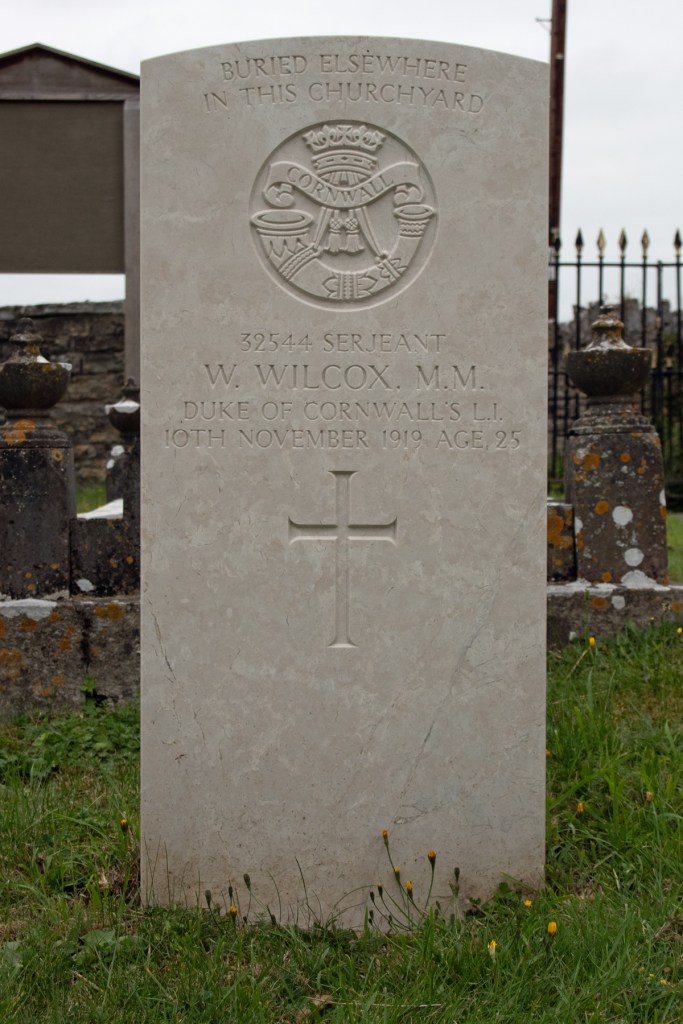
War was on the horizon and, while it is evident that he enlisted in the Duke of Cornwall’s Light Infantry, there is little further documentation to track his service. Both of the regiment’s main battalions fought on the Western Front, though where and when William was involved is lost to time.
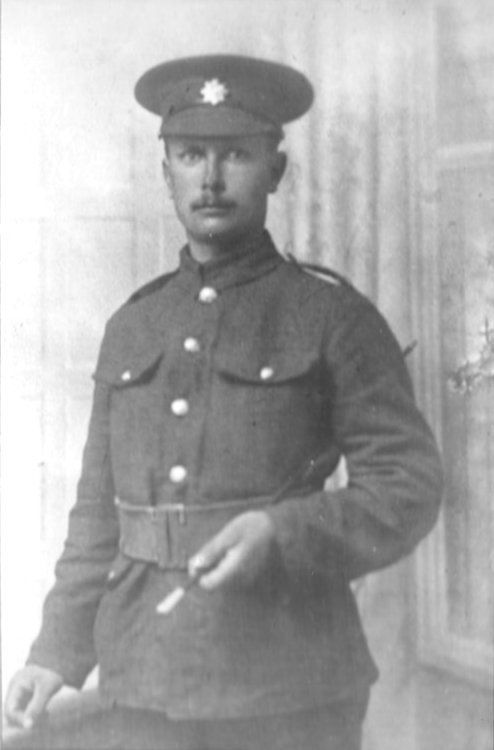
He seems to have been an ambitious young man; he rose through the ranks and, at the point he was discharged, he had risen to the role of Serjeant. He was also in receipt of the Military Medal, though there is no further information about the events that led to this.
William may well have been spurred on by family losses he suffered during the conflict. His mother Eliza died in April 1915, his brother Sidney was killed in action on 10th September 1916, and his father James passed away in August 1918.
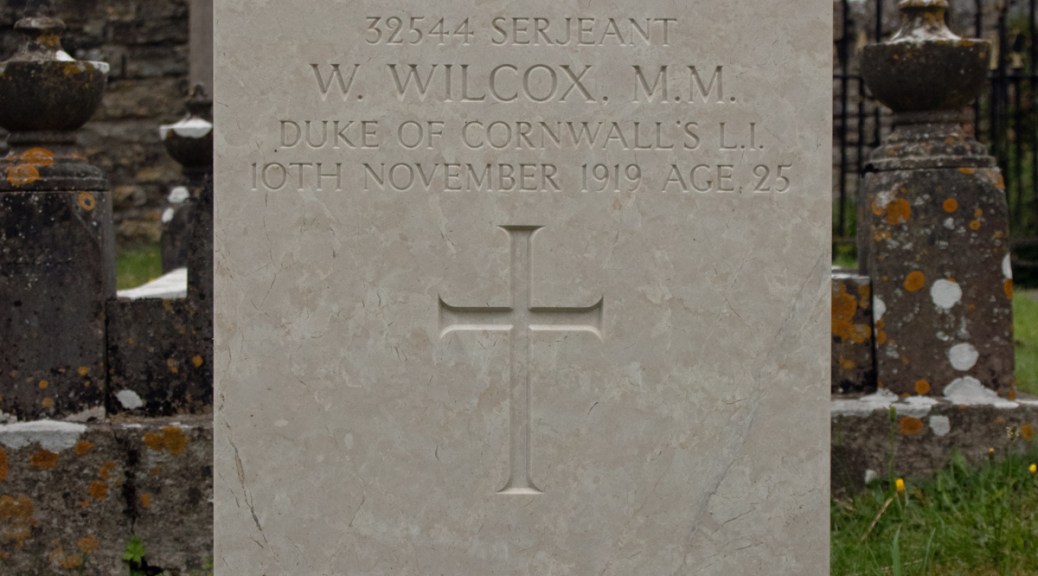
Serjeant Wilcox survived the war, and was eventually discharged from military service in August 1919. Whether he was simply demobbed, or he was medically discharged is unclear, but, given that he died only a few months later, it seems likely that the latter was the case.
Soloman William Wilcox died in Taunton, Somerset, on 10th November 1919, at the age of 25 years old. His body was brought to St Peter & St Paul’s Church in Charlton Adam, Somerset, potentially close to where some of his remaining family lived.
Serjeant William Wilcox (courtesy of findagrave.com)
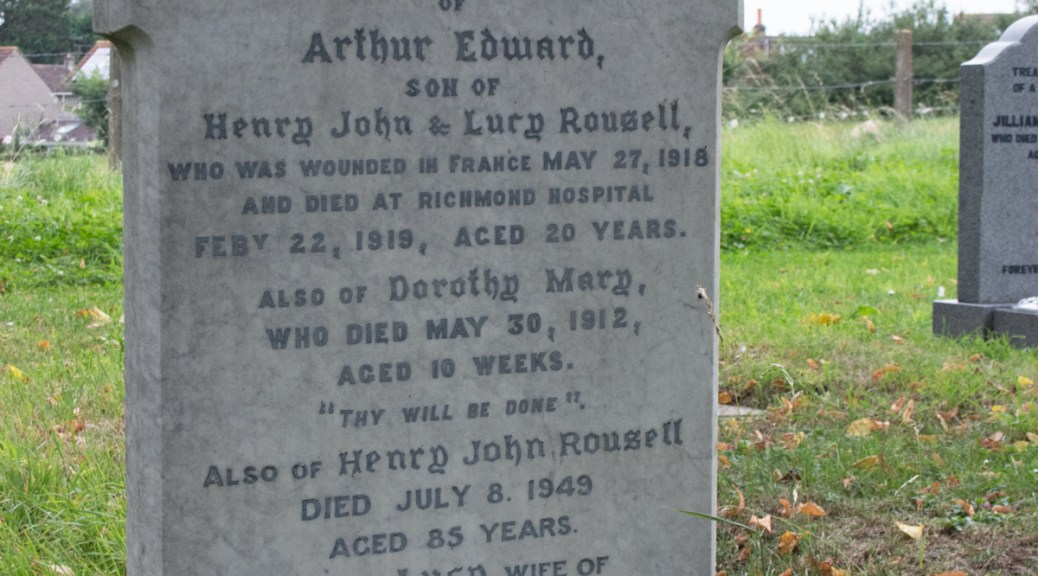
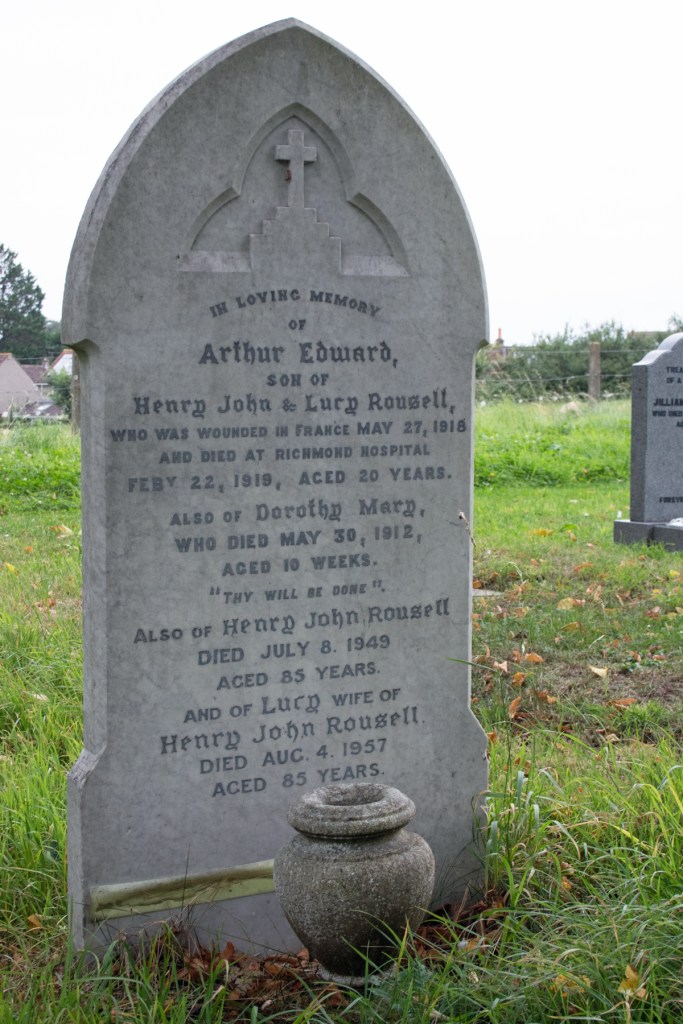
Arthur Edward Rousell was born in the summer of 1898, one of five children to Henry and Lucy Rousell. Henry was a police constable in Worle, near Weston-super-Mare, and this is where he initially raised his family. By the time of the 1911 census – when Arthur was a schoolboy of 12 years old – the family had moved to the village of Huish Episcopi, on the outskirts of Langport.
Details of Arthur’s military career are sketchy. Initially enlisting with the Royal Lancashire Regiment, he was soon transferred over to the 1st Battalion of the Lincolnshire Regiment. He certainly saw action abroad, and was caught up on the Western Front.
Private Rousell was injured on 27th May 1918, this the first day of the Battle of Aisne. His battalion was certainly involved in the battle, but whether this was where he was injured, and what his injuries actually were, cannot be confirmed.
Evacuated back to England for treatment, Private Rousell was admitted to the South African Hospital in Richmond. Whether he was there for a long time, is not recorded, but he was certainly there in nine months after he was wounded.
It seems that his injuries left him susceptible; his pension record confirms that he died of sickness, and it seems likely that this was one of the lung conditions – pneumonia, influenza – that was prevalent following the cessation of hostilities.
Private Arthur Edward Rousell died on 22nd February 1919, at the age of 20 years old. His body was brought back to Huish Episcopi, and he lies at rest in the family grave in the graveyard of St Mary’s Church.
UPDATE : 19th April 2022
An article on Arthur’s passing sheds more light onto his life:
We regret to record the death of Pte. AE Rousell, of the 1st Lancs. Regt., eldest son of PC and Mrs HJ Rousell of Newtown, which occurred at Richmond Hospital on Saturday morning. Deceased, who was 20 years of age, had been seriously ill a week with influenza, death being due to septic pneumonia, which followed.
The late Pte. Rousell, was a member of the staff of “The Langport and Somerton Herald” where he served his apprenticeship, when war broke out, and joined up early in 1917, his regiment being the King’s Own Yorkshire Light Infantry. After a period of training he proceeded to the front and took part in several engagements. He was gassed, and in the winter of that year was invalided home with trench feet. On recovery he was transferred to the Lancs. Regt., and again proceeded to the front.
On May 27th last he was severely wounded in the right leg by shrapnel, the bones being badly splintered. He was sent to a military hospital in this country and had been in hospital ever since. He had made a fairly good recovery and his parents were expecting him home shortly, when on Thursday last week a wire was received, informing them of his serious illness. Mrs Rousell at once proceeded to Richmond and was able to see her son before he passed away.
Deep sympathy is extended to the relations in their sad bereavement.
Langport & Somerton Herald: Saturday 1st March 1919
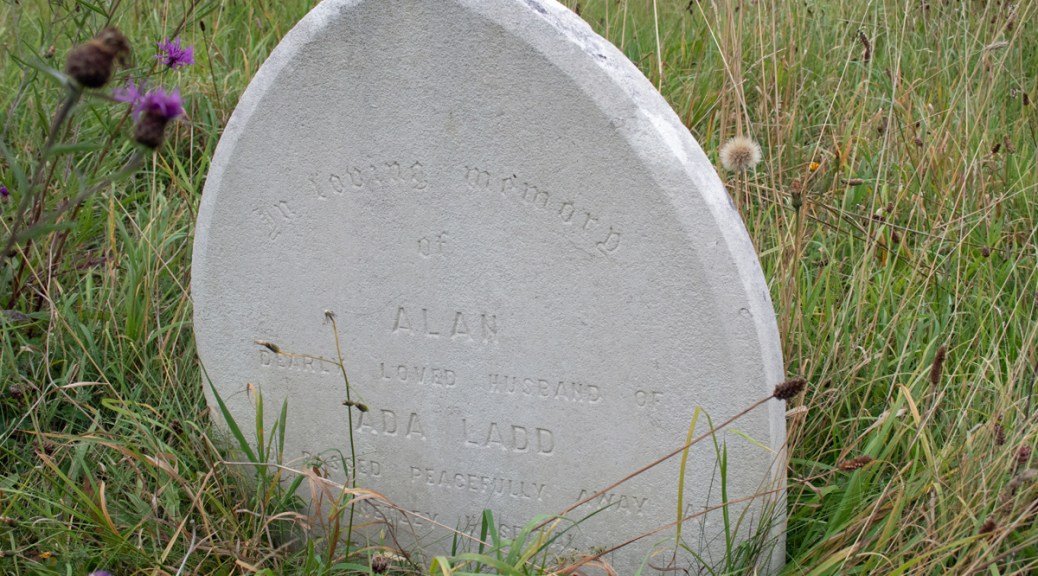
Alan Ladd was born in the summer of 1893, and was one of twins. His parents were plumber and gas fitter George Ladd and his wife Mary Ann, who was a midwife. The couple had eight children altogether, of whom Alan and his twin Arthur were the youngest.
George had been born in Exeter, Devon, and Mary Ann in Somerset, which is where they initially based their family. By 1887, however, they had moved to Berkshire, and were living in Knowl Hill, near Maidenhead, when their youngest four children were born.
The 1911 census found the family living in Dunster, Somerset, where everyone seemed to be bringing in a wage. George and Mary Ann had four of their children living with them, who were employed as an engine driver, grocer, baker’s apprentice and, in Alan’s case, a tailor’s apprentice.
War broke out in 1914, and, in November 1915, Alan enlisted. He joined the Royal Army Service Corps as a Private, and his enlistment papers showed he stood 5ft 5ins (1.65m) tall, and weighed in at 130lbs (59kg). He was stationed at the Corps’ Remount Department in Swaythling, Southampton and thus his military service was completed on the Home Front.
Shortly after enlisting, on 16th April 1916, Alan married Ada Westlake. She lived in the village of Long Sutton, near Langport in Somerset, and the couple married at the Wesleyan Methodist Chapel in Somerton. They do not appear to have gone on to have any children.
Further details of Private Ladd’s life are scant. What can be determined is that he was admitted to Netley Hospital in Southampton on 11th October 1918, having had symptoms of pneumonia for a few days. Sadly, his condition worsened, and Alan passed away just three days later, on 14th October 1918. He was just 25 years of age.
Alan Ladd was brought back to Long Sutton for burial. The war may have led him and Ada to adopt more of a Quaker way of life, as he lies at rest in the Friends Burial Ground on the outskirts of the town.
Fred Ford was born in the Wiltshire town of Mere in 1877. One of eight children to John and Charlotte, his father was an agricultural labourer from the village.
When he left school, Fred initially found work as an errand boy; he soon moved into labouring and, by the time of the 1901 census, was employed as a bricklayer.
In 1904, Fred married Florence Phillips; she was the daughter of an agricultural labour from Somerset. Fred, by this time, had found work as a coal miner in the county, and the young couple set up home in the village of Babington, near Frome. They went on to have four children.
Conflict was on the horizon and, while full details of his military service are not available, it’s clear that he enlisted as soon as he was able to, almost as was was declared. Gunner Ford joined the Royal Field Artillery, and was assigned to the 108th Brigade of the regiment’s Ammunition Corps.
Initially based in Taunton, Fred was soon moved to Portsmouth and then Worthing, and it was here, in the first winter of the war, that he contracted influenza and pneumonia. Admitted to St Cecil’s Red Cross Military Hospital in the Sussex town, sadly the condition proved too much for him. He passed away on 8th February 1915, tragically hours before Florence arrived from Somerset. Gunner Ford was just 37 years old.
Finances not enabling her to transport his remains back home, Florence Ford laid Fred’s body to rest in Broadwater Cemetery in Worthing, the town where he died.
William Thomas Cole was born in the spring of 1897, the youngest of three children to John and Caroline Cole. John was a bank cashier from Gillingham in Dorset, while Caroline was born in Battersea, London. By the time of William’s birth, however, the young family had settled in the Dorset town of Blandford.
John was a man with ambitions for himself and his family. The 1911 census records him and Caroline living in Axbridge in Somerset, where he was now a bank manager. William, meanwhile, was a student in Wareham, Dorset, and was lodging at a boarding house in the town.
There is little documented about William’s military service. His gravestone confirms that he had originally enlisted in the Dorsetshire Regiment, but had subsequently joined the Royal Air Force, when it was formed in April 1918. By the time of his death, he had reached the rank of Lieutenant, so it would seem that his John’s ambitious nature had rubbed off on his only son.
William’s death was reported in a number of contemporary newspapers:
Lieutenant WT Cole and First Air Mechanic H Keates were killed while flying in South Essex last night. They were both in the same machine, which nose-dived and crashed into the ground. Cole’s home is at Shaftesbury, Dorset, and Keates’ at West Wood Grove, Leek, Staffordshire.
Dundee Evening Telegraph: Thursday 24th October 1918
Lieutenant Cole was flying in Hornchurch, Essex, and was in an Avro 504K bi-plane. He was just 21 years old when he died on 23rd October 1918. There is little further information about the accident, but highlighting the real danger in aviation at the time, this was one of eight fatal plane crashes across the UK that day alone.
The body of William Thomas Cole was brought back to Shaftesbury, where his parents were by then living. He was laid to rest in the Holy Trinity Churchyard in the town.
Alfred Fear was born towards the end of 1898, the youngest of nine children to Charles and Eliza Fear. Charles was a mason from Weston-super-Mare in Somerset, who raised his family in the town of his birth.
Sadly, given his youth, there is little documented about Alfred’s early life. He was still at school at the time of the 1911 census and, while he would have found some sort of employment after leaving, there is no record of what that would have been.
Alfred’s military service records are also sparse. He enlisted in the Royal Field Artillery and was assigned the role of Driver in the 321st Brigade. While dates cannot be confirmed, he would have enlisted before the spring of 1918.
The next two documents relating to Driver Fear are his Pension Ledger record and the Army Register of Personal Effects. These confirms that he passed away on 22nd October 1918 at the Norfolk War Hospital. The cause of death given was infirmation of the brain, (or possibly inflammation of the brain). He was just 20 years old.
Alfred Fear’s body was brought back to Weston-super-Mare for burial. He lies at rest in the town’s Milton Cemetery.
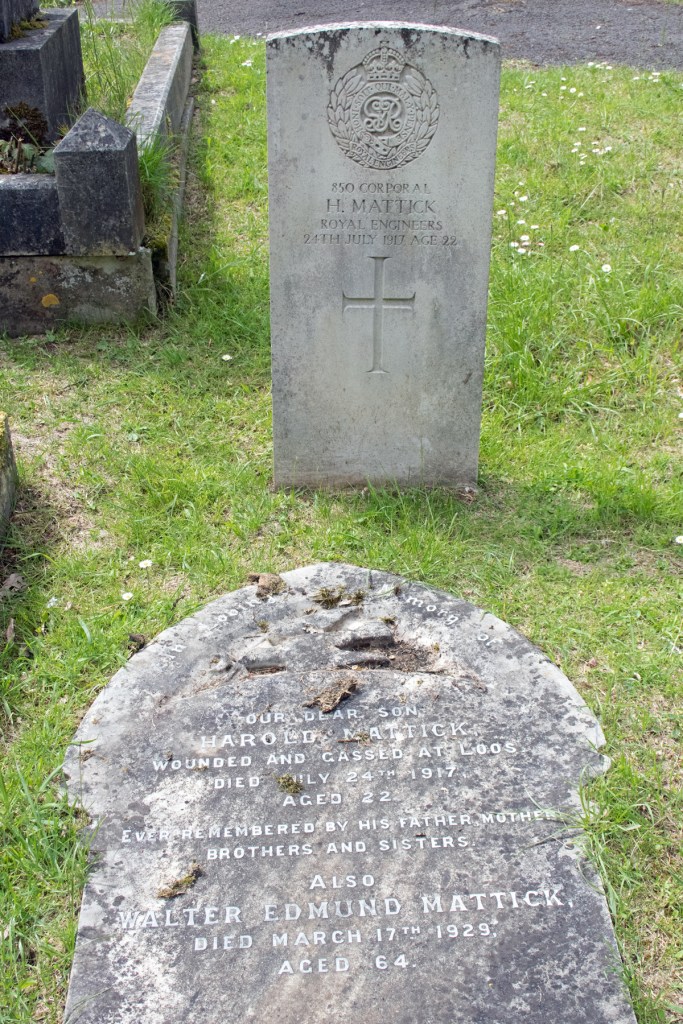
Harold Mattick was born in the spring of 1895, the youngest of four children to Walter and Augusta. Walter was a harness maker and brought the family up in his home town of Weston-super-Mare, Somerset.
When he left school, Harold found work as a plumber. He seemed to had sought a life of adventure, however, and, in 1908, aged just 14, enlisted in the Wessex Division of the Royal Engineers as a Bugler. He served for five years, fulfilling his duties at the same time as carrying out his plumbing work.
When war broke out, Harold immediately re-enlisted. As a Sapper, he was assigned to the 1st/2nd (Wessex) Field Company. After initial training, he was sent to the front as part of the British Expeditionary Force just before Christmas in 1914.
Sapper Mattick was caught up in some of the fiercest fighting on the Wester Front, including the First and Second Battles of Ypres. On 30th September 1915, at Loos, he received a gunshot wound in his right leg, which fractured his tibia. The Germans were also using gas to attack the Allied front lines, which also affected Harold.
Medically evacuated to England for treatment on 9th October, his condition was such that he was discharged from the army on health grounds six months later, on 30th March 1916.
Sadly, while Harold’s leg healed, the injuries he sustained in the gas attack were too severe for him to recover from. He died at home from a lung condition on 24th July 1917, aged just 22 years old.
Harold Mattick was laid to rest in the Milton Cemetery of his home town, Weston-super-Mare.
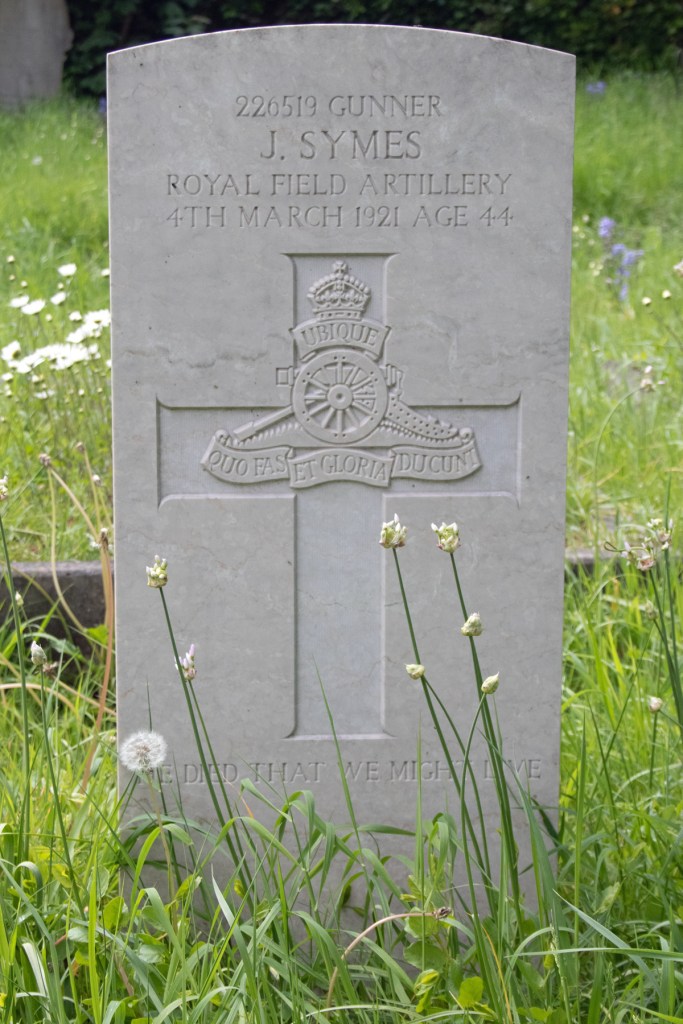
Joseph Symes was born in May 1876, and was the youngest of ten children to Joseph and Caroline Symes. Joseph Sr was a shoemaker who had been born in Shepton Mallet, Somerset, but who had moved to Bristol for work in the late 1860s.
As with some of his older siblings, Joseph Jr followed in his father’s shoemaking footsteps. He worked as a boot clicker, punching the eye holes in footwear, and cutter, taking the shaped pieces out of large leather hides.
In June 1905, he married Emily Delling, who was also from Bristol, and the couple went on to have a son, Douglas, a year later. The couple moved into a two-up-two-down terraced house in a cul-de-sac to the north east of the city centre.
War was coming to the British Isles. Full details of Joseph’s military service no longer exist; however, his gravestone confirms that he enlisted in the Royal Field Artillery.
There is no documentation to confirm whether Gunner Symes saw active service abroad; he certainly survived the war, but in February 1919 was discharged on medical grounds, suffering from myalgia. He was granted a pension, and the family soon replaced the busy city life for a quieter one down the coast in Weston-super-Mare.
Joseph’s trail goes cold for a couple of years, and he passed away on 4th March 1921, at the age of 44 years old. Sadly, there is nothing to confirm the cause of his death; it seems likely that his ongoing medical condition got the better of him.
Joseph Symes was laid to rest in the Milton Cemetery in Weston-super-Mare.
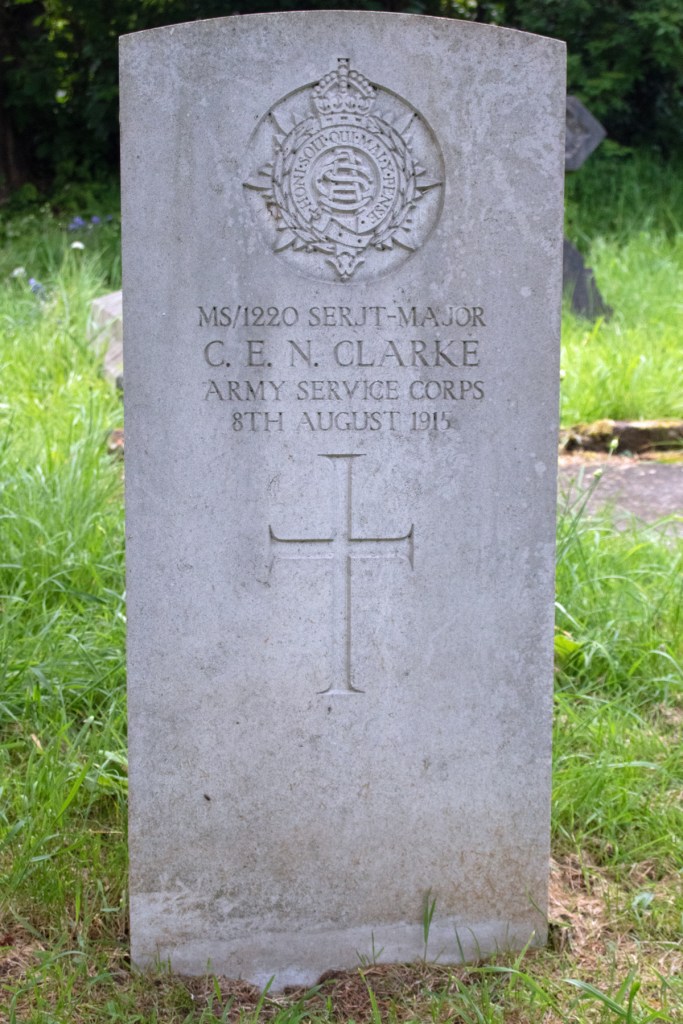
Charles Edward Nesbit Clarke was born in December 1884, the son of Ralph Clarke. Sadly, there is little documentation to flesh out his early life. He had at least one sibling, a sister called Nellie, and was born in London, possibly in Hampstead.
Charles seemed to have been mechanically minded; when he left school, he found work with a motor vehicle fitter, before going on to get employment as an electrical engineer.
He met a woman called Elizabeth Bertha Gould, and the couple married in Islington in November 1908. Four years later, the couple had a child, Edward. The boy’s baptism record shows that the family were living in the St John’s Road Workhouse in Islington, so things seemed to have been really tough for them. (There are no other workhouse records available, so it may be that it was a temporary residence, while Edward was born, but this cannot be confirmed either way.)
The Great War broke out, and Charles enlisted straight away. He had found employment as aforeman fitter by this point, and joined the Army Service Corps, in the Motor Transport Division. He was sent to France a week later, as part of the British Expeditionary Force, and served there for seven months.
When he returned to England, having gained the 1914 Star and the British and Victory Medals for his service, he was assigned to the military camp at Burnham-on-Sea, Somerset.
Five months later, a local newspaper picked up the sorry story of what happened next.
At Weston-super-Mare Hospital… Dr S Craddock held an inquest on the body of Staff Sergeant Major Charles Clark [sic], Army Service Corps, who was admitted to that institution suffering from a mortal and self-inflicted wound received at the Burnham military camp on Sunday morning.
Captain Budibent deposed that at the time the deceased was detained in camp as the result of having been absent from duty for four days without leave. On hearing of his return, witness (who liked the man and recognised his great value, having served with him in France) went to the tent to see him. Deceased was very upset, and in reply to a question said “I can’t account for staying away; I must have been mad.” Witness tried to cheer him up, reminding him that is was not “a hanging matter”, to which Clark replied “No, sir, I wish it was.” When they were in France together Clark confided to witness that a girl who once lived with him desired him to marry her on his returning from the Front, but he stated that he could not do so, as he loved another girl. As he was depressed, witness advised him on returning home to see the girl who considered she had a claim upon him, and, if it were a matter of money, to settle it, and then marry the other girl. On later returning to the Front from England, deceased said his troubles were over, that he had married the other girl, and that he could now do his work with a good heart. Witness, however, believed other troubles had arisen.
Sergeant Belt, ASC, said he had slept in the same tent with the deceased. Clark had a good night, but next morning became very depressed over the fact that half the Company were leaving the came for another destination, and would be losing close friends. He remarked “The last hour has been the worst in my life.” Later, when outside the tent, witness heard a rifle shot and, rushing in, found Clark lying in bed with a rifle wound in his chest. Deceased admitted that he had fired the rifle himself. Death occurred in Weston Hospital, whither he was removed the same night. The medical evidence revealed terrible internal injuries, the bullet having practically severed deceased’s liver.
The jury returned a verdict that Clark committed suicide while temporarily insane.
Taunton Courier & Western Advertiser: Wednesday 18th August 1915
The report, particularly Captain Budibent’s comments, raises some questions. By the time of the First World War, Charles was married to Bertha. There is no record of him having married anyone else, so where the girl he loved, and the other who loved him came into it, it is impossible to say.
Sergeant Major Clarke had taken his own life at the age of just 31 years old. Bertha and their son were living in Chatham, Kent, at the time, and it seems likely that the cost of moving him closer to home may have ruled that out.
Charles Edward Nesbit Clarke’s body was buried instead in the Milton Cemetery in Weston-super-Mare.





 Death and Service