Category Archives: Royal Army Service Corps

Private Reginald Bainton

Private Reginald Bainton

Reginald Thomas Bainton was born in Bath, Somerset, in the spring of 1889. The second of five children, his parents were bakers and confectioners Thomas and Mary Bainton.

While Reginald’s older brother Robert followed in his father’s trade, the 1911 census recorded that he had followed a different route, and was working as a hairdresser and tobacconist.

On Christmas Day 1913, Reginald married Henrietta Skinner, who was the daughter of a farmer. The couple went on to have a son, Reginald, who was born in July 1916.

War was, by this point, raging across Europe, and Reginald stepped up to play his part for King and Country. He enlisted in the autumn of 1916, and was assigned to the Royal Army Service Corps. Initially stationed in London, he moved to a camp near Reading, Berkshire, in March 1917.

One evening towards the end of that month, tragedy occurred.

[Private Bainton] was missing from his company, and when his service cap was found on the banks of the Thames there were fears that the worst had befallen him. On receipt of the news of his disappearance his wife proceeded to Reading in the hope of getting some information respecting him, and she remained there until the discovery of the body in the Thames on Monday. During the short period he was in the Reading camp, Private Bainton acted as the storekeeper.

At the inquest… the much-decomposed body was identified by [Reginald’s] father, and medical evidence was given that it had probably been in the water for three weeks to it is highly probable that Private Bainton was drowned on the first day he was mussed. There was not the slightest evidence as to how he got into the river, and the jury returned a verdict of “Found drowned”.

Bath Chronicle and Weekly Gazette: Saturday 28th April 1917

The date of Private Bainton’s death was recorded as 23rd April 1917 – the day he was found. He was 27 years of age.

Reginald Thomas Bainton’s body was brought back to Somerset for burial. He was laid to rest in St James’ Cemetery in his home city of Bath.


Private George Hutchings

Private George Hutchings

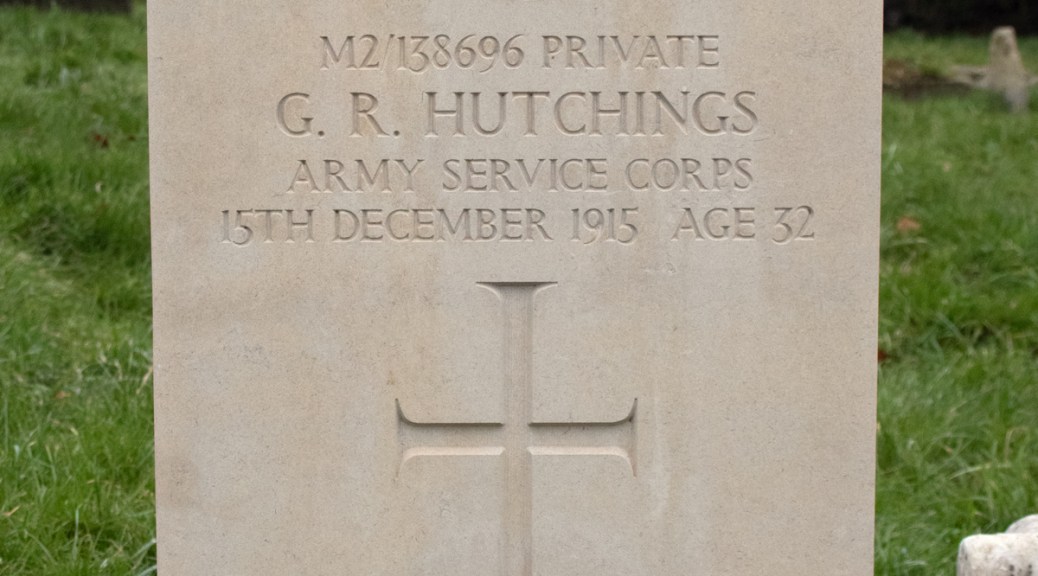
George Robert Hutchings was born towards the end of 1883 in Forest Gate, Essex. He was the oldest of four children to George and Mary Ann Hutchings. George Sr was a labourer for the railways, and this led to the family relocating to Swindon, Wiltshire, in the 1890s.

George Jr took up work with the Great Western Railway when he left school, while his father switched employment and, by the time of the 1911 census, he was working as a collector for a clothing supply company.

On 13th July 1911, George Jr married Daisy Smale in the Sanford Street Congregational Church, Swindon. Daisy was a school teacher, and was the daughter of an iron moulder. It is likely that the couple met through George’s workplace. The newlyweds had a son, Raymond, who was born in 1914 and, at some point moved to Bath in Somerset.

When war came to Europe, George stepped up to play his part. He enlisted in the Royal Army Service Corps and, unsurprisingly, given the work he was doing, was assigned to the Mechanical Transport division. Little information about his military service remains, but is it clear that he had enlisted in the second half of 1915.

The next available record for Private Hutchings is that of his passing. He had been admitted to the Royal Herbert Hospital in Woolwich, South East London, and died there on 15th December 1915. No cause for his death is evident, but he was 32 years of age.

George Robert Hutchings was brought back to Somerset for burial. He was laid to rest in Bath’s St James Cemetery.


When her husband died, Daisy was pregnant. In March 1916 she gave birth to a daughter, Winifred, who was never to know her father.

Daisy never remarried. By the time of the 1939 register, she was living in Northampton Street, Bath, sharing the house with a Mr and Mrs Spreadbury. Her employment was listed as unpaid domestic duties.

Daisy and George’s son Raymond was focused on his education. He made an eventual move to Birmingham, where, at the outbreak of war, he was working as a research chemist. He died in Bath in 1982, at the age of 68.

Winifred married grocer Kenneth Batten in Bath in 1938. The couple had three children and emigrated to Australia after the war, and settled in Coffs Harbour, New South Wales. Kenneth died in 1988, at the age of 72; Winifred died in 2003, aged 87.


Private Sydney Ridewood

Private Sydney Ridewood

Sydney Ridewood was born in Bath, Somerset, on 31st March 1891, and was one of eleven children. His parents were labourer and sometime butcher James Ridewood and his wife Mary.

When Sydney left school, he found work as a baker, although this seems to have been as piecemeal a job as his father’s.

In January 1910, Sydney married Kathleen Scudamore. She was the daughter of a carpenter from the Twerton area of Bath and had a bit of a chequered background herself.

On 10th June 1896, Kathleen had married Edward Edwards, who was twelve years older than her seventeen years. Their marriage certificate suggested he was a clerk, although the 1901 census – which included their two children, Charles and Percy – recorded him as being a draper’s porter. Beyond that document, there is no record of Kathleen’s husband and, by the time of her marriage to Sydney, she had reverted to her maiden name.

By the time of the 1911 census Sydney and Kathleen were living in central Bath, with their nine-month old daughter, Olive, and Kathleen’s two sons. Kathleen’s widowed father, Edmund, her brother Claude and sister-in-law Nora were also in the household.

The document recorded Sydney as still employed as a journeyman baker, while his wife was a cook for the Post Office. Edmund was working as a carpenter, Claude was a sawyer, Nora a shop assistant and 14-year old Charles was a messenger boy, also for the Post Office. Six pay cheques coming in to support the extended family in the four-roomed house.

An additional member of the Ridewood family came along on 22nd October 1913, when Kathleen gave birth to a second child, Sydney Jr.

War was on the horizon by this point, and, on 20th April 1915, Sydney stepped up to play his part. He enlisted in the Royal Service Corps, and was assigned to the Mechanical Transport Corps. There is little detail about Private Ridewood’s service, although his records show that he was 5ft 3ins (1.6m) tall, with auburn hair, brown eyes and a fresh complexion.

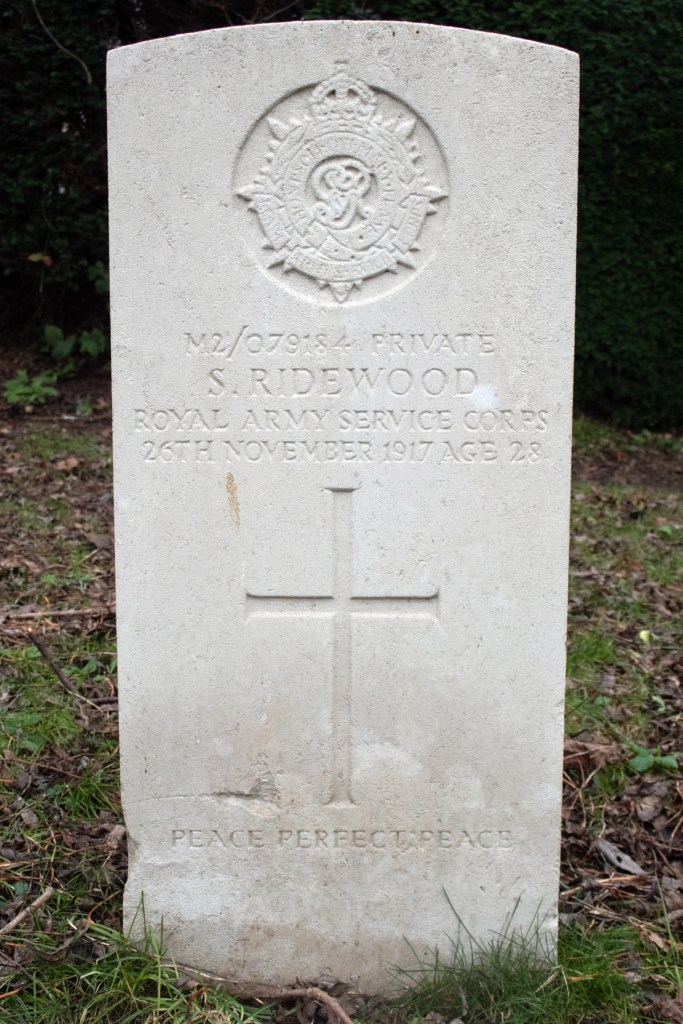
Sydney was sent to France a month after enlisting, and his may role seems to have been that of a driver. He remained on the Western Front for a little over two years, before contracting pleurisy. He was initially treated in France, but soon returned to Britain to recuperate. The lung condition, however, was to get the better of him, and he passed away at home on 26th November 1917, weeks before he was to be medically discharged from service. He was just 28 years of age.

Sydney Ridewood was laid to rest in St James’ Cemetery, a few minutes’ walk from his family home.


Air Mechanic 3rd Class William Mells

Air Mechanic 3rd Class William Mells

William John Mells was born in Southwark, Surrey, on 13th November 1873. His parents were Thomas and Elizabeth Mells, although much of his early life is lost to time.

The 1891 census found the 19-year-old William as one of four boarders living with the Skinner family in Peckham, Surrey, where he was working as a shoe maker. By the turn of the century, however, he had changes jobs, and was employed as an advertising contractor, possibly fixing signs to walls across the country.

It was while William was working in Somerset when he met Ethel Pryor. She was the daughter of a caterer, born and bred in Somerset. On 16th August 1903, the couple married at Ethel’s parish church in Bath. They set up home in a small cottage on King Edward Road in the city, and went on to have two children, Edith, who was born in 1904, and John, who was born the following year.

Storm clouds were brewing across Europe at this point, and William was called upon to play his part in the autumn of 1918. He had previously served as part of the Army Service Corps Volunteers, and had reached the rank of Lance Corporal. When his time to actively serve King and Country came, however, he chose the fledgling Royal Air Force and, on 24th October 1918, joined them as an Air Mechanic 3rd Class.

William was sent to Blandford Forum, Dorset, for training. While here, in packed and busy billets, he contracted influenza, which developed into pneumonia. He passed away from the conditions at the camp hospital on 3rd November 1918, ten days short of his 45th birthday, eight days before the end of the conflict and after just ten days’ service.

William John Mells’ body was brought back to Somerset for burial. He was laid to rest in the city’s St James’ Cemetery, and was joined by his widow, when she passed away in 1955.


The Commonwealth War Graves Commission headstone and website gives Air Mechanic Mells’ name as John William, but all other records – including censuses, marriage document and service records – confirm his name as William John Mells.


Serjeant John Carthew

Serjeant John Carthew

John Wallace Carthew was born in Warminster, Wiltshire, in the spring of 1892. The second youngest of seven children – three of whom did not survive childhood – his parents were miller James Carthew and his tailoress wife, Sarah.

John was destined to make a path for himself. By the time of the 1911 census, he was boarding with the Southon family in Aldershot, and working as a chauffeur.

On 22nd March 1914, John married Caroline Hamilton, a parlour maid for Captain Charles Woodroffe and his family in Aldershot. The couple set up home in Queensgate Mews, London, and having had a daughter, Cecilia, who was born that February.

When war came to Europe, John was quick to enlist. He joined up on the 21st December 1914, and was assigned to the Mechanical Transport section of the Royal Army Service Corps. His service records note that he was 6ft 1in (1.85m) tall, with a scar on his right eyebrow.

Private Carthew rose through the ranks, becoming a Corporal in 1916, and a Serjeant in 1918. During this time he acted almost exclusively as chauffeur to General Sir William Robertson. His duties were mainly based on home soil, but he did spend a year in France, while Robertson was Chief of the General Staff there.

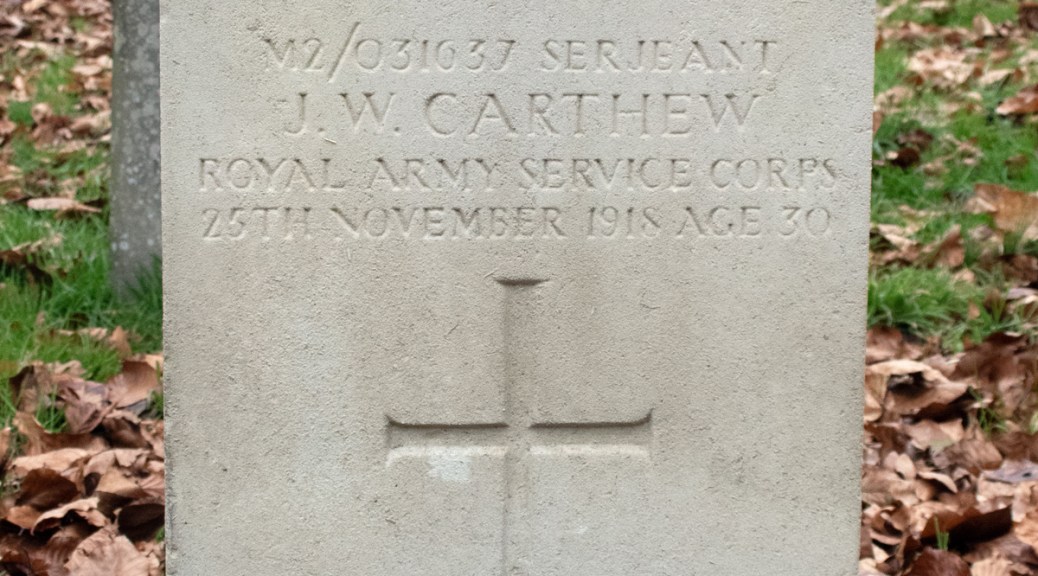
As the war came to a close, Serjeant Carthew fell ill. Based in a camp in Aldershot, he contracted influenza, and this developed into pneumonia. This was to take his life, and he passed away at the town’s Connaught Hospital on 25th November 1918. He was just 26 years of age.

Caroline was living in Bath, Somerset by this point, and this is where the body of her husband was brought for burial. John Wallace Carthew was laid to rest in St James’ Cemetery, in the family plot where his father, who had died in 1911, was also buried.


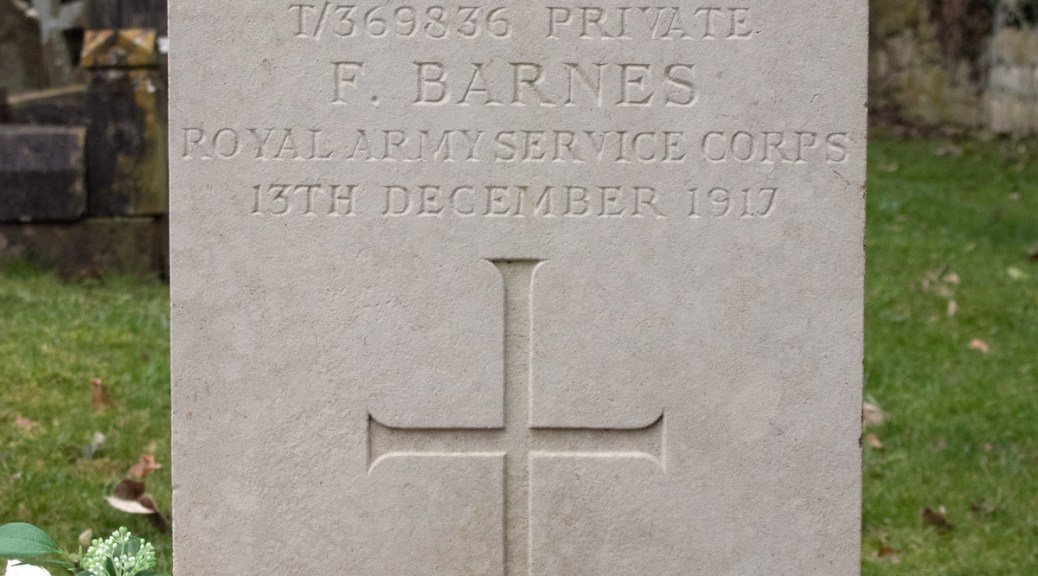
Private Francis Barnes

Private Francis Barnes

The life of Francis – Frank – Barnes is destined to remain a mystery and, indeed, the majority of the information comes from his headstone and one document, the British Army Register of Soldiers’ Effects.

Frank’s headstone confirms that he was a Private in the Royal Army Service Corps, and that he died on 13th December 1917, though the cause of his passing is unknown. He is buried in Bath Roman Catholic Cemetery, so this also sheds light on his religion.

The British Army Register of Soldiers’ Effects suggests that he was also known as Frank McBarnes, although no further information comes to light with this alternative surname. The document confirms that he died in Bath War Hospital, and that his dependents were not eligible for a war gratuity, which suggests that he enlisted after June 1917.

Five dependents are highlighted on the record – Frank’s siblings Sabrina, Elizabeth, Margaret, Patrick and Thomas. This would suggest that both of their parents were dead by the time Frank himself passed away. Sadly, a combined search of the siblings doesn’t shed any light on their background, despite married names being given for Sabrina and Margaret, and an alternative surname – McManus – being provided for Thomas.

Some lives are not meant to be uncovered, and that of Frank Barnes, at rest in a peaceful Somerset cemetery, took everything to his grave.


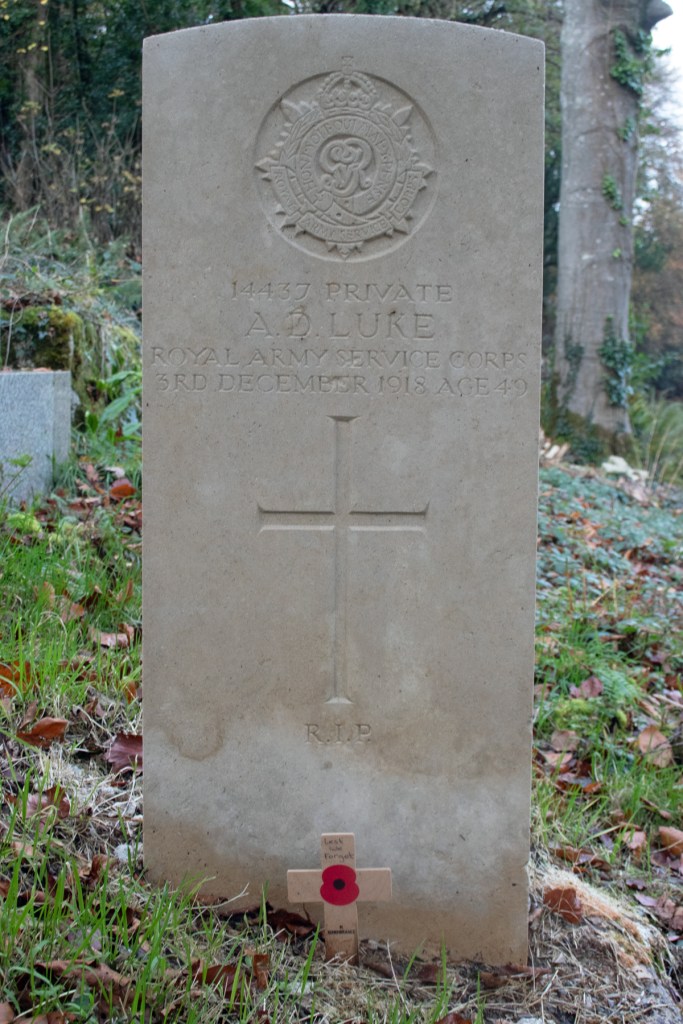
Private Alfred Luke

Private Alfred Luke

Alfred Docking Luke was born in 1869 in the village of St Breock, near Wadebridge, Cornwall. One of thirteen children, his parents were William and Selina Luke. William was a general labourer, and this is a trade into which Alfred followed.

Alfred wanted bigger and better things, however, and, on 27th September 1893, he enlisted in the Royal Garrison Artillery. Gunner Luke’s service records show that he was 5ft 9ins (1.75m) tall, and weighed 146lbs (66kg). He was noted as having blue eyes, brown hair and a fresh complexion. The record also noted a number of tattoos: a cross and a square and compass on his left forearm, the letters AL on the back of his left hand and rings on his middle and little fingers of the same hand.

Initially enlisting for seven years’ service, Alfred soon found himself sent to India. He served his whole time there, and it appears not to have been without incident. He was noted as having sustained a fractured skull on 2nd October 1896, although there is no further detail on the injury.

When Gunner Luke’s initial term of service came to an end, he elected to remain on active duty and, in the end, remained in India until December 1905, before returning home to be demobbed.

Back in Cornwall, Alfred built his life again. He found more labouring work, this time in a manure store in Wadebridge, and married the recently widowed Bessie Williams. She had two children, and the family set up home together.

A sense of duty, or a love of the army life, remained in Alfred’s heart, however and, when war was declared, he was keen to play his part again. He enlisted in the Royal Army Service Corps in July 1915, and, despite being 45 years old by this point, he soon found himself in Northern France.

Private Luke spent the next three years supporting the lines on the Western Front, but by the autumn of 1918, life was taking its toll on him. On 8th November 1918 he was admitted to a camp hospital, having contracted influenza. Tests for tuberculosis proved negative, although his breathing was laboured, and he was medically evacuated back to Britain for further treatment.

Admitted to St John’s Hospital in Cheltenham, the medical report makes for some grim reading:

Patient on admission had paralysis of soft palate lulateral and ptosis rt. eye. Tongue slightly pointing to the left. Difficulty in articulation due not only to palatal paralysis but also to apparently labial and dysphagia for fluids and solids. Fluids returned through nose. The symptoms, in short, of bulbar paralysis.

Private Luke’s condition worsened. He passed away the day after being admitted, on 3rd December 1918. He was 49 years of age.

Alfred Docking Luke’s body was brought back to Cornwall for burial. He was laid to rest in the peaceful, wooded graveyard of St Breoke’s Church in his home village.


St Breoke’s was the family church, and the Luke family were to be reunited again. Alfred’s mother Selina passed away a month after her son, at the age of 68; his father William followed in May 1919, at the age of 78.


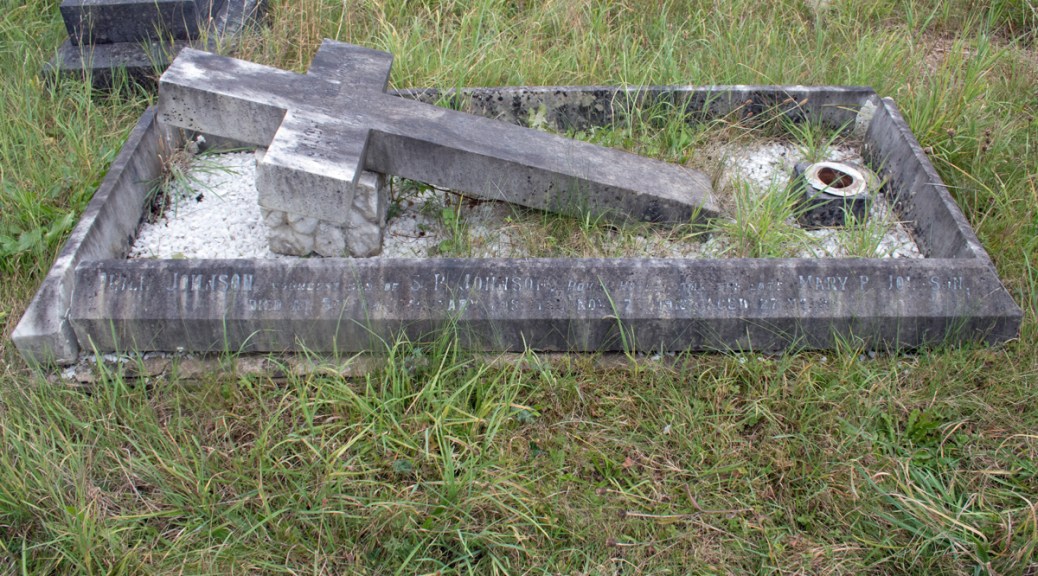
Private Philip Johnson

Private Philip Johnson

Philip Johnson was born in the summer of 1891 in Wrexham, Denbighshire. One of eight children his parents were Samuel and Mary Johnson. Samuel was a wine merchant from Scotland, while Mary had been born in Cheshire. When Philip was born the family were living and running the town’s Lion House inn on the High Street.

Mary died in 1897 and, in 1909 Samuel moved his family on. He bought the Royal Hotel in Llangollen, which occupied a large plot on the riverside, and which included a large garden.

The Royal Hotel was a busy business: to look after the guests, there were eleven members of staff living in. This was to be a Johnson family business, however, with Philip’s older sibling Elizabeth managing the hotel with her father, his brother Samuel Jr assisting, his sister Ethel acting as bookkeeper and Philip himself managing the bar.

In the spring of 1914, Philip married Elizabeth Kelsall, whose family ran the Eivion Hotel, down the road from The Royal. The couple set up home in the town – possibly even still living at Samuel’s hotel – and had two children.

When war came to Europe, Philip stepped up to play his part. Sadly, full details of his military service are lost to time, although it is clear from other documents that he had enlisted in the Royal Army Service Corps.

For The Royal Hotel, this was a challenging time. By December 1916, two of Samuel’s sons – including Philip – were away on service, as were nine of the hotel’s seventeen staff. Samuel applied for Samuel Jr’s exemption from war service on the basis that he was the hotel’s manager, but this was refused. A year later, he applied for another of the hotel’s servant’s, an Evan Edwards, exemption, but again this was refused.

Philip, meanwhile, was attached to the 728th Coy of the Motor Transport section of the Royal Army Service Corps. His troop served the RE Signal Service Training Centre, but it is unclear whether he saw any action overseas. By the end of the war, however, he was based in Hitchin, Hertfordshire.

With winter closing in, illness became rife in the cramped condition of army barracks. Private Johnson contracted pneumonia, and was admitted to the Bedford Military Hospital, not far from where he was based. Sadly, the lung condition was to get the better of him, and he succumbed to it, passing away on 7th November 1918, aged just 27 years old.

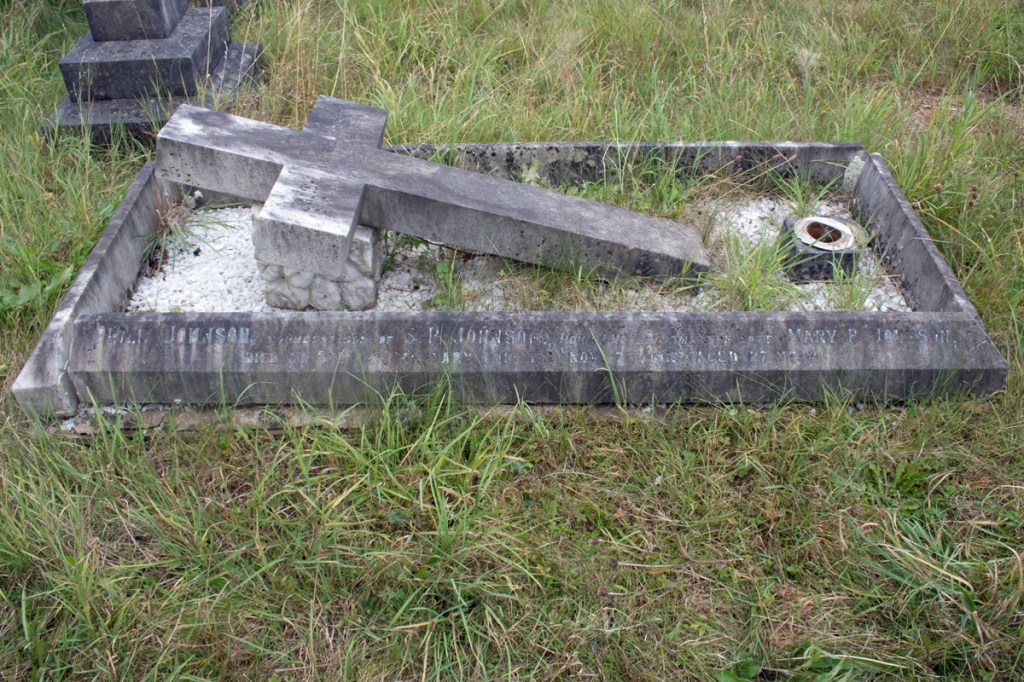
Philip Johnson’s body was brought back to Wales for burial. He was laid to rest in a family plot in the graveyard of St John’s Church in his adopted home town of Llangollen.


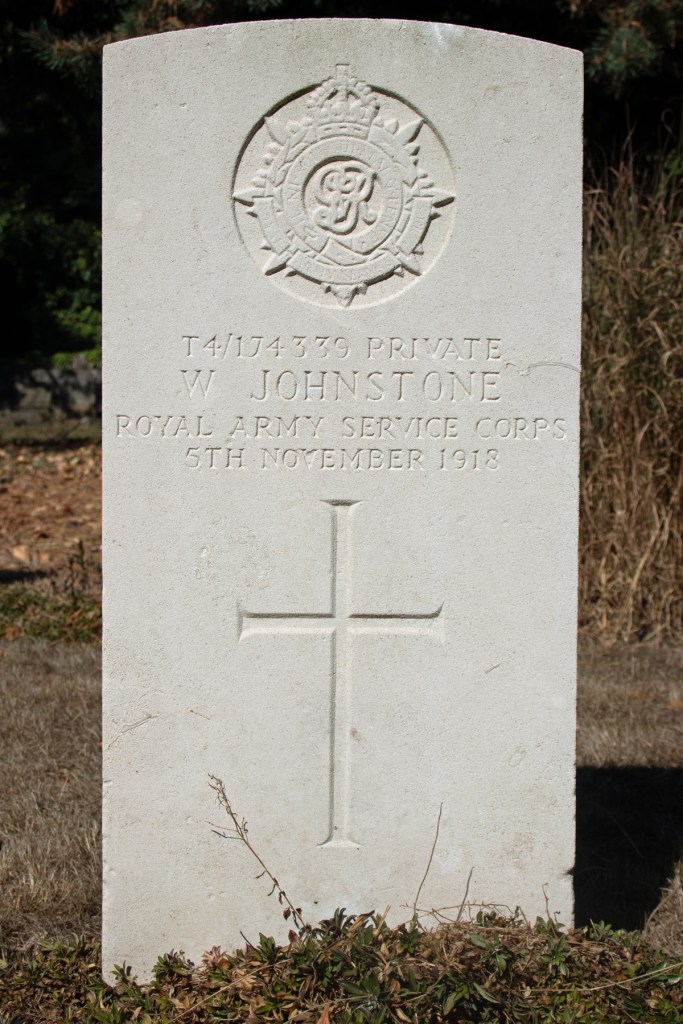
Private William Johnstone

Private William Johnstone

In the First World War section of St Peter and St Paul’s Churchyard in Aylesford, Kent, is a headstone dedicated to T4/174339 Private W Johnstone of the Royal Army Service Corps. Little other immediate information is apparent, and there are no military records available based on his service number.

The Commonwealth War Graves Commission website confirms that Private Johnstone transferred across to the 697th Agricultural Coy of the Labour Corps. He was given another service number – 440640 – and this allows access to a few more strands of his life.

Private Johnstone’s first name was William, and he had a dependent, Mrs CM Gunn, who lived at Moss Fall in Linwood, Paisley. The records, however, add a little more confusion to the story – Mrs Gunn is recorded as U/Wife and a guardian is also noted: Mrs Catherine McDree.

The waters are muddied further by the Army Register of Soldiers’ Effects. While this confirms that William had enlisted by the spring of 1918, it also highlights that his effects and war gratuity were not actually claimed.

With no date of birth for William, it is impossible to narrow down any further details of his early life: there are too many combinations of William and Catherine in the Paisley area to be able to identify them with any confidence.

The only thing that can be confirmed is that Private William Johnstone died from a combination of influenza and pneumonia on 5th November 1918, at the Preston Hall Military Hospital in Aylesford, Kent. He was buried in the nearby churchyard.


Staff Serjeant Henry Dyer

Staff Serjeant Henry Dyer

Henry Charles Dyer was born in January 1865 in the Devon town of Ivybridge. The oldest of five children, his parents were carpenter James and dressmaker Mary Dyer. When he left school, Henry found work as a cordwainer’s apprentice but, after James died in 1886, he sought out a career that would help support his mother.

Henry enlisted in the Army Service Corps on 10th July 1886 and, by the time of the next census was based at barracks in Woolwich, South London. His service records note that he was 5ft 4.5ins (1.64m) tall and weighed 124lbs (56.25kg). He had a dark hair, grey eyes and a dark complexion. He was also noted as having a tattoo of a cross on his left forearm.

Private Dyer served in the regiment on home soil for more than thirteen years, qualifying as a horse collar maker and saddler during this time and rising through the ranks. He was made a Driver in 1889, Corporal in 1895 and Staff Sergeant in October 1899.

Trouble was afoot on the other side of the world by this time and his promotion was linked to Henry being sent to South Africa. He was there for eighteen months, and was awarded the Queen’s South Africa Medal, as well as clasps for service at Tugela Heights, the Relief of Ladysmith, Laing’s Nek, Transvaal and Orange Free State.

Staff Sergeant Dyer went back to Britain in April 1901, where he remained for a further six years. On 4th July 1907, reached the end of his term of service and having completed 21 years with the Army Service Corps he returned to civilian life.

Henry moved back to Devon, moving back in with his mother and younger brother. Mary had remarried after James passed, but her second husband had also passed away, and so having two of her sons home would have been of comfort to her. The 1911 census records the family as living in three rooms of a house in Grenville Street, Plymouth. They shared the property with the Smith family, a husband, wife and two children. Henry was recorded as an army pensioner (saddler), while his brother Ernest was listed as being a watchmaker, while also in the army reserve.

War was on the horizon again, and, Henry was one of the first to step up when it was declared. He was 49 years old by this point, and so technically exempt from enlisting, but as an army life had served him well before, it must have seemed fit for him to serve King and Country once more.

Staff Sergeant Dyer’s new service records noted that he was formally employed as a saddler, and that he had put on 18lbs (8kg) since he initially signed up.

Henry was based firmly on home soil this time round, and while he was initially based in Aldershot, Hampshire, he seems to have been moved to barracks in Kent. He served for more than two and a half years, but his health seems to have been suffering by this point. At a medical on 24th July 1917, he was deemed to be no longer fit enough for war service and was discharged from the army.

It is likely that this discharge came while he was admitted to the Preston Hall Military Hospital in Aylesford. While Staff Sergeant Dyer’s earlier military service is fairly detailed, his later career is not. What is clear is that, four days after being discharged, he passed away. He was, by this time, 52 years of age.

A lack of funds may have prevented Mary from bringing her son home to Devon. Instead Henry Charles Dyer was laid to rest in the graveyard of St Peter and St Pauls Church in Aylesford, not far from the Kent hospital in which he passed.