Tag Archives: 1915

Private James Williamson

Private James Williamson

In amongst the rows of naval headstones in the Woodlands Cemetery in Gillingham, Kent, is one dedicated to James Williamson, a Private in the Royal Marine Light Infantry. He was killed in action on 27th May 1915, while attached to the ship HMS Princess Irene, and was 32 years of age when he passed.

There is little specific documentation relating to Private Williamson’s life, but what remains allows us to piece together something of the man he was.

James was born in the Dennistoun area of Glasgow in around 1883, and was one of five children to William and Jane Williamson. When he finished his schooling, he seems to have had a pull to the sea: whether this was because he was following in his father’s footsteps, or because of his home’s proximity to the river and docks is unclear.

By the time of the 1911 census, James was already serving in the Royal Marines. He was based on the cruiser HMS Philomel, which was in the Gulf of Oman on the day the census was taken, and was one of 19 Royal Marines on board our of a total compliment of 244 crew.

There is little more concrete information about Private Williamson’s life. By the spring of 1915, he had been assigned to the HMS Princess Irene, an ocean liner requisitioned during the war and converted into a mine layer. On 27th May, she was moored off Sheerness in Kent, when a series of explosions ripped her apart. More than 270 crewmen were killed: this included the 32-year-old James.

The crew whose bodies were not able to be identified were laid to rest in a communal grave in Woodlands Cemetery: James Williamson was laid to rest nearby, in a burial of his own.


Interestingly, James’ entry on the Royal Navy and Royal Marines War Graves Roll gives his next of kin as a friend, Miss J Malone of 3 Ashview Terrace, Newton Mearns, near Glasgow. There is no other information about her.


Writer 1st Class Harry Goodger

Writer 1st Class Harry Goodger

Harry Goodger was born on 15th April 1885, the fourth of five children – and the only boy – to George and Emma Goodger. George was a canal labourer from Aylesbury in Buckinghamshire, but by the time of his son’s birth, the family had settled in Tipton, Staffordshire.

Harry was initially committed to education and, by the time of the 1901 census, he was working as a school teacher. His heart seemed set on a career with more prospects, however, and so, on 2nd November 1904, he enlisted in the Royal Navy.

Harry’s service records show that he was 5ft 2ins (1.57m) tall and that he had bark brown hair, dark brown eyes and a fresh complexion. He was also noted as having a mole on his wight upper arm and another on his left breast.

Harry’s rank was Writer 3rd Class, which was the naval equivalent of a clerk. After an initial training period, he was assigned to the cruiser HMS Terrible. Over the next decade, he served on ten further ships, and was based at HMS Victory, the Royal Naval Dockyard in Portsmouth, in between voyages.

Writer Goodger slowly progressed through the ranks during his naval service. On 1st November 1908 he was promoted to Writer 2nd Class, and on 31st October 1912 was raised to Writer 1st Class. Harry seems to have needed extra support, however, and he was knocked back to Writer 2nd Class on 25th April 1913, and sent back to Portsmouth for further training. By 23rd October 1914, however, while serving on HMS Bulwark, he again received a promotion to Writer 1st Class.

By the spring of 1915, Harry had been assigned to HMS Princess Irene. She an ocean liner that has been converted to a minelayer at the start of the war.

On 27th May 1915, while Irene was moored off Sheerness, Kent, a series of explosions ripped through the ship, killing more than 350 crew. Writer Goodger was among those who perished: he was 30 years of age.

The body of Harry Goodger was buried in Woodlands Cemetery, Gillingham, Kent alongside the other victims of the disaster.


Writer 1st Class Harry Goodger
(from findagrave.com)

Harry’s surname is variously spelt Goodger and Goodyer across the documents that trace his life. While his headstone has the latter spelling, I have used Goodger, as this is what is recorded on his naval service records.


Private William Preston

Private William Preston

William Robert Preston was born on 2nd January 1888, and was the oldest of six children to William and Alice Preston. William Sr was a blacksmith from Norwich, Norfolk, and this is where the family were initially raised.

The 1901 census saw a move to Northamptonshire, however, the document confirming that the family were living at Tanner Cottages in the village of Walton.

When he finished his schooling, William Jr found work as a painter’s labourer. However, he sought bigger and better things and, on 5th June 1905, he enlisted in the Royal Marine Light Infantry. His service records show that he was 5ft 6ins (1.67m) tall, with dark brown hair, blue eyes and a fresh complexion. He was also noted as having a number of tattoos on his arms.

Private Preston was sent to barracks in Deal, Kent, for his initial training. He spent the best part of a year there, before being transferred to the Royal Naval Dockyard in Portsmouth, Hampshire, in April 1906. He was given his first ocean-going posting in January 1907, when he joined the crew of the cruiser HMS Terrible.

Over the next eight years, Private Preston served on three further ships, returning to HMS Victory, Portsmouth, in between trips. In March 1915, he was assigned to HMS Princess Irene, an ocean liner converted to a minelayer at the start of the war.

On 27th May 1915, while Irene was moored off Sheerness, Kent, a series of explosions ripped through the ship, killing more than 350 crew. Private Preston was among those who perished, but whose body was identified: he was 27 years of age.

The body of William Robert Preston was buried in Woodlands Cemetery, Gillingham, Kent alongside the other victims of the disaster.


Stoker 2nd Class Samuel Castle

Stoker 2nd Class Samuel Castle

Samuel George Castle was born on 1st November 1896 in Battersea, Surrey. The third of ten children, his parents were Samuel and Louisa Castle. His father was a gas fitter turned blacksmith and, by the time of the 1911 census, Samuel Jr was working as an errand boy for Army & Navy Stores.

When war broke out, Samuel was quick to step up and serve his country. On 6th March 1915, he gave up his job – he was by then employed as an equipment maker – to enlist in the Royal Navy as a Stoker 2nd Class.

George was sent to HMS Pembroke, the dockyard in Chatham, Kent, for his training. His service records show that he was 5ft 4ins (1.62m) tall, with black hair, brown eyes and a fresh complexion.

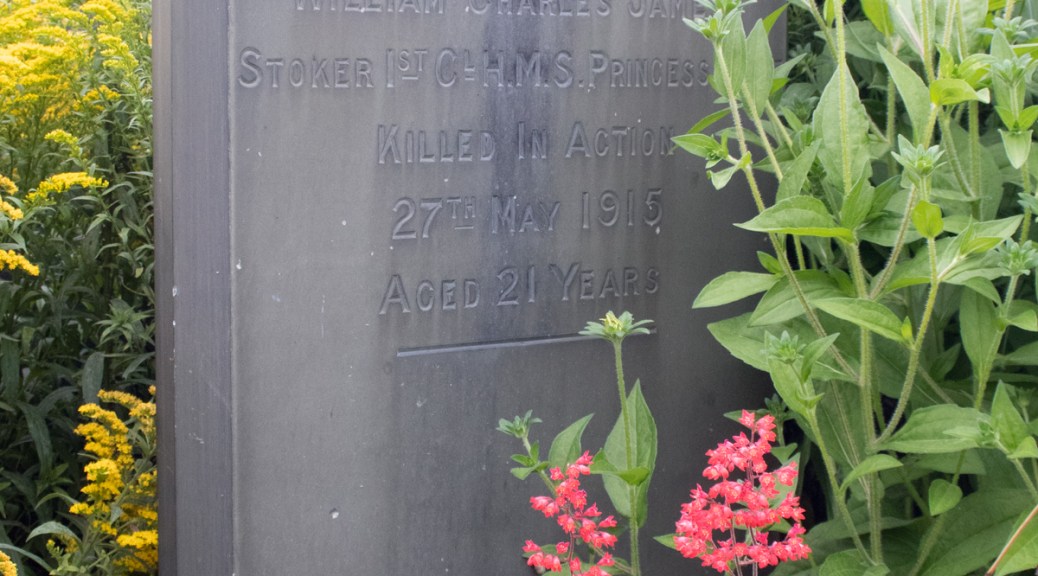
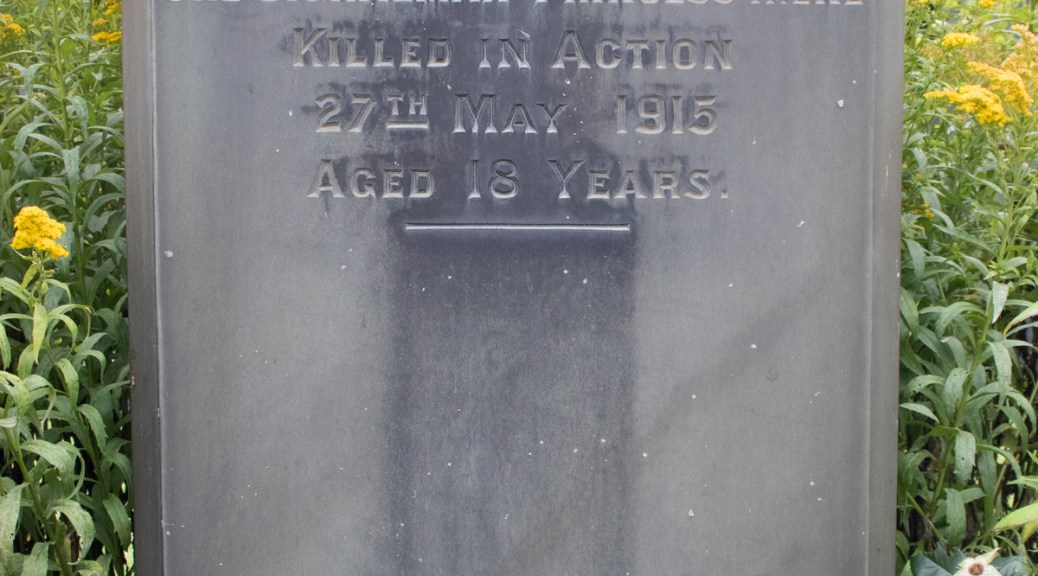
Tragically, Stoker Castle’s time in the navy would not prove a lengthy one. By the end of May he was part of the crew of HMS Princess Irene, an ocean liner that had been put into service as a minelayer when war was declared. On 27th May 1915, a series of explosions ripped through the ship, killing more than 350 crew, Samuel included. He was just 18 years of age.

Samuel George Castle was laid to rest in Woodlands Cemetery, Gillingham, alongside the other victims of the disaster.


Stoker George Marshall

Stoker George Marshall

George Patrick Marshall was born in Dublin, Ireland, on 17th March 1896. One of ten children, his parents were plumber and gasfitter Robert Marshall and his wife, Rachel.

When he finished his schooling, George found work as a messenger. By the time war broke out, however, he was working as a builder’s mate. Keen to play his part and serve his country, he decided to enlist in the Royal Navy.

Stoker 2nd Class Marshall enlisted on 7th March 1915. His service records show a little of the man he had become. He was noted as being 5ft 4ins (1.62m) tall, with brown hair, grey eyes and a fresh complexion. His first trip overseas took him to HMS Pembroke, the Royal Naval Dockyard in Chatham, Kent, where he would receive his training.

Tragically, George’s time in the navy would not prove a lengthy one. By the end of May he was part of the crew of HMS Princess Irene, an ocean liner that had been put into service as a minelayer when war was declared.

On 27th May 1915, a series of explosions ripped through the ship, killing more than 350 crew, Stoker Marshall included. He was just 19 years of age.

George Patrick Marshall was laid to rest in Woodlands Cemetery, Gillingham, alongside the other victims of the disaster.


Fireman Robert McQueen

Fireman Robert McQueen

In amongst the rows of naval headstones in the Woodlands Cemetery, Gillingham, Kent, is one dedicated to Robert McQueen. The inscription notes that he was a Fireman on board HMS Princess Irene, a liner that was conscripted by the Royal Navy as a minelayer during the First World War.

The headstone records that he died during the catastrophic explosion on 27th May 1915 that destroyed the ship, killing more than 300 people in the process. It also confirms that Robert was 23 years old when he died.

Birth records identify at least six Robert McQueens born in 1891/92, and without a place of birth, or parental names, it is not possible to definitively confirm which of these was serving on the Princess Irene on that fateful day. He was in what would become the Merchant Navy: their records are sparser than the Royal Navy equivalents, and none match the man who lies buried in Gillingham.

The life of Robert McQueen, therefore, is destined to remain lost to time, although his sacrifice will never be forgotten.


Signalman Philip Files

Signalman Philip Files

Phillip William Turner Files was born on 13th April 1894 in Walmer, Kent. One of eight children, his parents were George and Annie Files. George was a carpenter at a local colliery, but living so close to the sea, his son was inevitably drawn there. On 25th January 1910, Phillip gave up his life as an errand boy and joined the Royal Navy.

Phillip’s service records show that he was 5ft 4ins (1.62m) tall, with dark brown hair, blue eyes and a fresh complexion. He was just 15 years old when he enlisted, and, as he wasn’t of full age, he was given the rank of Boy 2nd Class. He was initially sent to HMS Ganges, the shore-based establishment in Suffolk for his initial training.

Phillip remained at HMS Ganges for the next year, and was promoted to Boy 1st Class on 5th September 1910. The following January he was moved to the Royal Naval Dockyard in Portsmouth, Hampshire, also known as HMS Victory.

Over the next year, with Victory as his base, Boy Files was sent to serve on three ships – the dreadnought battleship HMS Albermarle, and the cruisers HMS Sappho and HMS Philomel. While on board Philomel, Phillip came of age and, because of his technical abilities, was given the rank of Ordinary Signaller – changing to Signalman when the ranks were updated later in 1912.

Phillip remained on Philomel until October 1913 and, after a brief spell back in Portsmouth, he was transferred to the armoured cruiser, the converted RMS Laconia. She was to be Signalman Files’ base for the next year, when, on 9th March 1915, he was transferred again, this time to HMS Princess Irene.

Princess Irene was a converted liner, requisitioned as a minelayer when war broke out. On 27th May 1915, an explosion ripped through the ship, while moored off Sheerness, Kent. Signalman Files was one of the 352 souls killed. He was just 21 years of age.

Phillip William Turner Files was laid to rest in the Woodlands Cemetery in Gillingham, Kent. His body having been identified, he was given his own grave, unlike those who were buried in a mass grave nearby.


Signalman Files’ headstone spells his first name with one L. However, all the other documents relating to Phillip spell it with two.


Private Joseph Symes

Private Joseph Symes

Joseph Symes was born in the spring of 1871, and was the oldest of four children to William and Sarah. William was a farm labourer from Stoke Abbot in Dorset, and it was here that the family were born and raised. They set up home with Sarah’s parents, and were recorded as living with them in the 1871 census, and with Sarah’s widowed mother in the 1881 record.

William had died by the time the 1891 census return was taken, and Sarah took up work as a mill hand. The document found her living in the village of Netherbury, a few miles to the south east of Stoke Abbott, with her three younger children, William, Alice and Mary Ann. Joseph was noticeable by his absence, but later documents confirm that he had enlisted in the Dorsetshire Regiment by this point, and was likely serving overseas.

Joseph had returned to England by the turn of the century, setting up home back in Netherbury. On 24th September 1910, he married Sarah Jane Dunsbury in Beaminster parish church. The daughter of a blacksmith, she was 13 years Joseph’s senior – 52 years old to his 39. The couple lived in Netherbury, where he was working as a mason’s labourer.

When war broke out, Joseph stepped up to play his part once more. He re-enlisted in the Dorsetshire Regiment on 1st September 1914, and was attached to the 6th Battalion. His service records confirm that he was 5ft 5.5ins (1.66m) tall and weighed 182lbs (82.6kg).

Private Symes remained on home soil during his time in the army. He switched to the 3rd (Reserve) Battalion in March 1915, which was based in and around Weymouth. In the autumn of 1915, he was admitted to the Sidney Hall Military Hospital in the town, suffering from bronchial pneumonia. The lung condition was to prove his undoing, and he passed away on 22nd November 1915, while still admitted. He was 44 years of age.

Joseph Symes was taken back to Netherbury for burial. He was laid to rest in the graveyard of St Mary’s Church in the village.


Captain Francis Leach

Captain Francis Leach

Francis James Leach was born on 27th June 1878 in the Somerset village of Martock. He was the middle of four children to John and Louisa Leach. John was a solicitor who was 17 years older than Louisa, who was his second wife, and by whom he had had two children. The 1881 census found the family living in a house called The Lawn on Church Street, supported by five servants: a nurse, an under-nurse, a cook, a housemaid and a footman.

The next census return, taken in 1891, recorded the family having moved to Seaton in Devon. Louisa was living at 7 West Cliff Terrace with five of the children and a domestic servant. John, however, is not noted on the document, although Louisa is still recorded as married, which would suggest that he had not passed away.

A later newspaper report helps build a picture of Francis’ life growing up:

…Leach was educated at Allhallows School, Honiton, was a thorough sportsman in every sense of the word, a good shot, a keen rider to hounds, a polo player, and cricketer.

[Exeter and Plymouth Gazette: Friday 7th May 1915]

When he finished his schooling, Francis felt drawn to an army career, and the newspaper confirmed his progress:

He served through the Boer War with the R Battery, Royal Horse Artillery, and was present at the relief of Kimberley and at the actions at Paardeberg, Poplar Grove, Zand River, Johannesburg, Pretoria, Diamond Hill and Wittebergen, and was awarded the Queen’s medal with six clasps and the King’s Medal with two. He was given his commission in the Shropshire Light Infantry in 1901, attained the rank of Captain last August and was appointed Adjutant of his Battalion February 2nd, 1914.

[Exeter and Plymouth Gazette: Friday 7th May 1915]

The 1911 census found Francis back with his mother. She was now living in the village of Hawkchurch, near Axminster, living in a 9-roomed house called The Vineyard. Louisa also had her daughter and two servants – a cook and a housemaid – supporting her. The census return also confirmed that Louisa was a widow, John having died some rears previously. Francis’ visit may have been a fleeting one, as his fiancée, Doris Maunsell-Smyth, was also visiting in preparation for a wedding.

Francis and Doris exchanged vows on 29th July 1911, the wedding taking place in Christ Church, Paddington, Middlesex. Their marriage certificate confirmed that the groom was an army officer, while the bride’s father, George Maunsell-Smyth, was noted simply as a gentleman.

When war broke out in the summer of 1914, Captain Leach and his unit was called up to play their part. Full details of his service have been lost to time, but he was sent to the the Western Front by December that year. Over the coming months, the battalion was involved in the Battle of Eloi and the Second Battle of Ypres.

The funeral of Captain Francis Leach of the 2nd Battalion Shropshire Light Infantry, as taken place in the village churchyard amid every token of respect and sympathy. The officer died at Boulogne of wounds received in action in Flanders.

[Exeter and Plymouth Gazette: Friday 7th May 1915]

Captain Leach died of his injuries on 26th April 1915. He was 36 years of age.

Interestingly, despite a decree that the conflict’s fallen would be buried overseas if that was where they died, it seems that Captain Leach’s family were able to circumvent that ruling. Whether that was because he died in a hospital ship in Boulogne’s harbour is unclear, but had he died in the town itself, he should have been laid to rest in France.

Either way, the body of Francis James Leach was brought back to Devon for burial. He was laid to rest in the graveyard of St John the Baptist Church, Hawkchurch, not far from where his mother still lived.


Private Percy Coplestone

Private Percy Coplestone

Percy Reginald Coplestone was born in Torquay, Devon, on 17th August 1890. The oldest of four children, his parents were bakers William and Louisa Coplestone. The family moved to Kinkerswell in 1895, and, by the time of the 1911 census, they had moved to Paignton.

The Copplestones had set up business in Church Street and Louisa’s widowed mother, Louisa Smallbone, had moved in with them. Percy, now 20 years of age, was helping in the business, while his younger sister, Gladys, was employed as a draper’s assistant.

When war came to Europe, Percy was called upon to play his part. Details of his service are tantalisingly scarce, but they suggest that he had enlisted no earlier than April 1915. He joined the Royal Devon Yeomanry, and was assigned to the 3rd/1st Battalion, although his time in the military was to be brief.

The funeral took place Friday of Pte. Percy Coplestone, eldest sone of Mr and Mrs Coplestone, Church-street, Paignton, who joined 1st Devon Yeomanry, sustained an injury while undergoing gymnastic training, was operated upon on Monday, and died in the evening.

[Western Times: Tuesday 23rd November 1915]

Percy Reginald Copplestone died on 15th November 1915: he was 25 years of age. He was laid to rest in Paignton Cemetery, a short walk from where his family still lived.


While researching Percy’s life, I came across a couple of articles relating to a legal action taken against his father, William, by Edward Elkington, for damaged caused in a car accident. Edward was suing for £15 damaged, while William counter-sued for £65.

The case was initially heard in November 1915 – sadly, a week after Percy’s passing – before being adjourned until the following January. In amongst a number of witness statements, a local newspaper reported William’s evidence:

William Joseph Coplestone… baker and confectioner, said he left the Gerston [Hotel] between 11.5 and 11.10 in his single motor, with Mr Tolcher and Mr Hicks. It was a rather heavy car for his size, very reliable and very slow. They went on second speed, about six or seven miles an hour, and at the corner of Hyde-road witness [William] sounded the hooter, nothing then being visible. Taking a wide turn following the Torquay lines leading to Torquay, witness got on the left side, the proper side. He saw the lights of a car approaching, also a tram-car, the car being 140 yards away and 50 yards ahead of the tram. The car was approaching on the wrong side, and there was practically an end-on collision. Witness expected every moment the other car would have gone over to its proper side. Witness had driven about 100 feet when the collision took place and his car was stationery at the time. Witness and his friends were thrown out. The car cost him about £80 and the estimate of repairs was £63 5s. Mr Elkington said, “It is a bad job.” Witness replies, “It is your fault absolutely; you are on the wrong side of the road.” Plaintiff said, “You were crossing the road fast,” and witness replied that he was bound to cross the road. Elkington remarked, £I did my best to avoid the accident. Immediately I saw you I applied my brakes, but the roads were greasy, and the wheels would not grip.” PC Clarke was not there when the collision took place. Later he suggested to the constable that measurements should be taken, and went back to look after Mr Hicks. Before he got back they had moved his car. Coplestone said he had often driven two people in the car. When his son left for the Dardanelles, witness drove his wife and son to Southampton in comfort.

[Western Times: Tuesday 25th January 1916]

The case was adjourned once again, to 11th February. Frustratingly, there seems not to have been any follow-up newspaper report, so there is no confirmation of the outcome of William’s case.