Tag Archives: 1918

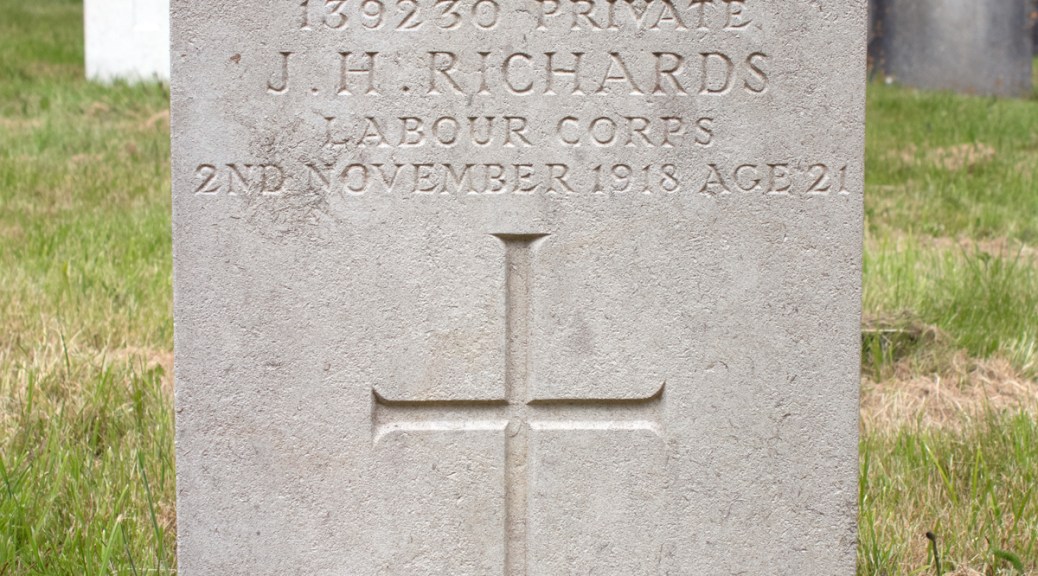
Private John Richards

Private John Richards

John Henry Richards was born in Sutton, Surrey, on 3rd June 1896. The third of four children, his parents were John and Harriet Richards. John Sr was an engine driver and stoker, while his son found employment as a greengrocer’s assistant when he finished his schooling.

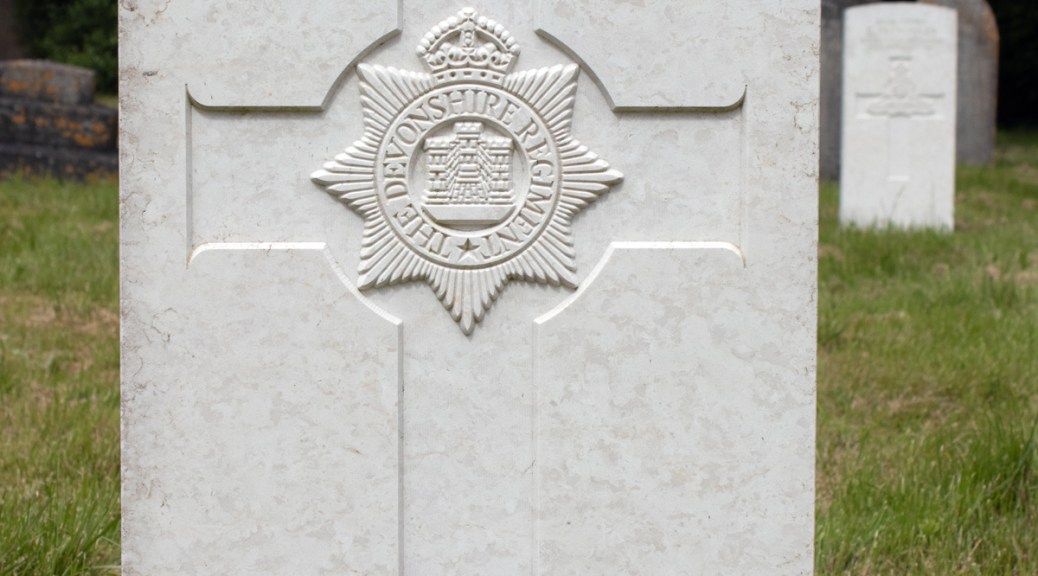
When war came to Europe, John Jr stepped up to serve his King. Full details of his military service have been lost to the annals of time, but he had certainly enlisted by the end of 1917. Initially joining the Devonshire Regiment, he subsequently transferred to the Labour Corps, and was assigned to the 385th Coy.

Private Richards seems to have been based in Kennington near Lambeth, Surrey. He married Dorothy Ford on 23rd December 1917, at which point, both bride and groom were living at 47 Hartington Road.

The family’s geographical locations become a bit confused at this point: Dorothy had been born in Bristol, Gloucestershire, but the 1911 census found her living in Ottery St Mary, Devon, with her paternal grandparents. John seems to have served some time in Devon as well, but it is unclear whether the couple met in the South West or London.

By the autumn of 1918, Private Richards’ unit was certainly in Devon: it was here that he contracted pneumonia, and he was admitted to the No. 1 Section Hospital in Devonport for treatment. This was to prove ineffectual, however, and he passed away on 2nd November 1918. He was 22 years of age.

Dorothy’s family appears to have been living in Axminster by this point, and it is certainly somewhere he would return to in later years. The town’s cemetery is where she would bury her late husband: John Henry Richards at peace again.


Lance Corporal John Channing

Lance Corporal John Channing

John Samuel Channing was born in Axminster, Devon, in 1884, the oldest of four children to John and Elizabeth. John Sr was a bricklayer’s labourer, and, when Elizabeth died in the late 1890s, he struggled to look after the whole family.

The 1901 census found John Sr and his two youngest children living with his widowed mother, while John Jr and his sister Sarah were sent to live with their maternal grandmother, widow Mary Telford. Both were of age to leave school, and both were employed: Sarah as a lace mender, John Jr as a nail brush finisher.

John Jr married a woman called Elizabeth in 1910. There is little additional information available about her, but by the time of the following year’s census, the young couple were boarding with an Eliza Banks in Silver Street, close to the centre of the town. John was employed as a toilet brush maker, adding that they were bone nailbrushes. Within the year, Elizabeth gave birth to their only child, son Leslie.

In addition to his brushwork, John had also enlisted in the local militia. He joined the Devonshire Regiment on 1st April 1908, although his service details are lost to time. Private Channing’s unit – the 4th Battalion – were based around Exeter, but, when war was declared, they moved to India. There is no evidence, however, that John went with them: promoted to the rank of Lance Corporal, it is likely that his experience was better used on the Home Front, training new recruits.

John’s wartime experience was not to be a lengthy one, however. By 1st April 1915, he had been medically discharged from service, having contracted tuberculosis. At this point, Lance Corporal Channing’s trail goes cold, but it is likely that he returned home to Elizabeth and Leslie.

The next record for John is that of his passing. He died from tuberculosis at home on 29th December 1918: he was 34 years of age.

John Samuel Channing was laid to rest in Axminster Cemetery, a short walk from where his widow and son still lived.


Private Alfred Wallis

Private Alfred Wallis

Alfred Edward Wallis was born on 7th February 1876, the youngest of five children to Charles and Mary. Charles was a carpenter and joined from Bruton in Somerset, but the family were born and raised in the Walcot area of Bath.

By the time of the 1901 census, Alfred was the only one of the Wallis siblings to remain living with his parents. They were living at 14 Belgrave Crescent, to the north of the city, and, at 25 years of age, Alfred had taken on work as a printer’s compositor.

On Christmas Day 1907, Alfred married Caroline Little. She was a farmer’s daughter from Cheltenham, Gloucestershire, and, at the time of their nuptials, the young couple were living at 8 Seymour Road, the next road over from his parents.

Alfred and Caroline would go on to have three children: Harold, Winifred and Lilian. The 1911 census found that they had moved again, and were now settled in a small terrace at 22 Cork Street, in the Weston area of Bath.

War broke out across Europe in the summer of 1914, and, in on 19th December 1915, Alfred enlisted in the Army Service Corps. His records noting that he was 39 years and 10 months old, stood 5ft 5ins (1.65m) tall, and weighed 128lbs (58kg).

Private Wallis was not formally mobilised until the August 1916. Attached to the 19th Company, he was sent for duty to the Queen Mary’s Military Hospital in Whalley, Cheshire. Full details of his duties are unclear, although he would remain in the area for the next couple of years.

As the war progressed, it is likely that Alfred was exposed to the illness with which the patients were being admitted. In October 1918, he became unwell, and was admitted to hospital with a combination of influenza and pneumonia. The hospital he was sent to was the King’s Lancashire Military Convalescent Hospital in Blackpool, Lancashire, so it is likely that he had left Whalley by this point.

Private Wallis’ illness was to prove too much for his body to bear. He passed away while still admitted, on 29th October 1918. He was 42 years of age.

The body of Alfred Edward Wallis was brought back to Somerset for burial. He was laid to rest in the majestic setting of Bath’s Locksbrook Cemetery.


Gunner Victor Evans

Gunner Victor Evans

Victor George Evans was born in the autumn of 1882, one of eleven children to George and Charlotte Evans. George was a woodsman from Aldworth in Berkshire, and it was here that he and Charlotte raised their growing family.

There is little concrete information about Victor’s early life. While his family were living on Bethesda Street in Basildon, Berkshire, at the time of the 1901 census, Victor is noticeable by his absence.

On 29th January 1910, Victor married Edith Rains in Kensington, Middlesex. She appears to have been a dressmaker’s apprentice, and had been born in Moulton, Lincolnshire. The next year’s census recorded Victor employed as a butler for the Clutton family. His boss, Ralph Clutton, was a lawyer, and the family resided at 5 Vicarage Gate, not far from Kensington Palace. This time, however, it is Edith who is missing from the census record and, given that she had given birth to their one and only child, Phyllis, the year before, it is likely that she was recuperating elsewhere, possibly with the support of her family.

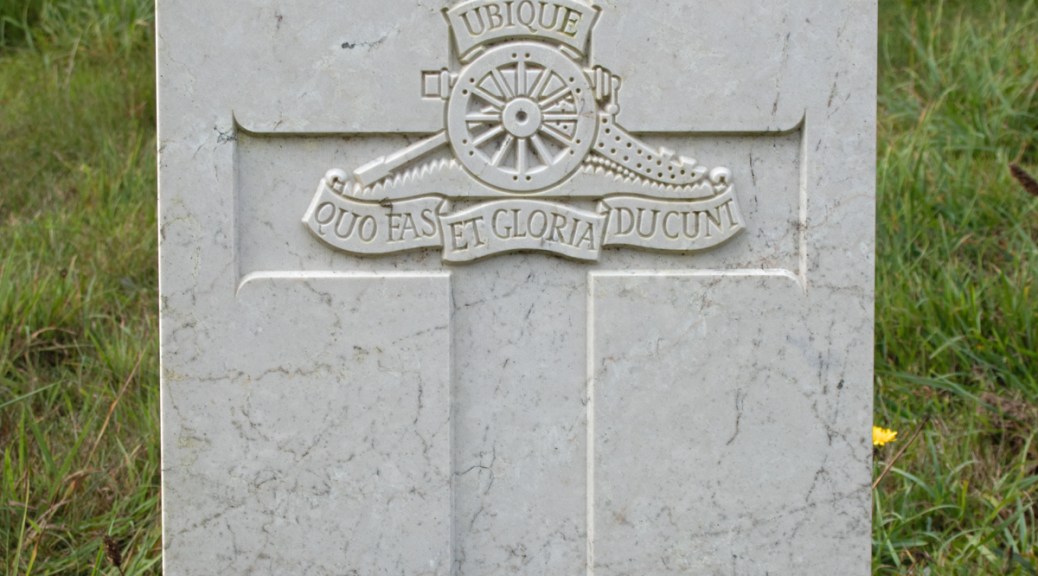
When war broke out, Victor was called upon to serve his country. On 22nd December 1916, he enlisted, joining the Royal Garrison Artillery as a Gunner. His service records show that 34 years of age and stood 5ft 7.5ins (1.71m) tall.

Victor was recorded as being a messenger, and he and Edith were living with his older sister, Rachel, at 17 Adeney Road in Hammersmith, Middlesex. The document suggests, however, that Phyllis was in the care of Edith’s parents in Lincolnshire, possible to enable both her and Victor to work.

Gunner Evans was assigned to the 270th Siege Battery, and he was soon sent to France. While based near Rouen in April 1918, he was badly injured through a number of shrapnel wounds, and medically evacuated to Britain for treatment. Admitted to a hospital in Paignton, Devon, there was little that could be done, other than being made comfortable. Victor succumbed to his wounds on 28th April 1918: he was 35 years of age.

It is likely that Edith would not have been able to afford for her husband to be brought back to Middlesex for burial. Instead, Victor George Evans was laid to rest in the ground of Paignton Cemetery.


Able Seaman William Real

Able Seaman William Real

William Thomas Bradley Real was born in Lyme Regis, Dorset, on 31st December 1875. His parents were coastguard William Real and his wife, Sarah. William Jr seems to have lived with his maternal grandparents for most of his life, even though he went on to have seven younger siblings.

Sarah died in the spring of 1891, just weeks after the birth of her and William Sr’s youngest child, and William Jr took this as an opportunity to seek a career for himself. Living next to the sea, and with a coastguard for a father, a role in the Royal Navy seemed an apposite choice. He joined up on 26th May 1891, just 20 days after his mother’s funeral.

William was under age when he joined up, and so was given the rank of Boy 2nd Class. His service records show that he was 5ft 8ins tall, with brown hair, blue eyes and a fresh complexion. He was initially sent to HMS Boscawen, the training ship moored in Portland, Dorset, and remained there until January 1893. By this point his training had paid off, and he had been promoted to the rank of Boy 1st Class.

William’s first posting was on board the ironclad HMS Alexandra. Over the next year he was posted to two further vessels, and, when he came of age on 31st December 1893, he was formally inducted into the Royal Navy, and given the rank of Ordinary Seaman. Over the next 25 years, he would serve on a total of sixteen more ships, returning to HMS Vivid, the Royal Naval Dockyard in Devonport, Devon, between some of his voyages.

William’s career saw promotion – to the rank of Able Seaman on 4th February 1896. He also spent three days in the cells in August 1898, although the nature of his misdemeanour is unclear.

Away from his career William’s family life took hold. On 15th April 1911, he married Louisa French. Her parents owned and ran the George Hotel in Charmouth, Dorset. The couple went on to have a daughter, Maud, who was born in the spring of 1915.

When war was declared, Able Seaman Real was assigned to HMS Tiger. The most heavily armoured battlecruiser in the British Navy, She would go on to fight in the Battles of Dogger Bank, Jutland and Heligoland Bight, action William would have seen first hand.

By the spring of 1918, Able Seaman Real had become unwell. He was posted back to HMS Vivid on 1st May, and was admitted to the Royal Naval Hospital in Plymouth. His admission was not to be a long one: he died of heart failure just five days later, at the age of 42 years old.

The body of William Thomas Bradley Real was taken back to Dorset for burial. He was laid to rest in Lyme Regis Cemetery, overlooking the town in which he had been born.


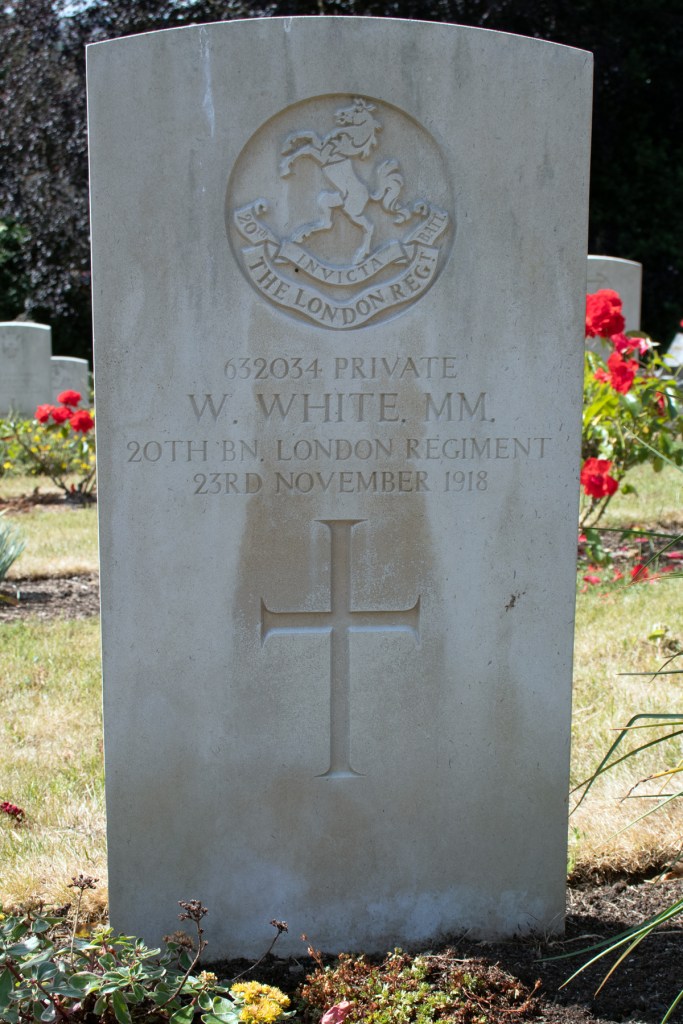
Private William White

Private William White

William White was born in the autumn of 1892 in Gravesend, Kent. He was the second of eleven children to Joseph and Eleanor – or Ellen – White. Joseph was a general labourer who, by the time of the 1911 census, was employed in the local docks.

The same census recorded the family of eleven people living in four rooms at 2 Robert Street, Gravesend. In addition to Joseph, both William and his older brother, Joseph Jr, were employed as assistants for a local butcher, while the next youngest of the siblings, Edward, was working as a bootmaker’s errand boy.

When war was declared, William stepped up to play his part. Full service details have been lost to time, but it seems that he had enlisted by the spring of 1918 at the latest. He joined the London Regiment, and was assigned to the 20th (City of London) Battalion. Private White’s unit spent the duration of the conflict on the Western Front, fighting at Loos, the Somme and Messines amongst other areas.

By the end of the war, William had been awarded the Military Medal for his bravery, although it is unclear when and for what he receive it.

The next confirmed record for Private White was his admission to hospital in Somerset, as he was suffering from pneumonia. He was sent to the Bath War Hospital, but it is unclear whether he had been on home soil when he fell ill, or if he had been medically transferred there from across the English Channel.

William White’s condition was to prove fatal. He passed away in hospital on 23rd November 1918, at the age of 26 years old. His body was laid to rest in the military section of Locksbrook Cemetery in Bath, not far from the hospital where he had breathed his last.


Boy 2nd Class Albert Loveless

Boy 2nd Class Albert Loveless

Albert William Loveless was born on 23rd February 1901, the third of four children to Albert and Matilda Loveless. Albert Sr was a hawker and marine store dealer, and the family grew up and lived in the Dorset village of Mosterton.

When he completed his schooling, Albert Jr found work as a railway porter. When war broke out, however, he was keen to play his part before the opportunity passed him by and, on 10th September 1918, he enlisted in the Royal Navy.

As he was below the age to formally enrol, Albert was given the rank of Boy 2nd Class. His service records show that he was 5ft 2.5ins (1.59m) tall, with brown hair, brown eyes and a fresh complexion.

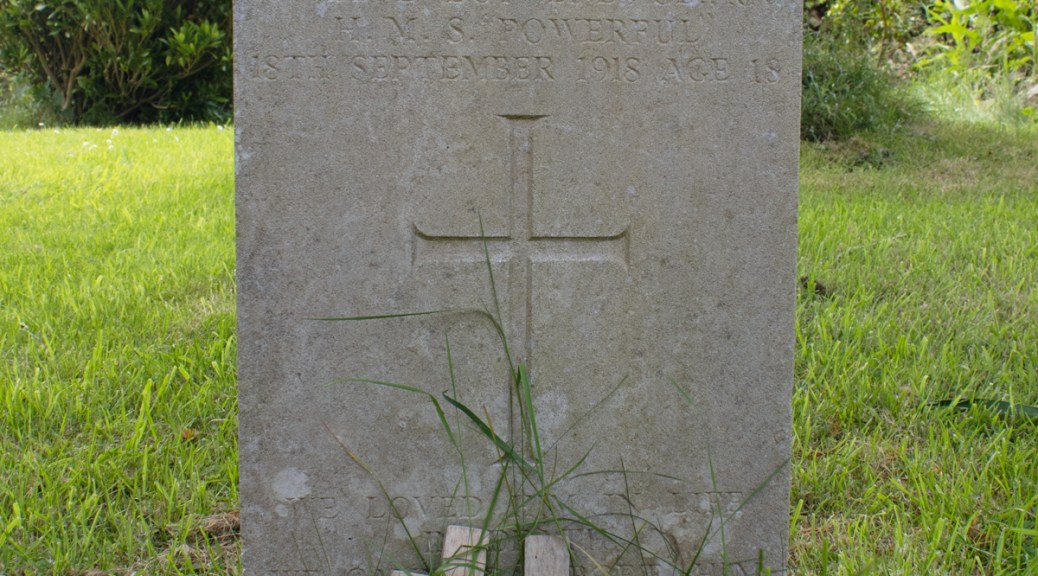
Boy Loveless was sent to HMS Powerful, a training ship based in Devonport, Devon, but sadly, his time there was to be brief. Within a matter of days, he was admitted to the Royal Naval Hospital in Plymouth, having contracted pneumonia. He passed away on 18th September 1918, having been in service for just a week. He was only 17 years of age.

The body of Albert William Loveless was taken back to Dorset for burial. He was laid to rest in the graveyard of St Mary’s Church in Mosterton, walking distance from his grieving family’s home.


Gunner Simeon Powell

Gunner Simeon Powell

Simeon James Powell was born on 18th October 1882 in Wootton Fitzpaine, Dorset. The oldest of three children, his parents were Francis and Elizabeth Powell. Elizabeth died when Simeon was just 7 years of age, and his father remarried, and went on to have five children with his new wife, Annie.

Francis was a farmer, and Simeon found employment as an estate labourer. The 1911 census found the family living on Dodpin Farm in Monkton Wyld, a village to the north of Lyme Regis: Francis, Annie, Simeon and his three younger siblings.

On 12th June 1913, Simeon married Mary Hodder. There is little information about her, but it seems the couple set up home on the outskirts of Charmouth, Dorset. Mary was six years older than her new husband, and they didn’t go on to have any children.

War was declared in the summer of 1914, and by the following autumn, Simeon had signed up to play his part. His service records confirm that he was 5ft 11ins (1.8m) tall and weighed 188lbs (85.2kg).

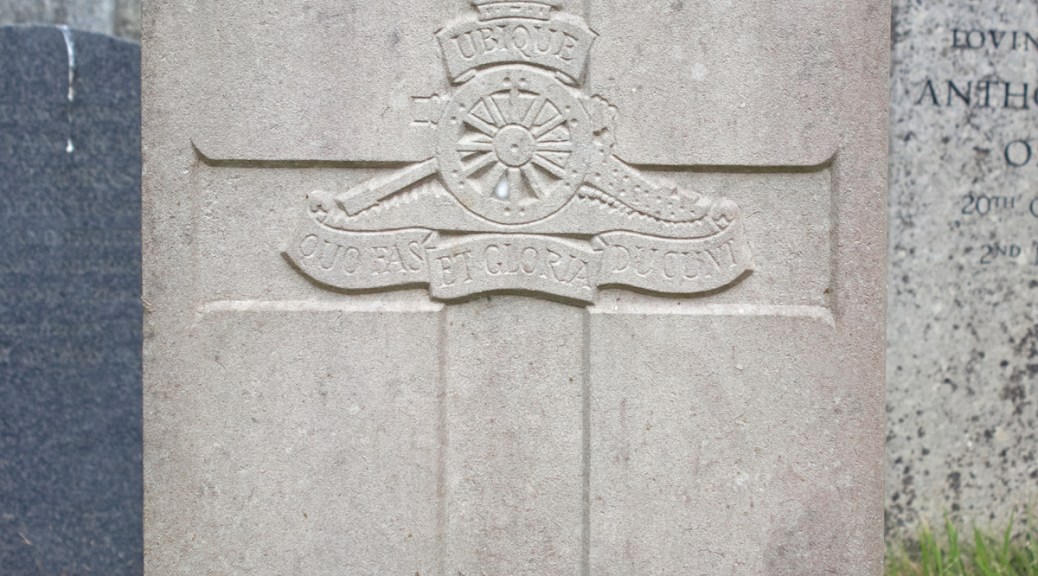
Gunner Powell joined the Royal Garrison Artillery, and was formally mobilised on 31st May 1916. By November he was sent to Malta, returning to Britain in September 1917. His new posting was in Sheerness, Kent, and he would remain there for the next nine months.

In May 1918, Simeon fell ill. He had caught influenza, and when this developed into bronchitis, he was admitted to the local war hospital. His health began to deteriorate, and, on 10th June 1918, Gunner Powell passed away from a combination of bronchitis and haemoptysis. He was 35 years of age.

The body of Simeon James Powell was taken back to Devon for burial. He was laid to rest in the graveyard of St John the Baptist Church in Hawkchurch, near the family home just across the border in Dorset.


Gunner Arthur Green

Gunner Arthur Green

Arthur William Green was born on 27th August 1896, the middle of five children to William and Mary Green. William was a shoemaker, who was employed at the Clark’s factory in Street, Somerset, and this is where the family were born and raised.

Clark’s was the key employer in Street and, by the time of the 1911 census, five of the Green family were working for them. This included the 15 year old Arthur, whose job was a shoe cutter.

When war came to Europe, Arthur had already stepped up to play his part. He enlisted in the Royal Marine Artillery in March 1914. His service records confirm that he was 5ft 8ins (1.72m) tall, with brown hair, blue eyes and a fresh complexion. He was also noted as having a scar on the back of his neck.

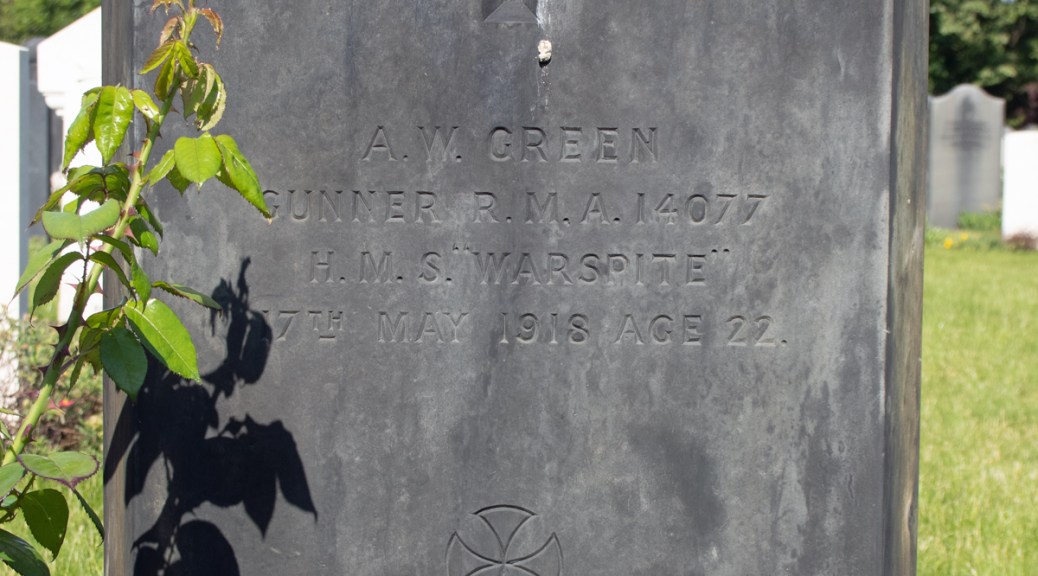
Private Green was initially under age for service in the regiment, only coming of age at the end of August 1914. He initially completed his training either in Chatham, Kent, or Plymouth, Devon, becoming a Gunner on 5th February 1915. That spring he was assigned to the battleship HMS Warspite, and would remain on board for the next four years.

In February 1918, Gunner Green was assigned to the 4th Battalion of the Royal Marines. Still serving on Warspite, on 23rd April he was involved in the Raid on Zeebrugge. A combined action by the Royal Navy and Royal Marines, the aim was to block the entrance to the port of Bruges-Zeebrugge by sinking obsolete ships. A total of 1700 men were involved, and, in the ensuing battle, some 200 were killed and 400 wounded.

Gunner Green was one of those who was injured in the battle. When the Warspite returned home, he was admitted to the Royal Naval Hospital in Chatham, Kent, but his injuries were to prove too severe for him to overcome. He passed away on 17th May 1918, at the age of just 21 years old.

Arthur William Green was laid to rest in Woodlands Cemetery, Gillingham, not far from the Chatham base he had briefly known as home.


Ordinary Seaman John Diaper

Ordinary Seaman John Diaper

John Dolby Diaper was born in Stowupland, Suffolk, on 1st June 1898. He was the second youngest of ten children to George and Martha, and the older of two sons. George was a cattleman turned gardener, and it seems that John went into farm work when he completed his schooling.

When war broke out, John was called upon to play his part. He enlisted in the Royal Navy on 6th June 1917, joining as an Ordinary Seaman. His service records show that he was 5ft 4.5ins (1.63m) tall, with brown hair, grey eyes and a fair complexion.

Ordinary Seaman Diaper was sent to HMS Pembroke, the Royal Naval Dockyard in Chatham, Kent, for his training. The summer of 1917 was a particularly busy for the base, and temporary accommodation was set up in the Drill Hall; this is where John was billeted.

On the night of 3rd September 1917, Chatham suddenly found itself in the firing line as a wave of German aircraft bombed the town. The Drill Hall received a direct hit, and Ordinary Seaman Diaper was badly injured. He was admitted to the Royal Naval Hospital in the town, and would remain there for some time.

John’s injuries were severe and, although his treatment was ongoing, the impact on his overall health was detrimental. Ultimately, the air raid weakened his system, and his heart gave out. He died on 18th April 1918, more than seven months after the bombing: he was 19 years of age.

John Dolby Diaper was laid to rest in Woodlands Cemetery, Gillingham, alongside those who had given their lives on 3rd September.