Tag Archives: 1918

Gunner Basil Corney

Gunner Basil Corney

Basil John Corney was born in Berrynarbor, Devon, in the summer of 1895. The fourth of five children, his parents were William and Elizabeth. William’s work as a farm bailiff, took the family across the area: by 1901, they had moved to Shapwick in Somerset, and the next census record, in 1911, found the family living in Stogumber, where William had taken up management of the White Horse Hotel. Basil, meanwhile, was employed as a butcher’s assistant in the village.

When war came to Europe, Basil stepped up to serve his King and Country. He enlisted on 10th December 1915 and, from this point, preferred to go by his middle name, rather than his first. He asked to be assigned to the Royal Army Service Corps, but by the time he was mobilised in April 1916, he was attached to the Royal Garrison Artillery. Gunner Corney’s service records show that he was 20 years and 8 months old, stood 5ft 10ins (1.77m) tall and weighed 155lbs (70.3kg).

Basil was assigned to the 143rd Siege Battery and, by August 1916, he was sent to France. His time in Europe was to be brief, however, as, on 1st October, he was shot and wounded by shell fire in his right knee while fighting at the Somme. Invalided to Britain for treatment, he eventually seemed to recover, and was transferred to the regiment’s No.2 Depot.

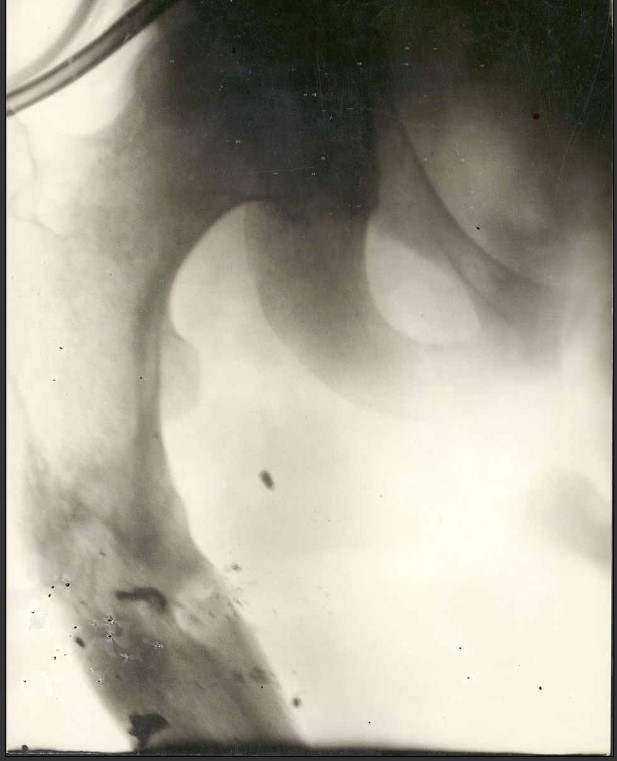
In April 1918, Gunner Corney was admitted to hospital in Edmonton, Middlesex, as his injury was causing some issues again. An examination identified that his kneecap had all but disintegrated, and this led to his eventual dismissal from armed service on medical grounds. He left the Royal Garrison Artillery on 14th November 1918 and was awarded the Silver Badge, noting the reason for him not being in the army.

Basil returned to Somerset, but his time back with his family was to be brief. He passed away at home on 12th December 1918: he was 23 years of age.

The body of Basil John Corney was laid to rest in the peaceful graveyard of St Mary’s Church in Stogumber, across the road from, and within sight of, where his family still lived and worked at the White Horse Hotel.


Serjeant Harold Shopland

Serjeant Harold Shopland

Harold George Shopland was born in the spring of 1893, the youngest of nine children to George and Mary Shopland. George was a joiner and platelayer for Great Western Railways: he died when Harold was just seven years old, which left Mary to raise the family alone. She did this with the support of the community and Harold’s older siblings.

By the time of the 1911 census, Harold, who was now 17 years of age, was the only one of her children to still be living at home: he was a stone mason’s carter, while Mary was getting by as the housekeeper for the local Wesleyan chapel.

When war broke out, Harold stepped up to play his part. Possibly keen to follow in his oldest brother’s footsteps – Private Walter Shopland had died at Bloemfontein in 1901 – he enlisted on 23rd November 1914. Harold joined the Royal Garrison Artillery as a Private, his service records confirming that he was 5ft 10ins (1.77m) tall, and weighed 165lbs (74.8kg).

Harold spent more than two years on home soil, before being sent to France in July 1917, with a promotion to Serjeant. He remained overseas, but fell ill with tuberculosis that winter, and was medically repatriated the following January. He was admitted to the Queen Mary’s Military Hospital in Whalley, Lancashire, and remained there for the next couple of months.

Harold’s condition meant that he was no longer fit for military duty, and was dismissed from service on 8th March 1918. He remained in hospital, however and his condition worsened. He passed away on 28th March 1918, at the age of 24 years old.

Mary brought Harold George Shopland’s body back to Somerset for burial. He was laid to rest in the peaceful setting of St Andrew’s Churchyard in Old Cleeve, not far from his father’s grave.


Second Lieutenant William Tyler

Second Lieutenant William Tyler

William Eric Tyler was born in the spring of 1888 in Carhampton, Somerset, the older of two children to farmers William and Nina Tyler. The details of William Jr’s early life are a bit sketchy: he was sent to a private school in Minehead, where he boarded for a while.

William Sr died in 1908, and Nina re-married, to farmer George Risden a couple of years later. Of William Jr there is no trace in the 1911 census, and the next record for him relates to his military service. He enlisted in the Somerset Light Infantry when war broke out, but transferred to the Machine Gun Corps in May 1918, receiving a commission to Second Lieutenant when he did so.

Again, details of Second Lieutenant Tyler’s time in the army are scarce. The only other document relating to him is that of his passing. He died, on 28th October 1918 at Belton Park Military Hospital near Grantham, Lincolnshire. He was 30 years of age.

Belton Park was primarily a facility to treat wounded soldiers returning from the Front Line, but it was also treated Machine Gun Corps personnel connected to the neighbouring camp. It is not possible, therefore, to identify the cause of his death.

William Eric Tyler’s body was taken back to Somerset for burial. He was laid to rest in the family plot in the graveyard of St John the Baptist Church in his home village, Carhampton. Buried alongside his father, he was reunited with his mother, when Nina died in 1946.


Private Herbert Trunks

Private Herbert Trunks

Herbert Henry Trunks was born in Williton, near Watchet, Somerset, in the spring of 1888. One of fourteen children, his parents were George and Rosa. George was a labourer in a timber yard, but when Herbert left school, he found work as a labourer in a paper mill.

On 10th June 1911, Herbert married Lily Sully at St Decuman’s Church in Watchet. Four years Herbert’s senior, she was a labourer’s daughter: the couple went on to have three children: Lilian, Henry and Dorothy.

Herbert was called up to serve his country on 5th June 1916. Assigned to the Royal Berkshire Regiment, his service records confirm that he was 5ft 9ins (1.75m) tall, and weighed 135lbs (61.2kg). He soon found himself in France, leaving for the continent on 20th September 1916.

Attached to the 13th Labour Battalion, Private Trunks spent the next 15 months overseas, returning to Britain in February 1918 for medical treatment. He was suffering from albuminuria, a side effect of kidney disease, and was hospitalised for a couple of months.

When he had recovered, Private Trunks was transferred to the 397th Home Service Company. He was based on the Isle of Wight, but his health had been impacted, and he came down with pneumonia. He was admitted to Parkhurst Military Hospital on the island on 28th October 1918, but died there just a week later, on 4th November. He was 30 years of age.

Herbert Henry Trunks was taken back to Somerset for burial. He was laid to rest in the peaceful graveyard of St Decuman’s Church, where he had been married just seven years before.


Lance Corporal Henry Grandfield

Lance Corporal Henry Grandfield

Henry Grandfield was born in the spring of 1887, the third of six children to William and Martha Grandfield. William was a bootmaker from the Somerset village of Over Stowey, and it was here that he and Martha raised their family.

Henry found work as a labourer on a local estate when he finished his schooling. When war came to Europe, however, he stepped up to play his part.

Service records for Henry are pretty scarce. He appears to have enlisted in the Royal Field Artillery, but then transferred across to the Tank Corps. Separate research appears to suggest that Lance Corporal Grandfield served in the Eastern Mediterranean, but fell ill.

Suffering from rheumatism he returned to Britain for medical support. Based at Bovington Camp in Dorset, Henry was later admitted to a hospital near Wareham, having contracted pneumonia. This latter condition was to prove too much for his body to bear: he passed away on 1st October 1918, at the age of 31 years old.

The body of Henry Grandfield was taken back to Somerset for burial. He was laid to rest in Over Stowey Cemetery, not far from where his family still lived.


Rifleman Walter Knight

Rifleman Walter Knight

Walter George Knight was born on 27th December 1887 and was the older of two children to George and Mary. George was a gardener from London, Mary had been born in Devon, but it was in Weston-super-Mare, Somerset that they settled down to raise their family.

On 11th October 1910, Walter married Rosa Burford at St Saviour’s Church. While listed as a spinster, Rosa had two children by this point – Phyllis and Lionel. A later document records Walter as their stepfather, but their full parentage is unclear.

The marriage certificate notes Walter’s trade as a musician, but the following year’s census shows a more reputable trade, as he had taken to working as an insurance agent. He and Rosa had set up home in Cranleigh Road, Bridgwater, by this point, in a small terraced house they shared with the two children and Rosa’s widowed father, William.

By the summer of 1914, war was brewing over European shores, and Walter was quick to step up and support his country. He enlisted in the army on 14th October, joining the Somerset Light Infantry. He spent a year with the regiment, before transferring to the 22nd Wessex & Welsh Battalion of the Rifle Brigade.

By January 1916, Rifleman Knight found himself sailing for the Eastern Mediterranean, spending the next year in Egypt and Salonika. It was while he was overseas, in the spring of 1917, that he became ill and, having contracted tuberculosis, he returned to the UK.

Walter’s condition meant he was no longer fit for the army: he was formally discharged from the Rifle Brigade on 16th April 1917, having served for two-and-a-half years. He was admitted to the Cheddon Road Sanatorium in Taunton, the aim being to help manage his condition.

Rosa and the children had moved from Bridgwater by this point, settling in a small house in Ravensworth Terrace, Burnham-on-Sea. It is likely that Walter came here to visit the family during good spells in his health. The lung condition was to get the better of him eventually, however, and he passed away on 2nd March 1918, at the age of 30 years old.

Walter George Knight was laid to rest in the peaceful Burnham Cemetery, a short walk from where his grieving family lived.


Rifleman Walter Knight
(from findagrave.com)

Deck Hand James Gore

Deck Hand James Gore

James Gore was born on 13th May 1876 in Steart, a community on the Somerset coast near Bridgwater. An only child, his parents were Robert Brewer and Elizabeth Gore, but parental duties were shared with Robert’s family, and Elizabeth went on to marry Thomas Dibble when James was just 4 years old.

Robert was a fisherman, as was his father, and this was a life into which James would also follow. By 1891 he was working with his paternal grandfather, John Brewer, and within ten years he was running his own boat.

On 12th December 1901, James married Emily Chilcott at the parish church in Stogursey, Somerset. She was the daughter of Richard, Chilcott, a labourer employed on the expanding road network for the area. The couple initially set up home in Steart, but had moved to Burnham-on-Sea by the time of the 1911 census. They would go on to have four children – Harold, Reginald, Margaret and Olive – between 1905 and 1916.

When war broke out, James was 38 years old. He wasn’t called up immediately, but by the closing months of the conflict, the needs of the Royal Navy were strong enough for him to be conscripted. He joined up on 21st August 1918 and, having built a career as a fisherman, he was assigned to the Royal Naval Reserve. His service records confirm that he was 5ft 6ins (1.67m) tall, with a fresh complexion and blue eyes.

Deck Hand Gore was sent to HMS Victory, the Dockyard in Portsmouth, Hampshire, for his initial training. Here, billeted in cramped barracks, perfect breeding grounds for germs and disease, he quickly became ill. Having contracted pneumonia, James was admitted to the Haslar Hospital in Gosport. The condition was to take his life: he passed away on 10th September 1916, less than three weeks after enlisting. He was 40 years of age.

James Gore’s body was taken back to Somerset for burial. He was laid to rest in the peaceful cemetery in Burnham-on-Sea, not far from where Emily and the children were still living.


Pioneer Joseph Maguire

Pioneer Joseph Maguire

The early life of Joseph Maguire is challenging to decipher. Born in Dublin in 1878, his name is sadly too common to pin down any specific family relationships. Later records suggest that he had a sister, Jane, but again, this does not help narrow down documentation.

It would appear that he had moved to England for work by the time war broke out: he enlisted in the Royal Engineers in Carlisle by November 1917. As a Pioneer, he was attached to the Inland Water Transport Battalion, although it is not possible to ascertain whether he served on the Home or Western Fronts.

Pioneer Maguire died at the Second Southern General Auxiliary Hospital in Weston-super-Mare, Somerset. The cause of his passing is not freely documented, but it seems likely to have been the result of an illness. He was 40 years of age.

Joseph Maguire was laid to rest in the sweeping ground of Minehead Cemetery. Commonwealth War Grave Commission records note that he is interred in the Roman Catholic section of the grounds, and that, when it was erected, his CWGC headstone was paid for by the Honourable Secretary of the British Legion.


Pioneer Joseph Maguire
(from findagrave.com)

Able Seaman Amos Cornish

Able Seaman Amos Cornish

Amos William Cornish was born on 16th August 1887 in Dunster, Somerset. One of five children, his parents were George and Elizabeth Cornish. George, who was a brickmaker, died in 1893, and at this point the family relationships seemed to have broken down.

By the time of the 1901 census, Elizabeth had remarried, and was living with her new husband and Amos’ youngest sibling, sister Lily. Two of Amos’ brothers, Walter and George, were living with his maternal grandparents, while Amos himself was one of three hundred inmates at the Horton Kirby Home for Homeless Boys in the Dartford area of Kent.

Amos’ schooling would have finished by the time he was 14 years old, and he quickly sought work that allow him to support himself as a young man with no home to go to. A career in the Royal Navy seemed to provide that regular pay and, on 4th June 1902, he enlisted.

As he was under age, Amos was given the rank of Boy 2nd Class, and sent to the shore-based training ship HMS Impregnable in Devonport, Devon. His service records show that he stood just 5ft 4ins (1.63m) tall, had brown hair, brown eyes and a fresh complexion. He was noted as having a scar in the centre of his forehead, and a tattoo of clasped hands over a heart on his right forearm.

Boy Cornish transferred to another training vessel – HMS Lion – after a month or so, and it was here, in February 1904, that he was promoted to Boy 1st Class.

Over the next eighteen months, Boy Cornish served at two more training bases – HMS Boscawen and HMS Vivid. He was given his first sea-going posting in April 1905, aboard the cruiser HMS Blake. It was on his next assignment, however, that he came into his own.

In May 1905, Amos boarded HMS Carnarvon, an armoured cruiser that had been launched a couple of years before. He was to spend the next two years as part of her crew, gaining the rank of Ordinary Seaman when he came of age in August 1905, and Able Seaman a year later.

When his time on board Carnarvon came to an end, Amos returned to shore, to HMS Pembroke, the Royal Naval Dockyard in Chatham, Kent, which was to be his base on and off for the next eight years. During that time, he served on six more ships, and rose to the rank of Leading Seaman in December 1911. This new rank, however, seemed not to suit Amos, and he reverted back to his previous rank eight months later.

Able Seaman Cornish’s longest posting was on board the cruiser HMS Antrim. He joined her crew in September 1913 and, over the next three-and-a-half years he travelled far and wide. Initially patrolling the North Sea – particularly around the Scottish Isles – Amos was on board for a journey to Arkhangelsk in Russia. The ship then transferred to the Western Atlantic, patrolling around America and the West Indies.

Able Seaman Cornish returned to British shores in April 1917, to be based at HMS Vivid, the Royal Naval Dockyard in Devonport, for the nest nine months. During this time, he became ill and was admitted to the Royal Naval Hospital in Truro with double pneumonia. Tragically, this was something he was not to recover from: Amos passed away on 4th February 1918, at the age of 30 years old.

While somewhat stretched, Amos’ family bond still remained. Elizabeth was living in Minehead by this point, with husband Alfred and their two children. It was to the Somerset town, therefore, that Amos William Cornish’s body was brought. He was laid to rest in the town’s sweeping cemetery.


George’s death in 1893, and Elizabeth’s remarriage a few years later split the family, and Amos’ siblings all followed separate paths.

The oldest of his siblings, Walter, also followed a military path. He joined the Royal Garrison Artillery as a Gunner and, by the time of the census, was based in Gibraltar. On completing his service, he returned to Somerset, marrying Florence Peddle in 1925. The 1939 Register found the couple living with his cousin, Amelia, while he worked as a gardener. Walter died in Weston-super-Mare in 1962, at the age of 74.

Amos’ next sibling, brother Harold, seems to have had a less fortunate time of things. Absent from the 1901 census, he appears in prison records four years later. He was incarcerated for six months’ hard labour in Brecon Prison, having been found guilty of “Gross Indecency with another male person”. Harold was 14 years and three months old at the time. A newspaper report from around this time suggests that the other party was a George Williams, but there is no further information about him. Harold seems to have come out the other side of his experience, however: the 1911 census recorded him as living and working with draper and grocer James Ridler and his family in Dunster, Somerset.

Amos’ third sibling, sister Lily, found work as a servant to bakers Joseph and Minnie Bagley in Minehead. She married painter and decorator William Whitting in 1916 and the couple went on to have a daughter, Kathleen, eight years later. The family settled in Weston-super-Mare, Lily passing away in 1968, at the age of 75.

The youngest of the Cornish siblings was George. He remained living with his maternal grandparents in Dunster, and found work as a printer. In the spring of 1921, he married Clara Govier and, by the time of the 1939 Register, they couple were living in Aylesbury, Buckinghamshire, where George was working as a printer and compositor. He died in 1957, at the age of 62 years old.


Private Victor Sperring

Private Victor Sperring

Victor William Sperring was born in the spring of 1897, in Lympsham, Somerset. One of nine children, his parents were James and Catherine Sperring. James was a farmer, 22 years older than his wife and, when he died in 1904, she was left to bring up the family alone. She remarried, to dairy farmer Frederick Butler, continuing the farming life.

Frederick died in 1914, and with her older children now in their 20s, Catherine’s sons took up the reins to keep the farm going. War was on the horizon now, and tragedy was never going to be far from the Sperring household.

Of the five brothers, at least two – Victor and his older brother, Hubert – stepped up to serve their King and Country. Hubert joined the Gloucestershire Regiment, rising to the rank of Lance Corporal in the 1st/6th Battalion. He was caught up at the Battle of the Somme, and was recorded as missing, presumed killed, on 21st July 1916. He was just 23 years of age, and is one of the tens of thousands of names commemorated on the Thiepval Memorial in Northern France.

Victor also joined the Gloucestershire Regiment, but his story is less clear. Certainly by 1918 he was attached to one of the regiment’s depots, possibly on home soil. He was admitted to the 2nd Southern General Hospital in the autumn of 1918, and this is where he passed away on 16th November. He was just 21 years of age.

Victor William Sperring was brought back to Lympsham for burial. He was laid to rest in the family plot in St Christopher’s Churchyard.


It seems likely that illness is what took Victor’s life. Just a month later, his sister, Annie, also passed away: she was interred next to her brother.

Catherine’s grief must have been indescribable, having lost a husband and three children in a matter of years. She continued on, however, and, by the time of the 1939 England and Wales Register, she was living with her son Roland, supporting him with his farm. She died in October 1941, at the age of 77: she was buried with her family in St Christopher’s.