Joseph Arthur Barnes was born in the spring of 1887, and was the youngest of four children to George and Hannah Barnes. George was a farm labourer from Longbridge Deverill, Wiltshire, and this is where he and Hannah – or Anna – raised their family.
When he completed his schooling, Joseph found work as a horseman on the farm, alongside his older brother, George. On 30th July 1913, he married Minnie Ring, a furniture maker’s daughter from the village. The couple exchanged vows in the parish church.
War was on the horizon, and a little over a year after their marriage, Joseph stepped up to play his part. He joined the Wiltshire Regiment and was assigned to the 3rd Battalion. Private Barnes was sent to Dorset for training, but his time in the army would not be a lengthy one.
Joseph contracted pneumonia, and was admitted to hospital in Weymouth. The condition would provide to severe, however, and he passed away on 9th April 1915: he was 27 years of age.
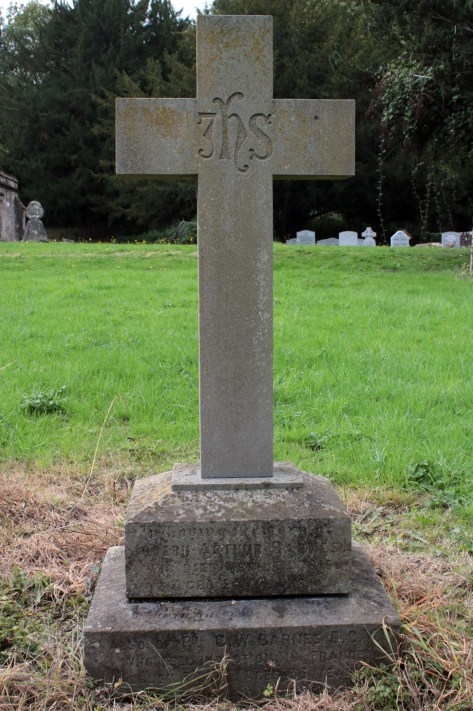
The body of Joseph Arthur Barnes was taken back to Wiltshire for burial: he was laid to rest in the tranquil surrounds of St Peter & St Paul’s Church, Longbridge Deverill.
Joseph’s brother George also served in the First World War. Assigned to the 1st Battalion of the Wiltshire Regiment, he served on the Western Front. Private Barnes was killed in action on 5th August 1917, at the age of 33. He is commemorated on the Menin Gate.
Frederick Cook was born in the Wiltshire village of South Wraxall in the spring of 1866. One of five children to James and Ann Cook, his father died when Frederick was just a toddler. The 1871 census found Ann and her children living in Bradford-on-Avon, where she was working as a farm labourer.
By 1881, Frederick had left school and found work as a cloth weaver. That year’s census found him living on Church Lane, Bradford-on-Avon with his mother and younger brother.
At this point Frederick disappears from the records. The next document relating to him is his wedding certificate, noting that he exchanged vows on 5th August 1895. His new wife was widow Ruth Doel, and the marriage took place in Holy Trinity Church, Heywood, Wiltshire, where she was living. Frederick was noted as being a labourer.
Frederick falls off the radar again and this point. He is noticeable by his absence from the 1901 census, Ruth living in Haywood with her son, Ernest. The next return helps to explain things, however, as, while she is now living alone, her husband is boarding in Pyle, Glamorgan, where he was employed as a limestone quarryman.
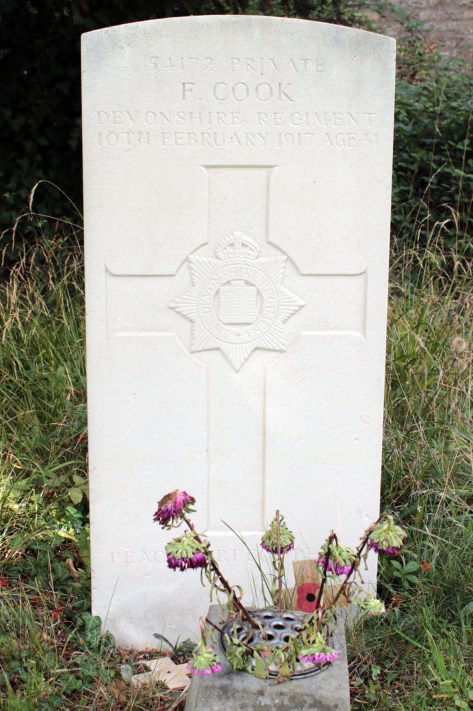
By the time war broke out, Frederick as 48 years old. He still stepped up to play his part, however, and, while his service papers have been lost to time, it is clear that he had joined the Devonshire Regiment by the summer of 1916. Attached to the 13th (Works) Battalion, Private Cook remained on home soil during his time with the army.
The next record for Frederick is that confirming his passing. He died from pneumonia on 10th February 1917, having previously been admitted to hospital. He was 51 years of age.
The body of Frederick Cook was laid to rest in Holy Trinity Churchyard, Heywood, Wiltshire.
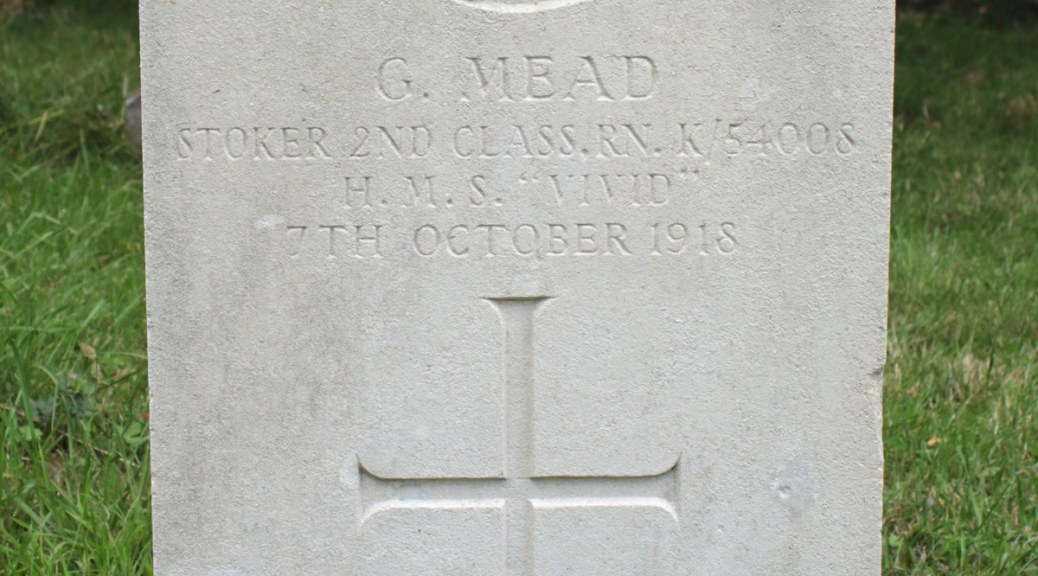
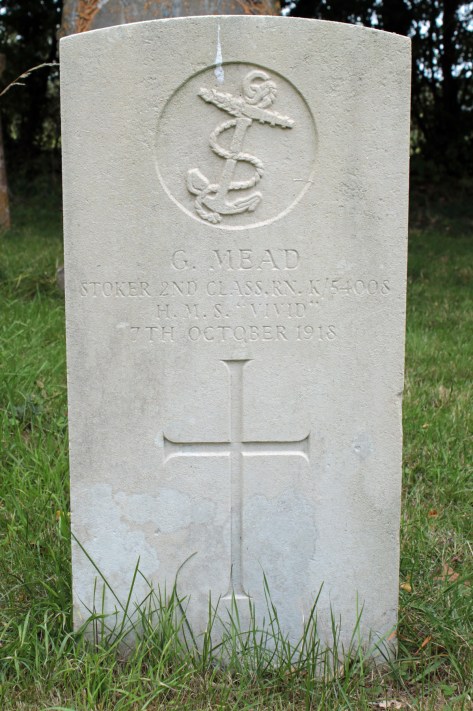
George Mead was born on 18th September 1900 in the Wiltshire village of Semley. The youngest of eleven children, his parents were police sergeant George Mead and his wife, Rebecca.
The 1911 census recorded the Mead family as having moved to Chapmanslade, near Westbury. George Sr and Rebecca were set up in a five-room cottage, Forest View, with George Jr and two of his older sisters – Edith and Margaret – also living there.
Rebecca passed away when her youngest was just sixteen years of age and, on 12th March 1917, George Jr’s older brother Charlie, a Private in the Worcestershire Regiment, was killed in action while fighting in France. It seems that his younger sibling was keen to prove his mettle before peace was declared and, on the day after his eighteenth birthday, he gave up his job as a carter and enlisted in the Royal Navy.
Stoker 2nd Class Mead’s service records show that he was 5ft 10.5ins (1.79m) tall, with brown hair, blue eyes and a fresh complexion. He was sent off to HMS Vivid – the Royal Naval Dockyard in Devonport, Devon – for his training.
Tragically, George Jr’s time in the navy was to be short. He contracted pneumonia and as admitted to the naval hospital in Plymouth. The illness was to prove too severe, and he passed away on 7th October 1918: he was eighteen years of age, and had been in the Royal Navy for just 18 days.
The body of George Mead Jr was taken back to Wiltshire for burial. He was laid to rest in the extension to St Margaret’s Church, Corsley, not far from where his grieving father still lived.
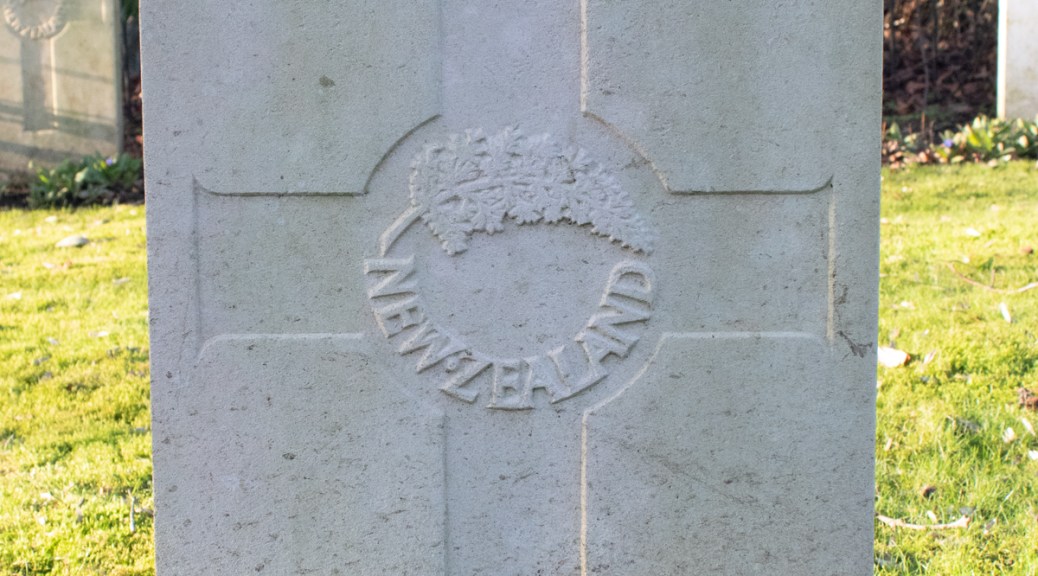
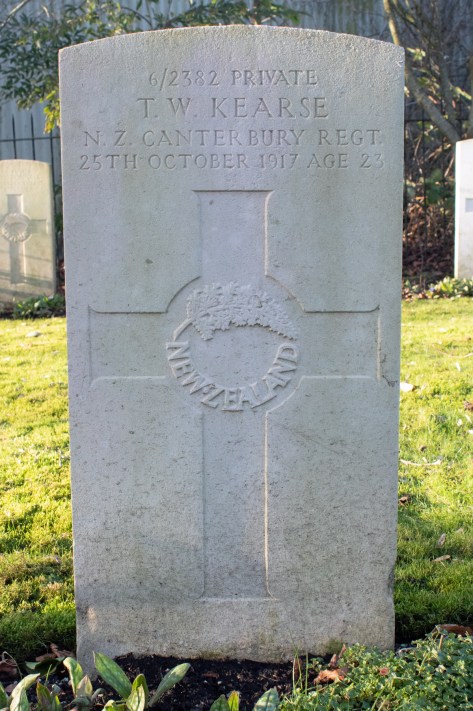
Thomas Walker Kearse was born in Westport, New Zealand, on 15th December 1891. One of seven children, his parents were British emigrant Thomas Kearse and his local-born wife, Rosanna.
There is little information available about Thomas’ early life. He found work as a general labourer when he finished his schooling, by which time his mother had passed away. By his mid-20s, he had relocated to Kaikohe, on North Island.
When war broke out, Thomas stepped up to play his part. He enlisted in Trentham on 16th February 1915, and was assigned to the New Zealand Canterbury Regiment. Private Kearse’s medical examination noted that he was just over 5ft 6ins (1.68m) tall, and weighed 139lbs (63kg). He had light hair, blue-grey eyes and a fair complexion. He was also noted as having a scar on his right shin.
Private Kearse would be in the army for two-and-a-half years, but would experience enough warfare for a lifetime. On leaving New Zealand his unit made for the Dardanelles, arriving there on 16th August 1915. He was wounded early on, and medically evacuated to Malta. His injuries would need further treatment, however, and he was shipped to Britain, and sent to hospital in Birmingham.
Thomas spent time recuperating at a base in Hornchurch, Essex, and it would seem that, while here, he met Catherine Goodwin. A romance started, but Thomas was sent to re-join his unit, who were barracked in Egypt. Within a month, however, he was on the move again, arriving in France in April 1916. While there, he went absent without leave for two days, and forfeited a month’s pay as a result.
In October, Private Kearse was wounded in the head and arm by gunfire, and, after initial treatment in Rouen, he was medically evacuated to Britain. Admitted to the 3rd Southern General Hospital in Oxford, he would remain here for the next month. He was then sent to the ANZAC base in Codford, Wiltshire, again to recuperate, but, while there, he was admitted to the camp’s venereal unit for a fortnight.
Discharged again, his condition had not cleared up: Thomas was back in hospital on 5th December 1916, and he spent a further two weeks admitted.
On his latest discharge, Private Kearse was marched to Sling Camp, near Bulford, where he took up a role as cook. He would remain there for the next four months and, during this time, he and Catherine exchanged vows. She had given birth to a daughter, Ivy, the previous October, and this helped formalise their family unit.
Over the next few months, Thomas’ life repeated itself. He was admitted to hospital in Codford again in June 1917, and went AWOL for 26 hours on 27th/28th July (for which he was docked four days’ pay). Discharged from hospital on 4th September, he was marched back to the Sling Camp.
Within six weeks, however, he was sent back to hospital in Codford, this time suffering from pneumonia. This time, Thomas would not be as fortunate. The lung condition got the better of his, and he passed away on 25th October 1917, at the age of 25 years old.
The body of Thomas Walker Kearse was laid to rest in the ANZAC extension to St Mary’s Churchyard in Codford, not far from the hospital he had visited so many times.
Thomas White was born on 17th October 1889, and was the fourth of nine children to William and Minnie White. William was an agricultural labourer for Hartwell, Northamptonshire, but the family were raised in the village of Hardingstone, to the south of Northampton.
When they finished their schooling, Thomas’ older siblings also found work on local farms, and Thomas was to do the same. By the time of the 1911 census, the white family had moved to Wootton, and were living in a four-roomed cottage on the village’s high street.
On 25th July 1914, Thomas married Nellie Westbury. The daughter of a groom from Wootton, she was employed as a cook at The Hermitage in the village when they couple exchanged vows. They would go on to have a daughter, Phyllis, the following year.
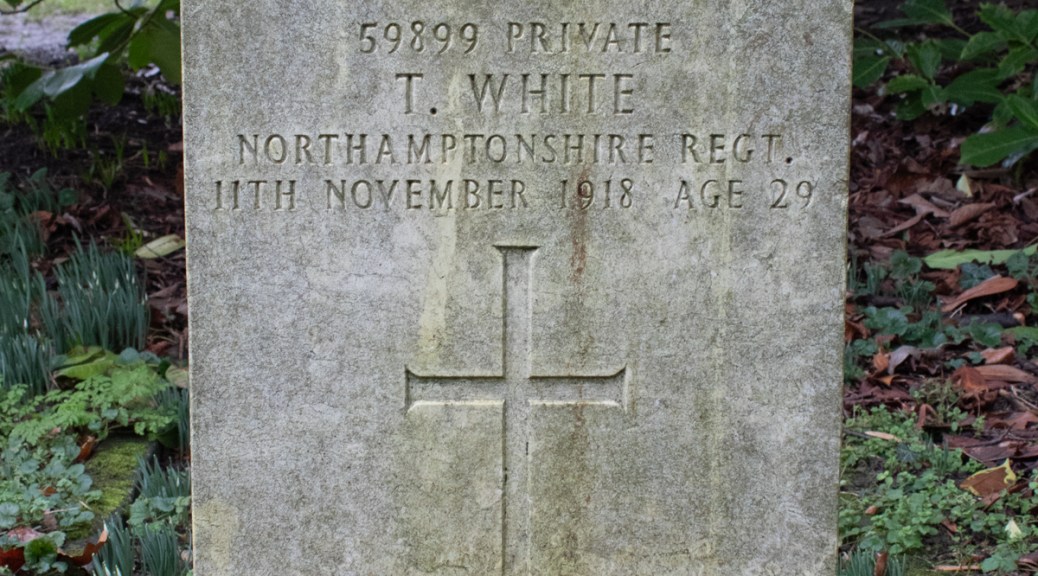
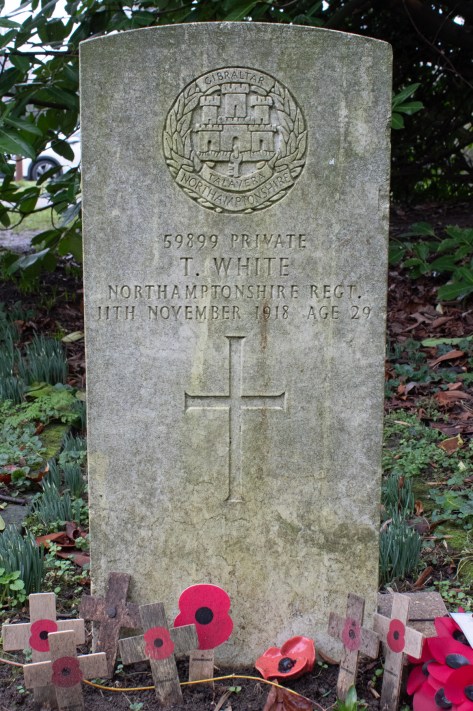
Details of Thomas’ military service are a challenge to pull together. His entry on the Army Register of Soldiers’ Effects confirm that he enlisted on 20th July 1918, joining the 3rd Battalion of the Northamptonshire Regiment. This was a training and depot unit, and, by the time Private White signed up, they were based in Sheerness on the Isle of Sheppey, Kent.
Thomas’ time in Kent was to be brief. While training, he came down with a combination of influenza and pneumonia, conditions to which he would succumb. Private White passed away on 11th November 1918, the day that Armistice was signed: he was 29 years of age.
The body of Thomas White was taken back to Northamptonshire for burial. He was laid to rest in the peaceful surroundings of St George’s Churchyard in Wootton.
Nellie went on to make a life for herself and her daughter. The 1921 census found them living at 28 Alton Street, Far Cotton, Hardingstone, Nellie working as an office cleaner for the Midland Railway.
The early life of Herbert Frederick Barber is a challenge to unpick. His navy service papers confirm that he was born on 12th December 1877 in Great Billing, Northamptonshire. His is not an uncommon name for the area, and Herbert Barbers appear on a number of census records. His parents are likely to have been shoe maker Frederick Barber and his wife, Jane.
In the summer of 1898, Herbert married Agnes Wood. He had found work as a bricklayer’s labourer by this point, and had set up home in Weston Favell, to the east of Northampton town centre. Agnes was a farm labourer’s daughter from nearby Great Billing: the couple went on to have six children – of whom four survived infancy.
The 1911 census found the Barber family – Herbert, Agnes and children Edith, Lilian, Fred and James – living in a five-roomed house in Weston Favell. Herbert was still labouring, but gave his employer as the navy.
When war broke out, Herbert stepped up to serve his country. He enlisted on 22nd September 1915, and his service records give his occupation as a gas stoker (although this was crossed out and replaced with “feller’s mate”). He was recorded as being 5ft 8.5ins (1.74m) tall, with grey hair, blue eyes and a fair complexion.
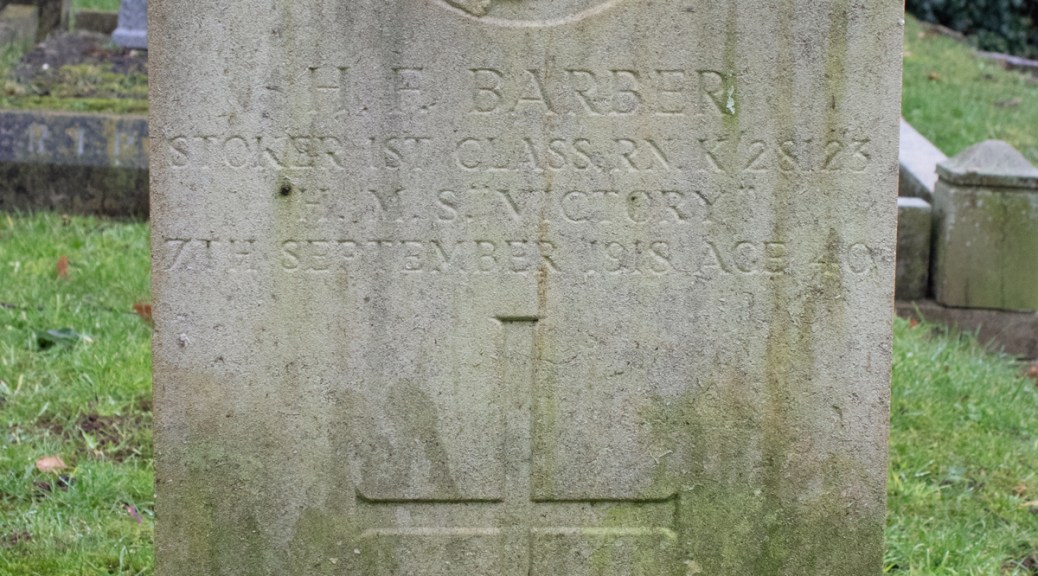
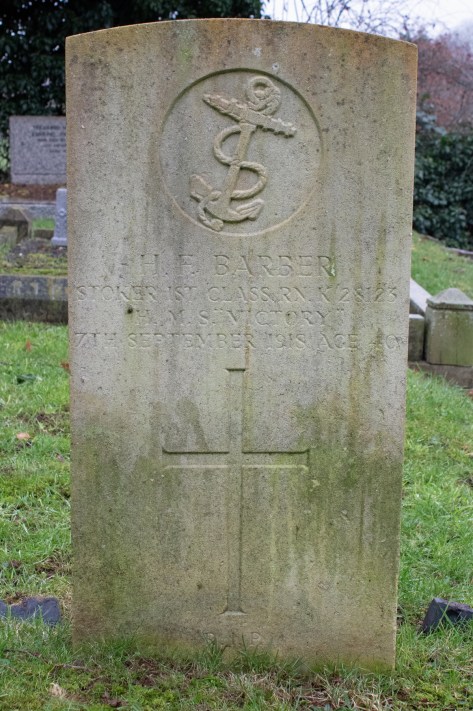
Herbert took on the role of Stoker 1st Class, and was sent to HMS Victory – the Royal Naval Dockyard in Portsmouth, Hampshire – for his training. He remained there for six months – including ten days in the cells for an unrecorded offence – before being sent down the coast to Dartmouth in Devon.
Stoker Barber remained on-shore for his naval career. By July 1917 he had returned to Portsmouth, and this is where he would stay for the next fourteen months. In the summer of 1918 he fell ill, and was admitted to the Royal Naval Hospital in Haslar with pneumonia. The condition would prove his undoing: he passed away on 7th September, at the age of 40 years old.
Barber, Pte. [sic] HF, husband of Mrs Barber of Weston Favell, and son of Mr and Mrs F Barber, Great Billing, died of pneumonia on September 7, after four days’ illness at RN Hospital, Haslar.
[Northampton Mercury – Friday 20 September 1918]
The body of Herbert Frederick Barber was taken back to Northamptonshire for burial. He was laid to rest in the Great Billing Roman Catholic Cemetery.
Agnes was left to raise her children alone. The 1939 England and Wales Register found her living at 10 High Street, Weston Favell, next door to her son Fred and his family. Working as a small shop keeper, she also had two boarders to bring in some additional money.
Agnes lived on until the age of 98: she died on 27th February 1975.
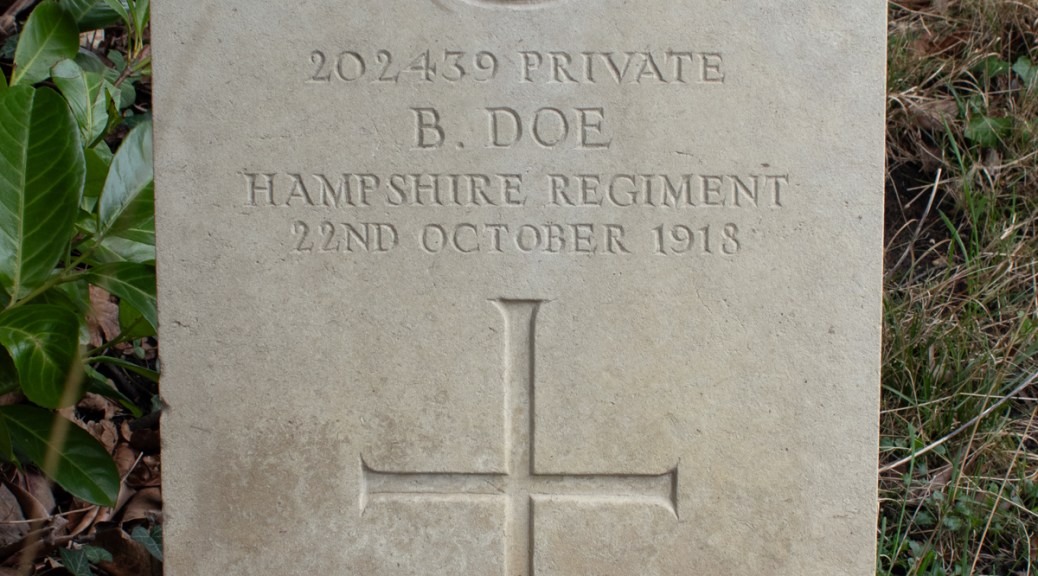
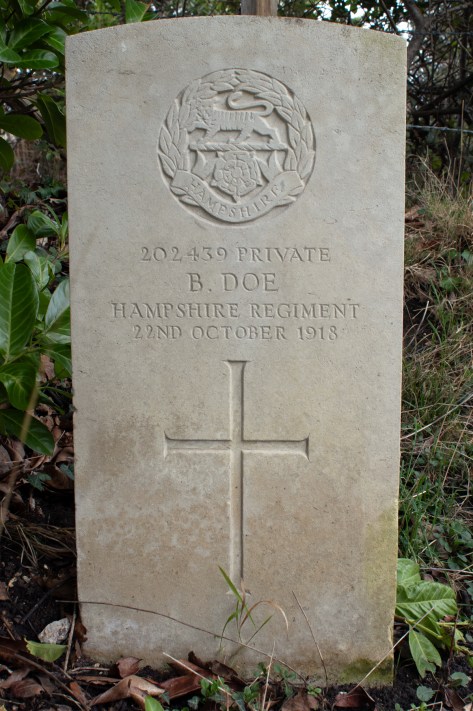
Bert Doe was born in Woking, Surrey, in 1881. One of twelve children, his parents were France and Louisa Doe. Francis – who went by his middle name, John – was a general labour and, over the years, his work took the family across the south of England. The 1891 census found the Does living in the village of Sopley, Hampshire, and this is where they seemed to settle.
There are large gaps in Bert’s early life, On 19th April 1916, he married Ellen Lackey. She was a broom maker’s daughter from Lyndhurst, Hampshire, and the couple had a son, Francis, who had been born a few weeks before they exchanged vows.
By the summer of 1918, Bert had enlisted in the army. He was attached to the Hampshire Regiment, but at some point had transferred over to the 441st Agricultural Company of the Labour Corps. Moves of this nature were often a way to rehabilitate injured or sick servicemen, and it is apparent that Private Doe fell into the latter category.
In October 1918, Bert had fallen ill with a combination of influenza and pneumonia. He was admitted to the Union Infirmary in Winchester, Hampshire, but the conditions were to prove too severe. He died on 22nd October 1918, at the age of 37 years old.
It would seem that Ellen was living in the East Boldre area of the New Forest by this point, and it was in the village’s St Paul’s Churchyard that her husband was laid to rest.
With a young son to raise, Ellen moved back in with her parents, Silas and Anna Lackey. The 1921 census found them living in Warsash Road, Sarisbury, Hampshire. Silas was employed as a labourer, while two of Ellen’s brothers were working as hawkers. Shockingly to today’s mindset, the census document records the family as ‘gipsies’.
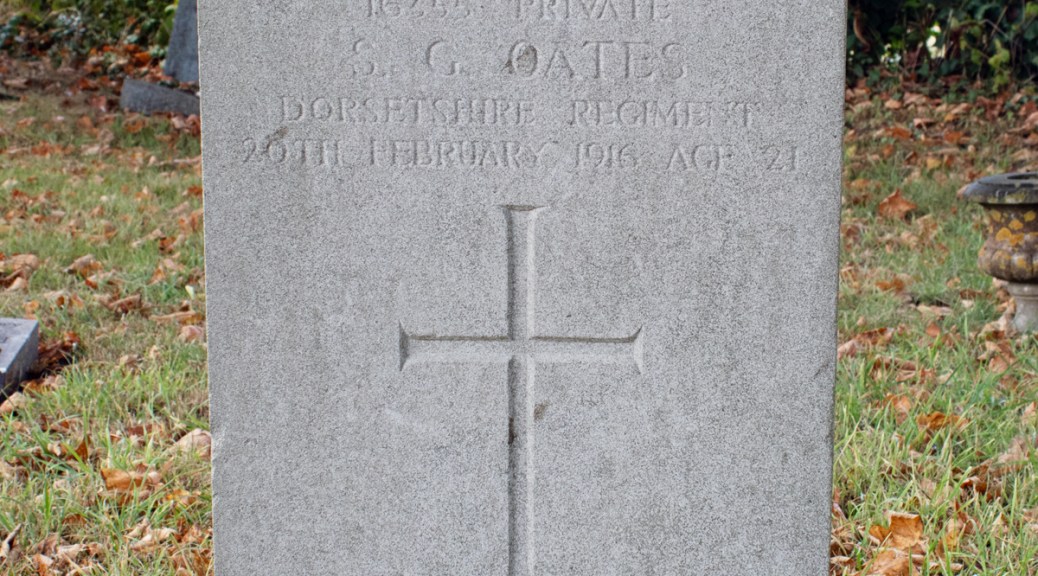
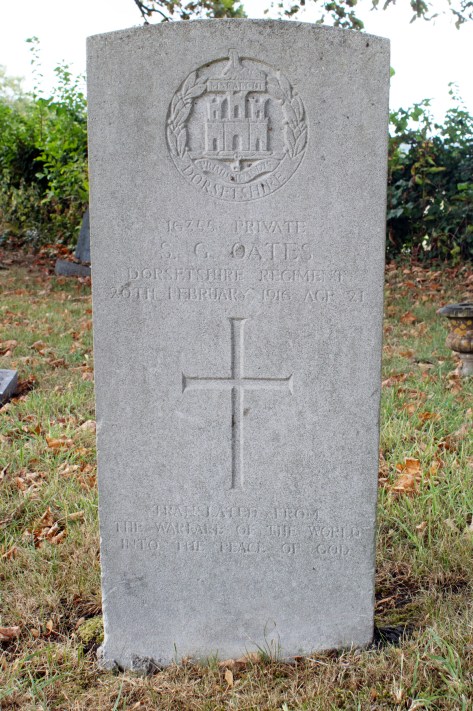
Sidney George Oates was born in the spring of 1895, and was the oldest of three children – all boys – to John and Eliza Oates. John was a general labourer from Parkstone, Dorset, but it was in the village of Odcombe in Somerset that the family were born and raised.
Eliza died in 1899, and John was left to raise three young children on his own. He re-married, to a Lucy Moores, but the a split of the family followed the wedding. Sidney’s younger brothers stayed with their father and his new wife, while Sidney himself was looked after by his maternal grandparents. Job and Elizabeth Green lived in Buckhorn Weston, a village to the west of Gillingham, Dorset.
When he finished his schooling, Sidney was apprenticed to a carpenter. War was on the horizon, however, and he soon stepped up to play his part. As with many others, his service papers have been lost to time, but it is clear that he had enlisted in the Dorsetshire Regiment no earlier than August 1915.
Private Oates was assigned to the 7th (Reserve) Battalion and sent to a training camp near Wool, Dorset. While there, however, he caught pneumonia, and was admitted to a military hospital in the village. The condition was to prove fatal: he passed away on 20th February 1916, aged just 21 years old.
The body of Sidney George Oates was taken back to Buckhorn Weston for burial. He was laid to rest in the village’s cemetery.
Sidney’s younger brother Edward also served in the First World War. A Pioneer in the Royal Engineers, he was killed in action in northern France on 12th April 1917. He was buried in Mory Abbey Military Cemetery to the north of Bapaume.
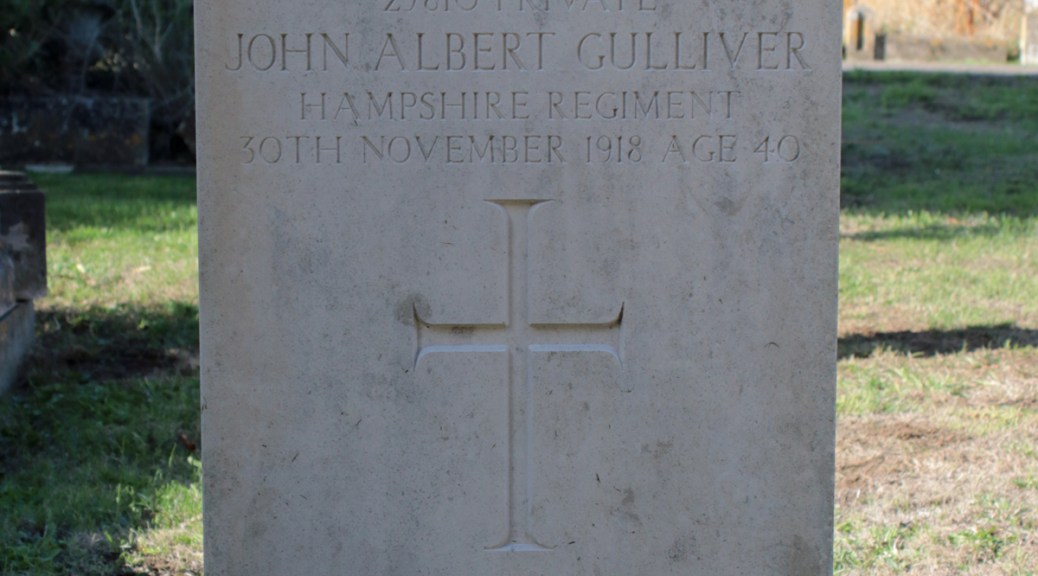
John Albert Gulliver was born in the summer of 1878. He was the second of six children – and the first boy – to farmers John and Ruth Gulliver. The family were raised in the Wiltshire village of Steeple Ashton, but had moved to Hilperton, on the outskirts of Trowbridge, by the time their eldest son had turned ten years old.
John Jr found work as a builder’s labourer when he finished his schooling. The 1911 census recorded him as living with his parents and sister on Horse Road, Hilperton, although the document suggests he was working in Edington, six miles to the south of the village. The Gulliver family also had a visitor – Bristol-born Albert Davies, who was a Lance Corporal in the Coldstream Guards.
When war broke out, John Jr was called upon to play his part. His service records have been lost to time, but it is clear that he had joined up by 1917. There is some confusion over his military service, however.
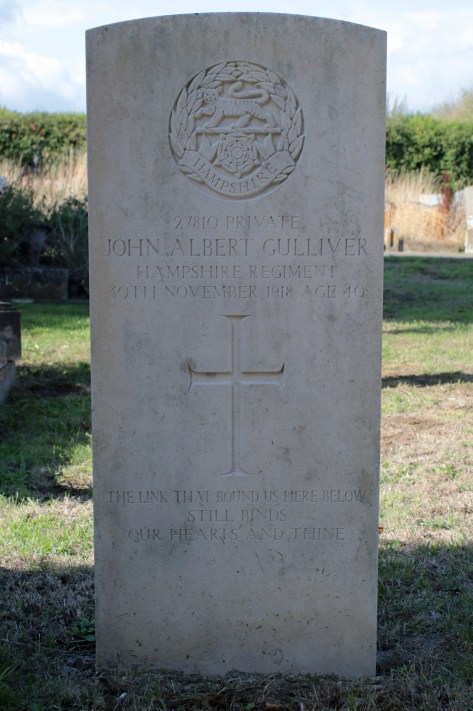
The Commonwealth War Graves Commission records give Private Gulliver’s initial unit as the 3rd Battalion of the Hampshire Regiment, and he was awarded a ‘wounded stripe’ following an injury on 10th September 1917. However, John’s Medal Roll Index Card suggests he joined the Duke of Cornwall’s Light Infantry. Either way, Private Gulliver did not appear to spend any time overseas and, by the autumn of 1918, he had transferred to the 442nd Agricultural Company of the Labour Corps.
Private Gulliver survived the war, but his health had been impacted. He had contracted pneumonia, and passed away at home on 30th November 1918. He was 40 years of age.
The body of John Albert Gulliver was laid to rest in the tranquil grounds of Hilperton Cemetery, not far from where his grieving parents still lived.
Albert Dobson was born in Bridlington, Yorkshire, on 7th April 1896. One of seven children, his parents were John and Annie Dobson. John was a bricklayer, and, when he completed his schooling, Albert was apprenticed to him. The 1911 census found the family living in a small terraced house at 55 St John’s Walk, on the outskirts of the town.
Bricklaying was not what Albert wanted from a career and, on 19th July 1913, he enlisted in the Royal Navy. Below the age to formally enlist, he was taken on with the rank of Boy 2nd Class, and sent to HMS Vivid – the Royal Naval Dockyard in Devonport, Devon, for his training.
Over the next nine months, Albert learnt the tools of his trade. Promoted to Boy 1st Class in October 1913, he spent time on board the battleship HMS Irresistible, before moving to HMS Pembroke, Chatham Dockyard in Kent. While he was there, he came of age, and was fully inducted into the Royal Navy as an Ordinary Seaman. Albert’s service papers show the man he had become: he was 5ft 7ins (1.7m) tall, with brown hair, blue eyes and a fresh complexion.
In April 1914, Ordinary Seaman Dobson was assigned to the new cruiser HMS Lowestoft. She would become his home for the next two years, and, while his annual reviews were average (character varying from good to very good and ability from moderate to satisfactory), he did gain a promotion to Able Seaman on 26th April 1915.
A singular fatality to a naval seaman names Albert Dobson, age 30 [sic], a native of Bridlington, was investigated at the Royal Naval Hospital, Chatham, on Monday. On October 20th, Dobson was one of a working party engaged on a battleship in the Dockyard, when, owing to the breaking of a plank, he and three men fell a distance of about eight feet. The knee of one of the men caught him in the stomach, with the result that he sustained a rupture of the spleen. In hospital he developed pneumonia, and died. A verdict of “Accidental Death” was returned.
[Kent Messenger & Gravesend Telegraph: Saturday 2nd December 1916]
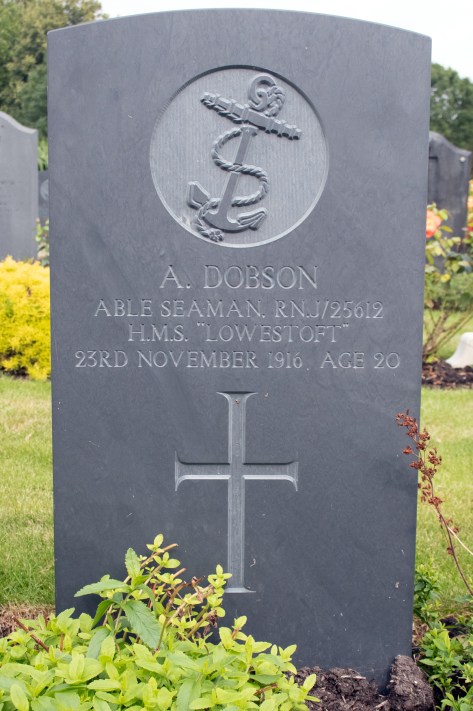
Able Seaman Dobson’s service papers confirm that the incident occurred as the men were transferring a torpedo from HMS Illustrious. He was just 20 years of age when he died on 23rd November 1916.
The body of Albert Dobson was taken to Woodlands Cemetery in Gillingham, Kent, close to the dockyard he had come to know as home. He was laid to rest in the graveyard’s naval section.


 Death and Service