Tag Archives: pneumonia

Rifleman William Garlick

Rifleman William Garlick

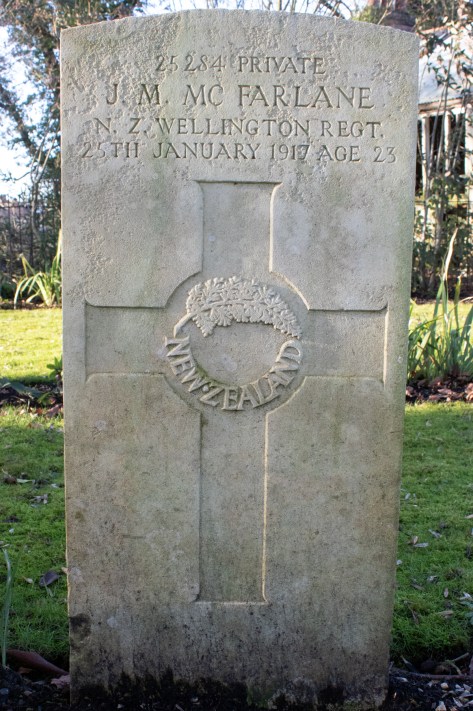
William Garlick was born in Whakatane, New Zealand, on 18th October 1888. The oldest of seven children, his parents were Wiltshire-born Charles and New Zealander Maria Garlick. There is little information about William’s early life, but it is clear that by the outbreak of war he was working as a shearer in Gisborne.

William enlisted on 19th November 1915, and was assigned to the New Zealand Rifle Brigade. His service records show that he was 5ft 9ins (1.75m) tall, and weighed 168lbs (76.2kg). He was noted as having black hair, brown eyes ad a dark complexion. He had a tattoo of an anchor on his upper right arm and a few boil scars on his leg.

Rifleman Garlick spent most of the next year training in the army camp at Trentham. On 25th September 1916 his unit finally left for Europe, and he set foot on British soil two months later. From Devonport, Devon, the battalion made its way to Sling Camp in Wiltshire. William was not to spend much time there, however, and within a fortnight he had fallen ill.

Admitted to the No. 3 New Zealand General Hospital in Codford, Rifleman Garlick had contracted pneumonia, and this was to get the better of him. William passed away on 13th December 1916: he was 28 years of age.

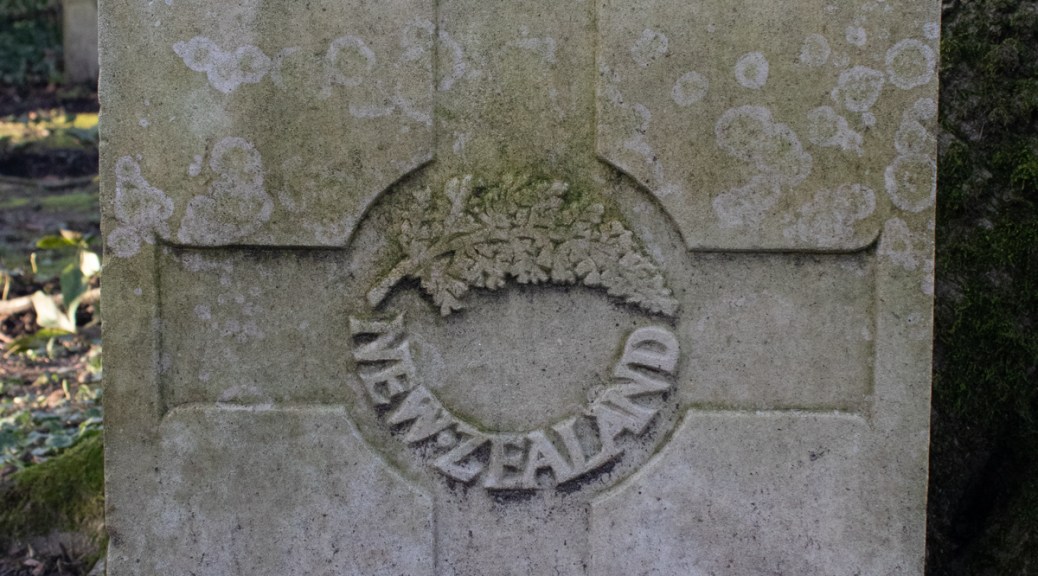
Thousands of miles from home, William Garlick was laid to rest in the ANZAC extension to St Mary’s Churchyard in Codford, not far from the medical facility in which he had breathed his last.


Gunner Alfred Potter

Gunner Alfred Potter

The early life of Alfred John Potter is a challenge to piece together. The second of four children – and the only son – to John and Alice, he only appears on the 1911 census. This shows him living with his grandparents, William and Sarah Endacott, at 3 Lawrence Terrace in Paignton, the town in which he was born. Alfred was 16 at this point, and was employed as a mason’s apprentice.

The same census return found Alfred’s parents and siblings were also living in Paignton, but in a 5-roomed cottage on Polsham Road. There is nothing to confirm why he had moved out, although with three sisters, his grandparents may have offered the space and privacy he wanted.

Details of Alfred’s time in the army are similarly lacking. That he had enlisted by March 1918 is clear. He joined the Royal Field Artillery and was assigned to the Command Depot in Ripon, North Yorkshire.

By the late summer of 1918, Gunner Potter had contracted pneumonia. He died on 6th September at the age of 23 years old. Records state that he passed away in Torquay and, given the proximity to his home town, it is likely that he had been admitted to a hospital or convalescent home in the area.

Alfred John Potter was laid to rest in Paignton Cemetery, overlooking his home town.


Chief Artificer Engineer Alfred Ward

Chief Artificer Engineer Alfred Ward

The life of Alfred Ernest Ward is a challenge to unpick. He lies at rest in Paignton’s sweeping cemetery in Devon, his headstone confirming that he was Chief Artificer Engineer on board the destroyer HMS Magic.

Alfred’s Pension Index Card confirms his beneficiary as his father, also called Alfred Ernest Ward, who lived at 41 Crown Hill Park in Torquay. Another document, the Naval Officer Casualty Docket, states that he died of pneumonia on 12th February 1919, while he was admitted to the Wallasey Cottage Hospital in Birkenhead on the Wirral.

There is a navy service record for an Alfred Ernest Ward, and, while there is nothing to definitively connect this to the man buried in Paignton, it seems likely that they are the same person. This Alfred was born in Huntingdon, Huntingdonshire, on 30th September 1876, and was working as a fitter and turner when he enlisted on 11th October 1897.

Over the eight years that the document records, Alfred rose from his initial rank of Engine Room Artificer 4th Class to Engine Room Artificer 2nd Class. His service details end on 5th December 1905, when he seems to have transferred to the Officer’s Section.

There are census records for the late 1800s for Ernest Ward (presumably forsaking Alfred to avoid confusion with his father). Alfred Sr working as a rope and marquee rick cloth maker. Married to Eliza Ward, the couple had three children, of whom Ernest was the oldest. By 1901, Engine Room Artificer Ward was assigned to HMS Furious, a cruiser based at Sheerness in Kent.

There are no further details for Chief Artificer Engineer Alfred Ernest Ward between 1905 and 1919, and his life during this time is destined to remain lost to time.


Private Thomas Legg

Private Thomas Legg

Thomas John Gladstone Legg was born in Dunster, Somerset, on 30th July 1898. The fourth of six children, his parents were John and Louisa Legg. John was a baker, and the family lived on West Street in the village.

By 1911, the Leggs had moved south, settling in Winsford, on the outskirts of Exmoor. Thomas was still in school, but his two older brothers were helping their father with the bakery business, and they had taken in a boarder – road worker John Jeffrey – to help bring in a bit of additional income.

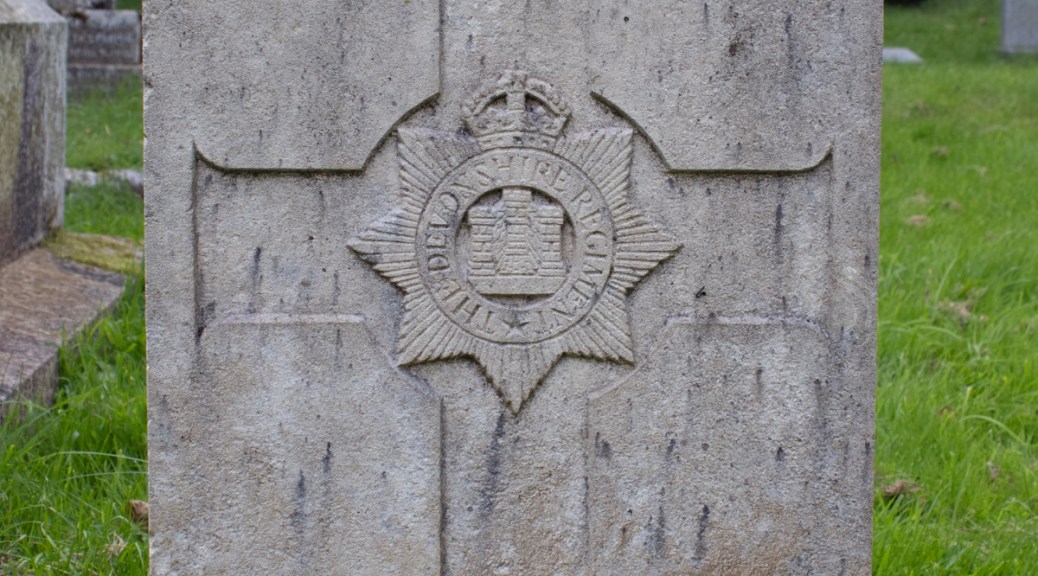
When war broke out, Thomas stepped up to play his part. There is little information available about his military service, but it is clear that he had enlisted in the Devonshire Regiment by the spring of 1918.

Private Legg was assigned to the 15th Battalion, although he soon transferred to the 474th Agricultural Company of the Labour Corps.

The profound sympathy of parishioners goes out to Mr and Mrs J Legg… who have sustained a double bereavement. On October 22nd their daughter, Miss Ivy Marion Legg, aged 23, succumbed to pneumonia. Their son, Pte J Legg, came home from training to attend his sister’s funeral, and he was attacked by pneumonia and died in a few days. Amid general tokens of respect and sympathy, the interments were made in Highbray Churchyard. Both father and mother have been seriously ill, but are now recovering. There are still several critical cases of complications following influenza in the parish.

[North Devon Journal: Thursday 14th November 1918]

Thomas passed away on 2nd November 1918: he was 20 years of age. He was laid to rest alongside his sister in All Saints’ Churchyard, High Bray.


Serjeant Edwin Huxtable

Serjeant Edwin Huxtable

Edwin Huxtable was born in the summer of 1863, the youngest of eight children to William and Sarah. William was a tailor and Sarah a dressmaker, and they raised their family in their home village of South Molton, Devon.

William’s two younger sons followed him into tailoring, although the family disappears from records for more than 20 years. William passed away in 1889, and a later newspaper report suggests that Edwin enlisted in the army in some capacity, serving in South Africa during the Second Boer War.

Back in Britain, Edwin married Hester Cole in 1904. She was a dressmaker from South Molton as well: the couple set up home and their business at 10 Broad Street in the village. They had two children: Sidney was born in 1905, and Herbert in 1906, although their younger boy passed away when just a babe-in-arms.

When war broke out, Edwin was called back into service. Details of his military career have been lost, but it is clear from what remains that he enlisted in the Devonshire Regiment, and served in the 11th (Reserve) Battalion. His previous time in the army was taken into account, and he was given the rank of Serjeant.

It is unclear whether Edwin saw any time overseas as part of the First World War, but his age and health were against him. Suffering from pneumonia, he was admitted to a hospital in Torquay. The lung condition got the better of him, however, and he passed away on 14th April 1915. He was 52 years of age.

Taken back to South Molton for burial, Edwin Huxtable was laid to rest in the village’s cemetery.


The 1921 census showed that Hestor was keeping up the family business. She was living in East Street, South Molton, and listed as a dressmaker and employer.


Private Alfred Darch

Private Alfred Darch

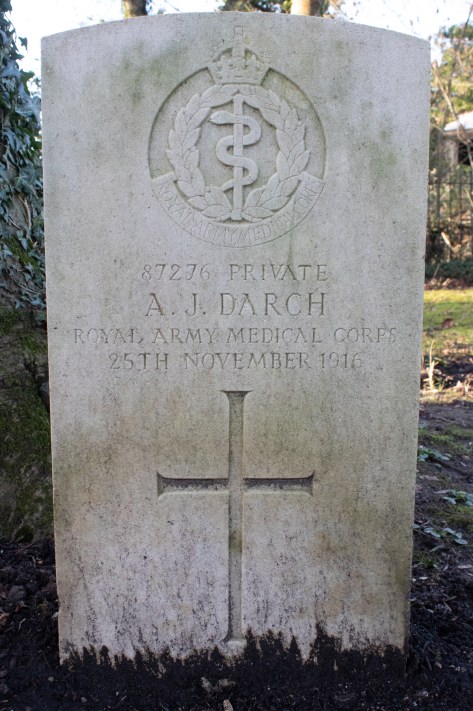
Alfred James Darch was born early in 1884, the second of seven children to James and Emily Darch. James was a postman and labourer from Somerset, but the family were brought up in Devon village of Clayhidon.

By the time of the 1901 census, the family had moved over the border to Wellington. Alfred had completed his schooling, and was working as a showmaker’s assistant. He committed himself to the role, and by 1911 was a shoemaker in his own right. By this point he was one of two of the Darch children to still be living with his parents: the family were settled at 22 Eight Acres Lane in Wellington.

When war broke out, Alfred stepped up to play his part. On 19th October 1916 he enlisted, joining the Army Medical Corps. His service records show that he was 5ft 4ins (1.63m) tall. They also suggested that his right leg was slightly shorter than his left, following an old dislocation. Private Darch had also had an operation for appendicitis five years previously.

Alfred was sent to Codford, Wiltshire, where the No. 3 New Zealand General Hospital was located. His time there was to be tragically short, however. On 17th November he was admitted himself, suffering with some breathing complications. The medical report noted that he was “vaccinated a fortnight ago. Bad, sore, inflamed arm. Reported sick eight days later with general malaise, slightly sore throat, slight headache – some cough. He had one anti-typhoid inoculation 2 or 3 days before vaccination… Has had no [previous] chest trouble… Face flushed. Temp 104.8. Pulse 100. Tongue white in centre, red at sides. Breath extremely foul. Voice hoarse. Breathing quiet. Not distressed.”

Over the nest week, Private Darch’s health deteriorated. Pleurisy was suggested, but when he passed away, at 5:45am on 24th November 1916, the diagnosis was pneumonia. He was 32 years of age.

Alfred James Darch was laid to rest in the extension to St Marys Church, Codford, not far from the base to which he had been sent just weeks before.


Rifleman Edward Foster

Rifleman Edward Foster

The early life of Edward Foster is destined to remain lost in the mists of time. Born in Sydenham, Christchurch, New Zealand on 16th May 1883, the only family connection available is Arthur Norman, a half-brother.

By 1916, Edward was working as a labourer and living in the British Empire Hotel in Gisborne. At this point, however, war was raging across the world, and New Zealanders were being called upon to serve their King.

Edward stepped up to play his part, and his service records confirm the man he had become. At 32 years of age, he stood 5ft 9ins (1.75m) tall and weighed 11st 4lbs (71.7kg). He had light brown hair, blue eyes and a fair complexion and, interestingly, his medical report notes that, while he was fit to serve, he was of very deficient intelligence. Edward’s papers also report that in around 1906 he had spent two months in a Wanganui prison.

Assigned to the New Zealand Rifle Brigade, Rifleman Foster’s unit set sail from Wellington on 19th August 1916. Their ship, the SS Aparima, would arrive in Devonport, Devon towards the end of October. Edward spent nearly three weeks of the of the voyage in the ship’s hospital, suffering from influenza.

When the brigade arrived in Britain, they were marched to camp in Sling, near Bulford, Wiltshire. Rifleman Foster’s health was still causing issues, however, and, on 10th November 1916, he was transferred to the No. 3 New Zealand General Hospital, near the Codford ANZAC base. He was suffering from bronchial pneumonia, and this was to take his life. He died on 14th November 1916, at the age of 33 years old.

Edward Foster was laid to rest in the new extension to St Mary’s Churchyard in Codford. Thousands of miles from home, he was surrounded by tens of his army colleagues.


Rifleman John Delaney

Rifleman John Delaney

Little information is available on the early life of Rifleman John Delaney. Born in Launceston, Ausrtalia, on 31st January 1888, by the summer of 1916 he was working as a shepherd in the New Zealand settlement of Whatatutu.

It was here that he enlisted in the country’s Expeditionary Force, and was assigned to the Rifle Brigade. His service records note that, at 28 years of age, he was 5ft 9ins (1.75m) tall and weighed 143lbs (64.9kg). The record confirms that he had fair hair, grey eyes and a fair complexion. He had tattoos on both forearms, and a scar on his left foot. The service docmentation also gives his next-of-kin as his friend, Mr G Garrett of Springbank, near Canterbury, on New Zealand’s South Island.

John’s unit boarded the TSS Maunganui in Wellington on 15th November 1916, embarking on the ten week voyage to Britain. Arriving in Devonport on 29th January 1917, Rifleman Delaney arrived at the ANZAC camp in Codford, Wiltshire, a few days later.

The journey had taken its toll on a lot of the newly arrived troops. John was admitted to the No. 3 New Zealand General Hospital on the outskirts of the camp with pneumonia on 10th February. His condition was to prove too severe, however, and he passed away just seven days later. He was 29 years of age.

John Delaney was laid to rest in the specially extended graveyard of St Mary’s Church in Codford.


Across the available documentation, John’s rank is given as both Private and Rifleman. I have used the latter rank, as this is what is provided by the Commonwealth War Graves Commission.


Rifleman John Delaney
(from findagrave.com)
Able Seaman Arthur Crisp

Able Seaman Arthur Crisp

Arthur Edward Crisp was born in 16th March 1899 in the Norfolk village of South Creake. The youngest of six children, his parents were blacksmith Henry Crisp and his wife, Sarah.

When war broke out across Europe, young Arthur had already had some experience of seamanship, and was keen to play his part. He joined the Royal Navy on 7th April 1915 and, given his age, he was assigned the rank of Boy 2nd Class. Initially sent to HMS Powerful, he was trained there for three months, rising to the rank of Boy 1st Class.

On 26th July 1915, Arthur was assigned to the battlecruiser HMS New Zealand, and would remain on board for the next two years. During this time, he came of age, and was formally inducted into the Royal Navy as an Ordinary Seaman. His service records show that he was 5ft 5ins (1.65m) tall, with brown hair, grey eyes and a fresh complexion.

His stint on New Zealand also exposed him to naval warfare, as she was heavily involved in the Battle of Jutland in May 1916. Ordinary Seaman Crisp came through, however, and remained part of the battlecruiser’s crew for a further year.

After a short time on shore, where he was based at HMS Victory, the Royal Naval Dockyard in Portsmouth, Hampshire, Arthur’s next posting was on board HMS Wallington. A former trawler, she had been converted to a boom defence vessel, she protected the dockyard in Grimsby. In November 1917, while based in the Lincolnshire town, Arthur was promoted again, rising to Able Seaman.

The following March, Arthur moved again, and was assigned to HMS Attentive, the shore base for the Dover Patrol. He would not remain there for long, however, and was admitted to the Royal Naval Hospital in Chatham, Kent. He passed away on 17th March 1918, from an intriguing combination of gunshot wounds to his chest and pneumonia. He had turned 19 years old the day before.

The body of Arthur Edward Crisp was taken to nearby Gillingham for burial. He was laid to rest in the military section of the town’s Woodlands Cemetery.


Able Seaman Arthur Crisp
(from findagrave.com)

Matron Jean Walker

Matron Jean Miles-Walker

Jean Nellie Miles Walker was born in Hamilton, Tasmania, on 16th November 1878. Her parents were Arthur and Louisa Walker, and her surname moves from Walker to Miles-Walker, depending on the document. There is little information about Jean’s early life, but by 1906 she had taken up nursing.

When war broke out, Jean was quick to step up and help those who were fighting. Initially enlisting on 27th September 1914, she was assigned to a hospital ship a year later, arriving in Ismailia, Egypt, in January 1916.

Now a Sister in the Australian Army Nursing Service, Jean’s records shot the woman she had become. At 36 years of age, she was 5ft 10ins (1.78m) tall, and weighed 128lbs (58kg). She had dark brown hair, brown eyes and a dark complexion.

Over the next couple of years, Sister Walker moved to where she was needed. By September 1916 she was attached to the No. 15 General Hospital in Alexandria, by the end of the year saw her in the 3rd Australian Auxiliary Hospital in London. Jean’s service records note that she was mentioned in despatches on 1st October 1916, but there is no clarification about why she was recognised.

Jean was promoted to Matron in the summer of 1917, and over the next year, she spent time at hospitals in both Britain and France. By the autumn of 1918, she had moved to the No. 1 Australian General Hospital in Sutton Veny, Wiltshire. It was while based here that she fell ill, contracting a fatal combination of influenza and pneumonia.

Sister Walker passed away in the Sisters’ Quarters on 30th October 1918. She was just a couple of weeks short of her 40th birthday.

Jean Nellie Miles Walker was laid to rest in the grounds of St John’s Church, Sutton Veny, close to the hospital in which she had served.


Matron Jean Walker
(from findagrave.com)