Tag Archives: Private

Private George Topp

Private George Topp

George Rose Topp was born in the autumn of 1891 in the Dorset village of Okeford Fitzpaine. The youngest of four children, he was the second son to Herbert and Louisa Topp. The 1901 census found the family living and working at Knacker’s Hole Farm, alongside George and Olive Savory.

When he finished his schooling, he helped with the farm; by the time of the 1911 census, they had moved on from Okeford Fitzpaine, and had taken up employment at Barter’s Farm in Hinton St Mary, Dorset.

War broke out in the summer of 1914, and George stepped up to play his part. There is little information about his time as a Private in the Queen’s Own Dorset Yeomanry, but a later newspaper report detailed what happened to him.

On Saturday morning a profound sensation was created at Hinton St Mary, when it became known that Mr George Rose Topp… had shot himself. It appears that the deceased was a trooper in the Dorset Yeomanry, who were mobilised in August 1914, and had been home on leave for three weeks, and was to return to camp on the day of the tragedy. Although the deceased had helped his father on the farm for some years, yet during the three weeks he had been home he had not been seen about very much. The deceased was well known throughout the district, and was very highly respected. Much sympathy is felt for the family in the sad occurrence.

An inquest was held on Monday at Barter’s Farm… [Herbert] deposed that his son, who had been living with him, was 23 years of age, and a bachelor… He was home on leave… and was supposed to return on Saturday, July 10th. He had been very bad in his head since he came home and had hardly been out. He had always complained of pains in his head, but not so much lately. He had been seen by the army doctor several times. He did not know of anything else except his head, and he had no trouble that he was aware of. He had never threatened to take his life. He was going by the eleven o’clock train on the day of the tragedy. He got up about seven o’clock and had his breakfast. Witness saw him about 9.45am, and he was getting ready to go to the station. He had packed everything ready to start. It was witness’s gun he used which he was in the habit of using, but had not done so for some time. The gun was kept in the kitchen. He did not think there were any cartridges in the house and he thought he used a “Bonex.” He did not know he was going to use the gun. The gun had a very light pull, and he had never seen any cartridge in the house like the one produced. He left no writing, and the gun had not been lent.

Mr Clifford Rose (cousin of the deceased) corroborated [Herbert’s] evidence, and said that on the morning of the tragedy deceased seemed brighter. He did not think he touched the gun at all before whilst home.

Henry Andrews… was working at Barter’s Farm on Saturday repairing the tibs to the back kitchen. They were out and in the house all the time, but he did not see deceased that morning. He heard a noise before the report of the gun about 10am. He went in and deceased was lying on his back with the gun by his right side. He had his coat on and he called for assistance. They heard the report, and Mrs Topp and Miss Topp were saying he was shot. The door he went in was shut, as was also the other door. He thought Mrs Topp thought he was shot through hearing the gun go off. The head was lying towards the furnace, and the body was in the same position when the police arrived. The gun had not been moved before the police came.

Dr THE Watts-Silvester deposed that he had attended deceased about three months ago for influenza. He knew nothing of the pains in the head. He was called and saw deceased at Barter’s Farm soon after 10am. In the back kitchen the deceased was lying dead on his back with his feet towards the two doors, and head resting on a large saucepan close to the copper. Almost the whole of the top of his head had been blown off to a level below the eyes, both having gone. It had practically disappeared. The gun must have been very close. Below the right chin there was a black mark.

The jury returned their verdict that the cause of death was a gunshot wound in the head whilst of unsound mind.

[Southern Times and Dorset County Herald: Saturday 17th July 1915]

George Rose Topp was just 23 years old when he ended his life on 10th July 1915. He was laid to rest in the church cemetery in the village of Hinton St Mary.


Private Sidney Oates

Private Sidney Oates

Sidney George Oates was born in the spring of 1895, and was the oldest of three children – all boys – to John and Eliza Oates. John was a general labourer from Parkstone, Dorset, but it was in the village of Odcombe in Somerset that the family were born and raised.

Eliza died in 1899, and John was left to raise three young children on his own. He re-married, to a Lucy Moores, but the a split of the family followed the wedding. Sidney’s younger brothers stayed with their father and his new wife, while Sidney himself was looked after by his maternal grandparents. Job and Elizabeth Green lived in Buckhorn Weston, a village to the west of Gillingham, Dorset.

When he finished his schooling, Sidney was apprenticed to a carpenter. War was on the horizon, however, and he soon stepped up to play his part. As with many others, his service papers have been lost to time, but it is clear that he had enlisted in the Dorsetshire Regiment no earlier than August 1915.

Private Oates was assigned to the 7th (Reserve) Battalion and sent to a training camp near Wool, Dorset. While there, however, he caught pneumonia, and was admitted to a military hospital in the village. The condition was to prove fatal: he passed away on 20th February 1916, aged just 21 years old.

The body of Sidney George Oates was taken back to Buckhorn Weston for burial. He was laid to rest in the village’s cemetery.


Sidney’s younger brother Edward also served in the First World War. A Pioneer in the Royal Engineers, he was killed in action in northern France on 12th April 1917. He was buried in Mory Abbey Military Cemetery to the north of Bapaume.


Private William Loxley

Private William Loxley

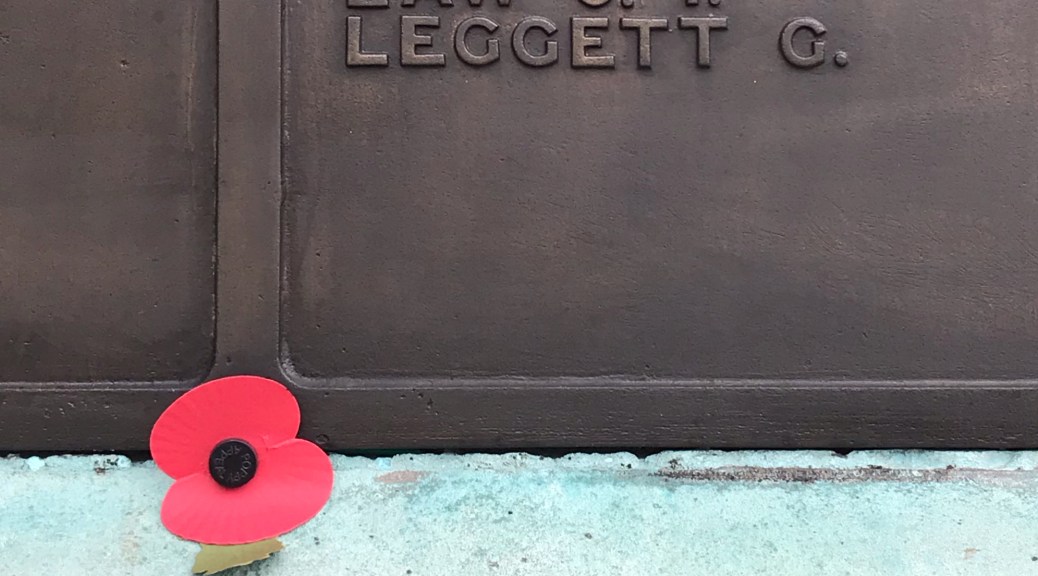
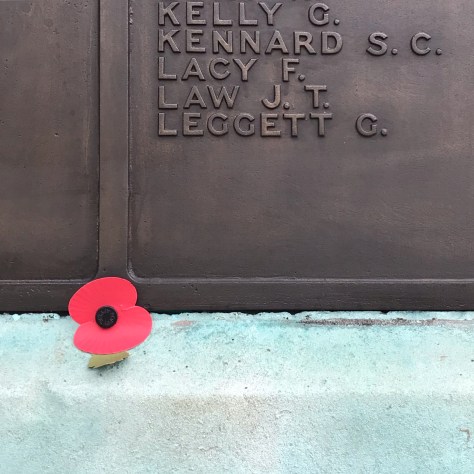
LOXLEY, WILLIAM, Private, No. 14657, 4th Battn. Coldstream Guards, eldest s. of the late William Loxley, Engine Fitter, by his wife, Ellen, dau. of the late Edward Stringer; b. Ecclesfield, co. York, 26th Oct. 1885; educ. there; was a stove and grate fitter; volunteered and enlisted 9 Jan. 1915; went to France, 15 Aug. 1915, and died in Convalescent Home, Westbury, co. Wilts, 27 Nov. 1915, of wounds received in action during the Battle of Loos, 27-29 September 1915. He m. at Grimsby, 4 Aug. 1912, Edith Mary (3, Burton Street, Langsett Road, Sheffield, widow of Philip Munty, and dau. of the late Frederick Charles Unwin.

De Ruvigny’s Role of Honour

William was the second of four children to William and Ellen. The family lived at 50 Town End Road in Ecclesfield, a small stone-built cottage overlooking grassland on the edge of the village.

Aside from his entry in de Ruvigny’s Role of Honour, there is no further information about his widow, although the British Army Register of Soldiers’ Effects names both Edith and William’s nephew – Faedon Muntz – as beneficiaries.

Injured at Loos, a local newspaper provided an obituary:

Giving up his profession for the Army, [William] was drafted out to France, and received a bullet through the forehead. After a long treatment in hospital he was, a fortnight ago, invalided home for ten days, leaving only a few days ago, then appearing to making rapid progress. He had a relapse, and on Friday his memory left him. Later he became delirious and passed away.

[Sheffield Daily Telegraph: Monday 29th November 1915]

William Loxley died at the Haywood House Hospital in Westbury, Wiltshire, on 27th November 1915: he was 30 years of age. His body was laid to rest in the town’s cemetery.


Corporal Ernest Ritchens

Corporal Ernest Ritchens

Ernest Ritchens was born in the summer of 1872 in the Wiltshire village of Semington. The youngest of nine children, he was one of seven boys to Isaac and Sarah Ritchens. Isaac was a farm labourer, and this is a job into which Ernest also followed when he completed his schooling.

Farming was not something Ernest wanted to be in for the long term, however, and, after the death of his parents – Isaac in 1895, and Sarah four years later – he joined the army. Details of his military career have been lost to time, but it seems that he joined the Wiltshire Regiment and, as a Private, spent time in South Africa. By the time he was stood down, he had risen to the rank of Lance Corporal.

Back home and, in the summer of 1907, Ernest married Sarah York, a wheelwright’s daughter from Hilperton near Trowbridge, Wiltshire. The newlyweds would set up home in the village, and go on to have four children. The 1911 census found the young family living on Devizes Road, Ernest back working as a farm labourer.

When war broke out, Ernest was again called upon to play his part . He was given the rank of Corporal, and attached to the Wiltshire Regiment (although other records he was assigned to the Hampshire Regiment). He did not appear to have spent any time overseas and, was soon transferred over to the 160th Company of the Labour Corps.

DEATHS

RITCHENS – On February 1st, at No. 1, Australian Hospital, Sutton Veny, Corporal Ernest Ritchens, of the Labour Corps, and formally of the Wilts Regiment, resident of Hilperton…

[Wiltshire News: Friday 7th February 1919]

Ernest Ritchens was 46 years of age when he passed away in 1919. While the cause us not reported, it is likely to have been an illness of some sort. His body was taken back to Hilperton, and he was laid to rest in the village cemetery.


Private John Gulliver

Private John Gulliver

John Albert Gulliver was born in the summer of 1878. He was the second of six children – and the first boy – to farmers John and Ruth Gulliver. The family were raised in the Wiltshire village of Steeple Ashton, but had moved to Hilperton, on the outskirts of Trowbridge, by the time their eldest son had turned ten years old.

John Jr found work as a builder’s labourer when he finished his schooling. The 1911 census recorded him as living with his parents and sister on Horse Road, Hilperton, although the document suggests he was working in Edington, six miles to the south of the village. The Gulliver family also had a visitor – Bristol-born Albert Davies, who was a Lance Corporal in the Coldstream Guards.

When war broke out, John Jr was called upon to play his part. His service records have been lost to time, but it is clear that he had joined up by 1917. There is some confusion over his military service, however.

The Commonwealth War Graves Commission records give Private Gulliver’s initial unit as the 3rd Battalion of the Hampshire Regiment, and he was awarded a ‘wounded stripe’ following an injury on 10th September 1917. However, John’s Medal Roll Index Card suggests he joined the Duke of Cornwall’s Light Infantry. Either way, Private Gulliver did not appear to spend any time overseas and, by the autumn of 1918, he had transferred to the 442nd Agricultural Company of the Labour Corps.

Private Gulliver survived the war, but his health had been impacted. He had contracted pneumonia, and passed away at home on 30th November 1918. He was 40 years of age.

The body of John Albert Gulliver was laid to rest in the tranquil grounds of Hilperton Cemetery, not far from where his grieving parents still lived.


Private Ernest Kendall

Private Ernest Kendall

Ernest George Kendall was born in December 1891 and was the fourth of five children to Charles and Mary Kendall. Charles was a farm labourer from Dorset, and the family were living at Shearstock Farm in the town of Gillingham when Ernest was born.

By the time of the 1911 census, Ernest had found work as a farm labourer, alongside his father. When war broke out, however, Ernest felt the need to serve his country.

Full details of Private Kendall’s military service have been lost to time, but he had enlisted in the Dorsetshire Regiment by the autumn of 1915, and was assigned to the 5th (Service) Battalion. His unit left Britain on 15th October, and headed for the Eastern Mediterranean and Gallipoli.

Over the next few months, Ernest was caught up in fierce fighting. He was evacuated to the Greek island of Mudros in December 1915, and spent the winter in Egypt. By the summer of 1916, his unit had moved to France, and fought at the Somme.

At some point, Private Kendall returned to Britain, and transferred to the Labour Corps. The move was likely to be due to an illness or injury, although there is no documentation to confirm this either way. Attached to the 477th Agricultural Company, he seems likely to have been based in Wiltshire. Ernest was admitted to the Military Hospital in Fovant for reasons unknown, and passed away there on 12th November 1918, a day after the Armistice was signed: he was 24 years of age.

The body of Ernest George Kendall was taken back to Dorset for burial. By this point his family had moved to East Stour, and he was laid to rest in the village’s Christ Church graveyard.


Private Seth Suter

Private Seth Suter

Seth Suter was born in the Dorset village of Silton on 8th March 1887. One of five children, he was the son of farm labourer Seth Suter and his wife, Mary. Seth Sr died in 1899, and, by the time of the next census, his son had taken a job as a stable boy at the Silton Farm, next to where the family lived on Waterloo Road.

The 1911 census recorded Seth living with his mother at Church Cottage in the village. Now employed as a domestic gardener, three of his siblings were also living there, and, while Mary was not working, there were four wages coming in to support the family.

At the start of 1916, Seth married Jane Sissons. There is little information about her but, while the couple married in Shaftesbury, she seems to have been born in Driffield, Yorkshire. The couple would not go on to have any children.

Details of Seth’s military life are sparse. With the war entering its final months, he enlisted in the Somerset Light Infantry on 13th May 1918. Assigned to the 3rd (Reserve) Battalion, he was sent to Ireland for training. Private Suter’s time there was not to be lengthy: he passed away through causes unknown just a month after joining up, on 12th June 1918. He was 31 years of age.

The body of Seth Suter was taken back to Dorset for burial. He was laid to rest in the quiet graveyard of St Nicholas’ Church in his home village of Silton.


Seth’s younger brother Richard also served in the First World War. He joined the 7th (Service) Battalion of the Duke of Edinburgh’s (Wiltshire Regiment), and rose to the rank of Lance Corporal.

He was injured during the fighting to the south of Valenciennes in France, dying of his wounds on 4th November 1918, one week before the end of the war. He was laid to rest in Busigny Communal Cemetery.


Second Lieutenant John Morrison

Second Lieutenant John Morrison

John Lindsay Morrison was born in Elma, Ontario, Canada, on 1st February 1894. One of eight children, his parents were farmers William and Elizabeth Morrison.

When John completed his schooling, he found employment as a bank clerk. He gave this up, however, when war broke out, enlisting in the Canadian Expeditionary Force on 24th August 1915. His service papers show that he was 5ft 7ins (1.7m) tall, with black hair, grey eyes and a dark complexion. No distinguishing marks were noted, but his religion was given as Presbyterian.

Private Morrison arrived in Britain on 11th April 1916. Assigned to the 32nd Battalion of the Canadian Infantry, he was billeted in Shorncliffe, Kent. His services records note that he arrived in France in June, and was promoted to Lance Corporal in February 1917. By May he was back in Britain, at Hursley Park, undertaking an aeronautics course with the Royal Flying Corps.

This seems to have been the route John wanted to take, and on 18th February 1918, he took a commission as a Second Lieutenant. He was based at the 29th Training Depot Station in East Boldre, Hampshire.

The role of a pilot was fraught with risk and, on 1st May 1918 – a month after the formation of the Royal Air Force – John was injured. His aircraft, an Avro 504, sideslipped while taking off from East Boldre airfield.

The court having viewed the wreckage at the scene of the accident, and having examined the wreckage area are of the opinion that 2nd/Lt. Morrison stalled Avro on a left hand turn and had not sufficient height to extricate the machine from the resulting spin.

Second Lieutenant Morrison would recover from his injuries, but more was to follow. Just three months later, on 31st July 1918, he had taken a Sopwith Camel up, and the aircraft crashed:

The cause of the accident was due to an error of judgement of pilot, in that he probably switched off at top of turn and had not time to get his nose down. Engine cut out at top of turn, causing machine to stall and then spin.

John was not to be so fortunate this time around. He was killed when the aircraft his the ground. He was 24 years of age.

Thousands of miles from home, the body of John Lindsay Morrison was laid to rest alongside colleagues from the squadron in St Paul’s Churchyard, East Boldre.


Private Clarence Jennings

Private Clarence Jennings

Clarence Albert Carrison was born on 6th June 1896 in Port MacDonnell, South Australia. His early life is a challenge to uncover: his father is noted as being Robert Carrison, while his mother was Mary Jennings. His parents had eleven other children, whose surnames vary between Carrison and Jennings.

Papers confirm that Clarence went to Mount Schank School from 29th July 1902 to 10th November 1904, although his attendance seems to have been a little haphazard. Intriguingly, his parents are not recorded, but Mr H Ulrich, a carpenter, is noted as being his guardian.

When he finished his schooling, Clarence found work as a labourer. War broke out on the other side of the world in the summer of 1914, and he was called upon to play his part. He enlisted in the Australian Imperial Force on 30th June 1917, and, Robert having passed away nine years earlier, he seems to have reverted to his mother’s name, Jennings.

Private Jennings’ service papers outline the young man he had become. He was a little over 5ft 7ins (1.7m) tall, and weighed 168lbs (76.2kg). He was recorded as having brown hair, blue eyes and a medium complexion.

Clarence spent the next three months training. On 30th October 1917, his unit left Australia for Europe, a journey that would take some eight weeks. The voyage was not uneventful for Private Jennings: he spent a night in the ship’s hospital with seasickness, then three weeks back there with mumps. His gratitude to be back on dry land when the HMAT Aeneas docker in Devonport on 27th December is likely to have been palpable.

Private Jennings was marched into camp in Sutton Veny, Wiltshire. Attached to the 33rd Battalion of the Australian Infantry, he moved to the nearby ANZAC base in Codford on 2nd January 1918, and would remain there for the next few months. This was not without its hiccups either, and he went AWOL from midnight on 7th February until 9:30am on 12th February. For this offence, he forfeited thirteen days’ pay.

By the end of that month, Clarence had fallen ill again. He was admitted to the No. 3 New Zealand General Hospital in Codford, suffering from measles and bronchitis. This combination of ailments would prove Private Jennings’ undoing: he passed away on 22nd March 1918, at the age of just 21 years old.

Thousands of miles from home, the body of Clarence Albert Jennings was laid to rest in the newly extended graveyard of St Mary’s Church, Codford.


Interestingly, Clarence’s burial report presents a clean slate to his family. He was noted as being “a keen soldier [whose] conduct was exemplary. He was very popular and his loss is very keenly felt.”


Private Thomas Chilton

Private Thomas Chilton

The early life of Thomas William Chilton is a challenge to unpick. Born in January 1888, his mother is recorded as Sarah Chilton. Documents refer to his place of birth as Darlington, County Durham, or Ripon, Yorkshire, although there are no records to corroborate either location.

When he finished his schooling Thomas found work as a farm labourer, but he had a sense of adventure. By 1911, he had emigrated to Australia to make a new life for himself as a farmer in New South Wales.

War broke out in the summer of 1914, and Thomas would step up to play his part. He enlisted in the Australian Imperial Force on 9th October 1916, his service records showing that he had previously volunteered for the 1st Battalion of the Australian Imperial Forces, but had been discharged on account of wounds. Private Chilton’s papers note that he was 5ft 9ins (1.75m) tall and weighed 159lbs (72.1kg). He had brown hair, blue eyes and a fresh complexion.

Thomas spent the next couple of months training, before his unit was dispatched overseas. He boarded the troop ship A24 Benalla on 9th November 1916, making the journey from Sydney to Devonport in two months. On 10th January, he was marched in to camp in Perham Down, Wiltshire, in preparation for the move to France.

Attached to the 53rd Battalion of the Australian Infantry, Private Chilton arrived in France on 26th April 1917. He was sent to the front, but just three weeks later was wounded by shrapnel in his feet, right side and face. He was sent to a casualty clearing station before being medically evacuated to Britain for treatment. Initially admitted to hospital in Wandsworth, Surrey, over the next few weeks he was moved to wards in Chelsea and Holborn in Middlesex.

Thomas recovered from his injuries and, by August 1917, he had been discharged from hospital. He had two weeks’ leave, before reporting back to his unit in Perham Down. Within days of arriving, he was charged with going AWOL, being absent from 3:30pm on 24th August to 4:30pm on 25th August. The result of his misdemeanour is unclear, but his records suggest he did not cross the line again.

In November 1917, Private Chilton was in hospital again, this time suffering from a bour of gastritis. He was admitted to the military hospital in Sutton Veny, Wiltshire, and, after being discharged on 3rd December, his time would be split between the ANZAC camps here and in nearby Codford.

Thomas undertook more training in January 1918, completing a course in signalling. That spring, however, his health took another downturn, and he contracted pneumonia. He was admitted to the No. 3 New Zealand General Hospital in Codford, but the condition would prove his undoing. Private Chilton passed away on 30th March 1918, at the age of 30 years old.

Although his mother was living in Yorkshire, the body of Thomas William Chilton was not returned home for burial. Instead he was laid to rest in the ANZAC graveyard extension of St Mary’s Church in Codford.


Thomas’ papers confirm that his brother was in attendance, and, although his name is not mentioned, it is likely to have been Ewden Auton, Sarah’s son, with whom Thomas’ will was kept for safe keeping.