Tag Archives: Sergeant

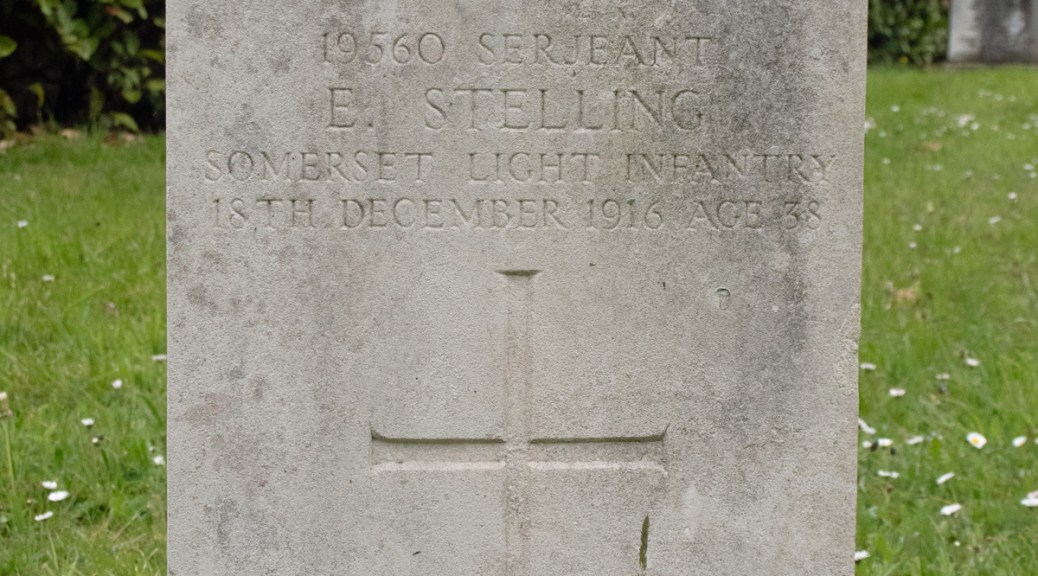
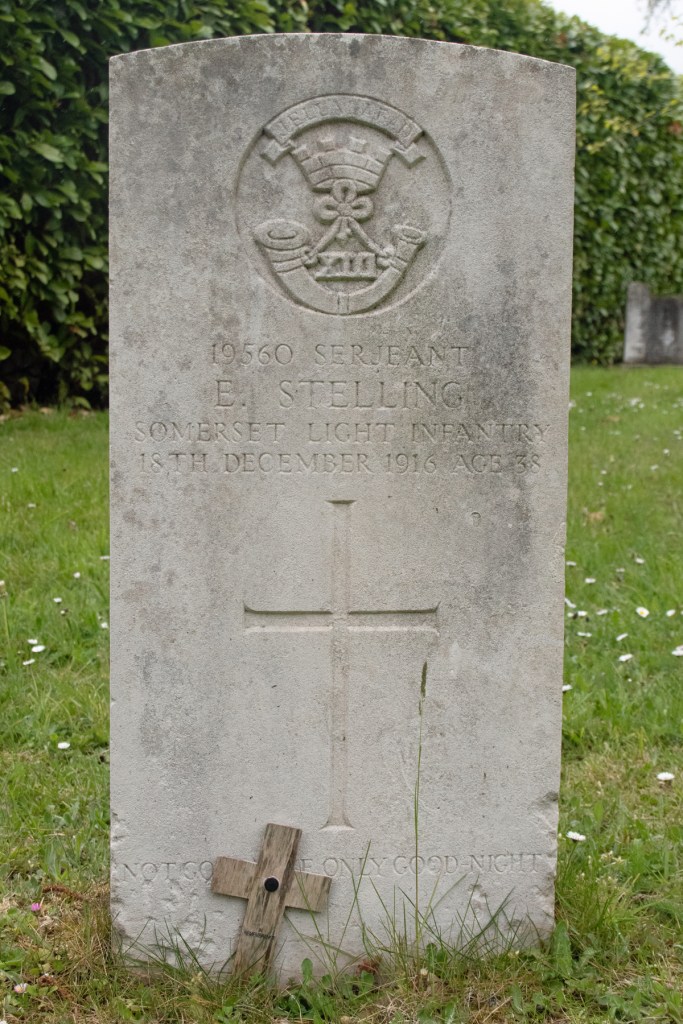
Serjeant Ernest Stelling

Serjeant Ernest Stelling

Ernest Leonard Stelling was born in the summer of 1881, the oldest of six children to Charles and Bertha Stelling. Charles was a tailor from London, and while Ernest was born in Suffolk, by the time of the 1891 census, the family had settled in Reading, Berkshire.

Ernest followed in his father’s footsteps, becoming a tailor and cutter in his own right. He met a woman from Reading called Lettie Eliza Mazey, and the couple married in 1904. The couple set up home with Lettie’s brother and his family in Tilehurst, but didn’t go on to have any children themselves.

Details of Ernest’s military service are a bit scarce. He initially enlisted in the Royal Berkshire Regiment, but quickly moved to the Somerset Light Infantry in the early stages of the First World War.

Sadly, no formal documents of Ernest’s time in the army are available, but a local newspaper gave a good insight into his Somerset service.

Death of a Master Tailor

After an illness of only seven days, the death took place at the military hospital on Monday afternoon of Sergeant EL Stelling, who has been master tailor of the Depot for the past two years. The cause of death was pneumonia, and the loss of so popular a member of the Depot staff is deeply regretted by all ranks.

Sergeant Stelling, who was 37 years of age, came to the Somersets from the Royal Berkshire Regiment, and succeeded the late Sergeant-Master-Tailor Chambers. He was a native of Reading, and one of four brothers serving their King and country. His father, Mr Charles Stelling, for many years carried on business as a master tailor in Reading.

Since he had been at Taunton barracks, Sergeant Stelling had made many friends, and actively identified himself with the social life of the sergeants’ mess, taking a prominent part in the arrangement of concerts, etc.

He was of a bright, generous disposition, and before his illness he was making a collection at the Depot on behalf of the Buffaloes’ Christmas treat to poor children of the town. He was a valued member of the local Lodge of the Royal Order of Buffaloes, and his death is greatly regretted by all the brethren.

He leaves a widow but no family. Much sympathy is felt for Mrs Stelling, who has for some years been a confirmed invalid.

The funeral took place with full military honours at St Mary’s Cemetery on Friday afternoon.

Taunton Courier and Western Advertiser: Wednesday 27th December 1916

This gives a real insight into Ernest’s personal life. He was obviously very active socially, and committed to the community. Whether Lettie’s infirmity contributed to the couple’s lack of family will never be known, but, from his support of the poor children of Taunton, it seems evident that he would have been a good family man.

The next document relating to Serjeant Stelling is his pension record; this confirms the news article’s report that he contracted pneumonia and influenza, and he succumbed to the conditions on 18th December 1916. He had, in fact, just turned 38 years old.

Ernest Leonard Stelling lies at rest in St Mary’s Cemetery in his wartime adopted home town of Taunton, Somerset.


Serjeant Ernest Stelling (from Ancestry.co.uk)

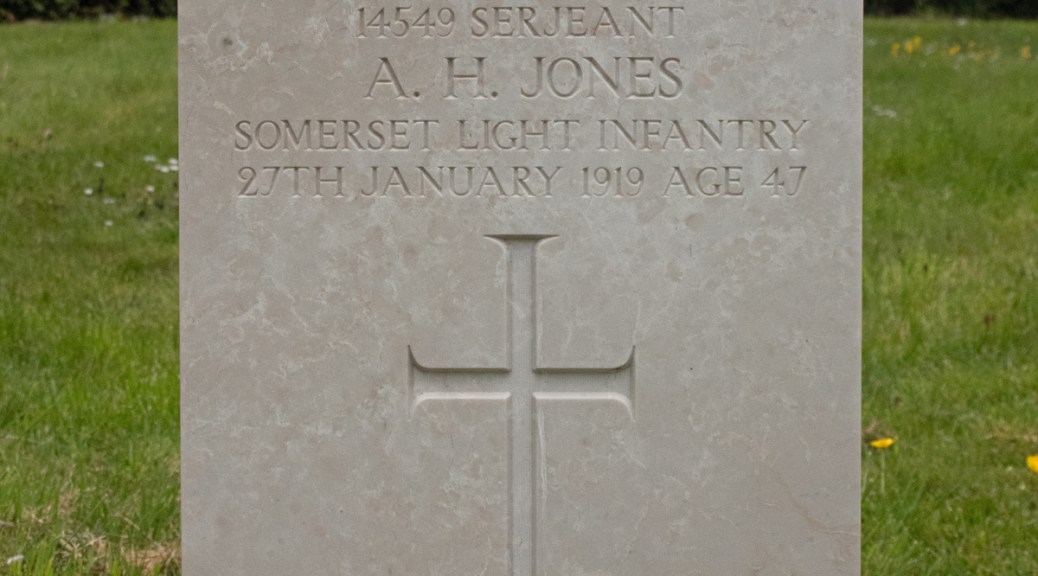
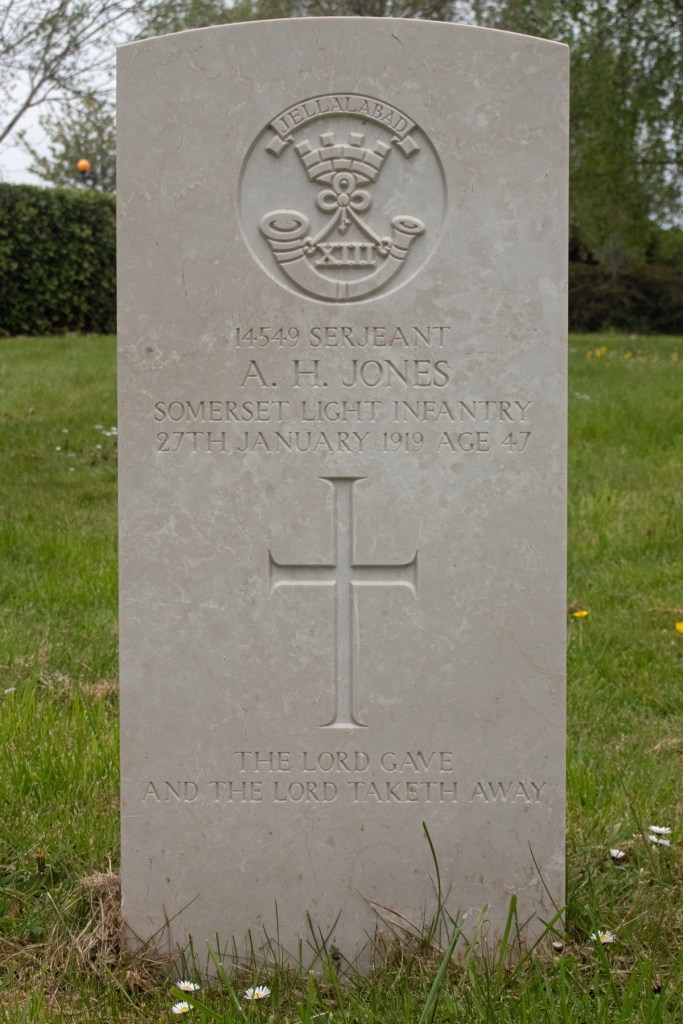
Serjeant Arthur Jones

Serjeant Arthur Jones

Arthur Henry Jones was born in 1874, the oldest of five children to James and Kate Jones. James worked as a coachman, and travelling seems to have been his thing.

Born in Wiltshire, he met and married Kate in Somerset, and this is where Arthur was born; by 1879, the young family had moved to Hampshire, and within a year they had relocated again, this time to Folkestone in Kent. Three years later, by the time James and Kate’s youngest two children were born, they were back in Wiltshire again, having competed their tour of the south of England.

Sadly, tragedy was to strike the Jones family, when Kate passed away in 1888, at the tender age of 31 years old. James had a family of boys to bring up, however, and he married again, this time to a Miriam Millard. The couple went on to have two children, giving Arthur a half-brother and half-sister.

At this point, Arthur falls off the radar. It may well be that he chose to take up a military career early on – if he was serving overseas, it is possible that the census documentation no longer exists. Twelve years’ service would certainly seem to account for his absence between 1881 and the next time his name appears on records.

These records relate to Arthur’s marriage to Fanny Hill. The couple were married by Banns in May 1906, marrying in Westbury, Wiltshire. They went on to have four children – Arthur, Kathleen, Gladys and Percival – between 1907 and 1911.

Again, at this point, Arthur falls off the radar. His service records no longer exist, but what evidence remains confirms that he enlisted in the Somerset Light Infantry and was assigned to the 7th (Service) Battalion. Initially formed in Taunton, they shipped out to France in July 1915, although there is no documentation to confirm when or if Arthur was involved.

Sadly, the only other reference to Serjeant Jones is his final pension record. This confirms that he succumbed to a combination of influenza and pneumonia on 27th January 1919. He was 44 years old.

Arthur Henry Jones lies at rest in St Mary’s Cemetery in Taunton, Somerset.


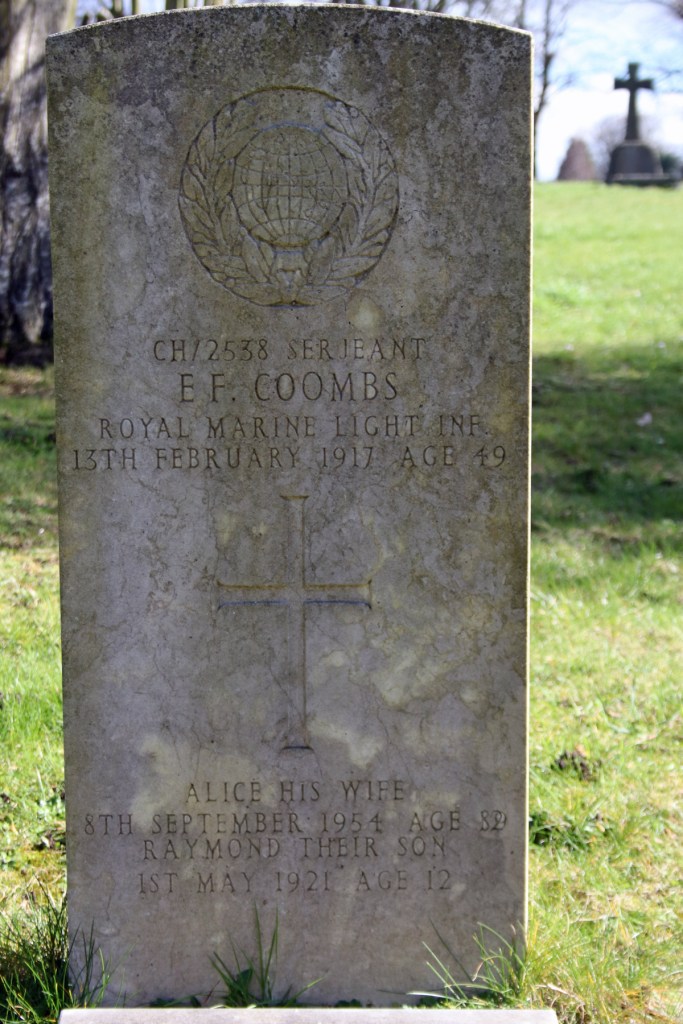
Sergeant Ernest Coombs

Serjeant Ernest Coombs

Ernest Frederick Coombs was born in the summer of 1866. One of four children to cabinet maker Frederick Coombs and his wife Julie, the family lived in Leatherhead, Surrey.

Unfortunately, the documentation around Ernest’s life is a little scattered. What we do know is that he married Alice Amelia Kinnear in June 1889, and the couple went on to have fourteen children.

Jumping forward, and by the time of the 1911 census, the family were living in a small terraced house on the outskirts of Dover. Ernest listed his trade as a canteen managed for a provision merchant.

Sadly, Ernest’s military records are also lost to time. He enlisted in the Royal Marines Light Infantry, and was promoted to Serjeant during his time there.

The only other information available about him comes from the obituaries section of a local newspaper in March 1917:

COOMBS: On February 13th, at the Royal Naval Hospital, Chatham, after a short illness, Ernest Frederick Coombs, aged 50 [sic] years (late of 14 Leighton Road, Dover). RIP

Dover Express: Friday 2nd March 1917

Ernest Frederick Coombs was actually 49 when he died; he lies at rest in the Woodlands Cemetery in Gillingham, Kent.


Ernest’s grave was also the last resting place for his youngest son, Raymond, who died aged just twelve years old, two months after his father, and his widow, Alice, who passed away in 1954, at the age of 82.


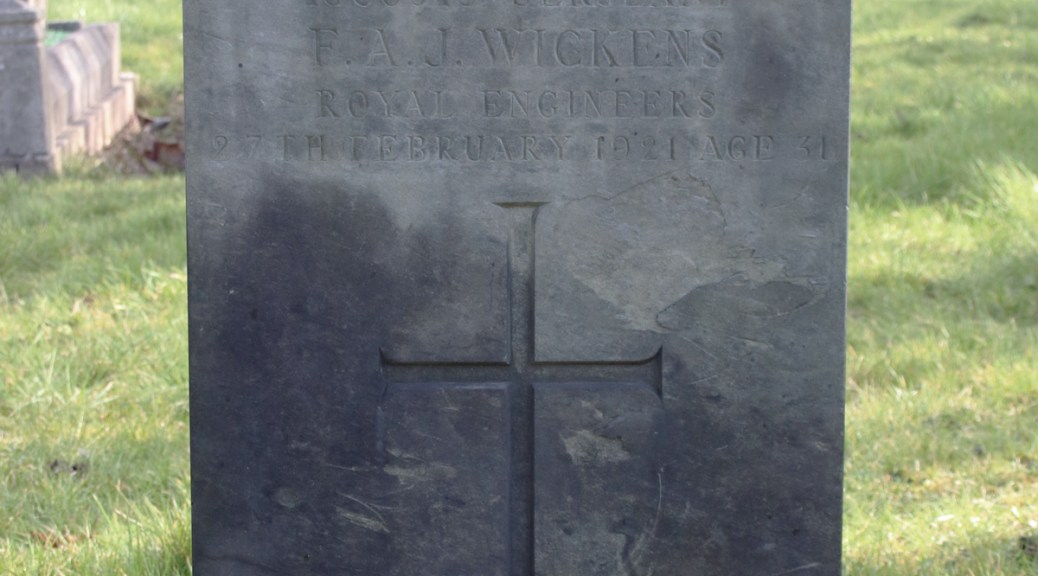
Serjeant Frederick Wickens

Serjeant Frederick Wickens

Frederick Albert John Wickens was born in Newbury, Berkshire, in the summer of 1889. The oldest of four children to Alfred and Emily Wickens, his father was a brewer’s labourer.

The military life proved more of a draw to Frederick, however. While his full records no longer exist, by the time of the 1911 census, he was recorded as being a Sapper with the 2nd Field Troop of the Royal Engineers. He was based at Potchefstroom, around 75 miles (120km) south east of Johannesburg in South Africa, and his trade was listed as a tailor.

Sadly, it is at this point that Frederick’s trail goes tepid, if not cold.

From a personal perspective, he married a woman called Rose, who was a year younger then him. Her details are scarce, and there is nothing to confirm when or where they married (other than the 1911 census, when Frederick was listed as ‘single’).

The couple must have had some connection to Gillingham, as this is where they lived; given the proximity of the Royal Engineers Barracks in neighbouring Chatham.

Sapper Wickens’ military service continued into the Great War. He was awarded the medaille militaire by Belgium, and achieved the rank of Serjeant during his career. Unfortunately, there are no details of the actions around either the award or his promotion.

Serjeant Wickens passed away on 27th February 1921; he died in Chatham, although the cause was not recorded. He was 31 years old.

Frederick Albert John Wickens lies at rest in the Woodlands Cemetery in Gillingham, Kent.


Frederick’s younger brother Thomas, also served in the Great War. He enlisted in the Princess Charlotte of Wales’s (Royal Berkshire) Regiment, and was involved in the battles on the Western Front. Sadly he was killed in the fighting on 24th May 1916, at the age of 19 years old.


Sergeant Christopher Faulkner

Sergeant Christopher Faulkner

Christopher William Thomas Faulkner was born in 1881, one of five children to William and Harriet Faulkner. There is little information about Christopher’s early life, but the 1891 census shows him living with his mother and siblings in the St George’s Barracks in St Martin in the Fields in central London. William is not listed, so it can only be assumed that he was away on duty when the census was completed.

Christopher attended the military school; his record confirms that he was born on 17th June 1881, and spent four months at the school when he was ten years old. William is listed as a Sergeant and the family were living at the St George’s Barracks, which were located in the site now occupied by the National Portrait Gallery.

The military life was indelibly in Christopher’s life by this point. Whilst the records are sparse, he had certainly enlisted by the time he was 25. On Boxing Day 1904 he married a woman called Essie Brant, the daughter of a tailor from Croydon.

On the marriage certificate, Christopher was listed as a Lance Corporal in the Royal Marine Light Infantry and was based at the barracks in Chatham, Kent.

The young couple went on to have four children together and, by 1911, Essie was living in Gillingham, not far from the naval base in Chatham. The majority of Christopher’s career was served here, although when war broke out, he also saw conflict overseas.

By 1916, he was promoted to Sergeant and was assigned to HMS Dominion, which patrolled the North Sea. Ill health must have taken hold, however, and by the end of 1917, Sergeant Faulkner was reassigned to Chatham, before being medically discharged at the beginning of the following year.

Sadly, there is no record of the cause of his release from duty, but it appears to have been something to which he would eventually succumb. The next record is of Sergeant Faulkner’s death, on 5th January 1920, at the age of 39 years old.

Christopher William Thomas Faulkner lies at rest in the Woodlands Cemetery in Gillingham, Kent.


Christopher’s grave also acts as a memorial to his son.

Leslie Albert Gerald Faulkner was born on 9th June 1910. On leaving school, he sought military service like his father, and enlisted in the Royal Navy for a period of twelve years’ service.

Unusually, details of his service appear to end after just three years, in January 1929. However, later records confirm that he continued to serve at HMS Pembroke, the on-shore vessel in Chatham, through to the Second World War, achieving the rank of Chief Petty Officer.

Chief Perry Officer Faulkner’s military records did thrown up some further information, though. Surprisingly, his death records give specific details of the cause of his passing, stating that it was a “rupture of the liver due to secondary neoplasm of the liver, due to primary seminoma of testis”. In effect, Leslie had suffered testicular cancer, which then spread to his liver.

Leslie Albert Gerald Faulkner died on 28th November 1945, at the age of just 35 years old. He was buried in the same grave as his father, in Woodlands Cemetery, Gillingham.


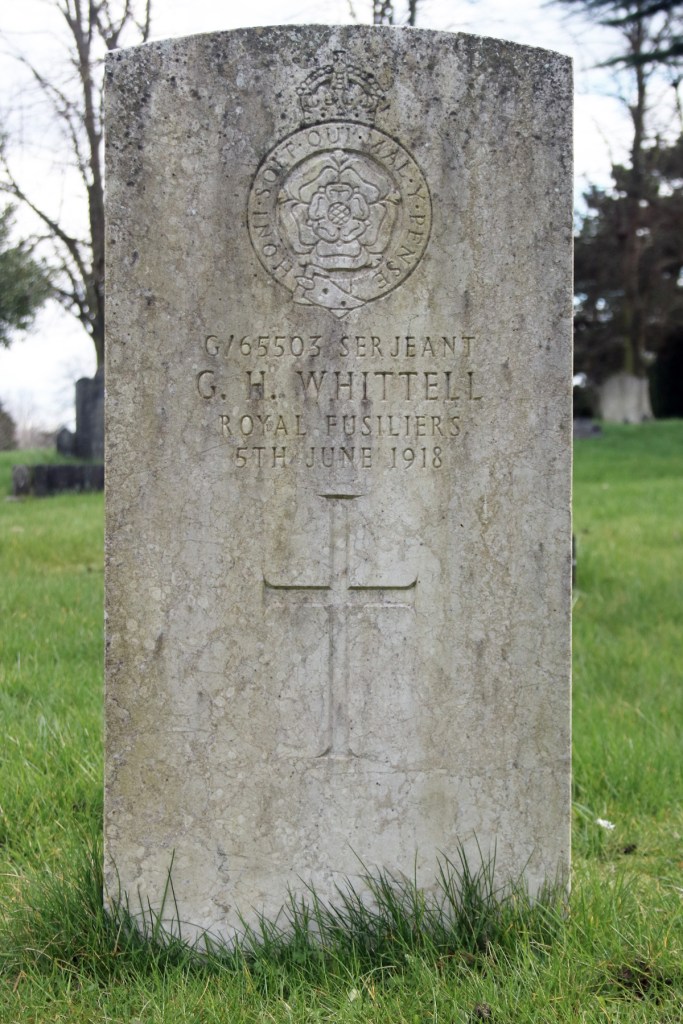
Serjeant George Whittell

Serjeant George Whittell

George Henry Whittell was born in the spring of 1891, the son of engine fitter William and his wife, Florence. George was the oldest of two children, both boys, but sadly lost his mother in 1897, at just six years old.

William remarried two years after her death, and, with his new wife, Frances, he had two further children, Gladys and Leslie.

By the time of the 1911 census, the family were living in Gillingham, Kent, and George and his brother Frederick were both working as boiler makers in the largest employer in the area, the naval dockyard in Chatham. War was on the horizon, and William was also working there as a torpedo fitter.

In 1915, George married Minnie Baker; they went on to have a son, Ronald, who was born in the September of that year.

I have not been able to track down all of George’s military records; he enlisted in the Royal Fusiliers, and was assigned to the 10th (Service) Battalion. While his date of enlistment is not recorded, his troop set off for France at the end of July 1915. If George had been involved from that point, he would have departed shortly after his marriage, and would have been at the Front when his son was born.

Little is known of Serjeant Whittell’s service; he was wounded in May or June 1918, and was repatriated to England for treatment. Admitted to the Western General Hospital in Manchester, he sadly did not recover from his wounds, and passed away on 5th June 1918. He was 27 years old.

George Henry Whittell lies at rest in the Woodlands Cemetery in his home town of Gillingham, Kent.


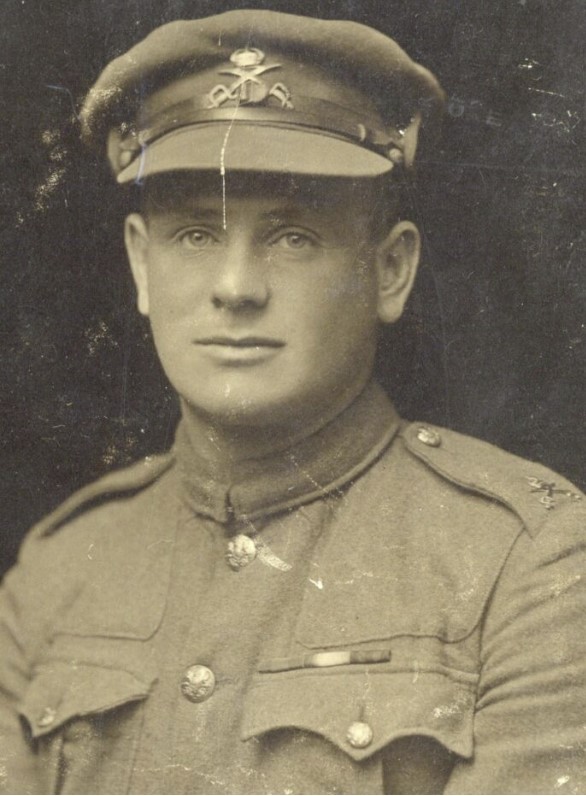
Serjeant Major Charles Willcox

Sergeant Major Charles Willcox

The early life of Charles Willcox is a bit of a mystery. From fragments of information, we can determine that he was born in 1893 and had a brother called Edmund and a sister called Beatrice. His mother was a Mrs S Willcox, who, by the early 1920s was living in Johannesburg, South Africa.

Piecing together the tiny pieces of information online, it seems likely, therefore, that his parents were Frank and Sarah Willcox. Frank was a cabinet maker and upholsterer, he and Sarah were from Bridgwater in Somerset, and they had eleven children.

By 1895, Frank had moved the family from Somerset to Cardiff; Charles was the last of the siblings to be born in England. The family did eventually move to South Africa – alongside Sarah, both Beatrice and Edmund lived and died there in their later years.

Back to Charles and, once the Great War started, he was quick to enlist. He joined the Somerset Light Infantry in August 1914, and had a narrow escape in October of that year. The Bridgwater Mercury reported that he was in the trenches and had had a near miss when his backpack was hit by a shell.

Corporal Willcox was wounded at Ypres in November, when a piece of shrapnel hit him in the shoulder, went through the lung and had to be cut out of the centre of his back. He was expected to make a full recovery within a year. Charles was also awarded the Distinguished Conduct Medal for his actions in the battle.

In September 1915, Sergeant Willcox received another award; the Russian Cross & Order of St George; the Bridgwater Mercury noted that Charles was the first man from the town to be awarded both this and the DCM. The town’s mayor also subsequently presented him with a gold watch and chain on behalf of the town.

Promotion continued for Charles, and, by 1917, he had been elevated to Company Sergeant Major. He was heavily involved in recruitment for the Somerset Light Infantry, and it is likely that, standing at a strapping 6ft 4ins (1.93m) tall and weighing in at 17st (107kg), he would have been the perfect advert for the battalion.

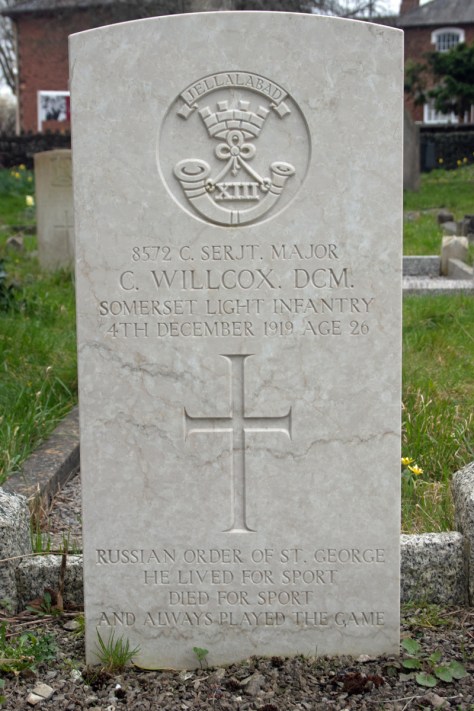
When the war came to a close, things quietened down for him. A keen sportsman – he played rugby for Somerset – he had been a gym instructor in the army, and had taken up boxing around 1912. He entered a novices’ boxing competition in Southampton in December 1919, and found himself up against Seaman Merrilees, from the HMS Hearty.

In the fight, Charles received a body blow and a blow to the jaw, he fell to the floor, landed awkwardly and was knocked out. Attended to by doctors in the sports club, he was sent to Charing Cross Hospital when he did not regain consciousness after a couple of hours.

At the hospital, bruising was reported to Charles’ eye and cheek, but no skull fracture was found. They operated on him, two pieces of bone were removed, and a large clot on the left-hand side of his brain discovered. Sadly, the operation did no good, and Charles died that afternoon, the 4th December 1919. He was just 26 years old.

His death was recorded as concussion and a cerebral haemorrhage, attributed to the fall he had had in the ring. An inquest was held, although one report suggests a verdict of accidental death, while another states excusable homicide by misadventure.

Charles Willcox lies at rest in the Wembdon Road Cemetery in his home town of Bridgwater in Somerset. His gravestone remembers that he lived for sport, died for sport and always played the game.


Serjeant Major Charles Willcox
(from wembdonroadcemetery.com)

Company Quartermaster Sergeant Robert Roberts

Company Quartermaster Sergeant Robert Roberts

Robert Roberts was born in Liverpool in November 1887 the youngest of two children to Robert and Alice Roberts.

The New World beckoned for the Roberts family, and they set sail for Canada when Robert Jr was just 4 years old. The family settled in the city of Regina, Saskatchewan.

Little is recorded about Robert Jr until October 1911, when he married a Quebecois woman called Edna Webber. The young couple went on to have two children, a daughter, One, and a son, George.

In April 1916, he enlisted in the Canadian Expeditionary Force. His trade was noted as a Lumberman, and his record notes that Robert had already served as part of the 95th Saskatchewan Rifles.

Joining the 224th Battalion, Robert was shipped to England in May 1916. He transferred to the Canadian Forestry Corps in November, reaching the rank of Staff Sergeant, and was assigned to the company’s Base Depot in Sunningdale, near Windsor.

When the war ended, demobilisation was still a way off for a lot of soldiers, particularly those from the Commonwealth. Robert was transferred to Stirling, and was appointed Quartermaster Sergeant (responsible for supplies and stores) for 121st Company.

On 28th January 1919, Robert was admitted to the Royal Infirmary in Stirling with influenza and double pneumonia. Sadly, he passed away just over a week later, breathing his last on 6th February 1919. He was 33 years old.

Robert Roberts lies at peace in the Wembdon Road Cemetery in Bridgwater, Somerset.


There is no evident connection between Robert and Bridgwater, so why this was chosen as his place of rest is a mystery. It is likely that there was some sort of family connection, but that cannot be definitely established.


Serjeant Henry Cummings

Sergeant Henry Cummings

Henry Cummings was born in the village of Wembdon, near Bridgwater in Somerset in 1876. The son of agricultural labourer John and his wife Jane, Henry was one of six children.

When he left school, Henry followed his father into agricultural labouring, as his older siblings had done before him. Jane had died when Henry had just reached his teens, so he continued to live with his widowed father, and was recorded there as late as the 1911 census.

On 4th August 1912, he married Sarah Palmer in Wembdon Parish Church; Henry was 36 by this point, and his new wife was 30. They couple may not have thought they could have children, as they went on to adopt a girl, Edith, who was six years old when they had married.

From a military perspective, it appears that Henry had initially tried to enlist in 1908. Based on his service records, it seems that he was not accepted at that point, but when war broke out, things were a different matter. He joined the Army Service Corps on 6th January 1915, attaining the rank of Sergeant.

Henry’s service was to be cruelly short, at just 85 days. Hospitalised in Rugby, Sergeant Cummings passed away from cerebrospinal meningitis on 6th April 1915. He was 38 years old.

Henry Cummings was brought back to Bridgwater for burial, and lies at rest in the Wembdon Road Cemetery there.


In September 1915, Sarah gave birth to a baby girl, Irene. Henry was never to see his little girl, and, tragically, may not even have known he was to be a father.


Photo courtesy of ancestry.co.uk

Serjeant Ernest Morris

Serjeant Ernest Morris

Ernest George Morris was born in September 1879, one of six children to John and Eliza Morris. John was a carter for the railways, and this was a trade his son was to follow.

Ernest married Sarah Garrett in Bristol on Christmas Eve 1904, and the young couple went on to have two children, Charles and William.

Ernest’s father died in 1907, and Ernest became head of the family. He moved them in with him in Bristol, and by the 1911 census, the household consisted of Ernest, his mother Eliza, his brothers Frank and William, sister Lily and his own son William.

The census also lists Ernest as a widow; I have not been able to track down any records of when Sarah died. Their eldest boy, Charles, passed very early on, however, so this is likely why Ernest set up home with his family.

By this time, Ernest was working as a carman in the Bristol Goods Yards, and it appears that had a strong character. In September 1912, he was cautioned for “smoking whilst on duty and refusal to give an undertaking to refrain from doing so in future.” He cited his reason that the rulebook “did not prohibit men from smoking when not with a load.”

Ernest was suspended for two days, and was only allowed back to work when he promised to follow instructions in the future. This, it seemed he may not have done, as he was dismissed just three months later.

Ernest’s military service records are hard to piece together. He enlisted in the Rifle Brigade as a Gunner, going on to achieve the rank of Serjeant. He was awarded the Victory and British medals – the standard awards for men involved in the Great War.

Serjeant Morris survived the war, but there is little information for him after that. He passed away on 28th June 1920, aged 40 years old, although there is no record of how he passed. His war pension was awarded to his mother, who was acting as guardian for his son William.

Ernest George Morris lies at rest in the cemetery of his home town of Langport.