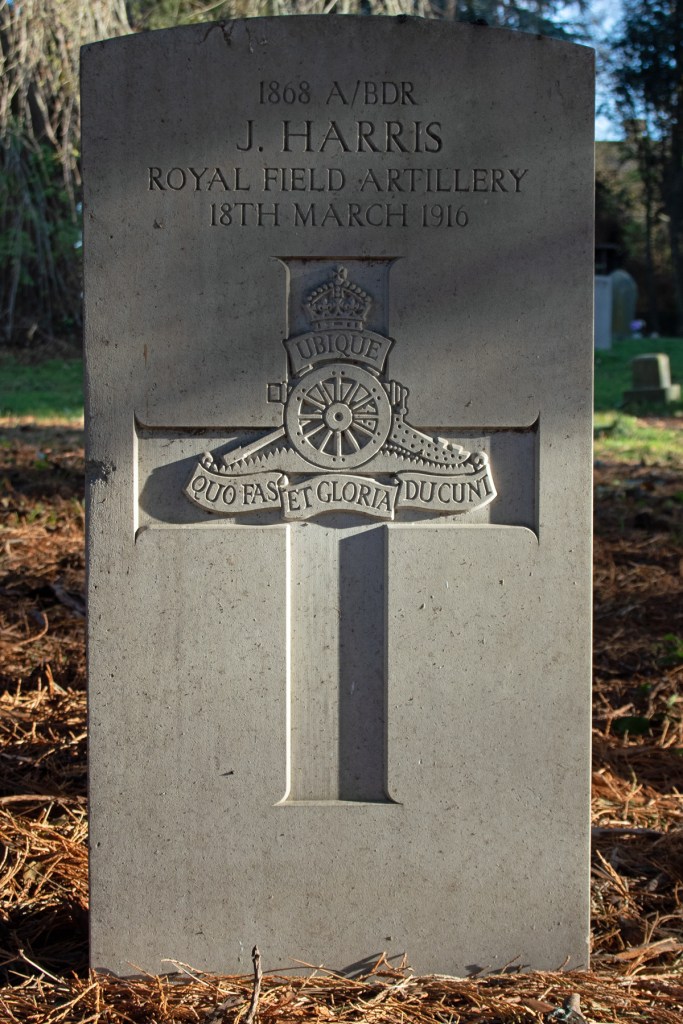
Sadly, much of John Harris’ life is lost to time. Born in Liverpool in around 1896, he was one of at least eight children, but, with a name as common as his, there is little to identify who his parents were.
What information remains available, comes from contemporary newspaper reports of his funeral:
Acting Bombardier Harris, of the 13th Battery, 2/3rd West Lancashire, died from double pneumonia at The Mount Hospital [in Faversham, Kent] last Saturday. He was 20 years of age, belonged to Liverpool, and had been in the Brigade about ten months. Deceased had been ill for about a fortnight. Several of the men at The Mount attended the funeral, and one of the nurses there accompanied the deceased’s sister.
Faversham News: Saturday 25th March 1916
From this it is possible to determine that John enlisted in the 2nd/3rd West Lancashire Artillery of the Royal Field Artillery in May 1915. His was a territorial force that was, by the spring of 1916, based in Kent.
It would seem that Acting Bombardier Harris’ parents had passed on by the time that he died at The Mount. His siblings – brothers Alfred and Edward, sisters Edith, Clara, Louise, Alice, Kate and Elizabeth – were all based in Lancashire.
John Harris, therefore, was buried in the town where he passed away, and was laid to rest in Faversham Borough Cemetery.
Herbert Woodley Lyon was born in Lincoln early in 1897, one of five children to Walter and Emma Lyon. Walter was a cashier for an engineering company, and the family grew up in some comfort, employing a housekeeper, sick nurse and servant by the time of the 1911 census.
When he finished school, Herbert found work as a draper’s assistant, but with war closing in things were to change. Initially joining the Lincolnshire Regiment, by February 1918, he had transferred across to the Royal Flying Corps, moving to the Royal Air Force when it was founded that April.
Corporal Lyon was based with 112 Squadron at RAF Throwley, just to the south of Faversham, Kent. Details of his service are scarce, but it seems that he trained and qualified as a fitter, helping with the maintenance of the aircraft. His service records show that he stood 5ft (1.52m) tall.
Herbert’s time in the Royal Air Force was limited. His records show that he died of natural causes on 1st November 1918. He was just 21 years of age.
Corporal Herbert Woodley Lyon’s family had relocated to Wells in Somerset by this point. He was laid to rest in Faversham Borough Cemetery, not far from the airfield at which he had been based.
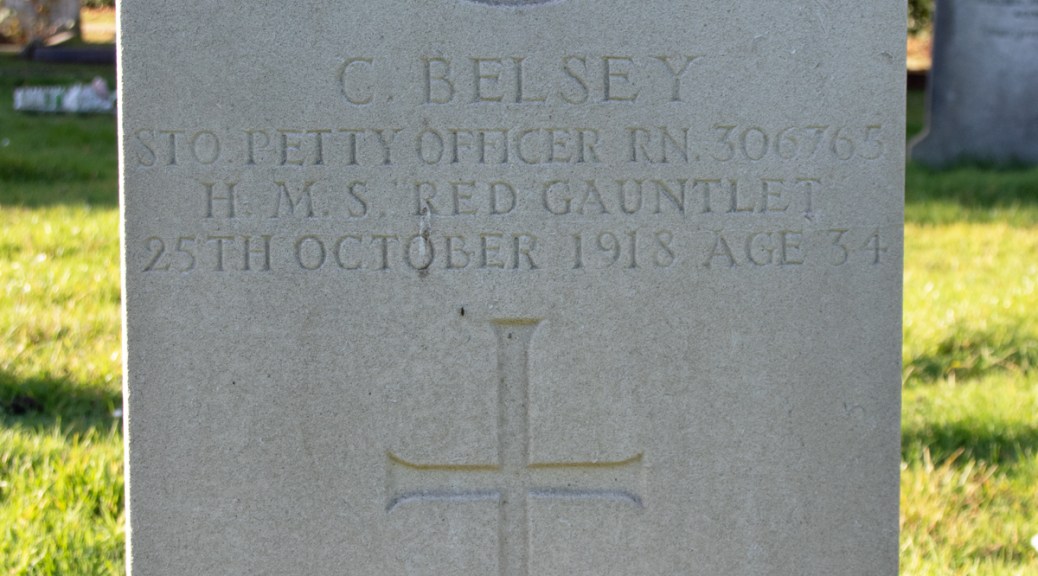
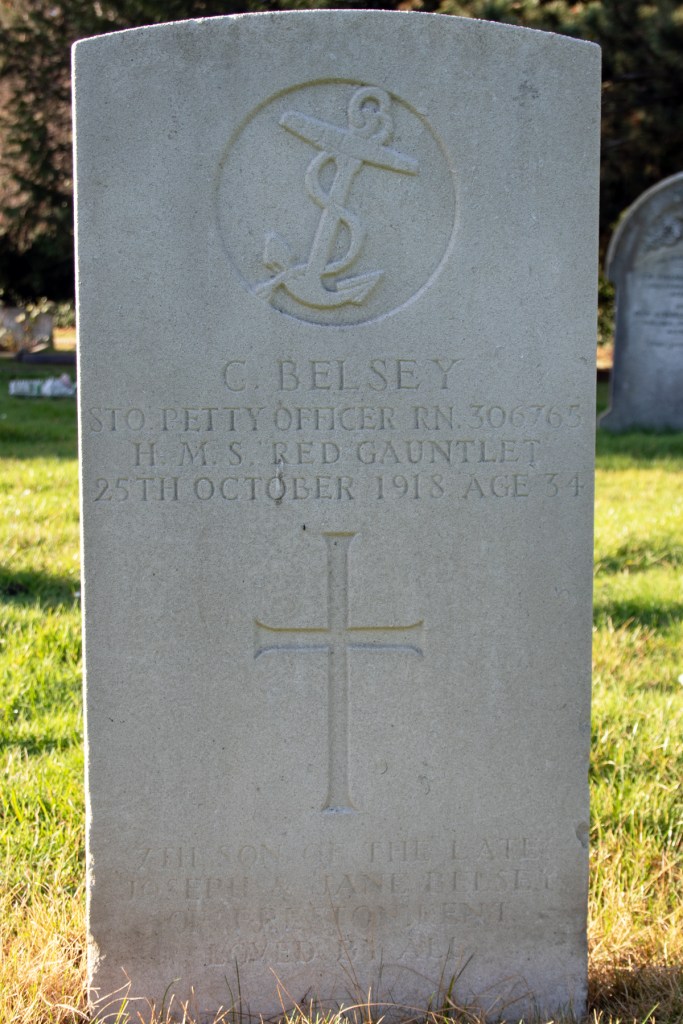
Christian Belsey was born on 12th February 1884 in the village of Preston, Kent. He was one of fourteen children to Joseph and Jane Belsey. Joseph was a farm labourer, and Christian followed suit on leaving school.
He wanted bigger and better things, however, and after his older brother Charles had sought out a life in the Royal Navy, he followed suit. Christian enlisted on 28th June 1904; his service records show that he was 6ft (1.83m) tall, had brown hair, brown eyes and a fresh complexion.
Stoker 2nd Class Belsey was based out of HMS Pembroke, the Royal aval Dockyard in Chatham, Kent, and this is where he returned to in between voyages. His first posting was on board the destroyer HMS Acheron, on board which he spent six months.
Over the twelve years of his initial service he was assigned to six different ships, rising through the ranks to Stoker 1st Class (in 1906), Leading Stoker (1911) and Stoker Petty Officer (1912).
When war broke out in August 1914, Christian was back in Chatham; he was soon assigned to HMS Laertes, a destroyer based out of Harwich, which patrolled the North Sea. She was involved in the attempt to head off the German attack on Yarmouth and Lowestoft in April 1916, during which, two of Christian’s colleagues, Stoker Ernest Clarke and Stoker Petty Officer Stephen Pritchard, were awarded the Distinguished Service Medal for their bravery under fire.
After three years on board Laertes, Christian was transferred to HMS Redgauntlet. He served on board for eighteen months until, in October 1918, he fell ill.
Admitted to a hospital in Samford, near Ipswich, Suffolk, Stoker Petty Officer Belsey was suffering from pneumonia. Sadly, the lung condition was to get the better of him, and he passed away on 25th October 1918, at the age of 34 years old,
Christian Belsey was brought back to Kent for burial. He was laid to rest in Faversham Borough Cemetery.
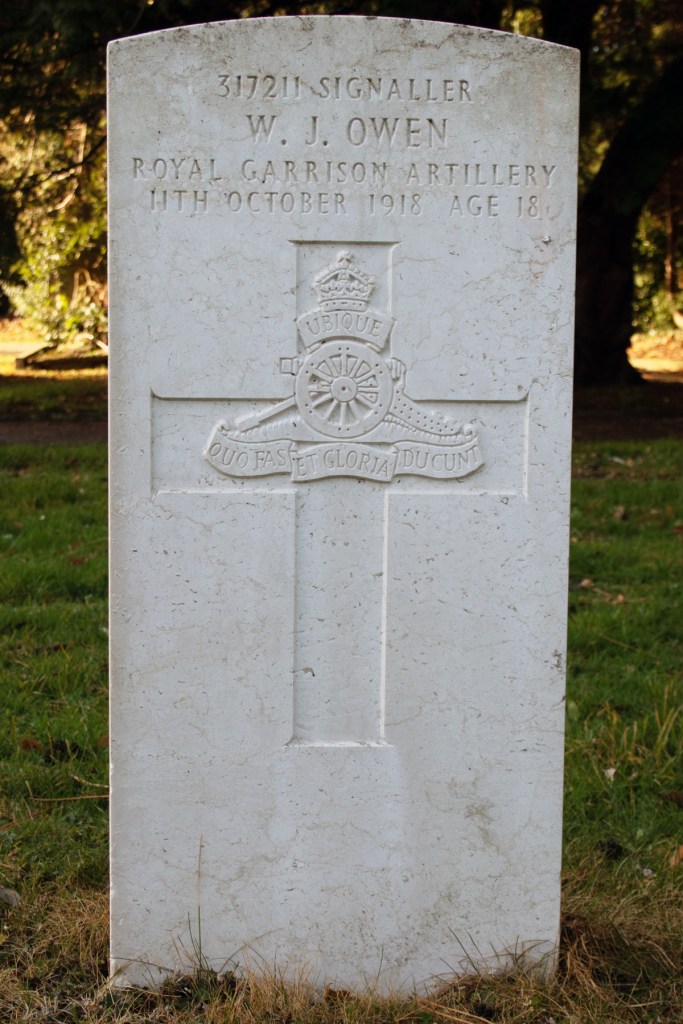
William John Owen was born in the spring of 1900, and was one of thirteen children to Henry and Emma Owen. Henry was an oyster dredger turned coal porter from Faversham in Kent, and this is where the family were born and raised.
There is little concrete information about William’s life, but it is clear that, by April 1918, he had joined the Royal Garrison Artillery, and was assigned to the 2/1st Kent Heavy Battery. Signaller Owen was sent to Larkhill Camp in Wiltshire for training.
The only further information is that William was admitted to the Fargo Military Hospital on Salisbury Plain, suffering from pneumonia. Sadly the lung condition was to get the better of him: he passed away on 11nd October 1918, aged just 18 years old.
William John Owen was brought back to Kent for burial. He was laid to rest in Faversham Borough Cemetery, just a few minutes’ walk from his family home.
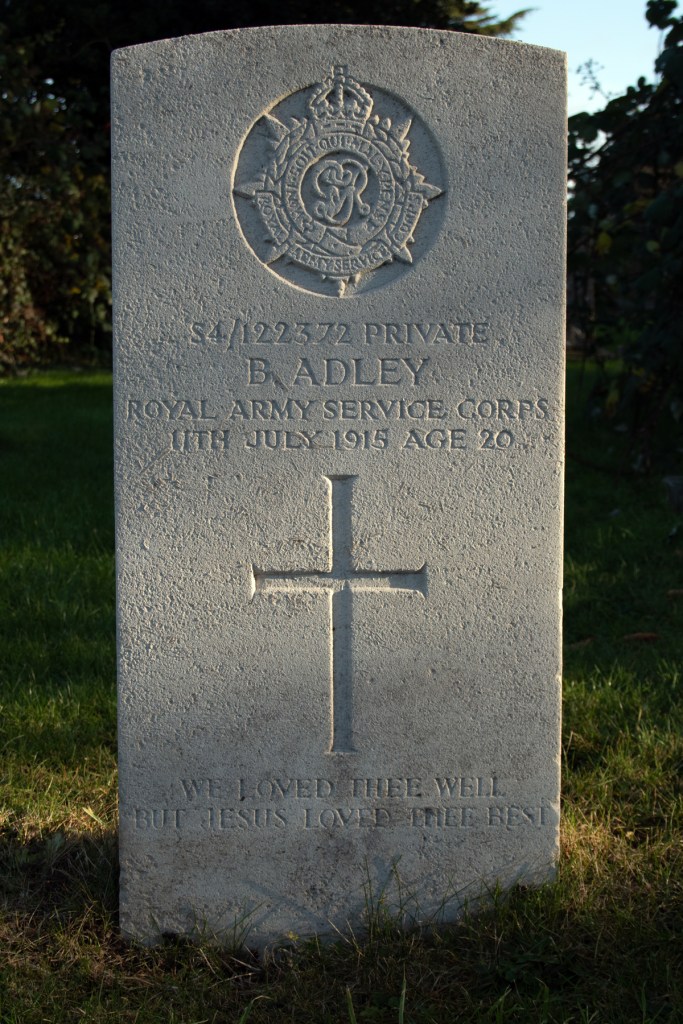
Bert Bennett Adley was born in the spring of 1895, the youngest of eleven children to George and Alma Adley. George was a brickmaker’s labourer from Canterbury, Kent, but it was in nearby Faversham that he and Alma raised their family.
Bert – who was affectionately known as Bertie – found work with a local baker when he left school, and this stood him in good stead when war broke out. He was called up in June 1915, and joined the Army Service Corps as a Private. His service records give little personal information, but they do give his height as 5ft 5ins (1.65m) and his weight as 9st 2lbs (58kg).
Private Adley’s military life was to be tragically short. Based in Aldershot, Hampshire, it is likely that the sudden mixing of recruits from across the country was key in his contracting pneumonia. He was admitted to hospital on 26th June, and died two weeks later, on 11th July 1915. He was just 20 years of age, and had been in the Army Service Corps for just 28 days.
Bert Bennett Adley’s body was brought back to Kent for burial. He was laid to rest in his home town, in the Faversham Borough Cemetery.
Frederick William Twist was born in around 1884, the older of two children to William and Clara Twist. William had been born in Faversham, Kent, and was a labourer in the cement works there.
Frederick did not follow his father’s trade, however, and, on leaving school, he found work in the printing office of the Faversham News, before moving on to Filmer Bros., a local nursery and bulb grower. He was a keen member of the Salvation Army, and played in the local Corps’ band. After more than a decade at Filmer Bros., Frederick took up new employment with Salvation Army Insurance, and worked out of the Whitstable office.
In the spring of 1909, Frederick married Helen Bedster, a bargeman’s daughter from Faversham. At the time of their wedding, she was working as a servant for a brewer manager in the town. The couple settled down in a terraced house in the centre of the town, and went on to have two children.
When war broke out, Frederick was called upon to play his part, but his time in military service was to be a troubled one. A contemporary newspaper expanded on this:
The toll of war continues through nearly a year has elapsed since the war practically ceased… [following] the death of Lance Corporal Frederick William Twist, 16th Lancers, a Faversham man, who passed away at the Military Hospital Woolwich, after a great deal of suffering.
Lance Corporal Twist enlisted under the Derby Scheme and being called up in May 1916, he joined the 16th Lancers and was sent to Ireland. At the end of that year he was drafted to France but in the following May he was invalided home with trench fever.
On his discharge from hospital in Devonshire he returned to Ireland. Then in March of last year there came the great offensive on the Western Front and for the second time deceased was drafted to France. He was not, however, at all fit, and the result was that he was obliged to fall out.
After a further spell in hospital and convalescent camp at the base he was employed on light duty – stores keeping and clerical work – to which he stuck with dogged spirit until in June last he again broke down and was once more in hospital.
Later he was transferred to the Royal Herbert Hospital, Woolwich, where he died on October 7th – a fine example of a British soldier who had struggled, even against weakness and suffering, to do his duty to the very last.
Faversham News: Saturday 18th October 1919
Lance Corporal Frederick William Twist was 35 years of age when he passed. He was laid to rest in the Borough Cemetery of his home town, Faversham.
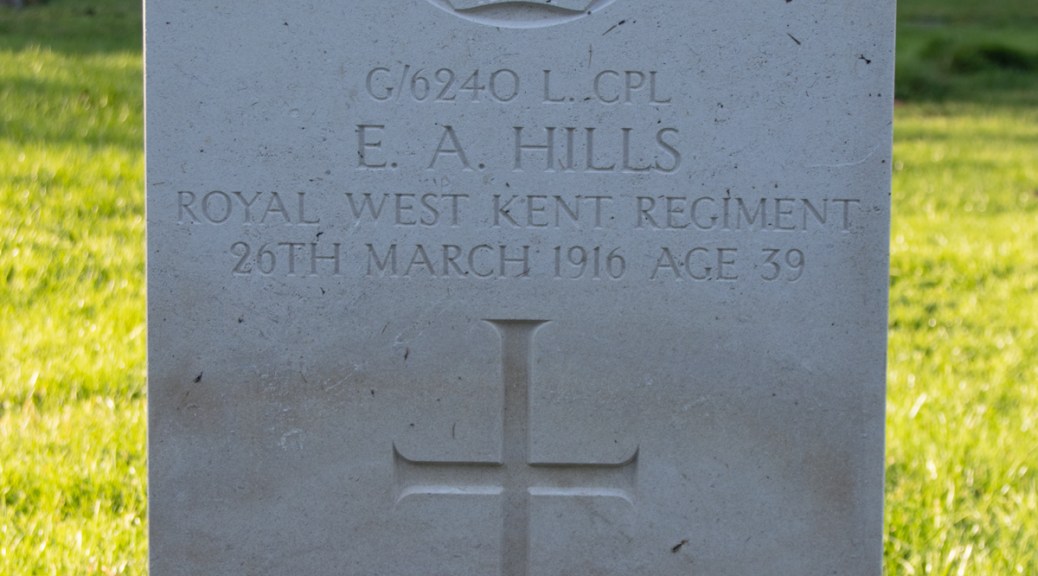
Ernest Albert Hills was born in December 1877, and was the fifth of ten children to Benjamin and Elizabeth Hills. Benjamin was a labourer for a brick maker from the Kent village of Upnor, but it was along the coast in Faversham that he and Elizabeth were to raise their young family.
When he left school, Ernest followed in his father’s footsteps, working in the local brick kiln. By the time of the 1911 census, however, he had moved to South East London and was boarding with his younger brother, William, working with him as a stoker for a Greenwich gas company.
War came to Europe, and Ernest wanted to play his part. On 20th April 1915, he enlisted, joining the Queen’s Own (Royal West Kent Regiment) as a Private. His service records give his height as 5ft 9.75ins (1.77m) and note that he had a scar on the right side of his abdomen.
Private Hills’ service was carried out on home soil: he was assigned to the 3rd (Reserve) Battalion, which was based in Maidstone and Chatham. Ernest was obviously well thought of: within six months of enlisting, he was promoted to Lance Corporal.
His good fortune was not to last for long, however, in the spring of 1916, he fell ill and, while at his family home in March, he passed away, having been suffering from Addison’s disease, a rare disorder of the disorder of the adrenal glands. He was 39 years of age.
Lance Corporal Ernest Albert Hills was laid to rest in the Faversham Borough Cemetery, not far from his family home, and where his father – who had passed away in 1903 – had also been laid to rest.
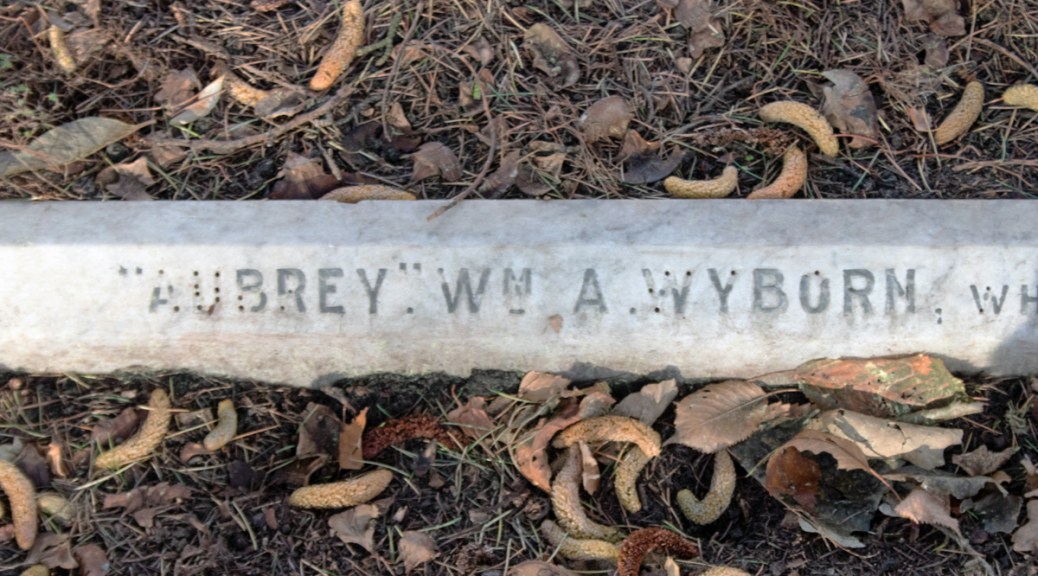
William Aubrey Wyborn was born on 15th November 1897, the middle of three children to farmer-cum-greengrocer-cum-butcher Henry Wyborn and his wife, Esther. The family lived in the Kent village of Tilmanstone, not far from Deal, but soon moved to Faversham in the north of the county.
William proved to be an astute student. After being a pupil at Faversham District Schools, he gained a scholarship to the towns Grammar School. He spent six years there, and proved to be a studious pupil, gaining a prize for maths. He was then granted a scholarship to the Sheffield School of Engineering, and, while studying for his degree there, war broke out.
William joined the West Lancashire Royal Field Artillery in June 1916 and was sent to Aldershot for training. sadly, Gunner Wyborn’s career was to be cut short – while training, he contracted diphtheria and pneumonia, passing away from a combination of the illnesses on 3rd November 1916. He was just short of his 19th birthday.
William Aubrey Wyborn was brought back to Kent for burial. He lies at rest in the family plot in the Faversham Borough Cemetery.
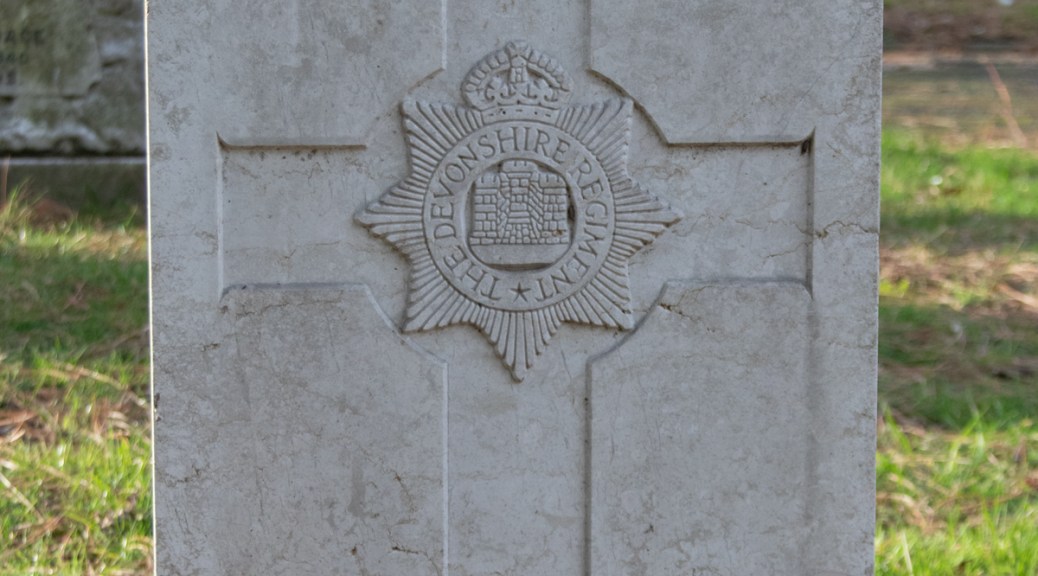
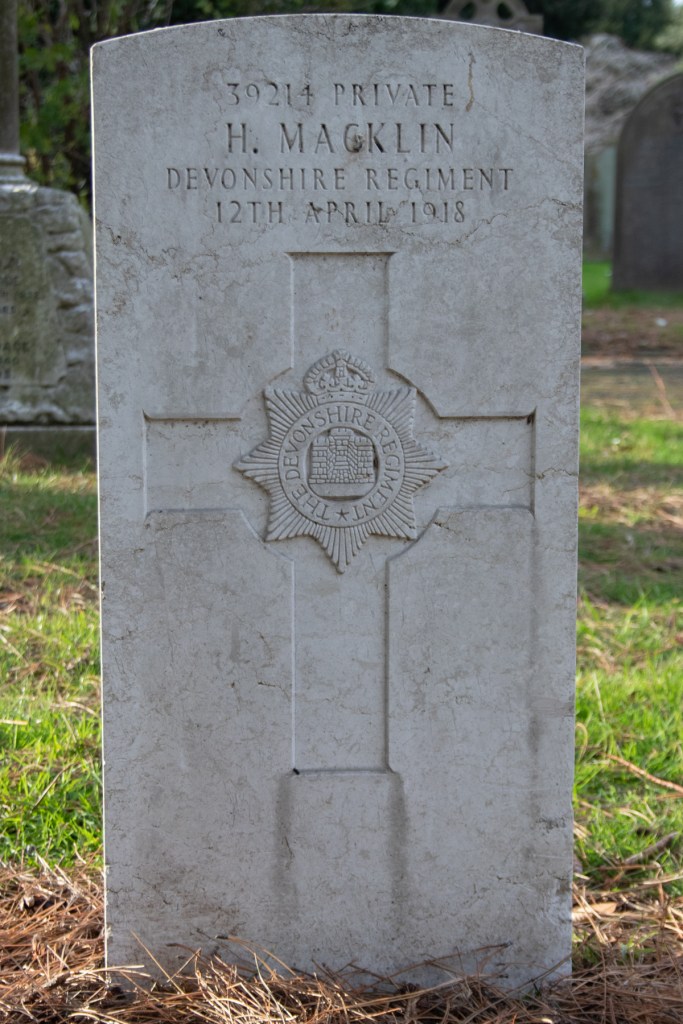
Herbert Macklin was born in Lambeth, Surrey, on 14th August 1897, the youngest of six children to Enos and Sarah Macklin. Enos was a general labourer and, after his mother died in 1909, Herbert worked around his school as a baker’s errand boy, to bring in a little more money for his family.
After Enos passed away in 1912, and with his older sisters all having families of their own, Herbert and his older brother William did what they could to survive, getting some support from the local poor school.
The outbreak of war gave the brothers a sense of purpose, and both enlisted. William joined the Royal Field Artillery, and was sent to France in September 1915.
Herbert, being six years younger than his brother, enlisted later than his sibling. He joined the Middlesex Regiment, on 10th May 1916, and his service records show that he was 5ft 4.5ins (1.64m) tall, 126lbs (57.2kg) in weight and had a fair physical development. While Herbert had a fair physical development, he was also recorded as having flat feet, which somewhat limited his army service.
Private Macklin transferred across to the Devonshire Regiment a few months after enlisting. He was then assigned to the regiment’s Labour Corps in the summer of 1917, and remained with them for the rest of his service.
While William was serving abroad, Herbert remained on home soil for the duration. By the spring of 1918, he was working in Kent, but was admitted to hospital in Faversham, suffering from acute tonsillitis. Sadly, this was to prove too much for Private Macklin’s body to take: he suffered cardiac failure, and died on 12th April 1918. He was 21 years of age.
Herbert Macklin was laid to rest in the Borough Cemetery of the town in which he passed, Faversham.
Tragedy was to strike again for the Macklin brothers: as the war moved into its closing months, Driver William Macklin was based in Salonika, Greece. He was not to see England’s shores again, sadly: he passed away on 23rd November 1918, aged just 27 years old.
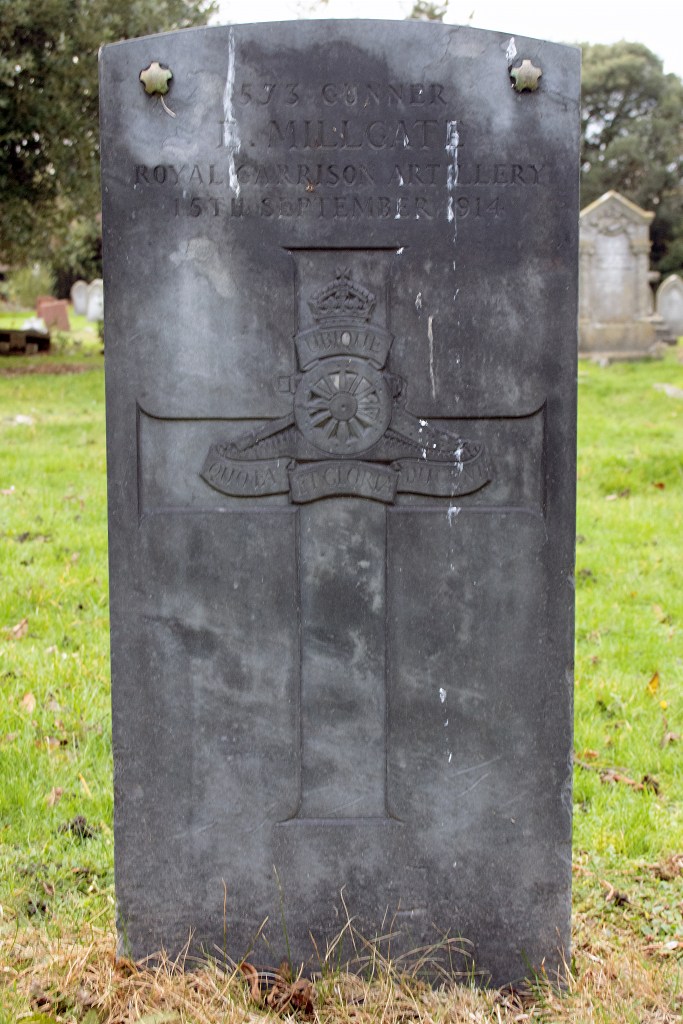
Ernest Millgate was born in late 1893, the fifth of six children to Henry and Agnes. Henry was a brewer’s drayman from Boughton, Kent, but it was in nearby Faversham that he and Agnes raised their family.
Ernest found work as a labourer in the town’s Cotton Powder Works, but when war was declared, he was one of the first to enlist. He joined the Royal Garrison Artillery as a Gunner on 5th September 1914, and was billeted nearby on the Isle of Sheppey. His service records show that he stood 5ft 9ins (1.75m) tall, had fair hair, blue eyes and a fresh complexion.
Gunner Millgate’s military service was to be tragically short, as a contemporary local newspaper was to report:
A terrible tragedy occurred at Minster, Sheppey, on Tuesday morning last, Ernest Millgate… who joined the Kent Heavy Battery barely a fortnight ago, being accidentally shot by a comrade, George Walter Cornelius… a gunner of three years’ service in the same Battery.
Gunner Cornelius, it appears, was handling a rifle preparatory to going on sentry duty shortly after eleven o’clock on Tuesday morning. On examining the rifle he had found that the magazine was charged but that there as no charge in the bore. Apparently the cut-off was in operation, for he pulled the trigger and there was no discharge. He examined the breech a second time and, afterwards pulled the trigger again. To his dismay there was this time a discharge and Millgate, who was standing near, fell dead, having been shot through the head. The theory is that Cornelius’ great coat, which he was wearing, caught in and released the cut-off, thereby bringing the magazine into operation.
Faversham Times and Mercury and North-East Kent Journal: Saturday 19th September 1914
An inquest was held, and it was a verdict of accidental death was given.
Gunner Ernest Millgate was just 21 years old, and had been in the service of the army for just eleven days. His body was brought back to Faversham, and he lies at rest in the town’s Borough Cemetery, just a few minutes walk from the home he had left just a fortnight before.
The same newspaper also ran a report on on Ernest’s older brother, Henry.
Private Millgate was a volunteer for the Northumberland Fusiliers, and was called into active service a couple of weeks before his brother. He had been caught up in the fighting at Mons, le Cateau and the Marne, and was, according to the newspaper, injured.
Medically evacuated to England for treatment, at the time of his brother’s funeral he was in a hospital in Newcastle-upon-Tyne.
Henry survived the war; he and his wife, Elizabeth, had two children, and he lived until 1939, passing away at the age of 52 years old.











 Death and Service