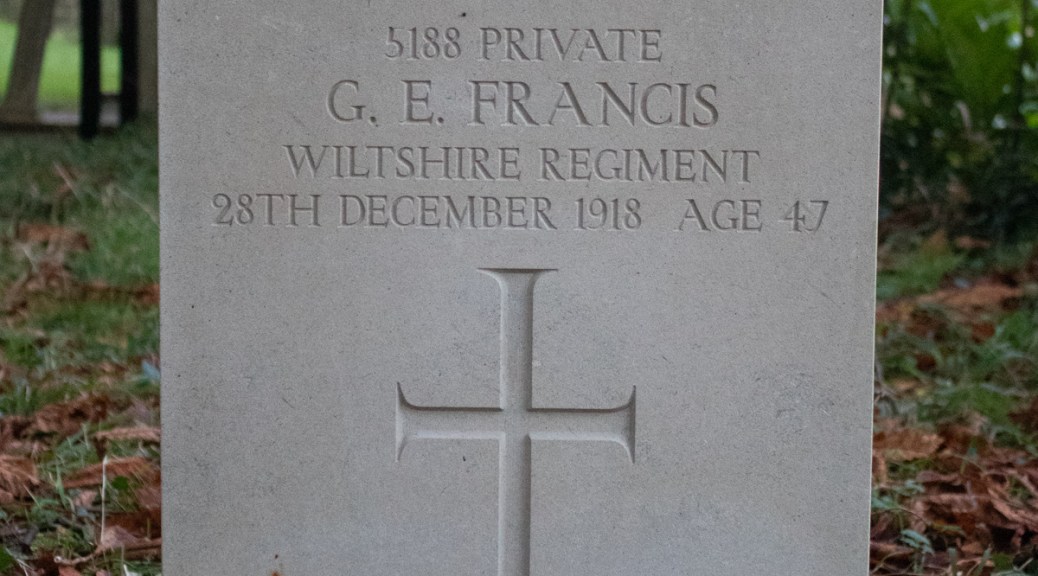
George Edward Francis was born at the end of 1871 in the Wiltshire village of Alvediston. The youngest of six children, his parents were Eli and Mary Francis. Eli was an agricultural labourer, and this was the line of work that George would also follow.
Eli died in 1885, and Mary moved in her daughter Elizabeth’s family, and the 1891 census noted that George and his older brother Samuel were also living there. George, now 19 years of age, was employed as a farm labourer.
On 11th July 1906, George married Alice Shirley. A year older than her new husband their wedding certificate notes that she was also born in Alvediston, but that her father wasn’t known. The couple settled in a house in Tollard Royal, a few miles south of their home village.
George stepped up to serve his country when war was declared. Full details of his time in the army are unclear, but he had definitely enlisted by the summer of 1918. He was initially assigned to the Wiltshire Regiment, but was later transferred to the 651st Agricultural Company of the Labour Corps.
The only other record for Private Francis’ time in the army, is a document relating to his passing. This confirms that he died on 28th December 1918 in camp at Norton Bavant, to the east of Warminster, Wiltshire: he was 47 years of age.
It seems likely that Alice was unable to cover the cost of bringing her husband’s body back to Tollard Royal for burial. Instead, George Edward Francis was laid to rest in the graveyard of All Saints’ Church in Norton Bavant.
Edward Victor Davies was born in the Weston area of Bath, Somerset, in the summer of 1897. The second of four children, and the only boy, his parents were Walter and Emily Davies.
Walter was a park keeper who died when Edward was just 9 years old. By the time of the 1911 census, Emily was working as a caretaker for a solicitor’s office, while her sone was a boarding student at the Duke of York’s School in Guston, Kent. This army school had more than 500 students, with a staff of 100 to train them. It is unclear whether Edward went voluntarily, or whether he was sent there by his mother’s employers because he was fatherless.
War came to Europe in the summer of 1914, and Edward stepped up to play his part. Unfortunately, his service records have been lost to time, so it is unclear whether he went straight into the army after finishing his education. However, given that he held the rank of Serjeant by the end of the conflict, it seems likely that his military career began before the start of the First World War.
Edward – who was better known as Ted – joined the Wiltshire Regiment, and was assigned to the 2nd Battalion. His unit spent time on the Western Front, but there is no evidence whether or not he served overseas. He survived the war, but subsequently fell ill, as so many servicemen did:
DAVIES – March 28th, Sergeant Edward Victor (Ted) Davies, 2nd Wiltshire Regiment, at the Royal Military Hospital, of pneumonia, following influenza, aged 22 years.
[Bath Chronicle and Weekly Gazette – Saturday 03 April 1920]
Edward Victor Davies was laid to rest in the sweeping grounds of Bath’s Locksbrook Cemetery, not far from where he had grown up.
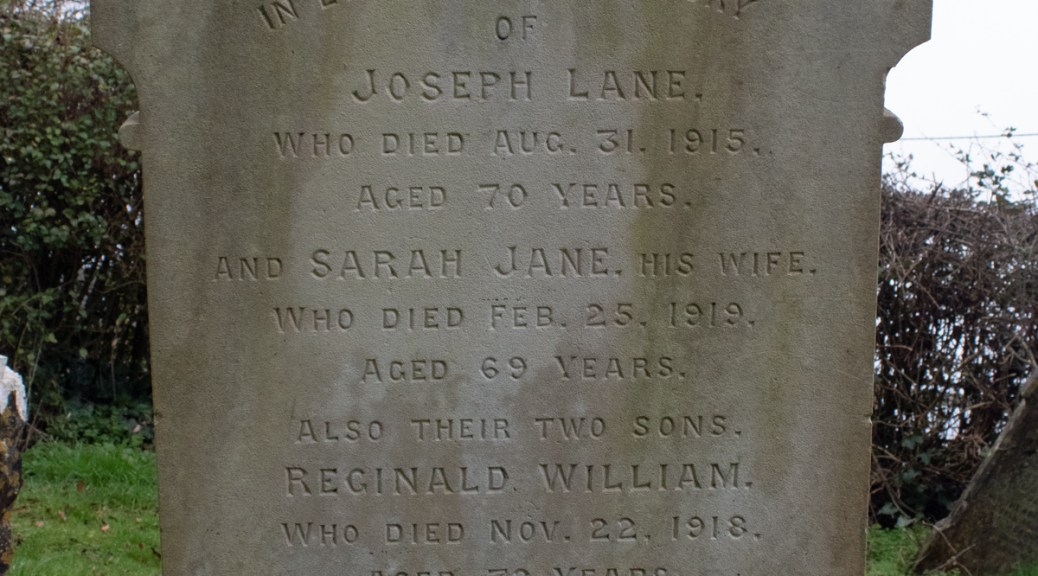
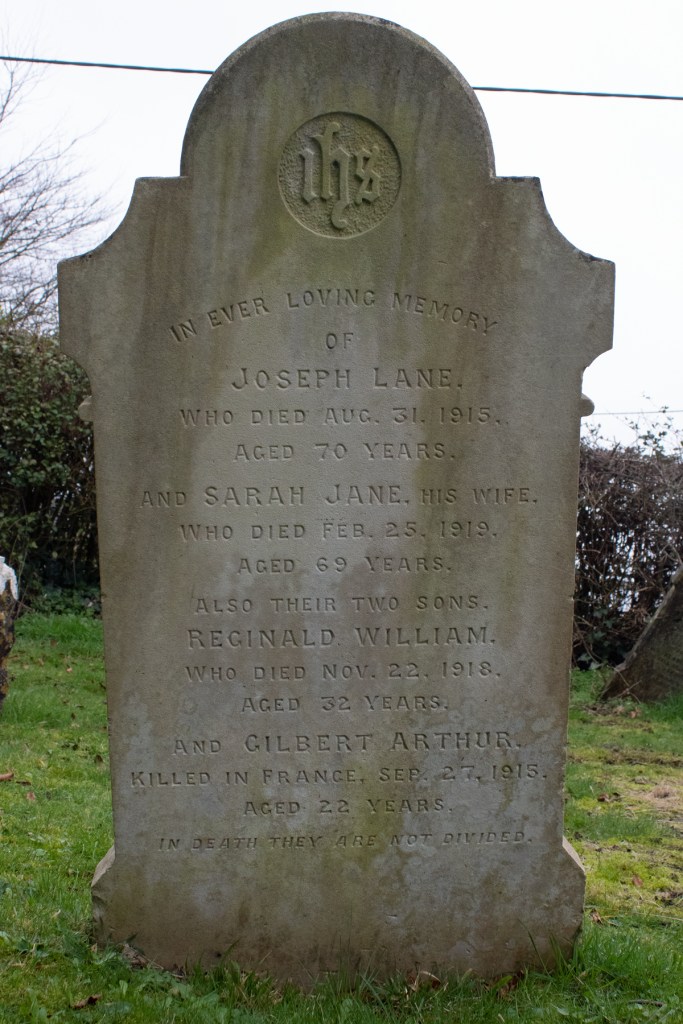
Reginald William Lane was born in the autumn of 1886, the eighth of ten children to Joseph and Sarah. Joseph was an agricultural labourer and he and his wife raised their family in their home village of Thornford in Dorset.
When he finished his schooling, he found work as a gardener’s boy. He went on to make a career out of this and was employed as a gardener when he married Evelyn Sharp on 15th April 1914. The couple exchanged vows in St Swithun’s Church, Hinton Parva, Dorset, the marriage certificate noting that the groom’s father was now employed as a woodsman.
War came to Europe later that year, and Reginald enlisted to serve the King and Empire. Little information is available about his military career: he joined the Dorsetshire Regiment, but there is no confirmation that he spent any time overseas. Private Lane transferred over to the 3rd (Reserve) Battalion of the Wiltshire Regiment, his new unit serving on home soil. Based in Kent, Reginald was part of the Thames & Medway Garrison.
Joseph died at the end of August 1915, and was laid to rest in the St Mary Magdalene Churchyard. Just weeks later, Reginald’s younger brother, Gilbert, a Private in the 3rd Battalion of the Middlesex Regiment, was killed during the Battle of Loos. He was commemorated on the Loos Memorial in Dud Corner Cemetery in France.
Private Reginald William Lane survived the war, but only by eleven days. While based in Kent, he contracted influenza and pneumonia. He died on 22nd November 1918, aged 32 years. His body was brought back to Dorset, and was laid to rest alongside his father.
There is no further information available for Evelyn.
Reginald’s mother, Sarah, however, only lived for another couple of months. She passed away on 25th February 1919, at the age of 69 years old. She was reunited with her husband and son in St Mary Magdalene Churchyard, the family headstone commemorating Private Gilbert Lane as well.
The early life of Ernest Brister is a challenge to piece together. His baptism record – at St Mary Magdalene Church in Thornford, Dorset – suggests that he was born in the summer of 1891, but gives only the name of his mother, Rosina Brister.
The 1901 census identifies the 9-year-old Ernest as a visitor to the house of Eliza Brister, a 65-year-old widow working as a laundress. There are several other Bristers in the village – including Eliza’s own to children – but Rosina is nowhere to be seen.
The next census, taken in 1911, sheds a little more light on the situation. Ernest is still living with Eliza, but he is now recorded as being her grandson. Aged 75, she was still taking in laundry, but Ernest was employed as a mason.
In the autumn of 1913, Ernest married Beatrice Chalker. She was a shepherd’s daughter from Dewlish in Dorset. The couple wed in Dorchester and went on to have two children, Doris and Edwin.
When war broke out, Ernest stepped up to play his part. He enlisted in the Dorsetshire Regiment, and found himself in France by the summer of 1915.
There is little information about Ernest’s time in the army, but later in the war, he seems to have transferred over to the Wiltshire Regiment. Attached to the 3rd (Reserve) Battalion, his new unit served on home soil and, based in Kent, was part of the Thames & Medway Garrison.
Private Brister was based in Maidstone in the autumn of 1918, when he contracted influenza and pneumonia. He was admitted to the military hospital in Aylesford, but the conditions were to prove to severe. He passed away on 24th November 1918, aged 27 years old.
Ernest Brister’s body was taken back to Dorset for burial. He was laid to rest in the graveyard of St Mary Magdalene Church. His grandmother, Eliza, passed away just a month later, at the age of 82. She was laid to rest close to her beloved grandson.
The 1910s were harsh for Ernest’s widow, Beatrice. Her youngest son was born in March 1915, her mother dying a couple of months later. She lost her brother, Edwin, to the war – he was serving with the 1st Battalion of the Gloucestershire Regiment, when he was killed on 28th August 1916. He was just 19 years of age. Two years later, she was widowed when Ernest passed away.
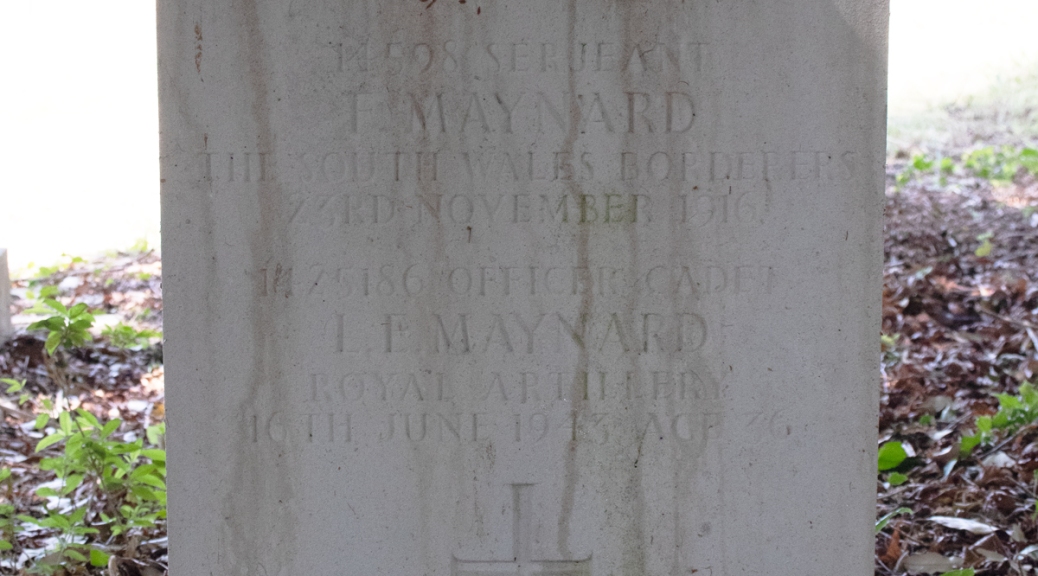
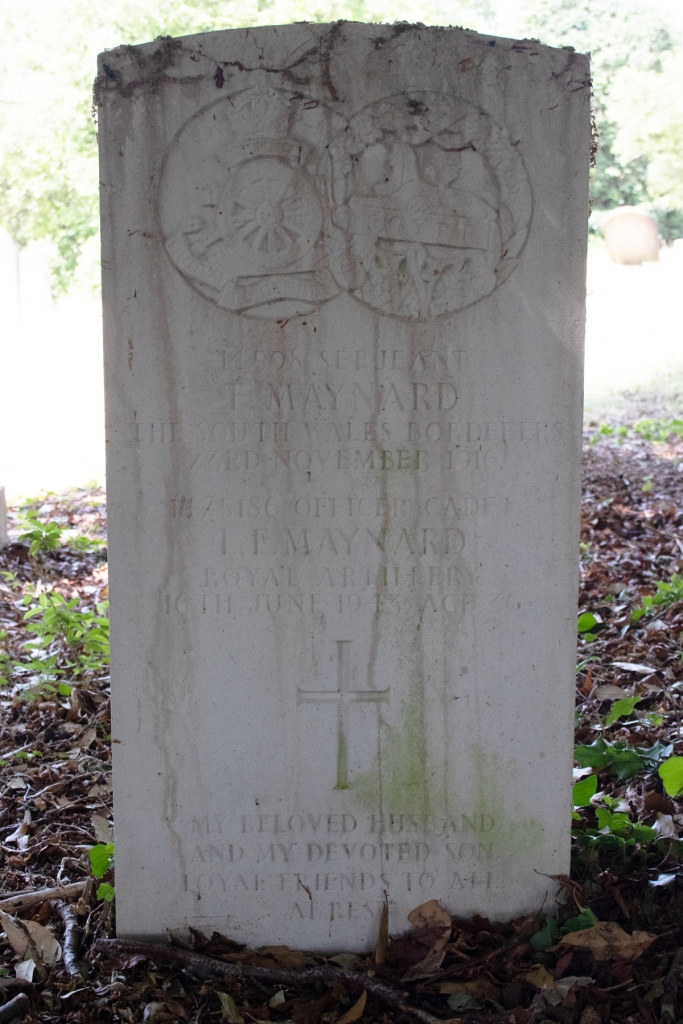
Details of Fred Maynard’s early life are a challenge to piece together. His First World War service records give his age as 44 years old when he enlisted in September 1914, and confirm his place of birth as Melksham, Wiltshire.
A newspaper report of his funeral gives the name of three brothers – Charles, Frank and Arthur – while only one census return, from 1881, provides a potential match for the family. This suggests Fred’s parents were iron fitter Alfred Maynard and his wife, Deborah, and gives the family’s address as Waterworks Road in Trowbridge.
Fred joined the army in the autumn of 1888. Initially assigned to the Gloucestershire Regiment, he had transferred to the Wiltshire Regiment by the following spring. Private Maynard showed a commitment to duty: in December 1890 he was promoted to Lance Corporal, rising to Corporal in the summer of 1893.
Fred was stood down to reserve status after his seven years’ active duty, but was recalled to the army in December 1899, when war broke out in South Africa. Promoted to Serjeant, he was sent to fight in the Boer War, and was mentioned in dispatches on 2nd April 1901 for special and meritorious service in South Africa. He was stood back down to reserve status in October 1901.
On 21st November 1895, Fred had married Louisa Card. The couple set up home in Trowbridge, but soon moved to London. They went on to have six children: Ernest, Nora and Leslie, who were all born in the London; and Arthur, Martha and Stuart, who were born in Cardiff, the family having moved to Wales by 1910.
The army was not finished with Fred, however, and, within weeks of war breaking out in the summer of 1914, he was called back into service. Given the rank of Serjeant again, he was attached to the South Wales Borderers. Fred was 44 years of age by this point, his service records confirming that he stood 5ft 8ins (1.73m) tall, weighed 164lbs (74.4kg) and had brown hair and hazel eyes.
Attached to one of the regiment’s depots, it seems unlikely that Fred saw service overseas this time around. He was discharged from the army on 1st September 1916 and this seems to have been on medical grounds. Later documents suggest that Serjeant Maynard had been diagnosed with carcinoma of the pylorus, or stomach cancer.
Fred returned to Cardiff, but his time back home was to be short. He was admitted to the Lansdown Road Military Hospital, and passed away on 23rd November 1916. He was 46 years of age.
It seems that Fred’s brother’s had some sway in his funeral. Instead of being laid to rest in Cardiff, where Louisa and the children were living, he was, instead, buried in the Locksbrook Cemetery, Bath, Somerset. His sibling Charles, who was a sergeant in Bath City Police, lived in the city, as did another brother, Frank.
Fred’s headstone also commemorates his and Louisa’s son, Leslie. He had joined the army in the 1920s and, in the summer of 1943, was in Yorkshire, undergoing officer training.
The death of an officer cadet through the accidental discharge of a rifle whose bolt had jammed was described at an inquest…
Captain WH Price said he was in charge of an exercise on the moors which involved the used of small arms and the firing of live ammunition. A squad of cadets lay on the ground in front of a trench firing over a range. All finished firing except Cadet Frank Holroyd, who said his bolt had hammed while firing a second round. [Price] told him to release the bolt by knocking the cocking piece up and back.
This attempt failed, and he told Holroyd to get back into the trench, turn the rifle magazine upwards, place the butt on the side of the trench, and kick the bolt down with his foot. While Holroyd was doing this he noticed Maynard standing in the trench about 4ft away from Holroyd and on his right-hand side.
Captain Price said he saw the rifle was pointing down the range when Holroyd kicked the butt. The cartridge suddenly exploded and Maynard dropped into the trench, shot in the head, and was dead when they reached him.
[Bradford Observer: Saturday 19th June 1943]
Officer Cadet Leslie Maynard was 36 years of age when he was killed. His body was taken back to Somerset for burial: he was laid to rest in the same grave as Fred, father and son reunited after 27 years.
Louisa remained somewhat elusive as time wore on. Fred’s military records confirm that she had moved from Cardiff to the Isle of Wight by 1922. By the time of her son’s death, she was living in Sidcup, Kent.
Ernest John Badman was born in Wick St Lawrence, Somerset, on 28th September 1898. The second youngest of ten siblings, although only six survived childhood, his parents were farm labourer William Badman and his wife, Fanny.
There is little specific documentation for Ernest. War came to Europe in the summer of 1914, and he had enlisted in the Wiltshire Regiment by the winter of 1916.
Attached to the 4th (Reserve) Battalion, Private Badman seems to have been in his initial training period by the following spring. However, this was not to last long. He passed away while on home soil on 21st March 1917: he was just 19 years of age.
Ernest John Badman was brought back to his home village for burial. He was laid to rest in the sleepy graveyard of St Lawrence’s Church.
Henry George Poole was born in the summer of 1892 in Creech St Michael, Somerset. The older of two children, his parents were carpenter Benedict Poole, and his wife, Louisa.
When he finished his schooling, Henry was apprenticed to a carpenter, but also devoted time to the village’s Friendly Society.
With war on the horizon, Henry was drawn to play his part and serve his country. He enlisted early in the conflict and, while full details of his military career are lost to time, documents confirm that he was assigned to the 8th (Reserve) Battalion of the Wiltshire Regiment.
It is unclear whether Private Poole served any time overseas but his battalion moved between Trowbridge in Wiltshire, to Weymouth and Wareham in Dorset. Indeed, by the end of 1915, Henry was based at Bovington Camp, to the west of Wareham. He was here when he fell ill, and when, on 28th November 1915, he passed away from an undisclosed condition in the camp hospital. He was just 23 years of age.
Henry George Poole was brought back to Somerset for burial. He was laid to rest in the peaceful graveyard of St Michael’s Church in the village of his birth.
A local newspaper reported on Henry’s funeral, but the article underlines how facts were gotten wrong then, as they are sometimes now. The Taunton Courier and Western Advertiser reported that Henry was 22, instead of 23, that he had ‘sisters’, when he only had one, and gave his father’s name as Benjamin, not Benedict.
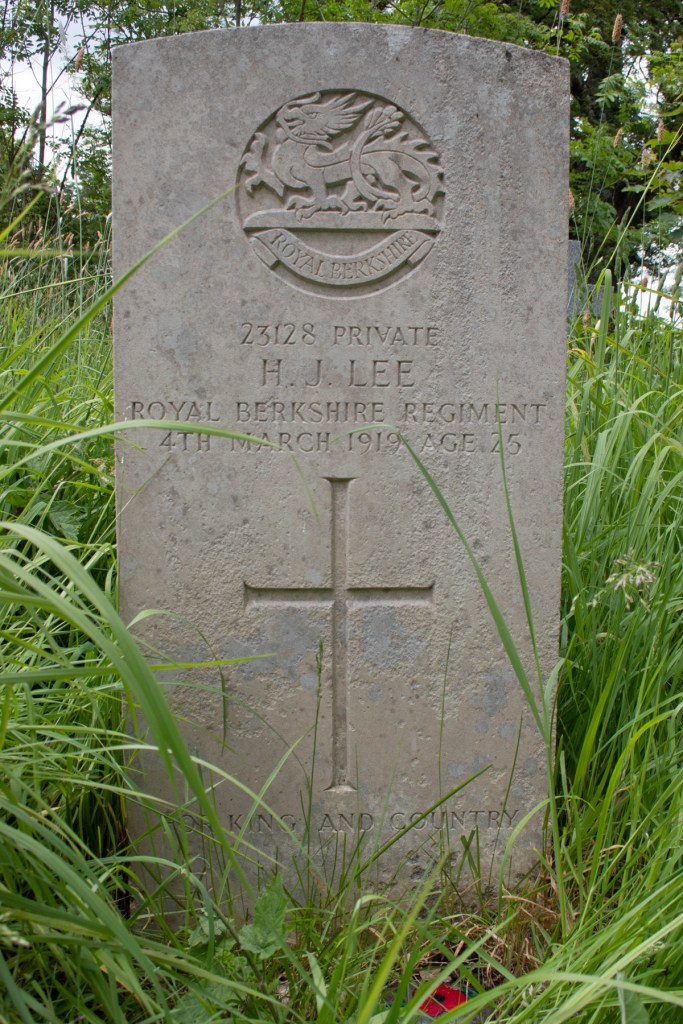
Herbert Jack Lee was born in the autumn of 1893 and was one of twelve children. His parents were Devon-born John Lee and his wife, Emily, who came from Churchstanton, Somerset, and it was here that the young family were raised. John was a bootmaker-turned-innkeeper, and the Lees lived in the village’s Rising Sun Inn.
By the time of the 1911 census, John had returned to boot-making once more. Herbert, meanwhile, had found work as a domestic gardener, bringing in a second wage to a household that included his parents and two younger siblings.
When war came to Europe, Herbert – who was better known by his middle name – stepped up to serve his King and Country. Little of his service documentation remains, but a contemporary newspaper report outlined his time in the army:
[Jack] joined the service in January, 1916, and was posted to the Wilts Regiment. He was subsequently transferred to the Royal Berks, and with them proceeded to France, returning to England suffering from trench feet at Easter, 1917. He was then posted to the Devon Regiment, and put into an Agricultural Company, and employed at Offwell, near Honiton.
Taunton Courier and Western Advertiser: Wednesday 12th March 1919
Private Lee’s health had suffered badly during the winter of 1916/17 and, in the spring of 1919, he came down with a severe bout of influenza. His body was too weakened to recover, and he passed away on 4th March 1919, aged just 25 years old.
Herbert Jack Lee was brought back to Somerset for burial. He was laid to rest in the peaceful graveyard of St Paul’s Church, in his home village of Churchstanton.
Interestingly, in the same edition of the Taunton Courier and Western Advertiser that had reported on Herbert’s funeral, was a report on the state of the Lee’s former home, the Rising Sun Inn.
…some of the rooms were very damp through water having come in… [and] was not fit to live in. The house had been very well conducted by the present tenant [Frank Gill], but… trade… had gone down by four-fifths since the war..
Taunton Courier and Western Advertiser: Wednesday 12th March 1919
Frank Gill was applying to the Licensing Board to avoid paying taxes for the year, given the drop in clientele and the number of other public houses in the area to support any customers. His case was referred on.
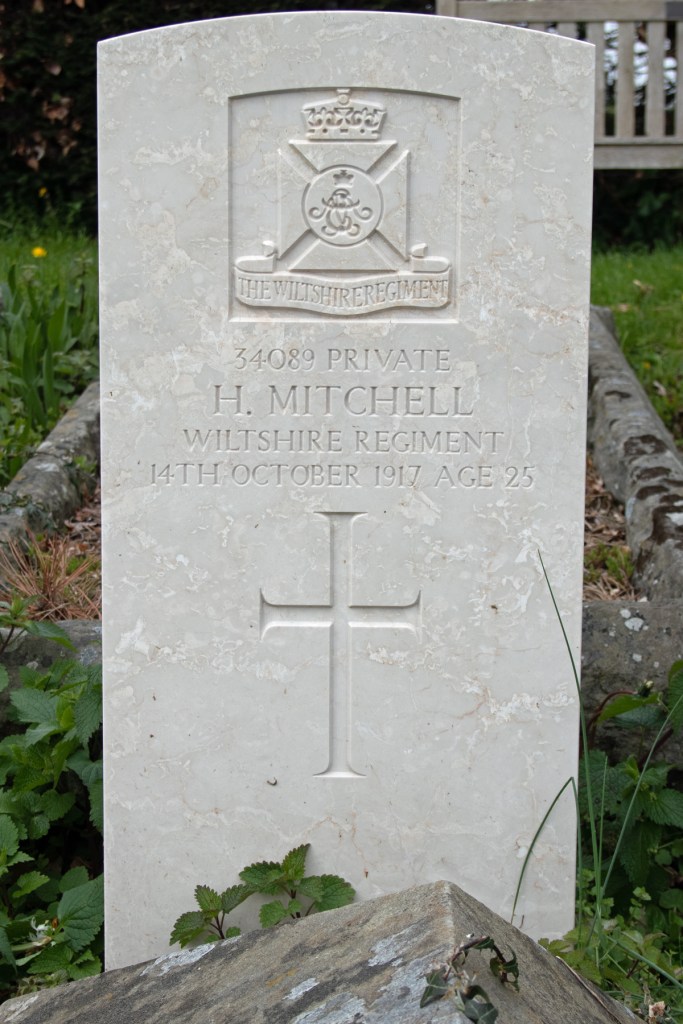
Henry Mitchell was born in the summer of 1892, the second of three children – and the only son – to George and Selina Mitchell. George was a gardener from Saltford, Somerset, and this is where he and Selina raised their young family.
By the time of the 1911 census, Henry had finished his schooling, and had followed his father into gardening for work. War was calling at England’s shores, however, and he was soon to take up a post in the army.
Full details of Henry’s military service are lost to time, but from his gravestone it is clear that he enlisted in the Wiltshire Regiment as a Private. From other documents it is possible to determine that he joined up by April 1917, and that he did not serve overseas. Instead, while his battalion – the 1st – fought at the Somme, Messines and Ypres, Private Mitchell was assigned to the regiment’s depot.
Henry seems to have been based in London, and he was certainly here in the summer of 1917. He was admitted to a hospital in Bethnal Green, and it was here that he breathed his last. He died on 14th October 1917, through causes unknown. He was just 25 years of age.
Henry Mitchell’s body was brought back to Somerset for burial. He was laid to rest in the family plot in the graveyard of the Blessed Mary Church in his home village of Saltford.
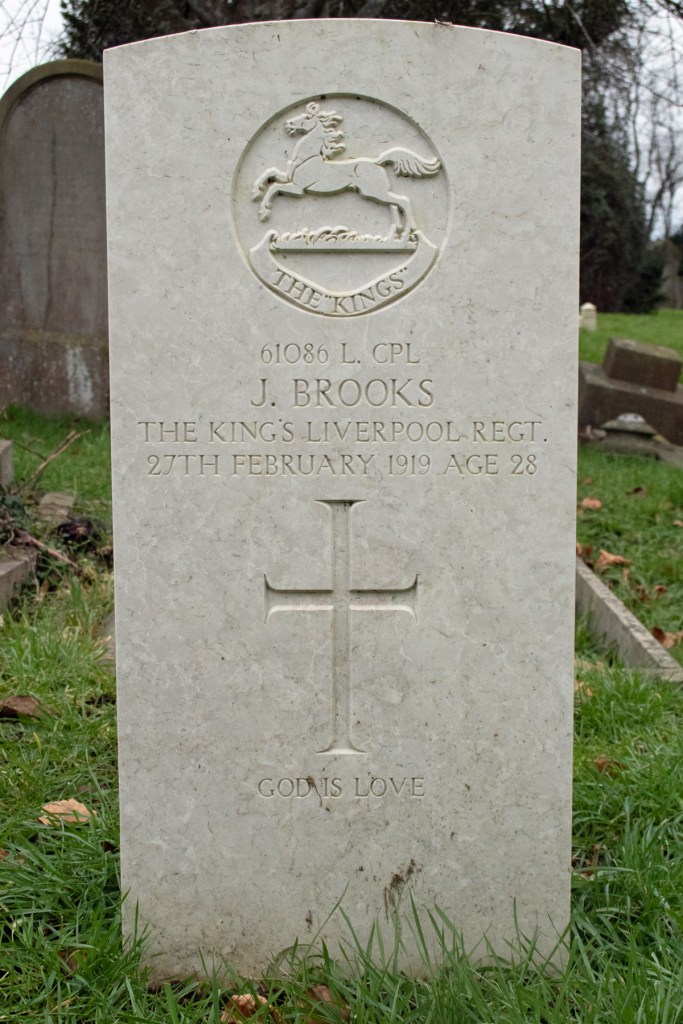
Jack Brooks was born in the autumn of 1890 and was the second of nine children. His parents, John and Kate Brooks, both came from Bath, where they ran a bakery on Queen Street, in the centre of the city. When he left school, it was natural for Jack to follow in his parents’ trade.
When war arrived on Europe’s shores, Jack stepped up to play his part and, on 7th December 1915, he enlisted in the Wiltshire Regiment as a Private. His service records show that he was 25 years and 2 months old, was 5ft 8.5ins (1.74m) tall, and weighed 156lbs (70.8kg). He was also noted to have a scrotal hernia, had flat feet and an upper set of dentures. These were enough for him to be passed for home service only, and he was formally mobilised on 10th February 1916.
Private Brooks seems to have taken a while to settle into army life. He was soon transferred across to the East Lancashire Regiment and, in May 1916, was attached to the 8th Works Coy as a Lance Corporal. In February 1917 he was transferred again, this time to the King’s Liverpool Regiment. On 6th June 1917 he was demoted to Private for ‘neglect of duty’, for not taking proper care of the stores that he was in charge of.
He married a woman called Rosina Elizabeth in 1917: the couple went on to have a son, William, who was born on 22nd November that year.
Jack continued serving after the end of the war and, by the beginning of 1919, was based in Aldershot. It was while here that he fell ill, and was admitted to the town’s Connaught Hospital on 11th February, suffering from influenza and pneumonia. Sadly the combination of illnesses was to prove to much: he succumbed to them, breathing his last on 27th February 1919. He was just 28 years of age, a boy with his mother, Kate, with him when he passed.
The body of Jack Brooks was brought back to Somerset for burial. He was laid to rest in the city’s St James’ Cemetery.









 Death and Service