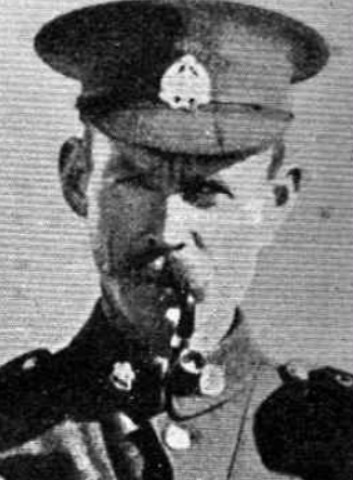
LOXLEY, WILLIAM, Private, No. 14657, 4th Battn. Coldstream Guards, eldest s. of the late William Loxley, Engine Fitter, by his wife, Ellen, dau. of the late Edward Stringer; b. Ecclesfield, co. York, 26th Oct. 1885; educ. there; was a stove and grate fitter; volunteered and enlisted 9 Jan. 1915; went to France, 15 Aug. 1915, and died in Convalescent Home, Westbury, co. Wilts, 27 Nov. 1915, of wounds received in action during the Battle of Loos, 27-29 September 1915. He m. at Grimsby, 4 Aug. 1912, Edith Mary (3, Burton Street, Langsett Road, Sheffield, widow of Philip Munty, and dau. of the late Frederick Charles Unwin.
De Ruvigny’s Role of Honour
William was the second of four children to William and Ellen. The family lived at 50 Town End Road in Ecclesfield, a small stone-built cottage overlooking grassland on the edge of the village.
Aside from his entry in de Ruvigny’s Role of Honour, there is no further information about his widow, although the British Army Register of Soldiers’ Effects names both Edith and William’s nephew – Faedon Muntz – as beneficiaries.
Injured at Loos, a local newspaper provided an obituary:
Giving up his profession for the Army, [William] was drafted out to France, and received a bullet through the forehead. After a long treatment in hospital he was, a fortnight ago, invalided home for ten days, leaving only a few days ago, then appearing to making rapid progress. He had a relapse, and on Friday his memory left him. Later he became delirious and passed away.
[Sheffield Daily Telegraph: Monday 29th November 1915]
William Loxley died at the Haywood House Hospital in Westbury, Wiltshire, on 27th November 1915: he was 30 years of age. His body was laid to rest in the town’s cemetery.
Frederick William Collier was born in the autumn of 1891. The oldest of four children, his parents were weavers Frederick and Annie Collier. Annie died in 1899, and her widow re-married. The 1911 census found the extended family – Frederick Sr, new wife Rose, Frederick Jr, two of his siblings and his three half-siblings – living at 30 New Prospect Buildings, Westbury, Wiltshire, their home town.
When Frederick Jr completed his schooling, he found work as a grocer’s labourer. War broke out in 1914, however, and he felt drawn to play his part. Full details of his military service have been lost to time, but it is clear that he had enlisted early in the conflict, and certainly by the start of 1915.
Driver Collier was assigned to the Royal Field Artillery, and was attached to the 59th Brigade Ammunition Column. He was sent to Surrey for training, unbeknownst to his unit, in preparation for the Gallipoli campaign. Frederick, however, was not to get his chance to be involved.
Frederick William Collier… died on Wednesday last week from injuries received while attempting to stop horses which were stampeding in his camp, the Ammunition Column, 59th Brigade, at Milford (Surrey)… Collier… was well known in Westbury, and was popular amongst his comrades, and the greatest sympathy is extended to his parents in their bereavement. The young fellow died the same day the accident happened in the hospital at Aldershot.
[Wiltshire News: Friday 2nd July 1915]
Driver Frederick William Collier succumbed to his injuries on 23rd June 1915. He was 23 years of age. His body was taken back to Wiltshire for burial, and he was laid to rest in Westbury Cemetery, not far from where his grieving parents still lived.
Ernest Ritchens was born in the summer of 1872 in the Wiltshire village of Semington. The youngest of nine children, he was one of seven boys to Isaac and Sarah Ritchens. Isaac was a farm labourer, and this is a job into which Ernest also followed when he completed his schooling.
Farming was not something Ernest wanted to be in for the long term, however, and, after the death of his parents – Isaac in 1895, and Sarah four years later – he joined the army. Details of his military career have been lost to time, but it seems that he joined the Wiltshire Regiment and, as a Private, spent time in South Africa. By the time he was stood down, he had risen to the rank of Lance Corporal.
Back home and, in the summer of 1907, Ernest married Sarah York, a wheelwright’s daughter from Hilperton near Trowbridge, Wiltshire. The newlyweds would set up home in the village, and go on to have four children. The 1911 census found the young family living on Devizes Road, Ernest back working as a farm labourer.
When war broke out, Ernest was again called upon to play his part . He was given the rank of Corporal, and attached to the Wiltshire Regiment (although other records he was assigned to the Hampshire Regiment). He did not appear to have spent any time overseas and, was soon transferred over to the 160th Company of the Labour Corps.
DEATHS
RITCHENS – On February 1st, at No. 1, Australian Hospital, Sutton Veny, Corporal Ernest Ritchens, of the Labour Corps, and formally of the Wilts Regiment, resident of Hilperton…
[Wiltshire News: Friday 7th February 1919]
Ernest Ritchens was 46 years of age when he passed away in 1919. While the cause us not reported, it is likely to have been an illness of some sort. His body was taken back to Hilperton, and he was laid to rest in the village cemetery.
John Albert Gulliver was born in the summer of 1878. He was the second of six children – and the first boy – to farmers John and Ruth Gulliver. The family were raised in the Wiltshire village of Steeple Ashton, but had moved to Hilperton, on the outskirts of Trowbridge, by the time their eldest son had turned ten years old.
John Jr found work as a builder’s labourer when he finished his schooling. The 1911 census recorded him as living with his parents and sister on Horse Road, Hilperton, although the document suggests he was working in Edington, six miles to the south of the village. The Gulliver family also had a visitor – Bristol-born Albert Davies, who was a Lance Corporal in the Coldstream Guards.
When war broke out, John Jr was called upon to play his part. His service records have been lost to time, but it is clear that he had joined up by 1917. There is some confusion over his military service, however.
The Commonwealth War Graves Commission records give Private Gulliver’s initial unit as the 3rd Battalion of the Hampshire Regiment, and he was awarded a ‘wounded stripe’ following an injury on 10th September 1917. However, John’s Medal Roll Index Card suggests he joined the Duke of Cornwall’s Light Infantry. Either way, Private Gulliver did not appear to spend any time overseas and, by the autumn of 1918, he had transferred to the 442nd Agricultural Company of the Labour Corps.
Private Gulliver survived the war, but his health had been impacted. He had contracted pneumonia, and passed away at home on 30th November 1918. He was 40 years of age.
The body of John Albert Gulliver was laid to rest in the tranquil grounds of Hilperton Cemetery, not far from where his grieving parents still lived.
Albert Dobson was born in Bridlington, Yorkshire, on 7th April 1896. One of seven children, his parents were John and Annie Dobson. John was a bricklayer, and, when he completed his schooling, Albert was apprenticed to him. The 1911 census found the family living in a small terraced house at 55 St John’s Walk, on the outskirts of the town.
Bricklaying was not what Albert wanted from a career and, on 19th July 1913, he enlisted in the Royal Navy. Below the age to formally enlist, he was taken on with the rank of Boy 2nd Class, and sent to HMS Vivid – the Royal Naval Dockyard in Devonport, Devon, for his training.
Over the next nine months, Albert learnt the tools of his trade. Promoted to Boy 1st Class in October 1913, he spent time on board the battleship HMS Irresistible, before moving to HMS Pembroke, Chatham Dockyard in Kent. While he was there, he came of age, and was fully inducted into the Royal Navy as an Ordinary Seaman. Albert’s service papers show the man he had become: he was 5ft 7ins (1.7m) tall, with brown hair, blue eyes and a fresh complexion.
In April 1914, Ordinary Seaman Dobson was assigned to the new cruiser HMS Lowestoft. She would become his home for the next two years, and, while his annual reviews were average (character varying from good to very good and ability from moderate to satisfactory), he did gain a promotion to Able Seaman on 26th April 1915.
A singular fatality to a naval seaman names Albert Dobson, age 30 [sic], a native of Bridlington, was investigated at the Royal Naval Hospital, Chatham, on Monday. On October 20th, Dobson was one of a working party engaged on a battleship in the Dockyard, when, owing to the breaking of a plank, he and three men fell a distance of about eight feet. The knee of one of the men caught him in the stomach, with the result that he sustained a rupture of the spleen. In hospital he developed pneumonia, and died. A verdict of “Accidental Death” was returned.
[Kent Messenger & Gravesend Telegraph: Saturday 2nd December 1916]
Able Seaman Dobson’s service papers confirm that the incident occurred as the men were transferring a torpedo from HMS Illustrious. He was just 20 years of age when he died on 23rd November 1916.
The body of Albert Dobson was taken to Woodlands Cemetery in Gillingham, Kent, close to the dockyard he had come to know as home. He was laid to rest in the graveyard’s naval section.
James George Mills was born on 5th August 1891 in Poplar, Middlesex. One of nine children, his parents were Robert and Emily Mills. Robert was a bricklayer, and by the time of the 1901 census, they had settled in Lochnager Street.
Robert had died by 1911, and Emily was left to raise their children alone. That year’s census return found them living in rooms at 1 Cobden Street, with three of the children – including James – old enough to be earning a wage.
James had enlisted in the Royal Navy the year before, and was employed as a Stoker 2nd Class. His service papers show that he was 5ft 5ins (1.65m) tall, with light brown hair, blue eyes and a fair complexion. He was also noted as having a small scar on his right cheek.
Stoker Mills would come to be based at HMS Pembroke, the Royal Naval Dockyard in Chatham, Kent, during his career. He served on a number of ships and, by the time he was promoted to Stoker 1st Class in October 1911, he had spent time on board the cruisers HMS Vindictive and HMS Foresight.
With his promotion came a move, and James was assigned to HMS Acteon, the navy’s new torpedo school based in Sheerness, Kent. From here on in, much of his time seems to have been spent on land, and in January 1914, he moved to HMS Dido, also in Sheerness.
This move to the navy’s land bases seems to have coincided with James’ life away from his career. On 26th December 1912, he married Classina Steenbergen, a Dutch national, whose parents had moved to Barking, Essex in the late 1890s. The couple would go on to have two children: daughters Clasina and Iris.
James’ dedication to the Royal Navy began to pay off, with his annual reviews noting a very good character and a superior ability. In May 1915 he was promoted to Acting Leading Stoker, with the position being formalised that November.
By this point, however, James’ health was becoming impacted. He was admitted to the naval hospital in Chatham in December 1916, suffering from a malignant growth on his pancreas. The condition would prove fatal: he died on 13th December, at the age of just 25 years old.
The body of James George Mills was laid to rest in Woodlands Cemetery, Gillingham, Kent, not far from the naval base he had known so well.
Classina now had two young children to support on her own. She married again in the spring of 1920, her new husband being cabinet maker William Walter Hermann. The couple went on to have three children: Walter, Pearl and James.
The details of Thomas Davis’ early life are a challenge to piece together.
His navy service papers confirm that he was born in Stockton, County Durham, on 25th January 1867, and was the son of John and Ann Davis. The 1881 census found the family living at 66 Argyle Street, Linthorpe, Yorkshire. John was a puddler, working iron in a local foundry, while Thomas, now 15 years of age, was a labourer in the same ironworks.
Thomas falls off the radar for a few years, and it is only his service papers that brings things together again. He enlisted in the Royal Naval Reserve in June 1915, joining up as a Trimmer. The document confirms that he was 5ft 6ins (1.77m) tall with blue eyes and a fair complexion.
Over the next eighteen months, Thomas served on four ships, returning to HMS Pembroke – the Royal Naval Dockyard in Chatham, Kent – in between voyages. His conduct seems to have been average and, in November 1916, he was jailed for 7 days and docked a day’s pay for an unrecorded misdemeanour.
By that winter, Trimmer Davis’ health was faltering, and he was admitted to the Sailor’s Home in Chatham, Kent, suffering from pneumonia. The condition was to get the better of him, and he passed away on 1st February 1917, just a week after his 50th birthday.
The body of Thomas Davis was laid to rest in the naval section of Woodlands Cemetery, Gillingham, Kent, not far from the naval base he had come to call home.
There is scant information about Thomas’ family. While the 1881 census notes he had a younger brother, Phillip, his service papers give his next-of-kin as cousin William Jones of Wellington Street, Toronto, Canada. (It also notes that communications sent to him were returned unopened.)
John Edward Major was born on 1st April 1881 in Gorleston, Suffolk. One of seven children, his parents were William and Elizabeth Major. William was a fisherman and the family lived on the town’s High Street.
Things changed for the Major family, however, and the 1891 census found them living in Barking, Essex. William was now employed as a general labourer, and the family had set up home at 16 Rosa Terrace.
John was drawn to his coastal past and, according to the next census, he was a ship’s mate on the fishing boat Cygnet. Based out of London, the return was taken in Lowestoft, so it is safe to assume that she plied the Essex and Suffolk coasts.
Love was blossoming for John at this point and, on 9th September 1906, he married Ann Davy. She was a coal porter’s daughter from Barking, and the couple married in the town’s St Margaret’s Church. They would go on to set up home in Cleethorpes, Lincolnshire, and have five children: Blanche, Amelia, Annie, Elizabeth and John Jr.
Over the next few years John’s trail goes cold. When war broke out, he was called upon to play his part, and joined the Royal Naval Reserve as a Trimmer. By the summer of 1917 he was attached to the SS Gransha, based out of the Royal Naval Dockyard in Chatham, Kent.
The next record for Trimmer Major relates to his passing. His pension ledger notes that, on 11th September 1917, he fell overboard from Gransha and was drowned. Sadly, there is no other information available about the incident, but John was 37 years of age.
The body of John Edward Major was laid to rest in the naval section of Woodlands Cemetery, Gillingham, Kent, not far form the naval base that he had come to call home.
Tragically, John’s entry on the Pension Ledger confirms that his and Ann’s youngest child – John Jr – died on Christmas Eve 1917, three months after his father.
Albert Edward Boorman was born on 21st November 1873 in Hadlow, Kent. He was the oldest of seven children, and one of four boys to James and Jane Boorman. James was a maltster’s labourer, but his eldest son sought a longer-term career.
On 5th January 1889, Albert enlisted in the Royal Navy. Due to his age, he took on the rank of Boy 2nd Class, and was sent to the training ships HMS Impregnable and HMS Lion, both based in Devonport, near Plymouth, Devon.
Over the next couple of years, Albert learnt the tools of his trade, rising to the rank of Boy 1st Class in December 1889. The following November he was assigned to HMS Calypso, a corvette, and it was during the eighteen months he spent with her that he came of age.
The now Ordinary Seaman Boorman’s service record show that, having turned eighteen, he was 5ft 7.5ins (1.71m) tall, with dark brown hair, grey eyes and a fresh complexion. He was noted as having a birth scar on his left shoulder.
Albert was obviously dedicated to his naval career and, on 2nd April 1892, he was promoted to Able Seaman. When he came of age, he enlisted for twelve years’ service and, during that time, he would serve on four ships. In between tours he returned to what would become his shore base, HMS Pembroke, the Royal Naval Dockyard in Chatham, Kent. His annual reviews reflected his commitment to the role: in December 1897 he was promoted to Leading Seaman, in January 1899 he gained the rank of Petty Officer 2nd Class, and in September 1900 he rose to Petty Officer 1st Class.
When his contract came to an end in November 1903, Albert immediately re-enlisted and would serve for another decade. In the summer of 1909 he was promoted to Acting Chief Petty Officer: the role was formalised a year later.
Away from his naval career, Albert had fallen in love. He married Eliza in 1909, and, while her husband was at sea, she set up home at 43 East Street, Gillingham, Kent.
In November 1913, after 22 years’ formal service, Chief Petty Officer Boorman was stood down to reserve status. This time away from the sea was not to last for long, however, and he was called upon once more when war was declared just nine months later. Albert resumed his previous role, but was primarily based back at HMS Pembroke.
On 7th March 1917, Chief Petty Officer Boorman was on board the gunboat HMS Spey, which was carrying out diving operations in the Thames Estuary. At 4 o’clock in the afternoon, in “bitterly cold and boisterous conditions” [Whitstable Times and Herne Bay Herald: Saturday 24th March 1917], the ship lost an anchor, and the decision was made to return to base at Sheerness, Kent. Another vessel, the HMS Belvedere, was close by and turned towards the Spey, and, despite trying to avoid a collision, the smaller ship was struck a glancing blow.
The Spey was 40 years old, and the impact sheered numerous rivets from the side. Water gushed in, and the gunboat sunk beneath the Thames within a matter of minutes. Some of the crew had managed to escape on a life raft, but it was not fitted with lights or flags. The boat drifted and was not found until five hours later, partially submerged: all on board had died.
In total, twenty of the thirty-seven crew perished on that March afternoon, including Chief Petty Officer Boorman. He was 43 years of age.
The body of Albert Edward Boorman was retrieved. He was laid to rest in the naval section of Woodlands Cemetery, Gillingham, Kent, not far from where his widow still lived.
Frank Waterhouse was born in Keighley, Yorkshire, on 14th September 1889. The second of four children, including two younger sibling who both died before their first birthdays, his parents were Waddington and Jane Waterhouse.
Waddington was an engineer for a worsted mill in nearby Bingley, and when Frank finished his schooling, he found employment as a fireman for the same mill. By the time of the 1911 census father, son, Frank’s sister Fanny and her husband Arthur were all employed at the factory.
In the spring of 1915, Frank married Alice Greenbank. She worked at a mill in Haworth and the couple set up home together. They would not go on to have any children.
War was raging across Europe by this point, and Frank stepped up to play his part. He enlisted in the Royal Navy and his trade made him ideal for an initial role of Stoker 2nd Class. He was sent to HMS Pembroke, the Royal Naval Dockyard in Chatham, Kent, for his training and his service record confirms the man he had become. He was 5ft 7ins (1.7m) tall, with brown hair, brown eyes and a fresh complexion.
Stoker 2nd Class Waterhouse was sent to HMS Pembroke, the Royal Naval Dockyard in Chatham, Kent, for his training. At the beginning of May 1917, he was assigned to the cruiser HMS Crescent, and spent the next four months aboard.
During this time, Frank fell ill. When Crescent docked back at HMS Pembroke at the end of September, he was disembarked, and taken to the Royal Naval Hospital in Chatham. He was suffering from endocarditis, and the heart condition would prove fatal. He passed away the day after he was admitted – on the 2nd October 1917 – at the age of 28 years old.
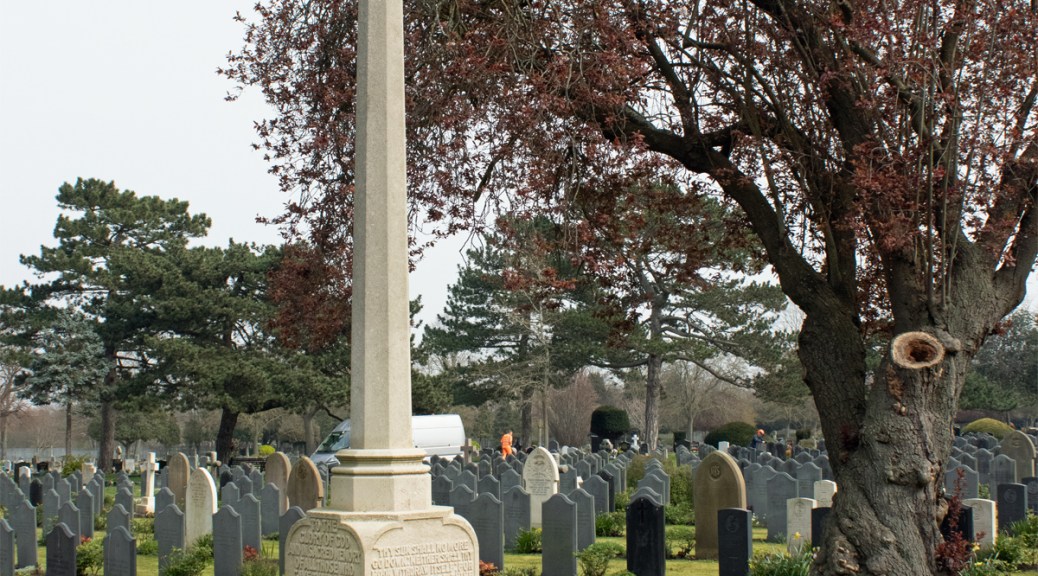
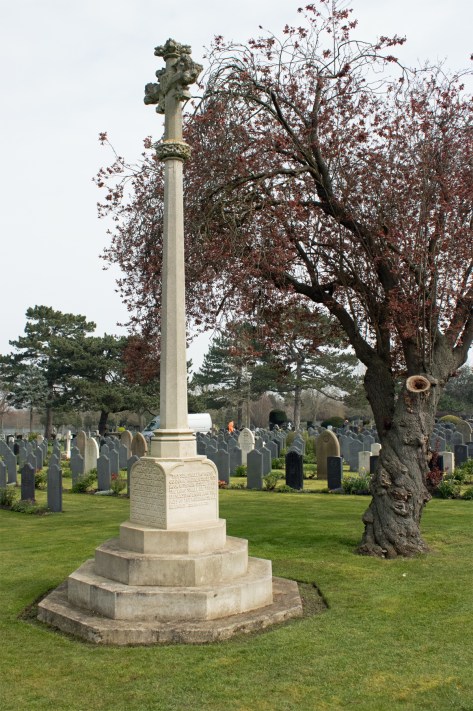
Hundreds of miles from home, it is likely that Frank’s family would not have been able to foot the bill for bringing his body back home. Instead, Frank Waterhouse was laid to rest in the naval section of Woodlands Cemetery in Gillingham, Kent, not far from the base at which he had been based.