Category Archives: Essex

Sapper John Dyer

Sapper John Dyer

John Phippen Dyer was born in the spring of 1896, and was the oldest of four children. His parents, John and Fanny Dyer, were from Somerset and it was in the town of Highbridge that they raised their family.

John Sr worked as a coach body maker for the railways, and his eldest boy joined him as an apprentice when he finished his schooling. When war broke out, however, John Jr was keen to be seen to be playing his part.

John Jr enlisted in Taunton on 15th November 1915, joining the Wessex Division of the Royal Engineers. His service records confirm that he was 5ft 7.5ins (1.71m) tall and of god physical development. He was sent off to Essex for training, but came down with influenza the following January.

Sapper Dyer was admitted to hospital in Great Bentley, spending a fortnight there. He was released back to his unit, but his health continued to suffer. He had had bouts of rheumatism going back to 1911, and, by the spring of 1916, this had recurred, and was recorded as possible rheumatic appendicitis.

John’s condition led to him being declared permanently unfit for was service: he was discharged from the army on 30th March 1916, having served for just four-and-a-half months.

John Jr returned to Somerset, but at this point his trail goes cold. The next record for him is that of his passing, on 26th May 1919. He was just 23 years of age.

John Phippen Dyer was lair to rest in the cemetery of his home town, Highbridge, Somerset.


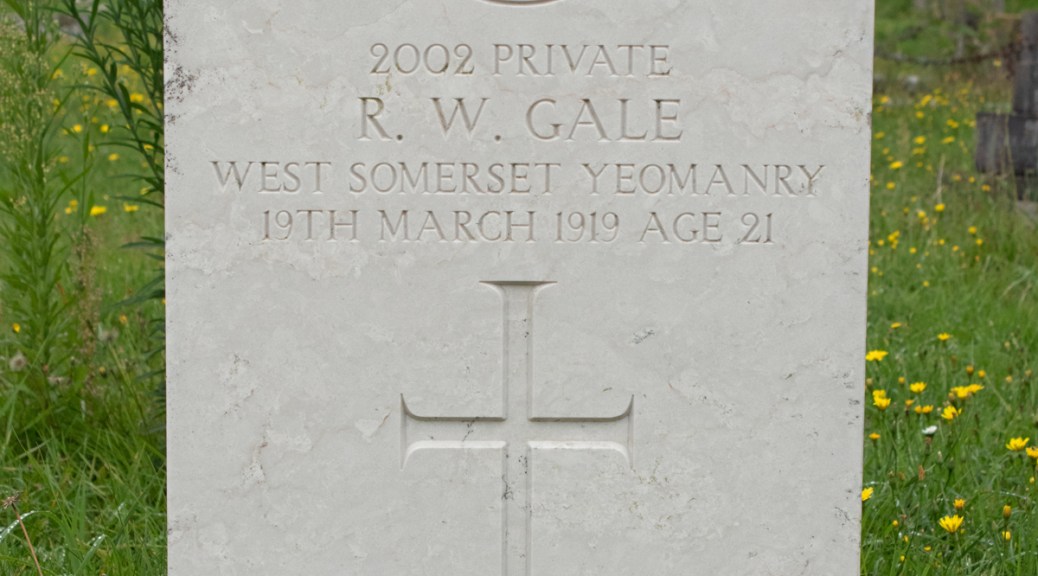
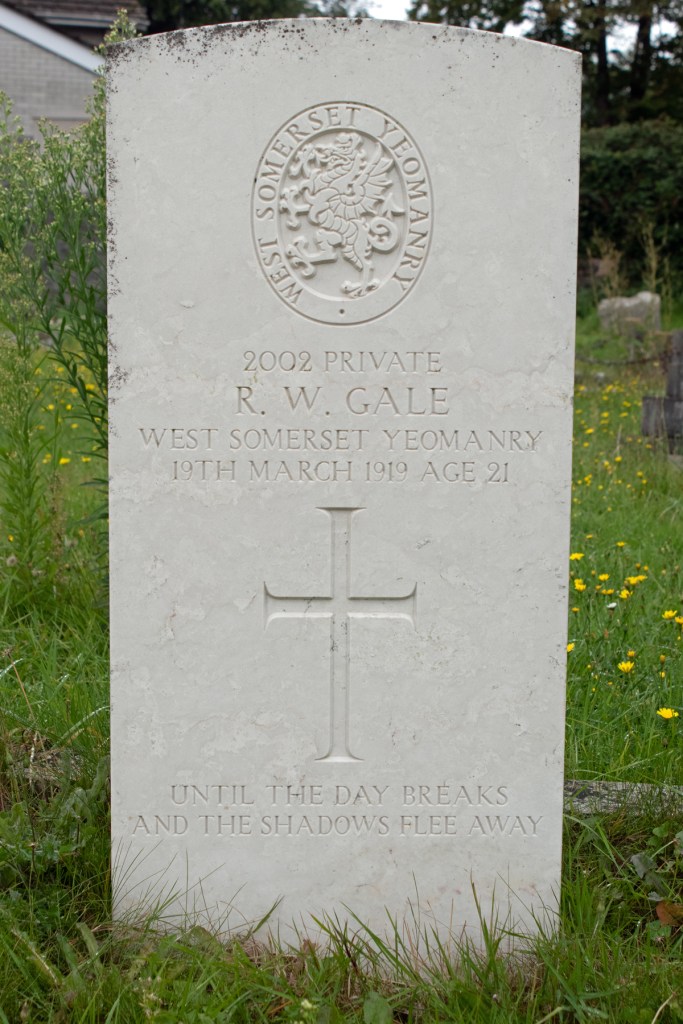
Private Richard Gale

Private Richard Gale

Richard William Gale was born in the autumn of 1897 in the Devon village of Sidbury. The third of six children, he was the son of George and Emma Gale. George was a bricklayer and labourer, and the family had moved to Burnham-on-Sea, Somerset, by the time Richard was ten, as this is where he had found work.

When Richard finished his schooling, he found employment as an errand boy for a school outfitters. By the time oft he 1911 census, there were four wages coming into the Gale household. Besides Richard and his father, his older brother, Frederick was working as a grocer’s apprentice, and his sister, Laura, was a dressmaker.

War was declared in the summer of 1914, and Richard was called upon to play his part. His service records no longer exist, so it is not possible to fully track his time in the army. However, he initially joined the 2nd/1st Battalion of the West Somerset Yeomanry and was sent for training in East Anglia.

As some point, Private Gale transferred to the Labour Corps, and became attached to the 949th Employment Company. Based in the London area, Richard’s duties are unclear, and his troop would have taken on any of a wide range of roles, from cooking and store work, to salvage, traffic control and telephone operating. Whether his previous work at the outfitters came into play is unclear, although Employment Companies were also involved in tailoring, shoemaking and laundry work.

Private Gale survived the conflict, and seems to have been based in the the Nottingham area after the Armistice. By March 1919, he had become unwell and, having contracted pleurisy, he was admitted to the Berridge Road Military Hospital. The condition took its toll on Richard, sadly, and he passed away on 19th March 1919. He was just 21 years of age.

Richard William Gale’s body was taken back to Somerset for burial. He was laid to rest in the cemetery of Burnham-on-Sea, a short walk from where his family lived.


Private Richard Gale
(from findagrave.com)

Lieutenant Arthur Devas

Lieutenant Arthur Devas

Arthur Edward Devas was born in Devizes, Wiltshire, on 29th July 1877. One of ten children, his parents were Reverend Arthur Devas and Louisa. Arthur Sr was chaplain at the County House of Correction, the prison a short walk away from the family home, over the Kennet and Avon Canal. The 1881 census showed the Devas’ were living to the south of the town centre, and were supported by three servants.

Arthur standing as a vicar’s son earned him an education. He was sent to the prestigious Haileybury College in Hertfordshire. When his father died in 1901, he felt a pull to see more of the world, and joined the army. Enlisting in the Essex Regiment in September 1902, he was taken on as a Second Lieutenant.

Promoted to the rank of full Lieutenant in January 1906, the next census, in 1911, recorded Arthur at the Warley Barracks in Billericay. When war broke out in August 1914, he was based in Mauritius: he remained there for the next five months, before his battalion – the 1st – were brought back to England.

Setting up camp in Banbury, Oxfordshire, the aim was to train the battalion in readiness for an assault in Gallipoli. For Lieutenant Devas, however, this was not to be. He had fallen ill on the journey back to Blighty and, having contracted typhoid, he was admitted to the 3rd Southern General Hospital in Oxford. He died at the hospital on 15th February 1915, at the age of 37 years old.

Louisa and some of her children had moved to Minehead, Somerset, after her husband’s death, and this is where Arthur Edward Devas’ body was brought for burial. He was laid to rest in the extensive Minehead Cemetery, to be reunited with his mother when she passed away some eighteen years later.


Private Henry Webber

Private Henry Webber

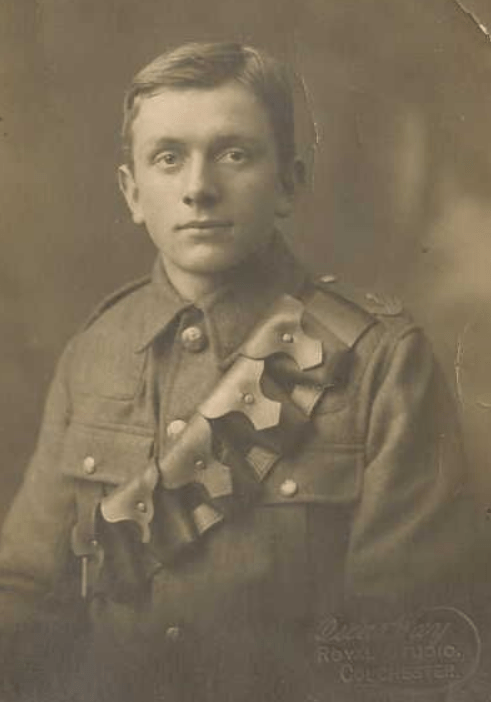
Henry James Webber was born in Plaistow, Essex, in 1889. One of ten children, his parents were Frederick and Etty Webber. Frederick hailed from Somerset, but worked as a sergeant in the Metropolitan Police. By the time of the 1901 census, he had been promoted to Inspector: the family moved to Somerset when he retired in around 1905, settling in Minehead.

Of Henry, there is little information documented. He does not appear on the 1911 census, and there are no military records to confirm his service in the army. He had certainly enlisted by the summer of 1916, joining the Somerset Light Infantry.

Private Webber was attached to the 7th (Service) Battalion and certainly saw action overseas. His troop was heavily involved in the Battles of the Somme in 1916, and it was here that he was injured. Again, full details are not available, but his wounds were severe enough for him to be medically evacuated to Britain for treatment.

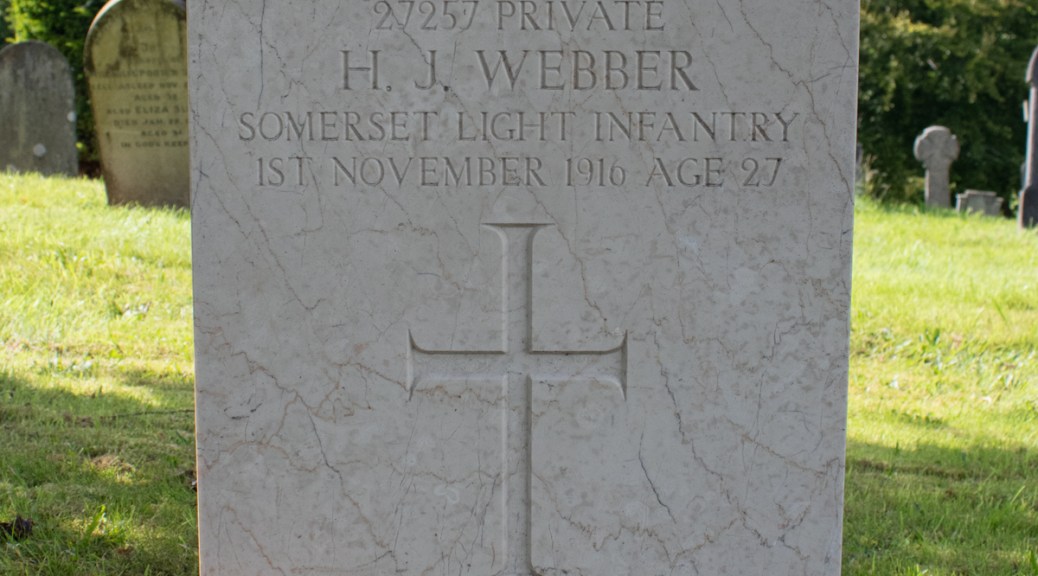
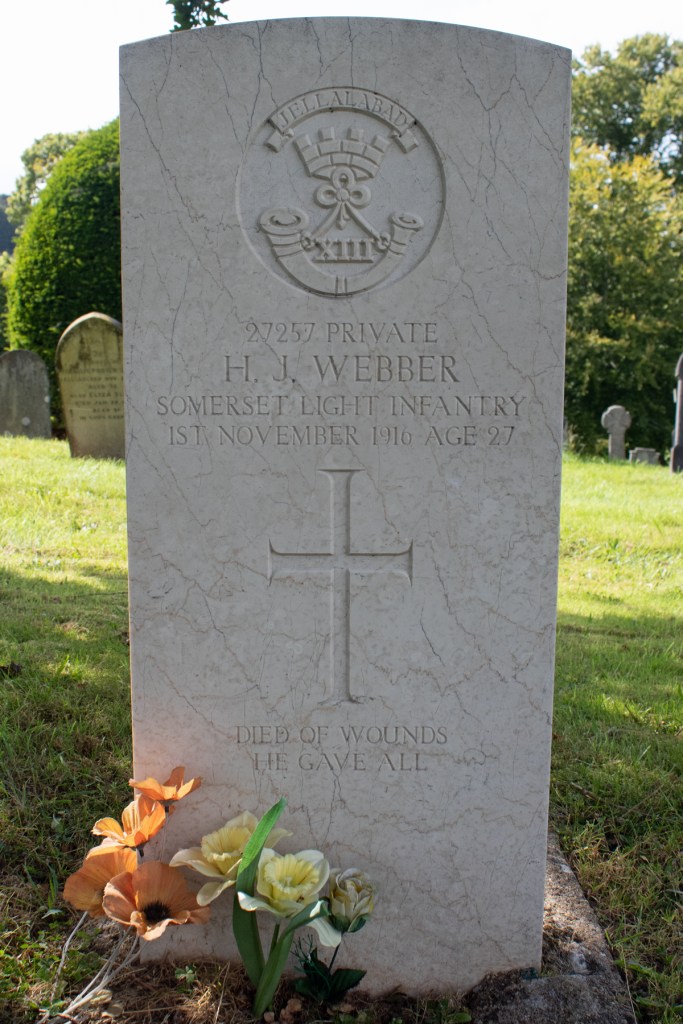
Henry was admitted to the 1st Southern General Hospital in Birmingham, but his injuries proved too severe. He died on 1st November 1916, at the age of 27 years old.

Henry James Webber’s body was taken back to Somerset for burial. He was laid to rest in Minehead Cemetery, not far from where his grieving family were living in Cher Street.


Lance Corporal Henry Rowell

Henry Edward Rowell was born on 22nd May 1898 in Southwark, Surrey. One of five siblings, of whom only three survived childhood, his parents were Henry and Jane Rowell. Henry Sr was a bricklayer’s labourer from Southwark, and the family were brought up in a small terraced house on Brandon Street, Walworth.

When he finished his schooling, Henry Jr found work as a turner’s improver but, when war came to Europe, he was called upon to play his part. He enlisted on 29th May 1915, and, as a Private, was attached to the 12th (Service) Battalion (Bermondsey) of the East Surrey Regiment. His service records tell a little of the man he was, confirming that he stood 5ft 3.5ins (1.61m) tall, and suggesting that he gave his age a 19 years old (he was just 16 at the time).

Henry seemed to have made an impression on his superiors as, in early October, he was promoted to Lance Corporal. His early service was based on home soil, primarily in Witney, Surrey.

In December 1915, Henry was temporarily released from military duty for munitions work. Sent to work for the engineering company Peter Hooker Ltd, in Walthamstow, Essex, Lance Corporal Rowell was to remain here for the next four months. On 25th March 1916, however, he was called back to service, as his battalion readied itself to move from its base, by that point in Aldershot, Hampshire, to Northern France.

Lance Corporal Rowell found himself in the thick of things very quickly. From 1st July, the 12th Battalion was caught up in the Battle of the Somme, and he remained entrenched there for the next couple of months.

On 15th September 1916, the British launched an attack on the German front line at Flers-Courcelette, mid-way between Albert and Bapaume. Lance Corporal Rowell was involved in the battle, which lasted until the end of the month, and was cut down on the very first day. He was just 18 years of age.

Henry Edward Rowell was laid to rest in the Bulls Road Cemetery in Flers, Picardie.


Henry Edward Rowell was my paternal grandmother’s first cousin.


Private Jeremiah West

Private Jeremiah West

Jeremiah West was born in the spring of 1892, the oldest of eight children to John and Laura West. John was an agricultural labourer from Somerset, and it was in the village of Bleadon that the family were born and raised.

When he finished his schooling, Jeremiah followed in his father’s footsteps. By the time of the 1911 census, he was working as a servant on the nearby Shiplette Farm, where he was employed by Kate Poole.

War came to Europe in 1914, and Jeremiah stepped up to play his part. He enlisted in the Somerset Light Infantry in 1915, and was assigned to the 4th Battalion. Private West set sail for India that August, and seems to have remained overseas for some time.

Records are not clear, but it would appear that Jeremiah returned to Britain at some point, and became attached to the 3rd Battalion of the Bedfordshire Regiment. This was a garrison troop, based in Harwich, Essex, and Jeremiah found himself part of the battalion’s Labour Corps.

Private West survived the war, but came down with pneumonia in the autumn of 1919. He passed away on 24th November 1919: he was 27 years of age.

Jeremiah West was brought back to Somerset for burial. He was laid to rest in the peaceful graveyard of St Peter and St Paul’s Church in his home village of Bleadon.


Private Hamlyn Perham

Private Hamlyn Perham

Hamlyn Horwood Perham was born in the autumn of 1872, one of seven children to William and Margaret. William was a solicitor from Wrington in the north part of Somerset, but it was in the village of Flax Bourton that the family settled.

Expectations were high for Hamlyn, who was the Perhams’ oldest son: the 1881 census found him boarding as a student in a private school in Weston-super-Mare. Ten years later, he was back home, but listed as a law student. The 1901 census recorded him as living with his family, but a practicing solicitor, presumably alongside his father (who, the document notes, was a solicitor and a Lieutenant Colonel in the Somerset Light Infantry).

Colonel WE Perham, the commanding officer of the 3rd Volunteer Battalion Somerset Light Infantry, had just been retired, after a connection with the corps dating from the year 1861, when he joined as a private. His retirement will occasion within the regiment universal regret, for he deservedly held the esteem and respect of all ranks. That Colonel Perham was well qualified to command is shown by the high state of efficiency in which he leaves the 3rd Battalion. He had taken the higher examinations, and in tactics passed with distinction. An officer who has worked through all grades from private to commander should, indeed, be a practical administrator and leader, and Colonel Perham was essentially both, and his knowledge of military matters singled him out for the important divisional and other commands. Latterly he was foremost in organising officers’ rides through the West Country – an instruction much valued at the War Office.

Somerset Standard: Friday 15th February 1907

The next census, taken in 1911, found Hamlyn still living with his parents and older sister. The family were supported by three live-in staff: a cook, a parlour maid and a housemaid. Hamlyn’s younger brother, Herbert, had also followed their father into law and, according to the same census, had set up a practice in Nailsea, where he lived with his wife of three years.

When war came to Europe, Hamlyn quickly stepped up to play his part. He enlisted in the Royal Fusiliers as a Private, and was assigned to the 23rd Service Battalion, also known as the 1st Sportsmen’s. Based at a camp in Hornchurch, Essex, Private Perham’s service was not to be a long one. He contracted meningitis, and was admitted to the South Western Hospital in Southwark. Sadly, the condition was to get the better of him: he died in hospital on 20th February 1915, at the age of 42 years old.

Hamlyn Horwood Perham’s body was brought back to Somerset for burial. He was laid to rest in the family plot in St Michael’s Church, Flax Bourton.


Private Frank Harvey

Private Frank Harvey

Frank Ernest Harvey was born at the start of 1892, the youngest of seven children to George and Clara Harvey. George was from Bethnal Green, London, and worked as a telegraphist clerk for the Post Office. By the time Frank was born, the family had moved to Leytonstone, while the 1901 census records them as living in Ilford.

On the day of the next census, in 1911, George and Clara were visiting friends in Guildford, Surrey. The four of their children who were still living with them were all at the family home. Ida, their daughter, was not listed as having any employment, while her three brothers were all working a clerks: one for an ironmonger, one for a stockbroker and Frank for an electrical engineer.

When war broke out, Frank stepped up to serve his king and his country. Little information is available about his military career, and, while his headstone confirms he was in the Suffolk Regiment, other records suggest that he had transferred to the regiment from the Royal Army Service Corps.

There is also little information about Private Harvey’s passing. Based on the fact that he was laid to rest in the Locksbrook Cemetery, Bath, it is likely that he had been admitted to the city’s War Hospital. This did not specialise in any single condition or set of conditions, so it could be that Frank was sent there to recuperate from an injury, or to recover from an illness.

Sadly, neither was to be the case, and Private Frank Ernest Harvey passed away on 9th February 1918. He was 26 years of age.


Private William Taylor

Private William Taylor

Much of the life of William Charles Taylor is destined to remain lost to time. His Commonwealth War Grave Commission and military records give his father as Henry Taylor, while another document suggests his mother’s initial was E, but no birth, baptism or census records match the three names given.

The document that can be directly attributed to William is his military service records. They confirm that he enlisted in Bath, Somerset, on 18th February 1916, joining the Somerset Light Infantry. The document notes that he was 21 years and 7 months old when he enlisted, and stood 5ft 7ins (1.7m) tall.

Initially assigned to the 10th Battalion of the Somerset Light Infantry, within a couple of months, Private Taylor was transferred across to the Durham Light Infantry in July 1917. He remained on home soil for the duration of his time in service, and was moved across to the Labour Corps in March 1918.

By May that year, William had become unwell. He was based in Essex at this point, and was admitted to the Warley Military Hospital in Brentwood, suffering from tuberculosis. He spent six weeks in hospital, before finally being discharged from the army as he was no fit for military service.

At this point, William’s trail goes cold once more. He seems to have returned home to Bath, finally succumbing to tuberculosis on 15th September 1918. He was just 24 years of age.

William Charles Taylor was laid to rest in Bath’s Twerton Cemetery.


Private Walter Fry

Private Walter Fry

The youngest of three children to William and Annie, Walter Harold Fry was born in the summer of 1897 in Shepton Mallet, Somerset. William’s job as a railway guard and porter meant the family moved around the area and, by the time of the 1901 census, they had settled in Twerton, to the west of Bath.

Little information is available about Walter’s early life and, indeed, documents from that time seem to record him as both Walter Harold and Harold Walter. When war came to Europe, He was keen to serve his country, presumably because his older brother, William Jr, was already serving overseas in the Somerset Light Infantry.

Walter enlisted in the Gloucestershire Regiment, and, as a Private, was assigned to the 4th (City of Bristol) Battalion. His initial training took place in Wiltshire and Essex, but by March 1915, the battalion had been sent to the Western Front.

Private Fry’s service records no longer exist, by his headstone, in the family plot, suggests that he was injured in France in March 1916. He was medically evacuated back to Britain, although, again, details are sketchy, and admitted to a military hospital in Aldershot, Hampshire.

At this point, Walter’s trail goes cold. The next record for him is that of his passing, while still admitted to the hospital, on 31st December 1916. He was just 19 years of age.

The body of Walter Harold Fry was brought back to Somerset for burial. He was laid to rest in Bath’s Twerton cemetery, a short walk from the family home.


Walter’s brother William had enlisted in the Somerset Light Infantry by 1911. That year’s census recorded him as being billeted at St Andrew’s Barracks in Malta, but by the time war broke out, his troop, the 2nd Battalion, was based in Quetta, India.

He remained based in this far outpost for the duration of the conflict and, while his service records are no longer available, he seemed to have been dedicated to his job as, by October 1918, he had risen to the rank of Sergeant.

William was based in Rawalpindi by that point, and it was here that he died, through causes unknown, on 31st October 1918. He was 26 years of age.

Buried in Rawalpindi Military Cemetery, Sergeant William Fry is also commemorated on the family grave in Twerton.