Category Archives: Middlesex

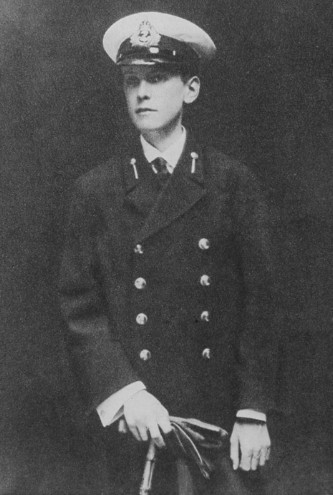
Able Seaman Harry Vince

Able Seaman Harry Vince

Harry Cooper Vince was born in Battersea, Surrey, on 14th January 1896. The 1901 census noted he was the son of Elizabeth Vince, a cook for barrister and solicitor Robert Purvis. The next census found Harry, Elizabeth and Elizabeth’s husband Harry, as one of four families to have taken rooms at 47 Bessborough Place, Pimlico.

Harry sought a life of adventure and, on 21st March 1912, he gave up his work as a kitchen boy to enlist in the Royal Navy as a Boy 2nd Class. He was dispatched to the training ship HMS Impregnable.

On 6th September 1912, having been promoted to Boy 1st Class, Harry was assigned to the battleship HMS Vanguard. Over the next couple of years he learnt his trade, and would come to be based out of HMS Pembroke – the Royal Naval Dockyard in Chatham, Kent – in between voyages.

Harry came of age on 14th January 1914, and was formally inducted into the Royal Navy as an Ordinary Seaman. His service records note that he was 5ft 5ins (1.65m) tall, with brown hair, blue eyes and a fresh complexion. He was also recorded as having small moles on his right buttock,

By the late spring of 1916, Harry had been assigned to the submarine depot ship HMS Bonaventure. He would remain on board for two years, during which time he was promoted to Able Seaman.

The next four months would go by in a bit of a blur for Able Seaman Vince. During this time he moved between three ships – the submarine depot ships HMS Dolphin and HMS Maidstone. The last of the three was HMS Lucia, originally the British-built steamship Spreewald, captured from the German Navy in 1914.

In September 1916, Harry was admitted to the Royal Naval Hospital in Chatham, suffering intestinal obstructions. These would prove too severe, and he succumbed to peritonitis on 13th October 1916. He was 20 years of age.

The body of Harry Cooper Vince was laid to rest in the military section of Woodlands Cemetery, Gillingham, not far from the naval base he had called home.


Interestingly, Harry’s service records not an irregularity in his name: “Registered at Somerset House in the name of Ball. Boy kept in ignorance of the fact for obvious reasons.” It would seem that Elizabeth may not have been married at the time her son was born. It also throws some potential doubt as to who his father was.


Commissioned Shipwright William Hallett

Commissioned Shipwright William Hallett

William Amos Hallett was born on 2nd March 1867 in Pimlico, Middlesex. The oldest of six children, his parents were Charles and Rosa Hallett. Charles was a police inspector and, by the time of the 1871 census, the family has moved to Sheerness in Kent, where he worked.

In the summer of 1893, William married Emily Nokes. By this point he had been working for the Royal Navy for four years, initially as a Shipwright, then as a Leading Shipwright. His service records show that he was 5ft 8ins (1.73m) tall, with light brown hair, blue eyes and a fresh complexion.

Based out of HMS Pembroke, the Royal Naval Dockyard in Chatham, Kent, by June 1900 William had served on HMS Urgent, HMS Sphinx. Most of his time, however, had been spent between his Chatham base and its Sheerness counterpart, HMS Wildfire.

In November 1901 William was promoted to the rank of Carpenter. Over the next decade he served on eight vessels, and his service record for that time give an insight into his character. He was regularly commended for his hard-working and zealous nature: “[he] gets through more work in his time than any carpenter I’ve been shipmates with… He is excellent in every way.” His ability did not go unnoticed, another report noting his “special knowledge [in] geometrical drawing.”

In the summer of 1910, his superior, Captain Morgan, noted that Carpenter Hallett “worked well and zealously and has got a good deal of work done under somewhat difficult circumstances and with a small staff…” He was recommended for advancement, and it seemed that a promotion was in the offing.

By the time war broke out, William was a Commissioned Shipwright. Details of his service are harder to trace, but by the end of 1916, he was assigned to the battleship HMS Commonwealth. The next record notes his passing:

HALLETT – On 17th February, at RN Hospital, Chatham, Chief Carpenter RN William Amos Hallett, aged 49 years, eldest son of the late Mr Charles Hallett, of Sheerness.

[Sheerness Guardian and East Kent Advertiser: Saturday 24th February 1917]

There is no further information about William Amos Hallett’s passing. He was laid to rest in the military section of Woodlands Cemetery, Gillingham, Kent, not far from HMS Pembroke, the dockyard he had for so long called home.


Farrier Staff Corporal Reginald Lambert

Farrier Staff Corporal Reginald Lambert

Reginald Harold Lambert was born in the spring of 1878 in Hurstpierpoint, Sussex. One of eight children, his parents were Henry and Elizabeth Lambert. Henry was a surgeon dentist, who had five more children from first marriage, giving Reginald a total of twelve siblings.

When Reginald finished his schooling, he took up work as a dental assistant, presumably under his father’s tutelage. Away from this, he volunteered for the Royal Sussex Regiment, and the military life drew him in. On 8th July 1897, he joined the 1st Life Guards: based in London, he took on the role of Farrier, tending to the regiment’s horses and looking after their hooves in particular.

On 25th April 1909, Reginald married Lilian Burns at St George’s Church in Tufnell Park, Middlesex. There is little information about her background, but she was the daughter of a grocer and, at 38 years old, seven years her new husband’s senior.

As the point of his marriage, Reginald was listed as a Corporal, and gave his address as Knightsbridge Barracks. By the time of the 1911 census, however, he and Lilian had set up home in second floor rooms at 6 Princess Road, Camden.

When war broke out in 1914, Corporal Lambert was called upon to play his part. His service records are long since lost, but the 1st Life Guards fought in some of the key battles of the conflict: at Ypres in both 1914 and 1915, at Loos in 1915, and at Arras in 1917. Exactly where and how Reginald served, however, is unknown, but by the end of the war he had risen to the rank of Farrier Staff Corporal.

The next record for Reginald is that of his death, which was registered in Islington, Middlesex. It seems likely that he either returned home, or was hospitalised close to home. He passed away through illness on 4th September 1918, at the age of 40 years old.

Reginald Harold Lambert was laid to rest in Highgate Cemetery, not far from where his widow still lived. His epitaph gave a nod to her pet name for him: In loving memory of dear Rex. Apart yet not afar.


Serjeant William Shanly

Serjeant William Shanly

William Michael Shanly was born in Hampstead, Middlesex, in the summer of 1892. The fourth of eight children, of whom three died in infancy, he was the eldest son to Michael and Mathilde Shanly. Michael was the owner of a coffee and refreshment company.

The Shanly family lived at 78 Sumatra Road, Hampstead, but by the time he was nine years old, William had been sent to Sussex, and was boarding at the Xavarians Brothers School in Uckfield.

There is little further information available about William’s life. His epitaph on the family headstone suggests that he died on active service and was a Platoon Sergeant of the 18th Battalion of the Royal Fusiliers. His unit was also known as the 1st Public Schools, although exactly what role he held is unclear. His entry on the Commonwealth War Graves Commission Grave Index suggests that he was attached to the 15th (Reserve) Battalion, but his military records no longer exists, so it isn’t possible to confirm either way.

Serjeant Shanly died on 5th February 1915, aged 22 years of age. He had had an operation for appendicitis five days earlier, but had succumbed to peritonitis.

William Michael Shanly was laid to rest in the family plot in Highgate Cemetery, not far from where his grieving family were living.


Clerk 1st Class George Townsend

Clerk 1st Class George Townsend

George Wilson Townsend was born in St Pancras, Middlesex on 13th September 1885. The youngest of three children – although his older brother Joseph had died before George was born – his parents were piano maker Samuel Townsend and his wife, Eliza.

When he finished his schooling, George found work as a clerk for a shipping company. In the summer of 1909 he married Ellen Gibbins: the couple went on to have two children, daughters Kathleen (born in 1910) and Elsie (born in 1912).

The 1911 census found the family in a small cottage at 43 Leighton Road, Kentish Town. George was still working as a shipping clerk, while Ellen was look after baby Kathleen.

When war broke out, George was called upon to play his part. He enlisted on 12th May 1917, and joined the Royal Flying Corps as an Air Mechanic 3rd Class. His service records show that he stood 5ft 9.75ins (1.77m) tall.

When the Royal Air Force was formed in April 1918, George was immediately transferred across. Reclassified as a Clerk 3rd Class, he was quickly promoted to Clerk 1st Class, the skills he had learn in civilian life coming to the fore. Attached to 85 Squadron, then 62 Training Squadron, which was based in Gosport, Hampshire.

By the autumn of 1918, George had returned home, although the circumstances for this are unclear. He may have been on leave or recuperating from an illness. Certainly he passed away from pneumonia while at home on 5th October. He had not long turned 33 years of age.

George Wilson Townsend was laid to rest in Highgate Cemetery, not far from where his family still lived.


Sapper Harold Chandler

Sapper Harold Chandler

Harold Frederic Chandler was born on 8th April 1886, and was the only child to Frederic and Rhoda. Frederic was a newspaper publisher, and the family lived in North London. The 1891 census found the Chandlers living at 1 Parolles Road, Islington; ten years later they were at 14 West View on Highgate Hill.

Those census returns included family members as part of the household. By the time of the 1911 census, however, when the were living in a substantial house at 22 Hillside Gardens, Highgate, there were no other family members with them, although they did have a boarder – banker’s clerk Alfred Schleicher – and domestic servant Esther Tebbutt living with them.

By this point, Harold was 24 years of age, and was employed as an architect’s assistant. War was coming, however, and he was called upon to play his part.

Full details of Harold’s service have been lost to time, but it is clear that he enlisted in the Royal Engineers as a Sapper, likely using the skills he had learnt in his civilian life.

The only documentation confirms Harold’s passing. Discharged from the army on 29th October 1919, he died just over a year later. He breathed his last on 17th December 1920, at the age of 34 years old. His death was registered in Edmonton, Essex, so it seems likely that he was there in some sort of convalescent capacity.

The body of Harold Frederic Chandler was taken back to Middlesex for burial, and he was laid to rest in Highgate Cemetery.


Air Mechanic 2nd Class Ernest Dean

Air Mechanic 2nd Class Ernest Dean

Ernest James Dean was born in the autumn of 1898 in St Pancras, Middlesex. The older of two children, he was the only son to Ernest and Caroline Dean. Ernest Sr was a bootmaker, and the family lived at 51 Lismore Road.

Ernest Jr found work as a clerk when he completed his schooling. However, when war broke out, he was keen to play his part. He enlisted on 6th February 1917, joining the Royal Flying Corps as an Air Mechanic 3rd Class. His service record shows that he was 5ft 6ins (1.67m) tall, and he must have proven to be a keen student: within four months he had been promoted to Air Mechanic 2nd Class and was being trained as a wireless operator.

When the Royal Air Force was formed on 1st April 1918, Ernest’s transfer was automatic. It is unclear exactly where Air Mechanic Dean served, but he seems to have been based in Kent by that autumn.

In October, Ernest was admitted to the Lees Court Hospital in Faversham, Kent, having come down with pneumonia. The condition, sadly, was to prove fatal: he passed away on 29th October 1918, at the age of just 20 years old.

The body of Ernest James Dean was taken back to Middlesex for burial, and he was laid to rest in the majestic grounds of Highgate Cemetery.


Private Albert Bentley

Private Albert Bentley

Albert John Bentley was born in St Pancras, Middlesex, in the spring of 1885. The second of six children, his parents were John and Eleanor (also known as Elizabeth) Bentley. John was a piano maker, and the family lived at 27 Hampshire Street in St Pancras.

When his father died in 1910, Albert had already started to follow in his footsteps. The following year’s census recorded him living with his mother and three younger siblings. Employed as an organ builder, his was one of three wages being brought into the household.

Albert stepped up to play his part when war broke out. Full details of his military service have been lost to time, but it is clear that he enlisted in the London Regiment, and was assigned to the 1st/19th (County of London) Battalion (St Pancras).

It is unclear whether or not Private Bentley spent any time overseas. By the summer of 1918, however, he had fallen ill, and was admitted to a military hospital in Shoreham-by-Sea, Sussex. He succumbed to a combination of influenza and pneumonia on 28th June 1918: he was 33 years of age.

The body of Albert John Bentley was taken back to Middlesex for burial. He was laid to rest in the sweeping grounds of Highgate Cemetery.


Driver Ernest Lord

Driver Ernest Lord

In the depths of Highgate Cemetery, Middlesex, is the weathered grave of Driver EA Lord, of the Royal Horse Artillery, who died on 8th May 1921. Little concrete information is available about him, and a lot of the young man’s life is destined to remain lost to time.

A few military documents shed some light on the man. His name was Ernest Arthur Lord, and he was 26 when he died in Manor House Hospital, Golders Green, Middlesex.

A pension for his widow was refused, because the couple married after he was discharged from the army. There is a marriage certificate for an Ernest Lord and Beatrice Moore on Christmas Day 1920. The couple wed in Charleston Parish Church, Salford, Lancashire: Ernest was noted as being a clerk, and Beatrice a tailoress. However, this is more of an interesting footnote: there is nothing to directly connect this Ernest Lord to the burial in Highgate.

Driver Lord’s entry on the Medal Roll Index confirms that his unit was sent to France on 26th December 1915. Where he served, and for how long, however, is unclear.

Much of Ernest Arthur Lord’s life is sadly untraceable: a life and a history lost to the Great War.


Serjeant Richard Ford

Serjeant Richard Ford

Richard Oscar Ford was born in Williamstown, Australia, in July 1891. The oldest of four children – and the only son – his parents were Anthony and Mary Ford. Anthony was a soldier, but Richard chose a different route and took work as a labourer when he completed his schooling.

There is little information available about Richard’s early life, but when war broke out, he stepped up to play his part. He enlisted in the Australian Imperial Force on 9th November 1914.

By this point he was working as a bushman, and his service papers reveal something of the man he had become. Standing 5ft 7ins (1.7m) tall, he weighed 140lbs (63.5kg), Private Ford had auburn hair, blue eyes and a fair complexion.

Assigned to the Light Horse Regiment, Richard left Australia for Europe on in March 1915. His unit arrived on the Gallipoli Peninsula on 15th July, and he would remain there for the next five months.

In December 1915, Richard came down with a bout of influenza, and was medically evacuated to the island of Mudros, then on to Alexandria, Egypt. In January 1916, he was admitted to hospital again, this time suffering from gonorrhoea and, after treatment, he re-joined his unit on 2nd February.

Private Ford’s unit spent that spring training in Egypt, but on 29th May, they set sail for the Western Front. Within a week they had disembarked in the French port of Marseilles and headed north to Etaples.

The next couple of years would prove a little disjointed. Richard switched units in August 1916, and given the rank of Gunner, but within two months his role had changed to Driver. His service records suggest that he managed to avoid injury during the fighting he was involved in, but that did not mean that he avoided hospital completely.

In January 1917 Driver Ford was admitted to the 51st General Hospital with a heart murmur, returning to his unit on 16th March. He had a second spell in hospital in February 1918, having come down with laryngitis.

In July 1918, having spent some time at the 4th Army Corporal School, Richard was reassigned to the 3rd Australian Field Artillery. This move seemed to have been the focus he needed. Initially promoted to Bombardier, within a month he rose to Lance Corporal, and by December 1918 he was a full Sergeant.

After the Armistice was signed, Richard was given three weeks’ leave, which he spent in Britain. By January 1919, however, his health was becoming an issue again, and he was admitted to the military hospital in Fovant, Wiltshire, suffering from influenza. The condition worsened, and Sergeant Ford passed away from bronchopneumonia on 4th February 1919. He was 27 years of age.

Richard Oscar Ford was laid to rest in Highgate Cemetery, Middlesex. While there seems to be no direct connection between the location and the man, his father, Anthony, had been born in Hackney, so it can be assumed that there was a family link to the area.