Category Archives: Somerset

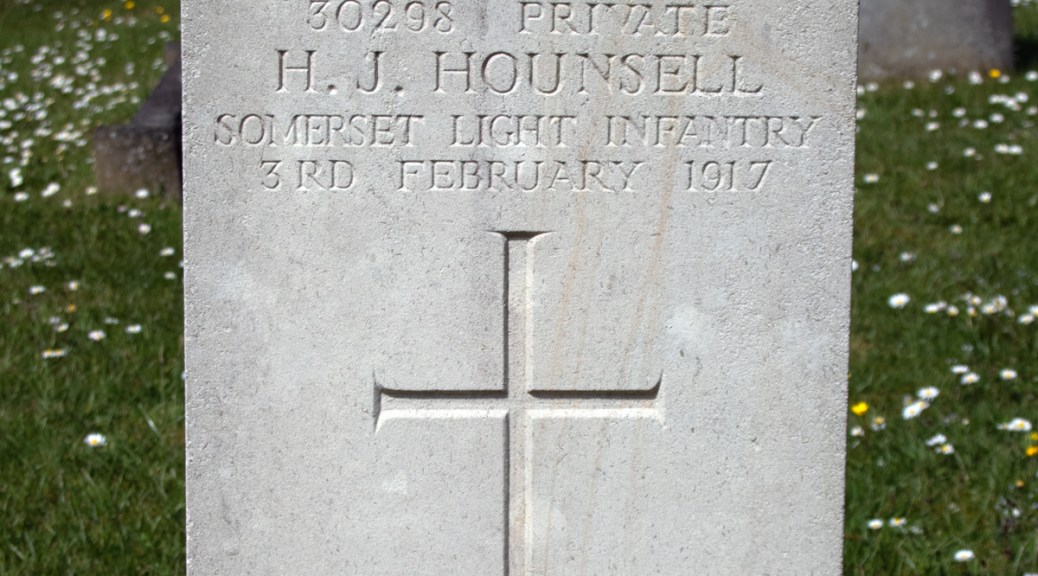
Private Henry Hounsell

Private Henry Hounsell

Henry James Hounsell was born in the spring of 1891, one of ten children to George and Emma Hounsell. George was a farm labourer and carter, and the family were raised in Tatworth, on the outskirts of Chard, Somerset.

Henry may have followed his father in farm work, but he wanted bigger and better things from life. The 1911 census recorded him as boarding with the Burt family in Corscombe, Dorset, where he was working as a baker’s van man.

Henry’s two older brothers, George and Alfred, died in 1913 and 1914 respectively; this left him as the oldest male of the siblings. In the summer of 1915, he married Lydia Lentell, the daughter of a shirt starcher and collar maker from East Coker, Somerset.

By this point, however, war was raging across Europe, and Henry was called upon to play his part. Full details of his service are lost to time, but it is clear that he enlisted in the Somerset Light Infantry as a Private in the 4th (Reserve) Battalion. By the time he joined up – at some point after August 1916 – his troop had already been sent out to Mesopotamia; it is unclear whether Henry also went overseas, but it appears unlikely.

The only other documents relating to Private Hounsell are those concerning his passing. His pension record confirms that he died on 3rd February 1917, having been suffering from a tumour in the back of his head, which had been aggravated by his military service. He was just 25 years old.

Henry James Hounsell was brought back to Somerset for burial. He was laid to rest in Tatworth Cemetery in Chard.


Lydia and Henry had had no children; she remained a widow for a number of years, before marrying for a second time in the autumn of 1939. Tragically, this was also destined to be a short-lived marriage – her new husband, Frederic Hodge, died just three years later.

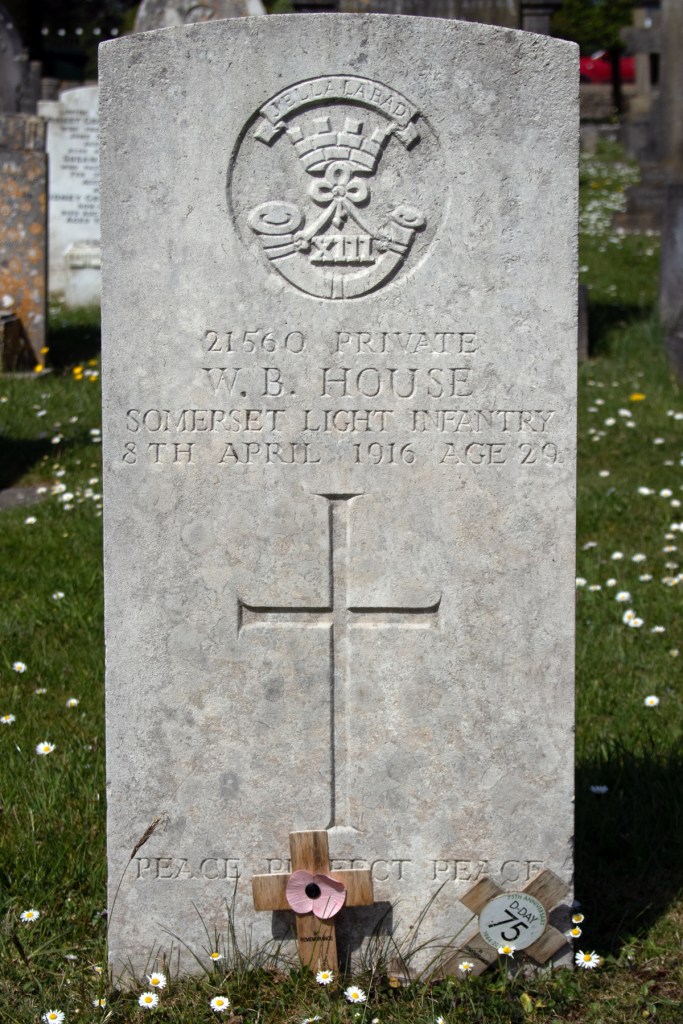
Private William House

Private William House

William Brewer House was born in Chard, Somerset, in the spring of 1888, one of eleven children to William and Minna House. William Sr was a farm labourer, and it was dairy work that William went into when he left school.

Little of William Jr’s life is documented. When war broke out, he stepped forward to play his part, enlisting in the 3rd (Reserve) Battalion of the Somerset Light Infantry at some point after October 1915. This particular troop was a territorial force, based primarily in Devon, and it is unlikely that Private House saw service overseas.

Sadly, the only other detail about his life is that relating to his passing. He was noted as having died on 8th April 1916 in the Military Hospital in Plymouth, although no cause is evident. He was just 28 years of age.

William Brewer House was brought back to Somerset for burial. He lies at rest in the Tatworth Cemetery near his home town of Chard.


William’s younger brother Frederick (known as Gordon) House also fought with the Somerset Light Infantry. He was killed in Mesopotamia in the spring of 1917.


Private Sam Mattocks

Private Sam Mattocks

Samuel Mattocks was born in Combe St Nicholas, Somerset, in 1885, one of six children to farm labourer George Mattocks and his wife, Anna. Sam sought a trade when he left school and soon found work as a butcher.

Documentation relating to Sam’s life is pretty scarce. When war broke out, he stepped forward to play his part, enlisting in the Army Service Corps (presumably because of his profession) by the start of 1916.

Private Mattocks was sent to Hampshire to work at one of the supply depots there. Sadly, this appears not to have been for long as, on 1st April 1916, he passed away at his base in Aldershot. No specific cause of death is evident – his records just note that he died ‘of disease’. He was 31 years old.

The body of Samuel Mattocks was brought back to Somerset for burial. He was laid to rest in the family plot in the graveyard of St Nicholas’ Church in his home village.


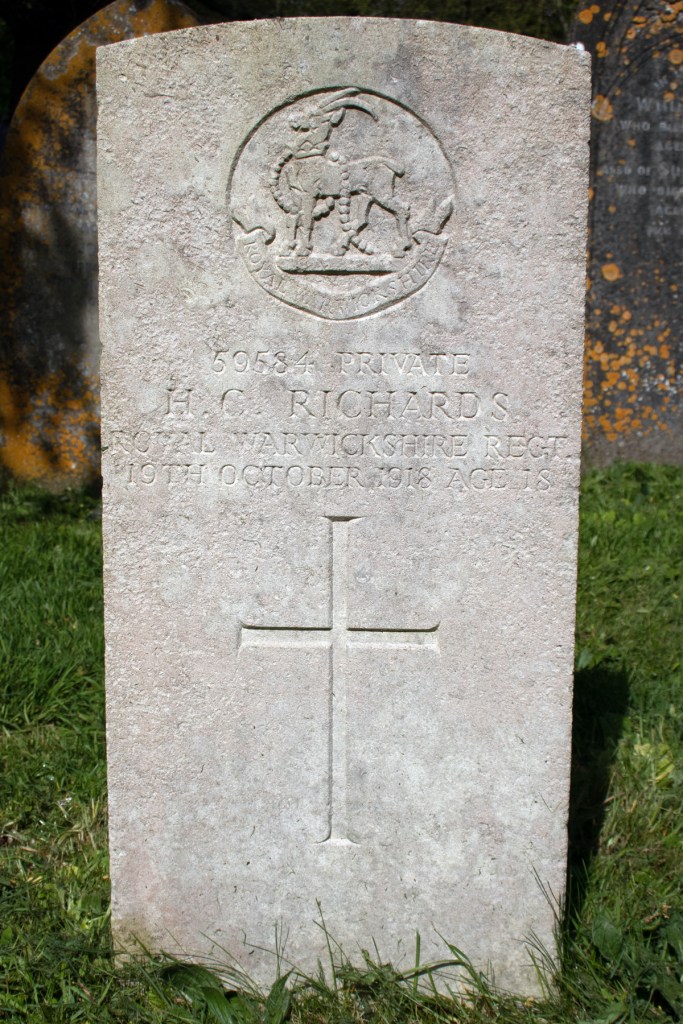
Private Howard Richards

Private Howard Richards

Howard Charles Richards was born in the summer of 1900, the youngest of seven children to George and Henrietta Richards. George was a sewing machine salesman from Combe St Nicholas in Somerset, and this was where the family were raised.

Howard was too young to join up when war was declared, but it seems to have been important to him. He enlisted in the 5th Battalion of the Royal Warwickshire Regiment soon after his eighteenth birthday and was sent for training.

Tragically, Private Richards’ time in the army was to be a short one. The next record for him confirms that he was admitted to the 1st Northern General Hospital in Newcastle-upon-Tyne, and that he passed away on 19th October 1918. The cause of his passing is not recorded, but he was just 18 years of age.

Howard Charles Richards’ body was brought back to Somerset for burial. He lies at rest in the graveyard of St Nicholas’ Church in his home town.


Driver Lionel Shearn

Driver Lionel Shearn

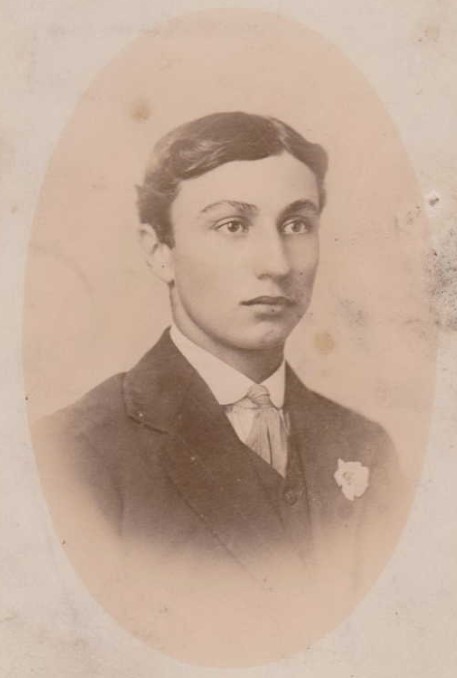
Lionel Shearn was born in April 1895, one of twelve children to, and the youngest son of, Joseph and Emily Shearn. There were two main industries in Paulton, Somerset, where the Shearn family lived, and, over time, Joseph was employed in both. He began in the boot-making industry – this was his trade when Lionel was born – but, by the time of the 1911 census, he had found work as a coal miner. Lionel, who was sixteen by the time of that document, was also working at the colliery as a carter.

War came to Europe in the summer of 1914, and Lionel was one of the first in the town to enlist. Little documentation remains about his military service, but he joined the Royal Field Artillery as a Driver and, by October was in Portsmouth, Hampshire.

Sadly, this is all the service information that’s available, as Driver Shearn passed away in the General Hospital in Southsea, Hampshire on 27th October 1914. His death certificate, which was submitted by his brother, Gilbert, gives a cause of death as otitis media (an infection of the middle ear) and meningitis. He was just 19 years of age.

Lionel Shearn was brought back to Somerset for burial. He was laid to rest in the picturesque Paulton Cemetery.


Driver Lionel Shearn
(from ancestry.co.uk)

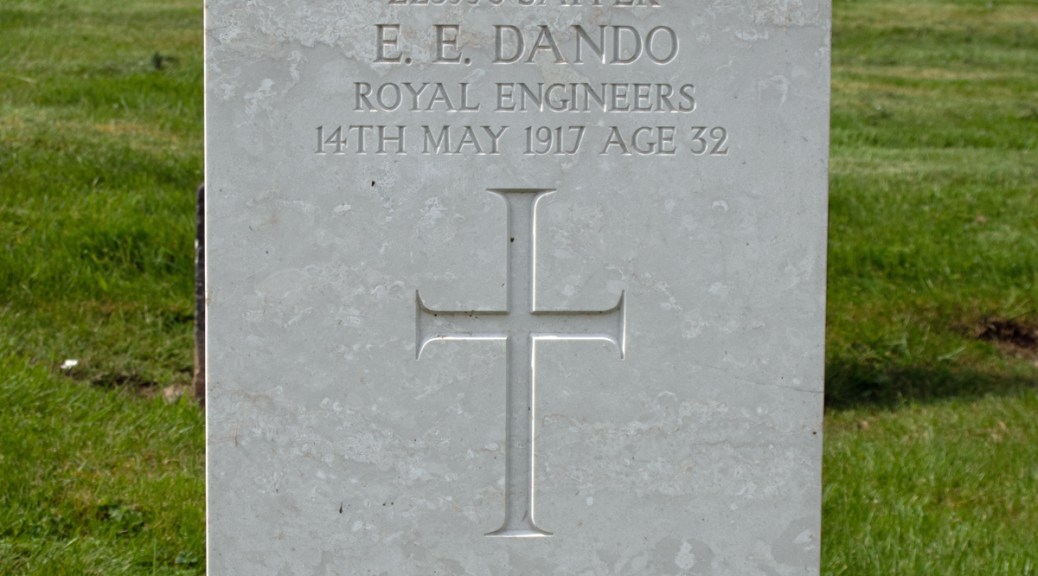
Sapper Ernest Dando

Sapper Ernest Dando

Ernest Edward Dando was born in November 1884, in Paulton, Somerset. One of eight children, his parents were Hezekiah and Emma Dando. Hezekiah was a shoemaker from the town and this is a trade into which Ernest followed when he left school and through to the outbreak of war.

On 20th December 1914, Ernest married bootmaker’s daughter Emma Elizabeth Elliott in Paulton’s Holy Trinity Church. With war raging across Europe by this point, it would eventually come to Ernest’s door, however, and, in January 1917, he enlisted in the Royal Engineers as a Sapper.

There is little documentation available about Ernest’s military life, although it is evident that his boot making skills were employed by the army. He was sent to Bangor, North Wales, for training, but contracted pneumonia while he was there. Admitted to a military hospital in the area, he passed away from the lung condition on 14th May 1917, at the age of 32 years old.

Ernest Edward Dando’s body was brought back to Somerset for burial. He was laid to rest in the picturesque Paulton Cemetery near the heart of the town.


Sapper Ernest Dando
(from britishnewspaperarchive.co.uk)

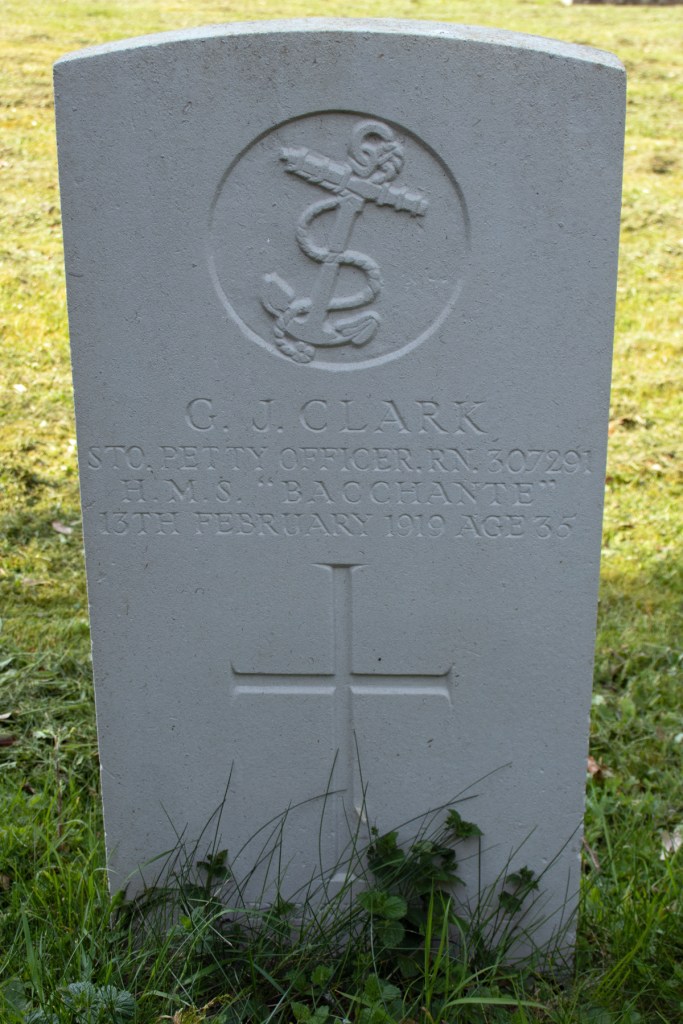
Stoker Petty Officer Gilbert Clark

Stoker Petty Officer Gilbert Clark

Gilbert John Clark was born in Bedminster, Somerset – now a suburb of Bristol – on 6th January 1884. He was one of eleven children to Jonah and Elizabeth Clark. Jonah was a coal miner from Devon, who travelled to find work. He and Elizabeth left Devon for Somerset in the early 1880s, before moving to Glamorgan, South Wales in 1891. This seemed not to last long, however, and, by 1895, the family were living back in Bristol.

The 1901 census recorded Jonah and Gilbert’ older brother, William, working the mines. Gilbert, however, had found different employment, working instead as a labourer for a brick maker. This did not turn out to be a long-term career for him, however, and, on 25th August 1904 he enlisted in the Royal Navy as a Stoker 2nd Class.

Gilbert’s service records show that he was 5ft 3ins (1.6m) tall, had black hair, dark brown eyes and a dark complexion. He was also noted to have a number of tattoos on his left arm, including a woman’s head, a figure of a woman and a cross with a man, crossed hands with a flower, a snake heart and an arrow.

Stoker 2nd Class Clark enlisted for a period of twelve years, and was initially based at HMS Vivid, the Naval Barracks in Devonport. After his training, he was given his first posting, on board HMS Barfleur. He quickly transferred, however, and in April 1905 was assigned to the battleship HMS Vengeance.

Gilbert’s three years on Vengeance were mixed. During that time, he spent two separate periods in the cells. The first, in February 1906, was for desertion, and resulted in ten days in the brig. The second, in August that year meant he was locked up for a further five days although the misdemeanour this time is not documented. This second period in the brig seemed to bring Gilbert to his senses, however, and the rest of his time on board Vengeance seems blemish-free, and even gave him a promotion to Stoker 1st Class.

The remainder of Gilbert’s twelve years’ service saw him assigned to a further eight vessels; between voyages he returned to the Devonport Naval Base. He also received a further two promotions: Leading Stoker in May 1912, and Stoker Petty Officer in February 1914.

War was imminent, by this point, and, at the end of his initial contract, he volunteered to remain in the Royal Navy for the period of the hostilities. After a six-month posting in Devon, Stoker Petty Officer Clark served on three more vessels. It was while he was on board HMS Bacchante, however that he fell ill with influenza. The ship was moored at the Royal Naval Dockyard in Chatham, Kent, at the time and he was admitted to the RN Hospital in the town.

Sadly, Gilbert’s influenza turned to pneumonia and proved too much for his body to bear. He passed away from the lung conditions on 13th February 1919, at the age of 35 years old.

Gilbert John Clark’s body was brought back to Somerset for burial. He was laid to rest in the graveyard of St John the Baptist Church in Peasedown St John, where his parents were then living.


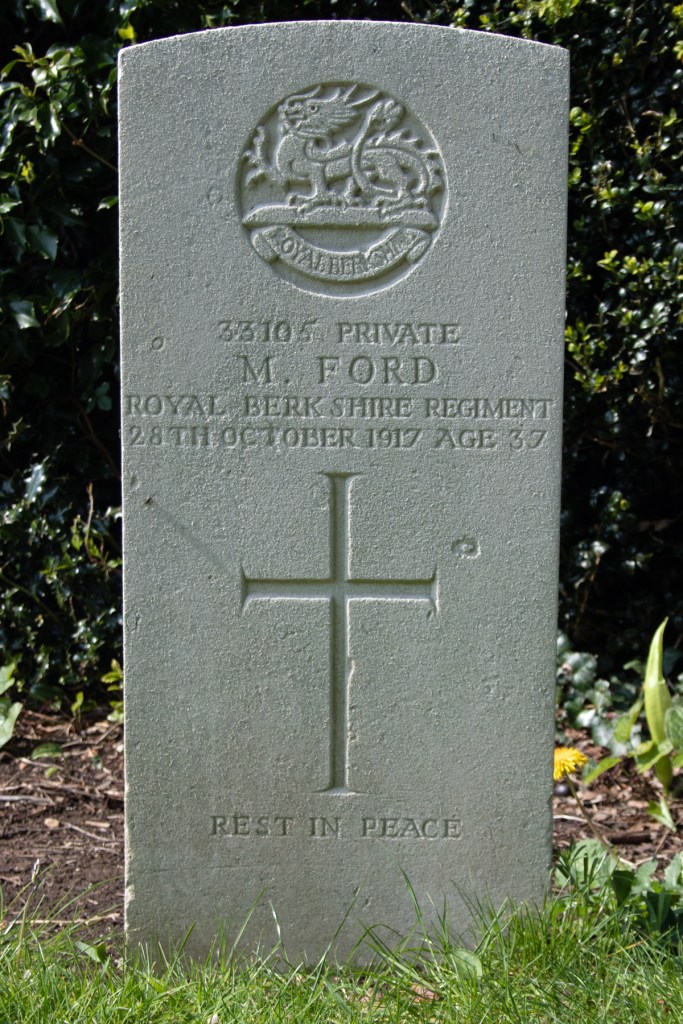
Private Mark Ford

Private Mark Ford

Mark Ford was born early in 1881 in Wellow, near Peasedown St John in Somerset. He was the youngest of eleven children, and the son of Thomas and Ellen Ford. Thomas was a coal miner, and this was a trade that his seven sons, including Mark, went into.

The 1901 census recorded Mark as boarding in a house in Abertillery, Monmouthshire, learning his trade. Within a few years, however, he was back in Peasedown St John. In the summer of 1910, he married local woman Emily Tucker and the couple set up home in Wellow, where they went on to have four children: George, Phyllis, Hubert and Ethel.

War was coming to Europe and, while records are scarce, it’s possible to build up a picture of the service Mark undertook. He initially enlisted as a Private in the Royal Berkshire Regiment, and was assigned to the 10th (Labour) Battalion. They were sent to France in June 1916, although it is not possible to confirm if Mark went at the same time.

His battalion became the 158th and 159th Labour Companies in April 1917, and it seems that Private Ford transferred to the former and, at this point, was definitely serving in France. That summer, he was wounded in the hip and head by an exploding shell and was medically evacuated to England for treatment.

Private Ford was admitted to the Military Hospital in York, where he lay injured for some time; long enough, thankfully, for Emily to make the journey to be with him. Sadly, his wounds were to prove too much: he passed away at the hospital on 28th October 1917, at the age of 36 years old.

Mark Ford’s body was brought back to Somerset for burial He was laid to rest in the churchyard of St John the Baptist, in Peasedown St John.


Gunner William Withers

Gunner William Withers

William John Withers was born in the spring of 1883, in the Somerset town of Midsomer Norton. He was one of six children to William and Rose Withers. William Sr was a coal miner who went on to become a night bailiff, or caretaker, for the colliery. His son, however, sought different things, and, when he left school, he found work as a grocer’s assistant.

In the summer of 1909, William Jr married Florence Robbins, a miner’s daughter from Radstock. The couple went on to have a son, Allan, in June 1913 but tragically it appears than Florence either died in childbirth, or shortly afterwards.

In the summer of 1914, war came to Europe; by the end of the following year, William had enlisted, joining the Royal Garrison Artillery as a Gunner. His service records show that he stood 5ft 8.5ins (1.74m) tall, and weighted 147lbs (66.7kg). By this time he was working as a shop manager and, as a widower with a young son, it seems that, while he volunteered for service, he wasn’t formally mobilised for another year.

Gunner Withers was initially posted at the Citadel Fortress in Plymouth, but soon moved to Halton Park in Buckinghamshire. He spent time there training to be a Signaller, and in April 1918, he succeeded. That summer, he was posted overseas, serving as part of the 461st Siege Battery in France.

In March 1919, Signaller Withers returned to England. Details are a bit sketchy, but it seems that he was posted to Lincolnshire, and while there he fell ill. He was admitted to the Northern General Hospital in Lincoln with peritoneal adhesions; sadly these proved too much for his body to take; he passed away on 9th April 1919, at the age of 36 years old.

William John Withers’ body was brought back to Somerset for burial. He lies at rest in the graveyard of St Nicholas’ Church in Radstock.


The exact spot of William’s burial is unknown. The grave in the image is of his father, who passed away in 1921. It is likely that William Sr was buried with his son.


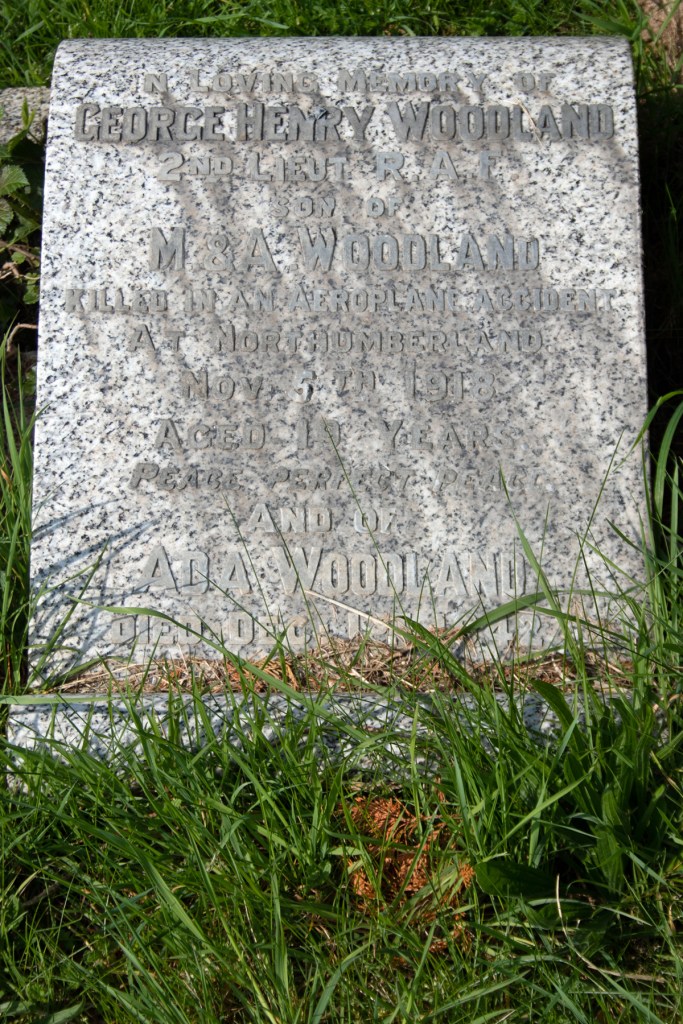
Second Lieutenant George Woodland

Second Lieutenant George Woodland

George Henry Woodland was born on 9th June 1899, and was one of six children – three boys and three girls – to Mark and Ada Woodland. Mark was a hewer in a coalmine in Radstock, Somerset, and this is where the family were raised.

George – who was better known as Harry – was still at school when war broke out. He had been taught at the Church of England School in his home town, before winning a scholarship to Shepton Mallet Grammar School. Having passed his exams there, he was taken on as a member of staff at his former school, before joining the army in June 1917 when he turned eighteen.

Initially joining the Infantry Training Reserve, Harry was subsequently transferred to the Royal Air Force. After training in Yorkshire for five months, he was transferred to the 52nd Training Depot Station at Cramlington Airfield in Northumberland.

Second Lieutenant Woodland returned home on leave in October 1918. This was the first time that he and his two brothers had been together since war had been declared – one had been serving in France, the other had been injured and was recuperating at a hospital in Bristol. Harry returned to Northumberland on 14th October.

On 5th November 1918, Harry was flying at the Cramlington base; shortly after take off, while carrying out a flat turn at a height of about 100ft, his aircraft stalled and nosedived, catching fire on impact. Tragically, Second Lieutenant Woodland and his passenger – Air Mechanic Ryder – were burnt to death. Harry was just 19 years of age.

George Henry “Harry” Woodland was brought back to Somerset for burial. He was laid to rest in the family plot in the graveyard of St Nicholas’ Church in his home town of Radstock.


Second Lieutenant George Woodland
(from britishnewspaperarchive.co.uk)