Category Archives: Boy

Boy 1st Class Bernard Smyth

Boy 1st Class Bernard Smyth

Bernard Arthur de Plumley Smyth was born in Erith, Kent, on 16th September 1897. The second of four children – all of them boys – his parents were Reginald and Emily Smyth.

Bernard’s early life was a delicate one, and he spent at least some time at Great Ormond’s Street Hospital in Camden, London. His weakened health was such that he was baptised at the hospital’s local church – St George the Martyr – on 11th February 1900.

It is intriguing to see Reginald Smyth’s life develop over the years. His son’s baptism record gives his line of work as labourer, but by the following year’s census, he had moved the family to Ifield, West Sussex, where he was noted as living on his own means. Moving forward another decade, and the family had moved again, settling in a 9-roomed villa in Burgess Hill. Reginald was now listed as being a nurseryman and the family of six were sharing their home with boarder Horatio Jacoby, who was living by private means.

Bernard was still a schoolboy at this point. His health had seeming recovered over the years, and he was ready to make his mark on the world. On 6th March 1913, he enlisted as a Boy 2nd Class in the Royal Navy. His service records show that he was 5ft 3ins (1.59m) tall, with brown hair, brown eyes and a fresh complexion.

Boy Smyth was initially sent to HMS Ganges, the shore-based establishment in Suffolk, for his training. He remined there for six months, and was promoted to Boy 1st Class for his work.

On 26th September 1913, Bernard was given his first posting, on board the cruiser HMS Grafton. He remained on board for nine months, before returning to shore – this time to the Royal Naval Dockyard in Chatham, Kent – for the summer.

In August 1914, war was declared and by the end of that month, Boy 1st Class Smyth was given his second assignment, aboard the battleship HMS Formidable. She was a key vessel in the Channel Fleet, her role part of a convoy patrolling the seas of the southern coast of Britain.

Early on the morning of 1st January 1915, while off the Dorset coast, the battleship was torpedoed by a German submarine. Other ships in her convoy came to her aid, but it would prove fruitless. After a couple of hours – and another torpedo strike – she sank, taking more than 540 officer and crew – including Boy 1st Class Smyth – were lost. He was just 17 years of age.

We regret to record that a former scholar of the London Road Council Schools, Burgess Hill, lost his life through the disaster which came to HMS Formidable on January 1st. This was Bernard Arthur de Plumley Smith, the second son of Mr and Mrs Smyth, of Edward cottage, Brook Road, Prittlewell, Southend-on-Sea, late of Elgin Villa, Crescent Road, Burgess Hill. He was 17 years of age, and a first-class boy on board the ship. He bore the reputation of being smart, steady ad industrious, and was well known in Burgess Hill…

[Mid Sussex Times: Tuesday 12th January 1915]

Bernard Arthur de Plumley Smith was laid to rest in a communal grave in Lyme Regis Cemetery, in the hills above the Dorset town where he had been brought ashore following his ship’s sinking.


Petty Officer William Feldon

Petty Officer William Feldon

William Feldon was born on 16th October 1878, the middle of three children – and the only son – to William and Jessie Feldon. William Sr was a carpenter from Highgate, Middlesex, but it was south of the Thames, in Lambeth, Surrey, that the family were raised.

When he finished his schooling, William Jr found work as a general labourer. He was drawn to bigger and better things, however, and a life at sea was to catch his eye. In June 1894, he enlisted in the Royal Navy as a Boy 2nd Class. His service records noted that he was 5ft 2ins (1.57m) tall, with brown hair, brown eyes and a fresh complexion.

By the time William had completed his initial training, he had been promoted to Boy 1st Class. He was then moved to HMS Pembroke, the Royal Naval Dockyard in Chatham, Kent.

By October 1895, he was given his first posting, on board the torpedo cruiser HMS Archer, and he would remain assigned to her for the next two years. During this time, William came of age and was formally inducted into the Royal Navy, and was given the rank of Ordinary Seaman. His commitment to the service was pretty clear, and, within seven months he had been promoted again, to Able Seaman.

After a short spell back at Pembroke, William was assigned to HMS Wildfire, another shore establishment just along the coast in Sheerness. He remained there for nine months, during which time he was promoted again, to the rank of Leading Seaman.

In May 1899, William was moved to another posting, on board the gunboat HMS Partridge. This assignment provide him with the route to further promotion: he remained on board until July 1901, having risen to Petty Office 2nd Class on 1st July 1899 and Petty Officer 1st Class on 23rd September 1900.

Over the remainder of his initial term of service, William served on six further vessels. The sea was in his blood by this point, and when his contracted ended on 15th October 1908, he re-enlisted without any hesitation.

Away from the Navy, William fell in love. On 23rd October 1909, he married Ada Plumpton, who was 25 years old, and who lived in Battersea, Surrey. The couple exchanged vows at St Faith’s Church in Southwark, but settled down in the village of Dovercourt, Essex. They went on to have two children, Doris, who was born in 1910, and Elsie, who came along the following year.

Back at sea, Petty Officer Feldon was assigned to the cruiser HMS Boadicea. He spent two years on board, before moving to another cruiser, HMS Blonde, for another two years. In between voyages, William returned to the Royal Naval Dockyard in Chatham.

On 13th January 1914, Petty Officer Feldon was posted to the battleship HMS Formidable, part of the Channel Fleet patrolling the seas of the southern coast of Britain.

Early on the morning of 1st January 1915, while off the Dorset coast, she was torpedoed by the German submarine U-24. Other ships in her convoy came to help, but after a couple of hours – and another torpedo strike – the damage was too great and she sank. 120 members of the crew were saved, but more than 540 officer and crew – including Petty Officer Feldon – were lost. He was 36 years of age.

William Feldon’s body was one of those recovered and identified. He was laid to rest in a communal grave in Lyme Regis Cemetery, in the hills above the Dorset town where he had been brought ashore.


Leading Seaman Sidney Crabb

Leading Seaman Sidney Crabb

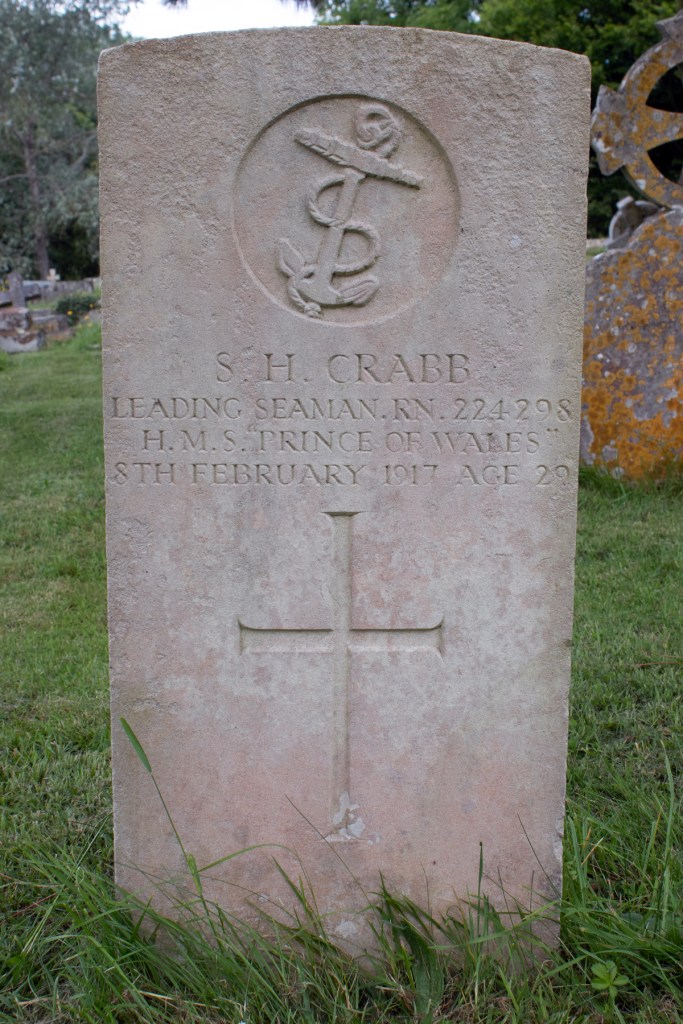
Sidney Harry Crabb was born in the seaside town of Lyme Regis, Dorset on 6th September 1888. One of nine children, his parents were Albert and Mary Crabb. Albert was a Trinity pilot, working on ships, and his son was destined to follow in his stead.

On 16th January 1903, Sidney enlisted in the Royal Navy. He lied about his age to be taken in, adding two years to his date of birth. That was still below the full enlistment age for the military, and he was taken on with the rank of Boy 2nd Class.

Sidney was sent to HMS Boscawen, a training ship, for his initial instruction. He remained there until mid-November 1903, by which time he had been promoted to Boy 1st Class. He then moved to the training battleship HMS Minotaur (which became HMS Boscawen II shortly afterwards), and remained on board for the next nine months.

On 7th September 1904, Sidney “came of age” (albeit he was two years younger than he had said), and was formally inducted into the Royal Navy. He was given the rank of Ordinary Seaman and, within a matter of days, was assigned to his first vessel, the tender HMS Fire Queen.

On 19th November 1904, Ordinary Seaman Crabb was reassigned, to the armoured cruiser HMS Sutlej. She was to remain his home for the next eighteen months, during which time Sidney was promoted again, to the rank of Able Seaman.

Over the next nine years, Sidney was to serve on six more vessels. On 9th December 1912, while back in Dorset, he married Lily Froom in the parish church of their home town, Lyme Regis. The couple would go on to have a son, Stanley, who was born in September 1914.

By this point, Able Seaman Crabb’s health was faltering. He was serving on board the battleship HMS Prince of Wales when war was declared, and had been promoted again, to Leading Seaman. By early October 1914, however, he was medically dismissed from service, having contracted pulmonary tuberculosis.

At this point, Sidney’s trail goes cold. He seems to have returned home, but it is unclear how much his failing health impacted on his daily life. The lung condition was ultimately to get the better of him: he passed away in Axminster, Devon, on 8th February 1917, at the age of 28 years of age.

Sidney Harry Crabb was taken the short distance back to Lyme Regis for burial. He was laid to rest in the town’s cemetery, overlooking the sea to which he and he late father had dedicated much of their lives.


Petty Officer 1st Class Albert Hodder

Petty Officer 1st Class Albert Hodder

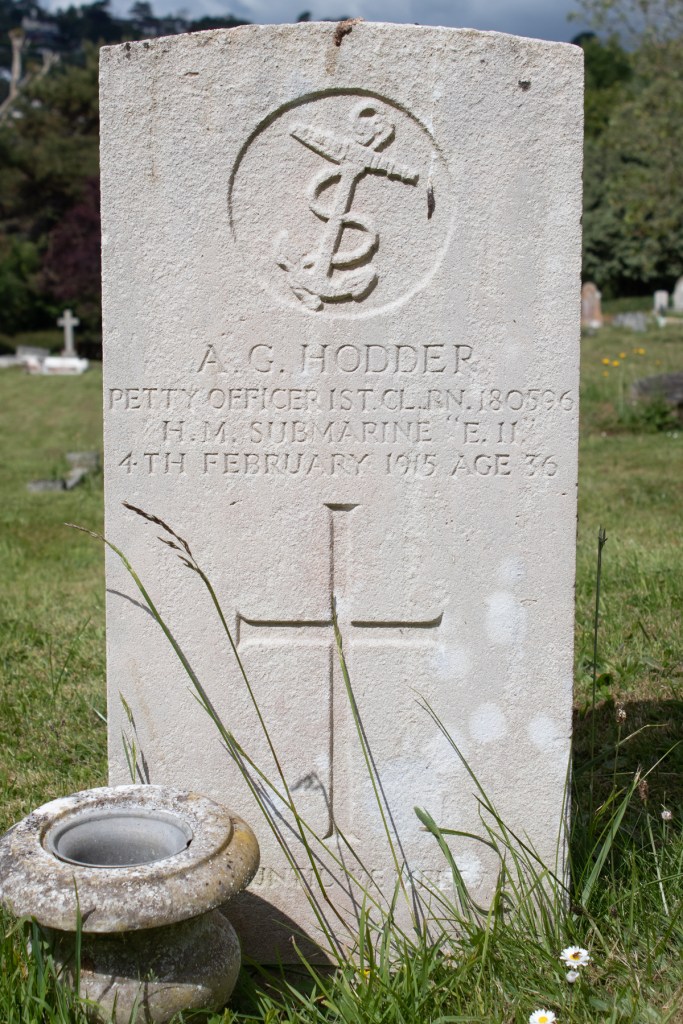
Albert George Hodder was born on 27th December 1878 in Lyme Regis, Dorset. The oldest of three children, his parents were Samuel and Ellen Hodder. Samuel was a general labourer who died in 1886, when he was 35 years of age. By the time of the 1891 census, Albert had given up school, and was working as a live-in cowboy in the nearby Devon village of Uplyme, bringing in what would be the only wage for him, his mother and his two younger brothers.

Working on a dairy farm would not bring in the money the his family would need. So, on 7th August 1894, Albert sought out more of a career and enlisted in the Royal Navy. His service records confirm that he was 5ft 4ins (1.62m) tall with brown hair, grey eyes and a ruddy complexion.

Albert was under the age to formally enlist, and so was given the rank of Boy 2nd Class. He was sent to the training ship HMS Boscawen, and, over the next eighteen months he received a basic education and naval induction. By the end of July 1895, he had been promoted to the rank of Boy 1st Class.

On 12th November 1895, Boy Hodder was assigned to the ironclad ship HMS Alexandra, and his naval career began. Over the next nearly two decades, he would serve on twelve separate ships, rising through the ranks as he did so.

When Albert came of age, on 27th December 1896, he was serving on board HMS Gibraltar. Formally inducted into naval service, he was given the rank of Ordinary Seaman. He spent more than three years on board Gibraltar, and rose to Able Seaman on 1st January 1899.

From here his career continued: He was promoted to Leading Seaman on 18th May 1903, Petty Officer 2nd Class on 1st April 1905 and Petty Officer 1st Class just two years later.

In the autumn of 1912, Albert’s career changed course. He was assigned to HMS Maidstone, a submarine depot ship, and a life under the ocean waves started to appeal. On 28th March 1914, Petty Officer Hodder was sent to HMS Dolphin, home of the Royal Navy Submarine Service, where he was trained up for new duties. By October that year he was to be found serving on board the newly-commissioned submarine E11.

Over the next few months he served in the North Sea, Baltic Sea, and the E11 was involved in a minor way in the defence of Scarborough in December 1914 and the Cuxhaven Raid ending on Christmas Day that year.

At this point, Petty Officer Hodder’s trail goes cold. He remained on the E11 until early February, by this time she was based off the Norfolk coast.

An inquest was held on Friday on the body of Albert George Hodder… of Lyme Regis, Dorset, a member of the crew of one of HM vessels, who died from the effect of immersion.

Evidence showed that at 9.20 on the previous Thursday night a petty officer heart the shout of “Man overboard.” He got on to a collier moored in the river and saw a black object float past. Unable to reach it, he jumped ashore and got into the ferry boat. He was then able to reach the object, which he found was the deceased. He held his head above the water while the ferryman pulled the boat to the quay. The deceased was got out in an insensible condition, a doctor sent for, and artificial respiration tired. Efforts were persisted till breathing was established, and he was then wrapped in blankets, with hot water bottle; but he succumbed to the effects of immersion and shock shortly after eleven. No one saw how the deceased fell overboard.

A verdict of “Accidental death” was returned.

[Diss Express: Friday 12th February 1915]

Petty Officer 1st Class Albert George Hodder was just 35 years of age when he died on 4th February 1915. His body was taken back to Dorset for burial, and he was laid in Lyme Regis Cemetery.


Able Seaman William Real

Able Seaman William Real

William Thomas Bradley Real was born in Lyme Regis, Dorset, on 31st December 1875. His parents were coastguard William Real and his wife, Sarah. William Jr seems to have lived with his maternal grandparents for most of his life, even though he went on to have seven younger siblings.

Sarah died in the spring of 1891, just weeks after the birth of her and William Sr’s youngest child, and William Jr took this as an opportunity to seek a career for himself. Living next to the sea, and with a coastguard for a father, a role in the Royal Navy seemed an apposite choice. He joined up on 26th May 1891, just 20 days after his mother’s funeral.

William was under age when he joined up, and so was given the rank of Boy 2nd Class. His service records show that he was 5ft 8ins tall, with brown hair, blue eyes and a fresh complexion. He was initially sent to HMS Boscawen, the training ship moored in Portland, Dorset, and remained there until January 1893. By this point his training had paid off, and he had been promoted to the rank of Boy 1st Class.

William’s first posting was on board the ironclad HMS Alexandra. Over the next year he was posted to two further vessels, and, when he came of age on 31st December 1893, he was formally inducted into the Royal Navy, and given the rank of Ordinary Seaman. Over the next 25 years, he would serve on a total of sixteen more ships, returning to HMS Vivid, the Royal Naval Dockyard in Devonport, Devon, between some of his voyages.

William’s career saw promotion – to the rank of Able Seaman on 4th February 1896. He also spent three days in the cells in August 1898, although the nature of his misdemeanour is unclear.

Away from his career William’s family life took hold. On 15th April 1911, he married Louisa French. Her parents owned and ran the George Hotel in Charmouth, Dorset. The couple went on to have a daughter, Maud, who was born in the spring of 1915.

When war was declared, Able Seaman Real was assigned to HMS Tiger. The most heavily armoured battlecruiser in the British Navy, She would go on to fight in the Battles of Dogger Bank, Jutland and Heligoland Bight, action William would have seen first hand.

By the spring of 1918, Able Seaman Real had become unwell. He was posted back to HMS Vivid on 1st May, and was admitted to the Royal Naval Hospital in Plymouth. His admission was not to be a long one: he died of heart failure just five days later, at the age of 42 years old.

The body of William Thomas Bradley Real was taken back to Dorset for burial. He was laid to rest in Lyme Regis Cemetery, overlooking the town in which he had been born.


Signalman Philip Files

Signalman Philip Files

Phillip William Turner Files was born on 13th April 1894 in Walmer, Kent. One of eight children, his parents were George and Annie Files. George was a carpenter at a local colliery, but living so close to the sea, his son was inevitably drawn there. On 25th January 1910, Phillip gave up his life as an errand boy and joined the Royal Navy.

Phillip’s service records show that he was 5ft 4ins (1.62m) tall, with dark brown hair, blue eyes and a fresh complexion. He was just 15 years old when he enlisted, and, as he wasn’t of full age, he was given the rank of Boy 2nd Class. He was initially sent to HMS Ganges, the shore-based establishment in Suffolk for his initial training.

Phillip remained at HMS Ganges for the next year, and was promoted to Boy 1st Class on 5th September 1910. The following January he was moved to the Royal Naval Dockyard in Portsmouth, Hampshire, also known as HMS Victory.

Over the next year, with Victory as his base, Boy Files was sent to serve on three ships – the dreadnought battleship HMS Albermarle, and the cruisers HMS Sappho and HMS Philomel. While on board Philomel, Phillip came of age and, because of his technical abilities, was given the rank of Ordinary Signaller – changing to Signalman when the ranks were updated later in 1912.

Phillip remained on Philomel until October 1913 and, after a brief spell back in Portsmouth, he was transferred to the armoured cruiser, the converted RMS Laconia. She was to be Signalman Files’ base for the next year, when, on 9th March 1915, he was transferred again, this time to HMS Princess Irene.

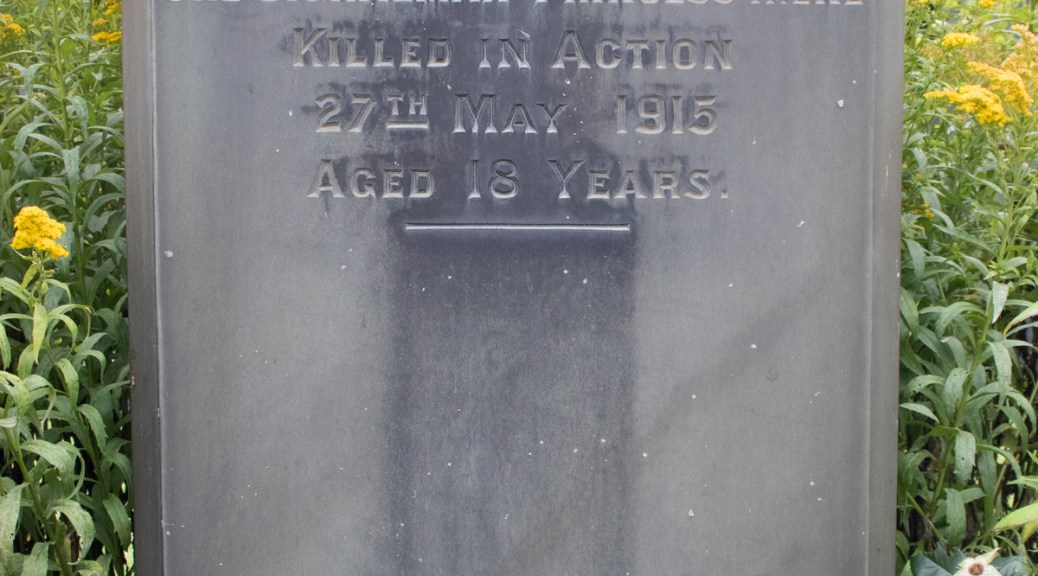
Princess Irene was a converted liner, requisitioned as a minelayer when war broke out. On 27th May 1915, an explosion ripped through the ship, while moored off Sheerness, Kent. Signalman Files was one of the 352 souls killed. He was just 21 years of age.

Phillip William Turner Files was laid to rest in the Woodlands Cemetery in Gillingham, Kent. His body having been identified, he was given his own grave, unlike those who were buried in a mass grave nearby.


Signalman Files’ headstone spells his first name with one L. However, all the other documents relating to Phillip spell it with two.


Boy 2nd Class Albert Loveless

Boy 2nd Class Albert Loveless

Albert William Loveless was born on 23rd February 1901, the third of four children to Albert and Matilda Loveless. Albert Sr was a hawker and marine store dealer, and the family grew up and lived in the Dorset village of Mosterton.

When he completed his schooling, Albert Jr found work as a railway porter. When war broke out, however, he was keen to play his part before the opportunity passed him by and, on 10th September 1918, he enlisted in the Royal Navy.

As he was below the age to formally enrol, Albert was given the rank of Boy 2nd Class. His service records show that he was 5ft 2.5ins (1.59m) tall, with brown hair, brown eyes and a fresh complexion.

Boy Loveless was sent to HMS Powerful, a training ship based in Devonport, Devon, but sadly, his time there was to be brief. Within a matter of days, he was admitted to the Royal Naval Hospital in Plymouth, having contracted pneumonia. He passed away on 18th September 1918, having been in service for just a week. He was only 17 years of age.

The body of Albert William Loveless was taken back to Dorset for burial. He was laid to rest in the graveyard of St Mary’s Church in Mosterton, walking distance from his grieving family’s home.


Ship’s Corporal Thomas Berry

Ship’s Corporal Thomas Berry

Details of the civilian life of Thomas Joseph Berry are a challenge to piece together. He is not recognisable in any census returns, and baptism records don’t tally either.

The main resource for building a picture of Thomas’ life is the service record for his time in the Royal Navy. This provides his date of birth – 6th May 1882 – and suggests that he was born in Hornsey, Middlesex. He was working as a cabinet maker when he enlisted, the document also confirming that he was 5ft 4ins (1.62m) tall, with brown hair, brown eyes and a fresh complexion.

Thomas began his naval career on 29th July 1898. Below the age to formally enlist, he was given the rank of Boy 2nd Class. Over the next eighteen months, his time was split between two training ships based in Devonport, Devon, HMS Impregnable and HMS Lion. In April 1899 he was promoted to Boy 1st Class.

In February 1900, Thomas moved to HMS Vivid, the Royal Naval Dockyard in Devonport. On 6th May he came of age, and was formally enrolled in the navy, receiving the rank of Ordinary Seaman. From this point his career took off and, over the next sixteen years, he would go on to serve on board fifteen ships, seeing the world.

At his annual reports, Thomas’ conduct was regularly identified as Very Good, and his commitment was reflected in the progress he made through the ranks. By June 1901, he had been promoted to Able Seaman Berry. The summer of 1907 saw him move up to Leading Seaman, and three years later, Thomas was a Petty Officer. In November 1911 he was made Ship’s Corporal 2nd Class, and by the following spring he had been promoted again, this time to Ship’s Corporal 1st Class.

Away from the Royal Navy, Thomas’ personal life was developing. Again there is little documentation to provide any specifics, but he married a woman called Albertine Elizabeth in the early 1910s. The couple went on to have a son, Bernard, who was born on 15th January 1913, and the family seemed to settle down in Paignton, Devon – a later record giving Albertine’s address as 3 Alma Terrace, Well Street.

When war broke out in the summer of 1914, Ship’s Corporal Berry was serving on board the protected cruiser HMS Blake. In February 1916, he was assigned to the battleship HMS Revenge which served in the English Channel.

By this point, Thomas’ health seemed to be taking a downturn. He was posted back to HMS Vivid on 7th March, but was then transferred to Devon County Asylum in Exminster, suffering from “general paralysis of the insane“. His condition worsened and he passed away on 29th April 1916: he was days away from his 34th birthday.

Thomas Joseph Berry’s body was brought back to Paignton for burial. He was laid to rest in the town’s cemetery.


Able Seaman Horace Freeman

Able Seaman Horace Freeman

Horace James Freeman was born in Hackney, East London, on 16th September 1879. The second of five children, his parents were Archibald and Mary Freeman. According to the 1891 census, Archibald was employed as a carman, but the next document had him listed simply as a ‘traveller’.

When he completed his schooling, Horace found work as a baker’s assistant. He sought bigger and better things, however, and, on 13th February 1897, he enlisted in the Royal Navy. His service records show that he was 5ft 5.5ins (1.66m) tall, with brown hair, hazel eyes and a fresh complexion.

A few months under full age, Horace was initially given the rank of Boy 2nd Class. He was sent to the training ship HMS Northampton, and seemingly impressed his superiors, rising to Boy 1st Class within a couple of months. He moved to another training vessel, HMS Calliope, in July 1897, and was serving on board when he came of age that September.

Now formally inducted into the Royal Navy, Ordinary Seaman Freeman began what was to be an eighteen year career at sea. He would become based at HMS Pembroke, the Royal Naval Dockyard in Chatham, Kent, and went on to serve aboard nine ships during his time.

Promoted to the rank of Able Seaman in October 1899, Horace’s time in the navy was not to be without incident. He spent eight separate periods of time in the cells, 158 days in total. Full details of his misdemeanours are lost to time, but at least on at least one occasion he was placed in the brig for refusing orders.

On Christmas Day 1911, Horace married Sarah Byatt. She was a bricklayer’s daughter from Tottenham, and the couple went on to have two children: Clifford, born in 1913, and Leslie, born two years later.

While Sarah was looking after their young family, Horace spent a lot of his time at sea. As time moved on, however, he was based at HMS Pembroke for longer spells, and it was while he was in Chatham early in 1916 that fate befell him.

The body of Horace J Freeman, an able seaman of the RFR, who had been missing from his ship since February 25th, was found floating in South Lock at Chatham Dockyard on Saturday.

[South Eastern Gazette: Tuesday 11th April 1916]

Little additional information is available about Horace’s death, and it is unclear how he had fallen into the lock. He was 36 years of age.

The body of Able Seaman Horace James Freeman was laid to rest in Gillingham’s Woodlands Cemetery, not far from the naval base he had called home for so long.


Boy 1st Class Sidney White

Boy 1st Class Sidney White

Sidney James White was born on 9th April 1899 in Bath, Somerset. The second of six children – and the oldest son – his parents were Sidney and Ann White. Sidney Sr was a butcher by trade and, by the time of the 1911 census, the family were living in Walcot Buildings in the city.

Sidney Jr was only 15 years of age when war came to Europe. However, he was still keen to do hit bit and, on 13th October 1915, he gave up his job as a fitter’s mate and enlisted in the Royal Navy. As he was underage, he was given the rank of Boy 2nd Class, his service records showing that he was 5ft 7.5ins (1.61m) tall, with brown hair, blue eyes and a fresh complexion.

Boy 2nd Class White was dispatched to the ship HMS Impregnable for his initial service. Moored in Devon, she was a training vessel, used to school young recruits in the art of seamanship. In May 1916, Sidney was promoted to the rank of Boy 1st Class, but his time in the Royal Navy was to be cut tragically short.

Holed up in cramped billets, disease often ran rife in military barracks, and Sidney was not to be immune. He contracted meningitis, and was admitted to the Royal Naval Hospital in Plymouth. While initially appearing to recover, the condition was to prove too severe, and his young body succumbed on 18th June 1916: he was just 17 years of age.

Sidney James White’s body was brought back to Somerset for burial. He was laid to rest in a shady spot in Bath’s sweeping Locksbrook Cemetery.