Walter Wigginton was born in the Leicestershire village of Illston-on-the-Hill in the summer of 1880. The second of seven children, his father John was a grazier, managing cows over a six-acre pasture. His mother, Rebecca, who was also born in Leicestershire, raised the family and managed the home.
Walter turned his hand to carpentry, and, by the time of the 1901 census, he was boarding with a widow in Frimley, Surrey, employed for his woodworking skills. By 1905, his journeyman life had taken him to the Somerset village of Trull. It was here that he met and married Annie Oaten, and here that the couple settled down to raise their family. They had two children, Dorothy, born in 1906, and Winifred, who was born two years later.
War was closing in on Europe and, by the summer of 1916, Walter had joined up to play his part. Initially assigned to the 65th Training Reserve Battalion, he had not long transferred across to the Royal Engineers as a Sapper when he fell ill.
Sapper Wigginton was admitted to the Kinmel Park Military Hospital near Abergele on the North Wales coast, suffering from bronchial pneumonia. Sadly, this lung condition was to get the better of him, and he passed away at the hospital on 29th December 1916, at the age of 36 years old.
Walter Wigginton’s body was brought back to Somerset for burial. He was laid to rest in the graveyard of All Saints’ Church in Trull, where his widow and children still lived.
John Charles Connett was born at the end of 1870 in Holway, on the outskirts of Taunton, Somerset. He was one of seven children to Charles and Thursa Connett. Charles was a farm labourer and, in John’s early years, Thursa worked from home as a glover to bring in a little extra money for the growing family.
In 1897, John married a woman called Annie; the couple settled down in a small cottage near the centre of Wellington, Somerset. John found work as a coachman, and the couple went on to have one child, a daughter called Ethel, in 1900.
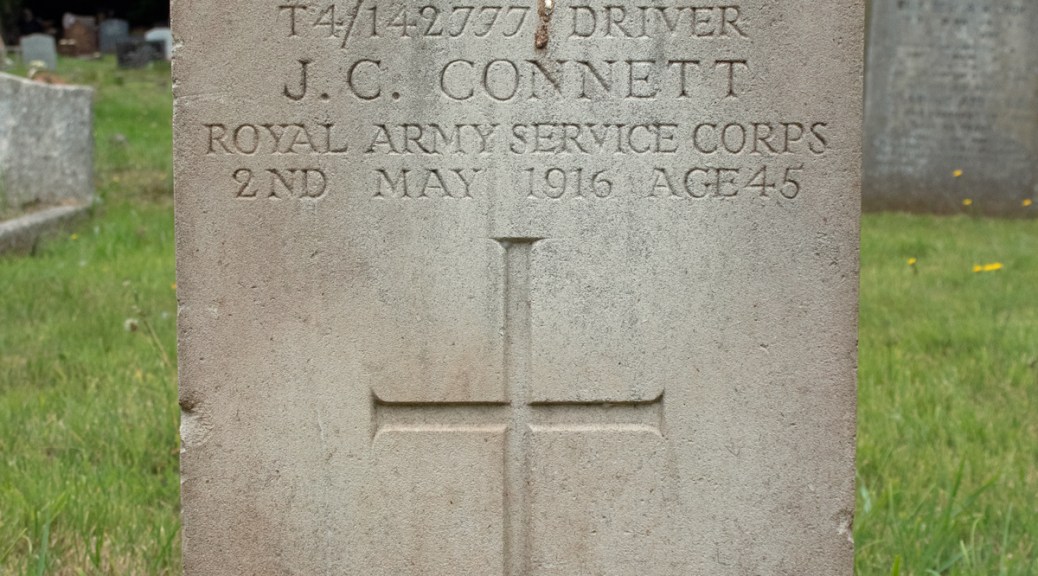
When war came to Europe, John was keen to play his part, even though he had turned 43 by the time hostilities were declared. He enlisted, joining the Royal Army Service Corps by November 1915, and was assigned to the 663rd Company.
Driver Connett’s time in the army was to be tragically short, however. He is recorded as passing away at home on 2nd May 1916, having contracted bronchitis and pneumonia while on active service. He was 45 years old.
John Charles Connett was laid to rest in Wellington Cemetery, within walking distance of where his widow and daughter still lived.
Albert Dowsett was born in the Essex village of Sible Hedingham in the spring of 1868. He was the fourth of six children – all of them boys – to Stephen and Susan Dowsett. Stephen was an agricultural labourer, while his wife worked as a straw plaiter to bring in a little extra money.
Albert seems to have been a bit of a tearaway. In July 1877, a local newspaper reported that:
Ezekiel Rulton and Albert Dowsett, boys each nine years of age, were indicted for breaking into the dwelling house of Matilda Jaggard, at Sible Hedingham, and stealing two books, value 1s, on the 20th June. Rulton, having once before committed burglary was sentenced to 10 days’ hard labour and five years in a Reformatory School. Dowsett was acquitted.
Essex Standard: Friday 6th July 1877
Stephen died in the autumn of 1884, while Susan died in March 1892. By this point Albert was 23 years of age, and had found solid work in the army. Full details of this early service no longer remain available, but he fought in South Africa in the 1890s.
By 1897 he returned to England and moved to Stone, near Greenhithe, in Kent. It was here that he met and married Anna Davis, the daughter of a local brewery man. The couple set up home in the village, and went on to have three children, William, Dorothy and Margaret.
The 1911 census recorded the family living in a small terraced house close to the railway station in Greenhithe. Albert was working as a labourer in the wash mill of the local cement works, and the family had a boarder, widower William Davies, who was a weighman at the same works.
Away from work, Albert had also found another calling, and was employed as a verger at St Mary’s Church, just a few minutes’ walk from home.
War was now encroaching on Europe, and, with his previous army service, Albert was perfect to resume his military role. Given the age limitations for new recruits early on in the conflict, it is likely that he volunteered for this role. He willingly took up a post with the 3rd Supply Company of the 2nd/4th Battalion of The Buffs (East Kent Regiment).
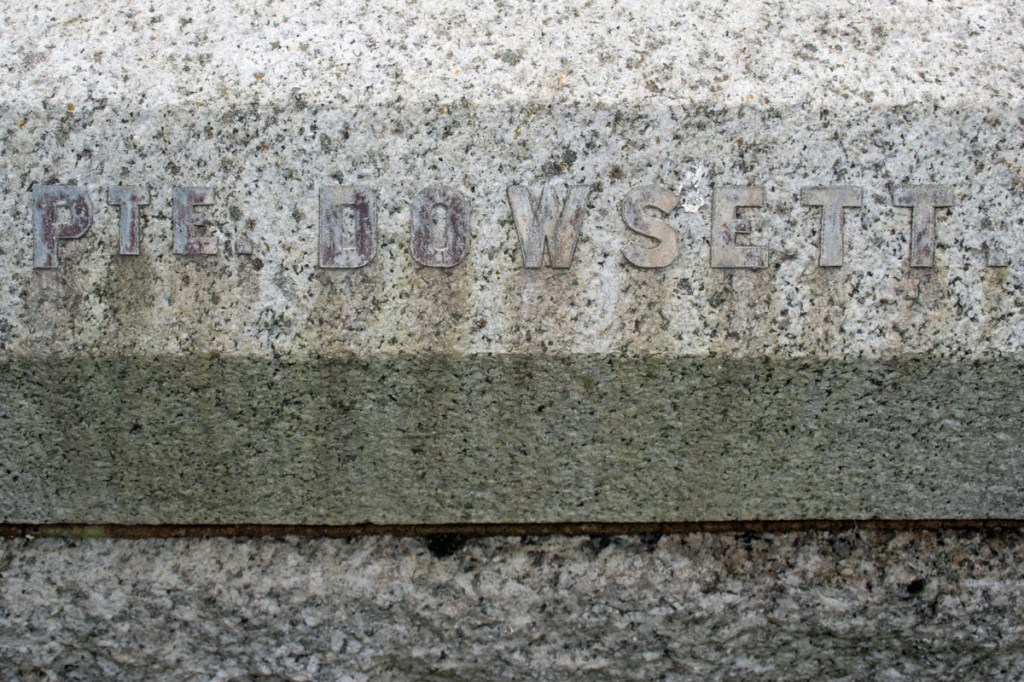
Private Dowsett was given a guard’s role, and was part of the team given the duty of patrolling two explosives factories near Faversham. He was on duty on the afternoon of Sunday 2nd April 1916 when a fire near one of the factory buildings set off a series of massive explosions. More than a hundred people were killed; sadly this included Private Dowsett. He was 48 years of age.
Albert Dowsett was laid to rest, along with the other victims of the Faversham Explosion, in a mass grave the town’s Borough Cemetery.
William Edward Jarvis was born in the spring of 1875, the son of silk printer Edward Jarvis and his wife Elizabeth. He was one of five children, and the family were raised in Crayford, Kent.
When he left school, William found work as a stoker, and this is what he was doing when, in the summer of 1903, he married local engineer’s daughter Maud Kitchener. The couple set up home with Maud’s widowed mother, and went on to have three children, Ivy, Edward and Edna.
War was coming to Europe, and while full details of William’s military service are unclear, it is evident that he had enlisted to play his part by October 1915. He was assigned to the 3rd Supply Company of the 2nd/4th Battalion of The Buffs (East Kent Regiment) and served as part of the territorial force.
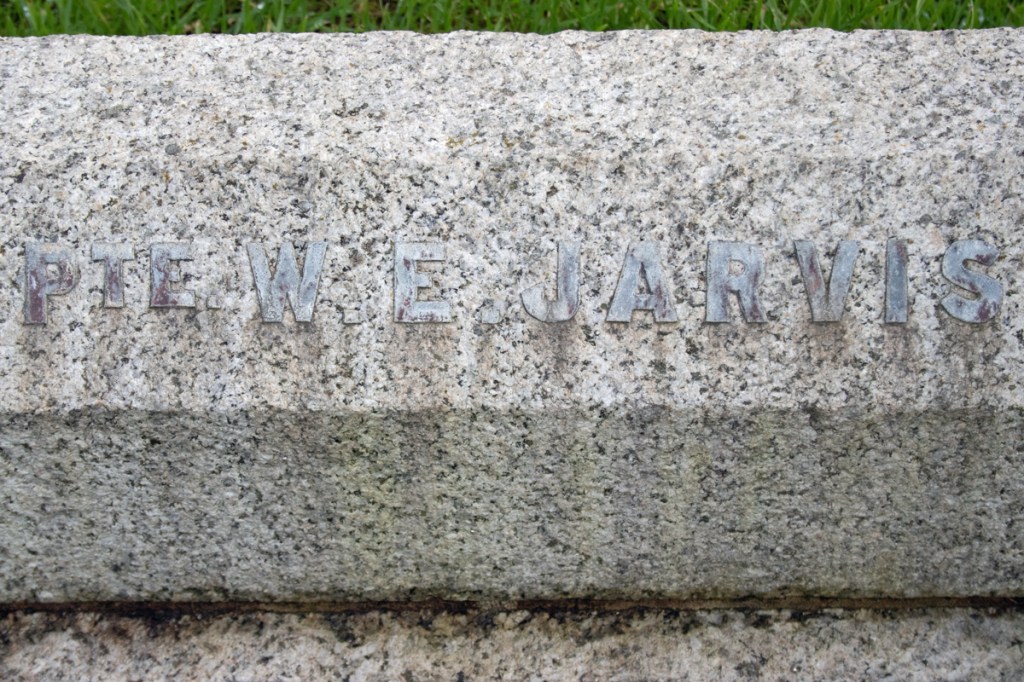
Private Jarvis was part of the team given the duty of guarding two explosives factories near Faversham. He was on duty on the afternoon of Sunday 2nd April 1916 when a fire near one of the buildings set off a series of massive explosions, killing more than 100 people, William included. He was 40 years of age.
William Edward Jarvis was laid to rest, along with the other victims of the Faversham Explosion, in the town’s Borough Cemetery.
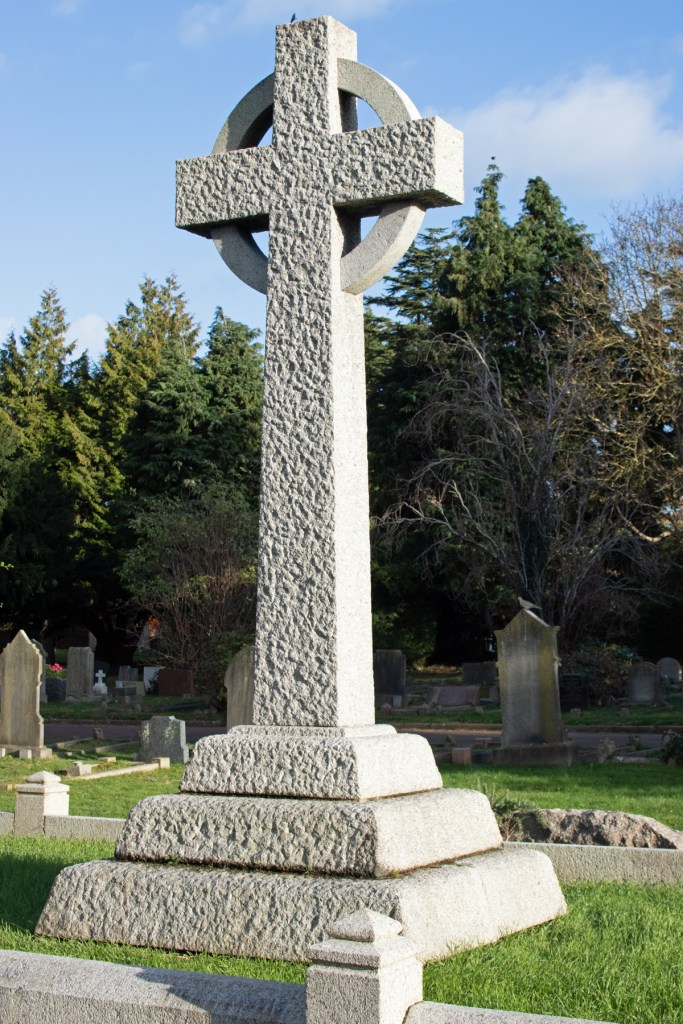
Memorial to the Faversham Explosion, Borough Cemetery
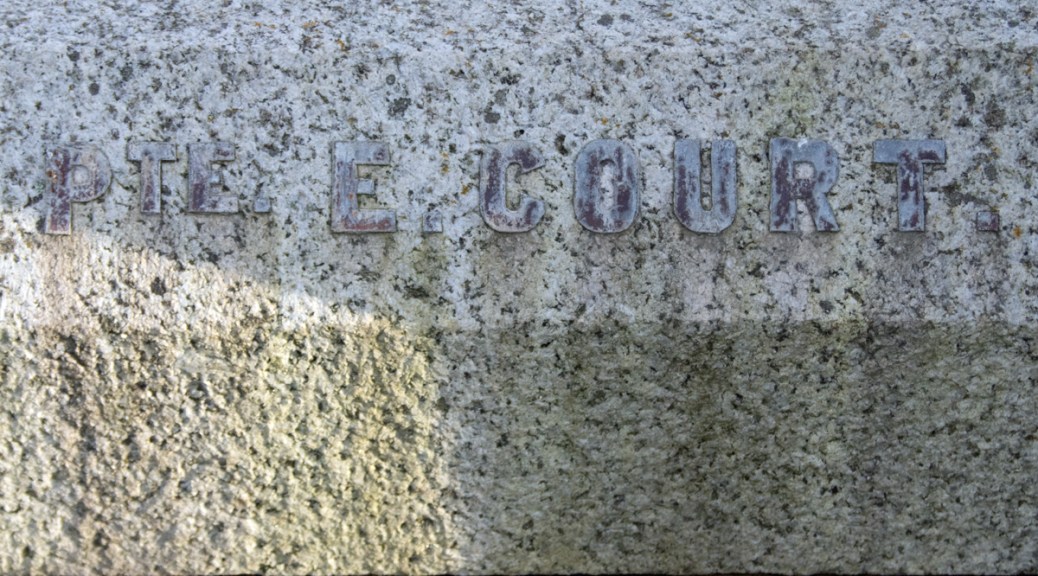
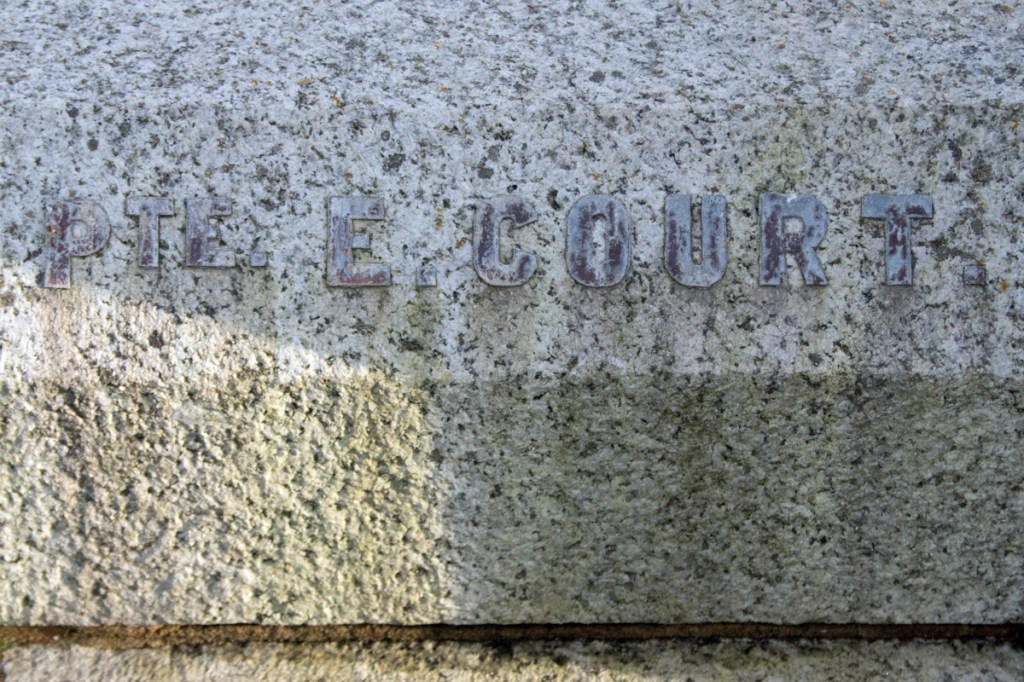
Ernest Court was born in the autumn of 1865, one of eleven children to Stephen and Harriet Court. Stephen was an agricultural labourer from Kent, and the family were raised in the village of St Nicholas at Wade, in the north of the county.
When he left school, Ernest followed his father and became a farm labourer. The 1881 census found him working at St Nicholas Court Farm, under William Broadley, a farmer of some 500 acres (202 hectares).
In the summer of 1894, at the age of 28, Ernest married Catherine Henman; she was a widow nine hears his senior. The couple went on to have a son, Frederick, who was born the same year, a younger half-brother to Catherine’s own son. They soon moved to Faversham, where work was more abundant.
Ernest continued to pick up jobs where he could. The 1901 census recorded him working in the stone pits; the same document gave Catherine working as a charwoman to bring in some extra money. Ten years later, Ernest was working as a road labourer for the town council. Catherine was no longer employed, but Frederick, having left school, was working as a jobbing gardener.
War was approaching Europe by this point and, by October 1915, Ernest had stepped up to play his part. Private Court was assigned to the 3rd Supply Company of the 2nd/4th Battalion of The Buffs (East Kent Regiment). While a good proportion of the regiment served overseas, Ernest remained on home soil, and was given a protective role at the Cotton Powder Company and Explosives Loading Company factories to the north of Faversham.
Private Court was based at the factories on the 2nd April 1916. That afternoon a fire set off a series of massive explosions at the site and around 110 people – Ernest included – were killed. He was 50 years of age.
Ernest Court was laid to rest, along with the other victims of the Faversham Explosion, in the town’s Borough Cemetery.
Memorial to the Faversham Explosion, Borough Cemetery
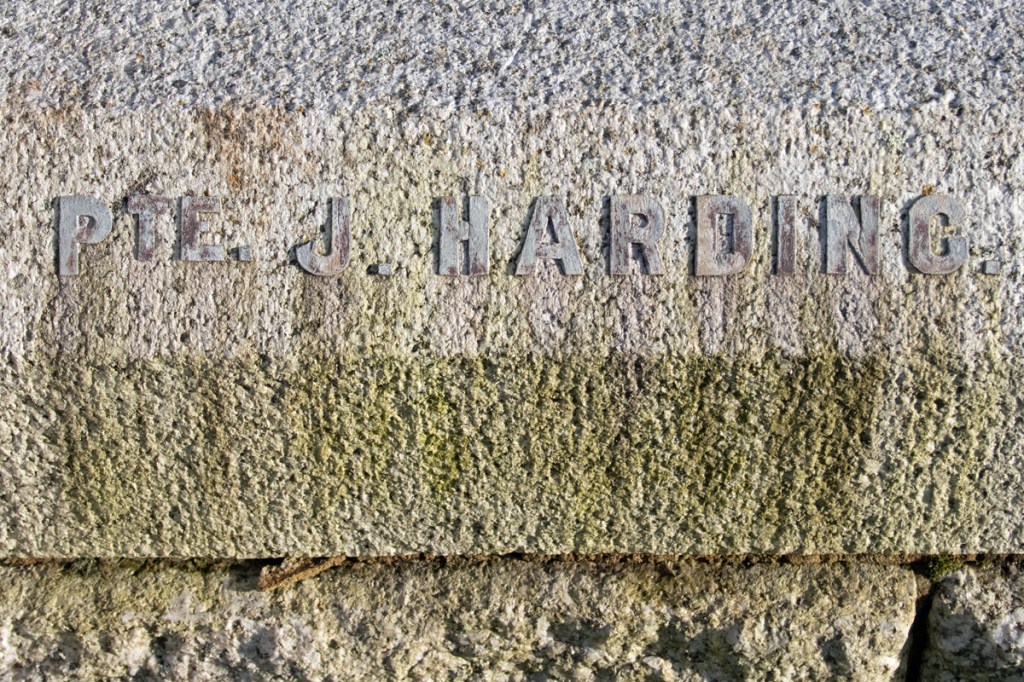
In a mass grave in Faversham Borough Cemetery, Kent, is a commemoration to Private John Harding, who died during the Faversham Explosion on 2nd April 1916.
Sadly, there is little concrete information about John, other than the details recorded in the Register of Soldiers Effects. This document confirms that he served in the 3rd Supply Company of the 3rd/4th Battalion of The Buffs (East Kent Regiment). He had enlisted before October 1915 and no next of kin is recorded.
Another document suggests that Private Harding was a resident of Milton Regis, a small village to the north of Sittingbourne. Again, however, there is not enough additional information to corroborate this or to expand on his personal life.
Unfortunately, therefore, Private John Harding is destined to remain a mystery, one of more than a hundred men and women to have died on that fateful day.
Memorial to the Faversham Explosion, Borough Cemetery
William Adams was born in Skelmersdale, near Liverpool, in around 1868. He was the son of George and Harriet Adams, although as his name was quite common in the area at the time, it is not possible to narrow down details of his early life any further.
At some point after leaving school, William joined the army, using the surname of Catlow. The 1891 census records him as a soldier in the Private Infantry, based at the Habergham Eaves Barracks near Burnley, Lancashire.
On leaving the army, William found work as a labourer and, by the 1890s, he had moved to Kent. He met and married a woman called Kate in 1895, and they went on to have a son, Archibald, the same year. The 1911 census records the family living in Cheriton, near Folkestone, William doing labouring work, and Kate employed as a laundress.
With the outcome of the First World War, William stepped forward to play his part again. By this point, he was 46 years old and, while he was assigned to the 4th Battalion of The Buffs (East Kent Regiment), was given more of a territorial role.
Private Catlow was serving at the site shared by the Cotton Powder Company and Explosives Loading Company to the north of Faversham in the spring of 1916. On the afternoon of 2nd April 1916, a fire caused a series of massive explosions at the factories, and William was one of around 110 people to be killed. He was 48 years of age.
William Adams, known militarily as Private William Catlow, was laid to rest, along with the other victims of the Faversham Explosion, in the town’s Borough Cemetery.
Memorial to the Faversham Explosion, Borough Cemetery
Alexander Johnstone de Vere was born on 10th August 1889 in Murree, India (now Pakistan). He was one of five children to Norfolk-born Alexander Johnstone (also known as John Ralph de Vere), and his wife Dorothea who had been born in Sangor, India. Alexander Sr was a Sergeant Major in the 12th Lancers, and the family returned to England not long after his son was born, settling first in Aldershot, then in Sandhurst.
Alexander’s youngest sibling, George, was born in Cairo, Egypt, so the family was on the move again. Sadly, Alexander Sr died in a nursing home in the city just two years later and, after returning to England, Dorothea passed away in a Holborn infirmary just two years later.
Documents for the de Vere children – Ellen, Alexander, Dorothea, William and George – are few and far between. The 1911 census places Dorothea boarding with a family in Kingston-upon-Thames, where she was employed as a dress maker. The same document records William as a Bandsman in the 1st Battalion of the Seaforth Highlanders, based at Chanpatia, in Northern India. George, meanwhile, was a schoolboy at the Duke of York’s Royal Military School on the outskirts of Dover. Of the two eldest siblings, however, there is no record.
In the autumn of 1912, Alexander married Emily Louise Collins. Born in Norfolk in 1884, she was working as a servant in a house in Surrey when she and Alexander met. The couple married in Faversham, Kent, and settle down there, their daughter, Dora, being born in the town in January 1915.
Given his family’s military background, it is not unsurprising that Alexander enlisted in the army almost as soon as war was declared. He may have already seen military service, as he enlisted in the 11th Hussars as a Lance Corporal. By 15th August 1914, Alexander was in France.
Lance Corporal de Vere was quickly caught up in the fighting. He saw action at Mons and Nery in 1914, and at Ypres the following year. By this point, he had been promoted to the rank of Sergeant Trumpeter, reflecting the musical connection he shared with his younger brother, William.
Alexander remained in France until January 1916, when he was invalided home. He was admitted to Dorchester County Hospital in Dorset, suffering from a cerebral abscess. Despite treatment, he succumbed to the condition, passing away on 17th March 1916, at the age of just 26 years old.
Alexander Johnstone de Vere was brought back to Kent for burial. He was laid to rest in Faversham Borough Cemetery.
Ambrose Frank Hopkins was born in the autumn of 1886, in the Kent village of Ospringe. He was one of four children to shopkeeper-turned-farmer William Hopkins and his wife Julia.
When he finished school, Ambrose found employment in a brickyard in nearby Faversham. In August 1901, however, things took a turn for the worse for the Hopkins family.
Mr WJ Harris, Coroner, had a painful task on Monday evening, when he held an inquest on the body of William Hopkins, a farmer, who was found hanging in the cellar of his house that morning, having ended his life in consequence, it would appear, of business troubles.
Julie Hopkins, wife of the deceased, stated that her husband was 59 years of age… He went to bed on Sunday evening apparently in his usual health and at four o’clock that morning to light the fire which he usually did. Deceased had lately been troubled by business worries.
Blanche Sophia Hopkins, deceased’s daughter, stated that on going down the cellar about seven o’clock that morning (Monday) she saw her father hanging from a beam in the ceiling. She was too much frightened either to touch him or to notice if he was dead, but run up and sent to PC Ward and a doctor. The constable saw deceased just as she found him.
Faversham News: Saturday 31st August 1901.
The tragedy rocked the family and, within eighteen months, Julia too had died. By the summer of 1903, Blanche had auctioned off her once family home for the sum of £270, in order to support her and Ambrose, who was nine years her junior.
In 1906, Ambrose married Florence Harris, a widow thirteen years his senior, who had three children. The couple settled down in Faversham, and went on to have three children themselves – Elsie, Harold and William.
By now Ambrose was working as a labourer in Harty Ferry, just the other side of the Swale River on the Isle of Sheppey. But again, things were going to change as, in May 1916, he was called up for military service.
Private Hopkins was assigned to the 3rd Battalion of the The Buffs (East Kent Regiment). He was sent to Dover for training, before returning to home on leave in advance of further action.
An inquest was held at the Guildhall, Faversham, on Tuesday by the County Coroner… touching the death of Ambrose Frank Hopkins, aged 29… a Private in the 3rd Buffs, stationed at Dover, who hung himself on Sunday last.
Florence Amy Hopkins, the widow, stated that deceased has been… called to the colours three weeks that day. He had leave on Friday last until Sunday night. When he returned he seemed in very good health, but he told her he could not get on in the Army as he could not do his drill, etc.
He was a very quiet man of sober habits. They got on well together except for occasional tiffs. On the Sunday he said what a good breakfast and dinner she had got. All Sunday morning he was cleaning his buttons. He sat talking till after 3pm and then went out the back.
She went out for about twenty minutes, and when she returned she could not find him. Thinking he had gone to bed she went upstairs, but he was not there. Just about five she looked down the cellar stairs, thinking he might be at work there, and saw him hanging by a rope.
On the Saturday night she found the following note on the living room table in her husband’s handwriting. “Good night, my dear Flo, the last night here. My dear little wife, think of me and be good to the children.” She went upstairs, woke him up, and asked him what he had done it for, and he said it was only a joke. There had not been any words between them.
His one trouble was about going back. She told him to make the best of it, and that it would all be the better for him. He replied “Flo, I cannot and I never shall.” They owed a little, but nothing to worry about.
He complained of the food very much, and said that all he had on Thursday night was a piece of bread as hard as a brick. He had fallen away very much since he had been in the Army.
Alfred Willett, a munition worker.. stated that he was called by [Julia] about 5:30pm on Sunday and found deceased in the cellar hanging by a rope fastened to the rafters. The knees were about six inches from the ground, and the feet were touching the ground. Witness cut him down, but he was quite dead. His tunic and cap were off.
Lieutenant Hillier Hughes, of The Buffs, said that deceased had a clean conduct sheet, and he was quite up to average at drill. The food at dinner consisted of meat, two vegetables and pudding. An officer always went round to enquire if there were any complaints. The bread was fresh every day.
The Coroner, in summing up, said that apparently the deceased was not well balanced, and no doubt felt that he was not doing as well as he ought to.
The jury returned a verdict of “Suicide whilst temporarily insane.”
Faversham Time and Mercury and North East Kent Journal: Saturday 24th June 1916.
In very similar circumstances to his father, Private Ambrose Frank Hopkins had died on 18th June 1916. He was just 29 years of age. He was laid to rest in Faversham Borough Cemetery, finally finding some peace.
Sadly, much of John Harris’ life is lost to time. Born in Liverpool in around 1896, he was one of at least eight children, but, with a name as common as his, there is little to identify who his parents were.
What information remains available, comes from contemporary newspaper reports of his funeral:
Acting Bombardier Harris, of the 13th Battery, 2/3rd West Lancashire, died from double pneumonia at The Mount Hospital [in Faversham, Kent] last Saturday. He was 20 years of age, belonged to Liverpool, and had been in the Brigade about ten months. Deceased had been ill for about a fortnight. Several of the men at The Mount attended the funeral, and one of the nurses there accompanied the deceased’s sister.
Faversham News: Saturday 25th March 1916
From this it is possible to determine that John enlisted in the 2nd/3rd West Lancashire Artillery of the Royal Field Artillery in May 1915. His was a territorial force that was, by the spring of 1916, based in Kent.
It would seem that Acting Bombardier Harris’ parents had passed on by the time that he died at The Mount. His siblings – brothers Alfred and Edward, sisters Edith, Clara, Louise, Alice, Kate and Elizabeth – were all based in Lancashire.
John Harris, therefore, was buried in the town where he passed away, and was laid to rest in Faversham Borough Cemetery.