Tag Archives: 1917

Private Frederick Finch

Private Frederick Finch

Frederick Henry Harvey Finch was born in 1876 in the Sussex village of Ripe. He was one of eleven children, born to James and Eliza Finch. James was an agricultural labourer, a trade into which most of his children, Frederick included, followed.

In the spring of 1900, Frederick married Ellen Maloney. She had been born in Fareham, Hampshire, and, by the time of the 1891 census, ages just nine years old, was recorded in the Union Workhouse in Portsea. The couple wed in Hailsham, and went on to have three children, Frederick Jr, Hilda and Herbert.

By now, Frederick had moved on from farm labouring, and was working as a groom and a gardener. Within ten years, however, he had moved the family to the coast and the village of Angmering; he had found new employment, working as a carter for a coal merchant.

Frederick continued in this line of work as war broke out, but was one of the first to join the village’s contingent of the Voluntary Training Corps. He seemed to be content with this and at the start of 1917, he enlisted in the armed forces, joining the Army Veterinary Corps.

Private Finch was sent to Woolwich for training, but within a matter of weeks fell ill. Admitted to the Royal Herbert Hospital, he passed away on 24th January 1917, at the age of 40. No specific cause of death is recorded, but a local newspaper report of his funeral suggests, rather disingenuously, that “his health, which was never very robust, proved unequal to the strain of Army life”. [Worthing Gazette: Wednesday 7th February 1917]

Frederick Henry Harvey Finch was brought back to Angmering for burial He lies at rest in the graveyard of St Margaret’s Church in the village.

Private Charles Hide

Private Charles Hide

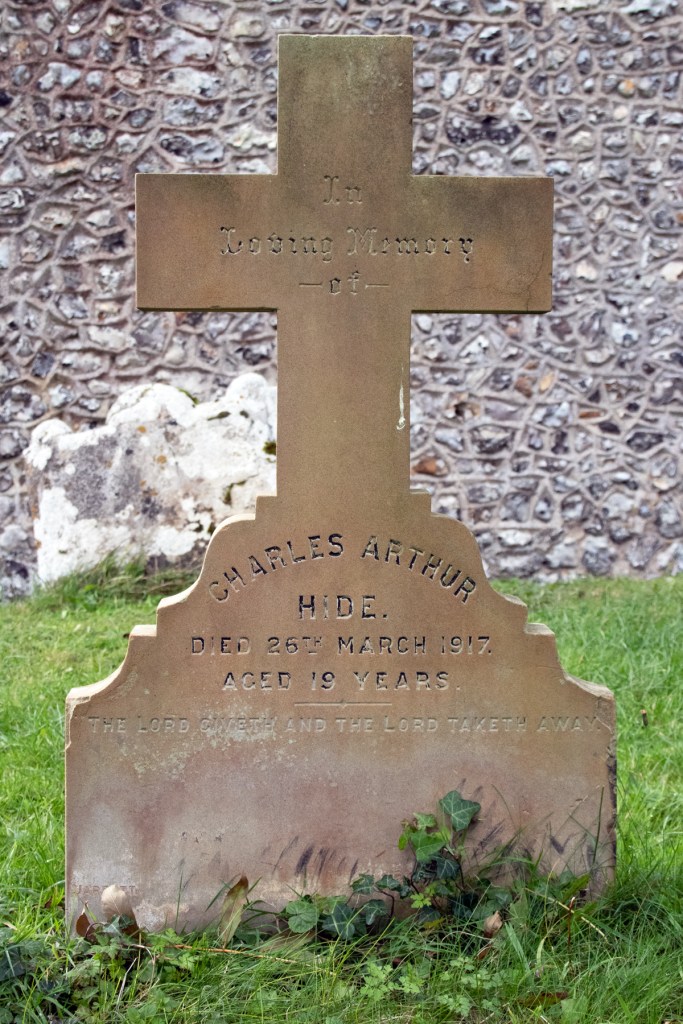
Charles Arthur Hide was born on 14th July 1897 and was the son of Ellen Edith Hide. The 1901 census found Charles living with his mother and her parents in the West Sussex village of Clapham. When Ellen’s father James died in 1909, local hurdle maker Alfred Daniels took her, Charles and her mother in as lodgers. Ellen subsequently married Alfred in 1916.

Charles, by this time, had left school and found employment with the railways. He started work on 22nd April 1913, earning 14s per week (around £55 a week in today’s money) as a porter at the station in Hove.

When war broke out, however, Charles felt the need to do his duty. He resigned from his job on 13th November 1914, and enlisted in the Royal Sussex Regiment as a Private. Charles was not alone in this: the employment records for Hove Station show that a number of other porters also handed in their notice around the same time.

Assigned to the 11th (Service) Battalion (also known as the 1st South Downs), Private Hide was initially based near Bexhill. His troop was then moved on, first to Maidstone in Kent, then to Aldershot, Hampshire. Whilst the battalion as a whole were shipped to France in 1916, there is no evidence that Charles went with them, and it seems that he may have served his time on home soil. Wherever he was based, he was awarded the Victory and British Medals for his time in the army.

At this point, details of Private Hide’s life become sketchy. He is only mentioned in one further document – the Army Register of Soldiers’ Effects – which confirms that he passed away at a military hospital in Epsom, Surrey, on 26th March 1917, although no cause is given. He was just 19 years of age.

Charles Arthur Hide’s body was brought back to Sussex for burial. He lies at rest in the quiet graveyard of St Mary the Virgin Church in his home village of Clapham.


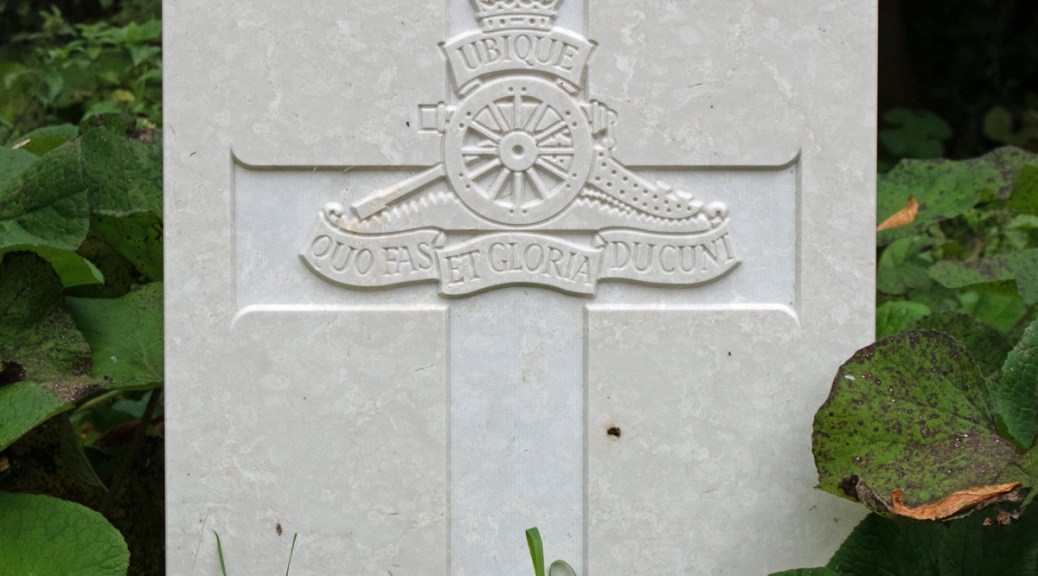
Gunner William Hann

Gunner William Hann

William Hann was born towards the end of 1871, the son of Harry Hann, who was a stonemason, and his wife Susan. Born in Stoke-under-Ham (now Stoke-sub-Hamdon), he was one of nine children, although sadly five of his siblings passed away at a young age.

Sadly, little of William’s early life remains documented. A newspaper article that reported on his passing, however, confirms that he served in the Royal Field Artillery, and was based in India for four years, before being shipped to South Africa to fight in the Boer War.

Back in Somerset in the early 1900s, he married a woman called Ellen, and the couple went on to have four children – Hilda, Herbert, Kate and Louisa.

At the outbreak of the [First World War], though under no obligation, [Gunner Hann] responded to the call of duty and was among the first to volunteer from Stoke. He was attached to the Indian Expeditionary Force and sent to France, and it is interesting to know that he saw some of the native soldiers whom he had bet while serving in India many years ago.

After serving in France for some time, he was transferred to Mesopotamia, and it was there that his health became impaired, which made him an easy victim of the disease which caused his death.

Western Chronicle: Friday 1st June 1917

Gunner Hann had contracted cellulitis in his right arm, which turned septic. He returned home on sick leave on 22nd May 1917, but died at home from blood poisoning just two days later. He was 48 years of age.

William Hann was laid to rest in the graveyard of St Mary’s Church, in his home village of Stoke-sub-Hamdon.


Private William Eglon

Private William Eglon

William Ernest Eglon (also known as Ernest William Eglon) was born in the Somerset village of Stoke-under-Ham (or Stoke-sub-Hamdon), in the spring of 1898. One of five children, his parents were stonemason Arthur Eglon and his glovemaker wife Sarah Elizabeth Eglon (who was better known as Bessie).

Unfortunately, little information on William’s early life remains documented. When war broke out, he was working at the Co-operative Bakery in the village. He was keen to do his bit, however, and enlisted in the Royal Army Service Corps as a Private not long after his eighteenth birthday.

Private Eglon was sent to serve in Essex, working as a baker in the Supply Section there. Within a couple of weeks of arriving, however, he was admitted to the Field Hospital in Chelmsford. He was suffering from an ear infection, and this turned out to be significant enough for him to be transferred to the Horton County of London War Hospital in Epsom.

William developed an abscess in the temporo sphenoidal region of his skull (in front of his right ear), which was operated on on the 27th May 1917. By this time meningitis had set in and, despite a second operation just over a week later, the conditions took hold.

Private Eglon passed away at 9:55am on 11th June 1917. He was just 19 years of age.

William Ernest Eglon’s body was brought back to Stoke-under-Ham for burial. He lies at rest in the family plot in the graveyard of St Mary’s Church in the village.


Ordinary Seaman John McNish

Ordinary Seaman John McNish

John McNish was born in the Staffordshire city of Wolverhampton on 26th June 1897. The oldest of six children, his parents were railway porter James McNish and his wife Mary Ann.

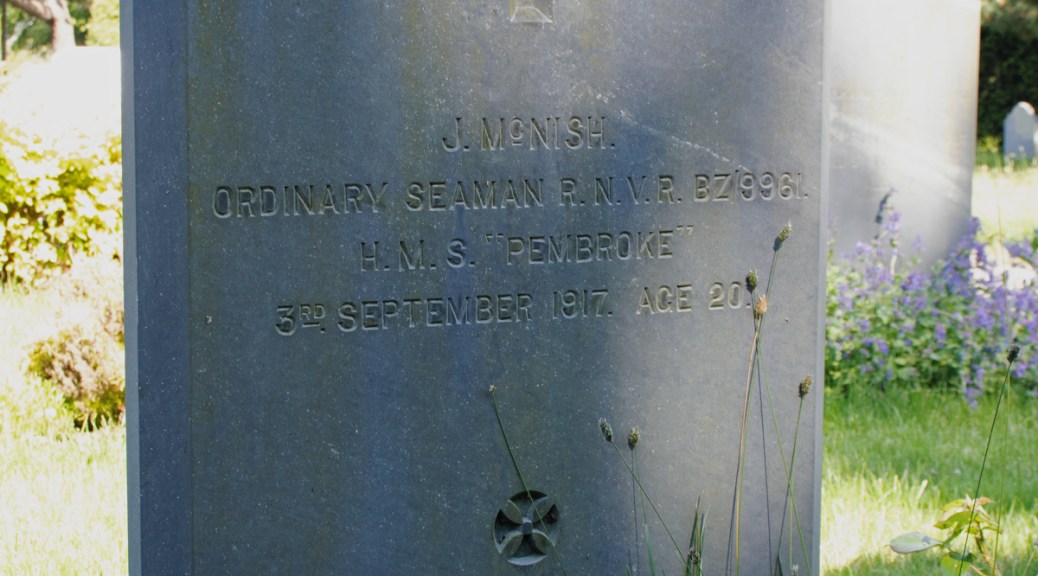
Sadly there is little documentation to evidence John’s early life. When he left school, he seemed to have joined his father in becoming a porter and, when war broke out, he joined the Royal Navy, given the rank of Ordinary Seaman in the Royal Naval Volunteer Reserve. He was based at HMS Pembroke, the shore-based establishment at Chatham Naval Dockyard in Kent.

In the summer of 1917 HMS Pembroke was becoming crowded and John was billeted at the Chatham Drill Hall. On the night of 3rd September, the building took a direct hit from a German bomber. Ordinary Seaman McNish, along with 97 others, was killed instantly. He was just 20 years old.

John McNish was buried in the nearby Woodlands Cemetery in Gillingham, along with dozens of others who perished that night.


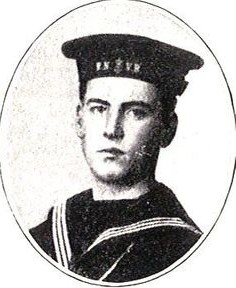
Ordinary Seaman John McNish
(from findagrave.com)

Full details of the night raid on Chatham Drill Hall can be found here.


Ordinary Seaman William Stanley

Ordinary Seaman William Stanley

William Alfred Stanley is one of those names that seems destined to be lost to the annuls of time. Little documentation exists for his early life, but what there is gives some hints at a determined young man.

William was born in London to an Annie Stanley, who lived in the Kentish Town area of the city. At some point, he emigrated to Canada as, according to his wartime enlistment papers, he joined up in Ontario.

William enlisted in the Canadian Expeditionary Force on 5th November 1915, and was initially assigned to the 44th Battalion of the Canadian Infantry. His troop embarked for England in July 1916, and, on his arrival he was transferred to the 98th Battalion.

It was at this point that things too an unusual turn. With a few months, Private Stanley was again transferred, this time to the 19th Battalion, and then again to the 4th Reserve Battalion from where he was discharged from the Canadian Infantry in February 1917 for being underage.

At this point, William seems to have been undeterred.

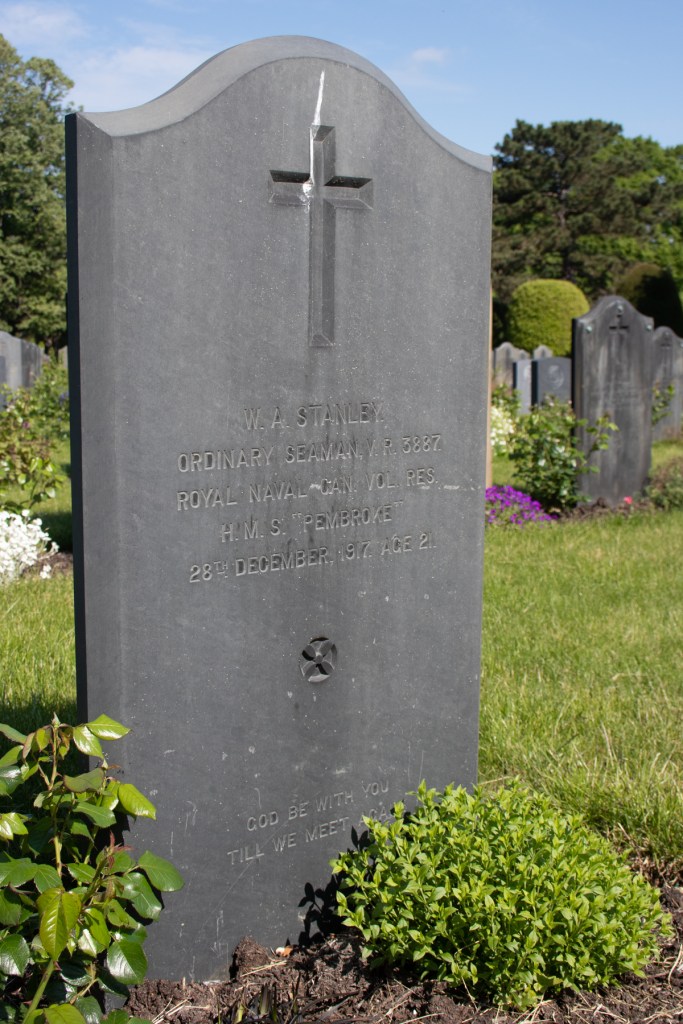
The next record for him – in fact the memorial to him – is his headstone. This confirms that he had enlisted in the Royal Naval Canadian Voluntary Reserve as an Ordinary Seaman. He was based at HMS Pembroke, the shore establishment at Chatham Dockyard, but there is no other information for him.

Ordinary Seaman Stanley died on 28th December 1917, at the age of 21. (His previous military discharge might suggest that he was, in fact, younger than this, but that is conjecture on my part.) There is no record of a cause of death and nothing in contemporary newspapers to suggest anything out of the ordinary.

William Alfred Stanley was laid to rest in the Woodlands Cemetery in Gillingham, Kent, not far from the Naval Dockyard where he had been based.


Officer’s Steward 2nd Class Frederick Shiplee

Steward 2nd Class Frederick Shiplee

Frederick John Shiplee was born on 15th November 1895 in the Essex town of Harwich. The oldest of eight children, his parents were Frederick and Matilda. Frederick Sr worked as a carter for the local railway, while his son found employment as a butcher’s errand boy when he left school.

In November 1913, having just turned 18, Frederick Jr enlisted in the Royal Navy as an Officer’s Steward, and spent three years training and serving on board HMS Ganges, the shore establishment at Shotley, near Ipswich.

From Suffolk, Frederick moved to Kent, and was based at the HMS Pembroke in Chatham. From here, he was involved in trips on HMS Spey, an old river gunboat that had been converted for use as a diving tender. It was during one of these trips that tragedy struck.

STORY OF A COLLISION IN THE THAMES

Mr CB Sewell resumed the inquest at Chatham, on Monday, on the 13 naval men who lost their lives after a collision between the London County Council steam hopper Belvedere and an old naval vessel in the Thames on March 7th [1917]…

The collision occurred shortly before four o’clock in the afternoon, the weather being bitterly cold and boisterous, and the sea extremely rough. The men, who had taken to a raft, were drifting about till 9pm before the raft was driven ashore. On the raft, when discovered, were a pile of dead men, who had been rendered unconscious by the cold and subsequently drowned through the raft being partly submerged. Lieutenant Humphreys, Royal Naval Reserve, and the other officers were all drowned. In all, 30 of the 37 members of the ship’s company lost their lived, and several bodies have not been recovered. Thirteen of the ship’s crew managed to get ashore at Sheerness in the cutter and three reached the shore at the Isle of Grain in the gig, while one was saved by the hopper.

Arthur George Chick, able seaman, said he was at the wheel of the naval vessel, which was steaming up river at six knots an hour to secure shelter from the weather. Lieutenant Humphreys and a warrant officer were on the bridge, and there were two look-out men. All were now missing. He saw the hopper coming down the river when she was two miles away. When the vessels were nearing each other, the hopper suddenly altered her course to starboard. The witness then altered his course to port by his officer’s orders, but the hopper crashed into his ship, stroking it a glancing blow in line with the forepart of the bridge on the starboard side. The ship sank in three minutes.

Alfred Rawlings, leading signalman, stated that the hopper changed her course when almost abreast of the naval vessel. The hopper’s alteration of course was, he considered, the cause of the collision.

Henry Davies, second officer, and Joseph Beard Hasdell, master of the hopper, gave evidence that they considered the collision was caused through the naval vessel’s error of judgment in starboarding, instead of going to port. The hopper, they stated, ported its helm in accordance with the ‘rule of the road’.

South Eastern Gazette: Tuesday 27th March 1917

While not mentioned in the newspaper report for security reasons, the ‘old naval vessel’ was, in fact HMS Spey. Annoyingly, I can trace no further report of the inquest, other than the conclusion that the deaths were due to drowning following a collision at sea.

Officer’s Steward Shiplee was one of the twenty men who died that day. He was just 21 years of age.

Frederick John Shiplee’s body was laid to rest in the Woodlands Cemetery in Gillingham, not far from the Naval Dockyard in Chatham, where he had been based.


Able Seaman George Davies

Able Seaman George Davies

George Herbert Davies was born in Rosses Point, County Sligo, Ireland on 28th September 1872. One of eight children, his parents were naval man Robert Davies and his wife Catharine.

George was obviously drawn to the sea, and enlisted in the Royal Navy in February 1888. Too young to be an active member of the crew, he was initially given the rank of Boy, before rising to Ordinary Seaman when he came of age in September 1890.

Over the duration of his initial twelve years’ service, George was assigned to a total of eight ships, with time between each spent at the shore-based establishment HMS Pembroke in Chatham, Kent. He rose to the rank of Able Seaman and, in February 1903, volunteered to continue his time in the Royal Navy.

At the start of 1914, having served for a further ten years, Able Seaman Davies was stood down to the Royal Fleet Reserve. He did not remain on reserve status for long, however, as, in August 1914, he was called again into active service as war was declared.

While primarily based on HMS Pembroke this time, George did service two tours on sea-going vessels: he spent two years on board HMS President from October 1914, and then six months on the General Greenford. By January 1917, however, he was back at HMS Pembroke.

Within a couple of months, Able Seaman Davies had been admitted to the Royal Naval Hospital in Chatham, suffering from pancreatitis. Sadly, this haemorrhaged, and he passed away on 27th March 1917; he was 44 years old.

George Herbert Davies was laid to rest in the Woodlands Cemetery in Gillingham; walking distance from the Naval Dockyard that had been his base for so long.


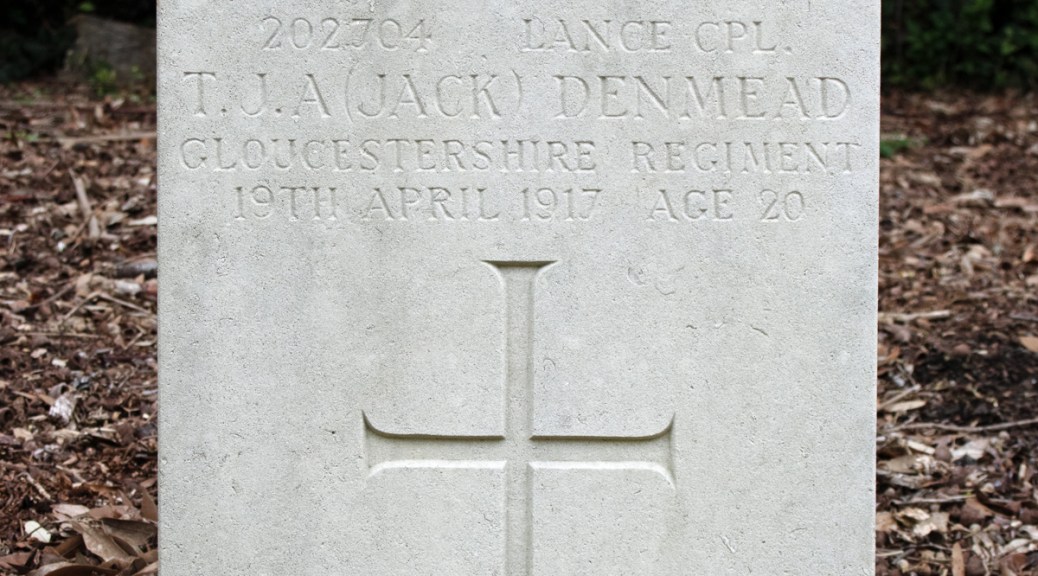
Lance Corporal Thomas Denmead

Lance Corporal Thomas Denmead

Thomas John Ambrose Denmead – better known as Jack – was born in Yeovil in the summer of 1896. The oldest of seven children, his parents were Thomas and Elizabeth Denmead. Thomas was a glover – the key industry in the Somerset town – who raised his young family in the middle of the town.

When he left school, Jack found work as a clerk at Petters’ Ltd, a local engine manufacturer and iron foundry. War was on the horizon, though, and he enlisted in the spring of 1916.

Jack joined the Gloucestershire Regiment, and was assigned to the 2nd/4th (City of Bristol) Battalion. He was sent to France in May 1916, and was involved in the Attack at Fromelles, part of the larger Somme offensive. He had started as a Private, but rose to the rank of Lance Corporal.

Towards the end of 1916, Jack fell ill. He was medically evacuated to the UK, and was admitted to the Royal General Infirmary in Paisley, Scotland. His condition was serious enough to need an operation, but the Lance Corporal sadly passed away not long after this treatment. He was just 20 years of age.

Jack’s body was brought back to Somerset for burial. He was laid to rest in the cemetery in his home town, Yeovil.


Private James Hayden

Private James Hayden

James Hope Hayden was born in Shorncliffe Military Camp in 1875, the son of Mary Anne Hayden. The youngest of five children, James’ father appears to have died when he was just a toddler; there are no records for him, and Mary Anne – who preferred to caller herself Annie – was listed a a widow by the time of the 1881 census.

The document confirms that Annie was lodging in a house near the Naval Dockyard in Chatham, working as a seamstress. She was living there with her landlady Anne Roberts and her five children, John, William, Annie, Charles and James, who seems to have gone by the name of Mathew.

By the time of the nest census, Annie had moved and was lodging in another house in the same road. She was still employed as a seamstress, and was sharing the rooms with her two youngest children and her brother, William.

The 1901 census finds Annie living in an adjacent road to her previous houses. Head of the household this time, she was working as a laundress. Her brother William was also living there – he was listed as an army pensioner. Mathew is the only one of her children still living with her; he had, by this time, found employment as a labourer in the dockyard.

Moving forward another ten years, and the family have moved one street over. Annie, at 69 years old, remained the head of the household, while Mathew is living there with his wife and three children.

Mathew’s wife is listed as Florence, but there is no record of their wedding, other than the census document which confirms they have been marred for ten years. Mathew is listed as an ex-soldier although again, there is no longer any documentation to confirm this.

From this point, Mathew’s/James’ life goes a bit hazy. The next available record is his army pension document. This confirms that he was a Private in the Royal Marine Light Infantry, under the name James Hope Hayden. By this time, he and Florence had had seven children, although it seems to suggest that they were not actually married.

Sadly, it also confirms that Private Hayden had passed away on 1st May 1917, having been suffering from pneumonia, contracted whilst on active service. He was 42 years old.

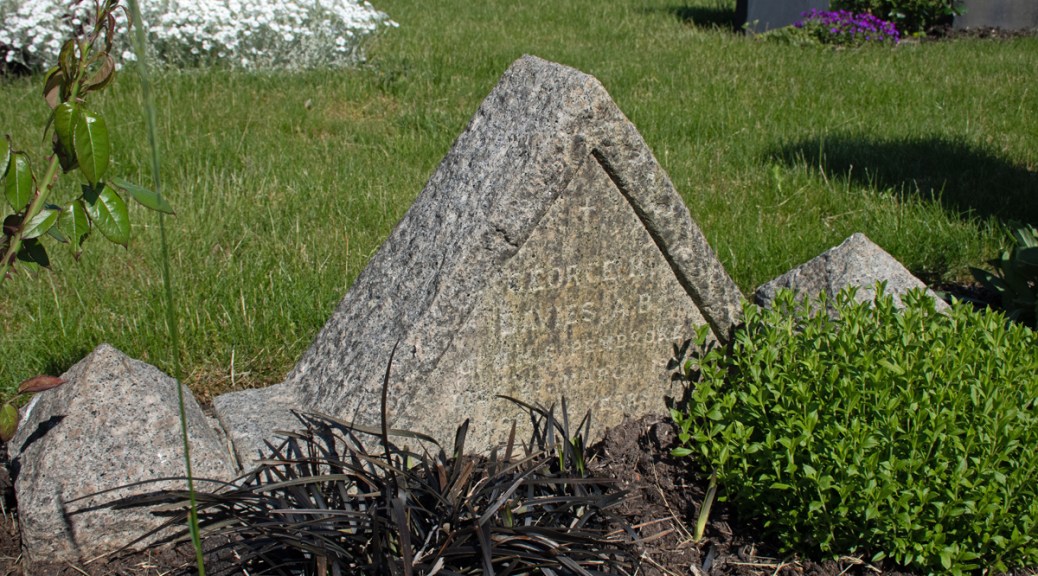
Mathew was laid to rest in the Grange Road Cemetery in Gillingham, Kent, under the name James. The cemetery has since been turned into a public park, and he is commemorated in the nearby Woodlands Cemetery.