Walter Sydney Wheeler was born in the autumn of 1887 in Crockerton, Wiltshire. The oldest of three children, his parents were Walter and Lore Wheeler. Walter Sr was an agricultural labour, but when his son – who was known by his middle name – finished school, he found work as a stable boy. The 1901 census found the family living at 12 Church Street, Longbridge Deverill.
Sydney married a woman called Mary in 1907. There is little information about her, and the couple did not go on to have any children. By the time of the 1911 census, the couple were living at Priors Cottages, Semley, where Sydney had found farm work.
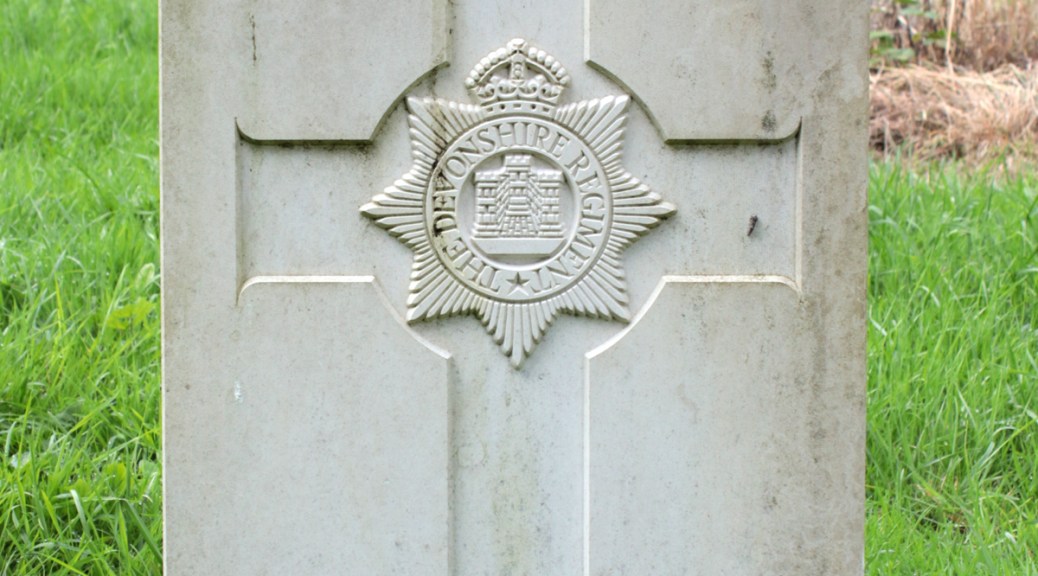
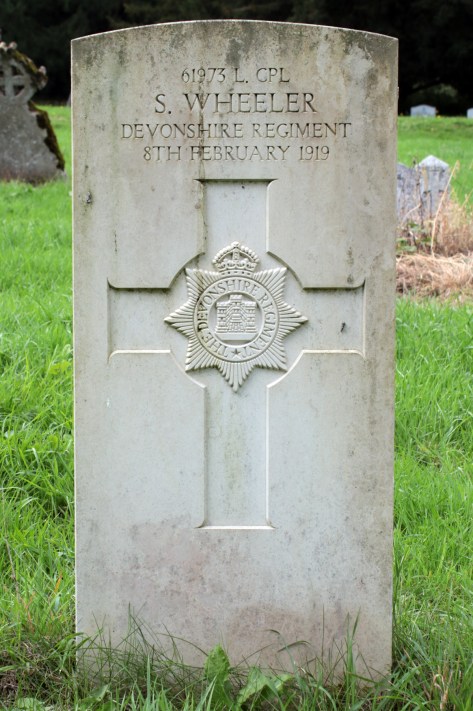
War came to Europe in 1914, and Sydney stepper up to play his part. Full details of his service have been lost to time, but it is clear that he had joined up no later than the summer of 1918. He initially joined the Devonshire Regiment, but later transferred to the 651st Agricultural Company of the Labour Corps. By the end of the conflict he had risen to the rank of Lance Corporal.
Sydney survived the war, and by the start of 1919, he was back in Wiltshire. His health was impacted, however, and that February he was admitted to the VAD Hospital in Trowbridge. While his condition is unknown, it was one to which he would succumb. Lance Corporal Wheeler passed away on 8th February 1919, at the age of 31 years old.
The body of Walter Sydney Wheeler was taken to Longbridge Deverill for burial: he was laid to rest in the graveyard of St Peter & St Paul’s Church.
Albert William Rose – who was better known by his middle name – was born in the spring of 1876. One of eight children, his parents were Thomas and Amelia Rose. Thomas was a farm labourer from Sturminster Newton, Dorset, and this is the village in which the Rose family were born and raised.
William followed in his father’s footsteps, and was a farm labourer by the time he turned 14. The 1881, 1891 and 1911 census records all show him living with his parents: in 1901 he was a boarder with the Brown family at The Stables in Bryanstone, Dorset. He was employed as a stable keeper, one of eleven live-in employees at the stud.
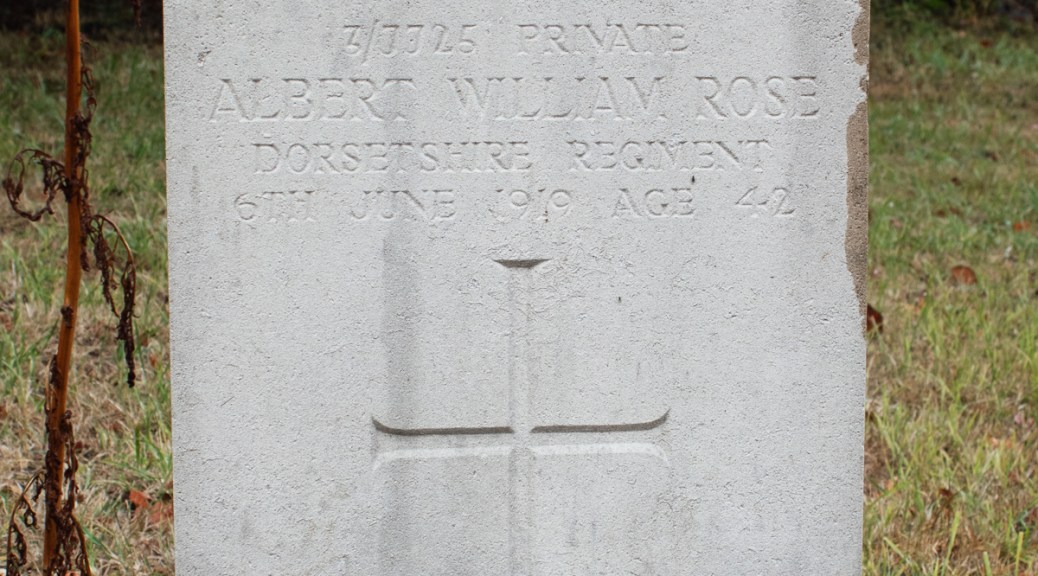
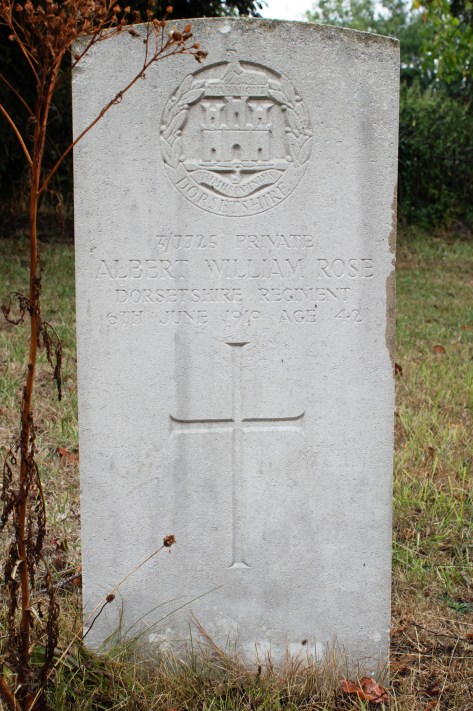
Alongside his farm work, William was also an active volunteer in the local militia. When war broke out in the summer of 1914, he was quick to enlist, joining the 3rd Battalion of the Dorsetshire Regiment. His service papers show that he was 5ft 7ins (1.7m) tall and weighed 160lbs (72.6kg). He is recorded as having brown hair and grey eyes.
During the next four months, Private Rose undertook training on home soil. In December 1914, his unit was moved to France, and he would remain on the Western Front through to the Armistice and beyond. His time overseas was not without incident, and his age and health would be against him.
Over the next four years, William would he hospitalised at least a dozen times, for rheumatism, myalgia, a recurring heart condition and, in May 1915, from the effects of a gas attack and subsequent issues with catarrh. In December 1918, he returned to Britain with atherosclerosis, a clogging of the arteries, and was medically discharged from service the following month.
At this point, William’s trail goes cold. It is likely that he returned home, as , when he passed away, his death was registered in Sturminster.
Albert William Rose passed away on 6th June 1919: he was 43 years old. His body was laid to rest in Sturminster Newton Cemetery, not far from his family home.
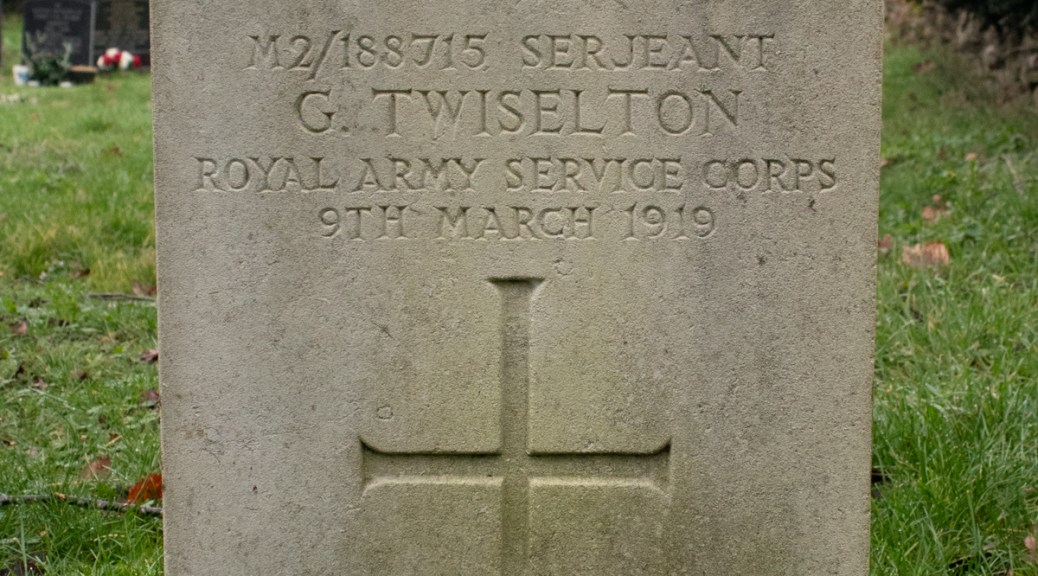
George Twiselton was born in Milton Malsor, Northamptonshire, in the spring of 1878. The third of nine children, he was the second of two sons to Reuben and Eliza Twiselton. Reuben was a general labourer, working for the local railway and brewer, and his son was to follow suit, taking up employment as a drayman.
In 1903, George married Annie Branson. She was a cooper’s daughter from Northampton, and it seems likely that George and his future father-in-law knew each other through their combined work. By the time the young couple married, Annie was working as a domestic servant for the Burnham family, and was living at 50 Middle Street, Bradwell, Buckinghamshire (now part of Milton Keynes).
The 1911 census found George and Annie living in Milton Malsor. They had four children by this point: Edith, Doris, Reuben and Clara. George was still employed as a brewer’s drayman, and this would stand him in good stead when war broke out a few years later.
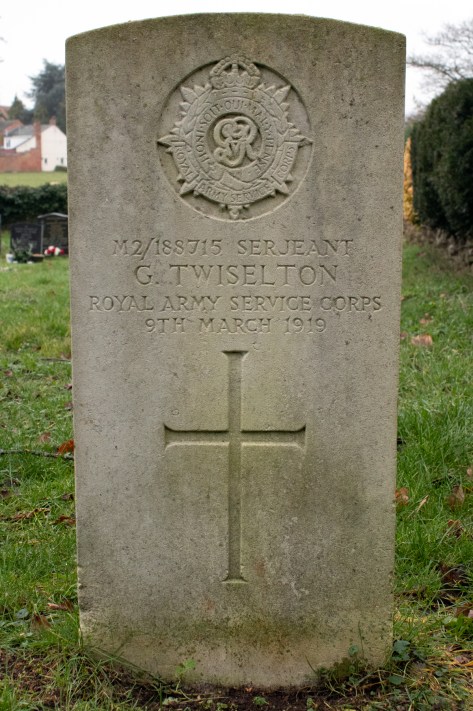
Details George’s time in the army have been lost to time, but it is clear that he had enlisted by 1916, and was assigned to the Royal Army Service Corps. His previous time with horses led him to be attached to the 381st Mechanical Transport Company, and he spent time in France, eventually rising to the rank of Serjeant.
George survived the war, and returned home after the Armistice. However, he contracted influenza early in 1919, and would succumb to the condition on 9th March: he was 40 years of age.
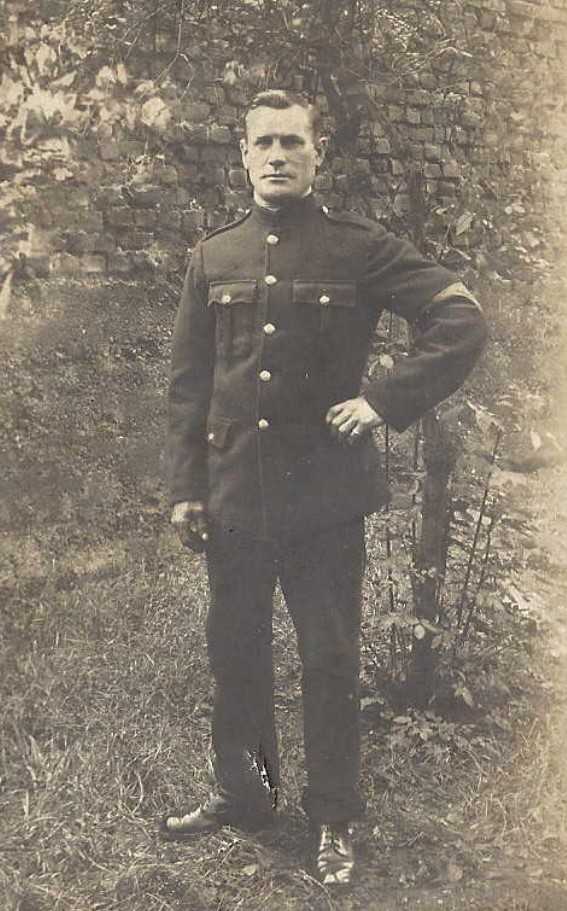
The body of George Twiselton was laid to rest with full military honours in the graveyard of Holy Cross Church, in his home village of Milton Malsor.
Serjeant George Twiselton (from miltonmalsorhistory.org.uk)
With her husband dead, and six children to raise, Annie had to find the strength to continue. The 1921 census found her living with her four youngest – including her only son, Reuben. She was employed on home duties, while her 13-year-old boy was working as a farm servant.
Reuben’s story is a testament to his father’s determination:
At the outbreak of WW2 Reuben, the only son of George, joined his father’s old RASC regiment and went to France as an ambulance driver with the British Expeditionary Force. Along with many others, he withdrew to the Dunkirk beaches but turned down evacuation back to the UK, choosing instead to stay behind and give assistance to the many wounded. He was later taken prisoner and held a Prisoner of War for 5 years until released by American soldiers in 1945. He died in 1988 aged 81 years.
Charles Albert Frost was born in Daventry, Northamptonshire, at during the winter of 1882/3. The third of eight children, his parents were William and Louisa Frost. William was a foreman at a shoe factory in Northampton and, at the time of the 1891 census, the family were living at what looks to be 47 Ardington Road or Abington Road (the return is not clearly legible).
Charles also found work in the shoe trade when he completed his schooling, but his is not a career he wanted to make for himself. Instead he was drawn to the army and, on 26th January 1900, he joined up. The now Driver Frost’s service records show that, at 18 years of age, he was 5ft 4.5ins (1.63m) tall and weighed 127lbs (57.6kg). He had brown hair, blue eyes and a fresh complexion.
Assigned to the Army Service Corps, Charles spent the next few years on home soil. Attached to the 17th Company, he would work hard and that dedication would pay off. He was promoted to Lance Corporal in April 1902, and 2nd Corporal just six months later. By January 1903 he had risen to Corporal, extending his term of service the same month.
Interestingly, in March 1904, Charles reverted to the role of Driver at his own request. He would remain at that rank until for the next four years, when he was stood down to reserve status.
The 1911 census found Charles living back home with his parents and siblings. By this point there were six adults and three children living at 74 Hood Street, Northampton, a seven-roomed terraced house on the east of the town centre. Charles had found work as a blouse cutter in a local factory, and with his father and older siblings all involved in factory work in some way.
Life on civvy street seemed not to appeal, however, and in November 1911 Charles was re-engaged with the Army Service Corps. This was initially planned to be for four years, but he would remain in the army for nearly twice that long.
In August 1914, Driver Frost was shipped out to France. and, barring leave, he would remain there for the next three years. In the summer of 1915, he returned home briefly, marrying Daisy Harris at St Edmund’s Church in Hardingstone, Northamptonshire, when he did so. He was soon sent back out to France, however, and remained on the other side of the Channel until April 1917.
Back on home soil, Charles’ career had taken a surprising turn. In January 1915 he was promoted to Acting Corporal, rising to Acting Sergeant just four months later. By November 1916 he had been promoted to Acting Quartermaster Sergeant, a role that was formalised just four months later.
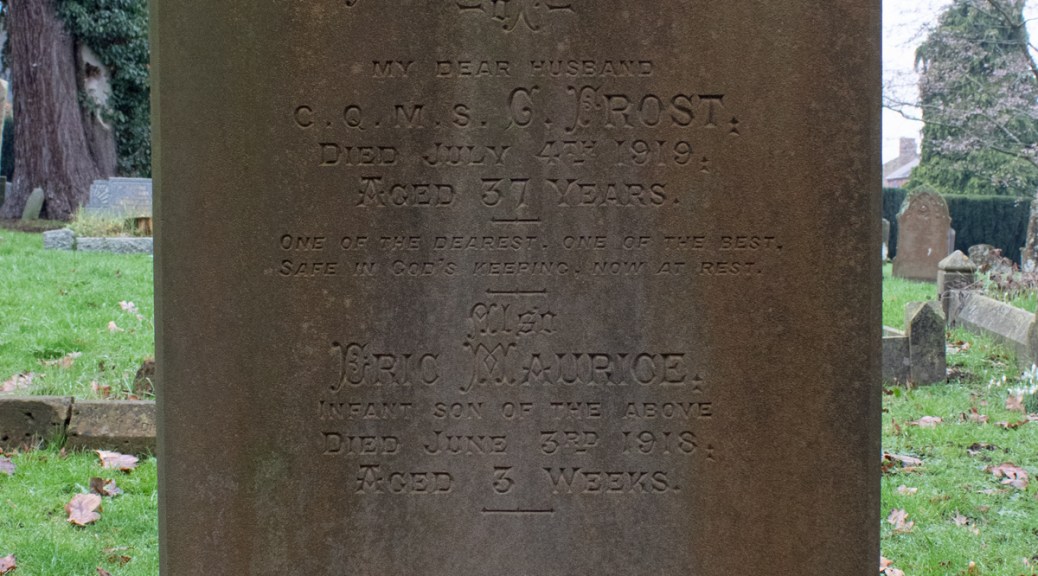
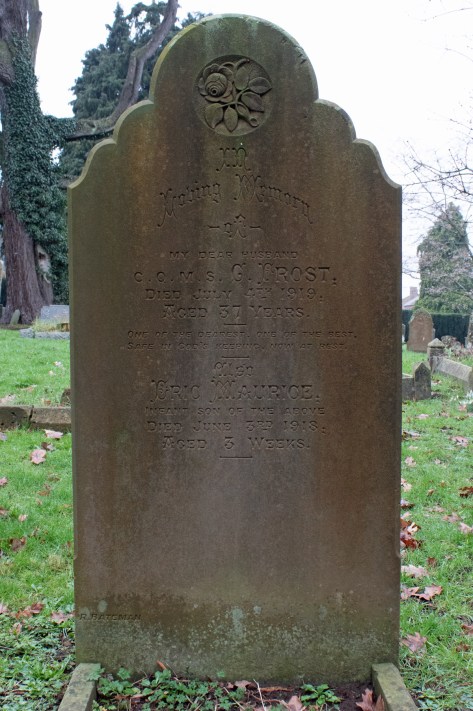
In May 1918, Daisy gave birth to their first – and only – child, a boy they called Eric. Tragically, he passed away just three weeks later, from a combination of pemphigus and asthma: with Charles away, Daisy had to register the death.
Quartermaster Sergeant Frost survived the war, but was admitted to the Mill Road Hospital in Liverpool, Lancashire, on 28th June 1919. He was suffering from a cerebral tumour, but his treatment would prove ineffectual. He died at 3:20am on 4th July 1919: he was 37 years of age.
The body of Charles Albert Frost was taken back to Northamptonshire for burial. He was laid to rest in the graveyard of St Edmund’s Church, Hardingstone, alongside Eric: a father and son reunited.
Daisy had not lost her son and husband in just over a year. The 1921 census found her back living with her father and sister, carrying out home duties while they worked.
Percy John Curtis was born on 2nd January 1889, the second of twelve children to Tom and Sabina Curtis. Tom was a general labourer from Todber, Dorset, and this is where the family were born and raised.
Much of Percy’s life is a mystery. He found work at sea when he finished his schooling, and in October 1911 he enlisted in the Royal Navy as a Stoker 1st Class. His service papers show that he was 5ft 3ins (1.6m) tall, with brown hair, hazel eyes and a fresh complexion.
Stoker Curtis was initially assigned to the cruiser HMS Pathfinder, and remained on board until the summer of 1912. After a short sting at HMS Victory – the Royal Naval Dockyard in Portsmouth, Hampshire – he was given another posting, aboard the battleship HMS King George V. She would become his home for the next four years, during which time Percy was promoted.
In September 1916, the now Leading Stoker Curtis returned to shore and to HMS Victory. He would remain at the base for the rest of his time in the navy.
On 5th November 1918, Percy married Kathleen Francis. She was the daughter of a Co-operative store manager from Dovercourt, Essex. She seems to have stayed with her family while her new husband was working, and a later census records confirms that she had returned (or remained) there after his death.
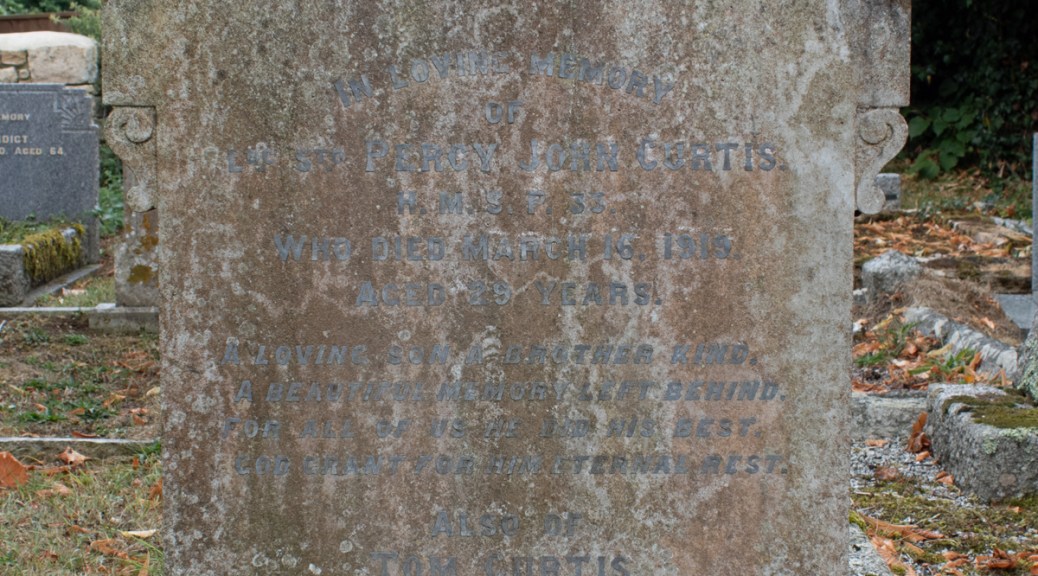
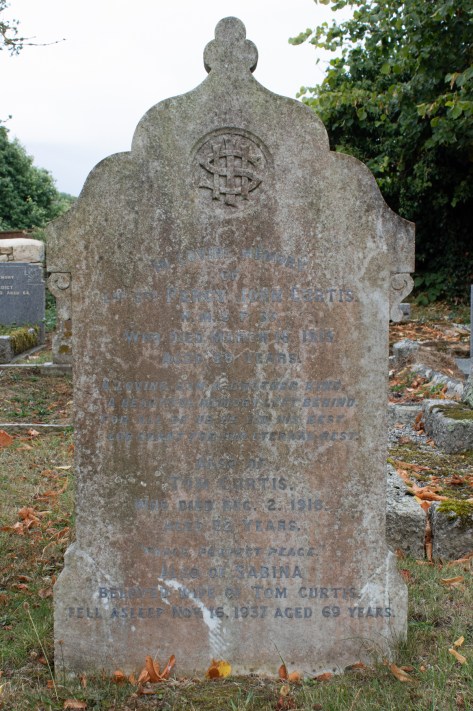
Percy’s service record gives a intriguing hint as to what happened, to him. By the end of the war he had been assigned to HMS Victory’s accounting branch. His papers simply state that he “Found dead on board 17 March 1919”. No cause of death is confirmed, although another naval document does confirm that it was due to illness, rather than any foul play. He was 30 years of age.
The body of Percy John Curtis was taken back to Dorset for burial. He was laid to rest in the family plot in Todber Churchyard, alongside his father, who had passed away the year before.
Ernest Ritchens was born in the summer of 1872 in the Wiltshire village of Semington. The youngest of nine children, he was one of seven boys to Isaac and Sarah Ritchens. Isaac was a farm labourer, and this is a job into which Ernest also followed when he completed his schooling.
Farming was not something Ernest wanted to be in for the long term, however, and, after the death of his parents – Isaac in 1895, and Sarah four years later – he joined the army. Details of his military career have been lost to time, but it seems that he joined the Wiltshire Regiment and, as a Private, spent time in South Africa. By the time he was stood down, he had risen to the rank of Lance Corporal.
Back home and, in the summer of 1907, Ernest married Sarah York, a wheelwright’s daughter from Hilperton near Trowbridge, Wiltshire. The newlyweds would set up home in the village, and go on to have four children. The 1911 census found the young family living on Devizes Road, Ernest back working as a farm labourer.
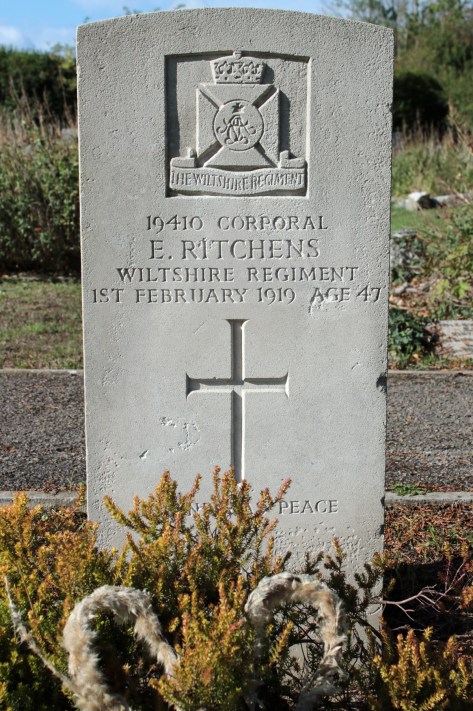
When war broke out, Ernest was again called upon to play his part . He was given the rank of Corporal, and attached to the Wiltshire Regiment (although other records he was assigned to the Hampshire Regiment). He did not appear to have spent any time overseas and, was soon transferred over to the 160th Company of the Labour Corps.
DEATHS
RITCHENS – On February 1st, at No. 1, Australian Hospital, Sutton Veny, Corporal Ernest Ritchens, of the Labour Corps, and formally of the Wilts Regiment, resident of Hilperton…
[Wiltshire News: Friday 7th February 1919]
Ernest Ritchens was 46 years of age when he passed away in 1919. While the cause us not reported, it is likely to have been an illness of some sort. His body was taken back to Hilperton, and he was laid to rest in the village cemetery.
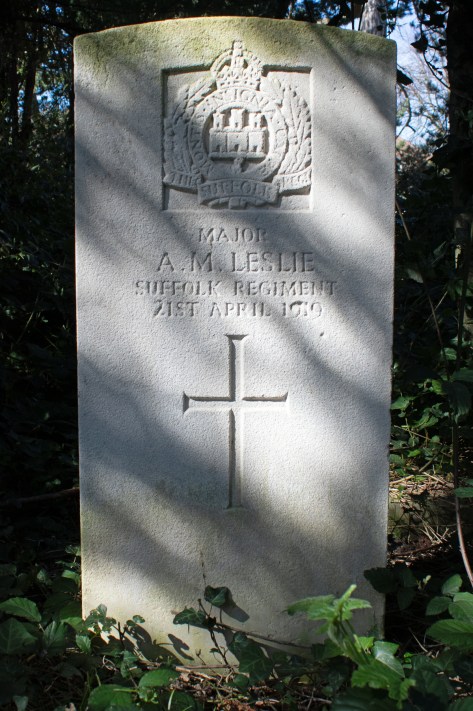
Alexander Augustus Maurice Leslie was born in France in 1852. One of five children, his parents were Government Secretary of State Francis Leslie and his French wife, Josephine.
Alexander’s mother died when he was 8 years old, by which point the family had moved back to Britain. Francis had set up home in Ealing, Middlesex, and they were living at 15 Castlebar Road, a Victorian villa.
When he completed his schooling, Alexander sought out a military life. The 1881 census recorded him as a Lieutenant in the Suffolk Regiment, living in St Helier, Jersey. He had married the year before, to Louisa Cumming, a surgeon’s daughter from Devon. They had a son, Maurice, by this point, and a daughter, Ida, was born the following year.
Lieutenant Leslie’s service records are sparse, but a later newspaper report fills in some of the gaps: “Leslie’s military experience, which extended… over a period of about 25 years, included participation in the Egyptian campaign in 1884, and service on the West Coast of Africa, in Jamaica, and in India.” [Worthing Gazette: Wednesday 30th April 1919]
During her husband’s time overseas, Louisa raised the children back home in Devon. She passed away in 1901, but which point, Alexander had retired with the rank of Captain. That year’s census found him living with Maurice and Ida at 14 Spencer Hill in Wimbledon, Surrey, a large detached villa. Maurice, now 20 years of age, was working as an accountant’s clerk, and the family had a live-in servant called Rose.
The next census record, from 1911, recorded Alexander living in rooms at 46 Leinster Gardens, Paddington. A substantial Georgian property, his landlady was Eveline Giradet, whose other residents included a barrister and a banker. Alexander’s occupation was now noted as Retired Major in the British Army.
From this point, Alexander’s trail grows cold. It is likely that he was called upon to play a part in the global conflict that broke out in 1914, though exactly when and how he did so is unclear. Records suggest he was admitted to Queen Alexandra’s Military Hospital on Millbank, Middlesex on 28th September 1916, suffering from syphilis. He only remained there for a couple of days, and his increasing age and health may have led to his retirement from duty.
For the past four years Major Alexander Maurice Leslie, who was for a period of a quarter of a century connected with the Royal Sussex Regiment, had been a resident of Worthing, and a brief intimation was given in the last issue… that he had died suddenly.
The circumstances were duly investigated by… the Deputy Coroner for West Sussex, on Wednesday afternoon, the inquiry taking place at the Central Fire Station, in High-street.
Evidence of identification was given by Colonel Francis Seymour Leslie… late of the Royal Engineers, who stated that the deceased, who was his brother, had lived at Worthing for the past four years, more or less all the time, though he had no permanent address…
Mrs Ethel William, a widow, at whose house… Major Leslie had lodged, stated that he had complained of indigestion and ate light food. On Monday evening he had his supper at half-past seven o’clock, going upstairs about half an hour later. About nine o’clock witness went to his room and found him lying in bed in great agony, and he exclaimed: “Oh, my poor heart!” Witness gave him some hot water to drink and sent for a doctor.
Dr Bernard Lees stated that he was sent for, but he found Major Leslie was dead when he got to the house. He had since made a post-mortem examination, which showed that the stomach and intestines were much distended, and there were signs of chronic gastric catarrh. The heart was fatty, but the valves were healthy. Death was due to syncope, the result of acute indigestion and the fatty condition of the heart.
A verdict of “Death from natural causes” was recorded.
[Worthing Gazette: Wednesday 30th April 1919]
[It should be noted that Alexander had been attached to the Suffolk Regiment throughout his military career. The error in the newspaper report is likely because of the Sussex town he had moved to in the mid-1910s.]
Alexander Augustus Maurice Leslie was 67 years of age when he passed away on 21st April 1919. His body was laid to rest in Broadwater Cemetery, to the north of the town he had called his home for more than four years.
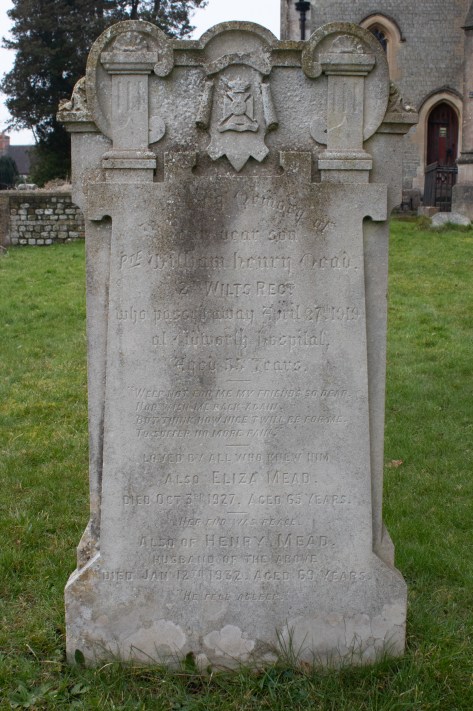
William Henry Mead was born in Frome, Somerset, in the spring of 1886. The second of six children, his parents were mason Henry Mead and his wife, Eliza. Henry’s work took him across the area: the 1891 census found the family living at 5 Tower Hill in Dilton Marsh, Wiltshire, while by 1901 they had moved to Upton Scudamore, closer to Warminster.
By this point, William was working as a farm labourer, but he then disappears from the records. His entry on the Army Registers of Soldiers’ Effects when he died shows that he left a significantly higher amount of money than would normally be expected for someone who had simply enlisted for the duration of the war. It is possible, therefore, that his absence from the 1911 census is due to him being out of the country whilst with the army.
The document confirms that William served with the 2nd Battalion of the Wiltshire Regiment. The unit saw action as Ypres, the Somme, Passchendaele and Messines, but, without his service records, it is impossible to know how or where Private Mead fought. He survived the war, however, and by the start of 1919, he was billeted in Tidworth, on the edge of Salisbury Plain.
Private Mead’s health was suffering by this point, and he was admitted to the camp’s hospital. He died, through causes unknown, on 27th April 1919: he was 33 years of age.
The body of William Henry Mead was taken back to Warminster, where his grieving family were now living. He was laid to rest in the graveyard of the town’s Christ Church.
Frederick Charles Hill was born on 13th June 1882 in the Devon village of Marldon. One of seven children, his parents were William and Elizabeth Hill. William was a carpenter, and the 1891 census found the family living or boarding at the Royal Oak Inn.
When he finished his schooling, Frederick found work as a gardener. However, he sought a bigger and better life and, on 21st April 1897, he joined the Royal Navy. His service record suggests that he lied about his age to do so, giving his year of birth as 1881,
Frederick was below the age to formally enlist in the navy, and was given the rank of Boy 2nd Class. He was sent to HMS Impregnable, the training base in Devonport, Devon, spending the next eighteen months there. Promoted to Boy 1st Class in February 1898, he was given his first posting, on board HMS Agincourt, later that year.
In the autumn of 1898, Frederick was assigned to the cruiser HMS Leander. The following summer, and based on the date of birth he had previously provided, he came of age, and was formally inducted into the Royal Navy. His service records show that he was 5ft 2ins (1.57m) tall, with red hair, grey eyes and a fresh complexion. Hs was also noted as having a scar on his forehead.
The now Ordinary Seaman Hill remained on board HMS Leander for more than two years. He proved a worthwhile member of crew, and was promoted to Able Seaman in May 1900. He left Leander in January 1901, and was billeted at HMS Vivid, the Royal Naval Dockyard in Plymouth, Devon, which would become his base when not at sea.
Frederick’s contract was for twelve years, and during that time he would serve on four vessels. His dedication to the navy was evident by his promotions – he made Leading Seaman in October 1904, Petty Officer 2nd Class in October 1906, and Petty Officer 1st Class in March 1911. When his term of service ended, he immediately re-enlisted, and, at his annual reviews, was regularly noted for his very good character and superior ability. His career kept going from strength to strength, and, in 1914, he was promoted to Chief Petty Officer.
He was sent to Antwerp in September [1914] with the Royal Naval Division, and in 1916 went to the Dardanelles, there gaining his commission for bravery. After the evacuation he was sent to France and won the MC in the Ancre drive in 1916. In February 1918 he was sent for six months’ rest to England. Lieut. Hill volunteered to go to France again in November the same year, and contracted heart disease, from which he died. He returned to England early in June [1919], and, being on sick leave, went to Paignton Hospital, where his death occurred.
[Brixham Western Guardian: Thursday 7th August 1919]
Frederick Charles Hill was 37 years of age when he died on 2nd August 1919. His body was laid to rest in the family plot in St John the Baptist’s Church, Marldon.
Frederick’s headstone records his rank as Lieutenant Commander. However, Commonwealth War Grave Commission documents suggest his rank was Lieutenant.
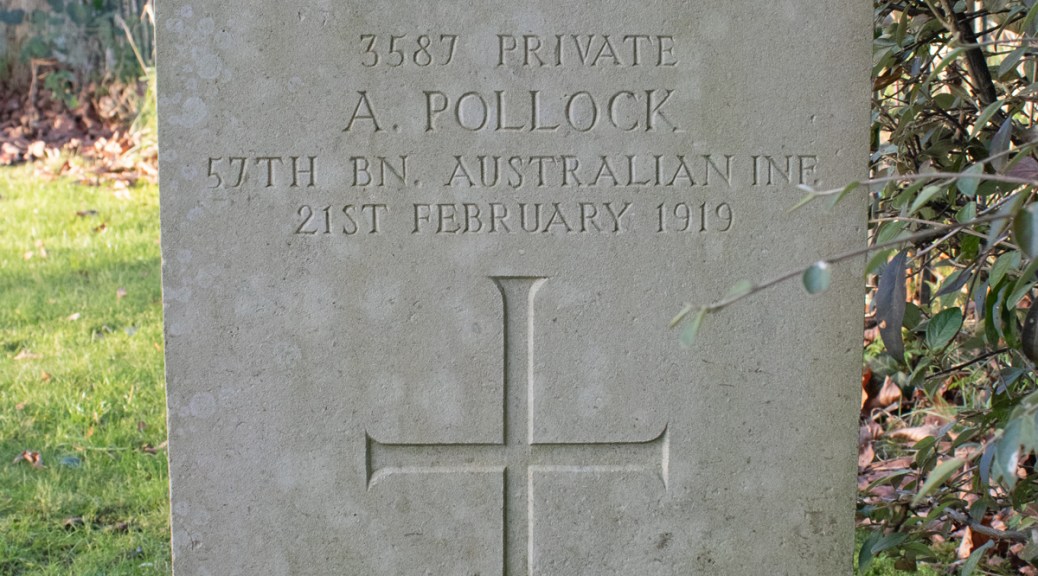
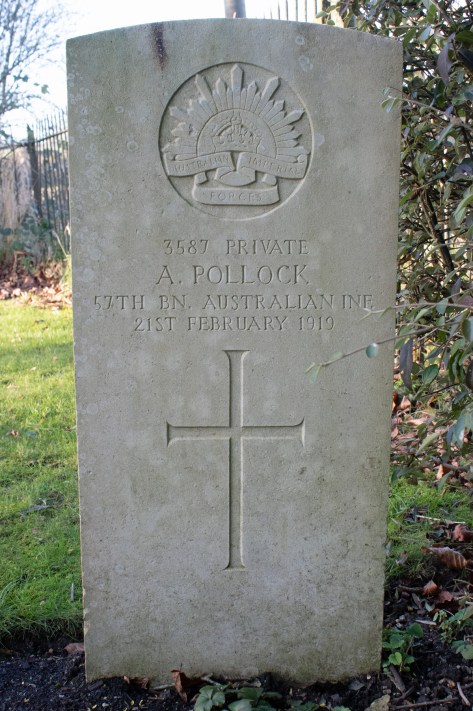
Alexander Pollock was born on 17th April 1893 in Bendigo, Victoria, Australia. The oldest of eight children, his parents were David and Annie. There is little information about his early life, but when he completed his schooling, he found work as a general labourer.
When war broke out, Alexander – who was better known as Ike – stepped up to play his part. He enlisted in the Australian Imperial Force (AIF) on 12th July 1915, just four months after his father had passed away. Private Pollock’s service records show that he was 5ft 6ins (1.68m) tall and weighed in at 13st 4lbs (84.4kg). He had dark brown hair, blue eyes and a fresh complexion, with a scar on his left bicep.
Private Pollock’s unit – the 57th Battalion – left Australia at the start of 1916, arriving in Egypt towards the end of February. They spent the next couple of months training at the Tell el Kebir camp, to the north of Cairo, before setting off to France, arriving in Marseilles on 23rd June.
Ike’s first taste of battle came within a matter of weeks, when his unit acted as a back-up force during the Battle of Fromelles. Described as the worst day in Australia’s history, the AIF suffered more than 5,000 casualties. The 57th Battalion, held in reserve, did not incur as many losses as other units and, as a result, Private Pollock would have remained entrenched on the Front Line after the worst hit battalions pulled back.
The next few years would see Ike remain on the Western Front. His service papers suggest that he did not see any leave until March 1918, but he was soon back in the action.
After the Armistice was declared, Private Pollock remained in France. He had a second period of leave from 22nd December 1918, spending the festivities in Britain. Back in France on 13th January 1919, he was moved to a training camp in Le Havre. By this point, however, his health was suffering, and he was moved back to Britain weeks after arriving.
Billeted at the ANZAC base in Codford, Wiltshire, Ike came down with influenza and pneumonia. He was admitted to the New Zealand General Hospital not far from the base, but the conditions were to prove fatal. He died on 21st February 1919, at the age of 25 years old.
Thousands of miles from home, and with his mother having also passed the previous year, the body of Alexander ‘Ike’ Pollock was laid to rest in the graveyard extension to St Mary’s Church, Codford.







 Death and Service