Joseph Tyler was born in the spring of 1882, and was the youngest of three children to Joseph and Sarah. Joseph Sr was a carter from Staffordshire, and the family were born and raised in Wordsley.
The 1901 census found the Tylers living in Brierley Hill, with Joseph Jr having found employment as a glass worker. His father passed away in 1907, and so he remained at home to support his now widowed mother.
By the 1911 census, Sarah and Joseph had moved to Birmingham, and were living at 32 Wiggin Street, a terraced house in the Ladywood area. Joseph listed his employment as a glassblower, while his mother gave no employment, presumably looking after the home.
When war came to Europe, Joseph stepped up to play his part. Full details of his service have been lost, but it is clear that he enlisted early on in the conflict. He joined the Hampshire Regiment, and was sent to Wiltshire for training.
Tragically, Private Tyler’s time in the army was not to be a lengthy one. Barracked near the village of Boyton, he was quickly admitted to the local military hospital. Suffering from heart failure, this would take his life: Joseph died on 13th October 1914, at the age of 32.
The body of Joseph Tyler was laid to rest in Boyton Cemetery, not far from the camp that had, so briefly, been his home.
George Bailey was born in Bedminster, Somerset, on 20th August 1871. One of six children, his parents were George and Anna (or Hannah) Bailey. George Sr was a labourer and, when he died in 1876, Anna moved the family to Clifton, near Bristol.
The 1881 census found the family living in a small cottage at 5 Crosby Row in the then village. Hannah was listed as a late general labourer’s wife, while her three older children were all working for a dairy.
When George finished his schooling, he sought out a career. Joining the Royal Navy, this would prove a long-term role, bringing in a relatively decent wage for him and his family, but also gave him some adventure, not surprising given the number of ships he would have seen going to and fro from Bristol.
George was only 15 years old when he joined up on 25th September 1886, and so was below the age to formally enlist in the navy. Taken on with the rank of Boy 2nd Class, he was sent to HMS Impregnable, the training ship based in Devonport, Devon. Over the next three year he learnt his craft, and served on a few ships, including the battleship HMS Iron Duke.
In October 1887, George was promoted to Boy 1st Class and, on 20th August 1889, while assigned to the Iron Duke, he came of age, and was formally inducted into the Royal Navy. Ordinary Seaman Bailey’s service records show that he was 5ft 5.5ins (1.66m) tall, with auburn hair, blue eyes and a fresh complexion. He was also noted as having a spot tattooed between the finger and thumb of his left hand, a scar on his left leg and another in the centre of his back.
Over the next seven years, George served on a total of ten ships, and saw the world. In between voyages he returned to HMS Vivid, the Royal Naval Dockyard in Devonport. In 1895 he married Elizabeth Bull, from Burrington, Somerset, and the couple went on to have six children.
George’s naval career continued, and he rose through the ranks, to Able Seaman in September 1890, Leading Seaman in June 1895, and to Petty Officer 2nd Class and 1st Class the following year.
In January 1899, George’s life took a different direction. After some time training at HMS Collingwood in Hampshire, he joined the Coastguard service, and would spend the next twelve years serving on the coast of Southern Ireland. This opportunity allowed him to have his family with him, and his and Elizabeth’s four youngest children were born in County Clare and County Cork.
By 1911, the family returned to Britain, setting up home in Brixham, Devon. That year’s census found the Baileys living at 6 Coastguard Station on the waterfront. The family remained there through to October 1913, when George was transferred to the Royal Naval Reserve, having served for 26 years.
George found work as the caretaker of the Electric Theatre in Tiverton, Devon, and this is where he and Elizabeth settled down.
Petty Officer Bailey’s time out of active service was to be limited, however, as, just nine months later, war was declared. Called back into action, he was sent to Western Stack Fort in Milford Haven, Pembrokeshire.
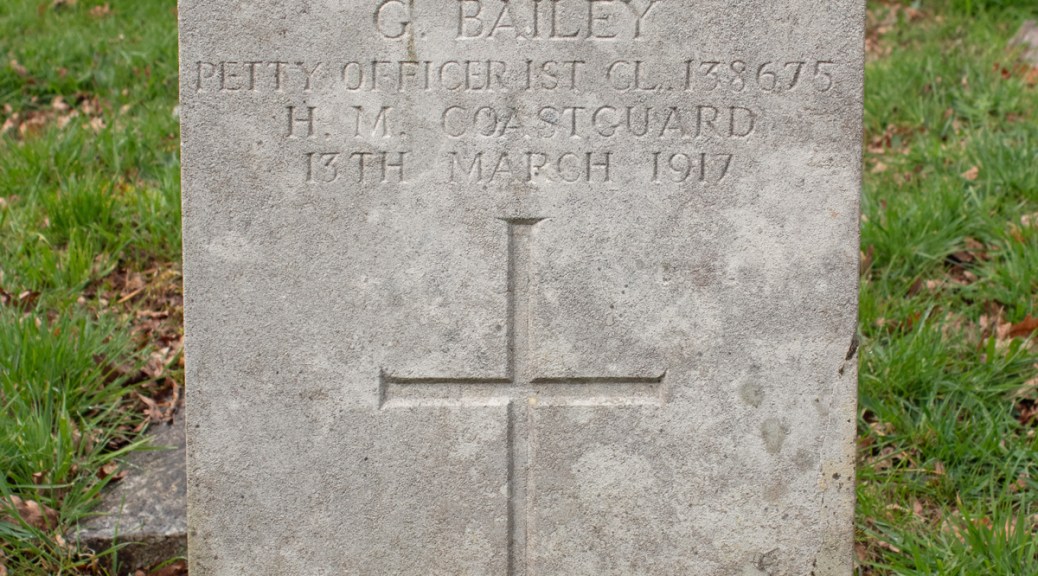
An interesting personality has passed away in First-Class Petty Officer George Bailey, who died suddenly on Tuesday… He came home about a fortnight ago on sick leave, and seemed to be improving in health, and on Tuesday went out for a walk. After retiring to bed his death came suddenly as a result of heart failure.
[Crediton Gazette: Saturday 24th March 1917]
George Bailey died on 13th March 1917: he was 45 years of age. He was laid to rest in Tiverton Cemetery.
William George Clark was born on 23rd November 1884, and was the oldest child to John and Harriet. John was an agricultural labourer from Exminster, Devon, and this is where the family were born and raised.
When he completed his schooling, William found work as a gardener. However, he wanted bigger and better things for himself, and sought out a career at sea. On 12th March 1900 he enlisted in the Royal Navy: being under the formal age to enlist, he was given the rank of Boy 2nd Class.
William was sent to HMS Impregnable, the training establishment in Devonport, for his induction. Over the next two years – until he turned 18 in November 1902 – Boy Clark started to learn his trade. He was promoted to Boy 1st Class in October 1900, and spent time on the frigate HMS Agincourt and the cruiser HMS Melampus.
When William came of age, he was formally inducted into the Royal Navy as an Ordinary Seaman. His service records show that he was just under 5ft 1in (1.55m) tall, with black hair, blue eyes and a fair complexion. He was also noted as having a tattoo of an anchor in his left arm.
Over the next five years, William served on three further ships, returning to HMS Vivid – the Royal Naval Dockyard in Devonport – in between voyages. He travelled the world and, in May 1904, was promoted to the rank of Able Seaman.
Away from the navy, love blossomed. In May 1907, William married Louisa Cosway in Tiverton, Devon. She was a few months older than her husband, and the couple would go on to have one child, William, who was born the following spring.
Back at sea, and Able Seaman Clark’s career continued. In November 1911 he was promoted to Leading Seaman, reaching the rank of Petty Office in January 1917. During his eighteen year career, he would serve on a total of eleven ships, but in the closing months of the war, William’s health was beginning to suffer. On 9th May 1918, he was medically discharged from service, suffering from heart disease.
William returned home to Tiverton. His time with his family was to prove tragically brief: he passed away from mitral disease and pneumatic fever on 13th May 1918, at the age of 33 years old.
William George Clark was laid to rest in Tiverton Cemetery. His grave was just a 15min walk from where his widow and son lived on Fore Street, in the town centre.
Francis Arthur Holland was born in Maryborough, Victoria, Australia, the fifth of seven children to Matthew and Elizabeth. Details of his early life are lost to time, although a later document confirms his date of birth as 19th July 1887.
Matthew died in 1901, and the New South Wales Police Gazette of 16th February 1910 included a request seeking a missing person:
Francis Arthur Holland, 22 years of age, 6feet high, about 13 stone weight, dark complexion; a sleeper-getter or labourer. Inquiry at the instance of his brother, James Holland, Bradshaw’s College, 250 Flinders-street, Melbourne, Victoria.
The 2nd March edition of the same publication noted that Francis had been found.
By 1916, Francis had moved to New Zealand, and was working as a bushman at the Grosvenor Hotel, New Plymouth. It was while here that he was called upon to serve in the war, and he enlisted on 29th June 1916 in Trentham, North Island. His service records confirm his height, and give his weight as 174lbs (78.9kg). It also noted that he had brown hair, hazel eyes and a fair complexion. He had a scar across the based of his right foot, and another on the left side of his throat.
Private Holland was assigned to the New Zealand Auckland Regiment, and his unit spend the next few months training. On 22nd September 1916, Francis was promoted to the rank of Lance Corporal, but reverted to his previous rank just a matter of weeks later. On 11th October, his unit boarded a ship and set sail for Europe.
Francis arrived in Plymouth, Devon, on 29th December, and set off for France just over a month later. His unit would serve on the Western Front, and, within a matter of months, Private Holland was admitted to field ambulance hospitals twice, for an undisclosed illness in May 1917, and a sprained ankle in June.
This second injury led to a transfer to Britain, and from here on in Francis’ health become more and more impacted. Admitted to hospital in London, he developed tonsillitis and, as he was recovering from this, he was moved again, this time to the ANZAC military camp near Codford, Wiltshire.
While in the camp hospital, it was determined that Private Holland was suffering from a heart infection, endocarditis. Sadly, his health had been tested to the limits by this point, and this was the condition to which he would succumb. Francis passed away on 6th September 1917, at the age of 30 years old.
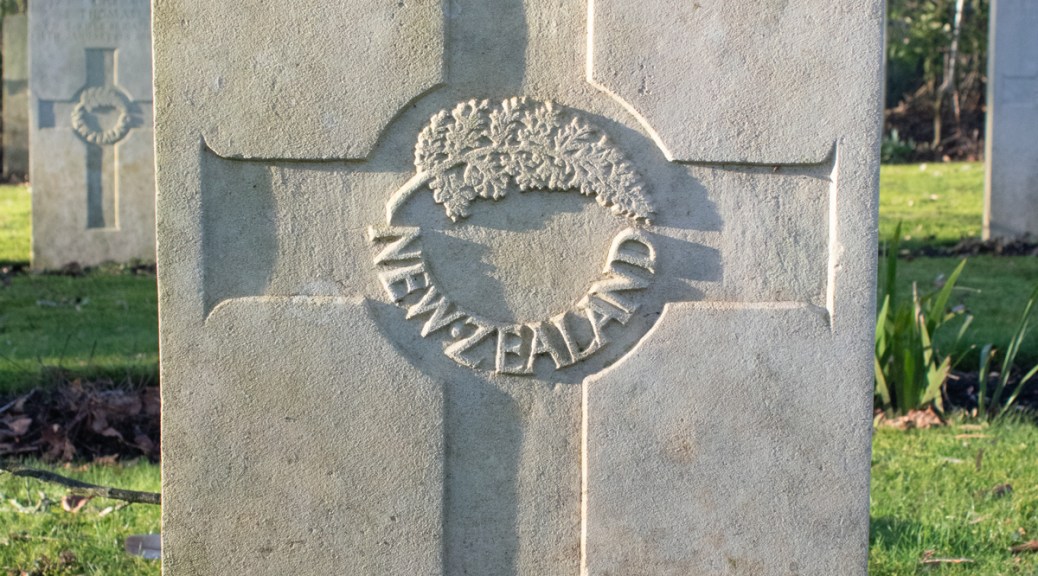
Having been born in Australia, emigrated to New Zealand and fought on the Western Front, Francis Arthur Holland was now thousands of miles from wherever he might call home. He was laid to rest in the extension to St Mary’s Churchyard in Codford, not far from the camp in which he had spent his last days.
Arthur Sidney Putt was born on 22nd October 1895 in Paignton, Devon. The youngest of five children, his parents were James and Elizabeth. James died when his son was jest five years old, leaving Elizabeth to raise the family in her own. By the time of the 1901 census, they Putts were living at 22 Roundham Cottages (four doors down from the fellow future soldier Charles Baker and his family), where Elizabeth was working as a charwoman to bring in the rent money.
When he finished his schooling, Arthur found employment as a wood chipper. At 15 years of age, he and his older brother, Frederick, were both bringing a wage into the household, and were the only two of Elizabeth’s children to still be living at home.
War broke out in the summer of 1914, and Arthur was one of the first to step up and play his part. He enlisted on 16th August, giving up his new job as a hairdresser, with the view of better prospects in the army. He joined the Royal Field Artillery, and was assigned to the 2nd Devon Depot Battery.
Gunner Putt’s initial medical report showed that he was 5ft 7ins (1.7m) tall, with good vision and normal physical development. He was sent for training, but a later, fuller, medical found that he was, in fact, not physically fit for army service. The report of the medical board of 27th April 1915 found that he had both rheumatism and valvular heart disease. He was dismissed from military service on 10th May 1915, after 267 days’ duty.
At this point, Arthur’s trail goes cold. It seems likely that he returned to Paignton, and to the life he had before the war, and the next record for him is that of his passing. He died on 14th May 1919, at the age of 23 years old.
Arthur Sydney Putt was buried in Paignton Cemetery, overlooking the town in which he had been born and raised.
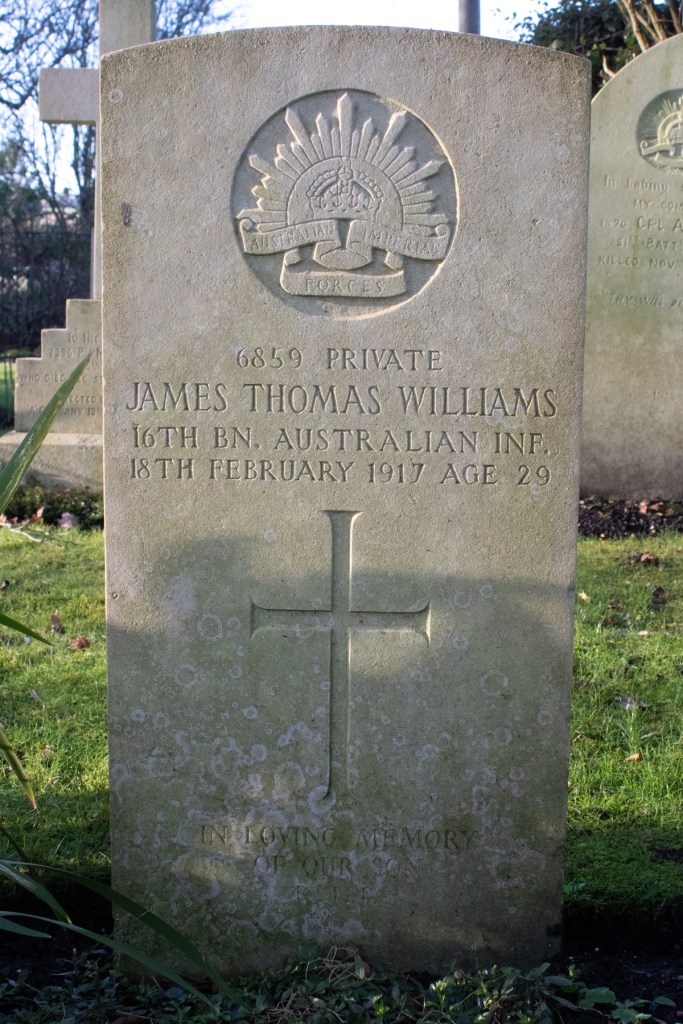
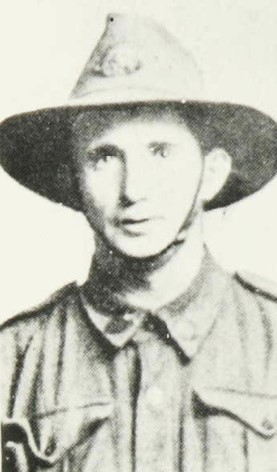
James Thomas Williams was born in Toodyay, Western Australia, in May 1888. The third of eight children, his parents were John and Mary Williams.
When he finished his schooling, James found work farming. Details of his early life are lost to time, but it seems likely that he had followed in his father’s footsteps.
When war engulfed the Empire, James stepped up to serve his King and enlisted in the Australian Imperial Force on 24th August 1916. His service records show that he was 5ft 6ins (1.68m) tall and that he weighed 134lbs (60.8kg). He was noted as having auburn hair, blue eyes and a fresh complexion.
Private Williams’ unit departed Australia from Freemantle on 9th November 1916. He would spend the next two months on board the Argyllshire, and eventually reached British shores on 10th January 1917. Assigned to the 16th Battalion of the Australian Infantry, his unit disembarked at Devonport, Devon, and made straight for base near Codford, Wiltshire.
The ANZAC troops had spent weeks cramped in the bowels of their ships, and space was once again at a premium in their army barracks. This congestion would prove fatal for numerous soldiers, as disease ran rife across the encampments.
Sadly, James would not be immune to poor health. Having contracted influenza, he was initially admitted to the camp infirmary, before being moved to the military hospital in nearby Sutton Veny. The condition was to get the better of him, and Private Williams passed away from a combination of flu and heart failure on 18th February 1917. He was 29 years of age.
The body of James Thomas Williams was laid to rest in the peaceful graveyard of St Mary’s Church in Codford, surrounded by others from his regiment.
William Thomas Bradley Real was born in Lyme Regis, Dorset, on 31st December 1875. His parents were coastguard William Real and his wife, Sarah. William Jr seems to have lived with his maternal grandparents for most of his life, even though he went on to have seven younger siblings.
Sarah died in the spring of 1891, just weeks after the birth of her and William Sr’s youngest child, and William Jr took this as an opportunity to seek a career for himself. Living next to the sea, and with a coastguard for a father, a role in the Royal Navy seemed an apposite choice. He joined up on 26th May 1891, just 20 days after his mother’s funeral.
William was under age when he joined up, and so was given the rank of Boy 2nd Class. His service records show that he was 5ft 8ins tall, with brown hair, blue eyes and a fresh complexion. He was initially sent to HMS Boscawen, the training ship moored in Portland, Dorset, and remained there until January 1893. By this point his training had paid off, and he had been promoted to the rank of Boy 1st Class.
William’s first posting was on board the ironclad HMS Alexandra. Over the next year he was posted to two further vessels, and, when he came of age on 31st December 1893, he was formally inducted into the Royal Navy, and given the rank of Ordinary Seaman. Over the next 25 years, he would serve on a total of sixteen more ships, returning to HMS Vivid, the Royal Naval Dockyard in Devonport, Devon, between some of his voyages.
William’s career saw promotion – to the rank of Able Seaman on 4th February 1896. He also spent three days in the cells in August 1898, although the nature of his misdemeanour is unclear.
Away from his career William’s family life took hold. On 15th April 1911, he married Louisa French. Her parents owned and ran the George Hotel in Charmouth, Dorset. The couple went on to have a daughter, Maud, who was born in the spring of 1915.
When war was declared, Able Seaman Real was assigned to HMS Tiger. The most heavily armoured battlecruiser in the British Navy, She would go on to fight in the Battles of Dogger Bank, Jutland and Heligoland Bight, action William would have seen first hand.
By the spring of 1918, Able Seaman Real had become unwell. He was posted back to HMS Vivid on 1st May, and was admitted to the Royal Naval Hospital in Plymouth. His admission was not to be a long one: he died of heart failure just five days later, at the age of 42 years old.
The body of William Thomas Bradley Real was taken back to Dorset for burial. He was laid to rest in Lyme Regis Cemetery, overlooking the town in which he had been born.
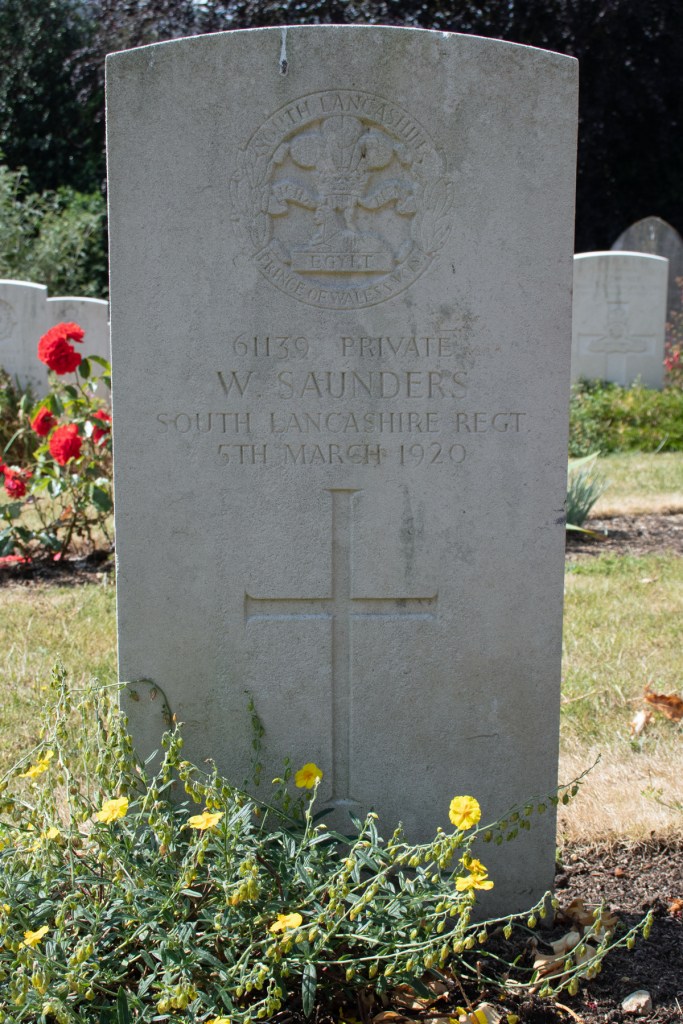
There is little concrete information about the life of Walter Saunders, and what details are available come from his limited military documents. These confirm that he was born in December 1862 in Widcombe, near Bath, Somerset.
Walter was unemployed labourer when enlisted in the army in January 1882. He joined the Somerset Light Infantry, and was attached to the 4th Battalion. His service records show that he was just under 5ft 5ins (1.64m) tall, with brown hair, hazel eyes and a fresh complexion. He was also notes as having a scar on his abdomen.
Private Saunders seems to have served in southern Asia, receiving the India medal and Burma 1885-1887 clasp. He then moved to South Africa, and was caught up in the Second Boer War. There is no further information about his initial time in the army.
When his contract came to an end, it would seem that Walter returned to the UK, finding work as a dock labourer in South Wales. When war came to Europe, though, he stepped up once more so serve his country, this time joining the South Lancashire Regiment. He was assigned to the 15th (Transport Workers’) Battalion, which served in the Mersey dockyards.
The next record for Private Saunders comes from June 1917, when he was sent to a medical board. He had been unwell for a while, it seems, and was suffering from arteriosclerosis, or hardened arteries. The medical report confirmed this was a permanent condition, and that he was no longer fit for military service.
At this point, Walter’s trail goes cold. It seems likely that he returned to Somerset, possibly still having family connections there. He passed away on 5th March 1920. He was 57 years of age.
Walter Saunders was was laid to rest in the military section of Bath’s sweeping Locksbrook Cemetery.
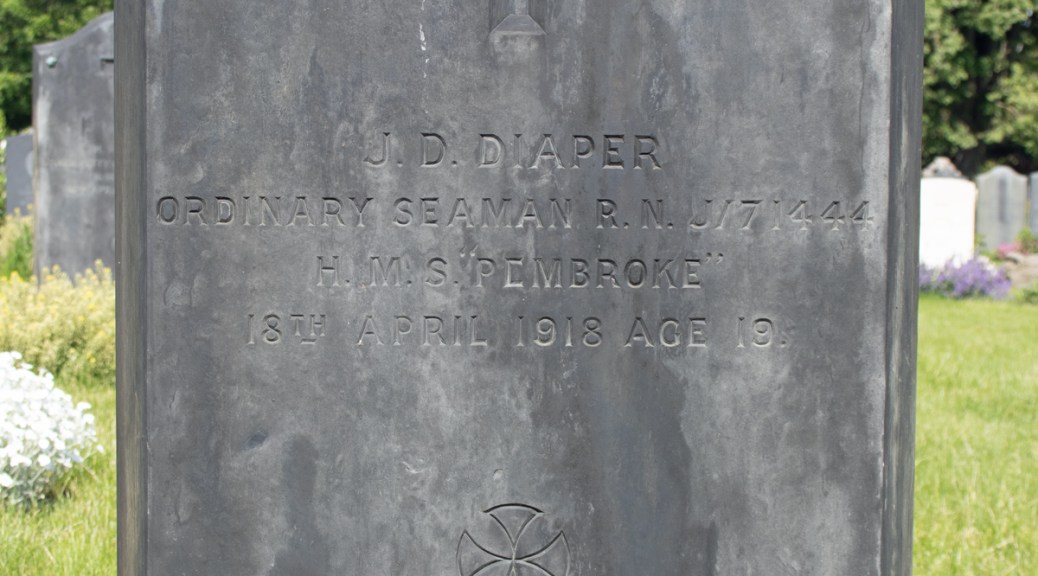
John Dolby Diaper was born in Stowupland, Suffolk, on 1st June 1898. He was the second youngest of ten children to George and Martha, and the older of two sons. George was a cattleman turned gardener, and it seems that John went into farm work when he completed his schooling.
When war broke out, John was called upon to play his part. He enlisted in the Royal Navy on 6th June 1917, joining as an Ordinary Seaman. His service records show that he was 5ft 4.5ins (1.63m) tall, with brown hair, grey eyes and a fair complexion.
Ordinary Seaman Diaper was sent to HMS Pembroke, the Royal Naval Dockyard in Chatham, Kent, for his training. The summer of 1917 was a particularly busy for the base, and temporary accommodation was set up in the Drill Hall; this is where John was billeted.
On the night of 3rd September 1917, Chatham suddenly found itself in the firing line as a wave of German aircraft bombed the town. The Drill Hall received a direct hit, and Ordinary Seaman Diaper was badly injured. He was admitted to the Royal Naval Hospital in the town, and would remain there for some time.
John’s injuries were severe and, although his treatment was ongoing, the impact on his overall health was detrimental. Ultimately, the air raid weakened his system, and his heart gave out. He died on 18th April 1918, more than seven months after the bombing: he was 19 years of age.
John Dolby Diaper was laid to rest in Woodlands Cemetery, Gillingham, alongside those who had given their lives on 3rd September.
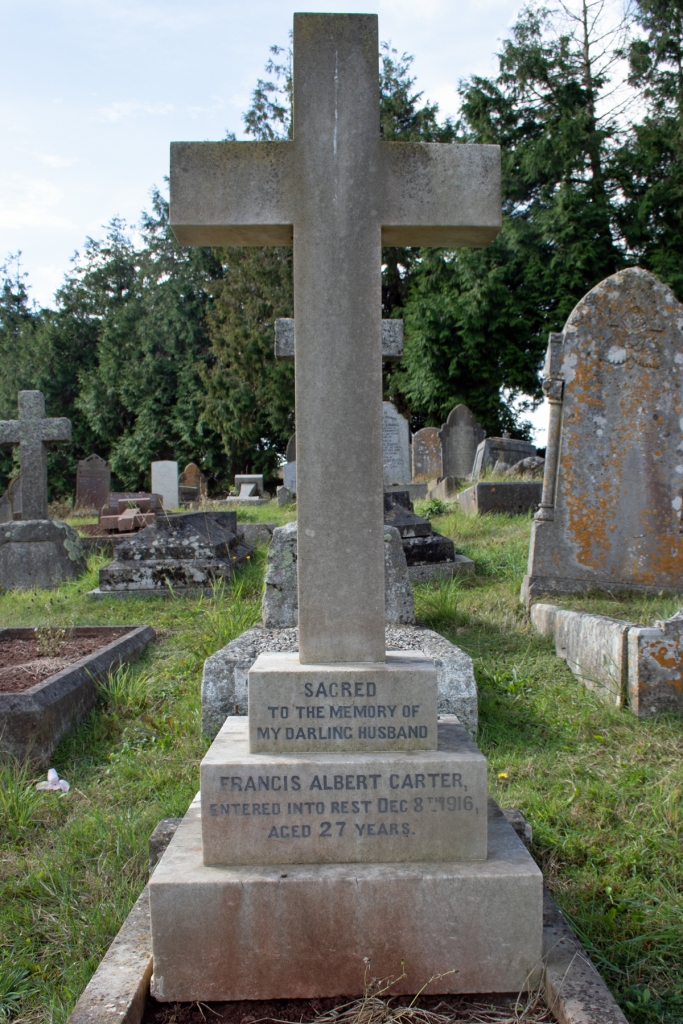
An inquest was held at Plymouth on Monday on Francis Albert Carter, 27, [Royal Garrison Artillery], late of 45 Lang-road, Paignton, auctioneer and valuer. Deceased was visiting his wife, who was staying with friends at St Hilary-terrace, St Jude’s, Plymouth, on the 8th inst., and died suddenly. Dr Ward said death was due to valvular disease of the heart. Deceased had only been in the artillery about three weeks. Deceased… was formerly in business with his brother as a house and estate agent…
[Western Times: Friday 15th December 1916]
Tracing the details of Francis Albert Carter’s life is a bit of a challenge, although the 1911 census records him living at 11 Shirburn Terrace, Torquay, Devon. At 21 years of age, he is noted as having been born in Lezayre, on the Isle of Man. He was living with his mother – the widow Sarah Carter, who was living on independent means – and his brother, 14-year-old Louis, who had been born in Halifax, Yorkshire. Francis was employed as a house agent, while Louis seems to have been his apprentice.
The previous census had recorded the family of three living in Torquay, and confirms that Sarah had been widowed by the time her youngest was four years old.
There is no information about Francis’ marriage, nor any indications as to who his wife might have been.
With regard to his time in the army, it is clear that he enlisted in the Royal Garrison Artillery as a Gunner in November 1916, and was on a break from his training when he visited his wife and her friends on the day he died.
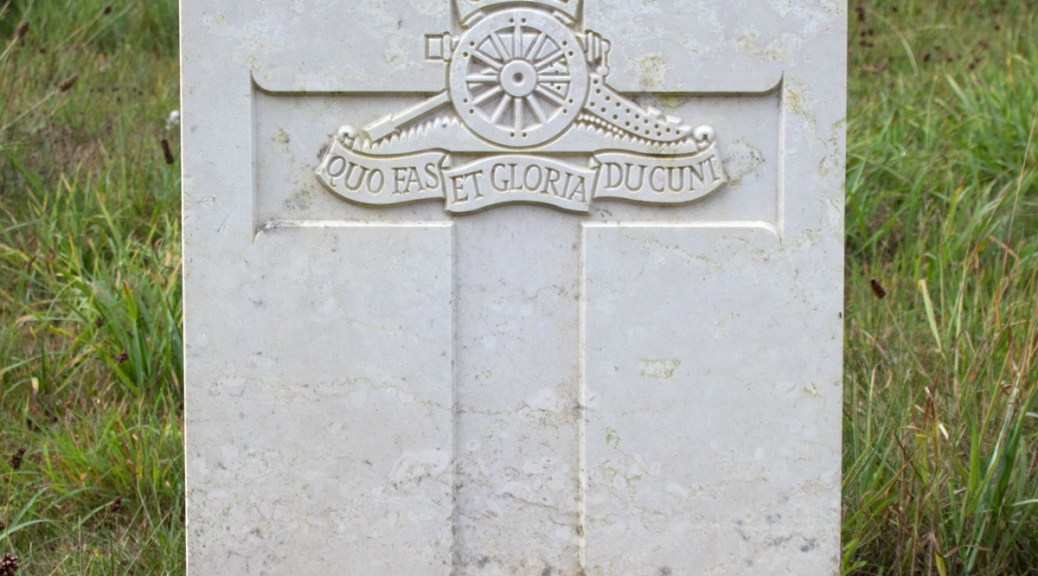
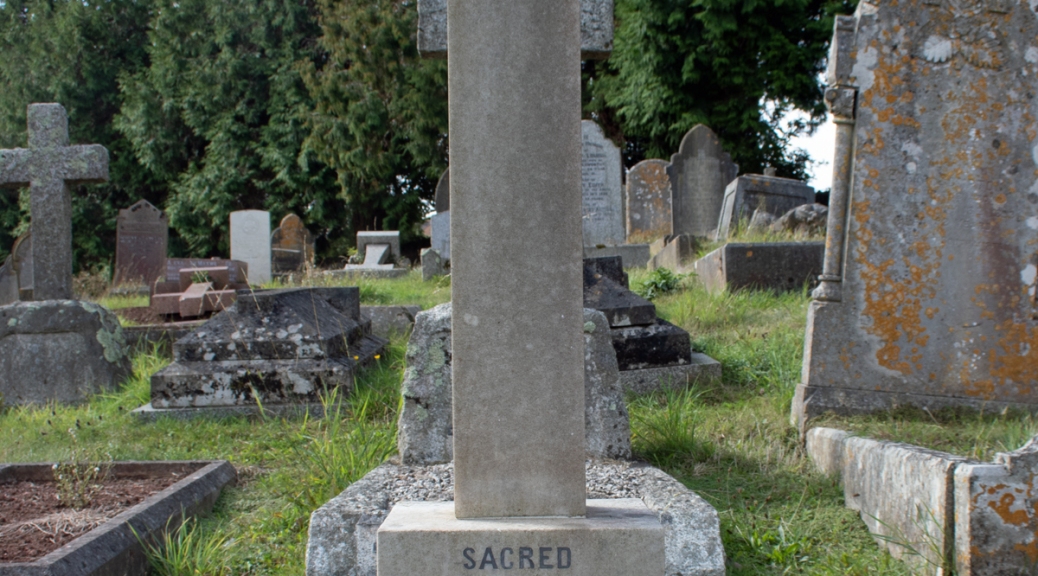
There is little more detail available for Francis Albert Carter. He was laid to rest in Paignton’s sweeping cemetery, not far from where his mother and brother were still living.











 Death and Service