Tag Archives: illness

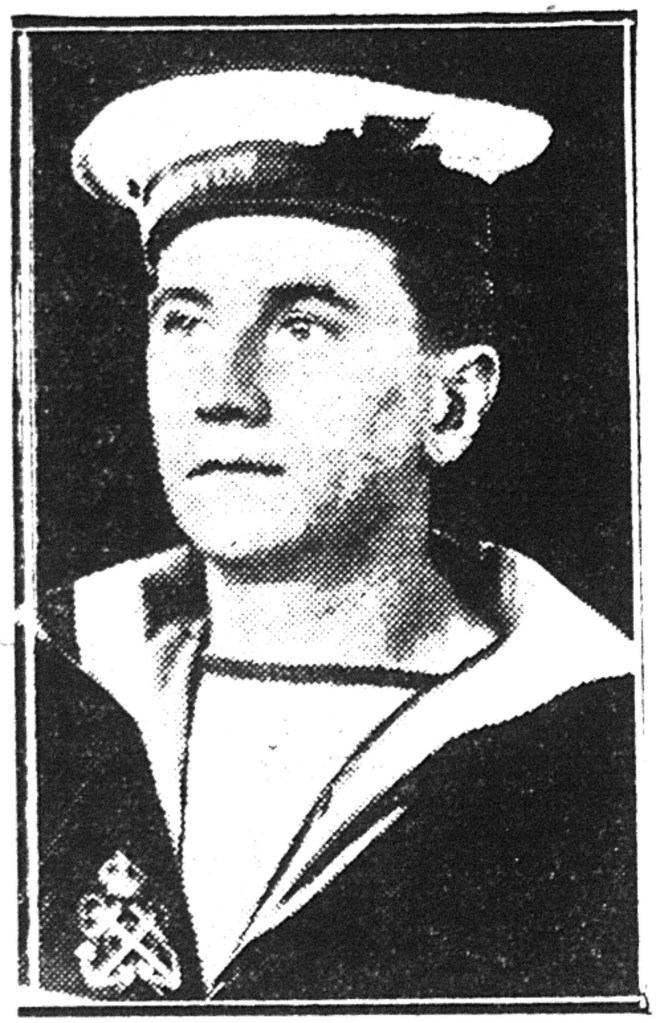
Able Seaman Michael Goulding

Able Seaman Michael Goulding

Michael Joseph O’Neill Goulding was born on 5th May 1884, the oldest of six children to Michael and Ellen Goulding (née O’Neill). Michael Sr worked for the inland revenue and his job took him around most parts of the British Isles.

Michael Jr had been born in Limerick – both of his parents came from Ireland – but his subsequent three siblings (Patrick, Margaret and William) had all been born in Scotland. His second youngest sibling, Lily, was born in County Durham, the youngest back in Scotland, while, by the time of the 1901 census, the whole family were living in Forest Gate, East London.

The census also shows that Michael Jr, having left school, was working at Customs House (presumably where his father was employed), as a boy copyist on tea accounts. The inland revenue at that time was a career for life; by the next census in 1911, the family had moved to Hertford, where Michael Sr was a customs and excise supervisor, and Michael Jr was an assistant clerk at the same place of employment.

War was on its way, but Michael seems not to have enlisted immediately. While specific dates for his joining up are not available, it appears that he was still working for the Inland Revenue when he got married in Shoreditch, in April 1917. His wife was called Bridget Mary Gough (known as Bryde), and she had also been born in Ireland. The couple went on to have a daughter, Ellen (or Eileen), the following year.

By this time, Michael had definitely enlisted. He joined the Royal Naval Volunteer Reserve, and was based at HMS Pembroke, the shore-based establishment in Chatham, Kent. This was the location for the Navy’s main accounting base, so it is likely that he was employed for financial, rather than his military, skills.

Able Seaman Goulding served through to the end of the war and beyond, and it was while he was based in Kent that he became unwell. Admitted to the Royal Naval Hospital in Chatham, he succumbed to a combination of bronchitis and pneumonia on 22nd February 1919. He was 34 years of age.

Michael Joseph O’Neill Goulding was laid to rest in the Woodlands Cemetery in nearby Gillingham. His family were still in Hertford, while his widow and daughter moved back to Ireland.


Michael Joseph O’Neill Goulding
(courtesy of ancestry.co.uk)

Stoker 1st Class Cornelius O’Brien

Stoker Cornelius O’Brien

Documentation on the early life of Cornelius Edward O’Brien is pretty scarce, so it is impossible to build a picture of him before the First World War. He was born in the late 1890s in Whitechapel, East London and was working as a carman when he received his enlistment papers.

Cornelius joined the Royal Navy as a stoker on 27th November 1915 and was sent to HMS Vivid II, the shore-based establishment in Devonport that served as the Stokers and Engine Room Artificers School. He trained there for a couple of months before being assigned to HMS Drake, where he spent most of 1916.

Returning to Devonport, Stoker O’Brien spent a further year on board HMS Vivid II, gaining the rank of Stoker 1st Class. By the end of 1917, however, he was back at sea, having been sent to HMS Vixen, a naval destroyer that served in the Thames Estuary, performing anti-submarine patrols and counter mining operations there.

In mid-November 1918, with the war officially over, Cornelius was admitted to the Royal Naval Hospital in Chatham, suffering from influenza, pneumonia and pleurisy. Sadly these were to prove too much of a challenge for him and he passed away on 21st November 1918.

Cornelius Edward O’Brien was laid to rest in the Woodlands Cemetery in Gillingham, not far from the Naval Dockyard in Chatham.


Able Seaman George Davies

Able Seaman George Davies

George Herbert Davies was born in Rosses Point, County Sligo, Ireland on 28th September 1872. One of eight children, his parents were naval man Robert Davies and his wife Catharine.

George was obviously drawn to the sea, and enlisted in the Royal Navy in February 1888. Too young to be an active member of the crew, he was initially given the rank of Boy, before rising to Ordinary Seaman when he came of age in September 1890.

Over the duration of his initial twelve years’ service, George was assigned to a total of eight ships, with time between each spent at the shore-based establishment HMS Pembroke in Chatham, Kent. He rose to the rank of Able Seaman and, in February 1903, volunteered to continue his time in the Royal Navy.

At the start of 1914, having served for a further ten years, Able Seaman Davies was stood down to the Royal Fleet Reserve. He did not remain on reserve status for long, however, as, in August 1914, he was called again into active service as war was declared.

While primarily based on HMS Pembroke this time, George did service two tours on sea-going vessels: he spent two years on board HMS President from October 1914, and then six months on the General Greenford. By January 1917, however, he was back at HMS Pembroke.

Within a couple of months, Able Seaman Davies had been admitted to the Royal Naval Hospital in Chatham, suffering from pancreatitis. Sadly, this haemorrhaged, and he passed away on 27th March 1917; he was 44 years old.

George Herbert Davies was laid to rest in the Woodlands Cemetery in Gillingham; walking distance from the Naval Dockyard that had been his base for so long.


Petty Officer James Green

Petty Officer James Green

James Henry Green was born in Brixham, Devon, on 13th April 1868, the only child to Isaac and Sarah Green. Isaac was the son of a miller from Essex, who found work as a miner in the south west; he sadly died in 1871, when James was just a toddler.

Sarah had been married before she met Isaac; she had had two children, both daughters, with her first husband, William Tozer, so James had two half-sisters. William had died in 1865, and Sarah had gone on to marry James’ father later that year.

The 1881 census found Sarah and the children living in a cottage in the middle of Brixham; she was listed (somewhat uncharitably by current standards) as a mangle woman. She had taken in a couple of lodgers and James – then aged 13 – was listed as a scholar.

James was evidently keen to make a place for himself in the world. In 1885 he enlisted in the Royal Navy, working as a Boy on a number of ships until, on his 18th birthday, he was given the rank of Ordinary Seaman. His naval records show that he had a dark complexion, brown eyes and brown hair and stood as just 5ft 1in (1.55m) tall.

During his initial ten years’ service, James served on nine ships as well as shore-based establishments, working his way up to the rank of Able Seaman. One the initial period of enlistment was up, he extended his time in the navy voluntarily, eventually serving on a further five vessels and reaching the rank of Able Seaman before transferring to the Coastguard in South Shields. James was stood down form active naval duties in January 1908 and transferred to the Royal Naval Reserve, based in Chatham, Kent.

It was while he was in County Durham that he met Edith Hansford (or Handforth), a horse keeper’s daughter from Whitburn. The couple married in the spring of 1901, and settled down in Sculcoates, to the north of Hull.

When war was declared, those in the Royal Naval Reserve were called into immediate action, and James was no exception. Given the rank of Petty Officer, he was initially assigned to HMS Pembroke, the shore establishment in Chatham, before a brief tour on HMS Columbine, and a longer term on the gunboat HMS Britomart.

In July 1916, Petty Officer Green returned to HMS Pembroke; he remained based there for six months, before being admitted to hospital, suffering from phlebitis (an inflammation of the veins in the legs). Sadly, the condition got the better of him; he passed away in the Royal Naval Hospital in Chatham on 19th February 1917, at the age of 48.

James Henry Green was laid to rest in the Woodlands Cemetery in his adopted home town of Gillingham, Kent.


Officers’ Cook Carmelo Ellul

Officer’s Cook Carmelo Ellul

Carmelo Ellul was born in Valetta, Malta, on 26th May 1889. There is little information about his early life, other than the fact that he worked as a baker.

He came to England at some point in the early 1900s, and was living in Portsmouth. It was here that he met Selina Southcott, who had been born on the Isle of Wight, and the couple married in 1904. The couple would go on to have three children, all boys: Maurice, who was born in 1911; Alva, who was born in 1912, but who died as a toddler; and Edwin, who was born in 1916.

Carmelo seemed to want a life of adventure: in the summer of 1912, he enlisted in the Royal Navy. Over the next eight years, Officer’s Cook Ellul served on a number of naval vessels, including HMS Bacchante, which toured the North Sea, and was involved in the Battle of Heligoland in August 1914.

Carmelo’s naval life continued after the war ended, although he seems to have been more shore-based than before. He was serving on HMS Waterhen on 24th January 1920, when he collapsed with an epileptic fit, and died of heart failure. He was just 32 years old.

Carmelo Ellul was laid to rest in the Woodlands Cemetery in Gillingham, Kent, presumably as his ship was moored in the nearby Naval Dockyard in Chatham.


Private Daniel Norman

Private Daniel Norman

Daniel Britton Norman was born in Yeovil, Somerset, in early 1891, the youngest of four children. Joseph and Eliza Norman, Daniel’s parents, ran the Blue Ball Inn in the town centre, something Eliza took over when her husband died.

There is little information on Joseph’s passing, but a report in the local newspaper may allude to what led to his death:

On Friday [16th January 1891], Mr J Norman, of the Blue Ball Inn, was riding in a waggon through the Borough when he was jerked off onto the road. One of the wheels passed over his right leg, breaking a vein.

Western Chronicle: Friday 23rd January 1891

By the time of the 1911 census, Eliza too had given up the reins of the Blue Ball Inn. At the age of 59, she was living with her two sons in a house on the outskirts of the town; Daniel was listed as a motor mechanic, while his older brother Rowland was a cabinet maker.

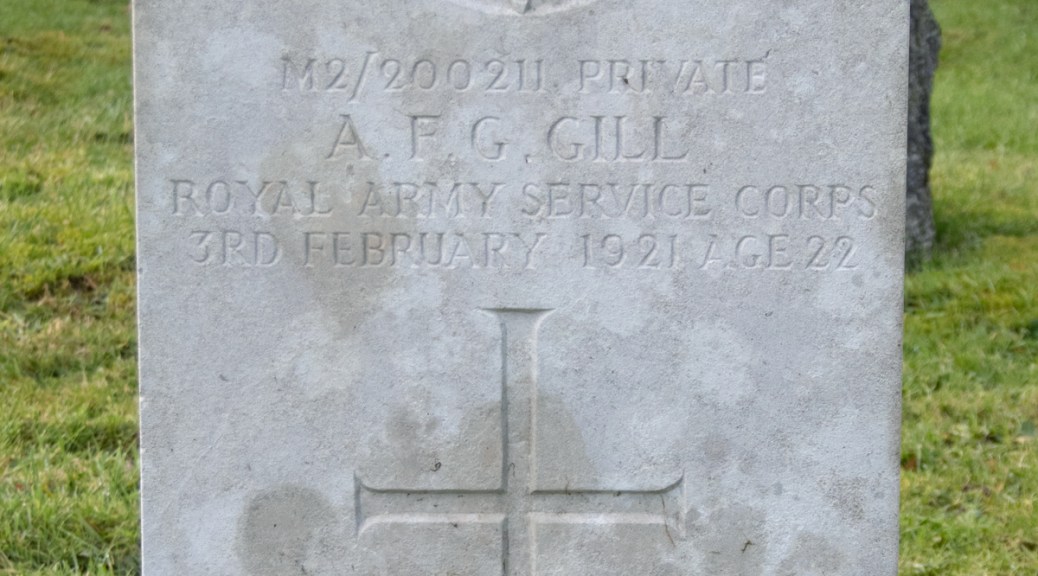
War broke out and Daniel enlisted in April 1916. He joined the Royal Army Service Corps and was assigned to the Motor Transport Division. Based in London, Private Norman had received three weeks’ training, when he was taken ill.

Admitted to the Royal Herbert Hospital in Woolwich with cerebro-spinal meningitis, Private Norman quickly went downhill. He died in the hospital on 26th May 1916, aged just 26 years old.

Brought back to Yeovil, Daniel Britton Norman was buried in Yeovil Cemetery, alongside his father.


Private Edgar Rattle

Private Edgar Rattle

Edgar Albert Rattle was born in Yeovil, Somerset, in 1895, the youngest of three children to Alfred and Charlotte Rattle. Alfred was a railway porter from Yatton, who raised his family in a cottage near the centre of the town.

When he left school, Edgar found employment as an accounts clerk; by the time of the 1911 census, Alfred has moved from being a porter to collecting passengers’ tickets; the family lived in a terraced house next to the station where he worked.

War was on the horizon by now and, although Edgar’s full service records are no longer available, the documents that do remain give an indication as to his time in the army.

Private Rattle enlisted in the early stages of the war; he joined the Somerset Light Infantry in October 1914, although it is not clear which battalion he was assigned to. Later in the conflict, he had been attached to the Labour Corps, and spent some time working on a farm in Ilchester.

It was while in Ilchester in October 1918, that Edgar had some leave, and travelled to Dorset. He was taken down with pneumonia and admitted to the Bournemouth Military Hospital, but subsequently died, breathing his last on 24th October 1918. He was just 23 years of age.

Edgar Albert Rattle’s body was brought back to Yeovil for burial. He lies at rest in the town’s cemetery.


Private Clarence Tucker

Private Clarence Tucker

Clarence Endicott Tucker was born in the summer of 1895 and was the oldest of eight children (six of whom survived) to Samuel and Emma Tucker. Samuel was a sign writer from Axminster in Devon, although he had lived in Nottingham in the early 1890s, where he had met and married Emma, and this was where Clarence was subsequently born.

Within a couple of years, the family had moved to Yeovil, Somerset, where Clarence’s siblings were born and the family were raised. The 1911 census recorded the family as living in a house in the centre of town, the household comprising of Samuel, Emma, their six children and Samuel’s sister. Clarence, having left school, was working as a junior clerk for a cheese and butter merchant.

When war broke out, it was clear that Clarence was keen to play his part. He enlisted in September 1914 and joined the Somerset Light Infantry as a Private. It must has seemed an overwhelming experience as, within a month he was on board a ship headed for India.

Private Tucker spent more than two years serving with the 5th Battalion, before contracting tuberculosis. After six weeks in hospital, he was evacuated to Egypt and then back to England again. He was admitted to the Southern General Hospital in Bristol, where an assessment identified that he was no longer medically fit enough to serve in the army. He was discharged on 2nd April 1917, having served for three and a half years.

At this point Clarence’s trail goes cold. He died on 18th February 1918, at the age of 22 years old. There is no confirmation of the cause of his death, although it seems likely to have been related to the problems he had with his lungs.

Clarence Endicott Tucker lies at rest in the cemetery in the Somerset town he called home, Yeovil.


Private Cecil Sims

Private Cecil Sims

Cecil Frank Sims was born in the village of Manston, Dorset, towards the end of 1897. The youngest of six children, his parents were Henry and Ann Sims. Henry was a dairyman and, after his death in 1909, his wife continued in this line of the work.

Cecil was just 16 years old when war was declared, but he was keen to do his bit for King and Country as soon as he could. In May 1917, he joined the 2nd Battalion of the Royal Marine Light Infantry in Portsmouth.

Sadly, information on Private Sims dries up at this point. His service records no longer exist, and the only document that remains is his pension record. This confirms that he died on 11th February 1919 from ‘disease’, but there is no further information to be had. He was just 21 years of age.

Cecil Frank Sims was laid to rest in Yeovil Cemetery.


There is one other element that adds to Cecil’s family story. When researching the local newspapers for any reports on his funeral, an advert was posted just a few days before he passed:

Farmer’s son wanted: Willing to help on farm. Lodgings found close. Good place for willing chap, age 16 or 17 years preferred. SIMS, Poplars Farm, Yeovil Marsh.

Western Gazette: Friday 7th February 1919

It would seem that, if he was at home, Cecil’s health was weakening, and so extra support to manage the farm was being sought.


Sergeant Herbert Rendell

Sergeant Herbert Rendell

Herbert George Rendell was born in the summer of 1886, the oldest of six children to George and Catherine Rendell. George was a twine maker from West Coker, near Yeovil in Somerset, and it was in this village that he and Catherine raised their young family.

While he initially found work as a labourer when he left school, the lure of a better life and career proved too much for Herbert and, in June 1905, he enlisted in the Royal Engineers as a Sapper. He spent three years spent on home soil, working hard and earning a Good Conduct medal for his service. During his tour of duty, he contracted pneumonia, spending five weeks in hospital in Chatham, Kent, over Christmas 1905, but fully recovering.

In September 1908, Herbert was sent to Singapore for a three-year tour of duty with the 21st Company. His body was not accustomed to the different environment, and he was hospitalised three times for malaria and myalgia, as well as two bouts of gonorrhoea in 1908 and 1910.

In December 1911, Sapper Rendell returned home, where he served for a further three years before war broke out in the summer of 1914. Having been promoted to Lance Corporal, and after a short bout in hospital following a reaction to his cowpox vaccination, he was sent to Egypt.

Assigned to the 359th Water Company, he would have been charged with constructing and maintaining the supply pipes to and from the Front Line and for his work was soon promoted to Corporal.

In the spring of 1918, the now Sergeant Rendell was transferred to the 357th Water Company, and found himself in Palestine, where he stayed until the end of the war. He came home on leave in April 1919, and it was here that, once again, he contracted pneumonia.

Sadly, Sergeant Rendell was not to recover from the lung condition for a second time; he passed away at his parents’ home on 9th April 1919, at the age of 32 years old.

Herbert George Rendell was laid to rest in Yeovil Cemetery, not far from the village where he was born.