Tag Archives: India

Captain Guye Lushington

Captain Guye Lushington

Guye Wellesley Lushington was born in India on 6th November 1880. The oldest of four children, his parents were James and Bessie Lushington. James was a worked in the Bombay Uncovenanted Civil Service and, while it’s not possible to track his location through census records, by the time of the 1891 census, Bessie had returned to Britain with the children. The document found them living at 31 Clarendon Street in Bedford, Bedfordshire.

Guye’s background stood him in good stead when it came to building a career. His chosen profession was the army and, by January 1898 he had landed a commission in the Royal Marine Artillery. Lieutenant Lushington continued to do well and, on 13th March 1908, he received a promotion to Captain.

Full details of Guye’s military service have been lost to time, but by the time war broke out, he was attached to the dreadnought battleship HMS Bellerophon. The stress of the Great War was to take its toll, however, and he was diagnosed with neurasthenia. In 1916, he was admitted to the King Edward Convalescent Home at Osborne House, on the Isle of Wight. Captain Lushington’s condition, however, was to worsen.

The Isle of Wight Coroner yesterday held an inquest respecting the death of Captain George [sic] Wellesley Lushington, 35, of the Royal Marine Artillery, sone of Mr James Law Lushington, of Briar Bank, Grove-road, Worthing [West Sussex], who was found dead… on Tuesday, having apparently thrown himself over an iron staircase fire escape into the courtyard.

Colonel Douglas Wardrop, house governor and medical superintendent, said the deceased arrived at Osborne House from Haslar on the 5th inst… He was rather depressed and worried about his loss of will power. He had been four years on the “Bellerophon” and on active service with the Grand Fleet. There was nothing in the deceased’s manner to suggest suicide. He slept on the top floor of the south wing. At two o’clock on Tuesday morning, the night nurse reported that the deceased had not slept in his room. Search was made, and the deceased was found lying in the courtyard between the kitchen and the south wing. He must have jumped from the fire escape – which was an iron staircase with platforms outside each landing – onto the flag stones below, a distance of 45 feet. His skull was smashed to pieces. There was a railing 3 feet 6 inches high round the staircase, and deceased could not have accidentally fallen over.

Two letters were found in deceased’s room, one addressed to his father and the other to his sister. His father identified the writing. The letter to the deceased’s father was as follows:

“Osborne House, Sunday.

“My dear pater, Since I broke down a month ago, I feel I shall never pick up again. I am afraid this will rather surprise you, but I cannot stand the tension any longer. I am always wondering what is going to happen to me. Give my love to Daisy. If one has to die, it is better quickly than slowly. With lots of love – GUYE”

Nursing sister Arkins, who had charge of the deceased, said he was quiet, bur showed no suicidal tendency.

Lieutenant George Stewart Manisty, of the Indian Army Reserve, attached to the 7th Bengal Lancers, said he played bridge with the deceased up till 10:30 on Monday night, and for three nights running. Deceased seemed quite friendly and in good spirits.

A verdict of “Suicide while of unsound mind” was returned.

The Coroner said that was the third suicide within a week on the Isle of Wight, either directly or indirectly due to the war.

[Sussex Daily News: Thursday 11th May 1916]

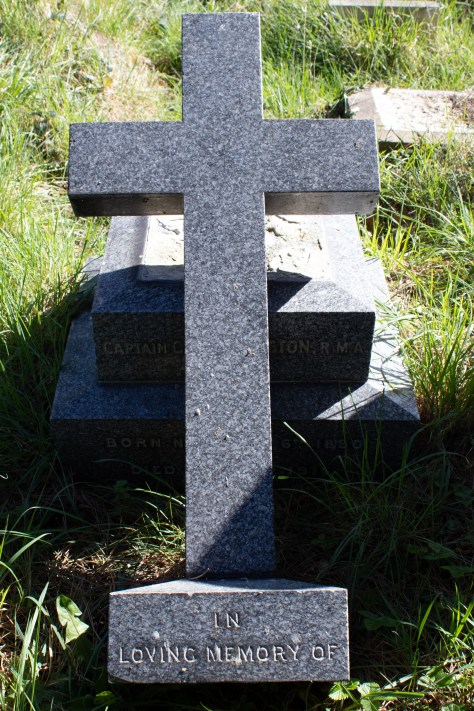
Captain Lushington’s full state of mind on the night he took his life will never be know. The family had suffered three early deaths in a matter of years: Guye’s oldest sister, Violet, had died in 1899, at the age of 18; his brother Hubert had died in 1905 at the age of 19; his mother Bessie passed away in 1911 at the age of 58. Guye had taken his life on 8th May 1916, aged 35 years old.

The body of Guy Wellesley Lushington was taken to Worthing, West Sussex, for burial. He was laid to rest in the town’s Broadwater Cemetery.


Lieutenant Colonel Thomas Bingham Day

Lieutenant Colonel Thomas Bingham-Day

Thomas Hulkes Bingham Day was born on 2nd January 1855 in Frindsbury, Kent. The youngest of four children, his parents were Thomas and Emma Day. Thomas Sr was a banker and a justice of the peace. He died when his youngest was just a child, and Emma was left to raise the family, albeit with the help of five servants.

Thomas sought out a life in the military. After volunteering in the local militia, for a number of years, he gained a commission in the Dorsetshire Regiment. He took on the role of Lieutenant on 29th November 1876.

Over the next two decades, Thomas served around the world, spending time in Malta, Gibraltar, and the East Indies. He was also promoted through the ranks, rising to Captain in 1883 and Major in 1893.

On 25th March 1884, while serving in India, Thomas married Katharine Watts. The couple had a daughter, Winifred, who was born in July 1885, and, eventually they settled in Wiltshire as their base in Britain.

Major Bingham Day served in South Africa during the Boer War, taking part “in the operations at Parde Kraal, and in the operations at Poplar Grove… Vet River, Zand River, Johannesberg and Pretoria. He had the Queen’s and the King’s medals with five bars.” [Lincoln Leader and County Advertiser – Saturday 28 April 1917]

Thomas retired in 1903, and his trail goes cold until the time of the 1911 census. He and Katherine were on holiday when it was taken, and they were listed as boarding at the Beach Lodge on Roseville Street in St Helier, Jersey.

When war broke out, Thomas stepped up to play his part once more. He was put in charge of the 4th (Reserve) Battalion of the Devonshire Regiment, which was based at Sutton Veny in Wiltshire. It seems that he lived off site, as he and Katherine moved into a house in nearby Warminster.

A military funeral took place… on Monday, when Lieutenant-Colonel TH Bingham-Day, in command of a regiment at Sutton Veny, was laid to rest in the churchyard. The deceased officer died suddenly while at mess, as the result of a seizure.

[Devizes and Wilts Advertiser: Thursday 19th April 1917]

Lieutenant Colonel Thomas Hulkes Bingham Day was 62 years of age when he passed away on 11th April 1917. He was laid to rest in the graveyard of St Aldhelm’s Church in Bishopstrow, Wiltshire, not far from the base at which he had so dutifully served.


Private Joseph Walls

Private Joseph Walls

Joseph Walls was born in Tortington, near Arundel, in West Sussex, on 13th November 1880. The youngest of four children, his parents were gamekeeper James Walls and his wife Annie. James moved the family to where his work took him and, by the time of the 1891 census, they had settled in the New Forest village of Sway, Hampshire.

When Joseph finished his schooling, he found work as a horseman and groom. The 1901 census found him living with his parents and older sister in a house in Brockenhurst. He seems to have taken his work seriously, and soon found himself a position as a chauffeur. The next census, taken in 1911, recorded him as working for Ann Libbey and her family in the village of Boldre.

On 18th February 1914, Joseph married Edith Perry. A carpenter’s daughter, she was working as a domestic servant when the couple exchanged vows. Their wedding certificate confirms that Joseph was ten years his new wife’s senior, and that they ceremony was witnessed by his older brother Frederick and her younger sister, Esther.

Joseph and Edith would go on to have two children: Vera was born in 1915, while Daphne came along three years later. During this time, however, war was raging across Europe, and Joseph had stepped up to play his part.

Private Walls enlisted within weeks of war being declared, on 10th December 1914. His service papers show that he was living at Hospital Cottage in Lyndhurst when he joined up. He was 5ft 8ins (1.72m) tall, with black hair, grey eyes and a dark complexion. He was also noted as being asthmatic since he was a child.

Assigned to the 1st/4th Battalion of the Hampshire Regiment, over the next few years, Private Wallis would see the world. Within days of enlisting, he was shipped out to India, where he would spend nearly three years (apart from the in the summer of 1917, when he served as part of the Mediterranean Expeditionary Force). During this time, Joseph was promoted to Lance Corporal, although by the time he left the army, he had returned to the tank of Private.

By the beginning of September 1917, Joseph was back on home soil. A spell of malaria that spring had impacted his asthma, and at the end of November, he was deemed no longer fit for war service. Private Walls was medically discharged from the army on 29th November 1917.

At this point, Joseph’s trail goes cold. He definitely returned home – Daphne was born just a few days after the Armistice – but it is unclear whether he was it enough to work.

Joseph Walls died on 14th February 1919: he was 38 years of age. He was laid to rest in Lyndhurst Cemetery, not far from where Edith and their children lived.


Private Joseph Walls
(from ancestry.co.uk)

Corporal George Collins

Corporal George Collins

The funeral of Corporal GH Collins, of the Royal Engineers, who died at Devonport at the age of 46, took place at Tiverton, where his mother and stepfather and sister reside. Corporal Collins’s wife and two children are at present in India. He had been in the army since 1899, and served in the South African War, for which he received the Queen’s and King’s medals with four clasps. He went to India in 1902, where he remained until the outbreak of the present war, when he came to France with his regiment. Corporal Collins was wounded, losing two fingers. He afterwards contracted fever, from which he died. The funeral was accorded military honours.

[Exeter and Plymouth Gazette – Monday 29 October 1917]

George Henry Collins was born in West Anstey, Devon, and was the son of George and Harriett Collins. There is little additional information about his early life available, and his was not an uncommon name in the area at the time.

George married Stella Euphrasia Constance O’Leary on 11th October 1911. At the time he was stationed in Myanmar, and the couple exchanged vows in the town of Maymyo, to the west of Mandalay. They would go on to have two children: Mary was born in August 1912, with Gertrude arriving the following November.

When the First World War broke out, it seems that Corporal Collins initially joined the Devonshire Regiment, but soon transferred to the Royal Engineers. Documentation suggests that he was assigned to the Special Brigade Depot at Saltash, Cornwall. However, this may have been the unit he was nominally allocated to when arrived in Britain for treatment to his injuries.

Frustratingly, there is little additional information available about George’s life. He died on 21st October 1917 was laid to rest in Tiverton Cemetery.


Bombardier Frank Sloman

Bombardier Frank Sloman

Frank Sloman was born in the autumn of 1887, and was the youngest of five children to Frank and Emma. Frank Sr was a mason from Jersey, in the Channel Islands, but it was in Tiverton, Devon, that he and Emma made their home and raised their family. The 1891 census found the family living on Castle Street, but by 1901 they had moved down the road to St Peter’s Street.

Frank Jr found work as a painter when he finished his schooling, but he sought adventure and a career. He was already a volunteer for the Devonshire Regiment, and, on 7th May 1904, he officially enlisted as a paid member of the troop. Private Sloman’s records show that he was 5th 10.5ins (1.79m) tall, and weighed 129lbs (58.5kg). He was noted as having brown hair, grey eyes and a fresh complexion.

Private Sloman spent two years on home soil. He quickly extended his contract, and this led to more opportunities. By December 1906 his unit was in India, and he would go on to spend five and a half years there.

In December 1907, Frank transferred to the Royal Garrison Artillery. He initially held the rank of Gunner, before being promoted to Bombardier in January 1912, and Corporal just three months later. In October, Frank returned to Britain, and was stood down to reserve status. He returned to Tiverton, and found work as a porter at the local station.

War was on the horizon, however, and when conflict broke out, Frank was called upon to play his part once more. Initially taking up the rank of Corporal in the Royal Field Artillery, he reverted to the role of Gunner at his own request. By this point, his unit was in France, and he would remain there for the next eight months.

On 6th May 1915, Frank returned to Britain, and was attached to 2B Reserve Brigade. He was based at the training facility in Bettisfield Park in Clwyd, and would spend the next eighteen months there. In June 1916, he was once again promoted to the rank of Bombardier.

Love was on the cards, and, on 17th June 1916, Frank married Frances Hadlow. There is little information available for her, but the couple exchanged vows at the Register Office in Windsor, Berkshire.

By the autumn of 1916, Frank’s health was becoming an issue. He contracted phthisis, or tuberculosis, and was sent to the the south coast for recuperation. His condition would ultimately render him unfit for continued military service, and Bombardier Sloman was discharged from the army on 17th December 1916.

His papers show that he had grown to 6ft 2.5ins (1.89m) in height, and, while physically unfit, he was a steady, sober and reliable man. He and Frances had taken rooms at 7 Hawley Street, Margate, Kent, but it seems that the couple soon moved back to Devon. Their new home was a small cottage at 3 Westbrook Place in Tiverton.

At this point, Frank’s trail goes cold. It is unclear whether he took up work again – or was able to do so – but his lung condition was ultimately to get the better of him. He passed away on 3rd June 1918, at the age of 30 years old.

Frank Sloman was laid to rest in Tiverton Cemetery, on the outskirts of the town in which he had grown up.


Acting Bombardier Frederick Lavers

Acting Bombardier Frederick Lavers

Frederick William Lavers was born in Paignton, Devon, on 5th November 1889. The middle of five children, and the only son, his parents were John and Jane Lavers. John was a carman, and the family had rooms in a house on Winner Street in the town.

When Frederick finished his schooling, he found work as a butcher’s boy. This wasn’t the career for him, however, and, on 16th January 1905, he signed up to join the Royal Navy. His service records suggest that he had said he was a year older, and confirm that he was 5ft 3ins (1.6m) tall, with light brown hair, blue eyes and a fresh complexion.

As he was under the age to formally enlist with the Royal Navy, Frederick was given the rank of Boy, and dispatched to HMS Vivid, the dockyard in Devonport, for his training. Something was amiss, however, and, after eighteen months, he was discharged as being unsuitable.

Undeterred, Frederick tried another tack and, on 26th April 1909, he enlisted in the Royal Garrison Artillery. By the time of the 1911 census Gunner Lavers was stationed at West Ridge in Rawalpindi, India. There is little information available about his service, however, and Frederick is only picked up again on 30th December 1918.

At this point, the now Acting Bombardier Lavers was put on a hospital train from Marseilles, as he was suffering from psoriasis. He disembarked three days later in Le Havre, and, is appears, then returned to Britain for treatment. On 24th February 1919 he was medically discharged from army service, and awarded the Silver War Badge.

Frederick’s trail goes cold again after this. He appears to have returned home, and passed away on 20th October 1920. He was 28 years of age.

Frederick William Lavers was laid to rest in Paignton Cemetery, overlooking his home town.


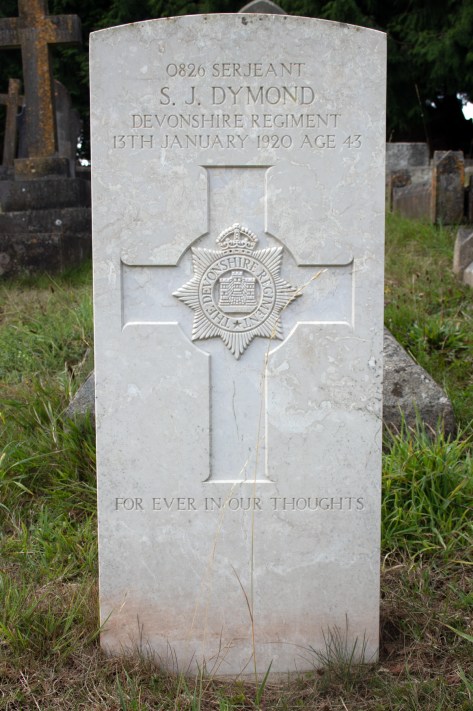
Serjeant Samuel Dymond

Serjeant Samuel Dymond

Samuel John Dymond was born in Broadhempston, Devon, in 1878. The son of Samuel and Jane Dymond, his childhood appears to have been disjointed: the 1881 census found him living with his uncle and aunt, while a decade later he was under his grandmother’s roof.

This background may have driven him to a more stable life and, on 22nd May 1896, he enlisted in the army. Joining the Devonshire Regiment, his service records show that he was 5ft 5.5ins (1.66m) tall and weighed 126lbs (57.2kg). He had fair hair, grey eyes, a fresh complexion and two scars on his right kneecap.

Private Dymond spent the first couple of years on home soil. In February 1898, however, he journeyed overseas, serving in the East Indies and South Africa, for which he was awarded the South Africa Medal, with a clasp for the defence of Ladysmith. By January 1902, Samuel was on the move again, and he spent the next two years in India.

At the beginning of 1904, Samuel returned to Britain. He remained on home soil until his contract came to an end on 21st May 1912.

Away from the army life, love beckoned. Samuel married Alice Reynolds on 9th October 1904 in the parish church at Marldon, Devon. The couple went on to have three children: Dorothy, Annie and Albert.

By the time of the 1911 census, Samuel was working as a labourer, and the family were living at Vine Cottage on Church Street, Paignton, Devon.

When war broke out, Samuel was called into service once more but, frustratingly, it is at this point that his trail goes cold. Returning to the Devonshire Regiment, he was certainly in France by 11th December 1914. Later on in the war he transferred across to the regimental depot, but whether this was on home soil of overseas is unclear.

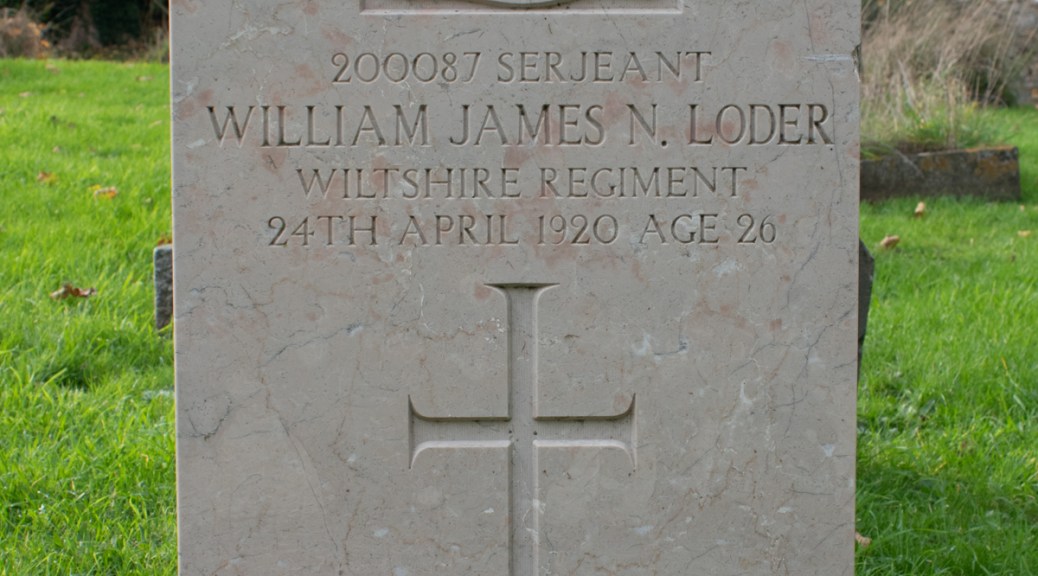
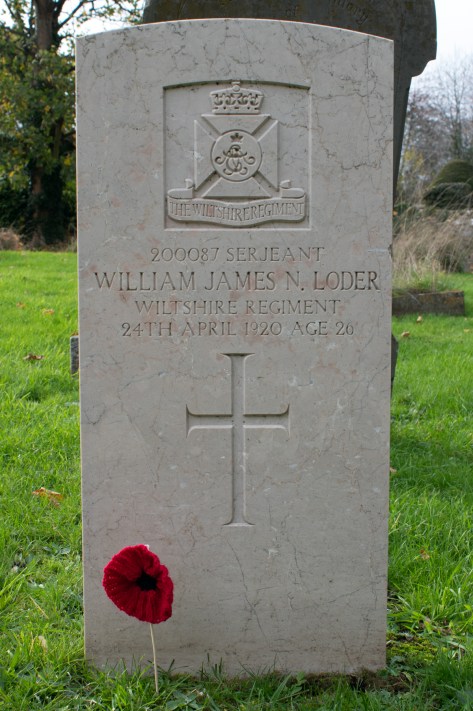
The next record for Samuel is that of his passing. He died in a military hospital in Devonport on 13th January 1920, the British Record of Soldiers’ Effects only at that point confirming that he had reached the rank of Serjeant. He was 42 years of age.

Samuel John Diamond was laid to rest in Paignton Cemetery, overlooking the town that had become his home.


Private Samuel Harris

Private Samuel Harris

Samuel John Harris was born in the spring of 1895, and was the oldest of three children to Samuel and Annie Harris. Samuel Sr was a cabinet maker from South Molton, Devon, and this was the village in which he and Annie raised their family.

The 1901 census found the Harrises taking rooms at 24 North Street, a house they shared with two other families. Move forward, and they were living four doors down the road at No. 28, a smaller cottage, but one they had to themselves.

Samuel Jr, at this point, was sixteen years old, but had completed his schooling and was working as a hotel waiter. His younger brother, Albert, had also started work, and was employed as an apprentice coach builder. Samuel Sr, meanwhile, was continuing with his cabinet making.

When war broke out, Samuel Jr was one of the first to enlist. While full details of his time in the army have been lost, it is clear that he joined the Devonshire Regiment, and he was initially attached to the 1st/6th Battalion.

Pte. SJ Harris proceeded to India and Mesopotamia with the Territorials. The hardships of campaigning and the trying climate in Mesopotamia proved too much for his constitution.

[Western Times: Friday 9th November 1917]

Samuel returned to Britain, and was admitted to the military hospital in Sutton Veny, Wiltshire. He passed away on 29th October 1917, from a combination of tuberculosis and a cyst in his back. He was 22 years of age.

Despite the apparent weakness in his constitution, the Western Times reported on his youth in South Molton:

The young man was very popular among his comrades in arms, and at Sutton Veny a general favourite. Prior to th war he was a familiar figure at football matches, having played for various teams at [South Molton] and in the district.

[Western Times: Friday 9th November 1917]

The body of Samuel John Harris was brought back to Devon for burial. He was laid to rest in the South Molton Cemetery, just a sort walk from his grieving family’s home.


Sergeant Reginald Brown

Sergeant Reginald Brown

Reginald William Brown was born in South Molton, Devon, the summer of 1873. The second of four children – all boys – his parents were William and Mary Brown. William died when Reginald was just a child, and the 1881 census found Mary supporting her children by working as a mangler.

Details of Reginald’s early life are sparse. In the autumn of 1898 he married Elizabeth Mayne and the couple set up home at 13 Cook’s Cross. The couple went on to have six children, and Reginald supported his family with work as a gardener.

Alongside his gardening work, Reginald volunteered for army service. Again, full details are unclear, but he was attached to the Devonshire Regiment from 1908. Initially for a year’s contract, he seemed to renew this on-and-off for the next six years.

When war broke out, Reginald was formally called into service. HIs time in the army resulted in him being given the rank of Sergeant, and by October 1914, his unit – the 4th Battalion – was sent to India.

Reginald spent the next couple of years overseas, before being posted back to Britain in the spring of 1916. That November he spent six weeks admitted to the Manor County of London War Hospital in Epsom, Surrey, suffering from bronchitis. This was the result of malaria, and he would continue to suffer from lung complaints for the next few years.

In September 1917, Elizabeth passed away, and Reginald was left, at a distance at least, to raise his children. By now, his health was being severely impacted, and in April 1919, he was medically discharged from army service.

Reginald returned home, but he would quickly succumb to illness. He passed away at 43 South Street, South Molton, on 22nd April 1919. He was 45 years of age.

Reginald William Brown was laid to rest in South Molton Cemetery. His was a family plot, and he was reunited with his beloved Elizabeth.


Private James Burge

Private James Burge

James Thomas Burge was born in Plymouth, Devon, in the summer of 1887. The oldest of five children, his parents were sawyer James Burge and his wife, Alice. James Sr moved the family to where the work took him: by the time of the 1901 census, the Burges had lived in and around the Plymouth area, including Devonport and Stonehouse. They settled in Ashburton, Devon, and the document found them living on Mill Lane.

When James Jr finished his schooling, he found work as a mill hand. By 1911, he had moved to Buckfastleigh, and was living with the Crook family on Silver Street. Henry Crook was a mason’s labourer, while he and his wife Bessie had three children, Hilda, Ada and Ruby. Living with them when the census was taken, were Bessie’s widowed brother Samuel, his daughter, Bessie, and three boarders, including James.

There are two intriguing things about this census document. The first is that of James’ employment. While he was recorded as being a mill hand, it is evident from his service records that he had enlisted in the 5th (Prince of Wales’) Battalion of the Devonshire Regiment by this point. He had completed training on Salisbury Plain in August 1910, and would undertake further instruction in the summer of 1911, but in between times, he remained on reserve status, and would have needed to earn money.

The second point of interest is that his service records noted that, by the time he was formally mobilised in August 1914, he was married to a woman called Hilda, who lived on Silver Street in Buckfastleigh. While there are no documents available to fully confirm this, it seems likely that this Hilda was Hilda Crook, the daughter of the family James was boarding with in 1911.

Once embodied, Private Burge’s time in the army took him around the world. By October 1914, his unit had been sent to India, and he would remain there for the next eighteen months. After a two-month stint on home soil, he returned to India, before his unit moved to Egypt in March 1917.

On 7th November 1917, while advancing on the enemy forces in Gaza James was struck in his right leg by a fragment of shell. He was wounded near the top of his fibula and, after initially being treated in the field hospital, he was evacuated to Alexandria, Egypt, for treatment. He was operated on, but from that point on had difficulty walking.

Private Burge was transferred to the 4th Reserve Depot, but his injury prevented him from undertaking many of the duties required of him. He was recommended for permanent transfer to England. Ultimately, however, his wound proved too severe, and he was formally discharged from military service on 25th February 1919.

At this point, James’ trail goes cold. He returned to Buckfastleigh, but would not be back on civvy street for long. He passed away on 22nd May 1919, at the age of 31 years old.

James Thomas Burge was laid to rest in the graveyard of Holy Trinity Church, in the Devon town he had made his home.