Tag Archives: Kent

Private Archibald Leal

Private Archibald Leal

Archibald Edmund Leal was born in Tinwood, West Sussex on 13th September 1894. The youngest of six children, his parents were George and Clara Leal. George was a dairyman, and, by the time of the 1901 census, the family had moved to a terraced cottage at 66 Newland Road in Worthing.

Clara died in 1906, and Archibald – who was better known as Archie – and two of his siblings took the opportunity to seek a better life across the Atlantic. In 1910, the three of them – Archie, brother Phillip and sister Winifred – emigrated to Canada, settling in Breakeyville, to the south of Quebec.

Archie found work as a chauffeur, but when war was declared, he was quick to step up and serve his King and Empire. He enlisted on 10th September 1914, joining the Canadian Expeditionary Force as a Private. His service records show that he was 5ft 6in (1.67m) tall, with fair hair, brown eyes and a dark complexion. He was also noted as having “very many [acne] scars over [his] chest and back.”

Assigned to the 15th Battalion of the Canadian Infantry, Private Leal sailed to Britain, arriving at Tidworth Camp in Wiltshire on 12th February 1915. By April he was in France, and, on 28th July he was in a front line trench near the town of Ypres. A shell exploded nearby and, in seeking shelter, he badly twisted his ankle and back. Medically evacuated to Britain, Archie spent a month recuperating at the Royal Herbert Hospital in Woolwich, Kent, before returning to his unit in Wiltshire.

By December 1915, Private Leal was back on the Western Front and remained there for the next five months. In April his unit was on the front line, and he was injured in his right leg when a rifle grenade exploded. Archie was initially treated by a field ambulance, but his injury was such that evacuation to Britain was again necessary. He was admitted to the County of London War Hospital in Epsom, Surrey, but had contracted tetanus by this point. This was to prove fatal, and his body succumbed on 10th May 1916: he was 21 years of age.

The body of Archibald Edmund Leal was taken back to Worthing for burial. He was laid to rest with full military honours in the town’s Broadwater Cemetery. A local newspaper reported that “Private Leal, although not a Canadian, was possessed of true Colonial grit, and had had his full share of active service.” [Sussex Daily News: Wednesday 17th May 1916]


Private Archibald Leal
(from ancestry.co.uk)

Sergeant Charles Chown

Sergeant Charles Chown

Charles Allen Chown was born in the Sussex village of Lyminster, at the start of 1882. The tenth of eleven children, his parents were Samuel and Mary Chown. Samuel was a general labourer, and when he passed away in 1898, Charles and his siblings rallied to support his now widowed mother.

The 1901 census found Mary, Charles and his brother Jesse living at 32 Lennox Road, Worthing, West Sussex. Jesse was employed as a brickmaker, while Charles had found work as a solicitor’s clerk. The family had two boarders, Helen and Rosie Bulbeck, and Charles’ niece, Minnie, was also staying with them.

Away from work, Charles was a music lover, and joined the local operatic society. In 1904 he appeared in a local version of Iolanthe, his “piece of portraiture being described as one of the successes of the occasion, for his facial play was good, and the drolleries of the character were displayed in an each and natural manner.” [Worthing Gazette: Wednesday 12th September 1917] In the following year’s Mikado, he took the role of the Lord High Executioner, and he was noted as being a “born comedian, with the most mobile countenance and a singularly dry form of humour…” [Worthing Gazette: Wednesday 12th September 1917]

By the time of the 1911 census, Charles had moved on with work, and moved out of home. Taking a room at 7 Tarring Road, Worthing, his landlords were Harold and Rose Ward. Still employed as a clerk, he was now employed by one of the estate agents in the town, although it is clear that his passion was elsewhere. When he joined up in the autumn of 1914, he gave his trade as musician.

Charles enlisted on 7th October 1914 in Ashton-under-Lyme, Lancashire. What took him north is unclear, although a theatre tour is a possibility. His service records note that he was 5ft 8.5ins (1.74m) tall and weighed 138lbs (62.6kg). He had dark brown hair, brown eyes and a sallow complexion.

Initially assigned to the Manchester Regiment, Private Chown was soon transferred to the 8th (Service) Battalion of the East Lancashire Regiment. He was obviously dedicated to his job: by the end of October 1914 he had been promoted to Lance Corporal, and within six weeks he rose to Sergeant.

In July 1915, Charles’ unit was dispatched to France. That autumn, they remained based near Tilques, in Northern France, but Sergeant Chown’s health was beginning to suffer. After just three months overseas, he was medically evacuated to Britain to receive treatment for pleurisy, and was hospitalised in Chatham, Kent.

When he recovered, Sergeant Chown was reassigned to the 10th Battalion of the East Lancashire Regiment, before being transferred to the 47th Training Reserve Battalion in September 1916. That winter, however, his health received a setback, and he contracted tuberculosis. He would spend the first half of the following year in hospitals in Aldershot in Hampshire, Sutton Veny in Wiltshire and, from May 1917, the 3rd Southern General Hospital in Oxford.

Sergeant Chown’s health would continue to deteriorate, and he was formally discharged from the army on 6th July 1917. He returned to Worthing, and his mother’s home, 2 Montague Place. Charles would eventually succumb to his medical condition, and he passed away on 31st August 1917, at the age of 35 years old.

The body of Charles Allen Chown was laid to rest in the family plot in Broadwater Cemetery, Worthing.


Lieutenant Allan Furlong

Lieutenant Allan Furlong

Allan Hyde Furlong was born the autumn of 1874, and was the oldest of seven children to Joseph and Adelaide Furlong. The place of his birth varies depending on which document you’re looking at, with census records suggesting he was born in Pembrokeshire, Wales, or Aldershot, Hampshire. His birth was registered in Eastry, Kent, however, so it is possible that this is where the family were based at the time.

Joseph was an officer in the North Lancashire Regiment, and his work meant the family moved time and time again. Allan’s younger siblings were born in Hampshire, Pembrokeshire and Athlone, Ireland. By the early 1880s, they had settled in Lancashire, the 1891 census recording them as living in the Fulwood Barracks in Preston.

Given his father’s military background, it is not surprising that Allan was drawn to follow suit. He took a different route, however, and enlisted in the Royal Naval Reserve. Midshipman Furlong took a commission on 27th August 1892, and would make a career out of the navy.

By the time war broke out, Allan was serving on board the SS Burma. In May 1915 he was promoted to Sub Lieutenant, and a further rise in rank – to full Lieutenant – followed in January 1918. He survived the war, and remained at sea through to the start of the new decade.

In March 1920, Lieutenant Furlong was admitted to the Royal Marine Infirmary in Deal, Kent, suffering from a combination of influenza and pneumonia. The conditions would get the better of Allan, and he passed away from them on 14th March 1920: he was 45 years of age.

Joseph and Adelaide were living in Worthing, West Sussex, by this point. Keen to bring their son home, the body of Allan Hyde Furlong was laid to rest in the town’s Broadwater Cemetery.


Private William Garrett

Private William Garrett

William Garrett was born in Warminster, Wiltshire, on 18th October 1880. The fourth of seven children, he was the fourth son to Henry and Mary Garrett. Henry was a groom, and the family lived at 80 Portway, a Victorian villa to the north of the town centre.

The 1901 census records the family having moved from No. 80. The document notes their address as 14 Portway and with this move, there appears to have been a change of circumstances. At some point in the previous ten years, Henry had given up working with horses, and had gone into baking instead. This too had taken a back seat, however, as the census confirms his employment as former baker. William, now 21 years of age, was still living with his parents, and was working as a printer for a local newspaper.

On 5th August 1905, William married Kate Macey. A labourer’s daughter from Bishopstrow, Wiltshire, the couple exchanged vows in her parish church. They settled in a house on Deverill Road, Warminster, and went on to have five children,

When war broke out, William would eventually be called upon to play his part. “He was previously employed at the ‘Warminster Journal’ office as monotype caster and operator, and served his apprenticeship at the office. It was very largely through his services that the ‘Journal’ was forced to suspend publication and though he might have obtained further exemption from military service, he preferred to leave civil employment and enter into the service of his country” [Wiltshire Times and Trowbridge Advertiser: Saturday 25th May 1918]

William enlisted in the Army Service Corps on 1st May 1918. As a Private, was attached to the Mechanical Transport Depot in Sydenham, Kent. His service records show that he was 5ft 3ins (1.59m) tall and weighed 126lbs (57.2kg). His medical records note that he was of good physical development.

The newspaper report continued:

[Private Garrett] left Warminster only a week or two ago and was billeted at Sydenham, being apparently in the best of health and spirits. On Tuesday his wife… received the following telegram from an officer: “I regret to have to inform you your husband died suddenly in his billet around 1:30pm today. All ranks convey deepest sympathy.”

The distressing news was confirmed by a letter from a comrade, Pte. Manley, who is a native of Taunton. He wrote “It is with extreme sorrow I write this letter to you. Your husband and I arrived here the same day and he slept in my room with two others – very nice fellows. We all send you our heartfelt sympathy in your sorrow. He spoke to me today about 1.10pm and then fell forward. I and others did everything possible for him but he was beyond human aid from the start. He only lived about two minutes and suffered no pain. We all liked him very much in our bedroom and indeed in the billet. I am sure he would have proved a credit to the ASC.”

[William] was a member of the Oddfellows Society and filled all the local lodge offices, and was also a member of the committee of the Co-operative Society. He belonged to the Warminster Volunteer Training Corps, and jus as he left to join the regular army he was about to be promoted.

[Wiltshire Times and Trowbridge Advertiser: Saturday 25th May 1918]

The inquest into Private Garrett’s death found he had died of natural causes. He was 37 years of age when he passed away on 21st May 1918. He had been in the army for just 20 days.

The body of William Garrett was taken back to Wiltshire for burial. He was laid to rest in the graveyard of Christ Church, Warminster.


Able Seaman Andrew Jacobs

Able Seaman Andrew Jacobs

Andrew William Jacobs was born on 7th May 1895 in Battersea, Surrey. One of nine children, his parents were Andrew and Ellen Jacobs. Andrew Sr was a bricklayer by trade, and, at the time of the 1901 census, the family lived at 37 Gwynne Road, sharing the house with Arthur and Florence Pitman.

Not long afterwards, the Jacobs family has moved to 31 Farlton Road, and Andrew Jr and his brother Henry were sent to Garratt Lane School. Both were registered on 23rd September 1903, and remained there until 18th November 1904, when they were moved to another school. By this point, Andrew Jr had reached Grade II in the key subjects of reading, writing, arithmetic and spelling.

When he completed his education, Andrew Jr found work as a machine and minder for Price’s Candle Company. According to the 1911 census he was boarding with his older sister, Ellen, and her family, living in a three-room lodging in Durham Buildings, York Road, Battersea.

Later that year, with adventure in mind, Andrew joined the Royal Navy. By this point he gave his employment as a candle wick maker, and, being under the age to fully enlist, he was given the rank of Boy 2nd Class. Sent to the training base in Devonport, Devon, he quickly learnt the tools of his trade and, in January 1912, he was promoted to Boy 1st Class.

On 7th May 1913, Andrew came of age, and formally signed up to the Royal Navy. His papers show that he was 5ft 9.5ins (1.77m) tall, with brown hair, brown eyes and a fresh complexion. The now Ordinary Seaman Jacobs had already served on board the armoured cruiser HMS Leviathan, and was into his second year aboard the training ship HMS St Vincent. Even though he had spent less than two years with the navy, his reviews were promising, noting a very good character and superior ability.

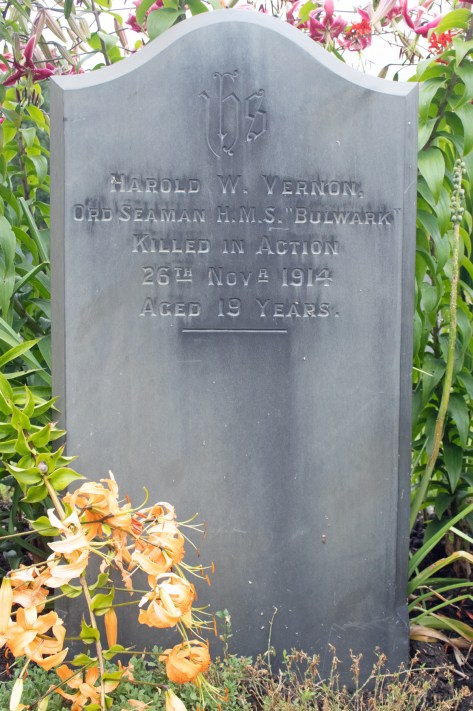
In April 1914, Ordinary Seaman Jacobs was moved to another vessel, the battleship HMS Bulwark. With war on the horizon, she formed part of the Channel Fleet, and was tasked with patrolling and defending Britain’s southern coast. Here Andrew’s dedication continued, and he was promoted to Able Seaman on 9th September 1914.

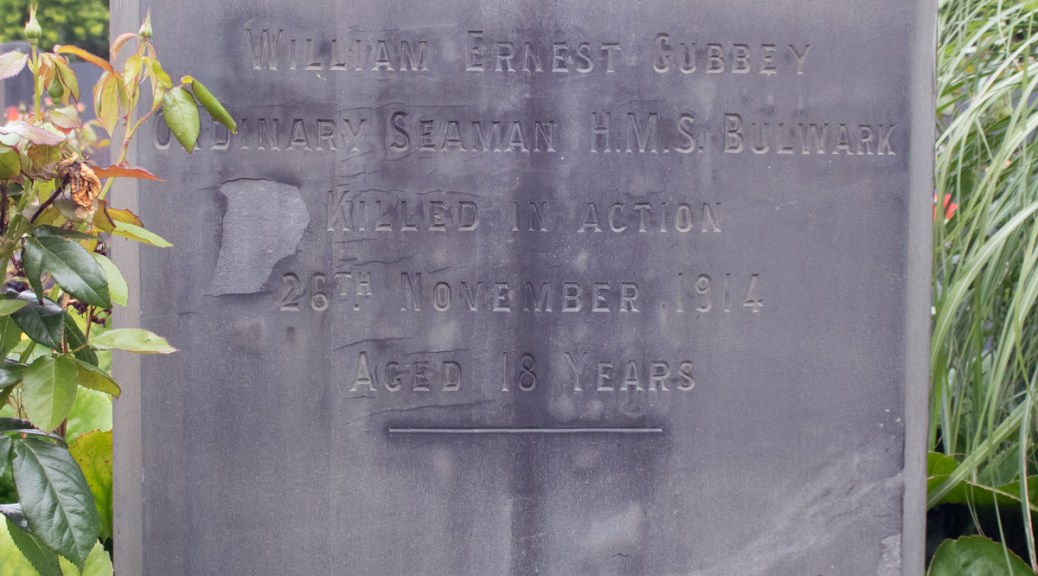
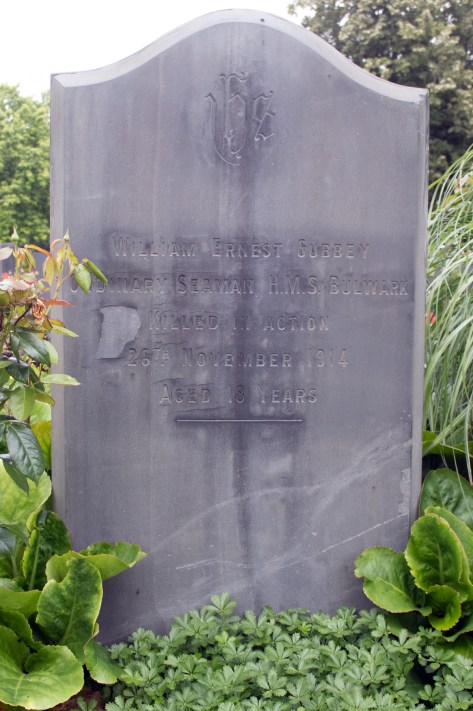
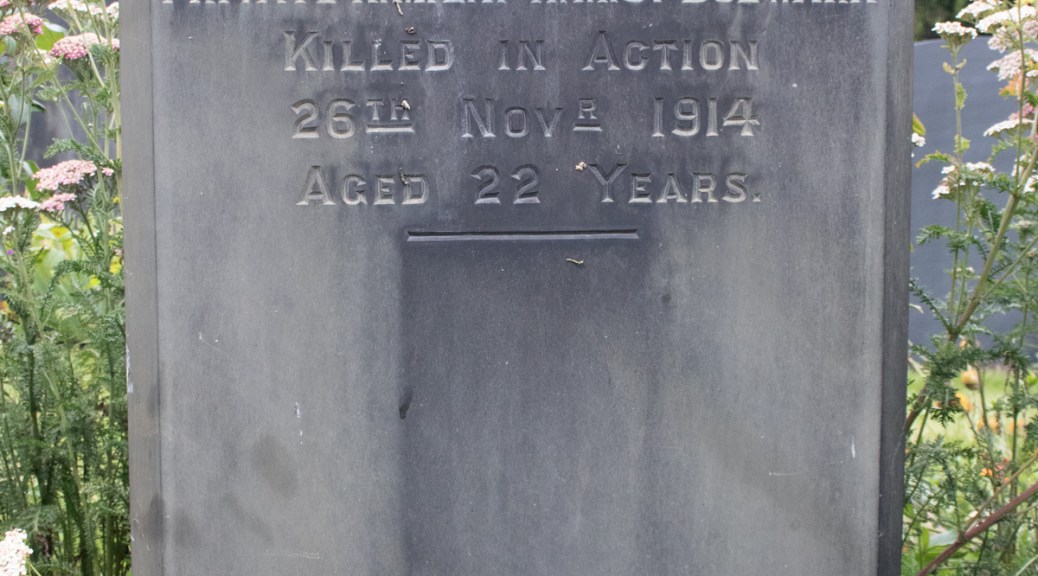
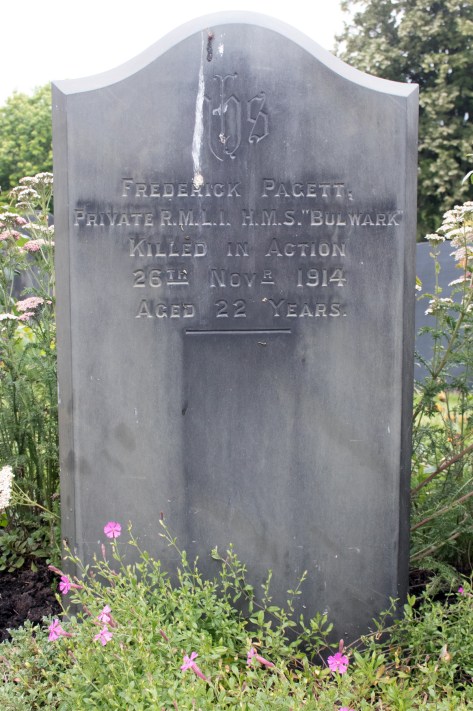
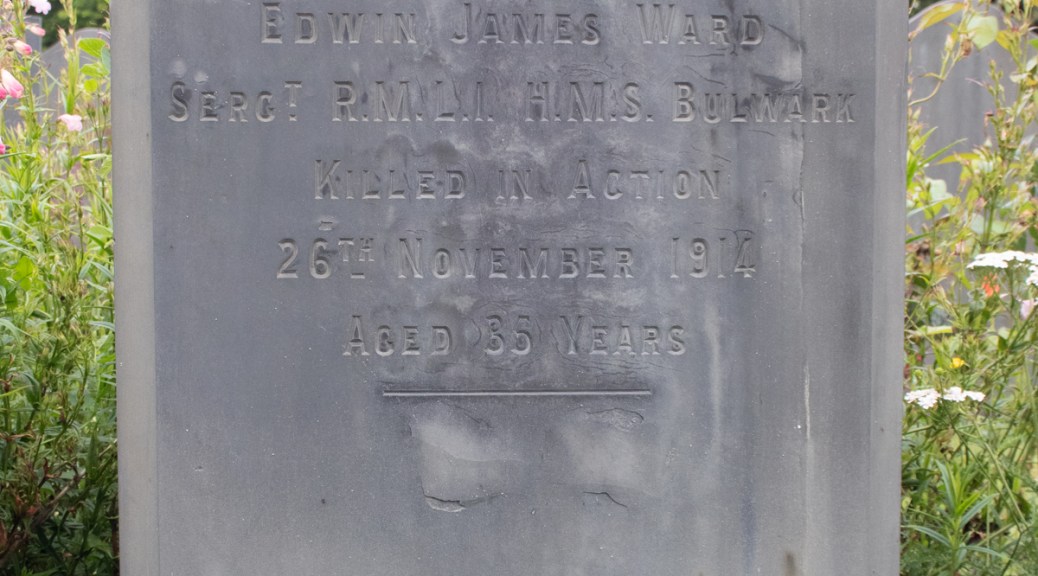
Two months later, on 26th November 1914, Bulwark was moored in the River Medway, close to Sheerness, and was being stocked with shells and ammunition. That morning, some poorly stowed cordite charges overheated, detonating the shells stored nearby. The resulting explosion ripped through the battleship, sinking her and and killing more than 740 crew, Able Seaman Jacobs included. He was just 19 years of age.

Many of the bodies from HMS Bulwark were not recovered, while those that were, but were unable to be identified, were laid to rest in a communal grave in Woodlands Cemetery, Gillingham, Kent. The remains of Andrew William Jacobs were both recovered and identified: he was buried in a marked grave in the same cemetery.


Boy 1st Class Harry Jerrom

Boy 1st Class Harry Jerrom

Harry Herbert Jerrom was born in the parish of Shinfield, Berkshire, on 26th July 1897. The oldest of eight children, his parents were caller Harry and Alice. Harry Sr was a farm labourer, and the family lived in Three Mile Cross.

Details of Harry Jr’s short life are scarce. Certainly when war broke out he stepped up to play his part, and had enlisted in the Royal Navy by the autumn of 1914. He was under the age to fully enlist by this point, and so held the rank of Boy 1st Class.

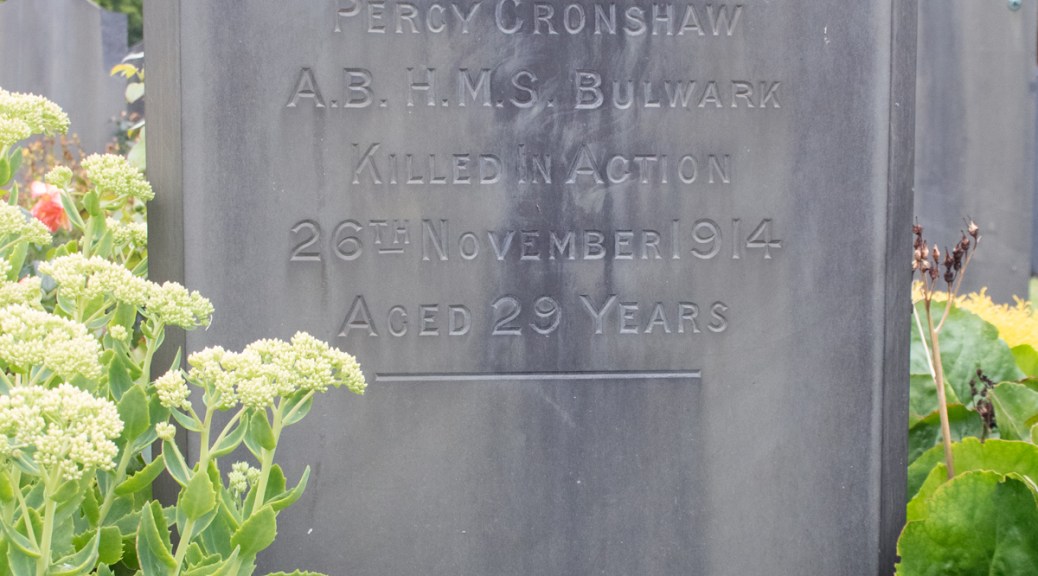
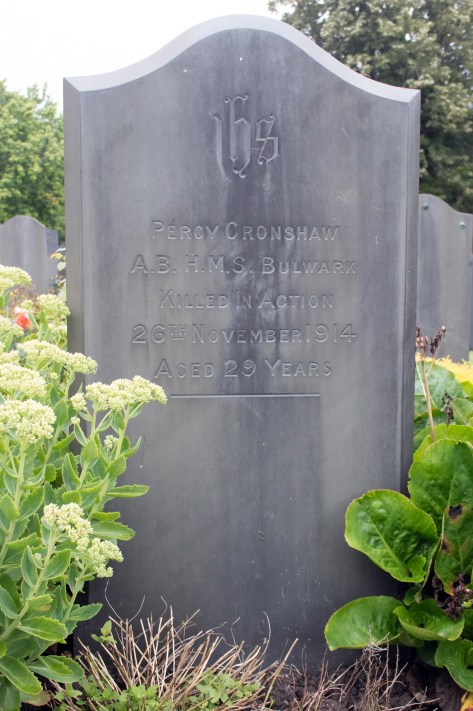
Harry was assigned to the battleship HMS Bulwark. Part of the Channel Fleet, she was tasked with patrolling and defending Britain’s southern coast. On 26th November 1914, Bulwark was moored in the River Medway, close to Sheerness, and was being stocked with shells and ammunition. That morning, some poorly stowed cordite charges overheated, detonating the shells stored nearby. The resulting explosion ripped through the battleship, and more than 740 crew were killed. Boy 1st Class Jerrom’s was among the bodies to be recovered: he was 17 years of age.

Those who were killed in the explosion were laid to rest in the naval section of Woodlands Cemetery, Gillingham, Kent. As his body had been identified, Harry Herbert Jerrom was laid to rest in a marked grave.
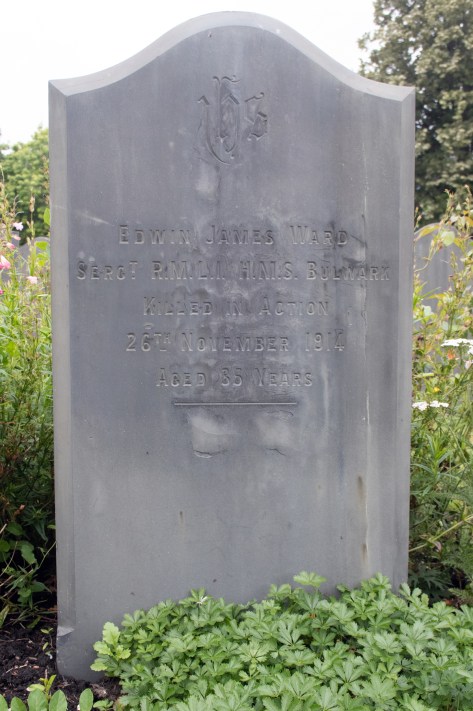

Boy 1st Class Harry Jerrom
(from findagrave.com)

Sergeant Herbert Marriott

Sergeant Herbert Marriott

Herbert Ernest Marriott was born on 15th November 1881 in the Hampshire village of Alverstoke (now part of Gosport). The younger of two children, his parents were George and Sarah Marriott. George was a navy pensioner, who died a matter of months after his youngest son was born, leaving Sarah to raise their two children alone.

The 1891 census found Sarah living at Prince Alfred Cottage in Alverstoke, with her two sons – Herbert, aged 9, and Joseph, aged 22 – and grandson, one-year-old Charles. She was employed as a launderess, while Joseph was employed as a bricklayer’s labourer.

Herbert was keen to build a career for himself and, on 20th July 1897, he enlisted in the Royal Marine Light Infantry. His service record shows that he was 5ft 7.5ins (1.71m) tall, with dark brown hair, brown eyes and a fresh complexion. He was also recorded as having a small scar on his left shoulder.

Private Marriott was sent just along the coast to Portsmouth for his training: this would become his land base in between voyages. He evidently showed some musical talent as, just two months after enlisting, he was given the rank of Bugler. Over the years the career he had sought grew, and his abilities grew with it.

Between 1897 and 1914, Herbert would serve on nine vessels in total. In February 1900 he became a Private once more, but by the end of the following year he had been promoted to Corporal. He continued to rise through the ranks, becoming Lance Sergeant in January 1905 and full Sergeant in the summer of 1907.

In the spring of 1901, Herbert married navy pensioner’s daughter Annie Hill. The newlyweds would set up home at 140 Queen’s Road, Gosport, and have six children between 1904 and 1914.

Back at sea and, by the time war was declared, Sergeant Marriott had been assigned to the battleship HMS Bulwark for two years. Part of the Channel Fleet, she was charged with patrolling and protecting the water off the south coast of England.

On 16th November, Bulwark was moored in the River Medway, near Sheerness, Kent, and being restocked with ammunition. A number of cordite charges had been stored incorrectly and overheated. These detonated the nearby shells and the resulting chain reaction of explosions ripped apart the battleship, sinking it and killing more than 740 crewmen, including Sergeant Marriott. He had turned 33 years of age just the day before.

The bodies recovered were laid to rest in the naval section of Woodlands Cemetery, Gillingham, Kent. As his had been identified, Herbert Ernest Marriott was buried in a marked grave.


Private Thomas Neale

Private Thomas Neale

Thomas Neale was born in the Botley, Oxfordshire, on 3rd June 1876. One of eight children, his parents were George and Mary Neale. George was an agricultural labourer and the family would settle in Cumnor, just over the Berkshire border.

Thomas was keen to make a life for himself and, on 29th December 1898, he enlisted as a Private in the Royal Marine Light Infantry. HIs service papers show that he had been employed as a general labour and the point he signed up, and give an indication into the man he was becoming. He was noted as being 5ft 7ins (1.7m) tall, with grey eyes, brown hair and a fresh complexion. He was also recorded as having a small scar on his right knee.

Private Neale was initially sent to the Royal Marines barracks in Deal, Kent, for his training. Over the next sixteen years, he would serve on eight ships, each time returning to what would become his home base, the Royal Naval Dockyard in Portsmouth, Hampshire, in between voyages. While never outstanding, his annual reviews reported his good or very good character, and very good ability.

When war broke out in the summer of 1914, Private Neale was serving on board the battleship HMS Bulwark. Part of the Channel Fleet, her role was to patrol and protect the English Channel and south coast.

On 26th November she was moored up in the lower reaches of the River Medway, not far from Sheerness, being re-stocked with ammunition. That morning, a number of cordite charges overheated, detonating the shells stored nearby. The resulting explosion ripped through the battleship, and more than 740 crew were killed. Thomas was amongst those whose bodies were recovered and identified: he was 38 years of age.

The bodies that were recovered from the tragedy were taken to the Woodlands Cemetery in nearby Gillingham and laid to rest. Thomas Neale was buried alongside his colleagues in a marked grave, while those whose remains had not been identified were laid to rest in a mass grave nearby.


Private Thomas Neale
(from findagrave.com)

Ordinary Seaman Frederick Millis

Ordinary Seaman Frederick Millis

Frederick Harold Millis was born in Marylebone, Middlesex, on 18th March 1896, and was one of five children to horse keeper William Millis and his wife Emily. Details of his early life are a challenge to piece together – he does not appear on the 1901 census, although Emily and his siblings are recorded at 1 Linhope Street.

William died in 1908, and by the time of the 1911 census, Emily had moved to Brighton, Sussex, where she was living at 49 Bernard Street with Frederick and two of his brothers. Fred was 15 years old by this point, and was working as a telegraph messenger, while his older sibling Alfred was working as a draper’s assistant.

Frederick sought a better life for himself, and, on 28th January 1913, he signed up to the Royal Navy. Being under age, he was given the rank of Boy 2nd Class, and was sent to HMS Vivid, the Royal Naval Dockyard in Devonport, Devon, for his training.

After just three months, Frederick was promoted to Boy 1st Class, and just a few weeks later was assigned to the battleship HMS Prince of Wales. In October 1913, he was moved to another battleship, HMS Bulwark, and it was here that he was formally inducted into the navy.

The now Ordinary Seaman Millis signed up for twelve years’ service, and his papers note that he was 5ft 8ins (1.73m) tall, with dark brown hair, dark brown eyes and a fresh complexion. He was also recorded as having a clasped hands tattoo on his right forearm and another of a sailor on his left arm.

Ordinary Seaman Millis would remain on board HMS Bulwark for a year. The battleship was part of the Channel Fleet, tasked with patrolling and defending Britain’s southern coast. On 26th November 1914, she was moored in the River Medway, close to Sheerness, and was being stocked with shells and ammunition. That morning, some poorly stowed cordite charges overheated, detonating the shells stored nearby. The resulting explosion ripped through the battleship, and more than 740 crew were killed. Frederick was amongst those whose bodies were recovered and identified: he was 18 years of age.

The bodies that were recovered from the tragedy were taken to the Woodlands Cemetery in nearby Gillingham and laid to rest. Frederick Harold Millis was buried alongside his colleagues in a marked grave.


Frederick’s headstone suggests he held the rank of Officer’s Steward: this seems to be an error, and possible a mis-interpretation of the initials of Ordinary Seaman.


Able Seaman Bertram Warner

Able Seaman Bertram Warner

Bertram William Warner was born on 16th February 1895 in Greenford, Middlesex. The youngest of four children, his parents were jobbing gardener Henry Warner and his wife, Elizabeth.

Bertram began working with his father after he completed his schooling, but he had his heart set on bigger and better things. A life at sea drew him in and, on 7th February 1913, he enlisted in the Royal Navy. His service records show the young man he had become: he was 5ft 2ins (1.58m) tall, with dark hair, grey eyes and a fair complexion.

Initially taken on as a Boy 2nd Class, Bertram was sent to HMS Vivid, the Royal Naval Dockyard in Devonport, Devon, for his training. His records outline his ability and commitment to the role. On 28th May 1913, as he moved to the training ship HMS Prince of Wales, he was promoted to Boy 1st Class. On 8th August he was deemed to be of age, and officially inducted into the Royal Navy.

On 4th October, Ordinary Seaman Warner was transferred to the pre-dreadnought battleship HMS Bulwark. Based in Portland, Dorset, at the start of the First World War, she would form part of the Channel Fleet patrolling and defending Britain’s southern coast. Bertram was continuing to prove his mettle and, on 13th October 1914, just eighteen months after initially joining the navy, he was promoted again, to Able Seaman.

Bertram was on board Bulwark on the 26th November 1914, when she was moored close to Sheerness, Kent. That morning, some poorly stowed cordite charges overheated, detonating some of the hundreds of shells stored shells nearby. The resulting explosion ripped through the battleship, killing more than 740 people. Able Seaman Warner was amongst those killed whose bodies were recovered and identified: he was 19 years of age.

The body of Bertram William Warner was taken to Woodlands Cemetery in Gillingham, Kent, and laid to rest alongside his colleagues.