Richard George Birch was born on 8th July 1878, in Westminster, Middlesex. One of nine children, his parents were Samuel and Alice Birch. Samuel started work as a messenger for the House of Lords, and went on to be a military cap maker by the time of his son’s baptism.
When he finished his schooling, Richard found employment as a printer and compositor. He married Evelyn Groom in 1906, and the couple went on to have three children: Harry, Doris and Richard Jr.
The 1911 census showed a change in circumstances for the family. They were living in Farnham, Surrey, and their household was made up of Richard, a pregnant Evelyn, Harry, Doris and a servant, Florence. Richard had now left the printing business, as was employed as a comedian.
When war came to Europe in August 1914, Richard stepped up to play his part. Having enlisted by the spring of 1917, he initially joined the East Surrey Regiment, although at some point he made the transfer to the Royal Fusiliers.
Little information remains available about Private Birch’s military life. Attached to the 22nd (Service) Battalion, he seems not to have served overseas. It appears that he either served in Somerset, or was sent there to recuperate following an illness or injury, as he was in Burnham-on-Sea by the autumn of 1917. He passed away in the town on 19th September, the cause of his passing not freely recorded. He was 39 years of age.
Richard George Birch’s body was not taken back to Surrey, possibly because of financial constraints. Instead laid to rest in Burnham Cemetery, Somerset.
Edward John Ham was born in Berrow, Somerset, in the spring of 1886. The second of seven children – all boys – his parents were Edward and Mary Ham. Edward Sr was a plasterer, but when he finished his schooling, his son found work as a jobbing gardener and nurseryman.
On 2nd October 1906, Edward married Annie Paddy. A carter’s daughter, three years older than her new husband, she was working as a domestic servant when the couple wed at St John the Evangelist’s Church in nearby Highbridge. They went on to have four children: Edward, Rose, Gladys and Horace.
The 1911 census recorded the family as living in Love Lane, Burnham-on-Sea, Edward continuing with his gardening work. War was on the horizon, though, and he was soon called upon to play his part.
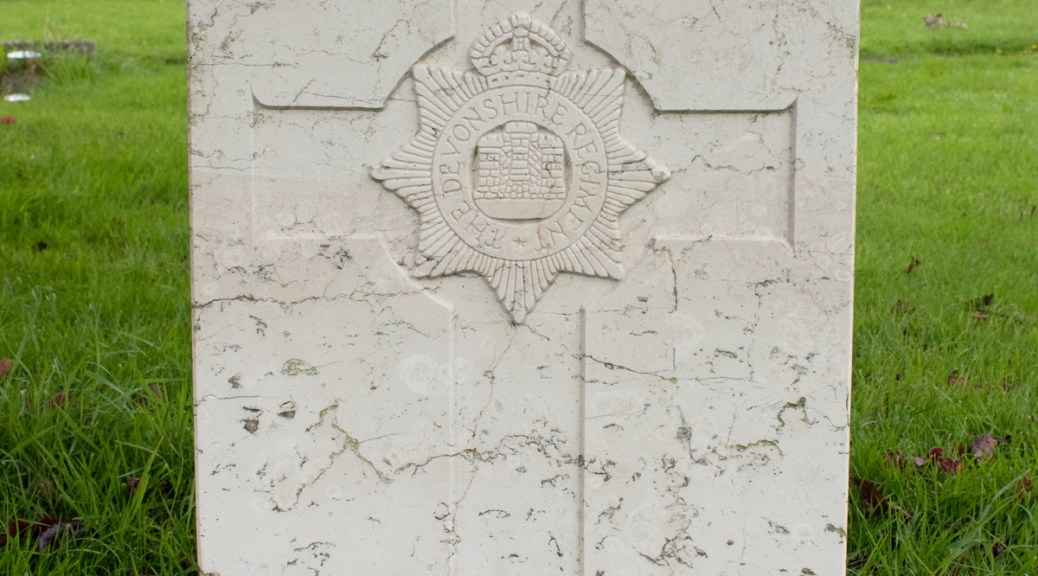
Full service records are not available for Edward, but he had enlisted by the summer of 1917. Private Ham initially joined the Devonshire Regiment, but at some point transferred across the to Labour Corps. Edward was attached to the 149th Company and was based in Enfield, Middlesex.
At this point, Private Ham’s trail starts to cool. He passed away on 25th December 1917 at the age of 31 years old. The cause of his death is unclear, but his body was brought back to Somerset for burial.
After a service in Burnham’s St Andrew’s Church, Edward John Ham was laid to rest in the town’s cemetery.
John Henry Wimble was born in the autumn of 1870, in Bathampton, Somerset. One of seven children, his parents were William and Charlotte Wimble. Charlotte had been married before, but her husband, John Eastment, had died in 1862, leaving her with three children to raise. She remarried in 1864, and William helped support the growing household.
John sought an escape to adventure and, when he finished his schooling, he enlisted in the army. Full service records are not available, but by the time of the 1891 census, he was noted as being a Private in the Somerset Light Infantry, and was living in barracks in Farnborough, Hampshire.
In the autumn of 1891, John married Eliza Hammond. She had been born in Calne, Wiltshire, and, at the time of their wedding, which took place in Bath, she was working as a parlour maid. The couple would go on to have two children, Percy and Victor.
John completed his army service and, according to the 1911 census, the family had settled in Cheddon Fitzpaine, to the north of Taunton. He was noted as being an army pensioner and that he was working as a warehouseman in the government stores. By the time war broke out, the family had moved to Burnham-on-Sea, where John had taken up the role of caretaker at the local Institute.
The war has cost another gallant local soldier, in the person of Sergt.-Major Wimble, of the Somersets, his life. This brave man re-joined the Army when war broke out on condition he could go to the Front. He was wounded, and died in a hospital at Edinburgh. The War Office had the remains sent to Burnham on Tuesday, where they were placed in St Andrew’s Church, and a large attendance of the public and the [Volunteer Training Corps] attended the funeral on Wednesday.
Taunton Courier and Western Advertiser: Wednesday 17th November 1915
John had been assigned to the 6th (Service) Battalion on re-enlisting, and was quickly sent to the front. Caught up in the Action of Hooge and the Second Attack on Bellewaarde, he was medically evacuated to Britain in the autumn of 1915, and passed away on 4th November, at the age of 45.
Here, though, accounts differ slightly. While the newspaper report suggests that he died of his wounds, the Army Register of Soldiers’ Effects gives the cause of death as gastritis.
After the funeral at St Andrew’s Church, John Henry Wimble’s body was laid to rest in Burnham Cemetery.
Regimental Serjeant Major John Wimble (from findgrave.com)
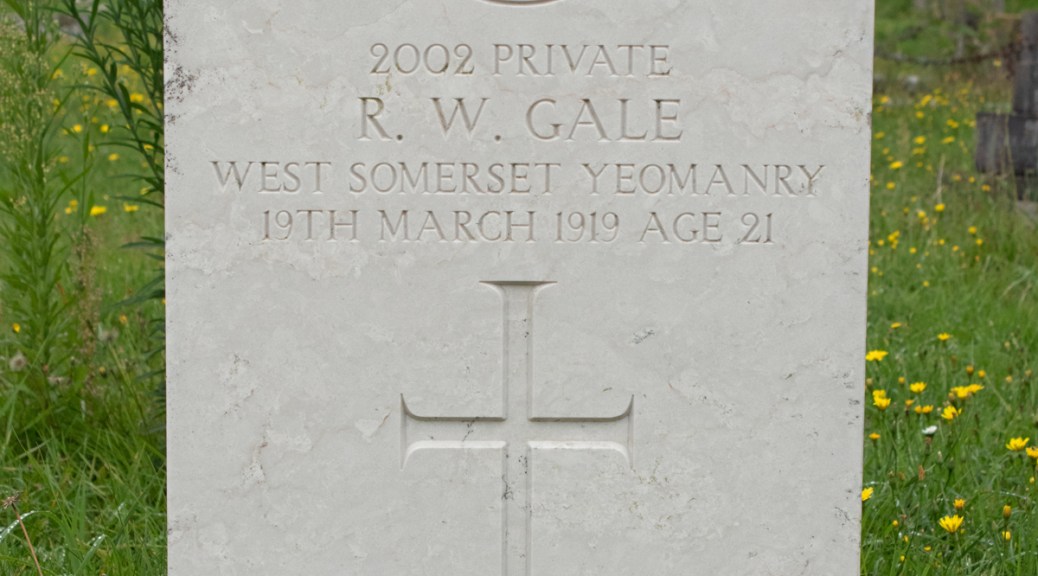
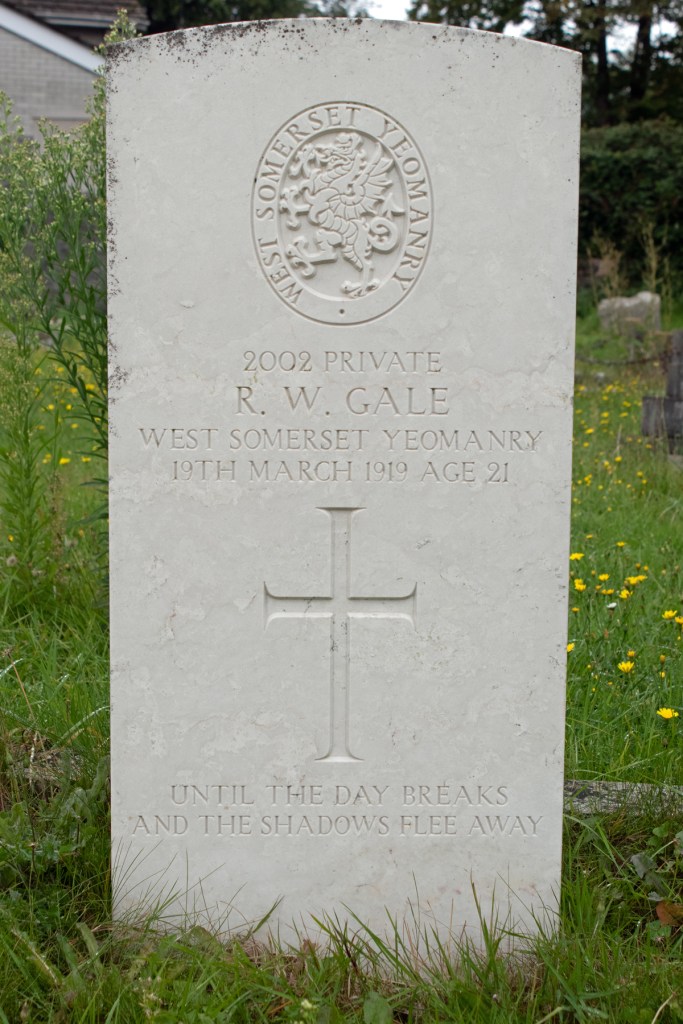
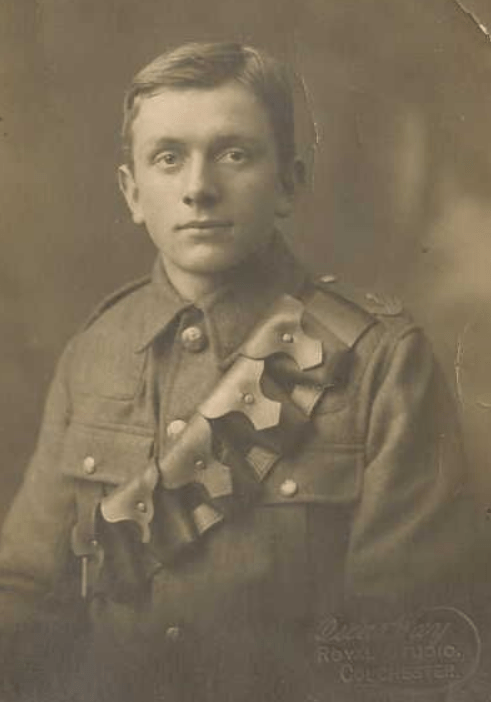
Richard William Gale was born in the autumn of 1897 in the Devon village of Sidbury. The third of six children, he was the son of George and Emma Gale. George was a bricklayer and labourer, and the family had moved to Burnham-on-Sea, Somerset, by the time Richard was ten, as this is where he had found work.
When Richard finished his schooling, he found employment as an errand boy for a school outfitters. By the time oft he 1911 census, there were four wages coming into the Gale household. Besides Richard and his father, his older brother, Frederick was working as a grocer’s apprentice, and his sister, Laura, was a dressmaker.
War was declared in the summer of 1914, and Richard was called upon to play his part. His service records no longer exist, so it is not possible to fully track his time in the army. However, he initially joined the 2nd/1st Battalion of the West Somerset Yeomanry and was sent for training in East Anglia.
As some point, Private Gale transferred to the Labour Corps, and became attached to the 949th Employment Company. Based in the London area, Richard’s duties are unclear, and his troop would have taken on any of a wide range of roles, from cooking and store work, to salvage, traffic control and telephone operating. Whether his previous work at the outfitters came into play is unclear, although Employment Companies were also involved in tailoring, shoemaking and laundry work.
Private Gale survived the conflict, and seems to have been based in the the Nottingham area after the Armistice. By March 1919, he had become unwell and, having contracted pleurisy, he was admitted to the Berridge Road Military Hospital. The condition took its toll on Richard, sadly, and he passed away on 19th March 1919. He was just 21 years of age.
Richard William Gale’s body was taken back to Somerset for burial. He was laid to rest in the cemetery of Burnham-on-Sea, a short walk from where his family lived.
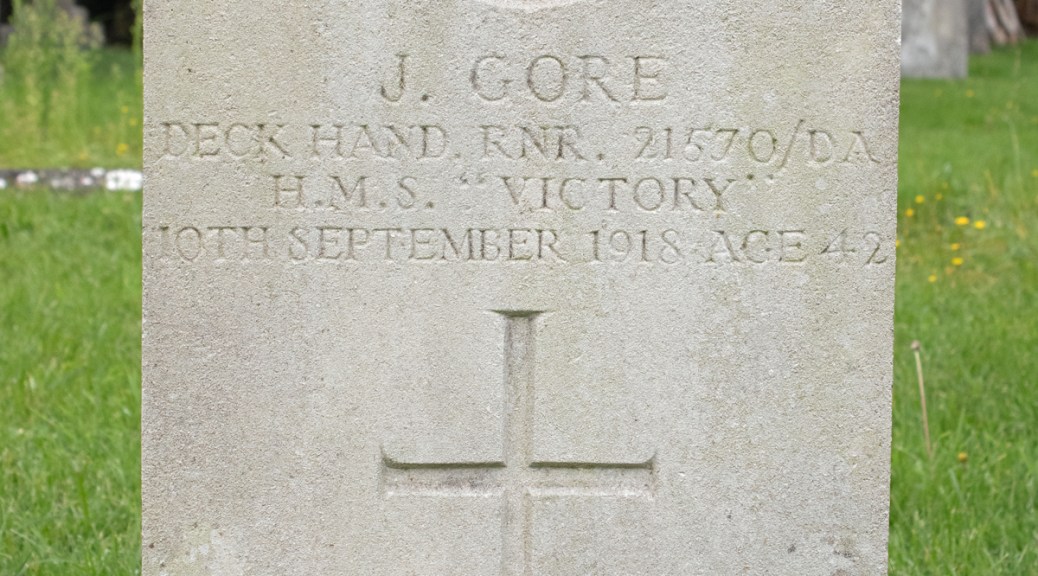
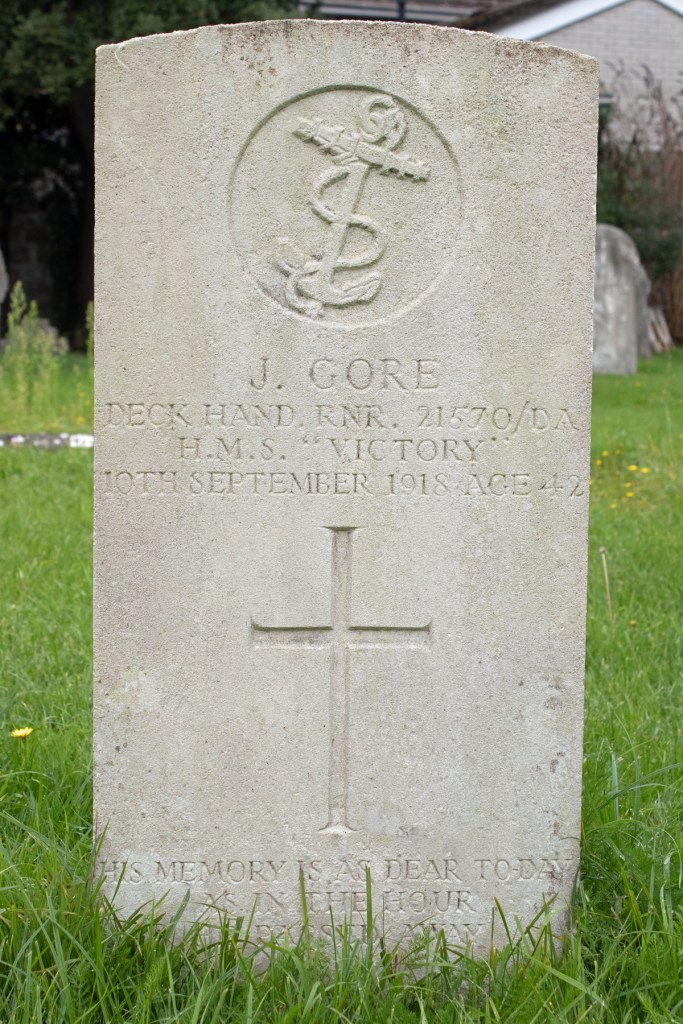
James Gore was born on 13th May 1876 in Steart, a community on the Somerset coast near Bridgwater. An only child, his parents were Robert Brewer and Elizabeth Gore, but parental duties were shared with Robert’s family, and Elizabeth went on to marry Thomas Dibble when James was just 4 years old.
Robert was a fisherman, as was his father, and this was a life into which James would also follow. By 1891 he was working with his paternal grandfather, John Brewer, and within ten years he was running his own boat.
On 12th December 1901, James married Emily Chilcott at the parish church in Stogursey, Somerset. She was the daughter of Richard, Chilcott, a labourer employed on the expanding road network for the area. The couple initially set up home in Steart, but had moved to Burnham-on-Sea by the time of the 1911 census. They would go on to have four children – Harold, Reginald, Margaret and Olive – between 1905 and 1916.
When war broke out, James was 38 years old. He wasn’t called up immediately, but by the closing months of the conflict, the needs of the Royal Navy were strong enough for him to be conscripted. He joined up on 21st August 1918 and, having built a career as a fisherman, he was assigned to the Royal Naval Reserve. His service records confirm that he was 5ft 6ins (1.67m) tall, with a fresh complexion and blue eyes.
Deck Hand Gore was sent to HMS Victory, the Dockyard in Portsmouth, Hampshire, for his initial training. Here, billeted in cramped barracks, perfect breeding grounds for germs and disease, he quickly became ill. Having contracted pneumonia, James was admitted to the Haslar Hospital in Gosport. The condition was to take his life: he passed away on 10th September 1916, less than three weeks after enlisting. He was 40 years of age.
James Gore’s body was taken back to Somerset for burial. He was laid to rest in the peaceful cemetery in Burnham-on-Sea, not far from where Emily and the children were still living.
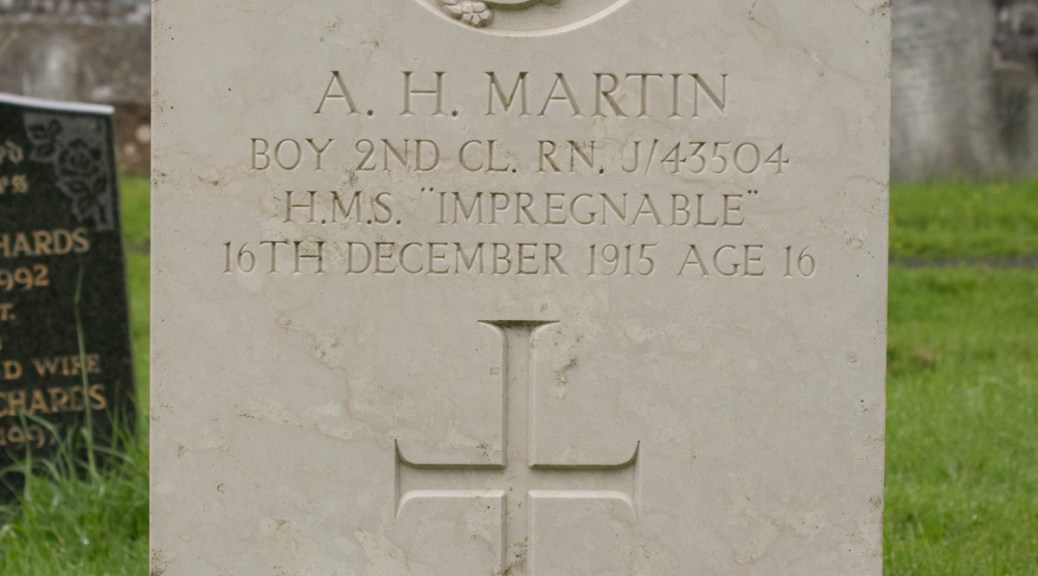
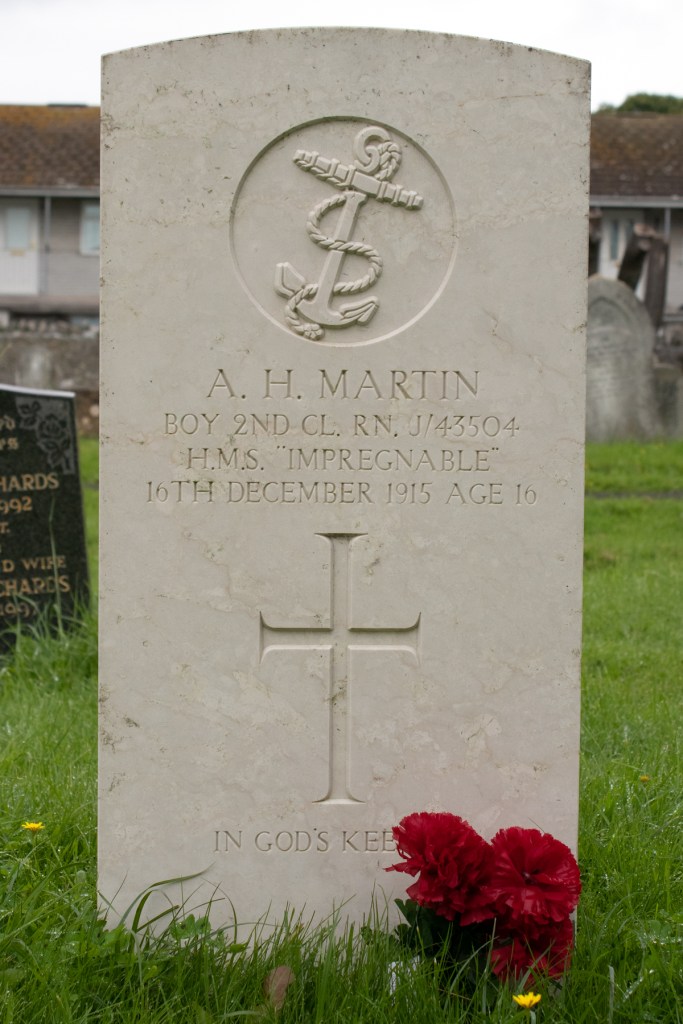
Alan Harold Martin was born on 24th May 1899 in Burnham-on-Sea, Somerset. The oldest of six children, his parents were bricklayer Clifford Martin and his wife, Augusta. The 1911 census found the family living at 64 Abingdon Street in the town, a terraced house not far from the seafront.
When war broke out, Alan was not long out of school. He had found work as a painter’s mate, but with adventure waiting for him, he had an obvious need not to miss out. He enlisted in the Royal Navy on 28th August 1915 and, as he was too young to be formally inducted into the service, he was given the rank of Boy 2nd Class.
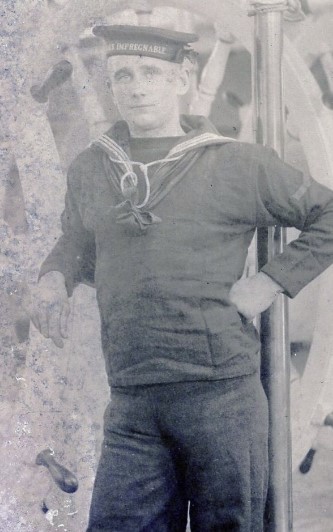
Alan was sent to HMS Impregnable, shore-based establishment in Devonport, Devon, for his training. His service records show that he was 5ft 3.5ins (1.61m) tall, with brown hair, blue eyes and a fresh complexion.
Tragically, Boy Martin’s time in the Royal Navy was not to be a long one. Billeted in tightly-packed barracks, with new recruits from across the country, he quickly fell ill. Contracting pneumonia, he was admitted to the Royal Naval Hospital in Plymouth. The condition was to get the better of him, and he passed away on 16th December 1915, at the age of just 16 years old.
Alan Harold Martin’s body was taken back to Somerset for burial. He was laid to rest in Burnham-on-Sea Cemetery, a short walk from where his grieving family lived.
Wallace Waterman Parsons was born in the autumn of 1893 and was one of thirteen children. His parents were both Somerset-born, David and Mary Parsons, and it was in a small terraced house in Bampton Street, Minehead, that the family were raised.
David was a chimney sweep and by the time of the 1911 census, eight of the then household of nine people were earning a wage. Six of the Parsons children – ranging in age from 15 to 33 – were living with their parents, working variously as a chair caner, a labourer and a French polisher. Wallace, 17 years old by this point, was employed as a stone worker, presumably alongside his older brother, David, who was a mason.
When war came to European shores, at least two of the Parsons brothers enlisted. While full service records no longer exist, it is clear that Wallace joined the Somerset Light Infantry, and was attached to the 8th (Service) Battalion.
Private Parsons arrived in France on 11th October 1915, and may have been involved in the closing days of the Battle of Loos. Over the next year, he would have been caught up in the fighting at the Somme, but by the autumn of 1916, he had fallen ill and returned to Britain.
Whatever condition Wallace had contracted led to his discharge from the army: his final day in service was 19th December 1916. He was awarded a Silver Star for his service: this confirmed his honourable discharge, and he wore it to show that he had served his country and was not, in effect, a coward for walking the streets of his home town, while other sons, brothers and fathers were fighting for their country.
At this point, Wallace’s trail goes cold. It is likely that he returned home, but his health continued to dog him. He passed away from anaemia on 17th July 1920, at the age of 26 years old.
Wallace Waterman Parsons was laid to rest in the sweeping vista of Minehead Cemetery.
Wallace’s older brother Hubert also served in the Somerset Light Infantry. Attached to the 1st/5th Battalion, he fought in the Middle East and rose to the rank of Corporal. Hubert fell ill with enteritis, dying from the condition on 13th April 1916. He was laid to rest 3,500 miles (5632km) from home, in the Kut War Cemetery, Iraq.
Arthur Edward Devas was born in Devizes, Wiltshire, on 29th July 1877. One of ten children, his parents were Reverend Arthur Devas and Louisa. Arthur Sr was chaplain at the County House of Correction, the prison a short walk away from the family home, over the Kennet and Avon Canal. The 1881 census showed the Devas’ were living to the south of the town centre, and were supported by three servants.
Arthur standing as a vicar’s son earned him an education. He was sent to the prestigious Haileybury College in Hertfordshire. When his father died in 1901, he felt a pull to see more of the world, and joined the army. Enlisting in the Essex Regiment in September 1902, he was taken on as a Second Lieutenant.
Promoted to the rank of full Lieutenant in January 1906, the next census, in 1911, recorded Arthur at the Warley Barracks in Billericay. When war broke out in August 1914, he was based in Mauritius: he remained there for the next five months, before his battalion – the 1st – were brought back to England.
Setting up camp in Banbury, Oxfordshire, the aim was to train the battalion in readiness for an assault in Gallipoli. For Lieutenant Devas, however, this was not to be. He had fallen ill on the journey back to Blighty and, having contracted typhoid, he was admitted to the 3rd Southern General Hospital in Oxford. He died at the hospital on 15th February 1915, at the age of 37 years old.
Louisa and some of her children had moved to Minehead, Somerset, after her husband’s death, and this is where Arthur Edward Devas’ body was brought for burial. He was laid to rest in the extensive Minehead Cemetery, to be reunited with his mother when she passed away some eighteen years later.
The death of Capt. James Wilson Pettinger has taken place in a military hospital at Aldershot. Captain Pettinger came to Kingsbridge [Devon] in 1903, entering into partnership with Dr D de Courcy Harston… He made a wide circle of friends, and was appreciated for his professional skill. Previously to coming to Kingsbridge, he was house surgeon at St George’s Hospital, London. In July 1915, Dr Pettinger volunteered for service in the Royal Army Medical Corps, being appointed Lieutenant to the Plymouth Military Hospital. He quickly gained promotion to captain, and was appointed to a hospital ship, and served in the Mediterranean for several months. He contracted blood poisoning in the arm, and was sent to Netley Hospital [Hampshire]. On recovery he was placed in charge of an infections hospital for several months at Salisbury. He was later ordered to France, and being taken ill was transferred to an Aldershot hospital, where he died from pneumonia. He leaves a widow and one son. Dr Pettinger was 43 years of age.
Western Times: Tuesday 16th October 1917
James Wilson Pettinger was born in the spring of 1874 in Moss Side, Lancashire. The youngest of four children, his parents were doctor and surgeon George Pettinger and his wife, Sarah.
James may have been a sickly child: the 1901 census recorded him as being a patient in community hospital in North Meols, near Southport, Lancashire. The oldest of only three patients, the facility was overseen by caretaker John Carr and his matron wife, Susan.
Having gone on to study at Cambridge University, James was carving a career for himself. By the time of the next census he was living in Shaftesbury, Dorset, he was recorded as being a medical practitioner, living on his own in a house near the centre of town.
As the Western Times was to report, James moved to Devon in 1903. On 8th January, he married Clara Risdon, a nursing sister seven years his senior. She came from the Somerset village of Old Cleeve, and the couple married in her local parish church. The couple set up home in Ewart House in Kingsbridge, and went on to have a son, Geoffrey, who was born that November.
James’ career continues to flourish. The 1910 medical directory noted that he was the Honourable Medical Officer for Kingsbridge & District Cottage Hospital, and noted that he had previously worked as an Honourable Physician, Honourable Surgeon, Ophthalmologist, Aural, Obstetric and Dental Assistant and Assistant Surgical Registrar at St George’s Hospital in London.
Little information relating to James’ time in the armed forces is available, and so it falls to his obituary in the Western Times to fill in the gaps. It would seem that Clara and Geoffrey moved to Minehead, Somerset, while James was serving overseas. The town was not far from where she had been born, and family connections may have helped with her husband’s absence.
When James Wilson Pettinger died, on 6th October 1917, his body was brought to Minehead for burial. He was laid to rest in the town’s sweeping cemetery, and was joined there by Clara when she passed away in 1945: a husband and wife reunited.
Charles Sainsbury Bagley was born in the autumn of 1889, one of eleven children to Benjamin and Jane Bagley. The couple’s early life was an intriguing one: they had both been born in Shoreham-by-Sea, West Sussex. The 1891 census recorded the couple living on board the barque Mizpah, with their three oldest children. Benjamin was the vessel’s master and there were ten other members of crew on board.
By the time Charles was born, the family had returned to shore and settled in Minehead, Somerset. By now Benjamin was working as a hairdresser and tobacconist on Park Street near the centre of the town.
Benjamin died in 1910, but left a thriving business to support Jane. At least three of the Bagley siblings went into hairdressing, while Charles’ older brother, Joseph, set up a bakery and confectioner’s in the town with his wife. Charles is absent from the 1911 census, although later records would suggest that he had moved to Lancashire, where he was also working as a hairdresser.
On 3rd July 1915, Charles married Celia Rogers in Lancaster. War was raging across Europe at this point and, in August 1916, he enlisted in the army. His service records confirm that he was 5ft 7.5ins (1.71m) tall and weighed 128lbs (58kg). Private Bagley joined the 5th Battalion of the King’s Own (Royal Lancaster Regiment) and by the end of the year he was on the Western Front, based around the Ypres salient.
The early part of 1917 proved relatively quiet for Private Bagley’s troop. At the end of July, however, he was caught up in the battle of Pilkem Ridge, and was shot in his left leg. Initially treated on site, the wound was severe enough for him to be medically evacuated to Britain for treatment.
Charles was admitted to the Royal Surrey County Hospital in Guildford, but his wounds were to prove to be too severe. He passed away on 28th October 1917, at the age of 27 years old.
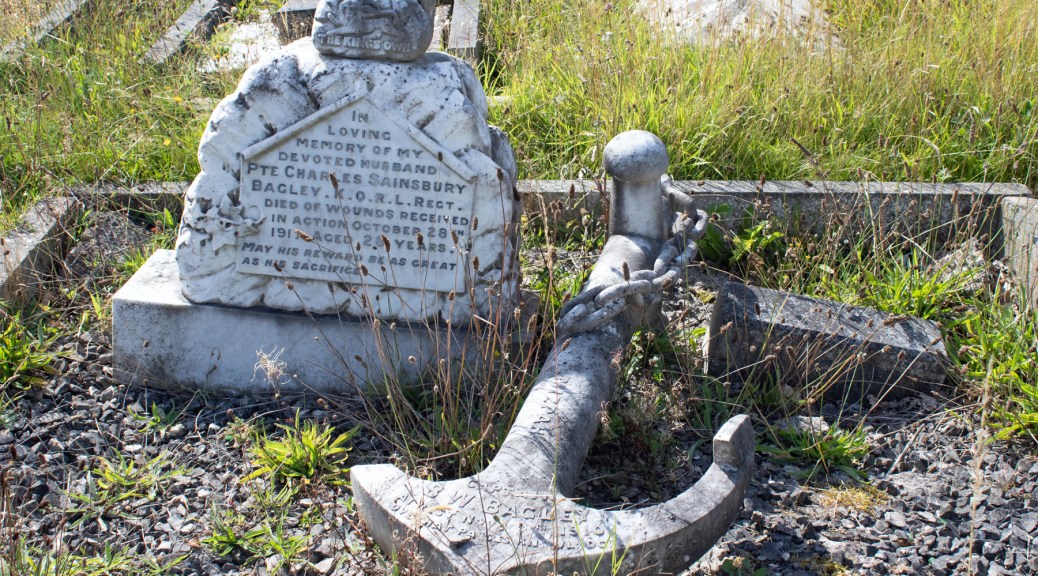
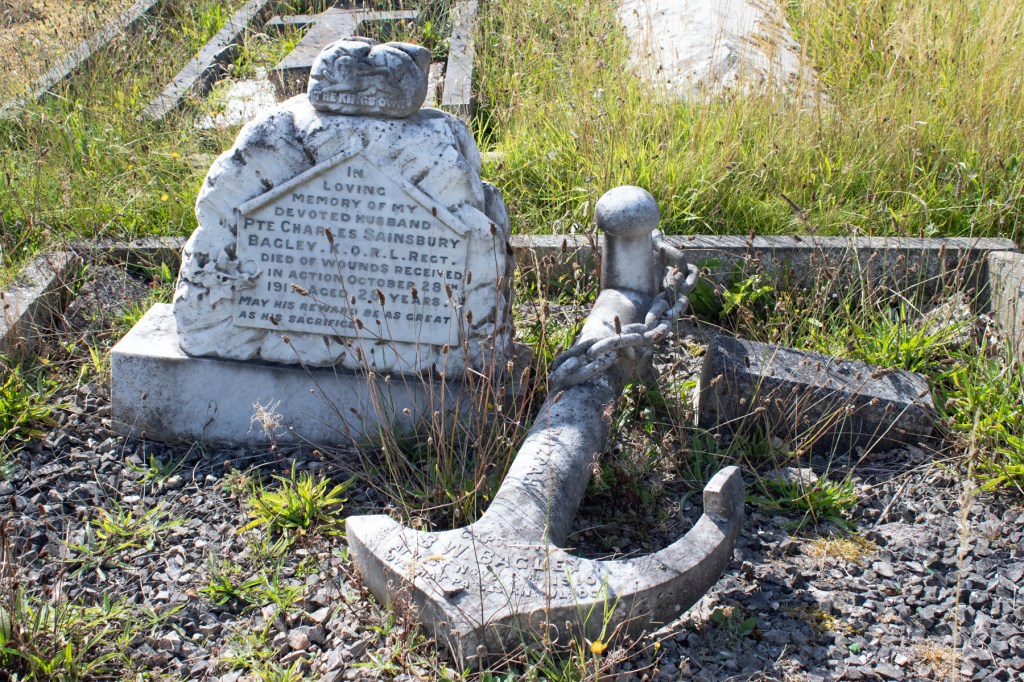
The body of Charles Sainsbury Bagley was taken back to Somerset for burial. He was laid to rest in the family plot in Minehead Cemetery, reunited with his parents, Jane having died at the beginning of 1917. The seafaring headstone paid homage to his father’s maritime service.









 Death and Service