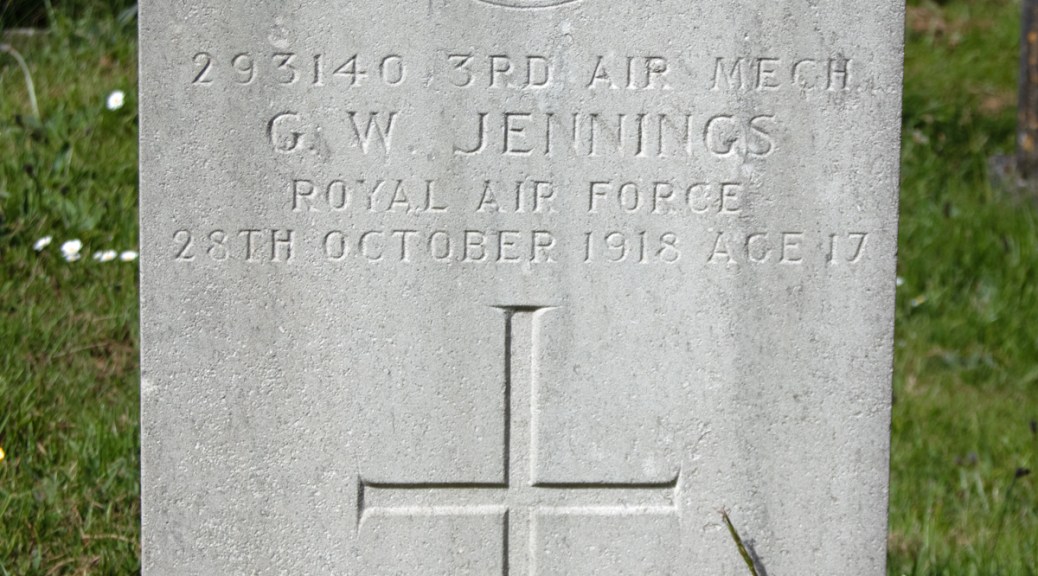
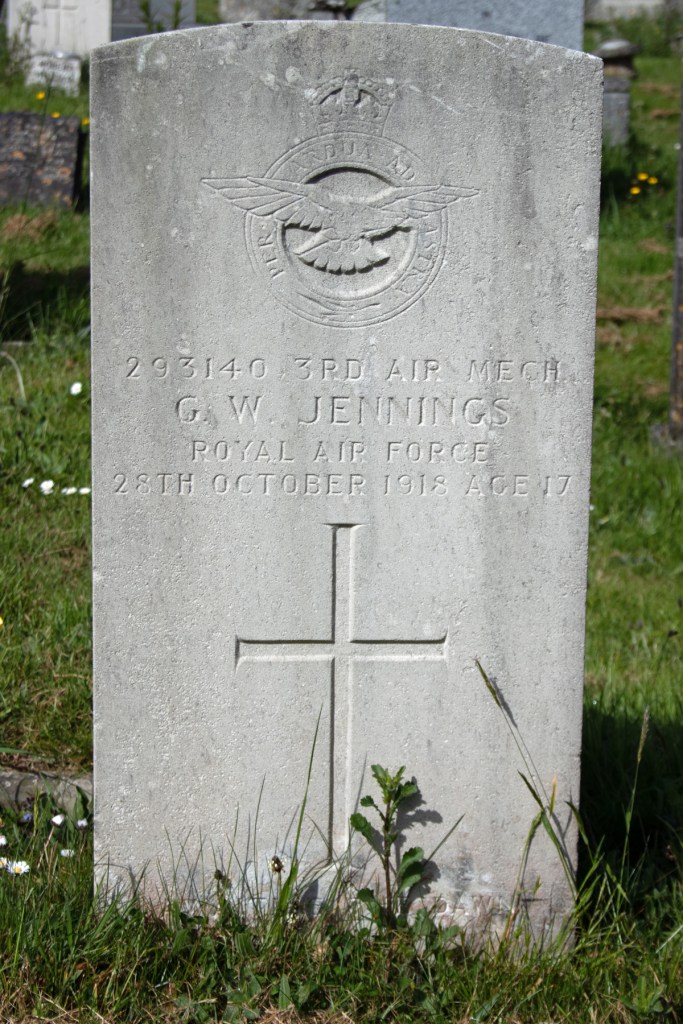
Gilbert William Jennings was born on 4th January 1901, and was the third of four children to William and Lily Jennings. Both were born in Chard, Somerset, and this is where they raised their young family. William was a foreman in one of the town’s lace factories and when he finished school Gilbert followed his father into the industry.
War broke out across Europe in 1914 and, while Gilbert was too young to enlist at the start of the conflict, it is evident that he wanted to play his part as soon as he was able to.
On 6th September 1918 he enlisted in the Royal Air Force: his experience with factory machinery led him to the role of Air Mechanic 3rd Class. His service records confirmed that he was 5ft 7ins (1.70m) tall, had brown hair, hazel eyes and a fresh complexion.
Air Mechanic Jennings was sent to Buckinghamshire for training, but his time there was to be tragically short. Within a matter of weeks he was admitted to the Central Military Hospital in Aylesbury with pneumonia. The condition was to prove too much for his body: he passed away on 28th October 1918. He had been in the Royal Air Force for just 52 days and was a victim of his desire to get involved in the war before it was too late to do so. He was 17 years of age.
Gilbert William Jennings’ body was brought back to Somerset for burial: he was laid to rest in the cemetery of his home town, Chard.
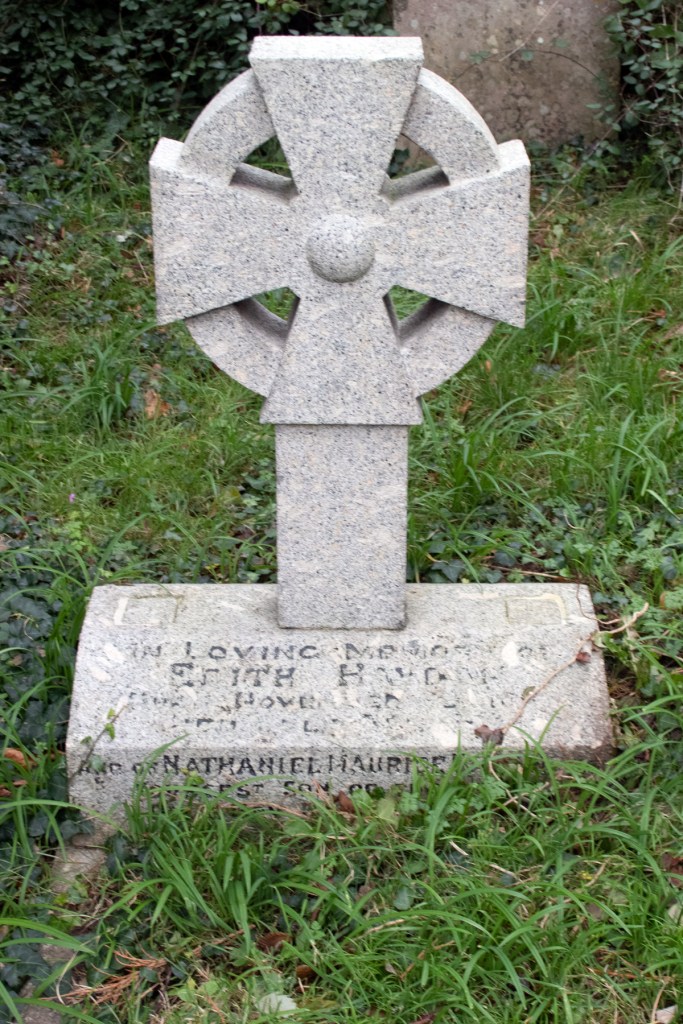
Nathaniel Maurice Haydon was born on 26th May 1900, and was the youngest of four children to Edgar and Edith Haydon. Edgar was a surgeon from Bovey Tracey, Devon, but the family were born and raised in Newton Abbot.
Edgar’s work gave them a comfortable lifestyle: the 1901 census shows the family had four live-in servants. Edith passed away from cancer in July 1903, when her youngest was only a toddler. Edgar married again – to a Gertrude Godwin, fourteen years his junior – four years later; given his role in the community, this is likely to have provided the family with a level of stability.
By the time of the 1911 census, Nathaniel and his older brother Frank were recorded as boarders in a private school in the town, while Edgar and Gertrude were listed at the family home with two domestics.
War was coming to Europe, but Nathaniel was initially young to become involved. Spurred on when his oldest brother, Edgar, was killed at the Somme in July 1916, he applied to join the Inns of Court Officer Training Corps in the summer of 1918. He was accepted, and sent off to Hemel Hempstead, Hertfordshire, for training that September.
Sadly, it was Private Haydon’s eagerness to emulate his brother that led to his undoing. While at the camp, he contracted pneumonia, and passed away on 1st November 1918, aged just 18 years old.
Nathaniel Maurice Haydon’s body was brought back to Devon for burial. He was laid to rest in the family plot in the graveyard of St Mary’s Church, Wolborough, Newton Abbot.
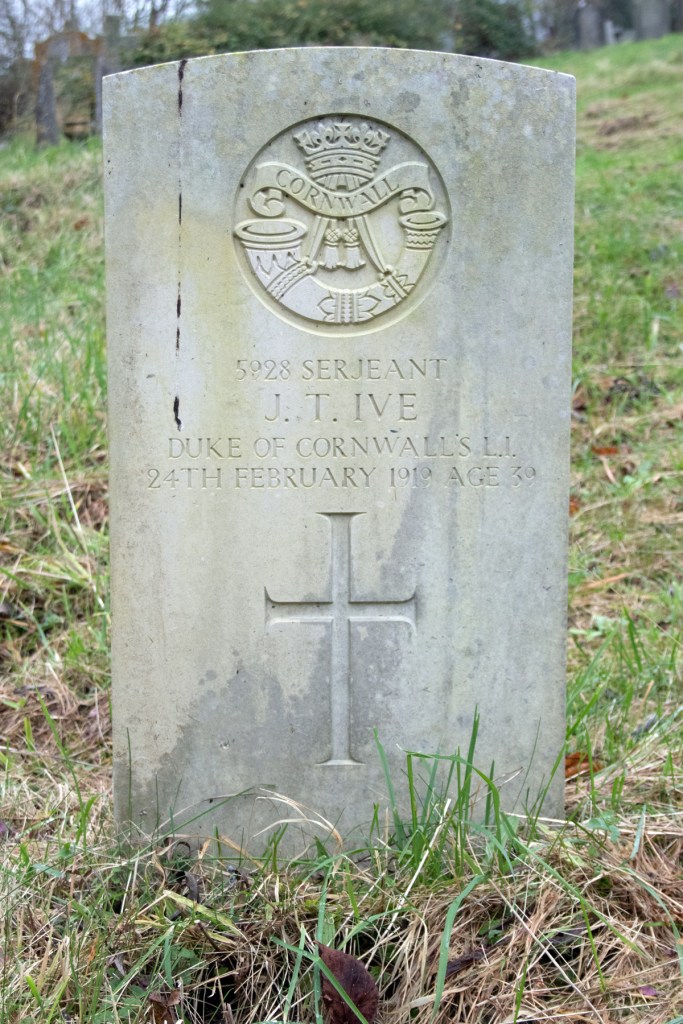
John Tucker Ive was born on 30th January 1882, one of eleven children to George and Emily Ive. George was a stone dresser from Harefield, Middlesex, and this is where the family were born and raised.
John was evidently after a life of adventure and, on leaving school, he enlisted in the Duke of Cornwall’s Light Infantry. There is little documented about his military career, but he was based in Devonport and spent a couple of years in South Africa during the Second Boer War.
When he returned to England, John met Amy Ethel Staunton, from Stonehouse in Devon. The couple married in 1905 and went on to have a son, also called John, the following year.
When his military service came to an end, John found work as a butler, and he and Amy were employed by the same household. John Jr, meanwhile, was brought up by his maternal grandmother in Plymouth.
Global conflict was on the horizon, by now, and John soon felt the need to play his part once again. He rejoined the 2nd Battalion of the Duke of Cornwall’s Light Infantry, and was given the rank of Serjeant. He was shipped to France in August 1914, where his battalion fought at Ypres and at Mons, and he was injured during both battles.
By the time the conflict ended, Serjeant Ive had transferred to the regiment’s Labour Corps; at the start of 1919, he was preparing to be discharged from the army, but contracted pneumonia. Admitted to the Alexandra Hospital in Cosham, Hampshire, the lung condition sadly got the better of him: he passed away on 24th February 1919, at the age of 37 years old.
John Tucker Ive was brought back to Devon for burial; he was laid to rest in the graveyard of St Mary’s Church in Wolborough, Newton Abbot.
Two of John’s brothers also died in the conflict.
Private George Robert Ive served with the 2nd Battalion of the Royal Fusiliers. He died at Gallipoli on 28th June 1915, at the age of 34 years old.
Gunner Edward Ive served with the Royal Garrison Artillery. He died in the Persian Gulf on 1st May 1916, aged just 30 years old.
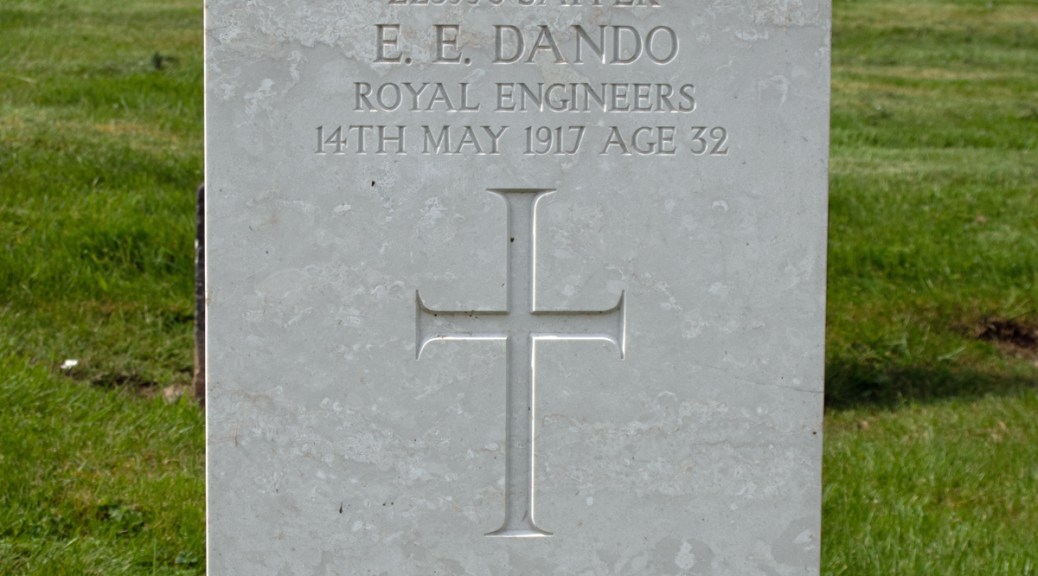
Ernest Edward Dando was born in November 1884, in Paulton, Somerset. One of eight children, his parents were Hezekiah and Emma Dando. Hezekiah was a shoemaker from the town and this is a trade into which Ernest followed when he left school and through to the outbreak of war.
On 20th December 1914, Ernest married bootmaker’s daughter Emma Elizabeth Elliott in Paulton’s Holy Trinity Church. With war raging across Europe by this point, it would eventually come to Ernest’s door, however, and, in January 1917, he enlisted in the Royal Engineers as a Sapper.
There is little documentation available about Ernest’s military life, although it is evident that his boot making skills were employed by the army. He was sent to Bangor, North Wales, for training, but contracted pneumonia while he was there. Admitted to a military hospital in the area, he passed away from the lung condition on 14th May 1917, at the age of 32 years old.
Ernest Edward Dando’s body was brought back to Somerset for burial. He was laid to rest in the picturesque Paulton Cemetery near the heart of the town.
Sapper Ernest Dando (from britishnewspaperarchive.co.uk)
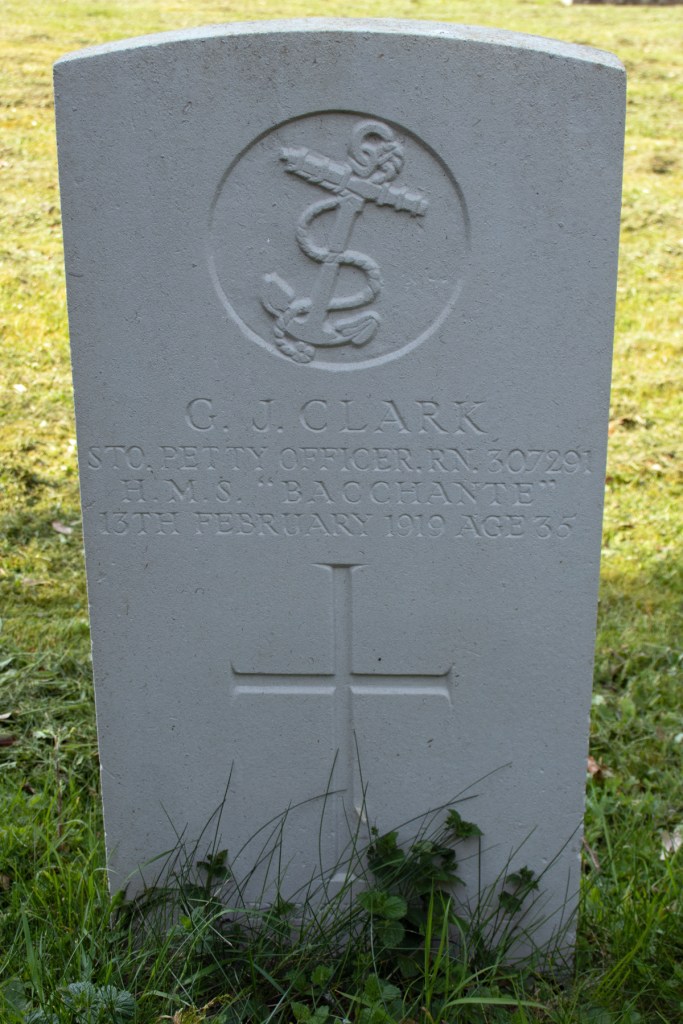
Gilbert John Clark was born in Bedminster, Somerset – now a suburb of Bristol – on 6th January 1884. He was one of eleven children to Jonah and Elizabeth Clark. Jonah was a coal miner from Devon, who travelled to find work. He and Elizabeth left Devon for Somerset in the early 1880s, before moving to Glamorgan, South Wales in 1891. This seemed not to last long, however, and, by 1895, the family were living back in Bristol.
The 1901 census recorded Jonah and Gilbert’ older brother, William, working the mines. Gilbert, however, had found different employment, working instead as a labourer for a brick maker. This did not turn out to be a long-term career for him, however, and, on 25th August 1904 he enlisted in the Royal Navy as a Stoker 2nd Class.
Gilbert’s service records show that he was 5ft 3ins (1.6m) tall, had black hair, dark brown eyes and a dark complexion. He was also noted to have a number of tattoos on his left arm, including a woman’s head, a figure of a woman and a cross with a man, crossed hands with a flower, a snake heart and an arrow.
Stoker 2nd Class Clark enlisted for a period of twelve years, and was initially based at HMS Vivid, the Naval Barracks in Devonport. After his training, he was given his first posting, on board HMS Barfleur. He quickly transferred, however, and in April 1905 was assigned to the battleship HMS Vengeance.
Gilbert’s three years on Vengeance were mixed. During that time, he spent two separate periods in the cells. The first, in February 1906, was for desertion, and resulted in ten days in the brig. The second, in August that year meant he was locked up for a further five days although the misdemeanour this time is not documented. This second period in the brig seemed to bring Gilbert to his senses, however, and the rest of his time on board Vengeance seems blemish-free, and even gave him a promotion to Stoker 1st Class.
The remainder of Gilbert’s twelve years’ service saw him assigned to a further eight vessels; between voyages he returned to the Devonport Naval Base. He also received a further two promotions: Leading Stoker in May 1912, and Stoker Petty Officer in February 1914.
War was imminent, by this point, and, at the end of his initial contract, he volunteered to remain in the Royal Navy for the period of the hostilities. After a six-month posting in Devon, Stoker Petty Officer Clark served on three more vessels. It was while he was on board HMS Bacchante, however that he fell ill with influenza. The ship was moored at the Royal Naval Dockyard in Chatham, Kent, at the time and he was admitted to the RN Hospital in the town.
Sadly, Gilbert’s influenza turned to pneumonia and proved too much for his body to bear. He passed away from the lung conditions on 13th February 1919, at the age of 35 years old.
Gilbert John Clark’s body was brought back to Somerset for burial. He was laid to rest in the graveyard of St John the Baptist Church in Peasedown St John, where his parents were then living.
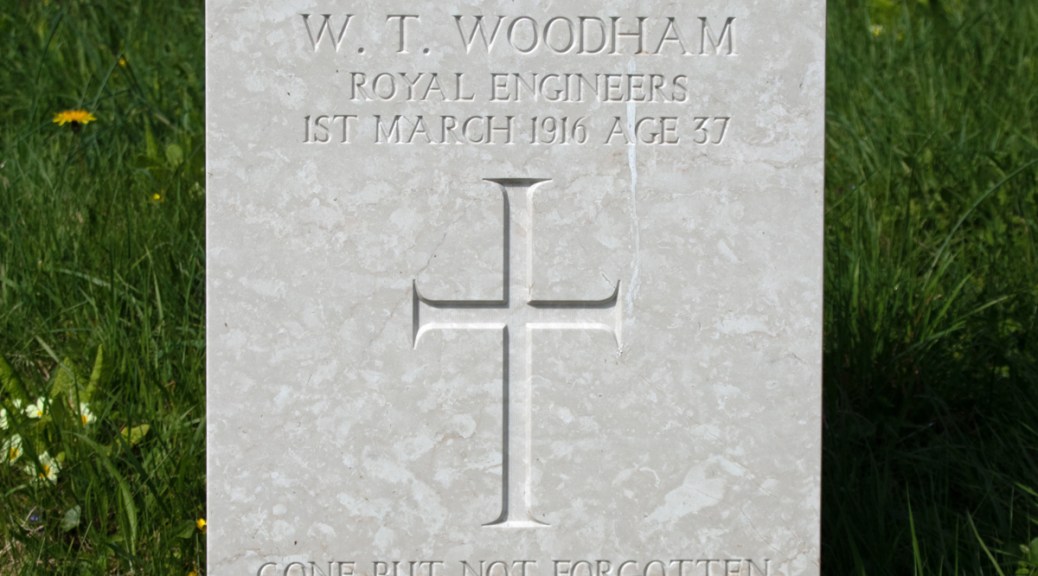
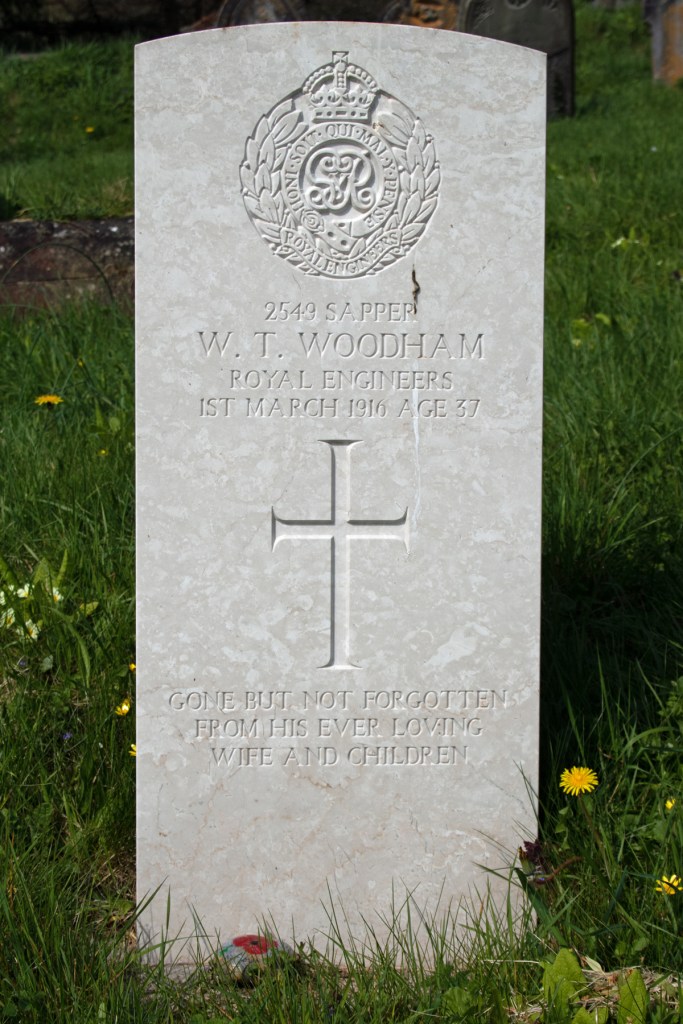
William Thomas Woodham was born at the end of 1877 in Peasedown St John, Somerset. One of four children, his parents were coal miner and pit worker William Thomas and his wife, Sarah. The young family quickly moved from Peasedown to nearby Radstock to set up home.
William Jr did not immediately follow his father to the mine: instead, when he left school, he found work as a cowherd for a local farm. By the time of the 1911 census, however, he was recorded as being a colliery stoker.
The following year, William married Matilda Gulliford. She was a local coal miner’s daughter: the couple went on to have three children, Gwendoline, Stanley and Irene.
In his spare time, William volunteered for the Somerset Light Infantry and, when war broke out, he was formally placed on reserve – mining was one of the reserved occupations. However, in June 1915, he transferred to the Royal Engineers, and was sent to the Military Barracks at Taunton for training.
Sapper Woodham was due to be sent to France in the spring of 1916, but started feeling unwell. He was admitted to the Taunton Military Hospital, suffering from pneumonia on 20th February, but his condition worsened. He passed away at the hospital on 1st March 1916, aged 38 years old.
William Thomas Woodham’s body was brought back to Radstock; he was laid to rest in the graveyard of the town’s St Nicholas’ Church.
Sapper William Woodham (from britishnewspaperarchive.co.uk)
Lionel Millard Gibbons was born in the spring of 1898 and was one of four children. His father, Benjamin, was a seed merchant from Camerton, Somerset, while his mother, Mary, had been born in Taunton. The family lived at Sheep House Farm in Camerton, where Benjamin employed a couple of servants to help manage things.
When war broke, out, Lionel was keen to play his part. He enlisted in the 4th Battalion of the Gloucestershire Regiment as a Private. While there are no dates to confirm when and where Lionel served, the regiment itself was involved at the Somme in 1916 and Ypres the following year.
Private Gibbons was badly wounded by shrapnel in the autumn of 1917, and returned to England to recover. Once he had, he was transferred to the 449th Agricultural Company of the Labour Corps and employed on farm work in Egford, near Frome.
It was while he was there that Private Gibbons contracted influenza and pneumonia; he passed at the farm on 28th October 1918, at the age of just 20 years old.
Lionel Millard Gibbons’ body was brought back to Camerton for burial. He lies at rest in the family grave in the ground of St Peter’s Church there.
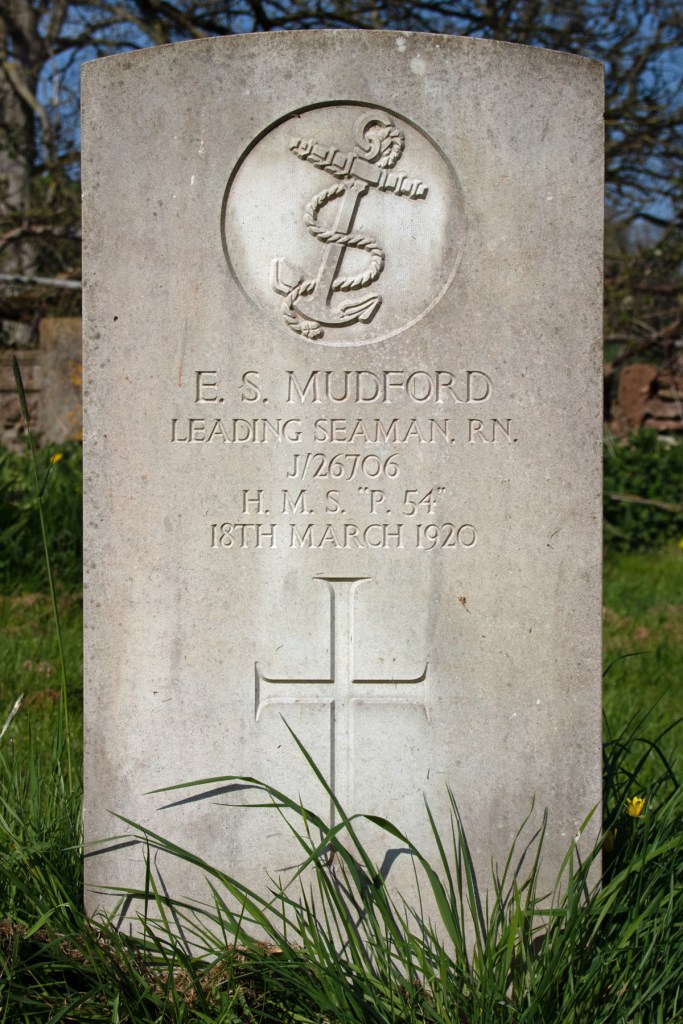
Edward Short Mudford was born on 29th March 1898 in the Somerset village of Stratton-on-the-Fosse. He was one of nine children to Joseph and Mary Mudford.
Information about his early life is confusing: the 1901 census gives his name as Edwin, rather than Edward; his father appears to have died by this point, leaving Mary to raise the family alone. The 1911 census records Edward and a younger sister living in the Union Workhouse in Shepton Mallet, while Mary has apparently remarried and was living in Radstock with two of Edward’s siblings and a daughter from her second marriage, although her new husband is noticeable in his absence from the document.
From this shaky start, however, Edward sought a new life for himself. On 21st August 1913 he enlists in the Royal Navy. His service records show that he stood just 5ft 1ins (1.55m) tall, had fair hair, hazel eyes and a fresh complexion. Being under age at the time, he was given the rank of Boy 2nd Class.
Edward was initially sent to HMS Ganges, the naval training establishment outside Ipswich, Suffolk. Promoted to Boy 1st Class in February 1914, he was soon given his first posting, on the cruiser HMS Crescent.
After another short spell at HMS Vivid, the Naval Dockyard in Plymouth, Boy Mudford found himself on board HMS Thunderer. Edward spent nearly four years aboard the battleship, coming of age and gaining the rank of Ordinary Seaman, while also being promoted to Able Seaman in March 1916.
Edward returned to Plymouth in February 1918, and spent the next couple of years between there, Portsmouth and Woolwich Dockyards. He was again promoted, given the rank of Leading Seaman in September 1918.
Life at sea and in barracks took its toll, however, and, in in the spring of 1920, Leading Seaman Mudford contracted influenza and pneumonia. Sadly the conditions proved too much to bear: he passed away on 20th March 1920, a week shy of his 22nd birthday.
Brought back to Somerset, where, presumably some of his family still lived, Edward Short Mudford was laid to rest in the graveyard of St John the Baptist Church in Chilcompton.
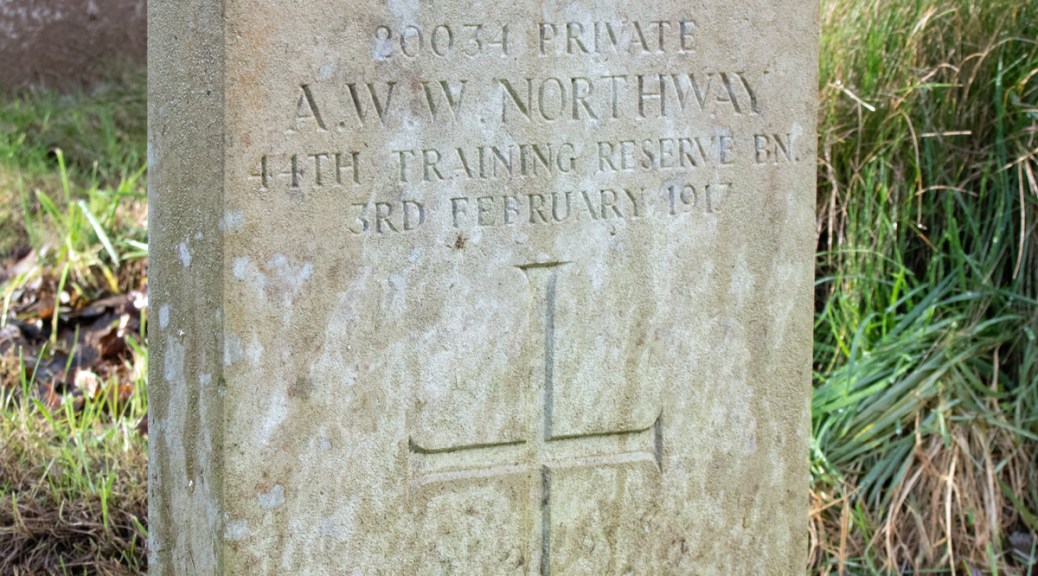
Alfred William Winsor Northway was born on 3rd December 1870 in Barnstaple, Devon. He was the only child to farm labourer John Northway and his wife Susan. By the time Alfred was a few months old, John had moved the young family to Ashburton.
On 2nd March 1890, Alfred married Susanna Raddon in Newton Abbot. The couple went on to have eleven children – Susanna already had two children when they married; there is no indication as to whether they were also Alfred’s.
By the time they married, Alfred was working as a farm labourer. This was a job he continued to do to support his rapidly growing family. War was coming to Europe, however, and the stability of life in Ashburton was soon to change. During this time, he volunteered for the 3rd Battalion of the Devonshire Regiment and this stood him in good stead moving forward.
At least two of Alfred and Susanna’s sons enlisted when the First World War broke out; not to be outdone, Alfred also joined up on 11th September 1914. Assigned to the 11th (Reserve) Battalion of the Devonshire Regiment as a Private, there is no indication that he saw any time abroad. Instead it seems that he served at the regiment’s depot in Wareham, Dorset, supporting the Training Reserve.
By the end of 1916, Private Northway had fallen ill. Admitted to the Sidney Hall Hospital in Weymouth with pneumonia, sadly the condition got the better of him. He passed away on 3rd February 1917, at the age of 46 years old.
Alfred William Winsor Northway was brought back to Ashburton for burial. He was laid to rest in the graveyard of St Andrew’s Church in the town.
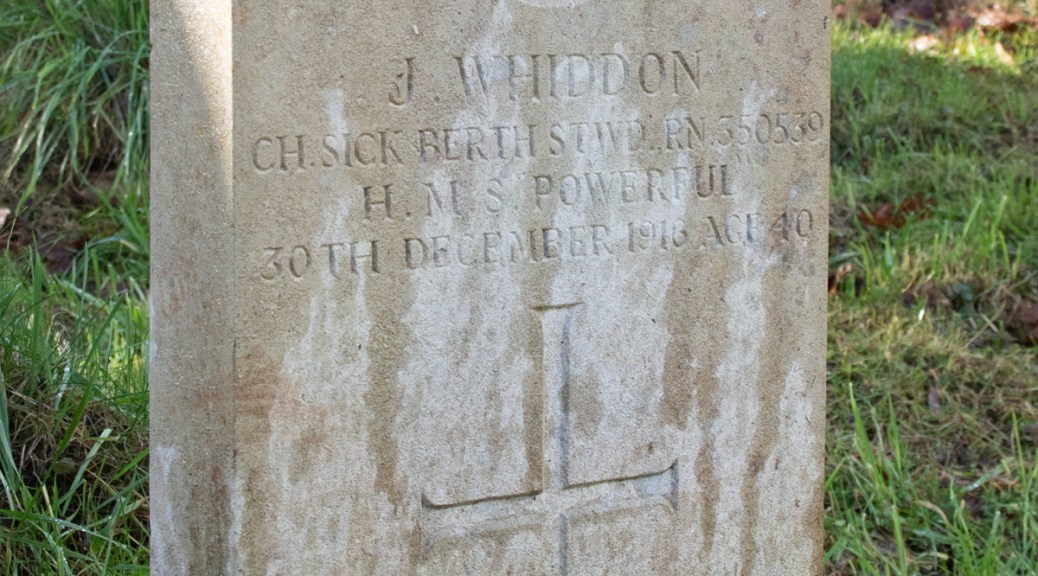
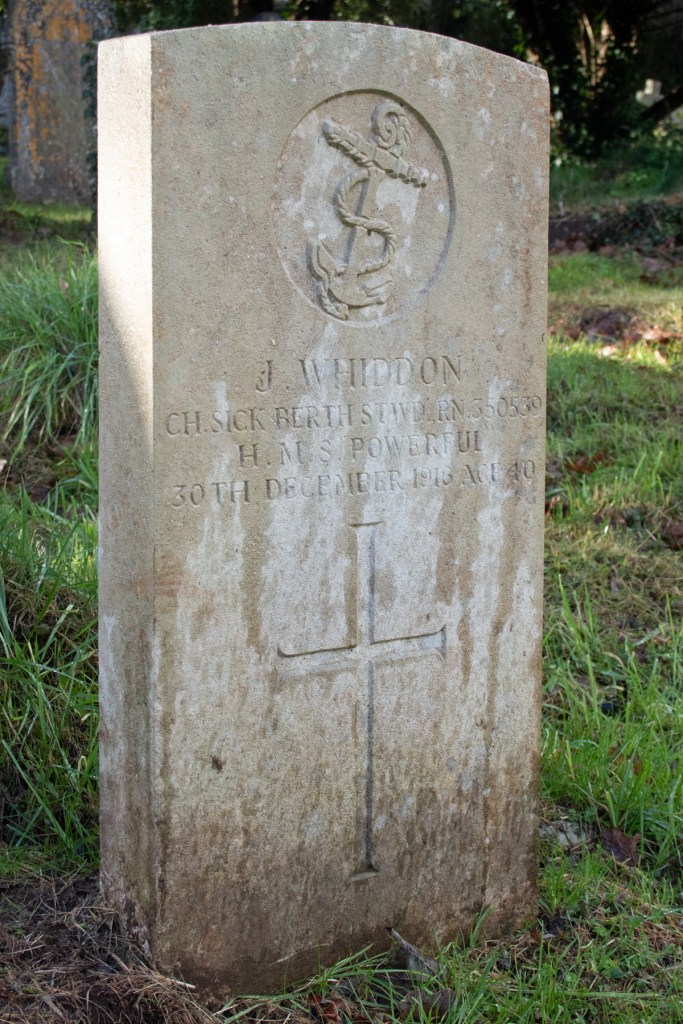
John Whiddon was born on 15th January 1876 in the Devon town of Ashburton and was one of seven children to John and Elizabeth Whiddon. John Sr was a general labourer, but when he left school, his son found work as a baker’s apprentice.
John was keen to better himself and so, at the age of 21, he enlisted in the Royal Navy. His service records confirm that he enlisted on 21st July 1897 for a period of 12 years. He was recorded as standing 5ft 6in (1.67m) tall, with light brown hair, blue eyes and a fair complexion.
John’s role was as a Sick Berth Assistant and, over the next few years he had a number of different postings. While some were on sea-going vessels, the majority of his time on shore. He served at the Haslar Hospital in Portsmouth, Plymouth Hospital and at HMS Vivid, the Royal Naval Dockyard in Devonport.
Sick Berth Assistant Whiddon certainly worked hard, though, and this paid off. In 1902 he was promoted to Sick Berth Steward and, in 1909, when his contract came to an end, he volunteered to stay on. Over the next seven years, John continued to do his duty, both on shore and at sea, and was again promoted, this time to Chief Sick Berth Steward.
At some point John married a woman called Catherine; sadly there is no information about her, other than that she had passed away by 1916.
In the autumn of 1916, John was serving on board HMS Powerful, when he contracted pneumonia. He was brought ashore and admitted to the Royal Naval Hospital in Plymouth, but sadly passed away from the illness on 30th December 1916. He was 40 years of age.
John Whiddon was brought back to Ashburton for burial. He lies at rest in the graveyard of St Andrew’s Church there.








 Death and Service