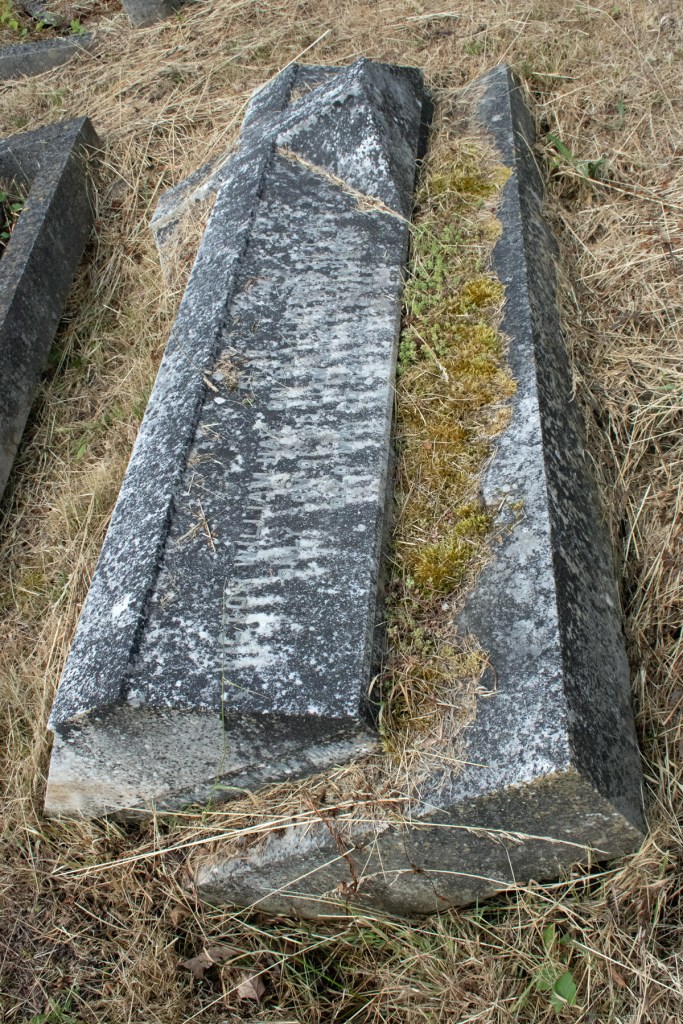
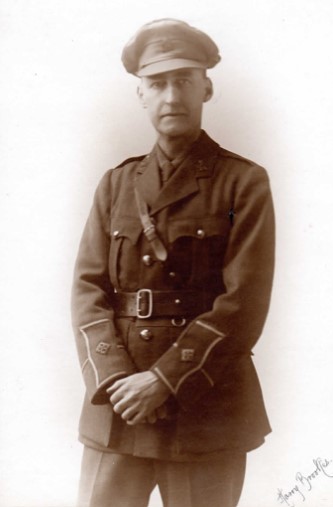
Category Archives: illness

Ship’s Corporal Thomas Berry

Ship’s Corporal Thomas Berry

Details of the civilian life of Thomas Joseph Berry are a challenge to piece together. He is not recognisable in any census returns, and baptism records don’t tally either.

The main resource for building a picture of Thomas’ life is the service record for his time in the Royal Navy. This provides his date of birth – 6th May 1882 – and suggests that he was born in Hornsey, Middlesex. He was working as a cabinet maker when he enlisted, the document also confirming that he was 5ft 4ins (1.62m) tall, with brown hair, brown eyes and a fresh complexion.

Thomas began his naval career on 29th July 1898. Below the age to formally enlist, he was given the rank of Boy 2nd Class. Over the next eighteen months, his time was split between two training ships based in Devonport, Devon, HMS Impregnable and HMS Lion. In April 1899 he was promoted to Boy 1st Class.

In February 1900, Thomas moved to HMS Vivid, the Royal Naval Dockyard in Devonport. On 6th May he came of age, and was formally enrolled in the navy, receiving the rank of Ordinary Seaman. From this point his career took off and, over the next sixteen years, he would go on to serve on board fifteen ships, seeing the world.

At his annual reports, Thomas’ conduct was regularly identified as Very Good, and his commitment was reflected in the progress he made through the ranks. By June 1901, he had been promoted to Able Seaman Berry. The summer of 1907 saw him move up to Leading Seaman, and three years later, Thomas was a Petty Officer. In November 1911 he was made Ship’s Corporal 2nd Class, and by the following spring he had been promoted again, this time to Ship’s Corporal 1st Class.

Away from the Royal Navy, Thomas’ personal life was developing. Again there is little documentation to provide any specifics, but he married a woman called Albertine Elizabeth in the early 1910s. The couple went on to have a son, Bernard, who was born on 15th January 1913, and the family seemed to settle down in Paignton, Devon – a later record giving Albertine’s address as 3 Alma Terrace, Well Street.

When war broke out in the summer of 1914, Ship’s Corporal Berry was serving on board the protected cruiser HMS Blake. In February 1916, he was assigned to the battleship HMS Revenge which served in the English Channel.

By this point, Thomas’ health seemed to be taking a downturn. He was posted back to HMS Vivid on 7th March, but was then transferred to Devon County Asylum in Exminster, suffering from “general paralysis of the insane“. His condition worsened and he passed away on 29th April 1916: he was days away from his 34th birthday.

Thomas Joseph Berry’s body was brought back to Paignton for burial. He was laid to rest in the town’s cemetery.


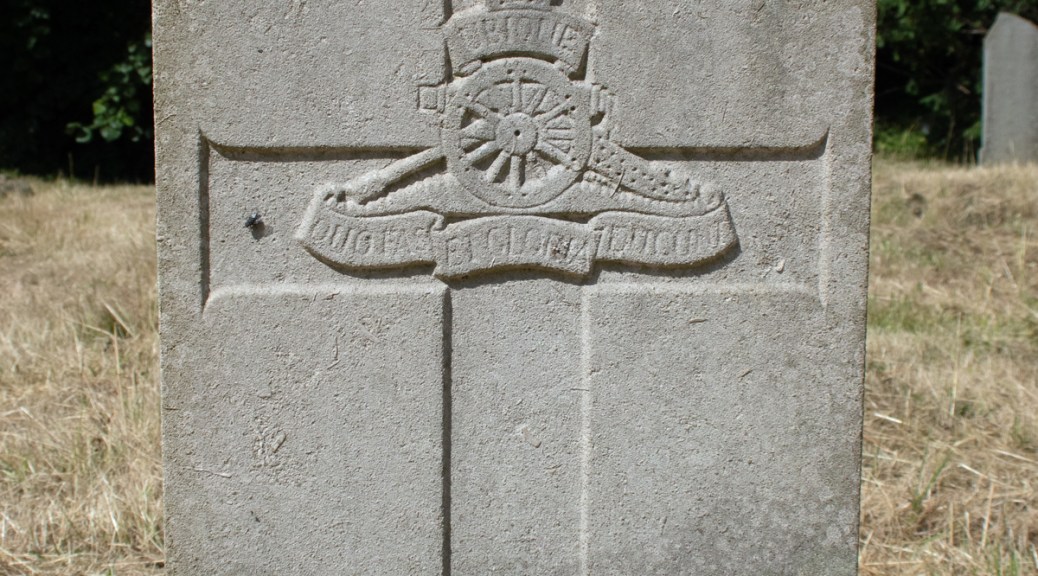
Serjeant Edward Davies

Serjeant Edward Davies

Edward Victor Davies was born in the Weston area of Bath, Somerset, in the summer of 1897. The second of four children, and the only boy, his parents were Walter and Emily Davies.

Walter was a park keeper who died when Edward was just 9 years old. By the time of the 1911 census, Emily was working as a caretaker for a solicitor’s office, while her sone was a boarding student at the Duke of York’s School in Guston, Kent. This army school had more than 500 students, with a staff of 100 to train them. It is unclear whether Edward went voluntarily, or whether he was sent there by his mother’s employers because he was fatherless.

War came to Europe in the summer of 1914, and Edward stepped up to play his part. Unfortunately, his service records have been lost to time, so it is unclear whether he went straight into the army after finishing his education. However, given that he held the rank of Serjeant by the end of the conflict, it seems likely that his military career began before the start of the First World War.

Edward – who was better known as Ted – joined the Wiltshire Regiment, and was assigned to the 2nd Battalion. His unit spent time on the Western Front, but there is no evidence whether or not he served overseas. He survived the war, but subsequently fell ill, as so many servicemen did:

DAVIES – March 28th, Sergeant Edward Victor (Ted) Davies, 2nd Wiltshire Regiment, at the Royal Military Hospital, of pneumonia, following influenza, aged 22 years.

[Bath Chronicle and Weekly Gazette – Saturday 03 April 1920]

Edward Victor Davies was laid to rest in the sweeping grounds of Bath’s Locksbrook Cemetery, not far from where he had grown up.


Gunner William Dallimore

Gunner William Dallimore

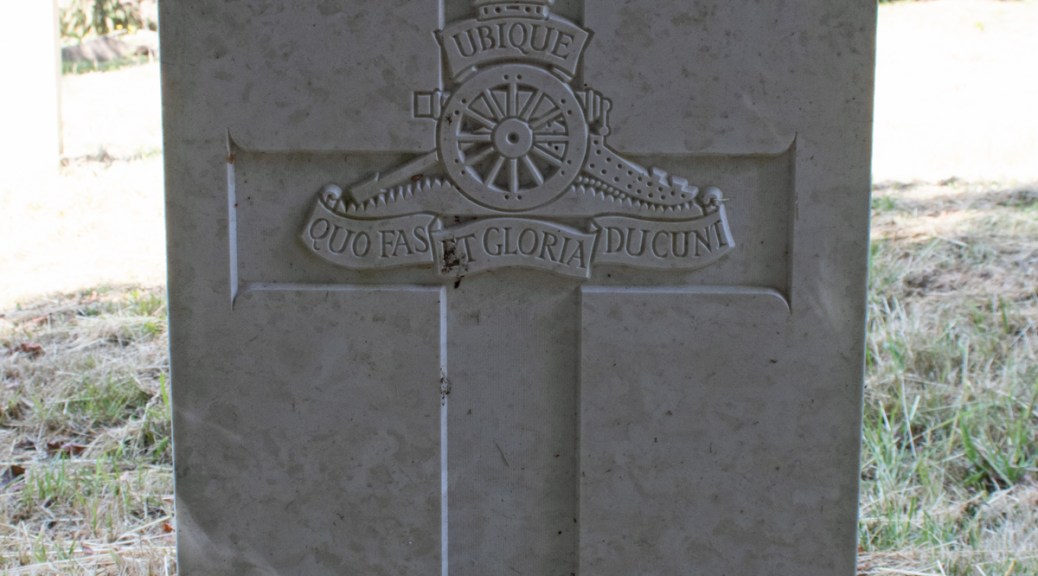
The funeral took place on Monday at Locksbrook Cemetery, with military honours, of Gunner Wm. Dallimore, B Battery, RFA, 88th Brigade, who died on Friday at the Kingswood School VA Hospital. Deceased, who was a single man, 32 years of age, living at 2 Spa Gardens, Larkhall, joined the Army only eight or ten months ago, and was brought to hospital less than a month ago, suffering from an incurable complaint…

The family mourners were Mr Frank Dallimore (brother), Private George Dallimore, 4th Somersets (brother), Mrs Frederick Dallimore (sister-in-law)…

[Bath Chronicle and Weekly Gazette – Saturday 21 August 1915]

There is little concrete information about the early life of William Dallimore. The Army Register of Soldiers’ Effects name his siblings as his beneficiaries, and so it seems that his parents had passed away before war broke out. There are no census records matching his name with the brothers confirmed in the newspaper article, and so it is impossible to get definite information about his birth or parentage.

Only the first page of Gunner Dallimore’s service records remain, but this still provides some details about him. He enlisted on 14th August 1914, a matter of weeks into the conflict, giving up his job as a painter to do so.

While his brigade would go on to serve at the Somme and Ypres, there is no evidence that William saw any action overseas. In fact, the hospital to which he was admitted was in Bath itself, so it may be that he was based near the city.

William Dallimore passed away on 13th August 1915. He was laid to rest in Bath’s sweeping Locksbrook Cemetery.


Gunner Henry Morris

Gunner Henry Morris

The early life of Henry Morris is difficult to pin down although later records suggest that his parents were William and Elizabeth from Bath, Somerset. A baptism record from December 1882 shows Henry Morris, with a mother called Elizabeth, but no father is noted, so there is no way to confirm any connection.

The first concrete information for Henry is the 1911 census: this records Henry Morris living with his wife, Eliza, their son, Henry Jr, and Eliza’s mother, Emma Derrick. He was working as a poulterer, employed by a fishmonger’s, with Eliza also working as a fish hawker. Henry and Eliza – who had married in 1905 – would go on to have a second child, Emma, who was born in November 1911.

When war broke out, Henry stepped up to serve his King and Country. Full service records are lost to time, but it is clear that he had enlisted by the spring of 1916, joining the Royal Field Artillery as a Gunner. Documents suggest two different units in which he served: the 26th Division Ammunition Column and the 5th (Reserve) Brigade.

By the autumn of 1916, Henry was suffering from nephritis. He was admitted to the military hospital on Endell Street, London, but his condition was to prove fatal. He passed away on 24th November 1916: he was 32 years of age. With a few discrepancies, a newspaper article gave a little more information about his life:

Henry Morris, RFA, 67 Avon Street, died this morning… He was invalided home from Salonika, and arrived in London nine weeks ago, He was married, and leaves a widow and two children… For eleven years Driver Brooks worked for Mr Broadhurst, fishmonger, York Buildings, Bath, and joined the army sixteen months ago.

[Bath Chronicle and Weekly Gazette: Saturday 25th November 1916]

Henry Morris was taken back to Somerset for burial. He was laid to rest in Bath’s sweeping Locksbrook Cemetery.


Gunner Henry Morris
(from findagrave.com)

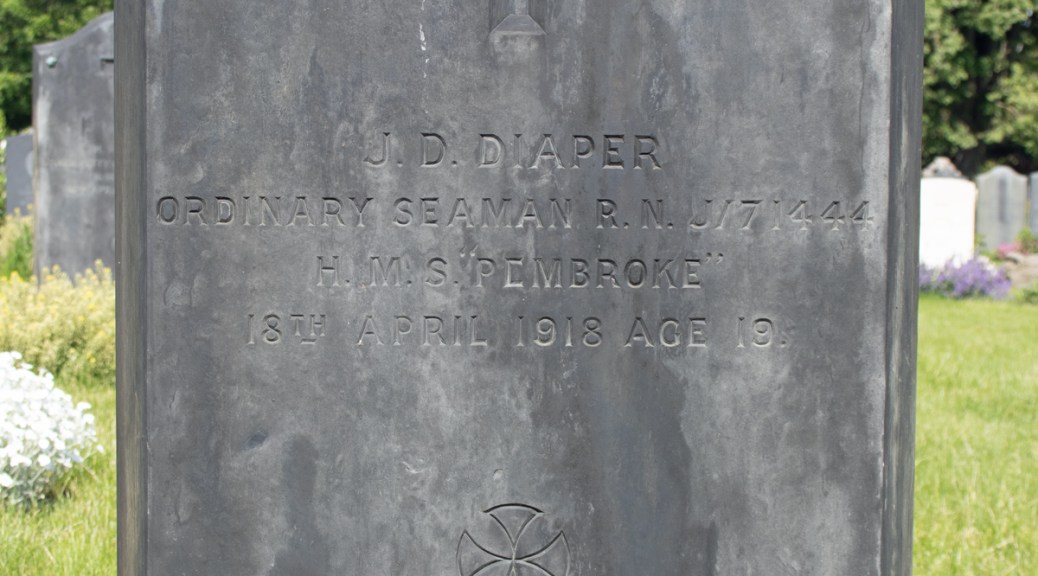
Ordinary Seaman John Diaper

Ordinary Seaman John Diaper

John Dolby Diaper was born in Stowupland, Suffolk, on 1st June 1898. He was the second youngest of ten children to George and Martha, and the older of two sons. George was a cattleman turned gardener, and it seems that John went into farm work when he completed his schooling.

When war broke out, John was called upon to play his part. He enlisted in the Royal Navy on 6th June 1917, joining as an Ordinary Seaman. His service records show that he was 5ft 4.5ins (1.63m) tall, with brown hair, grey eyes and a fair complexion.

Ordinary Seaman Diaper was sent to HMS Pembroke, the Royal Naval Dockyard in Chatham, Kent, for his training. The summer of 1917 was a particularly busy for the base, and temporary accommodation was set up in the Drill Hall; this is where John was billeted.

On the night of 3rd September 1917, Chatham suddenly found itself in the firing line as a wave of German aircraft bombed the town. The Drill Hall received a direct hit, and Ordinary Seaman Diaper was badly injured. He was admitted to the Royal Naval Hospital in the town, and would remain there for some time.

John’s injuries were severe and, although his treatment was ongoing, the impact on his overall health was detrimental. Ultimately, the air raid weakened his system, and his heart gave out. He died on 18th April 1918, more than seven months after the bombing: he was 19 years of age.

John Dolby Diaper was laid to rest in Woodlands Cemetery, Gillingham, alongside those who had given their lives on 3rd September.


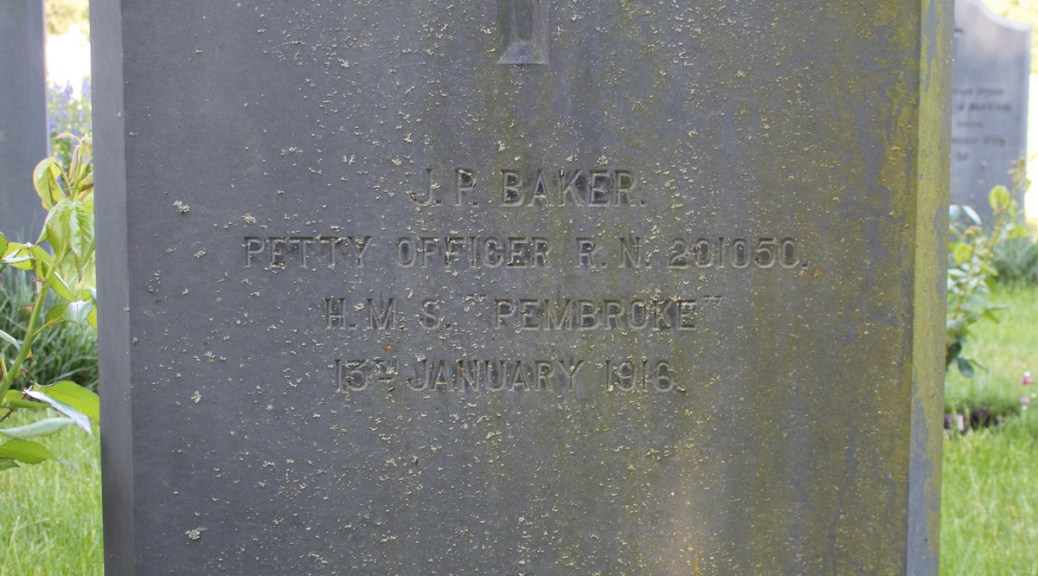
Petty Officer John Baker

Petty Officer John Baker

John Patrick Baker was born on 20th March 1883, the only child to Henry and Mary Baker. Henry was naval pensioner-turned-labourer from Belfast, Ireland, while Mary was born in Queenstown, Ireland. By the time of the John’s birth, however, they had moved to Kent, settling in the village of Cheriton.

John is noticeable by his absence in the coming years. The 1901 census return found his parents living in the same home, but the only other resident was boarder Jesse Fuller.

The 1911 census, however, helps explain this disappearance. The document records John as being one of more than 500 crew on board the cruiser HMS Highflyer. He was notes as being a Leading Seaman and, on the day that the census was taken, the ship was in the Laccadive Sea, off the coast of western India, to the south of Goa.

John is also noted as being married, and it seems that he wed a woman called Adela the previous year. Her entry in the 1911 census noted she was living in a room at 206 Risboro Lane in Cheriton, Kent. The house was also occupied by the Leach family – William, Hannah and daughter Margaret – and a Christina Hawkes, who was also married. Whether they were all related is unclear, but Adela, at 30 years of age, was working as a domestic servant to pay her way.

Adela and John would go on to have two children: John Jr was born on 31st July 1911 – just four months after the census. His younger brother Ernest was born on 21st May 1914, four months before the outbreak of war.

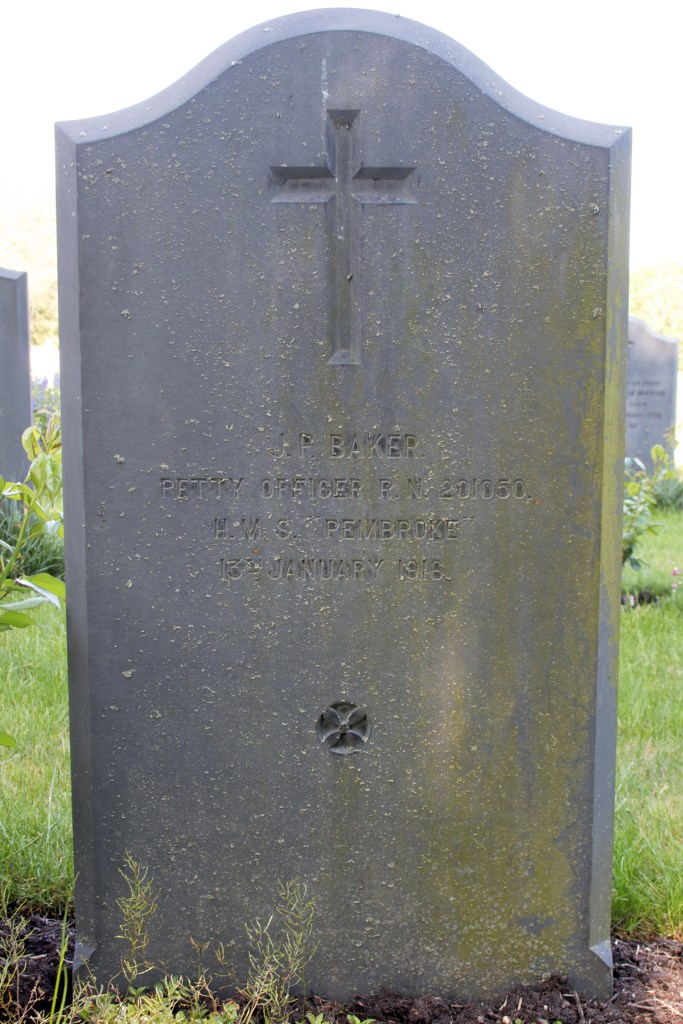
There is little further information available on the Baker Family. John progressed in his naval career, and had risen to the rank of Petty Officer by the end of 1915. That winter he became unwell, although the condition is not readily documented. He was posted at HMS Pembroke, the Royal Naval Dockyard in Chatham, Kent, by this point, and he may well have been admitted to the nearby Naval Hospital.

His illness was to prove fatal, however, and Petty Officer Baker passed away on 13th January 1916. He was 32 years of age.

John Patrick Baker was laid to rest in the Roman Catholic section of the Woodland Cemetery in Gillingham, Kent, not far from the base he had known so well.


Engine Room Artificer James Donnelly

Engine Room Artificer James Donnelly

James Donnelly’s life is a challenging one to pin down. Based on the Commonwealth War Graves Commission information, he was born in 1888 in Cappagh, County Tyrone, Northern Ireland, and was the son of Owen and Mary Donnelly. Unfortunately, there are no baptism or census records to expand on his family background.

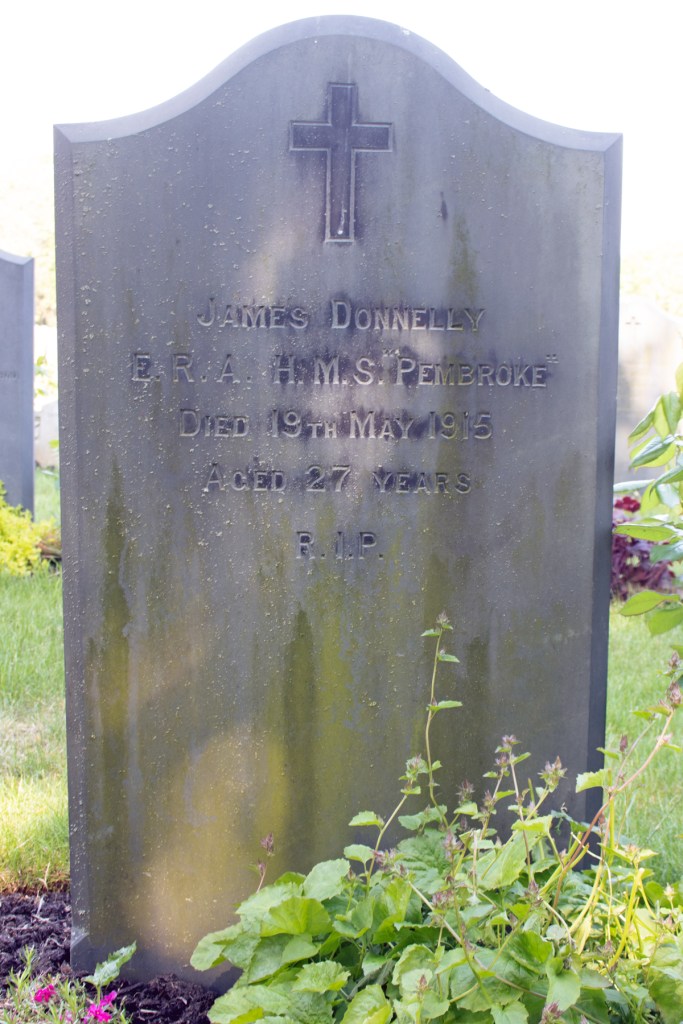
Military records are equally sparse. James enlisted in the Royal Navy as an Engine Room Artificer 4th Class. He was assigned to HMS Pembroke, the Royal Naval Dockyard in Chatham, Kent; given how early in the conflict, and his position at the lower end of the ERA rankings, is it likely that he was posted there for training.

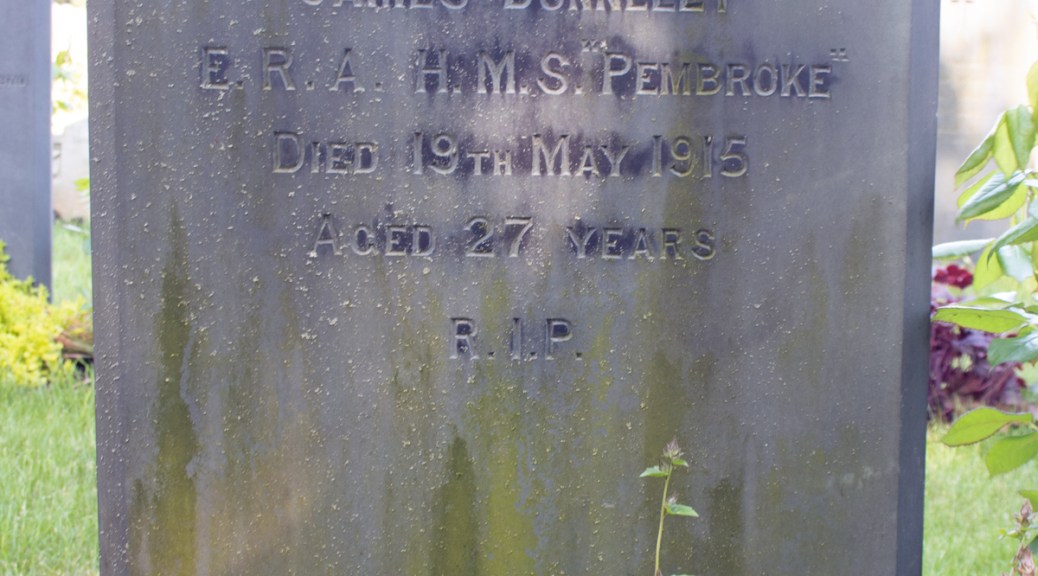
James’ time in the military was to be brief. He was admitted to the Royal Naval Hospital in Chatham, suffering from cerebrospinal meningitis. The condition was to prove severe: he succumbed to it on 19th May 1915, at the age of 27 years old.

Finances may have prevented the Donnelly family from bringing their boy back home. Instead, James was laid to rest in the Roman Catholic section of Woodlands Cemetery, Gillingham, not far from the naval base at which he had served.


Engine Room Artificer James Donnelly
(from findagrave.com)

Private Harold Randall

Private Harold Randall

Harold Stanley Randall was born in Taunton, Somerset, in the autumn of 1898. One of twins, his parents were Joseph and Elizabeth Randall. Joseph was a carpenter, and when Elizabeth died in 1900, he was left with nine children to raise on his own. This led to Harold being raised Joseph’s brother and sister-in-law, George and Caroline, and he is noted as living with them in Bath, Somerset, in the 1901 and 1911 censuses.

There is little direct evidence of Harold’s life: at the time of the 1911 census he was still at school, so it is not clear what employment he took up once his education came to an end. When war broke out, he played his part, and had enlisted in the Gloucestershire Regiment by the summer of 1918.

Private Randall was attached to the 17th Battalion, a territorial force based in Essex. By the end of the war, Harold was billeted in St Osyth, and it was here that he fell ill. Details of his condition are lost to time, but his health was impacted enough for him to be admitted to the general hospital in Colchester.

Harold Stanley Randall’s illness was to get the better of him. He passed away on 7th December 1918, aged just 20 years old. His body was brought back to Somerset for burial, and he was laid to rest in Bath’s sweeping Locksbrook Cemetery. His next of kin was noted as his aunt Caroline, who had raised him from a toddler.


Private Victor Blatchford

Private Victor Blatchford

Victor William Haydon Blatchford was born in Bath, Somerset, on the 20th November 1897. The younger of two children, his parents were William and Kate Blatchford.

William was a draper, and the family lived in the bustling city centre, above the shop he and Kate ran. By the time of the 1911 census, the family were registered as living in 12 rooms at 52 & 53 Southgate Street. As well as the Blatchfords, four other people made up the household: draper’s assistants Edith Letts and Nellie Harris, milliner Florence Carke, and general domestic servant Ellen Heskins.

War came to Europe in the summer of 1914, and Victor was called upon to play his part. Full details of his military service have been lost to time, but a later newspaper report suggest he had enlisted early in 1916. William had died in October 1914, but it is unclear whether his son’s decision to enlist was related to his father’s passing.

Private Blatchford joined the Royal Army Service Corps, and was attached to the Mechanical Transport Depot in Norwood, Surrey. While information about his time in the regiment is no longer available, the same newspaper report hints at time spent overseas:

Private Victor WH Blatchford, ASC, MT, only son of Mrs William Blatchford, Okehampton Lodge, Kipling Avenue, died on May 20th, at Manor War Hospital, Epsom, from pneumonia, contracted in East Africa, after two years and three months’ active service. The funeral will be at Locksbrook Cemetery, and it is asked that no flowers be sent.

[Bath Chronicle and Weekly Gazette: Saturday 25th May 1918]

Victor William Haydon Blatchford died on 20th May 1918: he was just 20 years of age. He was laid to rest in Locksbrook Cemetery, Bath, alongside his father. When Kate passed away in 1941, she was also interred in the family plot.


Second Lieutenant Algernon O’Donoghue

Second Lieutenant Algernon O’Donoghue

Algernon Leopold O’Donoghue was born on 4th June 1869 in Plymouth, Devon. The youngest of five children, his parents were Charles and Frances O’Donoghue. Charles had worked for the East India Company and the family travelled a lot while the children were growing up. He was in India when, in the spring of 1872, he passed away.

By the time of the 1881 census, Frances had moved the family to the Walcot area of Bath, Somerset. She was working as an assistant, and employed a servant of her own to help support the four children.

Over the next few years, Algernon’s trail goes cold. In 1900, he married Janette Hay, the daughter of a Justice of the Peace, who had been born in Ceylon. It seems likely that they met overseas: the 1911 census return records that she had been born in Ceylon, while he was a retired forest manager whose job had taken him to Burma (now Myanmar).

The census document found the couple living in a seven-room villa in Combe Down, on the outskirts of Bath. The had had a son by this point, with Algernon Jr making up the family.

Algernon was working for the Bombay Trading Company, and back out in India, when war broke out. He returned home, and stepped up to serve his King and Empire. While his service records have been lost to time, Private O’Donoghue joined the Royal Defence Corps, and quickly rose through the ranks: by the spring of 1917, he was a Second Lieutenant.

It was while serving in the north west of Britain that he fell ill: “[he got] wet while out in heavy rain, pneumonia following, and then double pneumonia.” [Bath Chronicle and Weekly Gazette: Saturday 26th May 1917] Second Lieutenant O’Donoghue was admitted to the Whitman Military Hospital in Manchester, but his condition was too severe. He passed away on 22nd May 1917, two weeks before his 48th birthday.

The body of Algernon Leopold O’Donoghue was taken back to Somerset for burial. He was laid in the family plot in Bath’s panoramic Locksbrook Cemetery, reunited with his mother, Frances, who had died a decade before.


Second Lieutenant Algernon O’Donoghue
(from findagrave.com)