Category Archives: illness

Private Frank Tucker

Private Frank Tucker

Frank Tucker was born in the Devon village of Georgeham on 7th June 1890. The youngest of seven children, his parents were farmers Charles and Mary Tucker.

When Frank completed his schooling, he joined his older siblings helping on the farm. The 1911 census recorded all but one of the Tucker household doing agricultural work, Frank’s older sister Hannah being the exception, as she was working as an elementary school teacher.

War broke out in the summer of 1914, and Frank would be called upon to play his part. He did not enlist until 21st June 1918, however, when he joined the Royal Marine Artillery as a Private. His service papers note that he was 5ft 10ins (1.77m) tall, with fair hair, blue eyes and a fair complexion.

Private Tucker was sent to the Royal Marine depot in Eastney, Hampshire, for this training, but his time there was not to be a lengthy one.

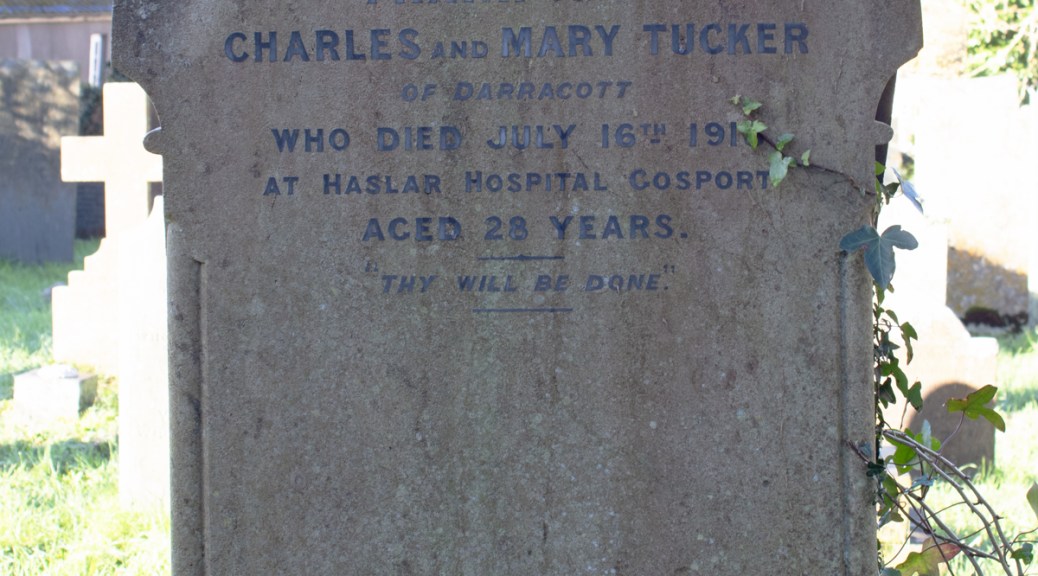
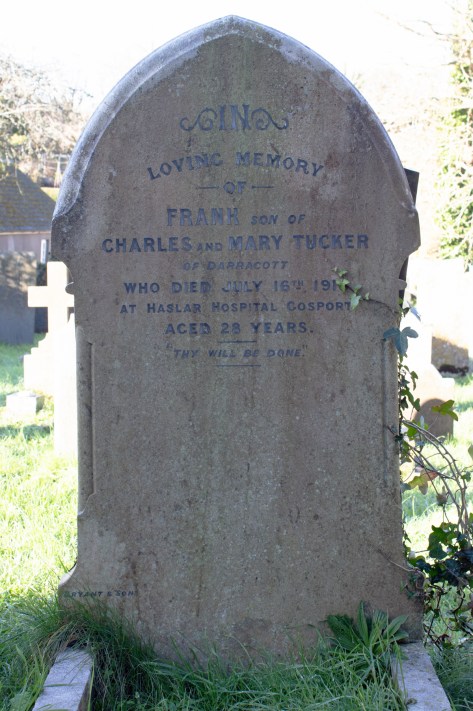
It is with regret that we have to record the death from pneumonia, of Pte. Frank Tucker (RMA) son of Mr and Mrs C Tucker, or Darracott, which occurred at Haslar Hospital, Gosport, on Tuesday in last week after a brief illness. Deceased, aged 28, had been serving with the colours just a month, and his death came as a sad blow to his many friends and relatives resident in Braunton and district.

[North Devon Journal: Thursday 25th July 1918]

The body of Frank Tucker was taken back to Devon for burial. He was laid to rest in the graveyard of St George’s Church in his home village.


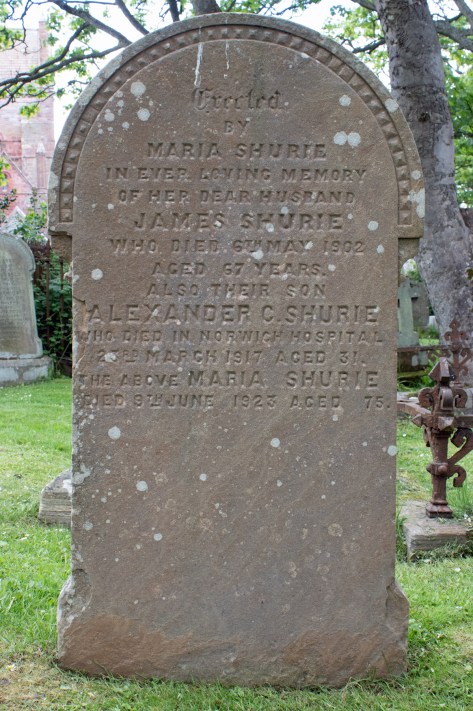
Private Alexander Shurie

Private Alexander Shurie

Alexander Cursiter Shurie was born in Orkney, in 1886. The youngest of seven children, his parents were farmers James and Maria Shurie. The family were born and raised in West Grenigoe, a small hamlet between Orphir and Scapa, on the Orkney mainland.

There is little information about Alexander’s young life. James died in 1902, and it is likely that his son helped with the running of the farm. When war broke out, he did not enlist immediate and, while his service records have been lost to time, it seems likely that he did not join up until the autumn of 1916.

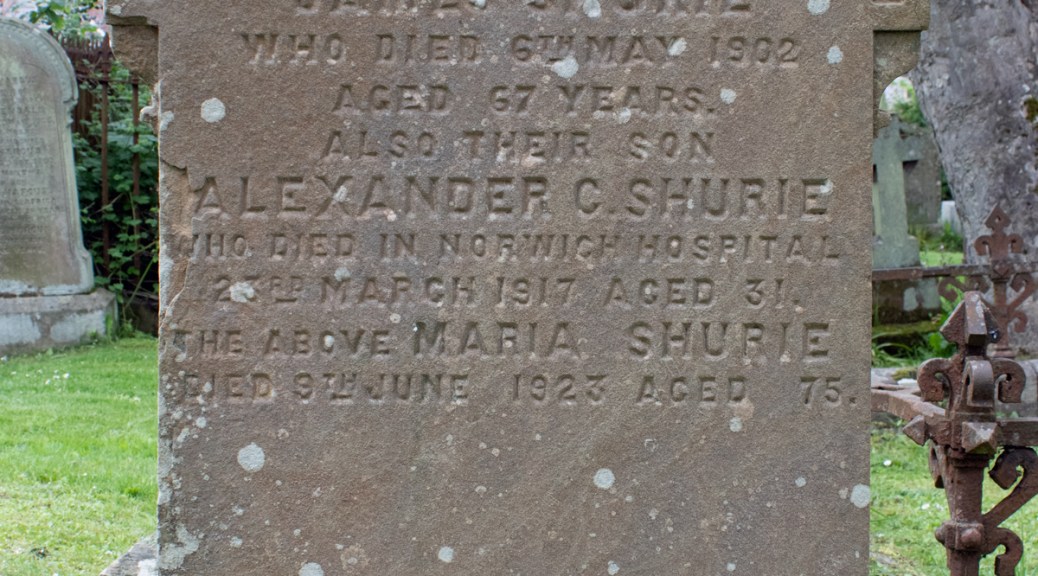
Private Shurie’s unit – the 6th Battalion or the Seaforth HIghlanders – served on the Western Front during the conflict, but there is nothing to show that Alexander spent any time overseas himself. By March 1917, he had fallen ill, and was admitted to the Norwich War Hospital in Norfolk. His condition is unclear, but it would prove fatal: he passed away on 18th March 1917, at the age of 31.

The body of Alexander Cursiter Shurie was taken back to Orkney for burial. He was laid to rest in the family plot in the graveyard of St Magnus’ Cathedral, Kirkwall.


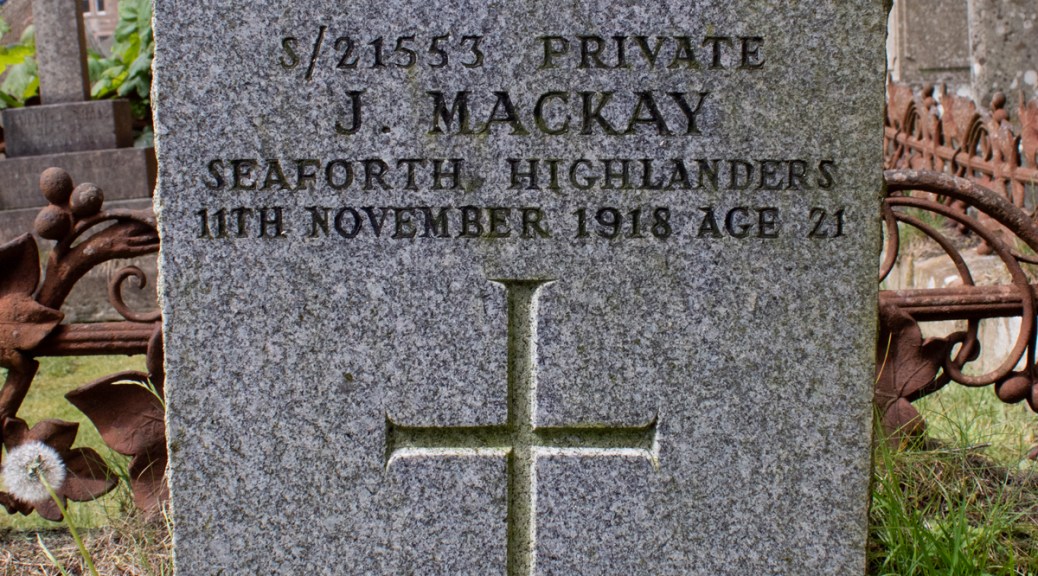
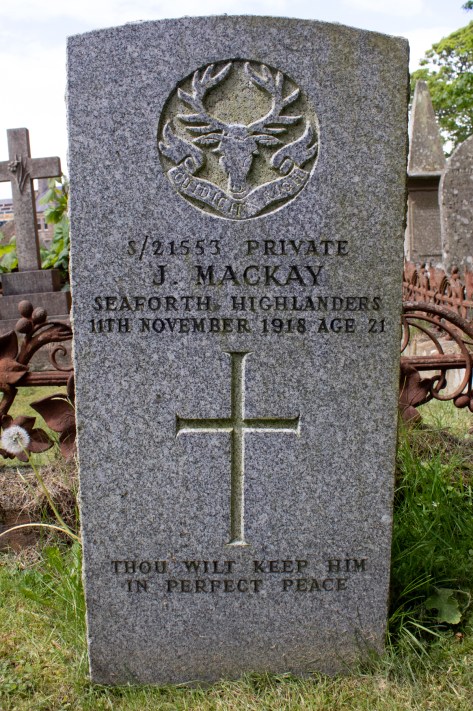
Private James Mackay

Private James Mackay

James – or Jim – Mackay was born in Kirkwall, Orkney, in 1897, and was the youngest of six children to John and Margaret Mackay. John was a stone mason, and the family lived in a small cottage at 14 Victoria Road, close to the town centre.

Little information survives about Jim’s life, and the family do not appear on the 1911 census. He would have been too young to enlist when war broke out, but at some point during the conflict, he enlisted in the army, joining the Seaforth Highlanders as a Private. His unit – the 3rd (Reserve) Battalion – was a depot unit, and was based at Cromarty, to the north of Inverness, for the duration.

In the closing weeks of the war, Jim fell ill, and was admitted to the military hospital in Cromarty, suffering from pneumonia. The condition would prove fatal, and he passed away on 11th November 1918, the day the Armistice was signed. He was just 21 years of age.

The body of James Mackay was taken back to Orkney for burial. He was laid to rest in the graveyard of St Magnus’ Cathedral, a short walk from where his family still lived.


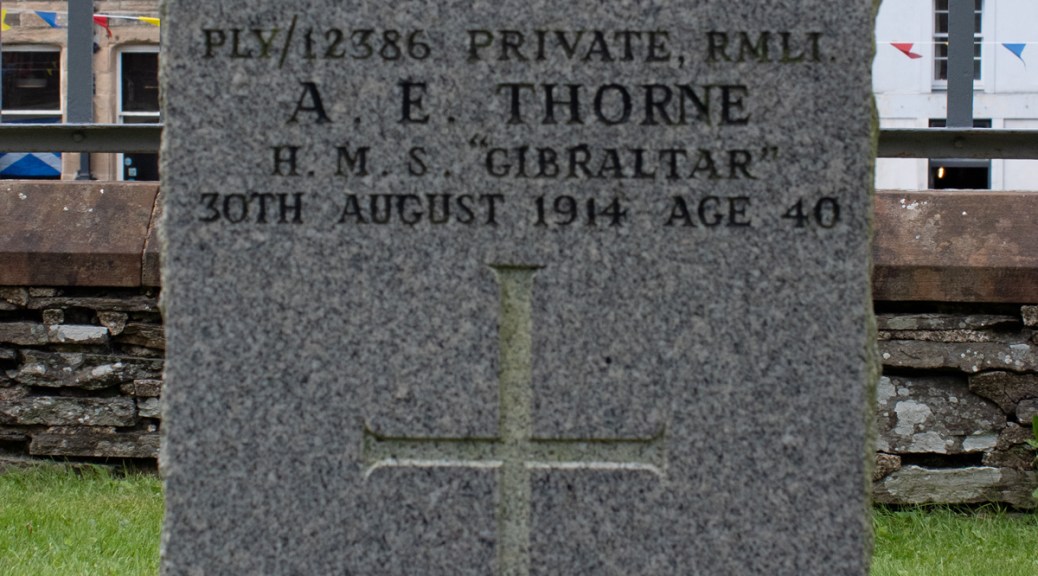
Private Albert Thorne

Private Albert Thorne

Albert Edward Thorne was born on 30th April 1874. The fourth of eight children, his parents were George and Rosanna Thorne. George was born in Nether Compton, Dorset, and this is where the family were raised. He worked as a stone mason, the 1884 census confirming he employed six men and two boys.

When Albert completed his schooling, he found work as a domestic gardener. This was not something he wanted to do long-term, however, and, on 30th May 1892, he enlisted in the Royal Marine Light Infantry. His service records show that he was 5ft 6ins (1.68m) tall, with dark brown hair and blue eyes. He was also noted as having a mole on the right of this abdomen and a scar on the right of his waist.

Private Thorne was sent to the Royal Marine depot in Walmer, Kent, for his training, and he remained there until the end of November. He transferred to Plymouth, Devon, and, over the next three years, split his time between there and Devonport.

On 26th December 1895, Albert married Rhoda Mills, the daughter of a local labourer, in Plymouth Register Office. The couple would have three children: Albert Jr, Arthur and Vera.

Private Thorne was a career marine, and remained in the service, based between Plymouth and Portsmouth, Hampshire, until the spring of 1914. Having completed 22 years, he was stood down to reserve status, although this was not to be for long, as storm clouds were brewing over Europe.

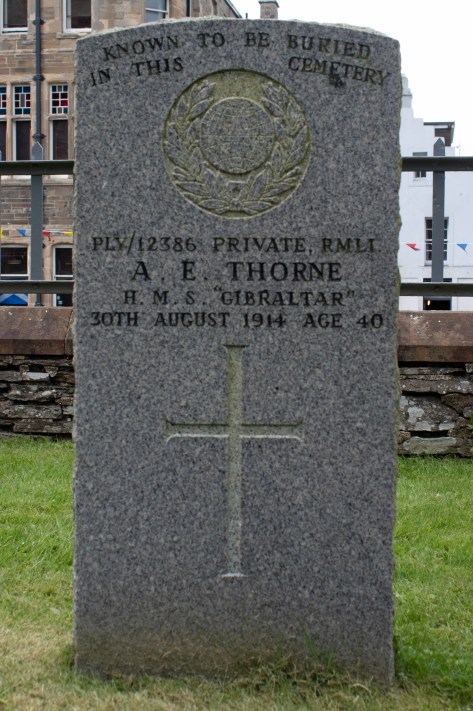
In August 1914, Albert was mobilised once more, and was assigned to the cruiser HMS Gibraltar. A depot ship, she would support other ships in and around the Orkney and Shetland Isles. The voyage north seems to have taken its toll, however, and Private Thorne was evacuated to the hospital ship Rohilla, suffering from appendicitis, which resulted in peritonitis. The conditions would prove fatal, and he passed away on 30th August 1914, at the age of 40 years old.

The Rohilla docked at Kirkwall on the Orkney mainland. Hundreds of miles from home, is seems that Rhoda may not have been able to afford to bring her husband’s body back to Devon. Instead, the body of Albert Edward Thorne was laid to rest in the graveyard of St Magnus’ Cathedral, Kirkwall.


Rhoda remained in Plymouth, in the rooms at 64 Durnford Street that she knew as home. The 1921 census found her living there with eldest son Albert – now a construction manager at the Royal Naval Dockyard in Devonport – and daughter Vera. The family had a boarder, Irish-born merchant seaman William Arnold, whose sister, Margaret Fitzgerald, was also visiting.


Private John Brass

Private John Brass

John Harcus Brass was born in Kirkwall on the Orkney mainland in May 1900. He was the oldest child to Thomas and Margaret Brass. Thomas was a grocer, and the family lived at 3 Union Street, to the south of the town centre.

There is little information about John’s early life. Better known as Jackie, he was too young to enlist when war broke out, but joined up as soon as he came of age. He was assigned to the Seaforth Highlanders and, as a Private, was attached to the 4th Battalion.

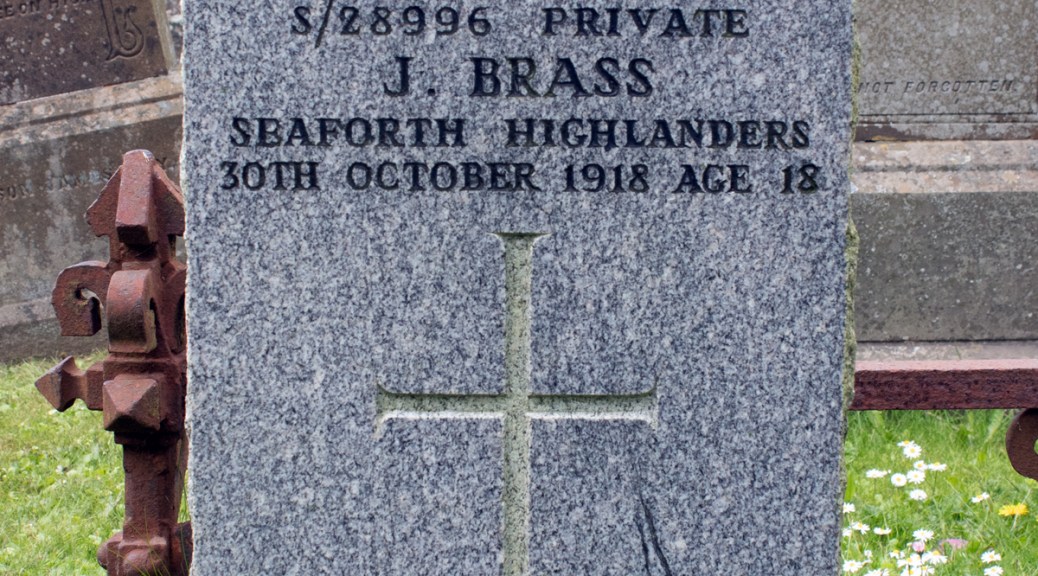
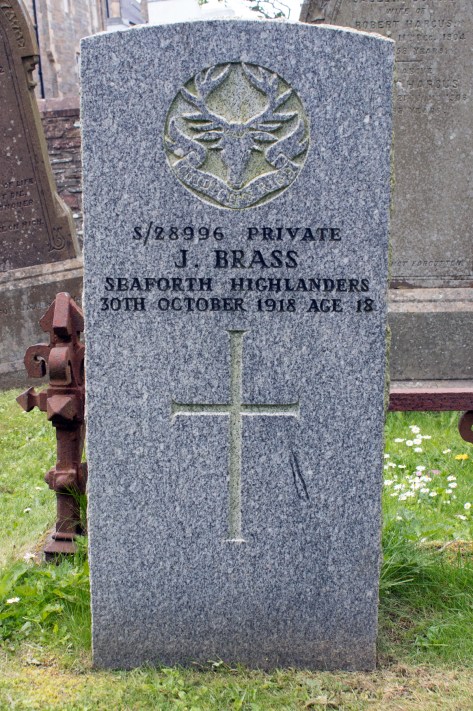
Jackie was sent south for training, and was billeted in Glencorse, to the south of Edinburgh. Sadly, Private Brass’ war was not to be a lengthy one. He was admitted to the 2nd Scottish General Hospital in Edinburgh, suffering from influenza. The condition was to get the better of him, and he passed away on 30th October 1918. He was just 18 years of age.

The body of John Harcus Brass was taken back to Orkney for burial. He was laid to rest in the graveyard of St Magnus’ Cathedral, in his home town of Kirkwall.


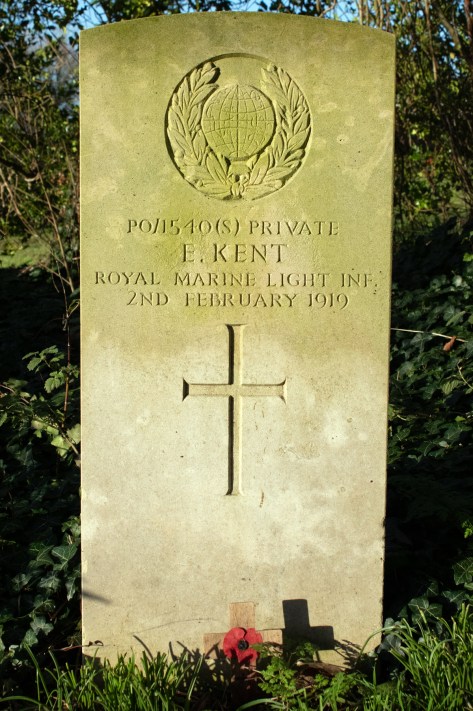
Private Edward Kent

Private Edward Kent

Edward Kent was born in the Berkshire village of Little Coxwell on 8th December 1887. One of fourteen children, his parents were John and Agness Kent. John was a mason’s labourer, and by the time of the 1901 census, the family had relocated to Fisherton de la Mare in Wiltshire.

Edward found work as a general labourer when he completed his schooling, but when war broke out, he was called upon to serve his country. Conscripted in the spring of 1916, he enlisted in the Royal Marine Light Infantry as a Private. His service papers show that he was 5ft 6.5ins (1.69m) tall, with brown hair, brown eyes and a fresh complexion. He was also noted as having a scar on the back of his neck.

Private Kent was sent to Deal, Kent, for his training, but by September 1916, he had moved to Portsmouth, Hampshire. Change was afoot, however, and in November Edward was assigned to the 3rd Battalion and sent to the Aegean, where he would remain for the rest of the conflict.

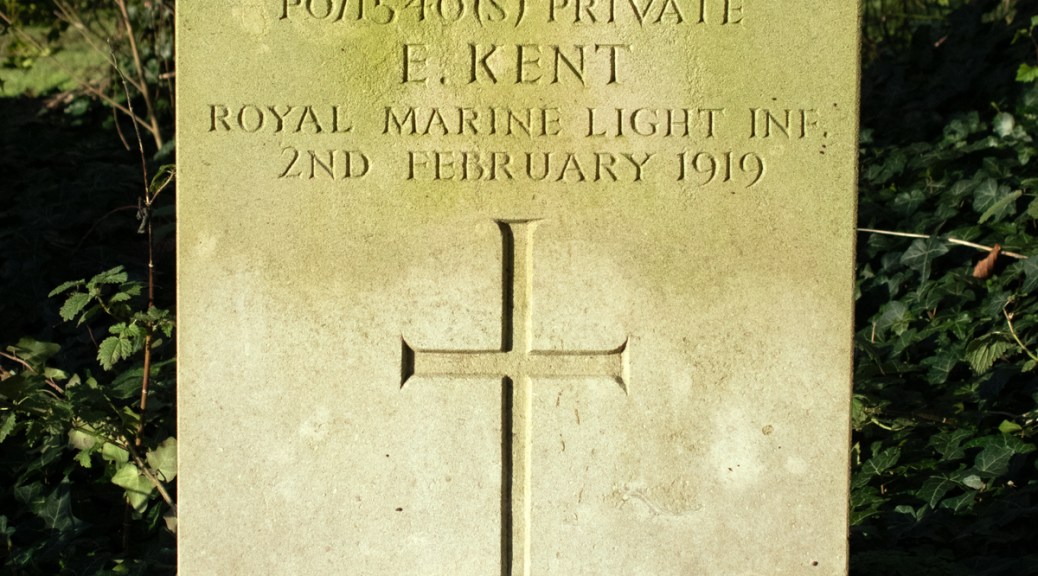
Edward returned to Portsmouth in January 1919, and was admitted to the Haslar Hospital, suffering from pneumonia. The condition would prove fatal, however, and he passed away on 2nd February 1919: he was 31 years of age.

The body of Edward Kent was taken back to Wiltshire for burial. He was laid to rest in the graveyard of St Nicholas’ Church, Fisherton de la Mere.


Private Jesse Doughty

Private Jesse Doughty

Jesse Doughty was born in the Wiltshire village of Bapton in the autumn of 1896. One of ten children, his parents were shepherd George Doughty, and his wife, Fanny.

George died in 1902, and Jesse’s mother was left to raise the children. His older brother William took the role of head of the family, however, and, by the time of the 1911 census, the Doughtys were living in a six-roomed cottage, with six wages coming in. Jesse, the second youngest of the siblings, had finished school by this point, and was working as a shepherd boy.

When war broke out, Jesse stepped up to serve his country, although full details of his time in the army have been lost to time. It seems that he initially joined the Machine Gun Corps, but transferred to the Labour Corps of the Wiltshire Regiment.

By the autumn of 1918, Private Doughty was based in Fovant, Hampshire. While there, he fell ill, and was admitted to a military hospital with pneumonia. The condition would prove fatal, and he passed away on 16th December, at the age of 22 years old.

The body of Jesse Doughty was taken back to Wiltshire for burial, and he was laid to rest in the graveyard of St Nicholas’ Church, Fisherton de la Mare, a short walk from where his family were still living in Bapton.


Private Percy Carpenter

Private Percy Carpenter

Percy Guy Carpenter was born in Worthing, West Sussex, in the autumn of 1887. One of eight children, he was the middle of three sons to Alfred and Alice Carpenter. Alfred was a chief clerk at the town’s post office, and the 1891 census found the family living on Oxford Road, to the south of the central railway station.

By the time of the next census, taken in 1901, the family had moved to a small cottage at 93 Newland Road. Alfred had changed jobs, and was noted as being the chief clerk at the local gas works. This seemed not to have been a long-term position, however. The 1911 census recorded his occupation as post office clerk (out of employment).

The Carpenter family were still living at 93 Newland Road by this point, and, of the six children who remained at home, all of them were working. Percy was employed as a tailor’s porter, while his sibling’s jobs included chemist’s stock keeper, ironmonger’s clerk and bookbinder’s apprentice.

War came to Europe in the summer of 1914, and Percy would be called upon to serve his country. Little information about his time in the army remains, but it is clear that he enlisted in the Royal Sussex Regiment at some point early in 1915.

Attached to the 2nd/4th (Cinque Ports) Battalion, Private Carpenter found himself in France by the end of March. He remained overseas for a year, but, while there, he contracted pneumonia. Medically repatriated to Britain for treatment, Percy was admitted to the 1st Eastern General Hospital in Cambridge, but died from a combination of pneumonia and nephritis on 18th March 1916. He was 28 years of age.

The body of Percy Guy Carpenter was taken back to Sussex for burial. He was laid to rest in Broadwater Cemetery, not far from where his family still lived in Worthing.


Private Francis Moody

Private Francis Moody

Francis Robert Moody was born on 8th September 1876, in the town of Kihikihi, on New Zealand’s North Island. There is little information about his early life, but his parents were Hampshire-born Francis Moody and his Irish wife, Mary.

When he completed his schooling, Francis Jr found work as a carter. When war broke out, however, he was called upon to play his part, enlisting in the New Zealand Canterbury Regiment on 18th June 1917. His service papers show that he was 5ft 10ins (1.77m) tall, and weighed 140lbs (63.5kg). A Roman Catholic by birth, he had brown hair, blue eyes and a medium complexion.

Private Moody’s unit left New Zealand on 13th October 1917, making the two-month voyage to Britain on board the HT Corinthic. Francis disembarked in Liverpool, Lancashire, before being marched into camp in Sling, Wiltshire.

Over the next month, Private Moody received further training, but by this point, and following the lengthy journey, his health was beginning to suffer. He was admitted to the No. 3 New Zealand General Hospital in Codford, Wiltshire, on 30th January 1918, suffering from bronchitis.

Francis’ health continued to deteriorate, and he developed tuberculosis. The condition would prove fatal, and he passed away on 22nd February 1918, at the age of 41.

Thousands of miles from home, Francis Robert Moody was laid to rest alongside his colleagues in the graveyard extension of St Mary’s Church, Codford.


Private Francis Moody
(from findagrave.com)

Private Francis Alley

Private Francis Alley

Francis Lignori Alley was born in Hikutaia, on New Zealand’s North Island, on 18th February 1896. There is little information about his early life, but it is clear that he was one of six children to John and Elizabeth Alley.

By the time he had completed his schooling, the Alley family had moved to the port town of Gisborne. Francis found work as a warehouseman in for Macky Logan Caldwell Ltd. When war broke out, however, he was called upon to play his part.

On 11th January 1916, Francis enlisted in the New Zealand Otago Regiment. His service records show that he was 5ft 8.5ins (1.74m) tall, and weighed just 90lbs (40.8kg). A practicing Roman Catholic, he had brown hair, grey eyes and a fair complexion. His papers also noted an operation scar in his groin.

Private Alley’s unit left New Zealand in the spring of 1916. After a month’s stop in Suez, they arrived in Southampton, Hampshire, on 7th August, and were marched to their camp in Sling, Wiltshire. Within a matter of days, however, Francis found himself on the Western Front, and would remain there for the next month.

On 9th June 1917, during the Battle of Messines, Francis was wounded. Initially treated on site, he was medically evacuated to Rouen, then Britain for treatment to gun shot wounds to his face and eye. He spent the next few months being treated and recuperating, hit service papers stating that he re-joined his unit in Étaples on 8th August. That autumn, he was given leave, but while back in Britain, he fell ill, and was admitted to the venereal section of the No. 3 New Zealand General Hospital in Codford, Wiltshire.

Private Alley was discharged on 7th November 1917, and remained at the camp in Codford. On Boxing Day, he was admitted back to hospital again, suffering from septicaemia: the condition was to prove fatal, and he passed away on 2nd February 1918. He was just 21 years old.

The body of Francis Lignori Alley was laid to rest in the graveyard extension of St Mary’s Church, Codford, not far from the camp he had been based at.


Private Francis Alley
(from findagrave.com)