Category Archives: Dorset

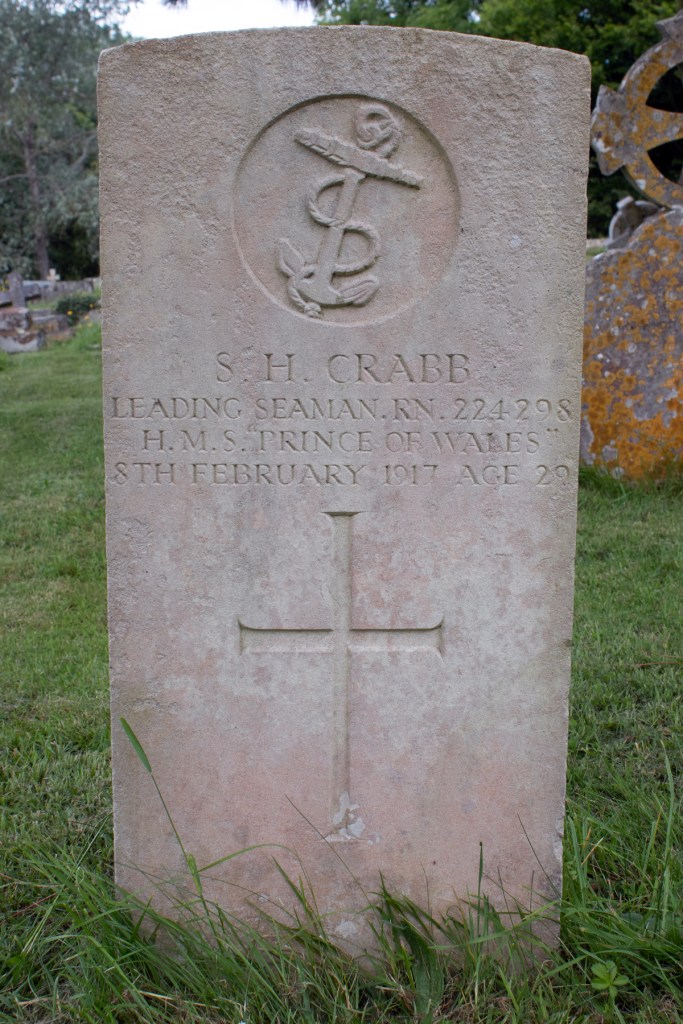
Leading Seaman Sidney Crabb

Leading Seaman Sidney Crabb

Sidney Harry Crabb was born in the seaside town of Lyme Regis, Dorset on 6th September 1888. One of nine children, his parents were Albert and Mary Crabb. Albert was a Trinity pilot, working on ships, and his son was destined to follow in his stead.

On 16th January 1903, Sidney enlisted in the Royal Navy. He lied about his age to be taken in, adding two years to his date of birth. That was still below the full enlistment age for the military, and he was taken on with the rank of Boy 2nd Class.

Sidney was sent to HMS Boscawen, a training ship, for his initial instruction. He remained there until mid-November 1903, by which time he had been promoted to Boy 1st Class. He then moved to the training battleship HMS Minotaur (which became HMS Boscawen II shortly afterwards), and remained on board for the next nine months.

On 7th September 1904, Sidney “came of age” (albeit he was two years younger than he had said), and was formally inducted into the Royal Navy. He was given the rank of Ordinary Seaman and, within a matter of days, was assigned to his first vessel, the tender HMS Fire Queen.

On 19th November 1904, Ordinary Seaman Crabb was reassigned, to the armoured cruiser HMS Sutlej. She was to remain his home for the next eighteen months, during which time Sidney was promoted again, to the rank of Able Seaman.

Over the next nine years, Sidney was to serve on six more vessels. On 9th December 1912, while back in Dorset, he married Lily Froom in the parish church of their home town, Lyme Regis. The couple would go on to have a son, Stanley, who was born in September 1914.

By this point, Able Seaman Crabb’s health was faltering. He was serving on board the battleship HMS Prince of Wales when war was declared, and had been promoted again, to Leading Seaman. By early October 1914, however, he was medically dismissed from service, having contracted pulmonary tuberculosis.

At this point, Sidney’s trail goes cold. He seems to have returned home, but it is unclear how much his failing health impacted on his daily life. The lung condition was ultimately to get the better of him: he passed away in Axminster, Devon, on 8th February 1917, at the age of 28 years of age.

Sidney Harry Crabb was taken the short distance back to Lyme Regis for burial. He was laid to rest in the town’s cemetery, overlooking the sea to which he and he late father had dedicated much of their lives.


Petty Officer 1st Class Albert Hodder

Petty Officer 1st Class Albert Hodder

Albert George Hodder was born on 27th December 1878 in Lyme Regis, Dorset. The oldest of three children, his parents were Samuel and Ellen Hodder. Samuel was a general labourer who died in 1886, when he was 35 years of age. By the time of the 1891 census, Albert had given up school, and was working as a live-in cowboy in the nearby Devon village of Uplyme, bringing in what would be the only wage for him, his mother and his two younger brothers.

Working on a dairy farm would not bring in the money the his family would need. So, on 7th August 1894, Albert sought out more of a career and enlisted in the Royal Navy. His service records confirm that he was 5ft 4ins (1.62m) tall with brown hair, grey eyes and a ruddy complexion.

Albert was under the age to formally enlist, and so was given the rank of Boy 2nd Class. He was sent to the training ship HMS Boscawen, and, over the next eighteen months he received a basic education and naval induction. By the end of July 1895, he had been promoted to the rank of Boy 1st Class.

On 12th November 1895, Boy Hodder was assigned to the ironclad ship HMS Alexandra, and his naval career began. Over the next nearly two decades, he would serve on twelve separate ships, rising through the ranks as he did so.

When Albert came of age, on 27th December 1896, he was serving on board HMS Gibraltar. Formally inducted into naval service, he was given the rank of Ordinary Seaman. He spent more than three years on board Gibraltar, and rose to Able Seaman on 1st January 1899.

From here his career continued: He was promoted to Leading Seaman on 18th May 1903, Petty Officer 2nd Class on 1st April 1905 and Petty Officer 1st Class just two years later.

In the autumn of 1912, Albert’s career changed course. He was assigned to HMS Maidstone, a submarine depot ship, and a life under the ocean waves started to appeal. On 28th March 1914, Petty Officer Hodder was sent to HMS Dolphin, home of the Royal Navy Submarine Service, where he was trained up for new duties. By October that year he was to be found serving on board the newly-commissioned submarine E11.

Over the next few months he served in the North Sea, Baltic Sea, and the E11 was involved in a minor way in the defence of Scarborough in December 1914 and the Cuxhaven Raid ending on Christmas Day that year.

At this point, Petty Officer Hodder’s trail goes cold. He remained on the E11 until early February, by this time she was based off the Norfolk coast.

An inquest was held on Friday on the body of Albert George Hodder… of Lyme Regis, Dorset, a member of the crew of one of HM vessels, who died from the effect of immersion.

Evidence showed that at 9.20 on the previous Thursday night a petty officer heart the shout of “Man overboard.” He got on to a collier moored in the river and saw a black object float past. Unable to reach it, he jumped ashore and got into the ferry boat. He was then able to reach the object, which he found was the deceased. He held his head above the water while the ferryman pulled the boat to the quay. The deceased was got out in an insensible condition, a doctor sent for, and artificial respiration tired. Efforts were persisted till breathing was established, and he was then wrapped in blankets, with hot water bottle; but he succumbed to the effects of immersion and shock shortly after eleven. No one saw how the deceased fell overboard.

A verdict of “Accidental death” was returned.

[Diss Express: Friday 12th February 1915]

Petty Officer 1st Class Albert George Hodder was just 35 years of age when he died on 4th February 1915. His body was taken back to Dorset for burial, and he was laid in Lyme Regis Cemetery.


Staff Serjeant Samuel Powell

Staff Serjeant Samuel Powell

Samuel Edwin Powell was born at the start of 1876, the third of eight children to Samuel and Catherine Powell. Samuel Sr was a baker from Gloucestershire, and it was in the village of Leonard Stanley that the family were born and raised.

Much of Samuel Jr’s earlier life is undocumented, and he does not appear on either the 1891 or 1901 census returns. By the time of the next census, taken in 1911, he is recorded as living in Lewisham, Surrey.

The census noted that Samuel was employed as a commercial traveller in the chocolate industry. He was married to Stroud-born Ellen Hobbs, and had been since 1906. The couple had a son, Denis, who was a year old, and were living at 20 Hazelbank Road in Catford, with a domestic servant, Edith Price, helping Ellen while her husband was away working.

When war broke out, Samuel was called upon to play his part. He was enlisted in the Royal Army Service Corps, with the rank of Staff Serjeant, which would suggest that his absence from earlier documents was because of earlier military service.

There is little information about Samuel’s time in the army, other than that he was attached to the Clearing Office when the Armistice was declared.

The cause of Staff Serjeant Powell’s passing is not known, but the Army Register of Soldier’s Effects confirm that he died in Dorset on 10th September 1919. The connection to Dorset is unclear: he may have been serving in the area, or recuperating from an illness. He was 43 years of age.

Samuel Edwin Powell was laid to rest in Lyme Regis Cemetery, overlooking the seaside town.


Able Seaman William Real

Able Seaman William Real

William Thomas Bradley Real was born in Lyme Regis, Dorset, on 31st December 1875. His parents were coastguard William Real and his wife, Sarah. William Jr seems to have lived with his maternal grandparents for most of his life, even though he went on to have seven younger siblings.

Sarah died in the spring of 1891, just weeks after the birth of her and William Sr’s youngest child, and William Jr took this as an opportunity to seek a career for himself. Living next to the sea, and with a coastguard for a father, a role in the Royal Navy seemed an apposite choice. He joined up on 26th May 1891, just 20 days after his mother’s funeral.

William was under age when he joined up, and so was given the rank of Boy 2nd Class. His service records show that he was 5ft 8ins tall, with brown hair, blue eyes and a fresh complexion. He was initially sent to HMS Boscawen, the training ship moored in Portland, Dorset, and remained there until January 1893. By this point his training had paid off, and he had been promoted to the rank of Boy 1st Class.

William’s first posting was on board the ironclad HMS Alexandra. Over the next year he was posted to two further vessels, and, when he came of age on 31st December 1893, he was formally inducted into the Royal Navy, and given the rank of Ordinary Seaman. Over the next 25 years, he would serve on a total of sixteen more ships, returning to HMS Vivid, the Royal Naval Dockyard in Devonport, Devon, between some of his voyages.

William’s career saw promotion – to the rank of Able Seaman on 4th February 1896. He also spent three days in the cells in August 1898, although the nature of his misdemeanour is unclear.

Away from his career William’s family life took hold. On 15th April 1911, he married Louisa French. Her parents owned and ran the George Hotel in Charmouth, Dorset. The couple went on to have a daughter, Maud, who was born in the spring of 1915.

When war was declared, Able Seaman Real was assigned to HMS Tiger. The most heavily armoured battlecruiser in the British Navy, She would go on to fight in the Battles of Dogger Bank, Jutland and Heligoland Bight, action William would have seen first hand.

By the spring of 1918, Able Seaman Real had become unwell. He was posted back to HMS Vivid on 1st May, and was admitted to the Royal Naval Hospital in Plymouth. His admission was not to be a long one: he died of heart failure just five days later, at the age of 42 years old.

The body of William Thomas Bradley Real was taken back to Dorset for burial. He was laid to rest in Lyme Regis Cemetery, overlooking the town in which he had been born.


Private Willie Martin

Private Willie Martin

Willie Cyril Martin was born in December 1891 in the Dorset village of Almer. The son of Elizabeth Martin, his mother would go on to marry Edward Holloway nine years later, although it is unclear whether he was Willie’s father.

When he finished his schooling, Willie found work as a kitchen porter, and this led him to the Dorset coast. The 1911 census found him boarding with 35 others at Pryory Mansions in Bournemouth.

When war broke out, Willie stepped up to play his part. He enlisted on 9th October 1914, joining the Dorsetshire Regiment. Assigned to the 4th Battalion, his unit was soon sent to India, moving to the Middle East over the following years.

By the autumn of 1916, Private Martin was back in Dorset. On 7th November he married Edith Williams at St Clement’s Church in Bournemouth. She was the 26-year old daughter of a gas fitter, and the couple’s marriage certificate sheds some light on Willie’s background as well. It gave his father’s name as Richard Martin (deceased), who was a butler, although there is no other information to substantiate this, and Elizabeth had passed away some years before, so could not back up or refute the suggestion.

Private Martin returned to duty after his wedding. At some point he transferred to the Labour Corps, and was attached to 644 Company. His re-assignment may have been down to medical issues – he had contracted malaria while serving overseas – and by the autumn of 1917, he was sent to hospital because of his deteriorating health.

Willie was admitted to Bath War Hospital in Somerset, suffering from a bout of malaria. The condition was to get the better of him, and he passed away on 8th October 1917, from a haemorrhage on his lungs. He was 25 years of age.

Willie Cyril Martin was laid to rest in the military section of Bath’s sweeping Locksbrook Cemetery, not far from the hospital in which he passed away.


Private Joseph Symes

Private Joseph Symes

Joseph Symes was born in the spring of 1871, and was the oldest of four children to William and Sarah. William was a farm labourer from Stoke Abbot in Dorset, and it was here that the family were born and raised. They set up home with Sarah’s parents, and were recorded as living with them in the 1871 census, and with Sarah’s widowed mother in the 1881 record.

William had died by the time the 1891 census return was taken, and Sarah took up work as a mill hand. The document found her living in the village of Netherbury, a few miles to the south east of Stoke Abbott, with her three younger children, William, Alice and Mary Ann. Joseph was noticeable by his absence, but later documents confirm that he had enlisted in the Dorsetshire Regiment by this point, and was likely serving overseas.

Joseph had returned to England by the turn of the century, setting up home back in Netherbury. On 24th September 1910, he married Sarah Jane Dunsbury in Beaminster parish church. The daughter of a blacksmith, she was 13 years Joseph’s senior – 52 years old to his 39. The couple lived in Netherbury, where he was working as a mason’s labourer.

When war broke out, Joseph stepped up to play his part once more. He re-enlisted in the Dorsetshire Regiment on 1st September 1914, and was attached to the 6th Battalion. His service records confirm that he was 5ft 5.5ins (1.66m) tall and weighed 182lbs (82.6kg).

Private Symes remained on home soil during his time in the army. He switched to the 3rd (Reserve) Battalion in March 1915, which was based in and around Weymouth. In the autumn of 1915, he was admitted to the Sidney Hall Military Hospital in the town, suffering from bronchial pneumonia. The lung condition was to prove his undoing, and he passed away on 22nd November 1915, while still admitted. He was 44 years of age.

Joseph Symes was taken back to Netherbury for burial. He was laid to rest in the graveyard of St Mary’s Church in the village.


Private Sidney Crabb

Private Sidney Crabb

Sidney Edgar Crabb was born in the autumn of 1898 in the Dorset village of Chedington. One of ten children, his parents were shepherd-turned-farm labourer John Crabb and his wife, Mary.

Little information is available about young Sidney’s life. He was still at school when the 1911 census was taken, and was too young to enlist when war was declared in the summer of 1914. He enlisted in the Dorsetshire Regiment no earlier than October 1916, and was sent to Warminster for training.

The only other record for Private Crabb confirms his passing. He died from bronchial pneumonia while in hospital near his army camp in Warminster, Wiltshire, on 3rd April 1917. He was just 18 years of age.

Sidney Edgar Crabb’s body was taken back to Dorset for burial. He was laid to rest in the graveyard of St Mary’s Church, in his home village of Halstock. While only five of his siblings survived childhood, Sidney was the only one to pass away as a result of the conflict.


Boy 2nd Class Albert Loveless

Boy 2nd Class Albert Loveless

Albert William Loveless was born on 23rd February 1901, the third of four children to Albert and Matilda Loveless. Albert Sr was a hawker and marine store dealer, and the family grew up and lived in the Dorset village of Mosterton.

When he completed his schooling, Albert Jr found work as a railway porter. When war broke out, however, he was keen to play his part before the opportunity passed him by and, on 10th September 1918, he enlisted in the Royal Navy.

As he was below the age to formally enrol, Albert was given the rank of Boy 2nd Class. His service records show that he was 5ft 2.5ins (1.59m) tall, with brown hair, brown eyes and a fresh complexion.

Boy Loveless was sent to HMS Powerful, a training ship based in Devonport, Devon, but sadly, his time there was to be brief. Within a matter of days, he was admitted to the Royal Naval Hospital in Plymouth, having contracted pneumonia. He passed away on 18th September 1918, having been in service for just a week. He was only 17 years of age.

The body of Albert William Loveless was taken back to Dorset for burial. He was laid to rest in the graveyard of St Mary’s Church in Mosterton, walking distance from his grieving family’s home.


Private George Hansford

Private George Hansford

George Edward Martin Hansford was born on 25th March 1892, the second of five children – and the eldest son – to Edward and Amelia Hansford. Edward was a farmer from Netherbury in Dorset, and this is where the family were born and raised.

By the time of the 1911 census, Lower Ford Farm had become a family affair, with George and his older sister, Susannah both supporting their father in running things. War was on the horizon, however, and things were to change.

George was called upon to serve his country on 15th February 1916. He joined the Dorsetshire Regiment, and was assigned to the 2nd Battalion. He wasn’t formally mobilised until 19th January 1917, but his medical identified an underlying health condition.

Private Hansford had suffered a bout tuberculosis in 1914, and this left to his medical report confirming that his health was impacted to the point that he was medically unfit to serve in the army. Unfortunately, while awaiting the results of the report, George, who was back at home had a recurrence of the condition, and succumbed to it. He passed away on 11th April 1917, at the age of just 25 years old.

George Edward Martin Hansford was laid to rest in the graveyard of Holy Trinity Church in Salwayash, a few miles from the family home in Netherbury.


Gunner Simeon Powell

Gunner Simeon Powell

Simeon James Powell was born on 18th October 1882 in Wootton Fitzpaine, Dorset. The oldest of three children, his parents were Francis and Elizabeth Powell. Elizabeth died when Simeon was just 7 years of age, and his father remarried, and went on to have five children with his new wife, Annie.

Francis was a farmer, and Simeon found employment as an estate labourer. The 1911 census found the family living on Dodpin Farm in Monkton Wyld, a village to the north of Lyme Regis: Francis, Annie, Simeon and his three younger siblings.

On 12th June 1913, Simeon married Mary Hodder. There is little information about her, but it seems the couple set up home on the outskirts of Charmouth, Dorset. Mary was six years older than her new husband, and they didn’t go on to have any children.

War was declared in the summer of 1914, and by the following autumn, Simeon had signed up to play his part. His service records confirm that he was 5ft 11ins (1.8m) tall and weighed 188lbs (85.2kg).

Gunner Powell joined the Royal Garrison Artillery, and was formally mobilised on 31st May 1916. By November he was sent to Malta, returning to Britain in September 1917. His new posting was in Sheerness, Kent, and he would remain there for the next nine months.

In May 1918, Simeon fell ill. He had caught influenza, and when this developed into bronchitis, he was admitted to the local war hospital. His health began to deteriorate, and, on 10th June 1918, Gunner Powell passed away from a combination of bronchitis and haemoptysis. He was 35 years of age.

The body of Simeon James Powell was taken back to Devon for burial. He was laid to rest in the graveyard of St John the Baptist Church in Hawkchurch, near the family home just across the border in Dorset.