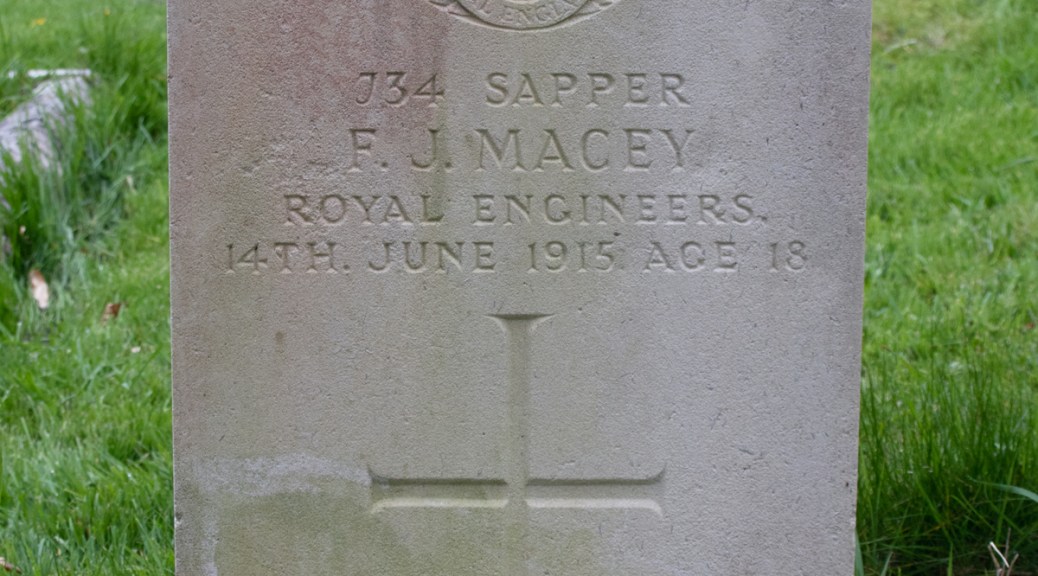
Frederick John Macey was born in the spring of 1897, the fourth of five children to James and Rose. James was a labourer from Hampshire, Rose was born in Ireland, but the children were born and raised in Monkton Combe, Somerset.
When war broke out, Fred stepped up to play his part. He enlisted in the Royal Engineers, and was assigned to the 503rd Field Company. Full details of his military service are lost to time, so it is not possible to identify whether Sapper Macey served overseas – Malta, where part of the regiment were based – or on home soil – in and around Ipswich, Suffolk.
Wherever he was based, Fred was injured, and he was sent to a military hospital in Guildford, Surrey, for treatment. Sadly, his wounds were to prove too severe, and he passed away on 14th June 1915, aged just 18 years old.
Frederick John Macey’s body was brought back to Somerset for burial. He was laid to rest in the peaceful graveyard of St Michael’s Church, in his home village of Monkton Combe.
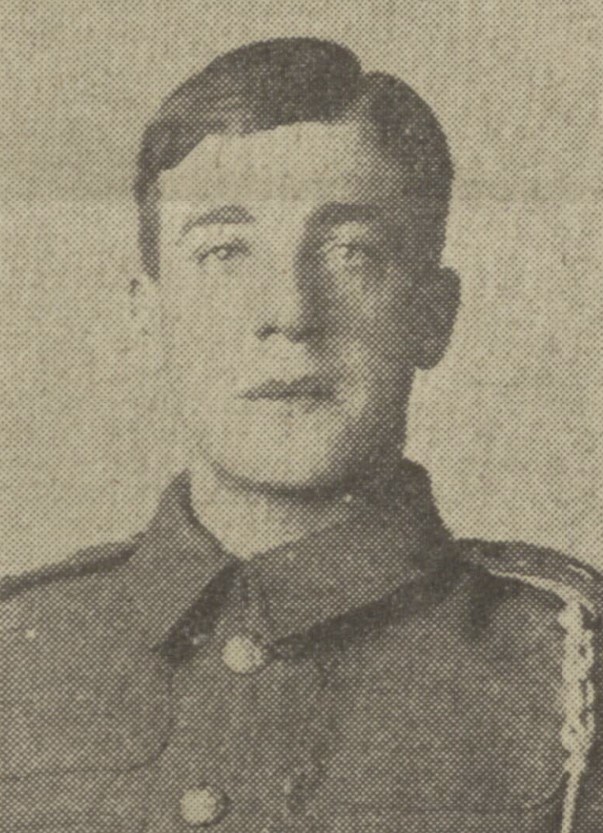
Sapper John Macey (from britishnewpaperarchive.co.uk)
Frederick Charles Pearce was born in the spring of 1873 in the Gloucestershire town of Thornbury. The youngest of six children, his parents were Thomas and Elizabeth Pearce. Thomas was an agricultural labourer and, when he finished school, Frederick found work as a ‘rural messenger’.
This was only a step towards the career that Frederick sought, however, and on 12th July 1892, he enlisted in the Gloucestershire Regiment a a Private. His service records show that he was 5ft 5ins (1.65m) tall and weighed 128lbs (58kg). He was noted as having a fresh complexion, blue eyes and brown hair.
Private Pearce spent twelve years in the army, serving in Malta, Egypt, India and Ceylon (Sri Lanka). He had two stints in South Africa, including the 1899-1900 campaign, during which he was wounded in his chest in the battle at Farquhar’s Farm.
By the time he was discharged on 11th July 1904, he had risen through the ranks to Sergeant, his service records noting that his conduct had been “very good” (in capitals and underlined).
Thomas had died in 1896, and Frederick’s widowed brother William moved back in with his mother to help support her. Frederick also returned to Gloucestershire and, on 30th March 1905, he married Mary Rugman in the parish church in Olveston. The couple may have been childhood sweethearts, as the Pearces and Rugmans were Thornbury neighbours.
The marriage certificate noted Frederick as a groom, and it is likely that he was able to turn his hand to any role after his army career. The couple had a son Leslie, who was born in 1909, and, with the new responsibility of fatherhood, Frederick sought a more permanent career.
The 1911 census found the family living in Somerset, where Frederick was employed as a gardener at the Kingswood Reformatory School. This was a boarding school on an estate to the north of Bath, set in 57 acres of grounds, and again it seems likely that his military career stood him in good stead for such a prestigious role.
When war came to Europe, Frederick felt the pull of his military career once more. While his age did not compel it, on 20th November 1914, he re-enlisted in the Gloucester Regiment. He was enlisted with his previous rank, but within a year has been promoted to Acting Colour Sergeant.
In the spring of 1916, the Royal Defence Corps was formed, and, given his experience and age, Frederick was transferred across to the new regiment. Colour Sergeant Pearce was based in London and, over the next eighteen months served in four troops: 109, 149 and 150 Protection Companies and the 10th City of London Volunteers’ Regiment.
Frederick’s age and the demands of his role were beginning to take their toll by this point, and by the end of 1917, he had developed nephritis, or inflamed kidneys. The condition was severe enough to warrant his discharge from service, and the now Sergeant Major Pearce’s military career came to an end on 17th January 1918.
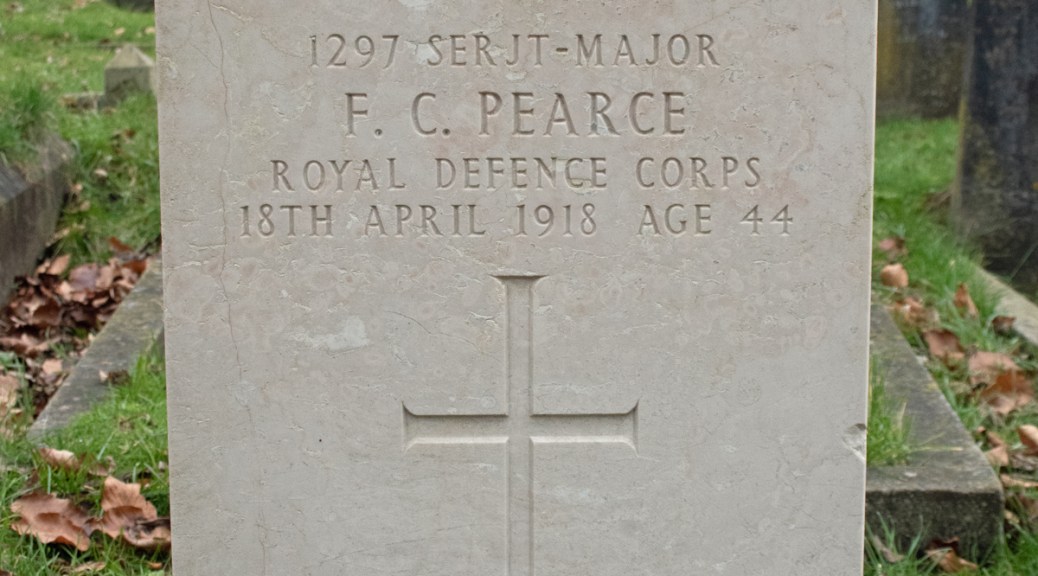
Frederick returned home to Bath, to the bosom of his family. He and Mary three children by this point, Violet and Freddie being two younger siblings to Leslie. Tragically for the Pearces, however, the family life was not to to last for long: Frederick’s condition was to get the better of him just three months later. He passed away on 18th April 1918, at the age of 44 years old.
Frederick Charles Pearce was laid to rest in St James’ Cemetery in Bath; a man of duty resting at last.
Tragedy was to strike again for poor Mary, when just six months later her youngest child, Freddie, also passed away. Details of his death are vague, but he was buried with his father, the two Fredericks reunited too soon.
Joseph Viles was born at the end of 1886 in Bath, Somerset. One of seven children, his parents were collier-turned-general labourer Joseph Viles and his wife, Sarah.
When he left school, Joseph found work as an errand boy, but, in reality, there is little documented about his life. There are only really two records that give an insight into the man he became.
The first is the 1911 census, which confirms he was a Private in the 2nd Battalion of the Somerset Light Infantry. The return gives his location as the St Andrew’s Barracks in Malta.
The second document dates from 29th June 1909, and is a court martial for Private Viles’ for the use of insubordinate language towards a senior officer, in this case a Major. The trial was held in Portland, Dorset, and Joseph was sentenced to 30 days’ imprisonment.
Sadly, a lot of the service records for the Somerset Light Infantry have been lost over time, and those relating to Joseph are amongst them. The only other confirmed detail for Joseph is that of his passing, but even this raises questions.
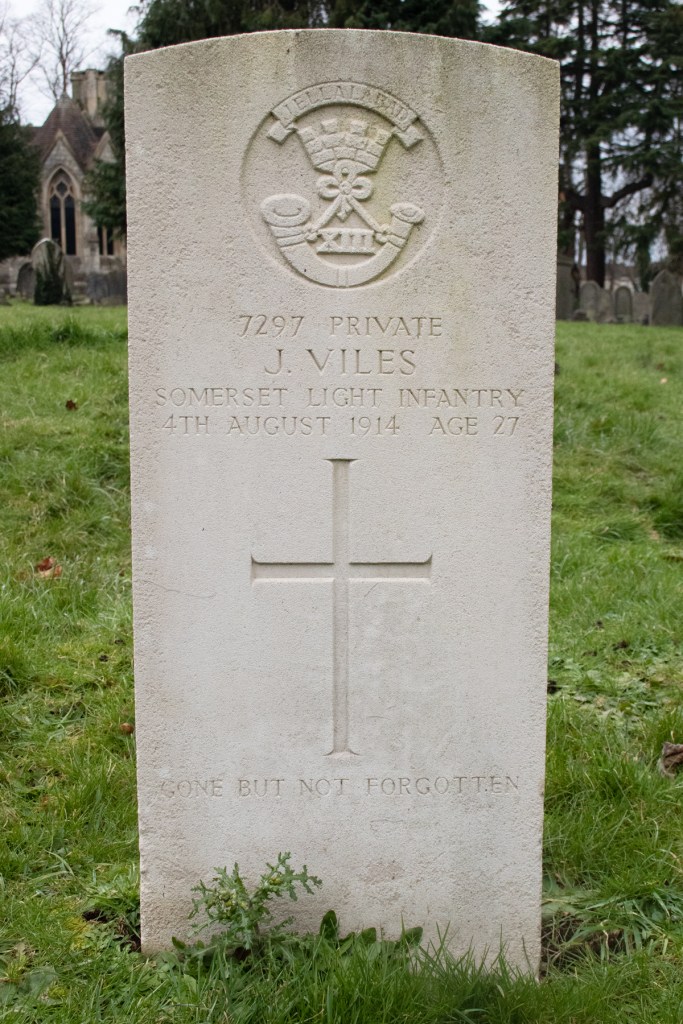
Private Joseph Viles died on 4th August 1914 – just seven days after war was declared. His regiment was actually based in Quetta, India, at this point, so it is likely that he was at home on leave at the time he died. No cause for is death is noted, and it is likely to have been from an illness of some description, as nothing unusual was reported in the newspapers of the time. Joseph was 27 years of age.
Joseph Viles was laid to rest in Bath’s St James’ Cemetery, where his parents would also be buried, Joseph Sr in 1948, and Sarah in 1958.
Richard Avary Arthur Young Jordan was born on 24th May 1866 in Cashel, Tipperary, Ireland. His father, Richard Jordan, died a week after his son’s birth, leaving his mother, Annabella, to raise him.
The 1871 census records mother and son living in Woolwich, London, with Annabella’s widowed mother, Grace. They were obviously a well-connected family, with Grace living as an annuitant, or pensioner, one son a Surgeon Major in the army and another as a Colonel in a different regiment. Annabella herself was recorded as a landowner, and the family had support with a cook and housemaid living in.
Surrounded by army servicemen as he was, it is no surprise that a military career called to Richard. He enlisted on 10th November 1886, joining the King’s Shropshire Light Infantry as a Lieutenant. Assigned to the 1st Battalion, his service records confirm that he had attended Burney’s Gosport School – a military academy – and was 5ft 7.5ins (1.71m) tall.
Richard was sent to Egypt just before Christmas that year, and over the next five years, he served both there and in Malta. On 11th May 1889 he attained the rank of Captain and, in December 1891 he was sent further afield, to Hong Kong.
After three years in the Far East, returned to Britain, and spent the majority of 1895 back on home soil. His travels were not at an end, however, and by the end of the year, Captain Jordan found himself in India. He spent three-and-a-half years in the sub continent, returning to the UK in May 1899.
At this point, details of Richard’s life get a little sketchy. He seems to have settled in Pembroke Dock, South Wales, and, on 18th April 1904, he married Ella Mary Caroline Grove. She was eight years his junior, and the daughter of a late Lieutenant in the Highland Light Infantry. The couple married at St George’s Church, Hanover Square, London.
Richard’s trail goes gold again, for a couple of years. He retired from the army on 8th August 1906, after nearly twenty years’ service. By the time of the 1911 census, he and Ella had set up home in Heywood House, on the outskirts of Tenby, Pembrokeshire, with two servants – Beatrice and Edith – as two live-in staff.
War came to Europe in the summer of 1914, and Richard seemed to keen to play his part once again. He enlisted again in August 1915, and was assigned the rank of Major in his former regiment. While it is not possible to determine Major Jordan’s complete service at this time, he definitely arrived in France the following month. If he remained in France, it is likely that he saw fighting at the Somme in 1916, Cambrai in 1917 and at Lys and on the Hindenburg Line in 1918.
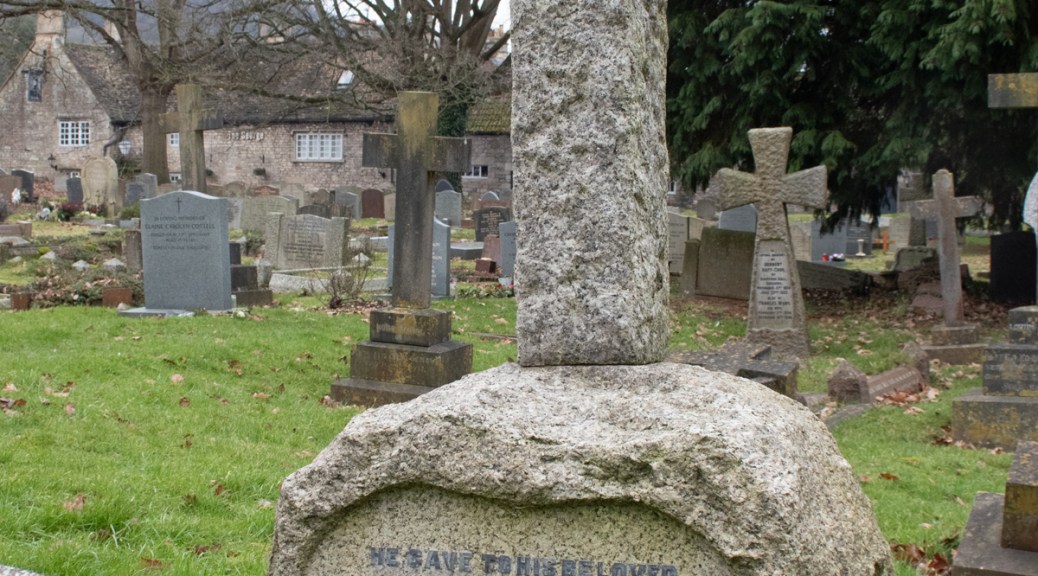
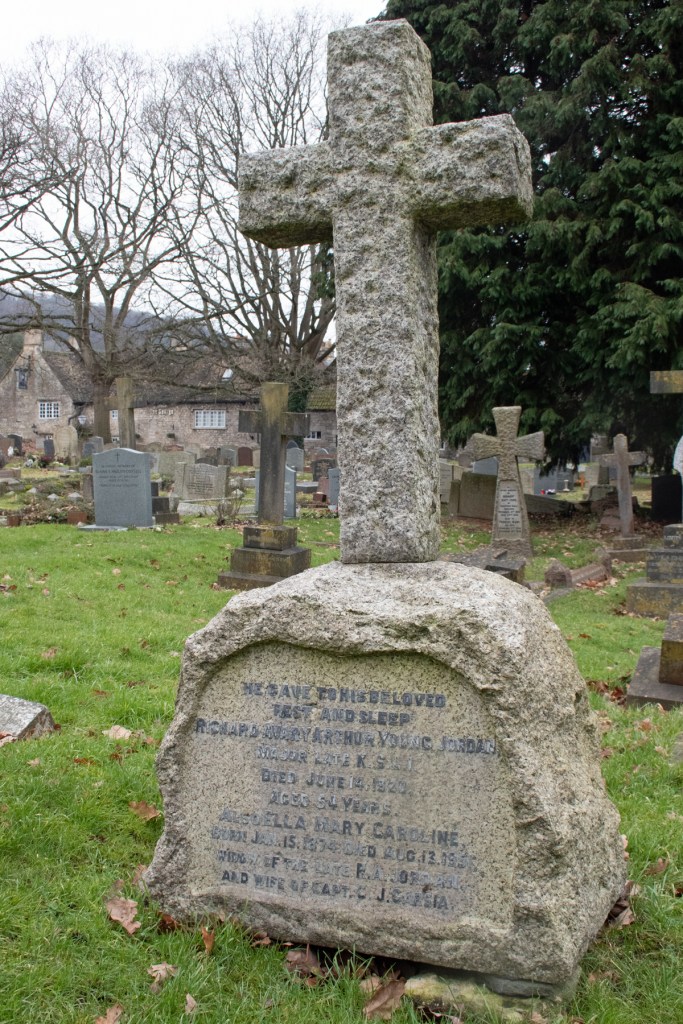
Again, Major Jordan’s post-war life remains tantalisingly elusive. By the summer of 1920, he and Ella were living at Holcombe Lodge in Bathampton, on the outskirts of Bath. It was here on 14th June, that Richard passed away. He was 54 years of age.
Despite all his travelling, it seems that Ella was comfortable living in Bathampton, and this is where she laid her late husband to rest. Richard Avary Arthur Young Jordan was buried in the graveyard of St Nicholas’ Church in the village.
The widowed Ella married again, to Captain Clare Garsia, on 9th October 1921. She remained in Bathampton, and lived to the age of 77, passing away on 13th August 1951. She was laid to rest in the same plot as her late husband.
When Captain Garsia died the following year, he was also buried in St Nicholas’ Churchyard, in a neighbouring plot to his beloved Ella.
Peter Galea was born in the Maltese town of Senglea on 25th August 1893. His mother’s name was Carmela, but there is little further concrete information about his early life.
What is clear is that Peter found employment by enlisting in the Royal Navy. He joined up on 2nd January 1912 as an Officer’s Steward 3rd Class. His service records show that he was 5ft 9.5ins (1.66m) tall, had brown eyes, black hair and a dark complexion.
Officer’s Steward Galea’s first assignment was on board the dreadnought battleship HMS Orion. He was to spend more than three years on board, although his continuous service was interrupted by three days spent in the cells in May 1913: unfortunately his misdemeanour is not recorded.
In February 1914, Peter was transferred to the Apollo-class cruiser HMS Thetis. She was to be his home for the next year, during which time war was declared across Europe. In March 1915, Officer’s Steward Galea was assigned to another ship, the ocean liner Princess Irene.
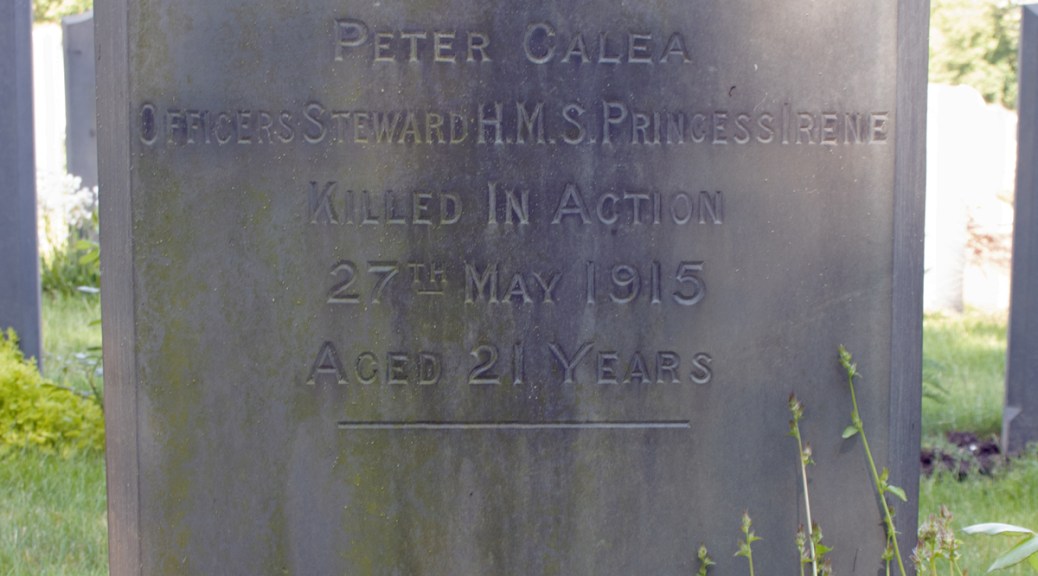
Tragically, Peter was on board when, on 27th May 1915, an explosion ripped through the ship, while moored off Sheerness, Kent and he was one of the 352 souls killed. He was just 21 years of age.
Peter Galea was laid to rest in the Woodlands Cemetery in Gillingham, Kent. His body having been identified, he was given his own grave, unlike those who were buried in a mass grave nearby.
Thomas David William Denny was born on 26th December 1890 in Glasgow, Lanarkshire. There is little information on his early life, other than that his parents were Thomas and Annie Denny.
By the time of the 1911 census, Thomas Jr was serving as a Lance Corporal in the 2nd Battalion of the Gloucestershire Regiment, and was based at the Verdola Barracks in Malta.
When war broke out, the battalion was called back to mainland Europe. By 19th December 1914, Thomas found himself in France; two years later, he was in Salonika, Greece.
Thomas’ bravery was not in doubt. While serving in France, he received the Military Medal for conspicuous gallantry. This went hand in hand with a promotion to Sergeant. In 1917, he received a commission as Second Lieutenant and was moved to the regiment’s 3rd Battalion.
In the spring of 1918, Second Lieutenant Denny married Elsie, a woman from Bearsted, near Maidstone in Kent. Sadly, little else is known of her, and even a later newspaper report only referred to her as “a Bearsted lady” [East Kent Gazette: Saturday 15th March 1919].
By early 1919, Thomas was back in Britain. Whether he had been demobbed is unclear, but is seems more likely that he had returned home for medical treatment. On 6th March, he passed away in Maidstone. He was just 28 years of age.
Thomas David William Denny was laid to rest in the graveyard of Holy Cross Church in Bearsted close to where the now-widowed Elsie must have lived.
Alexander Kennedy was born in Cromore on the Isle of Lewis on 15th June 1895. He was one of five children – four of them boys – to John and Isabella Kennedy.
Living in the remote coastal township, he would have grown up knowing the sea and, when the opportunity arose, he volunteered for the Royal Naval Reserve. His service records show that he enlisted on 12th December 1913; they also note that he was 5ft 6.5ins (1.69m) tall, had blue eyes, a fresh complexion and a scar under his chin.
Seaman Kennedy was kept on a retainer until war broke out the following summer, at which point he was sent to the other end of the country – HMS Pembroke, the Royal Naval Dockyard in Chatham, Kent – for formal training. His time in the navy was then split between the dockyard and the battleship HMS Implacable.
Over the next couple of years, Seaman Kennedy toured the Mediterranean, berthing in Egypt, Malta and Gibraltar between stops back in the ports on the English coasts. By the summer of 1917, he had returned to HMS Pembroke for good.
At that point in the war, Chatham Dockyard was a particularly busy place, and Alexander was billeted in overflow accommodation set up in the naval barracks’ Drill Hall.
On the night of the 3rd September, the German Air Force conducted the first night time raid on England. Chatham came in the firing line, and the Drill Hall received a direct hit. Seaman Kennedy was among those killed. He was just 21 years of age.
Alexander Kennedy was laid to rest in the Woodlands Cemetery in nearby Gillingham, along with the other victims of the Chatham Air Raid.
Edward Phillips Drewett was born on 22nd September 1893 in the Somerset town of Castle Cary. He was one of four children to Richard and Martha Drewett; his mother had been widowed before marrying Richard, and had a child from that marriage, Edward’s half-sister.
Richard was a solicitor’s clerk, but when he left school Edward found employment as a grocer’s assistant. It was this that he was doing when war broke out in 1914 and, in November 1915, he joined up to do his bit for King and Country.
Edward joined the 17th Battalion of the London Regiment as a Rifleman: his service records show that he stood 5ft 7.5ins (1.71m) tall, weighed in at 9st (57.2kg) and was of good physical development.
Rifleman Drewett ended up spending three-and-a-half years in the army, and travelled a lot. After nine months on home soil, he was sent to France, Salonika, Malta and Egypt, spending between four and nine months in each place. By July 1918, he was back in France, and by Christmas that year was on home soil again.
By this point, Rifleman Drewett was unwell, and suffering from nephritis – inflamed kidneys. The condition was severe enough for him to be stood down from the army, and he was formally discharged from military service on 31st March 1919, while admitted to the Bath War Hospital.
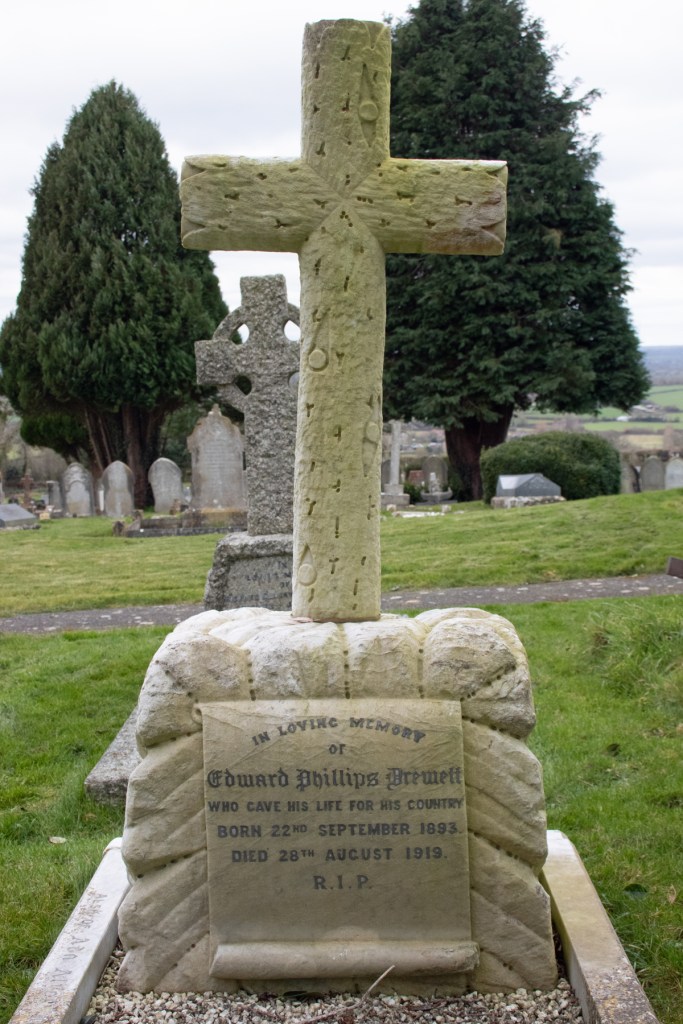
At this point, Edward’s trail goes cold. He passed away on 28th August 1919 and, while the cause is unclear, it seems likely to have been kidney-related. He was just 25 years of age.
Edward Phillips Drewett was laid to rest in the cemetery of his home town, Castle Cary.
Arthur Reginald Srodzinski was born in Paignton, Devon, in October 1890. His great grandfather Stanislaus was born in Poland and emigrated to Devon in the early 1840s. He was an upholsterer, and this is a trade that his son Samuel, and his grandson – Arthur’s father – Henry also followed. Henry and his wife, Sarah, had five children, of which Arthur was the middle one; by the time of the 1901 census, Henry has moved the family to Newton Abbot.
Arthur wanted bigger and better things than upholstering, and sought out a career in the army. In March 1909, he enlisted in the Devonshire Regiment as a Private. His service records show that he was 5ft 5ins (1.69m) tall, and weighed in at 131lbs (59kg). He has hazel eyes, brown hair and a fresh complexion.
Private Srodzinski enlisted for a period of twelve years (seven on active duty), and after his initial training, he was sent overseas. Over the next few years, he was posted to Malta, Cyprus and Egypt but, when was came to Europe, he returned to England, before heading to the Western Front.
Arthur’s time in France was not to be a long one – at the end of December 1914, he was medically evacuated to England, suffering from a heart condition. This was to turn out to be a serious issue, and he was formally discharged from the army on medical grounds just four months later.
Back in Devon, Arthur found work as a butcher and, in the autumn of 1917, he married local carpenter’s daughter Carrie Larkworthy; the couple set up home in Newton Abbot.
In March 1918, Arthur was attending a meeting of discharged soldiers at the Commercial Hotel in Newton Abbot, when he collapsed. Medical treatment was sought, but it proved too late; he had died of a heart attack. Arthur was just 28 years of age.
Arthur Reginald Srodzinski was laid to rest in Newton Abbot Cemetery. Three months later, Carrie gave birth to their one and only child, who she named Reginald.
Robert Anderson was born on 4th September 1889, one of ten children – of whom tragically only three survived – to James and Emily Anderson. James was a storekeeper from Belfast, who had moved his family to Preston, Lancashire, but who had subsequently moved them back to Northern Ireland after Robert had been born.
In 1911, while working as a town labourer, Robert had met and married Rebecca Barkley; the couple went on to have to children, Mary and Agnes.
War was coming to Europe, however, and Robert was keen to play his part. He enlisted in the 3rd Battalion of the Royal Irish Rifles and, according to a subsequent newspaper report, saw action at Mons and the Marne early in the conflict.
The Belfast Evening Telegraph reported that “He completed his time, and instead of re-enlisting in the Army, he joined the Navy.” [Thursday 4th October 1917] Given that Robert enlisted in the Royal Navy in the autumn of 1915, this raises the question of how he left the army at the height of the conflict, particularly given that the same report suggests that he had come through the major battles “unscathed“.
Either way, Private Anderson made the move to Stoker 2nd Class on 10th November 1915. He record show that he stood 5ft 5.5ins (1.66m) tall, had fair hair, brown eyes and a fresh complexion. On his arms he sported a number of tattoos; a lady, crossed flags and a ship on his right, and his initials on the left.
Robert’s first posting was HMS Pembroke, the Royal Naval Dockyard at Chatham, Kent, where he received a couple of months’ training. He was then assigned to HMS Egremont, also known as Fort St Angelo in Birgu, Malta, where he spent a couple of months. Stoker Anderson then returned to England, serving at HMS Victory, the Royal Naval Dockyard in Portsmouth, and gaining a promotion to Stoker 1st Class in the process.
By August 1917, he had returned to HMS Pembroke. The Dockyard was particularly busy that summer, and the large number of extra servicemen meant that Robert was billeted in temporary accommodation in Chatham Drill Hall.
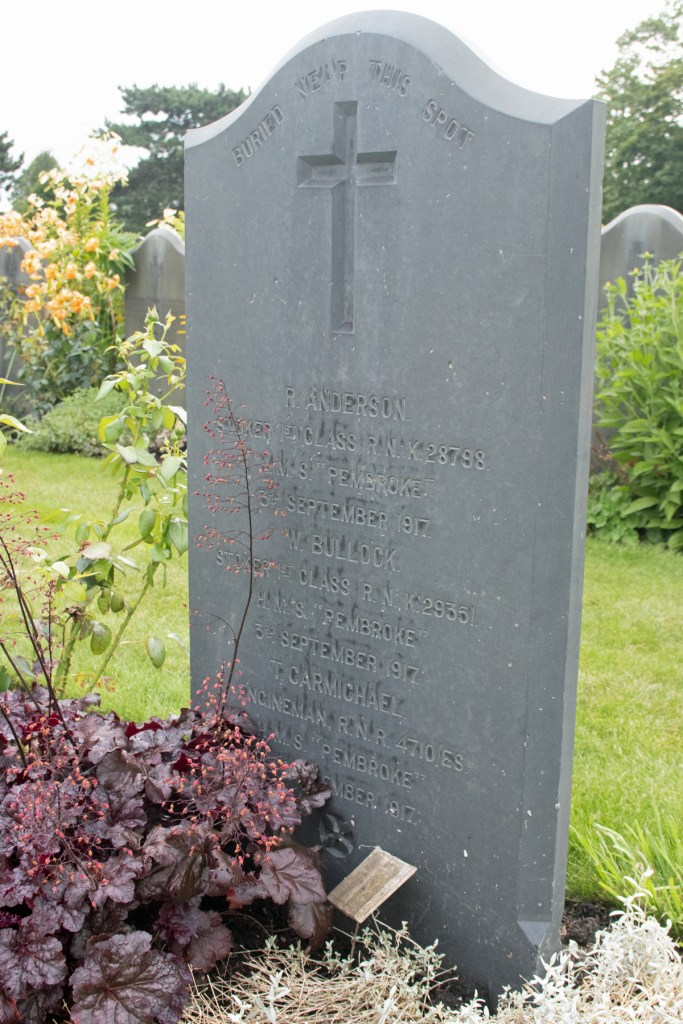
On the 3rd September 1917, the first night air raid carried out by the German Air Force bombarded the town, and scored a direct hit on the Drill Hall; Stoker 1st Class Anderson was among those killed instantly. He was a day short of his 28th birthday.
Robert Anderson was laid to rest, along with the other victims of the Chatham Air Raid, in the Woodlands Cemetery, Gillingham.
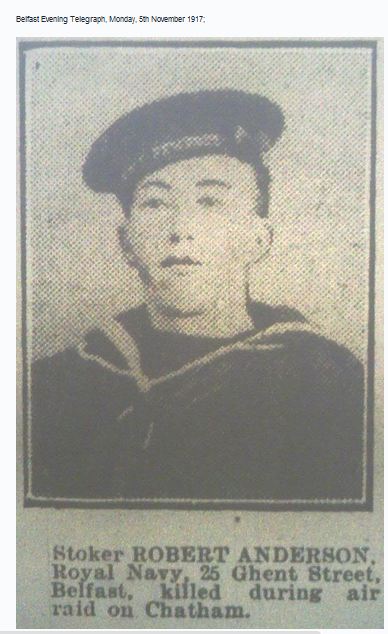
Stoker 1st Class Robert Anderson (from findagrave.com)








 Death and Service