Category Archives: Somerset

Major Cyril Wilson

Major Cyril Wilson

Cyril Spencer Wilson was born on 12th July 1883 in Charlcombe, Somerset. The youngest of three children, his parents were John and Edith Wilson. John was a solicitor who went on to become President of the Bath Law Society and, because of his standing, Cyril and his siblings had a comfortable upbringing: all three censuses covering his life – in 1891, 1901 and 1911 – all show the family living in a large villa in Charlcombe, with a cook and a housemaid to support them.

[Cyril] was educated at Bath College and Lancing College, and then studied engineering at Bristol University. He then became an articled pupil at the Great Western Railway Works at Swindon. Very interested in, and a keen supporter of, the Territorial movement, he was a Captain of the [Royal Engineers] Wilts Fortress Engineers when war broke out.

Bath Chronicle and Weekly Gazette: Saturday 2nd November 1918

Cyril had begun work for the Great Western Railway in July 1902, and became attached to the Institute of Civil Engineers the following January.

Captain Wilson formally enlisted when war was declared, and was soon sent to France. “He was awarded the Military Cross early in the summer of 1917, after being twice mentioned in despatches for excellent work.[Bath Chronicle and Weekly Gazette: Saturday 2nd November 1918]

Cyril was promoted to Major soon after this, and would go on to serve in France for more than a year more. In February 1918 he married Amy Pounds, the daughter of a bank clerk from East London and the couple exchanged vows in the city.

Major Wilson returned to France, but contracted dysentery that summer. He returned to Britain to recuperate, but came down with pneumonia, and this was to take his life. He died on 27th October 1918, aged 35 years old.

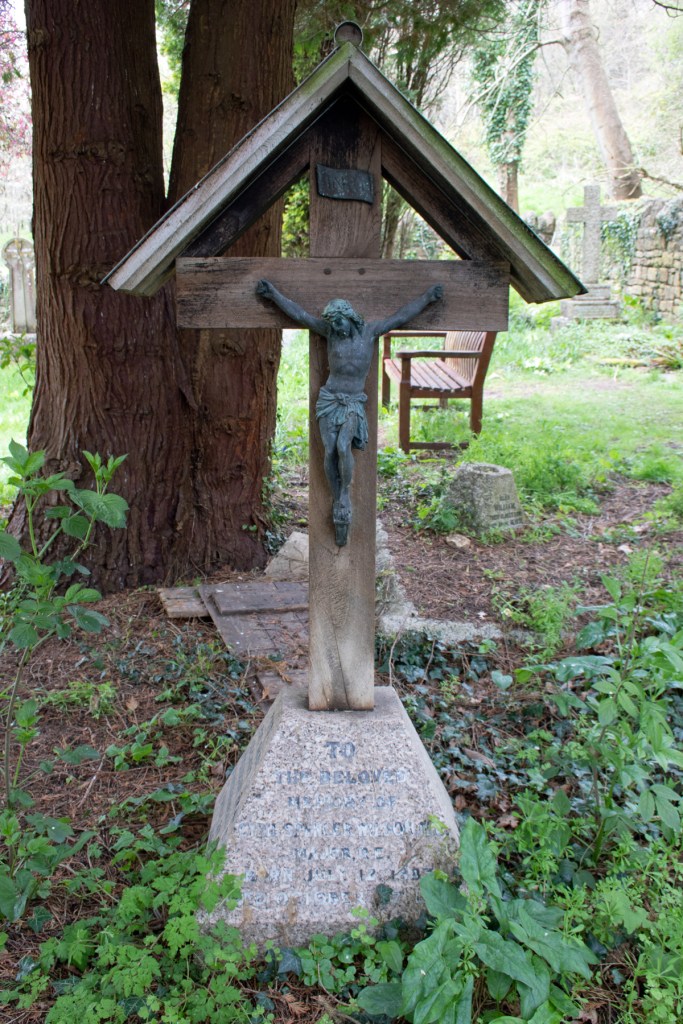
Cyril Spencer Wilson’s body was brought back to Somerset for burial. He was laid to rest in the family plot in St Mary’s Churchyard, Charlcombe.
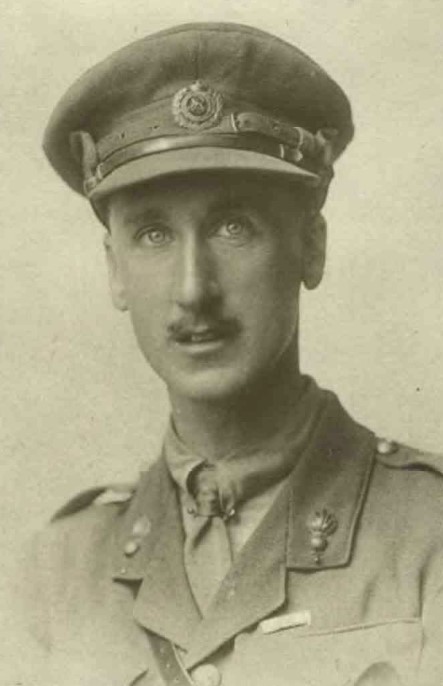

Major Cyril Wilson
(from ancestry.co.uk)

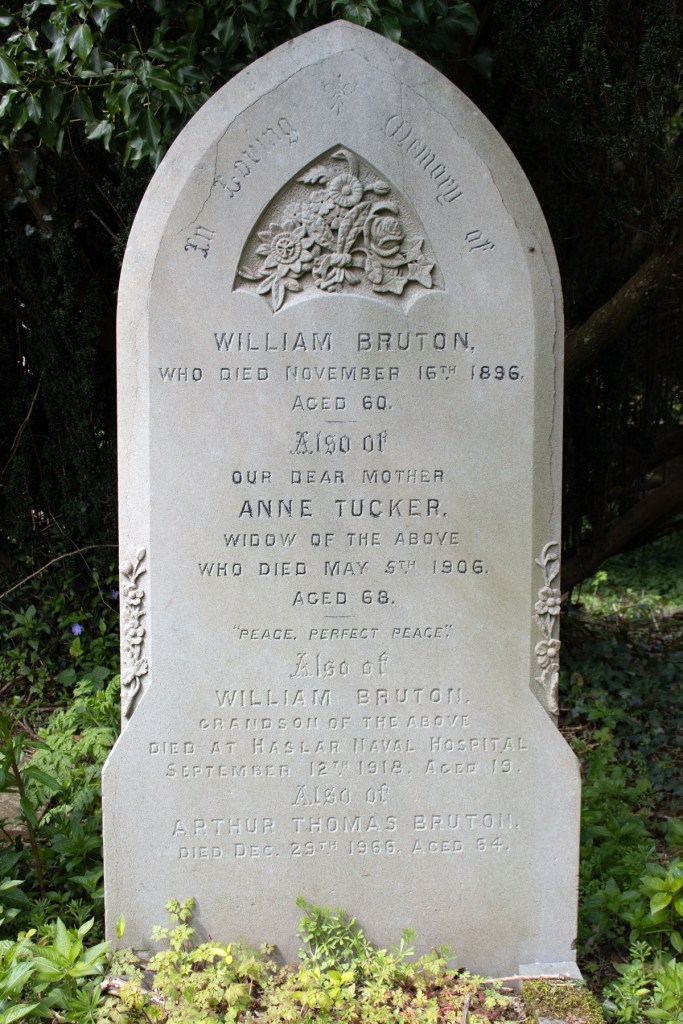
Ordinary Seaman William Bruton

Ordinary Seaman William Bruton

William Bruton was born on 9th August 1899, the oldest of two children to William and Kate Bruton. William Sr was a grocer from Charlcombe to the north of Bath, Somerset, but it was in the Walcot area of Bath itself that the family settled.

Kate died in November 1904, at the age of just 35 years old, and William Sr raised his children on his own. He married a second time, to Edith Elly in 1910, and the couple went on to have a daughter, Mona, the following year.

William Jr – who was known as Willie, to avoid confusion with his father – was still in school at the time of the 1911 census, but when he left a few years later, he found work as an engine cleaner. War had come to Europe by this point, but to begin with Willie was too young to play his part.

He finally got his chance to enlist towards the end of the conflict, and joined the Royal Navy as an Ordinary Seaman on 18th July 1918. His service document record that Willie was 5ft 11ins (1.8m) tall, with brown hair, hazel eyes and a fresh complexion. He was also noted as having a scar on his upper lip.

Ordinary Seaman’s first posting was to be HMS Victory, the Royal Naval Dockyard in Portsmouth, and, tragically, this was also to be his last. Within a matter of weeks he had contracted pneumonia, and he passed away from the condition on 12th September 1918. He was just 19 years of age.

William Bruton was brought back to Somerset for burial. He was laid to rest in the family plot in Lansdown Cemetery, overlooking the city of his birth.


Captain Frederick Walker

Captain Frederick Walker

Frederick Murray Walker was born on 29th July 1862 in the village of Terregles, Kircudbrightshire, Scotland. The fifth of eleven children, his parents were Colonel Sir George Gustavus Walker, Member of Parliament for Dumfries & Galloway, and his wife, Anne. Sir George owned the Crawfordton Estate, and this is where Frederick was raised, with a retinue of fourteen staff to help the family.

Following his father’s military career, Frederick felt a draw to serve. On 15th July 1875, he entered the Royal Navy as a Midshipman. He set out to build a dedicated career, visiting most parts of the world in the process.

While Frederick’s initial service took him to the Mediterranean – where he received the Egyptian Medal and Alexandria Clasp – by 1883 he was out in China, but he also spent time in India and South Africa. In 1882 he was promoted to Sub Lieutenant, three years later he rose to the rank of Lieutenant. By 1899, Frederick had become a Commander.

By his own request, Frederick retired from the Royal Navy on 1st August 1909. He was now 47 years old, and had spent 34 years in service and was given the rank of Captain as a mark of his career.

On 19th June 1891, Frederick had married Lucy Scriven in St Saviour’s Church, Paddington, London. They would go on to have seven children, and to begin with, the life of a Naval Captain took Lucy around the coastal ports of Southern England. When Frederick retired, however, the family settled in a large house in Milford-on-Sea, Hampshire, where they were supported by a governess, cook, parlour maid and housemaid.

When war broke out in 1914, Captain Walker stepped up once more to serve his King and Country. He remained in territorial waters and was given successive command of the yachts James, Zaria and Albion III. By 1917, Frederick’s health was beginning to suffer, and he was placed on HMS Victory’s reserve books, ready should Portsmouth’s Royal Naval Dockyard need his service.

Frederick was not to be called to action again. By the time the Armistice was declared Frederick’s condition was worsening. He had developed cancer of the tongue, and it was having a real impact. He was admitted to the Haslar Hospital in Portsmouth, and passed away there on 7th February 1919, at the age of 46 years old.

By this point the family had relocated to Bath, Somerset, and this is where Frederick Murray Walker’s body was brought for burial. He was laid to rest in the prestigious Lansdown Cemetery, overlooking the city.


Captain Frederick Walker
(from ancestry.co.uk)

Serjeant Joseph Smith

Serjeant Joseph Smith

Joseph Smith was born at the beginning of 1879 in Bath, Somerset. The fifth of six children – all boys – his parents were William and Sarah Smith. William was a carpenter and, while he did not follow in his father’s trade, Joseph found employment as a house painter when he left school.

Joseph married Alice May Martin in 1896: the couple were young, the groom being a year older than the bride, and they went on to have a daughter, Dorothy, who was born the following year. The newlyweds moved into a small, terraced house in Bath with Alice’s mother and sister, both of whom were widowed, and Alice’s nephew.

The 1911 census found the extended family living in larger home away from the centre of the city. Joseph was still employed as a house painter, Dorothy had left school and was apprenticed to a dressmaker. Alice looks to have been looking after the household, while her mother and sister were both living on their own means.

In his spare time, Joseph was also a member of staff at Bath’s Theatre Royal. He was sporty, with a keen interest in football and partial to a game of cricket. He was also very connected to St Stephen’s Church in the city, and was involved in parish life.

War was coming to Europe, and Joseph stepped up to play his part. Full details of his military service are lost to time, but from his gravestone and linked records, it is clear that he enlisted in the 6th Battalion of the Somerset Light Infantry. Further details are outlined in a contemporary newspaper report:

Though married, he was anxious to enlist practically as soon as the war began: and on January 16th, 1915, he offered himself for service, and was at once accepted. He did not leave England till 16th August [1916]. He had been selected for inclusion in 32 drafts on various occasions prior to that date; but had been obliged to remain behind from illness or some other cause. When he actually sailed, it was not as a member of a draft, but as one of five sergeants who had volunteered for special service.

Bath Chronicle and Weekly Gazette: Saturday 28th October 1916

Sergeant Smith made it to the Western Front, and was entrenched at the Somme. The newspaper report picks up on what happened next:

He was wounded in September, being struck by a bullet while leaving the trench preparatory to advancing. The bullet struck him in the thigh, and severed an artery… After doing what he could with his first-aid dressing, Sergt. Smith crawled some three miles from the firing line amid bursting shells. After five hours of this painful progress he was picked up by a stretcher party.

Bath Chronicle and Weekly Gazette: Saturday 28th October 1916

Sergeant Smith was medically evacuated to Britain for treatment, and was admitted to the 3rd Western General Hospital in Cardiff. Alice and Dorothy were a constant presence as his bedside, but the wound was to prove too severe, and he passed away at the hospital on 25th October 1916. He was 38 years of age.

Joseph Smith was brought back to Bath for burial. He was laid to rest in the Lansdown Cemetery, overlooking the city he called home.


Lieutenant Colonel Charles Holroyd-Smyth

Lieutenant Colonel Charles Holroyd-Smyth

Charles Edward Ridley Holroyd-Smyth was born in Ballynatray, Co. Waterford, Ireland, on 16th August 1882. The seventh of nine children, his parents were John and Harriette Holroyd-Smyth. John was a colonel in the army and, while from a a renowned family, there is actually little documented about Charles’ early life.

Given his father’s military career, it seemed natural for Charles to follow suit. His service records are tantalisingly elusive, but he certainly served in South Africa during the Second Boer War at the turn of the century.

When war broke out, Charles took up the rank of Captain in the 3rd Dragoon Guards (Prince of Wales’ Own). He set sail for France on 1st November 1914, and he found himself in the very thick of the fighting, where his battalion fought at Ypres, Loos and Arras. His conduct during the war earned him both the Distinguished Service Order and a Military Cross.

On 29th October 1916, Charles married Norah Layard, the daughter of another army officer, who had been born in Ceylon. Charles was soon back in France, however, and was promoted to Lieutenant-Colonel, and given command of the 15th Battalion of the Durham Light Infantry.

Over the course of 1918, Lieutenant-Colonel Holroyd-Smyth led his troop in the Battles of Bapaume, Messines, Kemmel and Aisne. However, it was during the Battle of Epehy that he was badly wounded. Initially treated on sight, he was quickly evacuated back to Britain for further treatment.

Lieutenant-Colonel Holroyd-Smyth was admitted to the Royal Victoria Hospital in Netley, Southampton, but his wounds were to prove too severe. He passed away on 23rd September 1918, at the age of just 36 years of age.

The body of Charles Edward Ridley Holroyd-Smyth was brought back to Somerset, where Norah was living. His funeral, at St Stephen’s Church, in Bath, was marked with some ceremony, and he was laid to rest in Lansdown Cemetery, overlooking the city.


(from ancestry.co.uk)
Charles’ death came just nine days after the passing of his mother, back in Waterford. He and Norah didn’t have any children, although tragically a newspaper report from July 1918 did note a birth: “On the 3rd July, at East Hayes House, Bath, the wife of Lieutenant-Colonel CE Holroyd-Smyth MC, a son (stillborn).” [Bath Chronicle and Weekly Gazette: Saturday 13th July 1918]


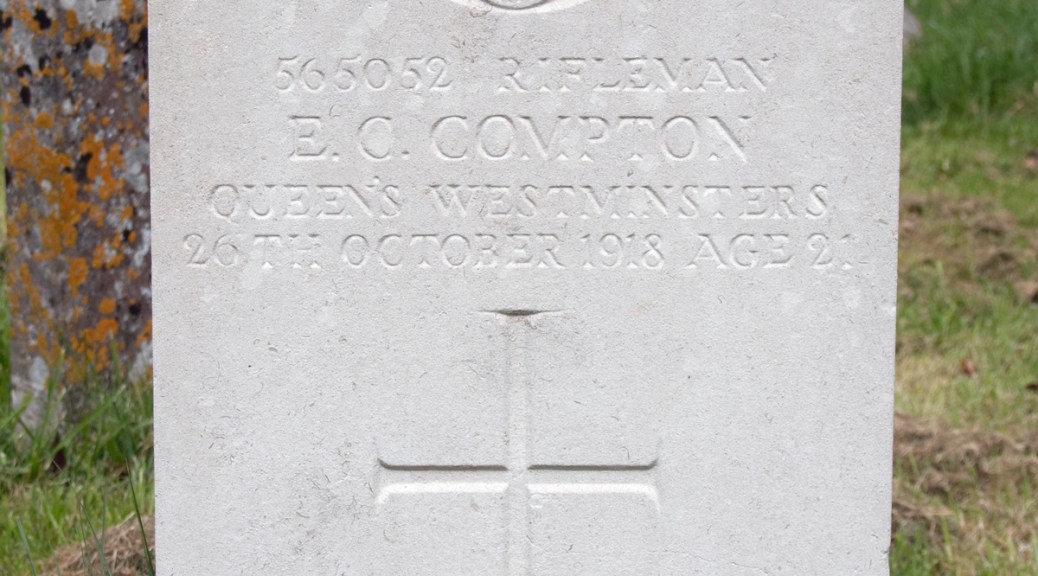
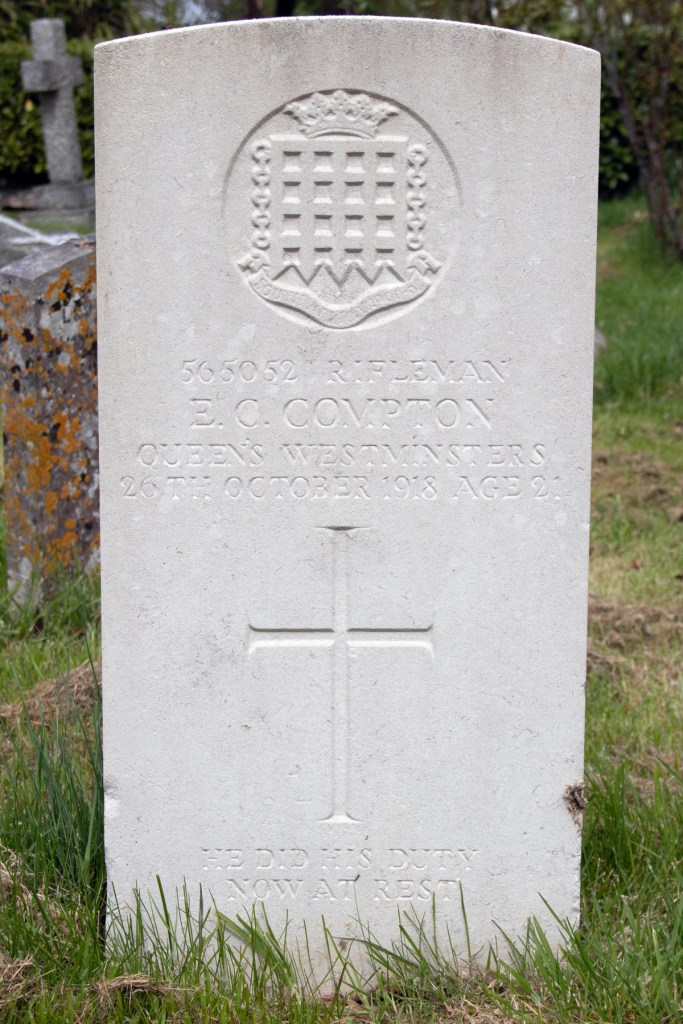
Rifleman Edward Compton

Rifleman Edward Compton

Edward Charles Compton was born in Islington, Middlesex on 4th July 1897, the only child to Charles and Ada Compton. Charles was an agent for the Prudential Insurance company, and the family lived on Devonshire Road, with Charles’ aunt, Mary.

When he finished his schooling, on 7th July 1911, Edward found work as a clerk for the North African Mission. When war came to European shores, he was eager to serve his King and Country. He enlisted on 10th September 1914, and was assigned to the 11th (Reserve) Battalion of the London Regiment.

Rifleman Compton’s service records confirm that he was 5ft 8ins (1.73m) tall, with good vision and physical development. He wasn’t formally mobilised until the summer of 1916 and, after training, he was transferred to the 16th (County of London) Battalion, also known as the Queen’s Westminster Rifles. He was sent to France on 19th December 1916.

Edward would have been involved in the German retreat to the Hindenburg Line in the spring of 1917, and the First and Third Battles of the Scarpe in April and May. At the end of July he returned to Britain and, while the reason for this is unclear, it seems that his health was suffering.

On 24th September 1917, Rifleman Compton was medically discharged from the army, after three years and fifteen days’ service. The cause for this isn’t documented, but there is no evidence that he was wounded, so it is likely to have been an illness of some description.

Edward returned to Islington and on 20th October 1918, he married Emily Backholer. She was a farmer’s daughter from Paignton, Devon, and was registered as living there when the couple’s banns were read during October.

Tragically, Edward and Emily’s marriage was not to be a long one: he died in Kelston, near Bath, Somerset, on 26th October 1918, less than a week after his wedding. He was just 21 years of age.

Edward Charles Compton was laid to rest in the graveyard of St Nicholas’ Church in Kelston, Somerset.


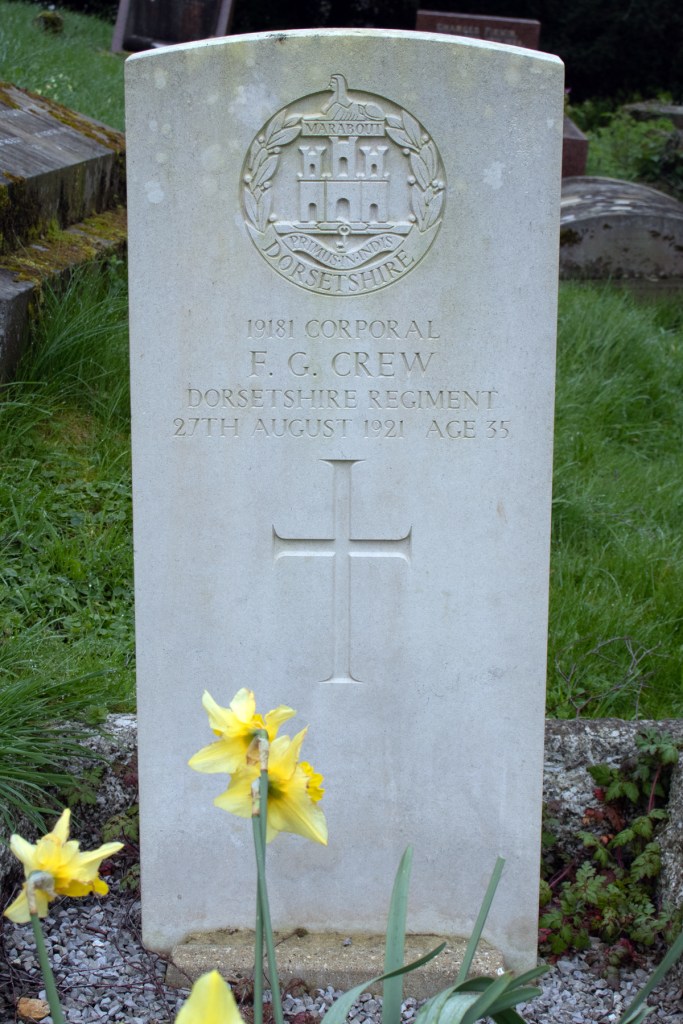
Corporal Frank Crew

Corporal Frank Crew

Frank George Crew was born in Twerton, Somerset, on 25th January 1886. The fourth of five children, his parents were nurseryman and market gardener William Crew and his laundress wife, Fanny.

When Frank finished his schooling, he followed his father into the nursery trade, and this is how he was employed when war was declared. He enlisted in the Dorsetshire Regiment on 19th July 1915, and was assigned to the 3rd (Reserve) Battalion. Private Crew’s service records are limited, but his medical report shows that he was 5ft 9ins (1.75m) tall, weighing around 10st (63.5kg).

On 6th October 1918, Frank, who had been promoted to Corporal by this point, was admitted to the Military Hospital in York with a bullet wound to his right forearm. Given that his battalion remained on home soil for the duration of the conflict, it is unclear whether this was an accidental injury at camp, or if he transferred to another troop when he recovered.

Little additional information for Frank remains. He remained in hospital until 8th November 1918 and it is unclear if he continued with his army service once he recovered – although given the Armistice was declared three days later, it is unlikely that he did.

On 11th November itself, Frank married Kate May, a mason’s daughter from Limpley Stoke, to the west of Bath. By this point he recorded his profession as gardener, so it seems his army career was indeed behind him. The couple went on to have a daughter, Peggy, who was born a year later.

William died in 1920, and by the time of the following year’s census, Frank, Kate and Peggy were living with Frank’s now-widowed mother. The extended family had a home on Padleigh Hill, to the south west of Bath city centre, and Frank seemed to be the main breadwinner, working as a labourer for Stothert & Pitts Ltd, a crane company on the River Avon.

Sadly, Frank was only to survive the census by a couple of months. He passed away on 21st August 1921, dying from a combination of influenza and epilepsy. He was 35 years of age.

Frank George Crew was laid to rest in the quiet Englishcombe Churchyard, close to the family home.


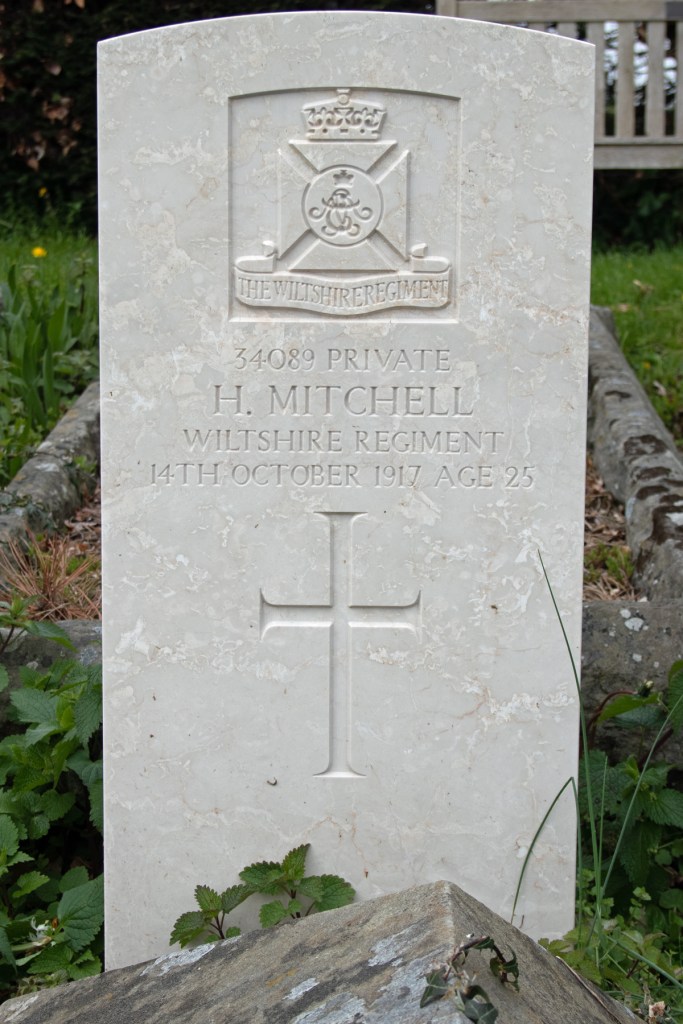
Private Henry Mitchell

Private Henry Mitchell

Henry Mitchell was born in the summer of 1892, the second of three children – and the only son – to George and Selina Mitchell. George was a gardener from Saltford, Somerset, and this is where he and Selina raised their young family.

By the time of the 1911 census, Henry had finished his schooling, and had followed his father into gardening for work. War was calling at England’s shores, however, and he was soon to take up a post in the army.

Full details of Henry’s military service are lost to time, but from his gravestone it is clear that he enlisted in the Wiltshire Regiment as a Private. From other documents it is possible to determine that he joined up by April 1917, and that he did not serve overseas. Instead, while his battalion – the 1st – fought at the Somme, Messines and Ypres, Private Mitchell was assigned to the regiment’s depot.

Henry seems to have been based in London, and he was certainly here in the summer of 1917. He was admitted to a hospital in Bethnal Green, and it was here that he breathed his last. He died on 14th October 1917, through causes unknown. He was just 25 years of age.

Henry Mitchell’s body was brought back to Somerset for burial. He was laid to rest in the family plot in the graveyard of the Blessed Mary Church in his home village of Saltford.


Stoker 1st Class Sidney Goddard

Stoker 1st Class Sidney Goddard

Sidney Goddard was born on 2nd January 1889 in the village of Oldland Common, near Bristol. The youngest of three children, his parents were Albert and Frances Goddard. Albert was a shoemaker, but by the time of the 1911 census, he and Frances had set up home in Saltford, between Bristol and Bath, where he was recorded as being a bootmaker and innkeeper at the village’s Jolly Sailor.

Sidney, by this time, had gone his own way. On 17th January 1917, he enlisted in the Royal Navy as a Stoker 2nd Class. His service records note that he had been working as a collier when he joined up, so it seemed that coal ran through him. The same records note that Sidney had dark brown hair, brown eyes and a fresh complexion. He was also recorded as being was 5ft 5.5ins (1.66m) tall, and having a number of tattoos: a true lovers’ knot on his left wrist, several dots on his left arm. He had three dots on his right arm, a scar on his back and another on the inside of his left shin.

Stoker Goddard was initially sent to HMS Vivid, the Royal Naval Dockyard in Devonport, for training. After a couple of months he was assigned to the cruiser HMS Amphitrite. It is evident that Sidney showed promise, because he was promoted to Stoker 1st Class on 22nd April, just three months after he enlisted. He returned to Devonport in May, but this was only to change assignments: he boarded HMS Blake, another cruiser, a few days later.

Over the next eight years, Stoker 1st Class Goddard served on five further vessels, returning to HMS Vivid in between assignments. On 1st July 1915, he was assigned to the newly commissioned minesweeper HMS Larkspur. In November that year, she came into Merklands Wharf in Glasgow.

[Sidney] met his death while assisting in docking his ship at Glasgow on the afternoon of Wednesday, November 3rd. By some mischance he was thrown into the dock, and in falling his head struck either on the boat’s side or on the dock. It is believed that he was rendered unconscious by the blow, as otherwise, being a good swimmer, he would have been able to keep afloat till help came.

Bath Chronicle and Weekly Gazette: Saturday 13th November 1915

Stoker 1st Class Sidney Goddard was just 26 years of age when he died. His body was brought back to Somerset for burial. He was laid to rest in the peaceful graveyard of St Mary’s Church, Saltford, within walking distance from the Jolly Sailor, where his parents still lived.


Sidney has the dubious honour of being the only member of HMS Larkspur’s crew to die during the First World War. His two older brothers also served in the conflict, Maurice in the Royal Marines and William, who was a Leading Seaman on board HMS Spitfire when he was killed during the Battle of Jutland.


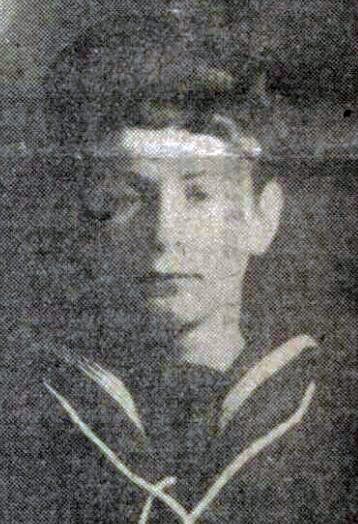
Stoker 1st Class Sidney Goddard
(from britishnewspaperarchive.co.uk)

Corporal Charles Fernley

Corporal Charles Fernley

Charles Edward Fernley was born on 28th November 1874 in Stepney, East London. One of thirteen children, his parents were Richard and Eliza Fernley. Richard was a sluice keeper, who worked his way up to be an inspector of sewers and drains for London County Council. By 1888, he had been able to move his family out of the East End, to suburban Bromley, south of the river in Kent.

By the time of the 1891 census, Charles had finished his schooling, and had found work as a printer’s labourer. Ten years later, however, he was employed as a packer for a millinery warehouse. There seems to have been more need for this back in the East End, however, as he was living in Bow in the summer of 1901.

On 21st August 1901, Charles married Hannah Weston in St Faith’s Church, Stepney. She was three years younger than her husband, and was the daughter of a boatbuilder. The couple settled in a small terraced house in East Ham and had a son, Leonard, who was born in 1908.

When war came to Europe, Charles was keen to play his part. He enlisted in the Essex Regiment, and was assigned to the 1st/4th Battalion. Sent to the Balkans in August 1915, it is likely that he was caught up at Gallipoli and, in December 1915, evacuated with his battalion to Mudros on the Greek island of Lemnos.

By this point, the now Corporal Fernley had contracted dysentery, and was repatriated to Britain for treatment. He was admitted to the Newton Park VAD Hospital on the outskirts of Bath, but was to succumb to the condition on 31st December 1915. He was 41 years of age.

Charles Edward Fernley was laid to rest in the quiet Holy Trinity Churchyard in Newton St Loe, Somerset.


While Charles’ headstone is dedicated to Sergeant Fernley, all other documentation suggests that he held the rank of Corporal when he died.