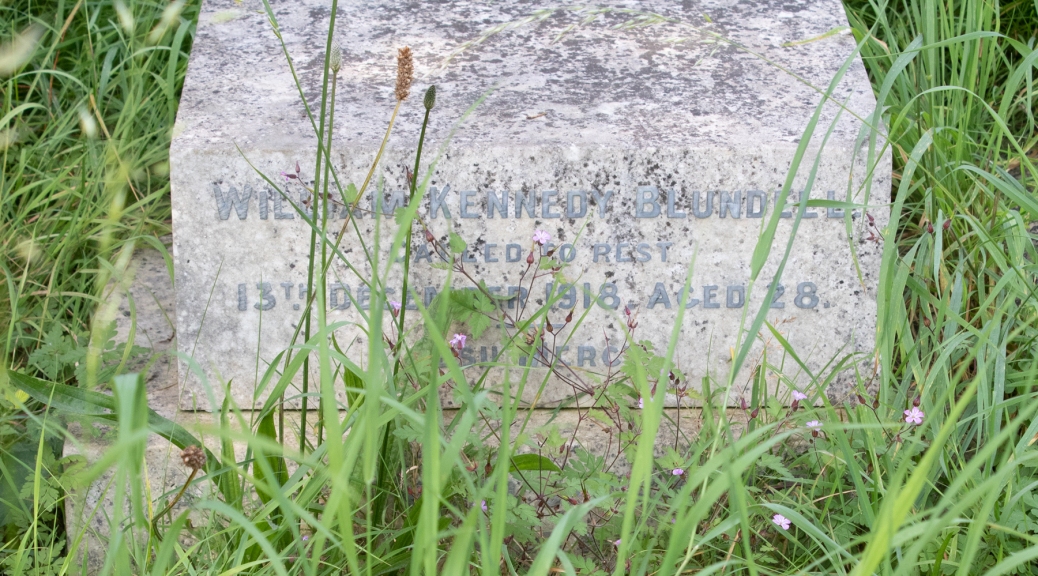
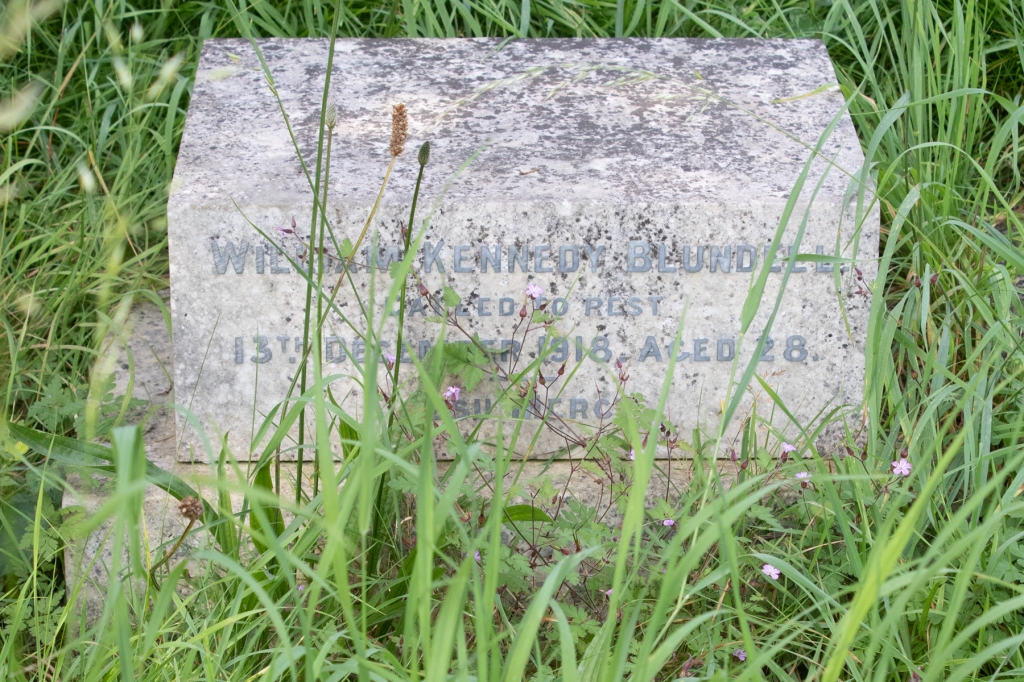
William Kennedy Blundell early life seems anything but ordinary. Born in Cardiff, Glamorgan, in the summer of 1890, he was the only child to bank clerk Edmund Blundell and his wife, Annie. Edmund was born in Staplegrove, Somerset, while Annie had grown up in Lahore, India.
The 1891 census found William living with his maternal grandparents James and Edith Kennedy in the Walcot area of Bath, while his parents were firmly based in Cardiff. Edmund died the following year, so it is possible that he was placed out of the way while Annie tended to her husband (along with her sister-in-law and a domestic servant).
By the time of the next census return, Annie and William were reunited, and were living in Avenue Road, Wimborne Minster, Dorset. Anne was living off her own means, and had a servant, Emily Chaffey, to hep look after the home.
Both Annie and her son disappear from the 1911 census. It is likely that William had embarked on a military career by this point, and may have been serving overseas. Sadly, his trail goes cold, but scraps of later information help identify some of what became of him.
By the outbreak of the First World War, he was serving in the Bedfordshire Regiment. He was based in Egypt from January 1916, and rose to the rank of Captain by the end of the conflict. By 1918, he was attached to the 12th (Transport Workers) Battalion, and was back in Britain.
Captain Blundell was in Sussex by the time of the armistice, and it was here that he fell ill, contracting pneumonia. He was admitted to the General Eastern Hospital in Brighton, but the condition was to prove too severe. He passed away on 13th December 1918, at the age of 28 years old.
William Kennedy Blundell’s body was taken back to Somerset for burial. He was laid to rest in the sweeping grounds of Locksbrook Cemetery in Bath.
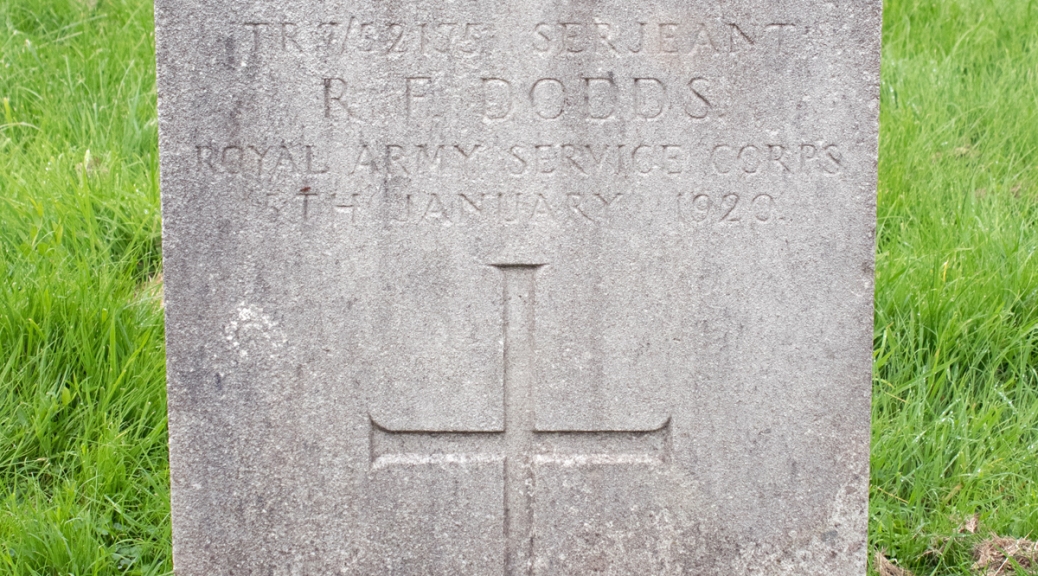
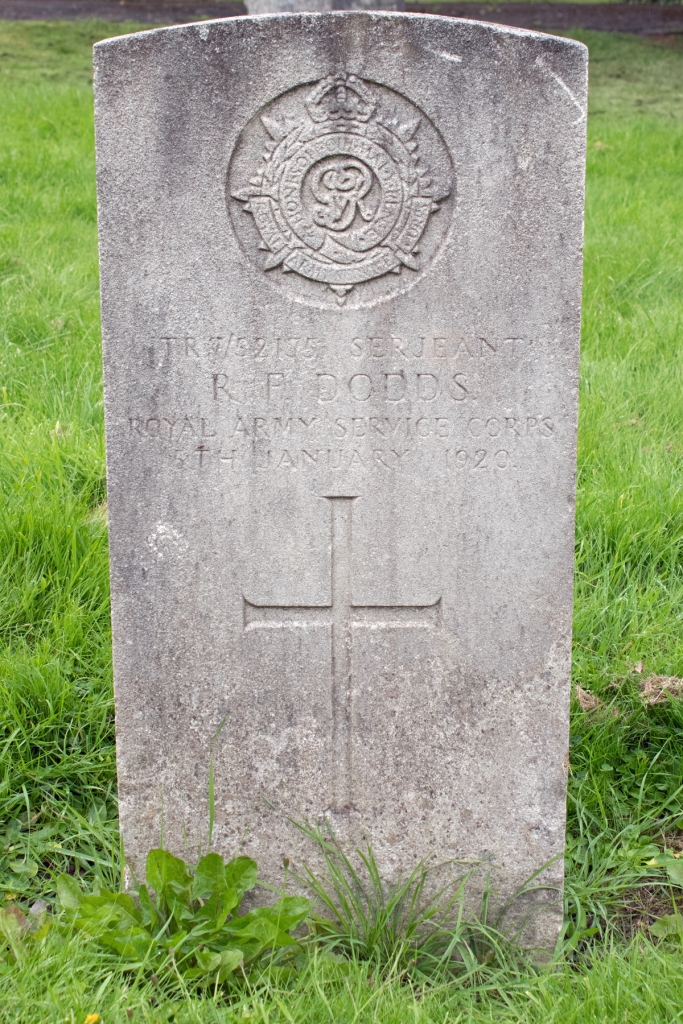
Robert Frederic Dodds was born in 1874 in Darlington, Country Durham. The third of nine children, his parents were Robert and Elizabeth Dodds. Robert Sr was a carter and furniture remover and, when he finished his schooling, Robert Jr joined his father in his work.
Robert Sr died in 1898, at the age of 61. Whether this was a catalyst for his son to move on is unclear, but by the following year, Robert Jr was working as a labourer in Weston-super-Mare, Somerset. On 16th September 1899, he married Elizabeth Counsell, a fisherman’s daughter from the town.
It seems that Robert was keen to build a life for his new wife: the next census, taken in 1901, found the couple living in Cardiff, Glamorgan, where he was employed as a stone mason. The Dodds remained in Wales for the next decade, having three children – Lily, William and Rosie – there. By the spring of 1911, however, they were back in Somerset, living in a three-roomed cottage in Castle Street. Elizabeth had had a fourth child just a month before the census, with a second son, Bertie, adding to the family.
When war came to Britain, Robert stepped up to play his part. He initially joined the Royal Army Veterinary Corps as a Private, and found himself in France on 6th March 1915. Elizabeth, meanwhile, remained at home in Somerset, seeking support from her family. With four children to look after, her workload was to increase again when, just a week after Robert arrived on the Western Front, she gave birth to their fifth child, the patriotically named Frederick Gordon Kitchener Dodds.
Robert remained in the Royal Army Veterinary Corps for the next four years, rising to the rank of Serjeant. Details of his time in the service are unclear, but he survived the war and, on 11th July 1919, he transferred to the Royal Army Service Corps.
Little further information is available about Robert’s life. By the winter of 1919/1920, he was based in Midlothian, Scotland. He was admitted to the 2nd Scottish General Hospital, Edinburgh, although his condition is unclear. Whatever it was, it was to be fatal: he passed away on 6th January 1920, at the age of 45 years old.
Robert Frederic Dodds’ body was taken back to Somerset for burial. He was laid to rest in Highbridge Cemetery.
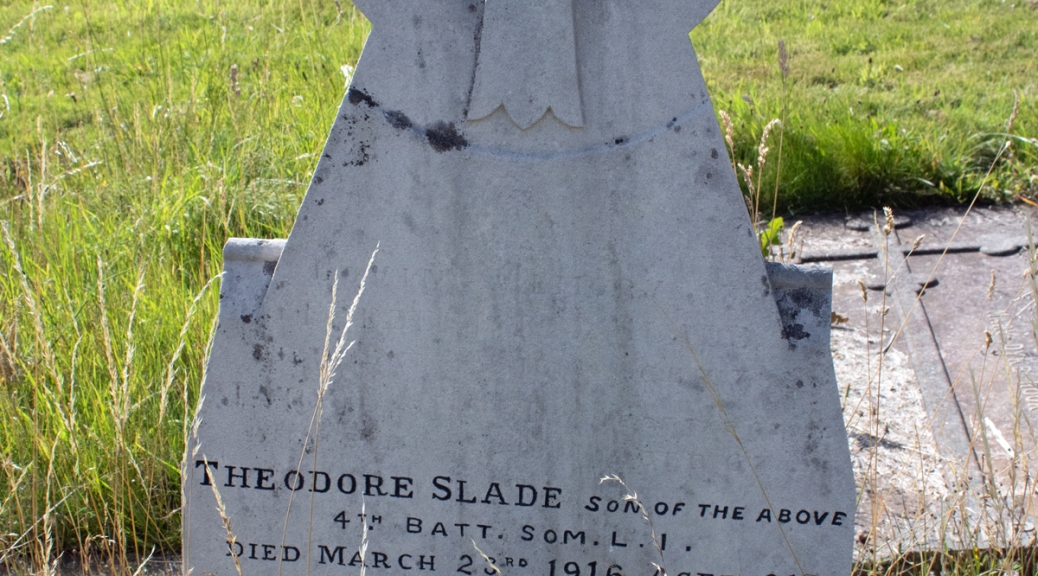
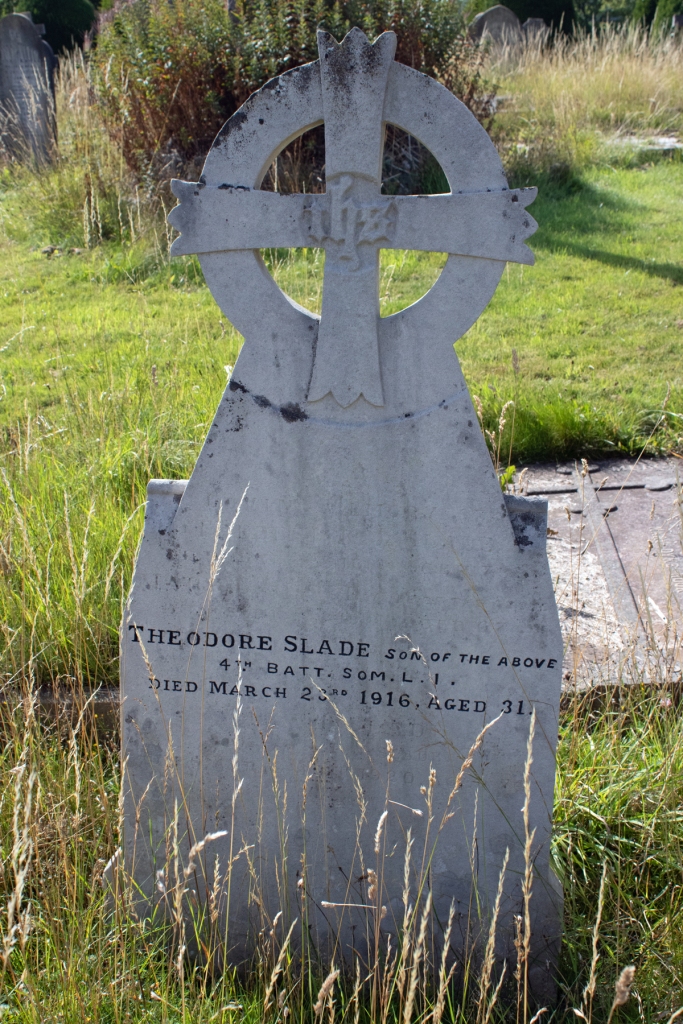
Theodore Slade was born early in 1885 in Buckfastleigh, Devon and was the second of two children to Frederick and Mary Slade. The 1891 census recorded the family four living with Frederick’s widowed mother and younger sister in Minehead, Somerset, where he had himself been born. Frederick was listed as a schoolmaster, while Mary was working as an organist.
Music definitely ran through the Slade family. The next census, in 1901, found Frederick now working as a gunsmith. Mary, meanwhile, was now noted as being a professor of music, while Theodore and his older brother, appropriately named Beethoven, were both employed as music teachers.
Ten years further on, and Beethoven had moved out of the family home, for a life with his wife and her widowed mother. Frederick was still working as a gunsmith, while Mary and Theodore were still teaching music. All three were self-employed, Theodore also working as an organist at St Andrew’s Church, Minehead, for more than a decade.
An interesting side note to the three document is how the census takers relied fully on the information they were given by residents. In 1891, Frederick gave his age as 41 and Mary 40; ten years later, Frederick was noted as being 56 and Mary 53; the 1911 census gave their ages as 71 and 63 respectively.
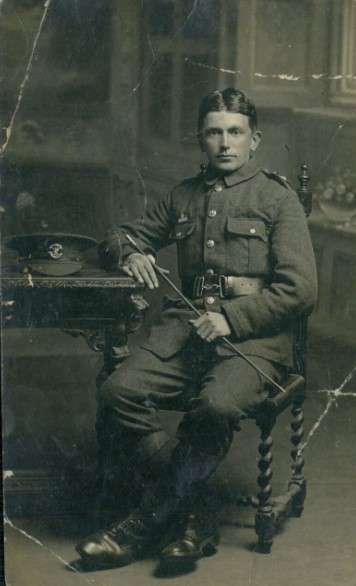
When war broke out, Theodore enlisted early on. He joined the Somerset Light Infantry, and was initially attached to the 4th (Reserve) Battalion. Private Slade was transferred across to the 1st Battalion, and soon found himself ensconced at Ypres.
Towards the end of 1915 Theodore came down with tuberculosis, and was medically evacuated to Britain for treatment. He was admitted to St John’s Hospital in Penarth, Glamorganshire, and remained in hospital over the winter months. His lungs weakened, he contracted pneumonia, passing away from the condition on 23rd March 1916, at the age of 31 years old.
Theodore Slade’s body was brought back to Somerset for burial. He was laid to rest in the family plot in the sweeping vista of Minehead Cemetery.
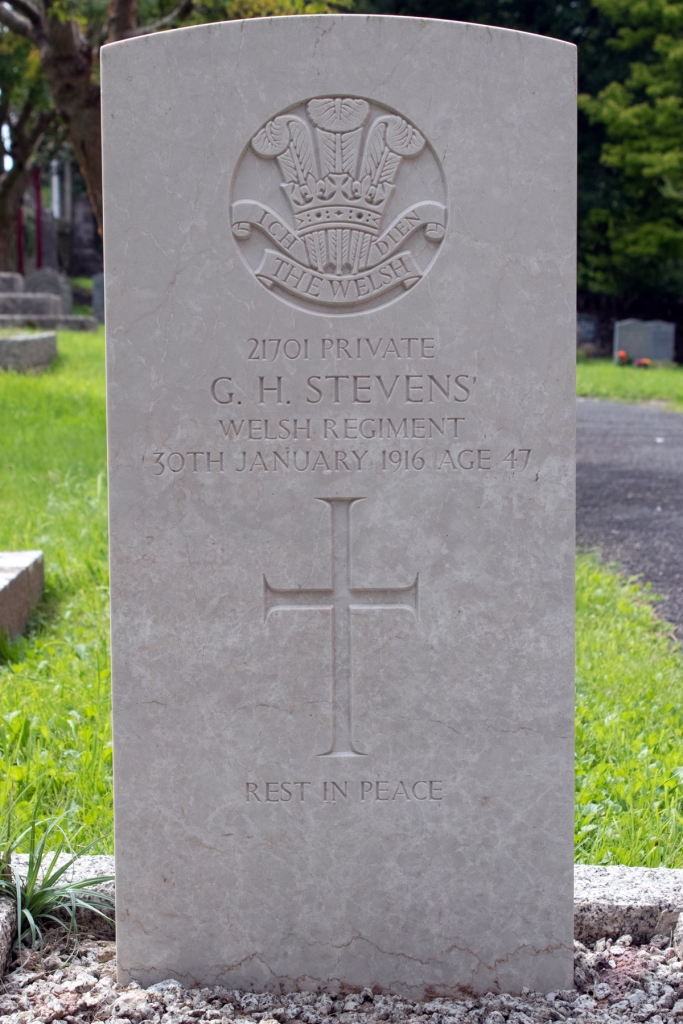
George Henry Stevens was born in Winscombe, Somerset, in the spring of 1869. The oldest of four children, his parents were blacksmith Joseph (or John) Stevens and his wife, Eliza.
When he finished his schooling, George found work as a collier. In 1893, he married a woman called Maria, and went on to have three children: Edward, Mary and Charlie. By 1900 the family had moved to South Wales for his work. They settled in Llanwonno, Glamorganshire, and went on to have three more children: John, Cyril and George Jr.
By 1911, George and Maria had been married for eighteen years. George was working as a repairer for the colliery, while Edward had followed his father into the mines.
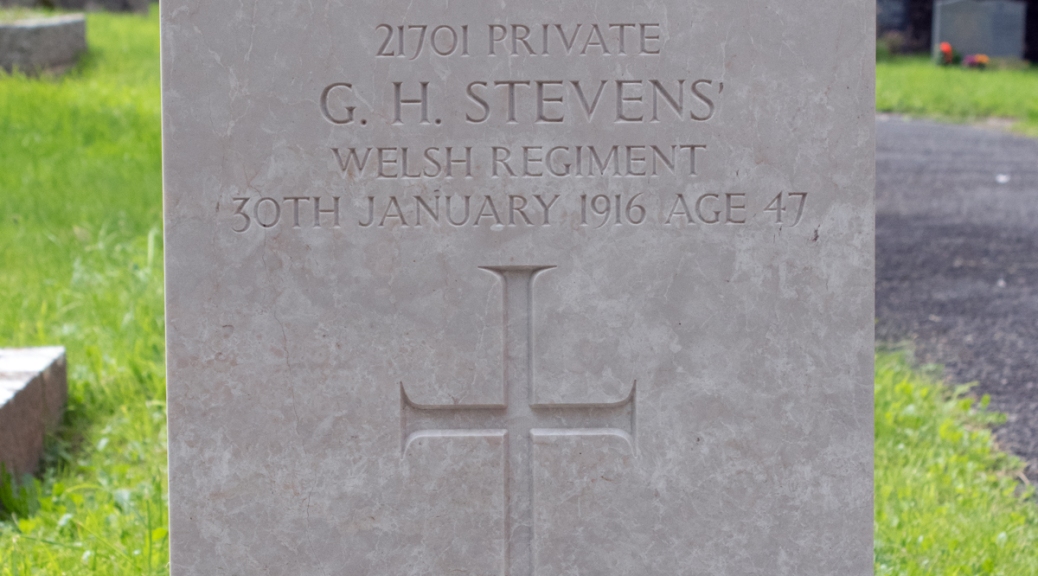
When war came to Europe’s shores, George stepped up to play his part. He enlisted in the Welch Regiment, and was assigned to the 1st/5th Battalion. While his full service records no longer exist, his troop served in Gallipoli during 1915, so it is possible that he spent times overseas.
By January 1916, however, Private Stevens was back in Britain, and had become unwell. Again, little specific information remains, but he passed away on 30th January 1916, having fallen into a diabetic coma. He was 47 years of age.
George Henry Stevens was brought back to Somerset for burial. He was laid to rest in the graveyard of Holy Trinity Church in Cleeve, where Maria had moved back to with the family when her husband went to war.
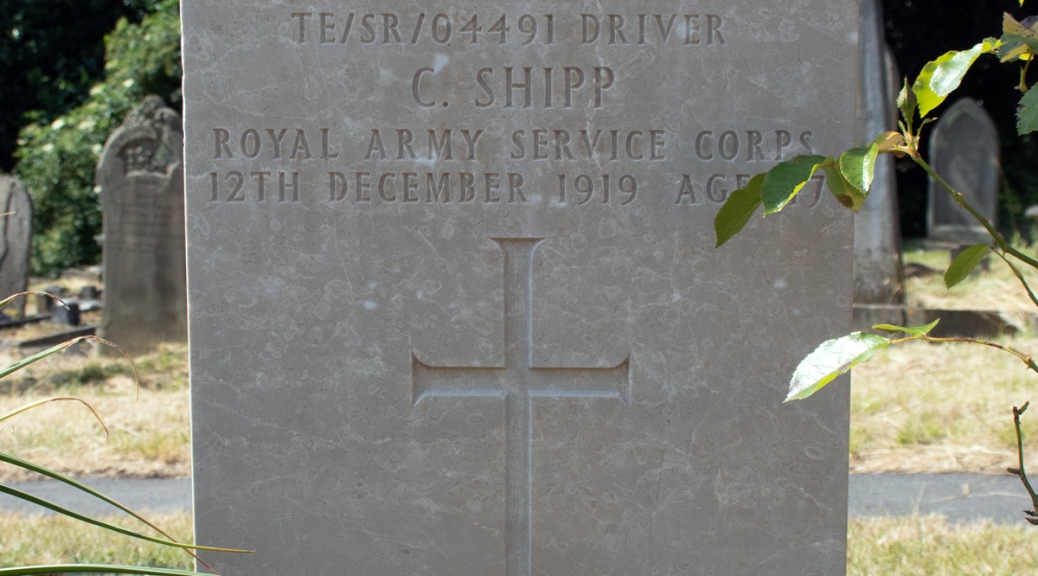
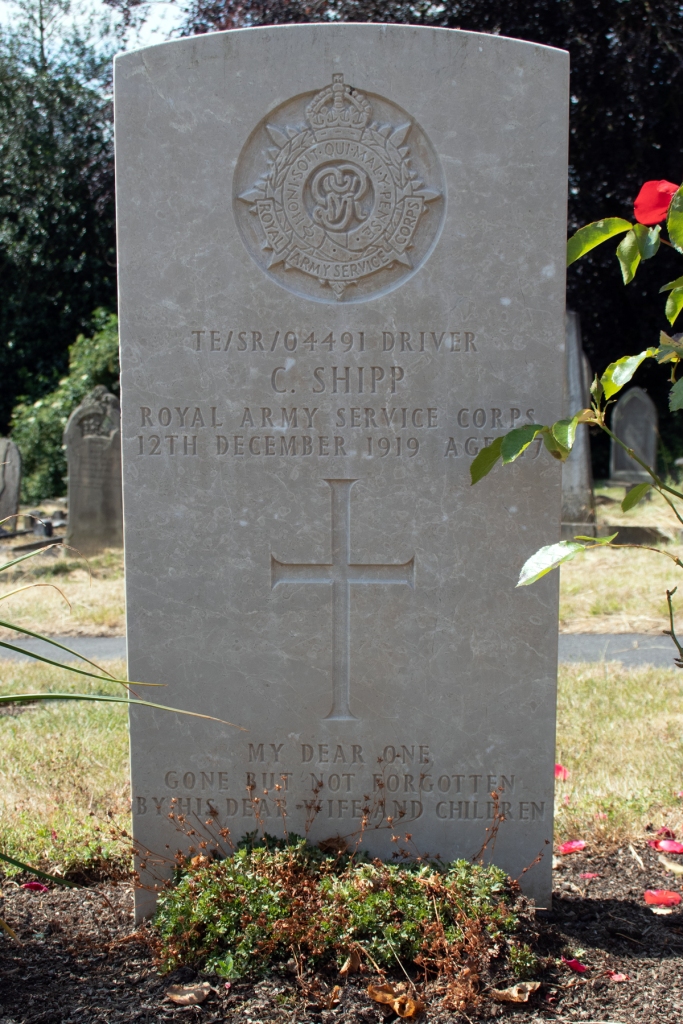
The early life of Charles Shipp is a challenge to unpick. Born Charles Morgan in Bath, Somerset, in 1872, his father was also called Charles. He found work as a labourer when he finished school.
Charles sought a life of adventure, however, and on 7th January 1890, he enlisted in the army, joining the South Wales Borderers. Private Morgan’s service records show that he was 5ft 5.5ins (1.66m) tall and weighed 116lbs (52.6kg). He had brown hair, grey eyes and a fresh complexion, with tattoos of crossed flags, a crown and VR on his left forearm.
Private Morgan spent three years on home soil, and is recorded as being based in North Camp Barracks in Farnborough, Hampshire, in the 1891 census. His battalion was sent to Egypt in December 1892 and spent the next three years overseas, moving to Gibraltar in the spring of 1895. The only details available for his time abroad relate to a couple of hospital admissions – for a fever in Cairo in August 1894, and for gonorrhoea in Gibraltar in the autumn of 1895. He returned to Britain at the end of November that year.
Charles appears to have been based in South Wales when he returned home and, on 20th December 1896, he married Lottie Walters in Llandough Parish Church. Interestingly, while the new bride’s father’s details are recorded – naval pensioner James Walters – Charles’ have been intentionally left blank. This is also the first document on which his surname is recorded as Shipp, so there seems to have been a deliberate distancing from his family at this point.
Charles was still committed to his military career. He served on home soil until January 1897, when he was placed on reserve, having completed seven years’ service. This respite was not to be for long, however, as he was recalled on three years later, and sent to South Africa, to fight in the Second Boer War.
Private Shipp, as he was now known, served in South Africa for more than two years, and was awarded the Johannesburg, Cape Colony, 1901 and 1902 clasps. In August 1902, he returned to Britain, and was formally stood down from army service.
Charles and Lottie moved to Bath, and set up home in a small cottage in Locksbrook Road. They went on to have seven children, all of them girls and, by the time of the 1911 census, Charles was working as a carter for the local gas works. His heart seems always to have been with his military career, however, and, when war broke out in 1915, he saw this as an opportunity to play his part once more.
On 25th October 1915, Charles enlisted in the Royal Army Service Corps as a Driver. His was not to be a war fought on home turf, and within a month, he was in the Mediterranean, potentially back in Egypt again. In April 1916, his battalion moved to Salonika, and he spent the next three years in Northern Greece.
Charles contracted malaria in the autumn of 1917, and this resulted in a hospital admission for just over two months. He returned to his unit, but spent another couple of months in a Macedonian hospital the following year when the condition recurred.
Driver Shipp survived the war, and returned to Britain in April 1919. His health was again suffering, and he was formally discharged from the army on medical grounds on 29th April.
At this point, Charles’ trail goes cold. He returned home to Lottie and their daughters, but there is nothing to account for the the last eight months of his life. He passed away on 12th December 1919, at the age of 47 years of age.
Charles Shipp was laid to rest in Bath’s majestic Locksbrook Cemetery, not far from where his family lived.
Claude John Howard Rawlings was born on 5th November 1896 in the Monmouthshire village of Aberbeeg. One of three children, his parents were Sidney and Alice Rawlings. Sidney was a brewer from Bath, Somerset, while Alice was born in the Welsh village and this is where the couple raised their family.
By the time of the 1911 census, Claude had been sent to Weston-super-Mare, Somerset, and was a boarding student at the Brynmalyn Private School to the north of the town centre. His heritage would not have been out of place, though, as nine of the 25 live-in students were from Wales. Claude’s parents seemed to have taken the opportunity to visit Sidney’s mother in Bath, a possible prequel to them moving back to Somerset permanently.
Claude completed his schooling at Brynmalyn the following year, and took up a place as an agricultural student in Broadstone, Dorset. When war broke out, however, he was called upon to play his part.
Details of Claude’s military service are sketchy, but he initially enlisted in the Gloucestershire Regiment and was assigned to the 4th (City of Bristol) Battalion. The regiment service in France and Italy from 1915 onwards, but there is no evidence of Private Rawlings serving anywhere other than on home soil.
Claude wanted greater things, and was drawn to a life in the sky. In the spring of 1918, he transferred to the Royal Air Force, and was attached to 125 Squadron. Sent to Fowlmere Airfield near Royston, Hertfordshire, Flight Cadet Rawlings began his training. Over the next couple of months, he learnt to fly a Royal Aircraft Factory R.E.8 biplane.
Flight Cadet Rawlings was dong a routine practice flight on 12th August 1918, when, during a left hand turn, the aircraft’s side slipped and nose dived. The plane crashed to the ground, and Claude was killed instantly. He was just 21 years of age.
The body of Claude John Howard Rawlings was brought back to Somerset for burial. He was laid to rest in Bath Abbey Cemetery.
Flight Cadet Claude Rawlings (from britishnewspaperarchive.co.uk)
Claude’s grave was a family plot, and he was reunited with his parents when Alice and Sidney died in 1933 and 1945 respectively.
The inscription on the family headstone gives Claude’s date of death as October 1918. All other records confirm the crash took place on 12th August, and that he died at the scene.
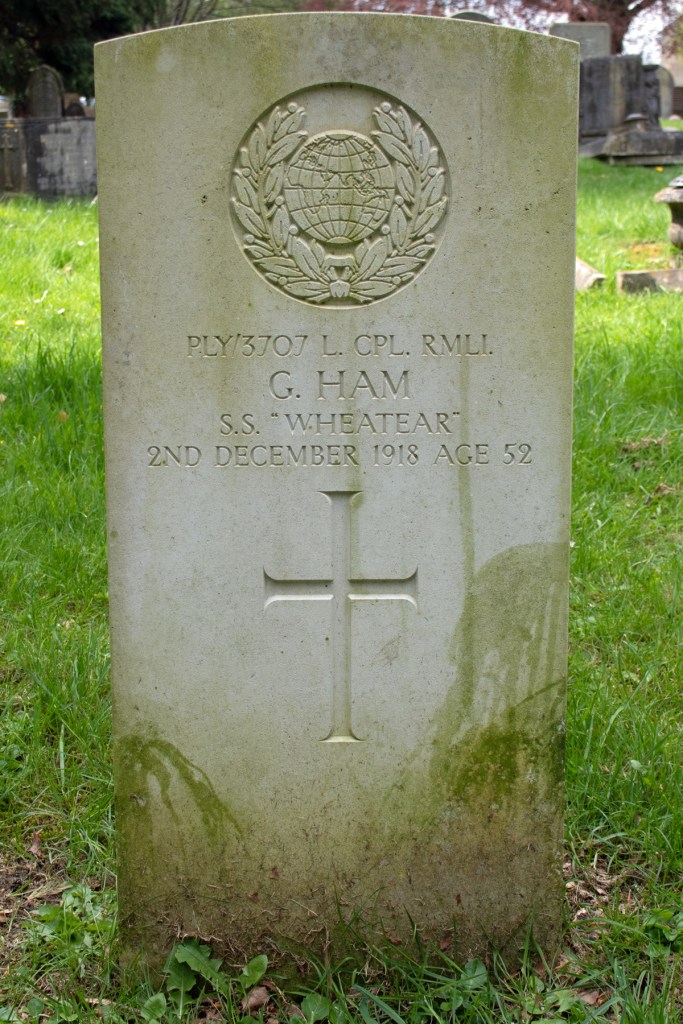
George Ham was born on 19th December 1867 in Twerton, Somerset. His parents were George and Emily Ham, and he was the oldest of their nine children. George Sr was a mason, and initially his first born followed suit, but he was pulled towards something bigger and better and, on 19th January 1886, he enlisted in the Royal Marine Light Infantry.
George’s service records note that he was 5ft 6ins (1.68m) tall, with brown hair, grey eyes and a fresh complexion. He was initially sent to the barracks at Walmer in Kent, and it was from here that Private Ham began a 21 year career in the Royal Marines. Over that time, he served on seven separate ships, and, between voyages, he was based in barracks in Plymouth, Devon. Both his character and ability were consistently noted as being very good.
Private Ham’s career took him around the world and, in 1887, he found himself on the gunboat HMS Banterer, on which he served for three years. His tour of duty included a period of time in Galway, Ireland, and it was here that he met Mary Ann Goode. On 5th July 1889, the couple married in city’s St Nicholas’ Church. The church’s records suggest that the couple went on to have four children – Frederick George; Emily, who died just after her first birthday; Albert; and Katherine.
George’s records from this point become a little disjointed. In October 1890, he returned to his Plymouth base, and the following year’s census recorded him as living in the East Stonehouse Barracks, although his marital status was noted as single.
The next census, in 1901, presents a different picture. George and Mary were, by this time, living in family barracks in East Stonehouse, with two children, (Frederick) George and Albert. Katherine, the couple’s youngest child, was born the following year.
In January 1907, after more than two decades’ service, George was stood down from active service in the Royal Marines. He was placed on reserve status, and took up work as a mason once more. At this point, however, the family seemed to have hit more troubled times, underlined by four separate 1911 census documents.
George, who was 44 by this point, was recorded as being an inmate in the Bath Union Workhouse and Infirmary in Lyncombe, Somerset. Mary and Katherine, meanwhile, were in two rooms in a house in Stonehouse, Devon. Frederick, who was now better known as George, had followed his father into military service, and was a Private in the Royal Marine Light Infantry, serving on HMS Colossus. Albert, who was 13 years old, was one of 946 students boarding at the Royal Hospital School for Sons of Seamen in Greenwich, London.
George spent nine years in the reserves, and, in 1914, was called up again for war service, this time as a Lance Corporal. According to a contemporary newspaper:
[He was] engaged on naval patrol work against submarines off the Canadian coast and elsewhere, and was in charge of a gun on an armed merchant ship. Once the boat he was on was torpedoed, and on another occasion he had a long running fight with a submarine in the Irish Channel. The ship, however, reached Portrush (Ireland), and the inhabitants gave Lance-Corporal Ham a testimonial, and he was also rewarded in other ways, the Cardiff owners of the vessel recognising his skill and gallantry.
Bath Chronicle and Weekly Gazette: Saturday 7th December 1918
Tragedy was to strike in the end, however, and George was to meet a sad end to a distinguished career.
While at Cork [George] fell, either from a boat or the dock, and sustained an injury to the side of his head. It did not appear very serious, and it is understood that he made a trip to Cardiff and back to Londonderry, [where] he became so seriously ill as to necessitate his going to a military hospital in Londonderry. Hemorrhage [sic] of the brain set in, and he died on Monday [2nd December 1918] before his brother, Mr Albert Ham, who had been telegraphed for, could reach him.
Bath Chronicle and Weekly Gazette: Saturday 7th December 1918
Lance Corporal George Ham was days short of his 51st birthday when he died. His body was brought back to Somerset for burial, and he was laid to rest in Twerton Cemetery. The newspaper report give no indication as to whether Mary or their children were in attendance and, in fact, does not mention his wife and family at all.
In St James’ Cemetery, Bath, is a headstone dedicated to one William Parry, once a Private in Devonshire Regiment. A lot of his life is lost to time, but his death highlights the length to which soldiers returning from the Great War were often left to fend for themselves.
On 4th November 1919, Private Parry “was found in an exhausted state lying under an arch in a suburb of [Bath], and told the police he had been there for 17 days. Crawling there to rest, he found himself afterwards too weak to move owing to trench feet” [Western Gazette: Friday 14th November 1919]
On 18th November, having been admitted to the Royal United Hospital in Bath, he passed away from pneumonia. “The police are endeavouring to ascertain something as to the man’s antecedents. He stated to them that he had no home.” [Western Gazette: Friday 21st November 1919]
An inquest into William’s death was held, and a miserable tale unfolded.
Parry was described as a seaman, and his address was given as 36 Catherine Street, Exeter…
[He had] said he was born at Swansea, had served in the 2nd Devons, and was demobilised at Exeter last March. He got into the arch because his feet were aching. He had come from Bristol. He did not say where he was going.
[When he died] Parry’s belongings… included a ration book, issued to him for the address in Exeter, his insurance card, and his out-of-work book. Parry had 10s 8d [approximately £11 in today’s money] in cash on him; but 10s 6d of this sum was given him by a lady since his arrival at the hospital. Parry had received various other gifts sent him by ladies from all over the country, who had read of the account of his discover in the Press. The last out-of-work donation received by him was on June 26th, and the ration book was issued at Exeter on March 24th. The address at Catherine Street, Exeter, as which Parry had stayed was that of a Church Army Home. He had also with him a card indicating membership of the Comrades of the Great War. The entries on his insurance card showed he was last employed on September 8th.
Inspector Lovell… gave the Coroner the result of exhaustive enquiries which he had made… regarding Parry’s antecedents… By the Exeter police he was informed that Parry registered at the Labour Exchange there as a seaman on March 25th. He then produced a certificate showing him to be a member of the Mercantile Marine. He had apparently served with the 2nd Battalion of the Devon Regiment for 2½ years. On May 16th, 1919, he obtained work as a painter in Exeter. He retained this employment till June 21st. A week later he obtained similar employment with another Exeter firm at 1s 3d [approx. £1.68] an hour and his earning averaged £2 [around £87] or more a week. He lest the Church Army Home on September 12th, explaining that he was going to Barrow-in-Furness, where he expected to obtain employment with Messrs Vickers, Sons, and Maxim. While staying at the Church Army Home he appeared to have been regarded as of a morbid disposition…
Inspector Lovell added that the members of the Exeter branch of the Comrades of the Great War had assisted him… and he was able to furnish the Court with a letter from Mr FW Drew, with whom Parry had lodged at the Church Army Home. The writer said he had met Parry in the latter part of April, and their friendship lasted until ten weeks ago, when deceased left Exeter. As they were two ex-Service men they became intimate friends, but apparently before the war he belonged to London.
After enlistment he had served in France, and was taken prisoner by the Germans. He was in their hands for three months; and acted as interpreter between his captors and the other British prisoners. He could speak German and other foreign languages, and undoubtedly was a man of superior education. Apparently, so far as his relations were concerned, he was “one of England’s lonely soldiers.” He said he was badly treated by the Germans, and suffered from a bad cough, the result of a wound in the chest. He was liable to depression when out of work, and the writer well remembered how pleased he was to think that he had obtained work at Barrow-in-Furness… “I deeply regret,” concluded the writer, “that he has come to such an untimely end. He was a good fellow, and would do anyone a good turn, if possible.”
In summing up, the Coroner remarked that exhaustive enquiries had been made into the case. There was no doubt from the medical evidence that the cause of death was pneumonia. It would appear that Parry had been on the road for some time when he crawled under the arch where he was found…
Bath Chronicle and Weekly Gazette: Saturday 22nd November 1919
Private William Parry died on 18th November 1919, aged around 44 years old. The British Federation of Discharged Soldiers and Sailors and the Comrades of the Great War jointly made arrangements for, and funded, his funeral, at which he was given full military honours. He was laid to rest in St James’ Cemetery, Bath.
Funeral of William Parry (from britishnewspaperarchive.co.uk)
James Oscar Stuckey was born in the summer of 1886, in Milford Haven, Pembrokeshire. The second of eight children, his parents were James and Minnie Stuckey. James Sr was a carter from Langport in Somerset, and his work took him across the country. James Jr’s older sister was born in Sandown, on the Isle of Wight, and, when his next sibling was born, the family had moved back to Somerset and were living in the village of Curry Rivel.
By the time of the 1901 census James Sr was working as a warehouseman. James Jr had also left school and found employment as an agricultural labourer.
On 24th March 1913, James married Margaret Beatrice Tilley – who was better known as Beattie. The couple set up home in Curry Rivel, and went on to have two children, Cecil and James.
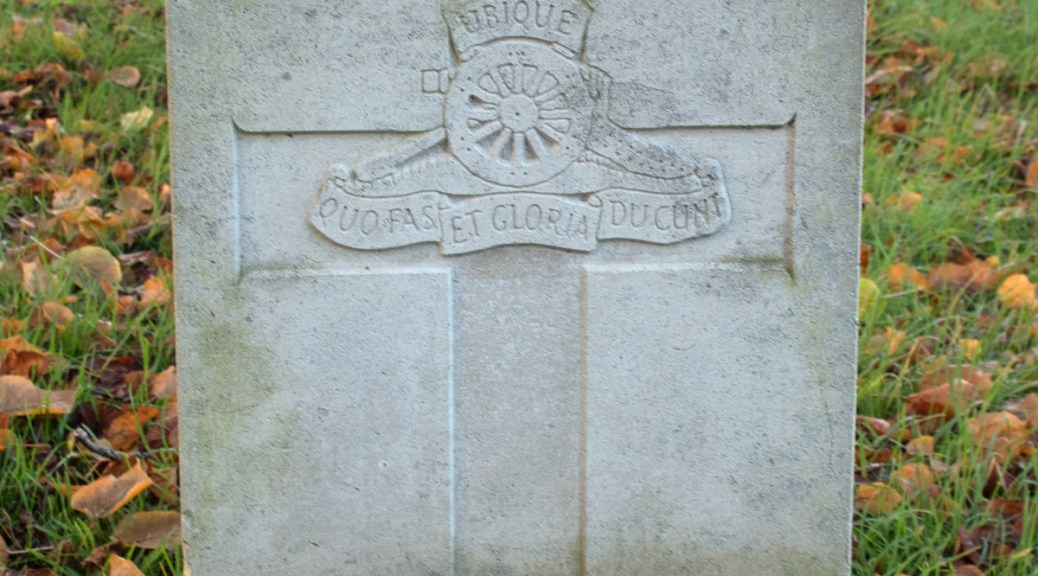
By this time war was coming to Europe and, in January 1915, James stepped up to play his part for King and Country. He enlisted in the Royal Field Artillery, and was given the rank of Gunner. Over the next couple of years, he served in France and Italy, rising through the ranks to Bombardier and Corporal.
During this time, however, James’ health was being impacted. His troop was gassed while in France, and he was hospitalised a couple of times with bronchitis and tuberculosis, and it was TB that saw him evacuated to Britain for treatment in September 1918.
His condition was such that Corporal Stuckey was medically discharged from the army on 23rd November 1918, as he was no longer fit for duty. He returned to civilian life, and settled back into Curry Rivel.
He was well-known in the district, and being of a jovial disposition, was liked by everyone with whom he came into contact. He was a member of the Curry Rivel Male Friendly Society.
Langport & Somerton Herald: Saturday 11th December 1920
James’ lung conditions were to get the better of him. After a protracted illness, he finally succumbed, breathing his last on 3rd December 1920. He was just 34 years of age.
James Oscar Stuckey was laid to rest in the graveyard of St Andrew’s Church, in Curry Rivel.
Arthur Cock was born in around 1885 in Wadebridge, Cornwall. One of eleven children, he was the son of mortar mason William Cock, and his wife, Louisa.
When he left school Arthur helper his father out in the business, but when war came to Europe’s shores, he stepped up to play his part. Sadly, his service records are lost to time, and it is a challenge to piece together his time during the conflict from a confusion of other documents.
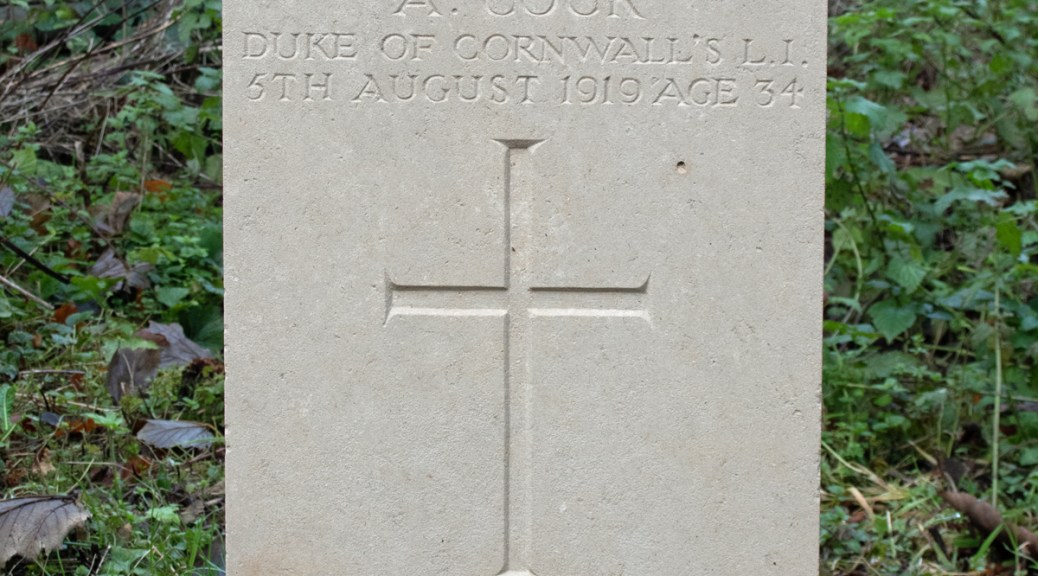
It is clear that Arthur enlisted in the Duke of Cornwall’s Light Infantry, as this is what is engraved on his headstone. However, his Medal Roll suggests that he also served in the Gloucestershire Regiment and the Labour Corps. He seems not to have fought overseas, and was awarded the Victory and British Medals for doing his duty.
Private Cock’s entry in the Army Register of Soldier’s Effects confirms that he must have enlisted before February 1919, and that he passed away at Whitchurch Hospital.
An entry in the local newspaper, reporting on his death, reads as follows:
In loving memory of Pte. Arthur Cock, son of William, and the late Louisa Cock, of Wadebridge, who died August 5th, at Whitchurch War Hospital, Cardiff.
Cornish Guardian: Friday 8th August 1919
Interestingly, the facility Arthur had been admitted to was a psychiatric hospital, but with no other confirmation as to his passing, it is only possible to assume the cause of his death. He was 34 years old when he passed away.
Arthur Cock’s body was brought back to Cornwall for burial. He was laid to rest in the peaceful, wooded graveyard of St Breoke’s Church, next to the family grave in which Louisa had been buried three years previously.
The family grave, by this time, was tragically quite full. William was able to mourn his son, wife and six of Arthur’s siblings – Mary, William, John, Fred, Charles and Ernest – who had all passed in childhood and were laid to rest there.
Arthur’s younger brother – another William – also fought in the First World War. His service records reveal a lot about his life.
Private Cock enlisted in the Australian Imperial Force on 7th September 1914. At the time he was working as a railway porter in Morphettville, now a suburb of Adelaide, Australia. His records confirm that he was 5ft 8.5ins (1.74m) tall, and weighed 158lbs (72kg). He had brown hair, brown eyes an a fresh complexion.
William left Australia for the battlefield on 20th October 1914, and soon found himself in the Eastern Mediterranean. Sadly, this was to be the end of the line for him: he was killed on the battlefields of Gallipoli on 23rd March 1915, aged just 28 year of age.
William Cock was laid to rest in the Shrapnel Valley Cemetery in Gallipoli. He is commemorated on the headstone of the family grave back in St Breock.







 Death and Service