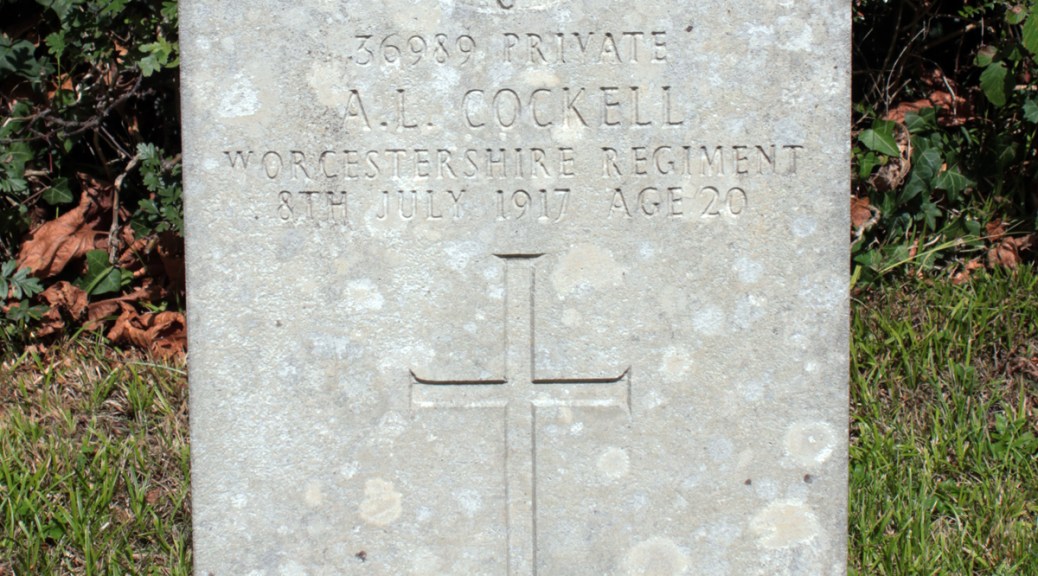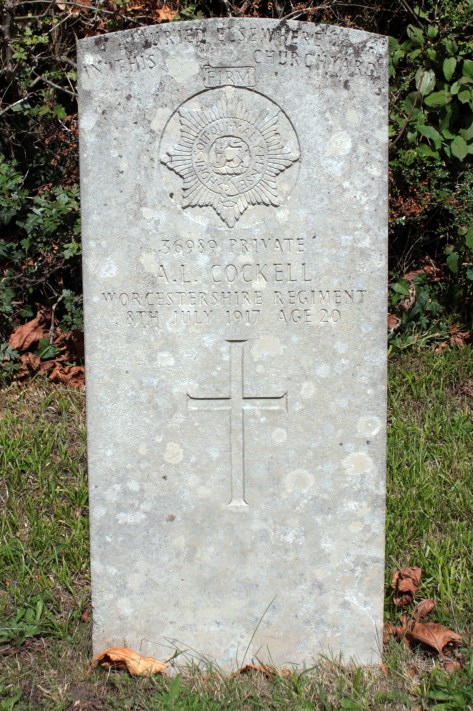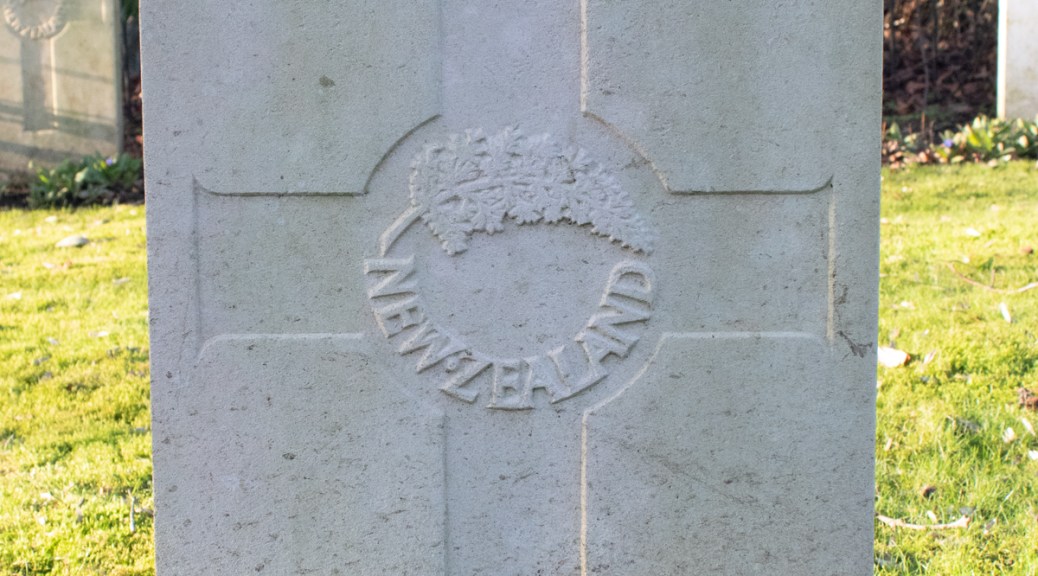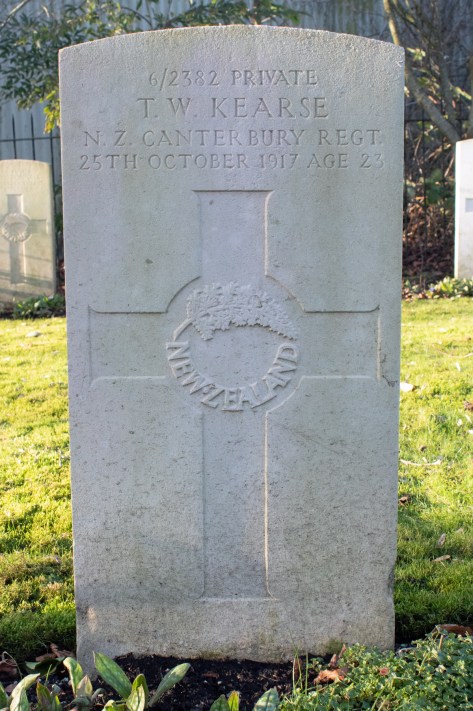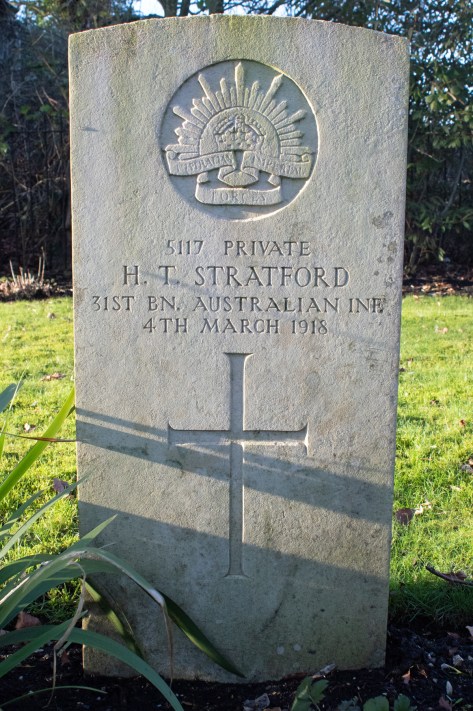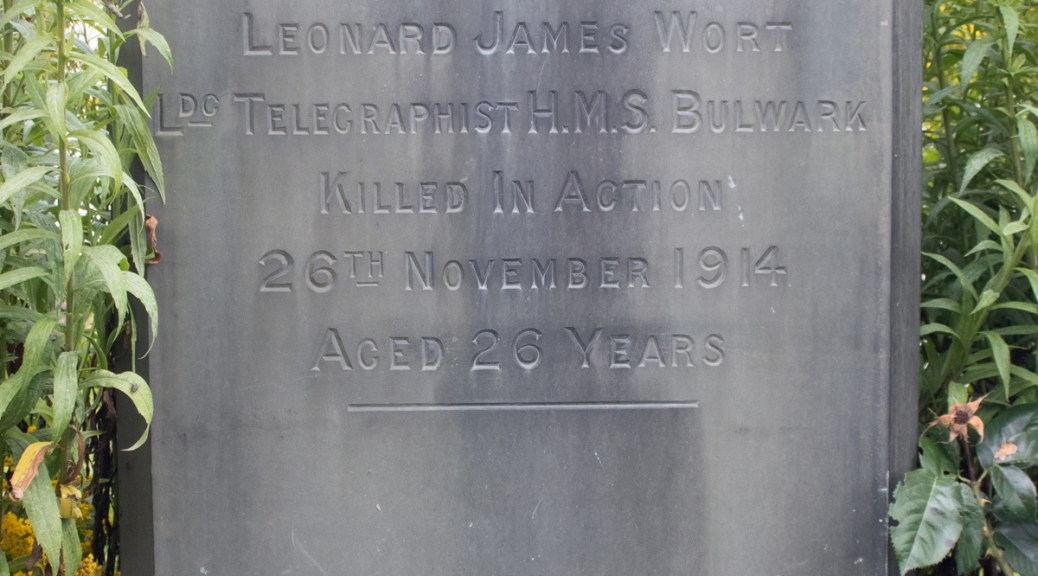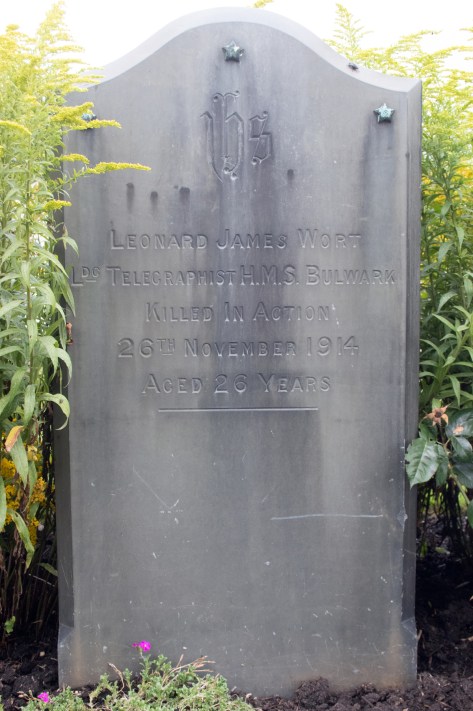
The early life of Sydney Clarke is a challenge to piece together. Born in St George, Queensland, Australia, his birth parents are not recorded, and his military records give his friend and foster mother Mrs Ellen Noud.
What can be determined is that he was working as a stockman when he enlisted in the army in April 1917, and was living in the town of Warwick.
Sydney’s service records give a little more information about the man he was. Aged 27 years and two months old, he was 5ft 3ins (1.6m) tall, and weighed 109lbs (49.4kg). He had black hair, hazel eyes and a dark complexion.
Part of the Australian Imperial Force, Private Clarke left Australia on 31st October 1917. His journey on board the troop ship HMAT Euripides was not without incident, and Sydney was placed in the brig for seven days and docked two days’ pay for “neglecting to obey an order given by a superior officer”. The ship reached Britain in December 1917, and he marched in to the ANZAC base in Codford, Wiltshire, on Boxing Day.
The next six months would prove trying for Sydney’s health. On 9th January 1918, he was admitted to the camp hospital with bronchitis. This developed into pneumonia, and he would remain admitted until 18th May, when he was sent to his unit, the 49th Battalion of the Australian Infantry.
Less than a month later, however, Private Clarke was back in hospital, this time with influenza. This time his health would fail him, though: he passed away from the condition on 23rd June 1918, and the age of 28 years old.
Thousands of miles from home, Sydney Clarke was laid to rest in the newly extended graveyard of St Mary’s Church in Codford, not far from the base in which he had been billeted.
Charles Frederick Wilhelm Ziesler was born on 12th February 1877 in Timaru on New Zealand’s South Island. The oldest of nine children, his parents were Norwegian-born Johan Ziesler, and his New Zealand wife, Lucy.
Little information is available about Charles’ early life, but it is clear that he found work as a clerk when he finished his schooling. By the time of the 1899 electoral role, he had set up home at 258 Hereford Street in the Canterbury area of Christchurch.
Things were to change, however, and Charles emigrated to Australia. Taking up a job as a fire adjuster for an insurance company, he settled in the Subiaco suburb of Perth. In 1909 he married Martha Grimwood: the couple went on to have three children, and lived in a house at 97 Park Street.
When war broke out, despite his age, Charles stepped up to serve the Empire. He enlisted in the Australian Imperial Force on 12th November 1915, and was initially attached to the 35th Depot. His service papers show that he was 5ft 11ins (1.8m) tall and weighed 182lbs (82.6kg). He was recorded as having brown hair, blue eyes and a fair complexion.
After several weeks’ training, Private Ziesler’s unit left Australia for the battlefields of Europe. Arriving in Suez, Egypt, on 11th March 1916, he would receive further instruction there over the next couple of months. While many of the ANZAC battalions then set sail for the Dardanelles, the 35th Training Battalion, of which Charles was now a part, headed for Britain.
Private Ziesler arrived in Plymouth, Devon, on 16th June, and was marched into Rollestone Camp in Wiltshire. His preparation continued, and, in August, he was promoted to the rank of Corporal. Charles’ service records suggest that he did not serve on the Western Front, instead remaining attached to the Training Battalions based around Salisbury Plain, in Tidworth and Codford.
By the summer of 1918, Corporal Ziesler had been in Britain for two years and had been promoted to the rank of Acting Sergeant in the 51st Battalion of the Australian Infantry. In June he fell ill, and was admitted to the No 3 New Zealand General Hospital in Codford, suffering from bronchopneumonia. The condition was to prove his undoing: he passed away on 26th June 1918, at the age of 41 years old.
Thousands of miles from home, the body of Charles Frederick Wilhelm Ziesler was laid to rest in the ANZAC extension to the graveyard of St Mary’s Church, Codford, Wiltshire.
Charles’ belongings were returned to his widow: these included his clothing (a leather vest, fur vest, boots, puttees, cap, breeches, underpants and singlets) and more personal items (pipes, coins, photo albums, letters).
Martha may have taken comfort from a detailed letter she received about her late husband’s funeral. “The late Sergeant Ziesler was held in a very high esteem by all ranks in the Unit, and always proved himself a keen soldier, a true and sympathetic comrade and a friend in need and deed. His loss to the Unit is very keenly felt.”
(The CWGC records record the last full rank Charles held: as he held the role of Acting Sergeant, he is noted at the level below, Corporal.)
Archibald Edmund Leal was born in Tinwood, West Sussex on 13th September 1894. The youngest of six children, his parents were George and Clara Leal. George was a dairyman, and, by the time of the 1901 census, the family had moved to a terraced cottage at 66 Newland Road in Worthing.
Clara died in 1906, and Archibald – who was better known as Archie – and two of his siblings took the opportunity to seek a better life across the Atlantic. In 1910, the three of them – Archie, brother Phillip and sister Winifred – emigrated to Canada, settling in Breakeyville, to the south of Quebec.
Archie found work as a chauffeur, but when war was declared, he was quick to step up and serve his King and Empire. He enlisted on 10th September 1914, joining the Canadian Expeditionary Force as a Private. His service records show that he was 5ft 6in (1.67m) tall, with fair hair, brown eyes and a dark complexion. He was also noted as having “very many [acne] scars over [his] chest and back.”
Assigned to the 15th Battalion of the Canadian Infantry, Private Leal sailed to Britain, arriving at Tidworth Camp in Wiltshire on 12th February 1915. By April he was in France, and, on 28th July he was in a front line trench near the town of Ypres. A shell exploded nearby and, in seeking shelter, he badly twisted his ankle and back. Medically evacuated to Britain, Archie spent a month recuperating at the Royal Herbert Hospital in Woolwich, Kent, before returning to his unit in Wiltshire.
By December 1915, Private Leal was back on the Western Front and remained there for the next five months. In April his unit was on the front line, and he was injured in his right leg when a rifle grenade exploded. Archie was initially treated by a field ambulance, but his injury was such that evacuation to Britain was again necessary. He was admitted to the County of London War Hospital in Epsom, Surrey, but had contracted tetanus by this point. This was to prove fatal, and his body succumbed on 10th May 1916: he was 21 years of age.
The body of Archibald Edmund Leal was taken back to Worthing for burial. He was laid to rest with full military honours in the town’s Broadwater Cemetery. A local newspaper reported that “Private Leal, although not a Canadian, was possessed of true Colonial grit, and had had his full share of active service.” [Sussex Daily News: Wednesday 17th May 1916]
Charles Allen Chown was born in the Sussex village of Lyminster, at the start of 1882. The tenth of eleven children, his parents were Samuel and Mary Chown. Samuel was a general labourer, and when he passed away in 1898, Charles and his siblings rallied to support his now widowed mother.
The 1901 census found Mary, Charles and his brother Jesse living at 32 Lennox Road, Worthing, West Sussex. Jesse was employed as a brickmaker, while Charles had found work as a solicitor’s clerk. The family had two boarders, Helen and Rosie Bulbeck, and Charles’ niece, Minnie, was also staying with them.
Away from work, Charles was a music lover, and joined the local operatic society. In 1904 he appeared in a local version of Iolanthe, his “piece of portraiture being described as one of the successes of the occasion, for his facial play was good, and the drolleries of the character were displayed in an each and natural manner.” [Worthing Gazette: Wednesday 12th September 1917] In the following year’s Mikado, he took the role of the Lord High Executioner, and he was noted as being a “born comedian, with the most mobile countenance and a singularly dry form of humour…” [Worthing Gazette: Wednesday 12th September 1917]
By the time of the 1911 census, Charles had moved on with work, and moved out of home. Taking a room at 7 Tarring Road, Worthing, his landlords were Harold and Rose Ward. Still employed as a clerk, he was now employed by one of the estate agents in the town, although it is clear that his passion was elsewhere. When he joined up in the autumn of 1914, he gave his trade as musician.
Charles enlisted on 7th October 1914 in Ashton-under-Lyme, Lancashire. What took him north is unclear, although a theatre tour is a possibility. His service records note that he was 5ft 8.5ins (1.74m) tall and weighed 138lbs (62.6kg). He had dark brown hair, brown eyes and a sallow complexion.
Initially assigned to the Manchester Regiment, Private Chown was soon transferred to the 8th (Service) Battalion of the East Lancashire Regiment. He was obviously dedicated to his job: by the end of October 1914 he had been promoted to Lance Corporal, and within six weeks he rose to Sergeant.
In July 1915, Charles’ unit was dispatched to France. That autumn, they remained based near Tilques, in Northern France, but Sergeant Chown’s health was beginning to suffer. After just three months overseas, he was medically evacuated to Britain to receive treatment for pleurisy, and was hospitalised in Chatham, Kent.
When he recovered, Sergeant Chown was reassigned to the 10th Battalion of the East Lancashire Regiment, before being transferred to the 47th Training Reserve Battalion in September 1916. That winter, however, his health received a setback, and he contracted tuberculosis. He would spend the first half of the following year in hospitals in Aldershot in Hampshire, Sutton Veny in Wiltshire and, from May 1917, the 3rd Southern General Hospital in Oxford.
Sergeant Chown’s health would continue to deteriorate, and he was formally discharged from the army on 6th July 1917. He returned to Worthing, and his mother’s home, 2 Montague Place. Charles would eventually succumb to his medical condition, and he passed away on 31st August 1917, at the age of 35 years old.
The body of Charles Allen Chown was laid to rest in the family plot in Broadwater Cemetery, Worthing.
William Henry Mead was born in Frome, Somerset, in the spring of 1886. The second of six children, his parents were mason Henry Mead and his wife, Eliza. Henry’s work took him across the area: the 1891 census found the family living at 5 Tower Hill in Dilton Marsh, Wiltshire, while by 1901 they had moved to Upton Scudamore, closer to Warminster.
By this point, William was working as a farm labourer, but he then disappears from the records. His entry on the Army Registers of Soldiers’ Effects when he died shows that he left a significantly higher amount of money than would normally be expected for someone who had simply enlisted for the duration of the war. It is possible, therefore, that his absence from the 1911 census is due to him being out of the country whilst with the army.
The document confirms that William served with the 2nd Battalion of the Wiltshire Regiment. The unit saw action as Ypres, the Somme, Passchendaele and Messines, but, without his service records, it is impossible to know how or where Private Mead fought. He survived the war, however, and by the start of 1919, he was billeted in Tidworth, on the edge of Salisbury Plain.
Private Mead’s health was suffering by this point, and he was admitted to the camp’s hospital. He died, through causes unknown, on 27th April 1919: he was 33 years of age.
The body of William Henry Mead was taken back to Warminster, where his grieving family were now living. He was laid to rest in the graveyard of the town’s Christ Church.
Ernest Harold Prince was born in the spring of 1891 in Warminster, Wiltshire. The eighth of eleven children, he was one of five boys to William and Mary Prince. William was a quarry worker, and the family lived at 33 Brook Street to the south of the town.
Ernest followed his father into quarry labouring. William was working in Abercarn, Monmouthshire, at the time of the 1901 census, and had returned to Wiltshire by 1911. Ernest, on the other hand, had sought work in Wales himself by this point, and is recorded as boarding with the Courtney family at 39 Rhyswg Road. The document notes that he was employed as a labourer below ground in a local colliery.
When war broke out, Ernest stepped up to play his part. Full details of his service have been lost to time, and it is unclear whether he was still working in the colliery, and therefore exempt from joining up initially because of his reserved occupation. What is certain, however, is that he had enlisted by the spring of 1918, and, as a Gunner, had joined the Royal Horse Artillery A Battery.
The next record for Gunner Prince relates to his passing. He is recorded as having died of disease on 29th October 1918. His death was recorded in Warminster, so it is safe to assume that he had been at home, or at least in his home town, when he passed. He was 27 years of age.
The body of Ernest Harold Prince was laid to rest in the graveyard of Christ Church in Warminster.
Ernest’s younger brother, Walter, also fought in the First World War. A Private in the 2nd Battalion of the Wiltshire Regiment, he had served on the Western Front during 1915.
Private Prince fought at Loos and was killed on 26th September 1915. He is commemorated on Panel 102 of the Loos Memorial.
Stanley Curtis was born on 31st October 1899, and was one of 21 children to Rowland and Sarah Curtis. Rowland was a gardener and labourer from Warminster, Wiltshire, and it was here, at 9 Marsh Street, that the family were raised.
There is little information available about Stanley’s early life: he was only two years old at the time of the 1901 census, and still at school for the next return in 1911. Later document, however, confirms that he worked as a farm labourer when he completed his schooling and that he was an active member of the Warminster Cadets.
Stanley was keen to play his part when war broke out. He enlisted in the Royal Navy as soon as he was able to, joining as a Stoker 2nd Class on 7th December 1917. His service records show that he was 5ft 4ins (1.62m) tall, with brown hair, brown eyes and a fresh complexion.
Stoker 2nd Class Curtis was sent to HMS Victory, the Royal Naval Dockyard in Portsmouth, Hampshire, for his training. After four months there he was given his first assignment, on board the protected cruiser HMS Amphitrite. Working as a minelayer, she served in the North Sea, and was positioned off Scotland when Stanley fell ill.
Stoker Curtis was disembarked in Edinburgh, and was admitted to the city’s Royal Naval Hospital with peritonitis. Sadly the condition was to prove fatal, and he passed away on 13th September 1918, a few weeks short of his 19th birthday.
The body of Stanley Curtis was brought back to Wiltshire for burial. He was laid to rest in the graveyard of Christ Church, Warminster, just a few minutes’ walk from where his grieving family lived.
William Garrett was born in Warminster, Wiltshire, on 18th October 1880. The fourth of seven children, he was the fourth son to Henry and Mary Garrett. Henry was a groom, and the family lived at 80 Portway, a Victorian villa to the north of the town centre.
The 1901 census records the family having moved from No. 80. The document notes their address as 14 Portway and with this move, there appears to have been a change of circumstances. At some point in the previous ten years, Henry had given up working with horses, and had gone into baking instead. This too had taken a back seat, however, as the census confirms his employment as former baker. William, now 21 years of age, was still living with his parents, and was working as a printer for a local newspaper.
On 5th August 1905, William married Kate Macey. A labourer’s daughter from Bishopstrow, Wiltshire, the couple exchanged vows in her parish church. They settled in a house on Deverill Road, Warminster, and went on to have five children,
When war broke out, William would eventually be called upon to play his part. “He was previously employed at the ‘Warminster Journal’ office as monotype caster and operator, and served his apprenticeship at the office. It was very largely through his services that the ‘Journal’ was forced to suspend publication and though he might have obtained further exemption from military service, he preferred to leave civil employment and enter into the service of his country” [Wiltshire Times and Trowbridge Advertiser: Saturday 25th May 1918]
William enlisted in the Army Service Corps on 1st May 1918. As a Private, was attached to the Mechanical Transport Depot in Sydenham, Kent. His service records show that he was 5ft 3ins (1.59m) tall and weighed 126lbs (57.2kg). His medical records note that he was of good physical development.
The newspaper report continued:
[Private Garrett] left Warminster only a week or two ago and was billeted at Sydenham, being apparently in the best of health and spirits. On Tuesday his wife… received the following telegram from an officer: “I regret to have to inform you your husband died suddenly in his billet around 1:30pm today. All ranks convey deepest sympathy.”
The distressing news was confirmed by a letter from a comrade, Pte. Manley, who is a native of Taunton. He wrote “It is with extreme sorrow I write this letter to you. Your husband and I arrived here the same day and he slept in my room with two others – very nice fellows. We all send you our heartfelt sympathy in your sorrow. He spoke to me today about 1.10pm and then fell forward. I and others did everything possible for him but he was beyond human aid from the start. He only lived about two minutes and suffered no pain. We all liked him very much in our bedroom and indeed in the billet. I am sure he would have proved a credit to the ASC.”
[William] was a member of the Oddfellows Society and filled all the local lodge offices, and was also a member of the committee of the Co-operative Society. He belonged to the Warminster Volunteer Training Corps, and jus as he left to join the regular army he was about to be promoted.
[Wiltshire Times and Trowbridge Advertiser: Saturday 25th May 1918]
The inquest into Private Garrett’s death found he had died of natural causes. He was 37 years of age when he passed away on 21st May 1918. He had been in the army for just 20 days.
The body of William Garrett was taken back to Wiltshire for burial. He was laid to rest in the graveyard of Christ Church, Warminster.
John Adlam was born in the spring of 1883 in Warminster, Wiltshire. The youngest of seven children, his parents were William and Emily Adlam. William was a maltster’s labourer, and the family lived in a small cottage at 66 Pound Street, to the south west of the town centre.
When John finished school, he found work as a garden labourer. By this point the Adlam family had moved, and home was 29 Chapel Street. William himself wasn’t recorded there, however. Work had taken him away and he was living at Holcombe Malthouse, on the outskirts of Kilmersden, Somerset.
On Christmas Day 1906, John married Ethel Brown, a plasterer’s daughter from Westbury, Wiltshire. The couple would go on to have three children, and 1911 census shows them living at 24 Chapel Street, Warminster with John’s recently widowed mother.
When war broke out, John stepped up, or was called upon, to play his part. His service records no longer exist, although it is clear that he served as a Private in the Dorsetshire Regiment as a Private. He was based at on of the regimental depots, and served through to the end of the war.
The only other record for John are those relating to his passing. He died on 29th November 1918 and, as his death was registered in Warminster, it seems likely that he died at or close to home. He was 35 years of age.
The body of John Adlam was laid to rest in the graveyard of Christ Church in his home town of Warminster.
Interestingly, while an initial grant was paid to Ethel, John’s entry on the Pension Ledger stated that they had been “instructed to cease [temporary] payment as widow not eligible for pension in respect of her late husband.” There is no indication as to whether this was later overturned.
Herbert Victor Creed was born in Warminster, Wiltshire, towards the end of 1898. One of eight children, his parents were David and Mary Creed. Davis was a railway porter, and, at the time of the 1911 census, the family were living at 41 Vicarage Street, to the west of the town centre.
When he finished his schooling, Herbert – who had begun to be known by his middle name – found employment working alongside his father. When war broke out, however, he stepped up to play his part. His service papers have been lost to time, but it is clear that he enlisted by the spring of 1918, and he was attached to the Machine Gun Corps.
Private Creed was sent to the Western Front. Where and when he served is not known, but he would definitely have been in the thick of it.
Victor Hubert Creed [sic] (21), third son of Mr and Mrs DJ Creed… who was attached to the Machine Gun Corps, was seriously wounded in action on October 21st. He was taken t a hospital in Manchester, where he passed away on Friday.
[Wiltshire Times and Trowbridge Advertiser: Saturday 9th November 1918]
Herbert Victor Creed – plain Victor to his friends – was 21 years of age when he died on 1st November 1918. His body was taken back to Wiltshire for burial and he was laid to rest in the graveyard of St Denys’ Church.