Category Archives: Yorkshire

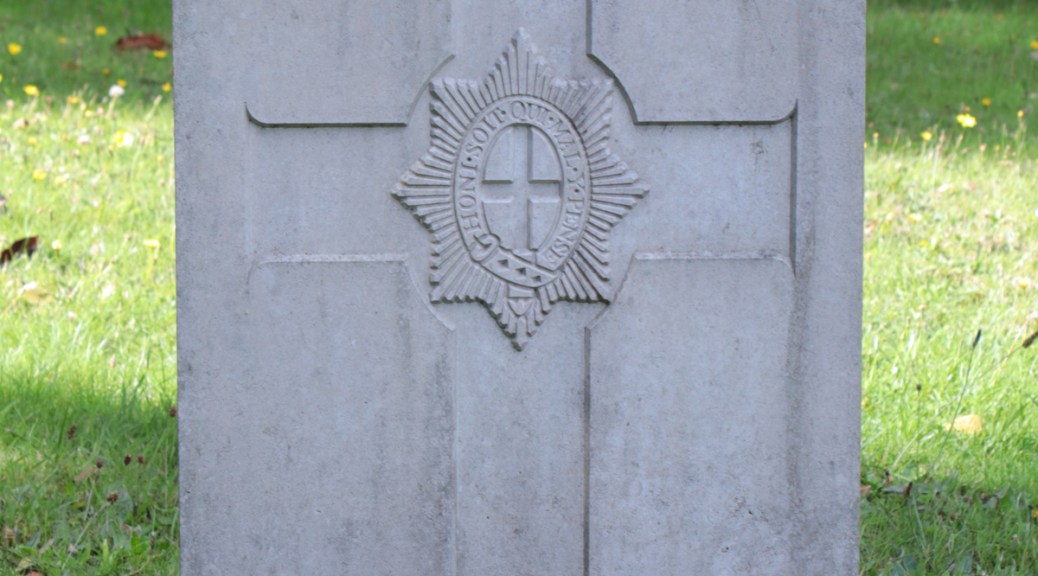
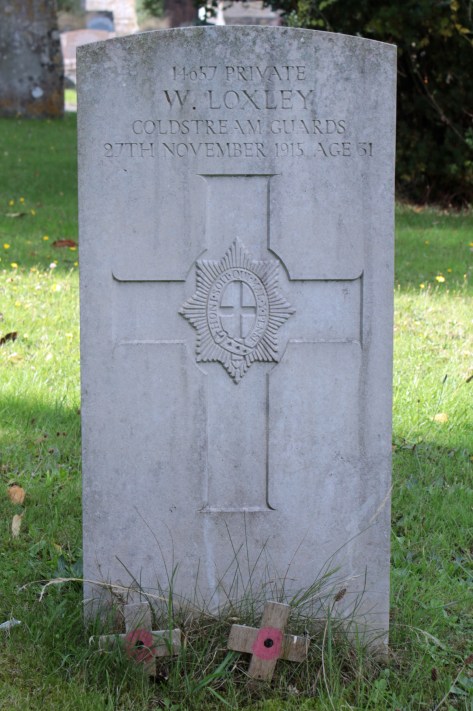
Private William Loxley

Private William Loxley

LOXLEY, WILLIAM, Private, No. 14657, 4th Battn. Coldstream Guards, eldest s. of the late William Loxley, Engine Fitter, by his wife, Ellen, dau. of the late Edward Stringer; b. Ecclesfield, co. York, 26th Oct. 1885; educ. there; was a stove and grate fitter; volunteered and enlisted 9 Jan. 1915; went to France, 15 Aug. 1915, and died in Convalescent Home, Westbury, co. Wilts, 27 Nov. 1915, of wounds received in action during the Battle of Loos, 27-29 September 1915. He m. at Grimsby, 4 Aug. 1912, Edith Mary (3, Burton Street, Langsett Road, Sheffield, widow of Philip Munty, and dau. of the late Frederick Charles Unwin.

De Ruvigny’s Role of Honour

William was the second of four children to William and Ellen. The family lived at 50 Town End Road in Ecclesfield, a small stone-built cottage overlooking grassland on the edge of the village.

Aside from his entry in de Ruvigny’s Role of Honour, there is no further information about his widow, although the British Army Register of Soldiers’ Effects names both Edith and William’s nephew – Faedon Muntz – as beneficiaries.

Injured at Loos, a local newspaper provided an obituary:

Giving up his profession for the Army, [William] was drafted out to France, and received a bullet through the forehead. After a long treatment in hospital he was, a fortnight ago, invalided home for ten days, leaving only a few days ago, then appearing to making rapid progress. He had a relapse, and on Friday his memory left him. Later he became delirious and passed away.

[Sheffield Daily Telegraph: Monday 29th November 1915]

William Loxley died at the Haywood House Hospital in Westbury, Wiltshire, on 27th November 1915: he was 30 years of age. His body was laid to rest in the town’s cemetery.


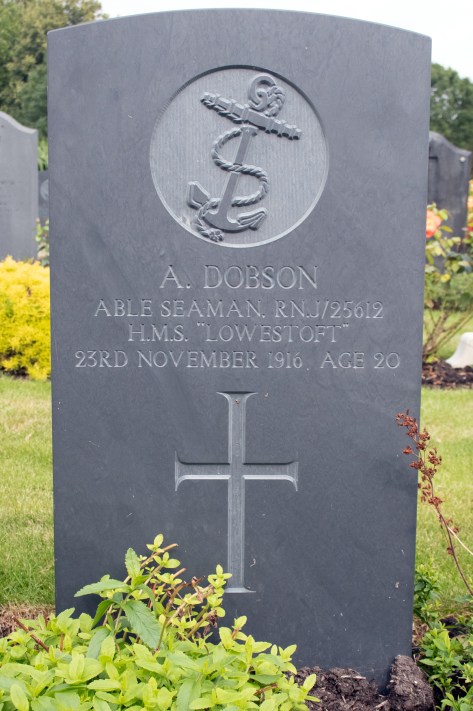
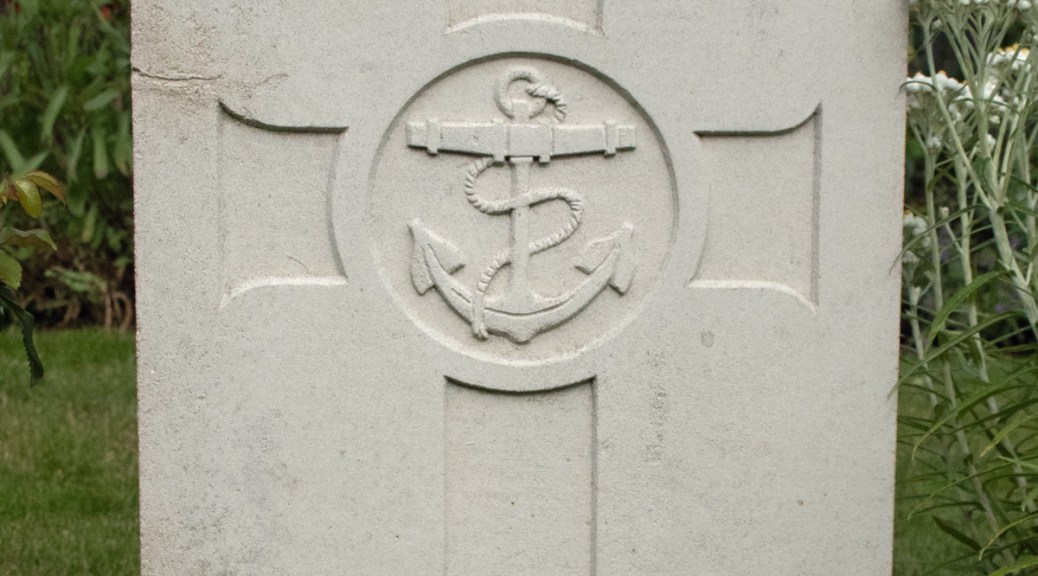
Able Seaman Albert Dobson

Able Seaman Albert Dobson

Albert Dobson was born in Bridlington, Yorkshire, on 7th April 1896. One of seven children, his parents were John and Annie Dobson. John was a bricklayer, and, when he completed his schooling, Albert was apprenticed to him. The 1911 census found the family living in a small terraced house at 55 St John’s Walk, on the outskirts of the town.

Bricklaying was not what Albert wanted from a career and, on 19th July 1913, he enlisted in the Royal Navy. Below the age to formally enlist, he was taken on with the rank of Boy 2nd Class, and sent to HMS Vivid – the Royal Naval Dockyard in Devonport, Devon, for his training.

Over the next nine months, Albert learnt the tools of his trade. Promoted to Boy 1st Class in October 1913, he spent time on board the battleship HMS Irresistible, before moving to HMS Pembroke, Chatham Dockyard in Kent. While he was there, he came of age, and was fully inducted into the Royal Navy as an Ordinary Seaman. Albert’s service papers show the man he had become: he was 5ft 7ins (1.7m) tall, with brown hair, blue eyes and a fresh complexion.

In April 1914, Ordinary Seaman Dobson was assigned to the new cruiser HMS Lowestoft. She would become his home for the next two years, and, while his annual reviews were average (character varying from good to very good and ability from moderate to satisfactory), he did gain a promotion to Able Seaman on 26th April 1915.

A singular fatality to a naval seaman names Albert Dobson, age 30 [sic], a native of Bridlington, was investigated at the Royal Naval Hospital, Chatham, on Monday. On October 20th, Dobson was one of a working party engaged on a battleship in the Dockyard, when, owing to the breaking of a plank, he and three men fell a distance of about eight feet. The knee of one of the men caught him in the stomach, with the result that he sustained a rupture of the spleen. In hospital he developed pneumonia, and died. A verdict of “Accidental Death” was returned.

[Kent Messenger & Gravesend Telegraph: Saturday 2nd December 1916]

Able Seaman Dobson’s service papers confirm that the incident occurred as the men were transferring a torpedo from HMS Illustrious. He was just 20 years of age when he died on 23rd November 1916.

The body of Albert Dobson was taken to Woodlands Cemetery in Gillingham, Kent, close to the dockyard he had come to know as home. He was laid to rest in the graveyard’s naval section.


Trimmer Thomas Davis

Trimmer Thomas Davis

The details of Thomas Davis’ early life are a challenge to piece together.

His navy service papers confirm that he was born in Stockton, County Durham, on 25th January 1867, and was the son of John and Ann Davis. The 1881 census found the family living at 66 Argyle Street, Linthorpe, Yorkshire. John was a puddler, working iron in a local foundry, while Thomas, now 15 years of age, was a labourer in the same ironworks.

Thomas falls off the radar for a few years, and it is only his service papers that brings things together again. He enlisted in the Royal Naval Reserve in June 1915, joining up as a Trimmer. The document confirms that he was 5ft 6ins (1.77m) tall with blue eyes and a fair complexion.

Over the next eighteen months, Thomas served on four ships, returning to HMS Pembroke – the Royal Naval Dockyard in Chatham, Kent – in between voyages. His conduct seems to have been average and, in November 1916, he was jailed for 7 days and docked a day’s pay for an unrecorded misdemeanour.

By that winter, Trimmer Davis’ health was faltering, and he was admitted to the Sailor’s Home in Chatham, Kent, suffering from pneumonia. The condition was to get the better of him, and he passed away on 1st February 1917, just a week after his 50th birthday.

The body of Thomas Davis was laid to rest in the naval section of Woodlands Cemetery, Gillingham, Kent, not far from the naval base he had come to call home.


There is scant information about Thomas’ family. While the 1881 census notes he had a younger brother, Phillip, his service papers give his next-of-kin as cousin William Jones of Wellington Street, Toronto, Canada. (It also notes that communications sent to him were returned unopened.)


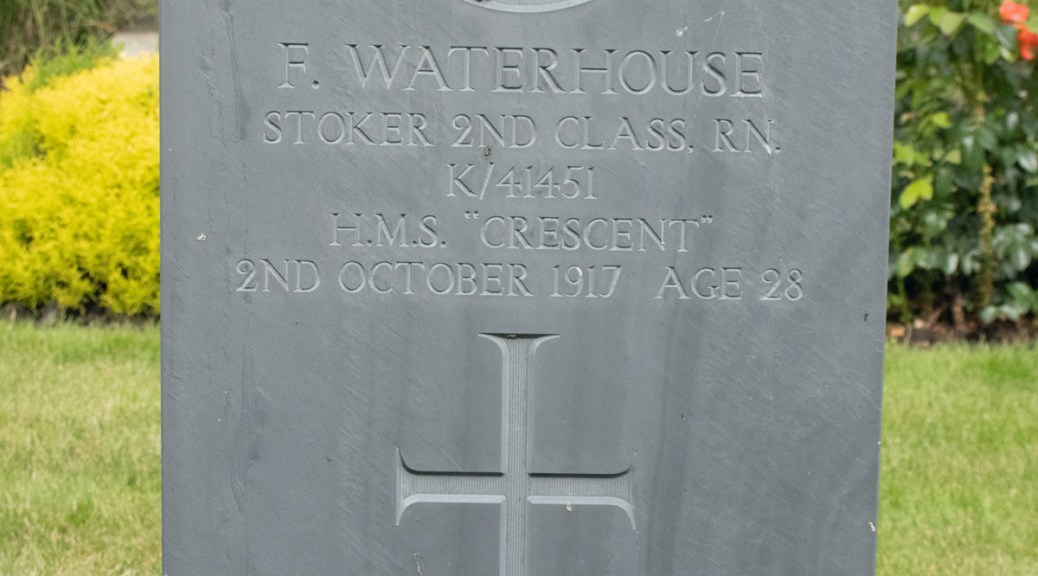
Stoker 2nd Class Frank Waterhouse

Stoker 2nd Class Frank Waterhouse

Frank Waterhouse was born in Keighley, Yorkshire, on 14th September 1889. The second of four children, including two younger sibling who both died before their first birthdays, his parents were Waddington and Jane Waterhouse.

Waddington was an engineer for a worsted mill in nearby Bingley, and when Frank finished his schooling, he found employment as a fireman for the same mill. By the time of the 1911 census father, son, Frank’s sister Fanny and her husband Arthur were all employed at the factory.

In the spring of 1915, Frank married Alice Greenbank. She worked at a mill in Haworth and the couple set up home together. They would not go on to have any children.

War was raging across Europe by this point, and Frank stepped up to play his part. He enlisted in the Royal Navy and his trade made him ideal for an initial role of Stoker 2nd Class. He was sent to HMS Pembroke, the Royal Naval Dockyard in Chatham, Kent, for his training and his service record confirms the man he had become. He was 5ft 7ins (1.7m) tall, with brown hair, brown eyes and a fresh complexion.

Stoker 2nd Class Waterhouse was sent to HMS Pembroke, the Royal Naval Dockyard in Chatham, Kent, for his training. At the beginning of May 1917, he was assigned to the cruiser HMS Crescent, and spent the next four months aboard.

During this time, Frank fell ill. When Crescent docked back at HMS Pembroke at the end of September, he was disembarked, and taken to the Royal Naval Hospital in Chatham. He was suffering from endocarditis, and the heart condition would prove fatal. He passed away the day after he was admitted – on the 2nd October 1917 – at the age of 28 years old.

Hundreds of miles from home, it is likely that Frank’s family would not have been able to foot the bill for bringing his body back home. Instead, Frank Waterhouse was laid to rest in the naval section of Woodlands Cemetery in Gillingham, Kent, not far from the base at which he had been based.


Major John Kinnear

Major John Kinnear

John Lawson Kinnear was born on 9th February 1890 in the Yorkshire village of Copgrove. The youngest of six children, his parents were Henry and Frances Kinnear. Henry was the vicar of St Bartholomew’s Church, and, at the time of the 1891 census, the family lived in the rectory with four servants: a governess, a cook, a housemaid and a nurse.

When he completed his schooling, John was drawn to a career in the military. His full service papers have been lost, but it is clear that he joined the King’s (Liverpool Regiment) with a commission. He held the rank of Second Lieutenant when he joined the battalion in October 1910, rose to Lieutenant in March 1913, and transferred to the Royal Flying Corps not long after the First World War broke out. By June 1915, he had been made a Captain.

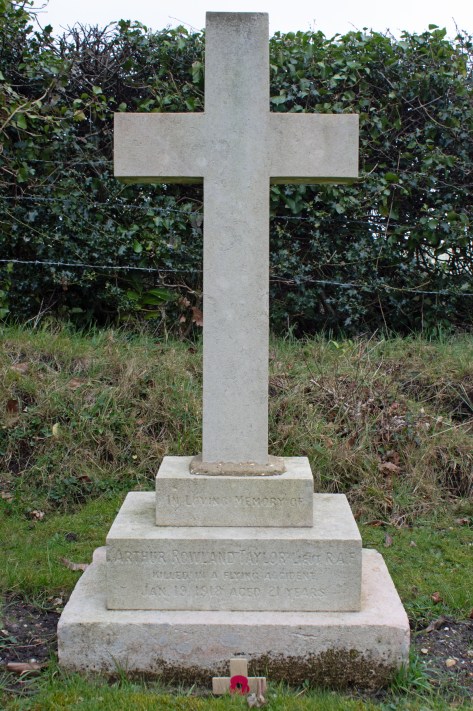
By the time of the Royal Air Force’s foundation in April 1918, John had risen to the rank of Major. He had also been awarded both the Military Cross and the Distinguished Service Order. Attached to the 1st Training Squadron, he was based at East Boldre, Hampshire.

On 28th April 1918, Major Kinnear was piloting his Sopwith Camel, when it stalled at a height of 200ft and fell to the ground. John was killed instantly. The RAF Casualty Card noted: “The court having carefully considered the evidence, viewed the scene of the accident and examined the wreckage are of the opinion that the smash was caused by an error of judgement on the part of the pilot.”

John Lawson Kinnear was 28 years of age when he died. His body was laid to rest in the graveyard of St Paul’s Church, East Boldre, not far from the airfield which he had called home.


Major John Kinnear
(from findagrave.com)

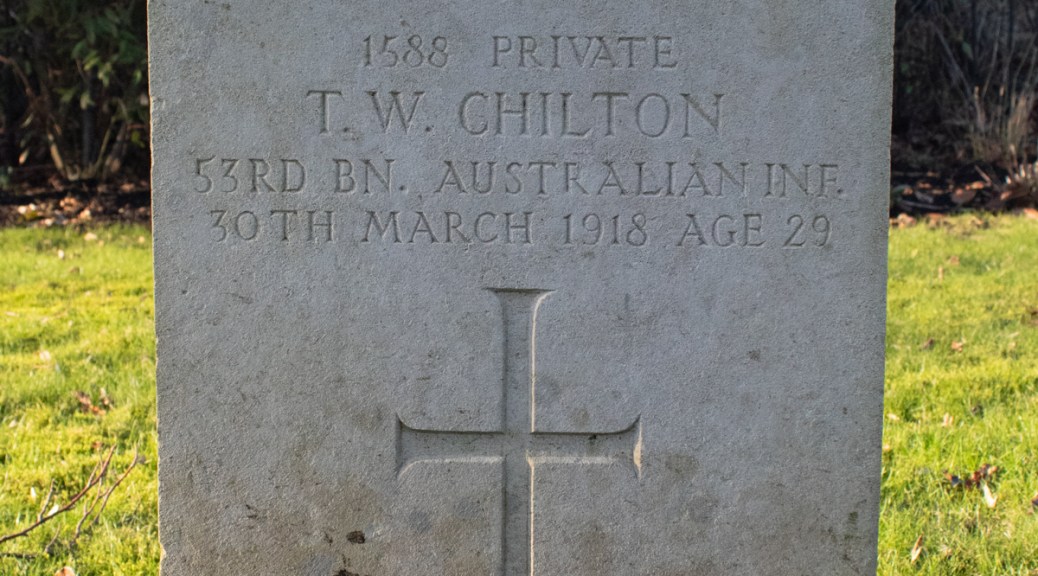
Private Thomas Chilton

Private Thomas Chilton

The early life of Thomas William Chilton is a challenge to unpick. Born in January 1888, his mother is recorded as Sarah Chilton. Documents refer to his place of birth as Darlington, County Durham, or Ripon, Yorkshire, although there are no records to corroborate either location.

When he finished his schooling Thomas found work as a farm labourer, but he had a sense of adventure. By 1911, he had emigrated to Australia to make a new life for himself as a farmer in New South Wales.

War broke out in the summer of 1914, and Thomas would step up to play his part. He enlisted in the Australian Imperial Force on 9th October 1916, his service records showing that he had previously volunteered for the 1st Battalion of the Australian Imperial Forces, but had been discharged on account of wounds. Private Chilton’s papers note that he was 5ft 9ins (1.75m) tall and weighed 159lbs (72.1kg). He had brown hair, blue eyes and a fresh complexion.

Thomas spent the next couple of months training, before his unit was dispatched overseas. He boarded the troop ship A24 Benalla on 9th November 1916, making the journey from Sydney to Devonport in two months. On 10th January, he was marched in to camp in Perham Down, Wiltshire, in preparation for the move to France.

Attached to the 53rd Battalion of the Australian Infantry, Private Chilton arrived in France on 26th April 1917. He was sent to the front, but just three weeks later was wounded by shrapnel in his feet, right side and face. He was sent to a casualty clearing station before being medically evacuated to Britain for treatment. Initially admitted to hospital in Wandsworth, Surrey, over the next few weeks he was moved to wards in Chelsea and Holborn in Middlesex.

Thomas recovered from his injuries and, by August 1917, he had been discharged from hospital. He had two weeks’ leave, before reporting back to his unit in Perham Down. Within days of arriving, he was charged with going AWOL, being absent from 3:30pm on 24th August to 4:30pm on 25th August. The result of his misdemeanour is unclear, but his records suggest he did not cross the line again.

In November 1917, Private Chilton was in hospital again, this time suffering from a bour of gastritis. He was admitted to the military hospital in Sutton Veny, Wiltshire, and, after being discharged on 3rd December, his time would be split between the ANZAC camps here and in nearby Codford.

Thomas undertook more training in January 1918, completing a course in signalling. That spring, however, his health took another downturn, and he contracted pneumonia. He was admitted to the No. 3 New Zealand General Hospital in Codford, but the condition would prove his undoing. Private Chilton passed away on 30th March 1918, at the age of 30 years old.

Although his mother was living in Yorkshire, the body of Thomas William Chilton was not returned home for burial. Instead he was laid to rest in the ANZAC graveyard extension of St Mary’s Church in Codford.


Thomas’ papers confirm that his brother was in attendance, and, although his name is not mentioned, it is likely to have been Ewden Auton, Sarah’s son, with whom Thomas’ will was kept for safe keeping.


Leading Seaman William Coombes

Leading Seaman William Coombes

William Henry Marsh was born on 6th September 1879 in Whitstable, Kent. An only child, his parents were William and Maria Marsh, and, based on the census records, his early life seemed to have lacked some stability.

The 1881 census recorded William and his mother living on Beach Walk in the town. Marias was recorded as being a mariner’s wife. By 1891, William and his father was living with Maria’s sister and son. Still a mariner, with his son also working as a seaman, William Sr was listed as being a widower.

A decade on, and William Jr’s life had taken a different turn and the 1901 census listed him living on Whitstable High Street. Working as a labourer in the harbour, he is recorded as having a wife, Julia, and a two-year-old son, also William. Sadly, there is no further information about either of them.

The next document for William Jr is his First World War service papers. It shows that he enlisted on 10th March 1915, his previous time at sea making him an ideal candidate for the Royal Naval Reserve. His is noted as being 5ft 7ins (1.7m) tall, with blue eyes and a fresh complexion. He also had a tattoo of clasped hands on his right forearm. The most interesting thing about this document, however, is the fact that William had chosen to go by the surname of Coombes.

Given the rank of Leading Seaman, William would spend the next couple of years serving mainly on shore, at bases in London and Devonport. By the spring of 1918, while attached to the SS Eastville, he was admitted to the Royal Naval Dockyard in Chatham, Kent. Suffering from anaemia and malaria, the conditions would take his life. He died on 19th March 1918, at the age of 38 years old.

The body of William Henry Coombes was laid to rest in the naval section of Woodlands Cemetery, Gillingham, Kent, not far from the dockyard he would have known.


William’s will left £114 (around £8200) to his widow Julia, who was by now living in Leeds, Yorkshire. At his request, however his war pension, however, was given to his aunt, Mrs Rose Rout, of Hull, Yorkshire.


Private Osborne Robinson

Private Osborne Robinson

Osborne Robinson was born in the autumn of 1891. The middle of three children, he was the only son to Edward and Edith Robinson. Edward was a merchant of foreign products from West Hartlepool, County Durham, and this is where the family were raised.

Edward died in 1905, and this provided a marked change for the Robinsons. Edith moved the family to Richmond, Yorkshire, which is where her widowed mother still lived. The 1911 census recorded a divided family. Osborne’s older sister, Mary, was employed as a housekeeper for a widowed farmer in Thornton Watless, south of Richmond. His younger sister, Elsie, was living with her maternal grandmother and aunt in Richmond.

Edith and Osborne, meanwhile, were living at Swale Farm, Ellerton Abbey, to the west of Richmond. Edith recorded herself as living on private means, while her son was employed as a grazing farmer, presumably connected to the farm they were living on.

Osborne wanted to expand his horizons and, at the beginning of 1914, took the decision to seek a new life overseas. On 30th January, he boarded the SS Norman, bound for Brisbane, Queensland, Australia. Within a matter of months, war had broken out, and Osborne felt he needed to play his part for King and Empire.

On 25th July 1915, while working near Cootamundra, New South Wales, Osborne enlisted, joining the Australian Imperial Force as a Private. His service papers show that at 23 years of age, he was 5ft 5.5ins (1.66m) tall and weighed 140lbs (63.5kg). He had dark brown hair, blue eyes and a dark complexion, presumably from working outside.

Private Robinson left Australia on 5th October 1915, travelling on board HMAT A32 Themistocles for his journey to Europe. His unit – the 1st Australian Pioneer Battalion – spent time in Egypt, before moving on to Marseilles, France, in April 1916. By the autumn Osborne was on the Western Front, and, on 3rd September, during the Battle of Pozières, he was wounded in his left hand.

Initially treated at the 17th Casualty Clearing Station, Private Robinson was stoon transferred to the 1st Southern General Hospital in Birmingham. His injury took close to six weeks to heal, and he returned to an ANZAC base in Wareham, Dorset, towards the end of October.

Osborne spent a good few months on home soil, eventually re-joining his unit in France on 18th October 1917. Over the next year, he served on the Western Front, with two periods of leave – a week in Paris in March 1918 and a fortnight in the UK the following October. The Armistice declared, Private Robinson’s unit returned to its base near Warminster, Wiltshire, in January 1919.

Osborne had fallen ill with influenza by this point and his condition was to worsen to pneumonia. He died at a private address in Warminster on 8th February 1919: he was 28 years of age.

The body of Osborne Robinson was laid to rest in St John’s Churchyard, Warminster. It is unclear why Edith chose not to bring her son home, but the 1921 census recorded her, Mary and Elsie (neither of whom were married) living in the village of Reeth, on the edge of the Yorkshire Dales. All three were noted as being employed with home duties.


Blacksmith Robert Holdsworth

Blacksmith Robert Holdsworth

Robert William Holdsworth was born on 11th February 1880 in Pilmoor, Yorkshire. The third of nine children, his parents were John and Fanny. John was a railway signalman, and, by the time of the 1891 census, the family had moved to Kirby Wiske, near Thirsk.

When he completed his schooling, Robert found work as a blacksmith. Moving away from home, by 1901, he was boarding at the Albion Foundry on New Street in Pocklington. The job, however, was a stepping stone to bigger things, and, on 28th July 1902, he enlisted in the Royal Navy.

Blacksmith’s Mate Holdsworth’s service records show that he was 5ft 6ins (1.68m) tall. He had dark brown hair, brown eyes and a dark complexion. It was also noted that he had a scar on his right elbow.

Robert was initially sent to HMS Pembroke, the Royal Naval Dockyard in Chatham, Kent, for his training. He would spend the next year at the base, and was promoted to Blacksmith proper in April 1903. Over the twelve years of his initial contract, he would serve on board seven ships, returning to Chatham in between assignments. The 1911 census recorded him as being one of 283 crew aboard HMS Patrol, a scout vessel moored in Harwich Harbour, Essex.

In the summer of 1916, Robert married Minnie Eames. Born in Kensal Rise, London, by the time of the nuptials, her family had moved to Gillingham, Kent, where her father James worked as a night watchman. Minnie was working as a shop assistant by this point, and was living with her parents and older brother at 35 Wyles Street.

Back at work, Blacksmith Holdsworth had renewed his contract. His annual reviews noted both very good conduct and superior ability, and he had added another string to his bow – the role of Diver – in the spring of 1912. In April 1913 he was assigned to HMS Astraea, on board which he would spend the next three years. The cruiser patrolled the seas off the eastern coast of Africa, bombarding Dar-es-Salaam in the autumn of 1914.

By the summer of 1916, Blacksmith Holdsworth was back at HMS Pembroke, where he would remain for the rest of the year, barring a couple of months’ on board HMS Royal Arthur. On 2nd December Robert was feeling unwell, and was moved the Hospital Ship Garth Castles. He had suffered a cardiac arrest, but his transfer would prove too late: he died that afternoon, at the age of 36.

The body of Robert William Holdsworth was laid to rest in Woodlands Cemetery, Gillingham, not far from the naval base he had called home, and within walking distance of where his widow still lived.


Blacksmith Robert Holdsworth
(from ancestry.co.uk)

The epitaph on Robert’s headstone reads: In loving memory of Robert William Holdsworth, 1st Class Petty Officer (Blacksmith & Diver). There is no evidence in his service records for the PO rank, although this may have been an informal nod to his dual roles.


Gunner Alfred Potter

Gunner Alfred Potter

The early life of Alfred John Potter is a challenge to piece together. The second of four children – and the only son – to John and Alice, he only appears on the 1911 census. This shows him living with his grandparents, William and Sarah Endacott, at 3 Lawrence Terrace in Paignton, the town in which he was born. Alfred was 16 at this point, and was employed as a mason’s apprentice.

The same census return found Alfred’s parents and siblings were also living in Paignton, but in a 5-roomed cottage on Polsham Road. There is nothing to confirm why he had moved out, although with three sisters, his grandparents may have offered the space and privacy he wanted.

Details of Alfred’s time in the army are similarly lacking. That he had enlisted by March 1918 is clear. He joined the Royal Field Artillery and was assigned to the Command Depot in Ripon, North Yorkshire.

By the late summer of 1918, Gunner Potter had contracted pneumonia. He died on 6th September at the age of 23 years old. Records state that he passed away in Torquay and, given the proximity to his home town, it is likely that he had been admitted to a hospital or convalescent home in the area.

Alfred John Potter was laid to rest in Paignton Cemetery, overlooking his home town.